2026 Dongle DAC Ranking: Best USB DACs for IEMs and Headphones
Looking for a compact USB DAC for IEMs or headphones? This 2026 dongle DAC comparison evaluates the FiiO KA15, KA13, KA11, MOONDROP Dawn Pro and Dawn Pro 2, Shanling UA4, and Fosi Audio DS2 2024. The guide compares sound quality, output power, noise, features, compatibility, portability, power consumption, build quality, and value to help you choose the right model.
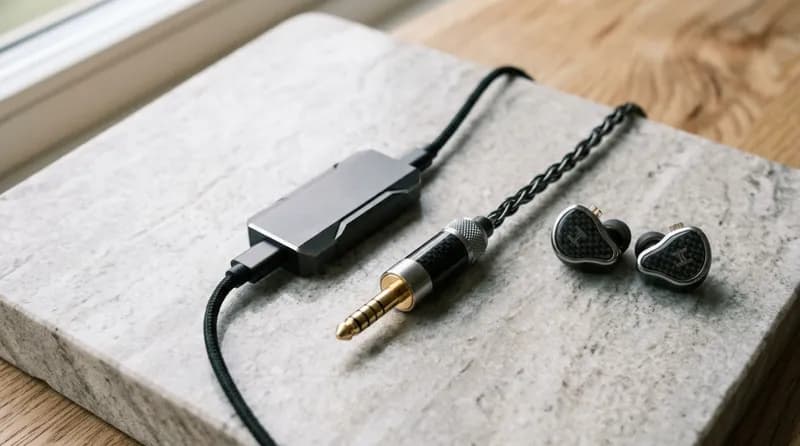
Small USB DACs, often called dongle DACs, have become a practical way to improve the headphone output of phones, tablets, laptops, and other USB devices. But once you move beyond entry-level models, the differences are no longer simply about which DAC chip is used or which product claims the highest output power.
A good dongle DAC needs to balance sound quality, output power, noise performance, compatibility, battery consumption, heat, controls, portability, and price.
This guide compares the FiiO KA11, FiiO KA13, MOONDROP Dawn Pro, MOONDROP Dawn Pro 2, FiiO KA15, Shanling UA4, and Fosi Audio DS2 2024. Because Dawn Pro and Dawn Pro 2 are separate products, the comparison covers seven specific models across six product families.
The overall scores use a 100-point system:
Category | Weight |
|---|---|
Sound quality | 25 |
Driving power | 15 |
Noise & technical performance | 10 |
Features & software | 10 |
Connectivity & compatibility | 10 |
Portability | 10 |
Power consumption & heat | 5 |
Build & operation | 5 |
Value | 10 |
Total | 100 |
The ranking is an editorial buying guide rather than a claim that one DAC is objectively better in every system. Differences in sound can be subtle, while differences in power, controls, noise, software, and compatibility can be much easier to notice.
Overall Dongle DAC Ranking
Rank | Model | Score | Best suited for |
|---|---|---|---|
1 | FiiO KA15 | 92/100 | Feature-rich all-round use |
2 | FiiO KA13 | 89/100 | High output power in a small package |
3 | MOONDROP Dawn Pro 2 | 88/100 | IEMs, low noise and DSP |
4 | Fosi Audio DS2 2024 | 86/100 | Power and value |
5 | Shanling UA4 | 85/100 | Efficient IEMs and hardware controls |
6 | MOONDROP Dawn Pro | 83/100 | Simple IEM-focused setup |
7 | FiiO KA11 | 82/100 | Maximum portability and simplicity |
Prices vary by market and promotions, so price should be treated as a reference rather than a fixed part of the ranking.
FiiO KA15 — 92/100
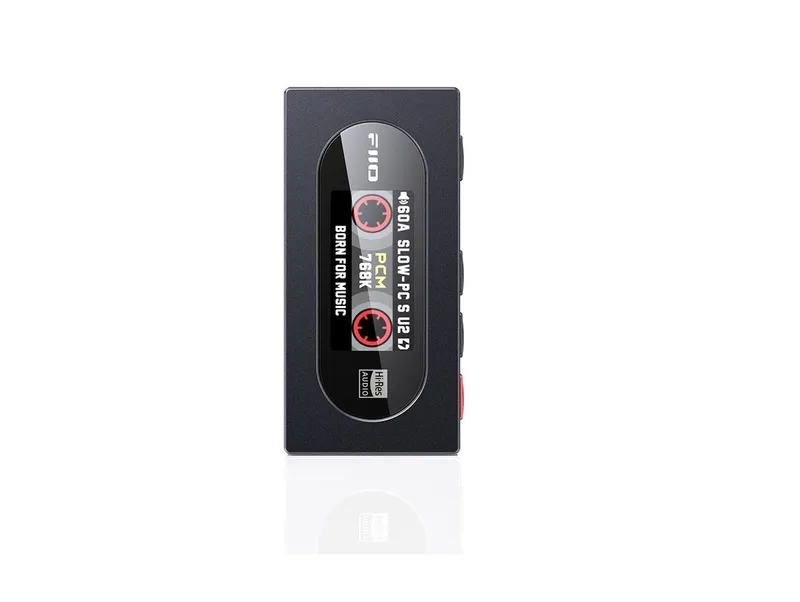
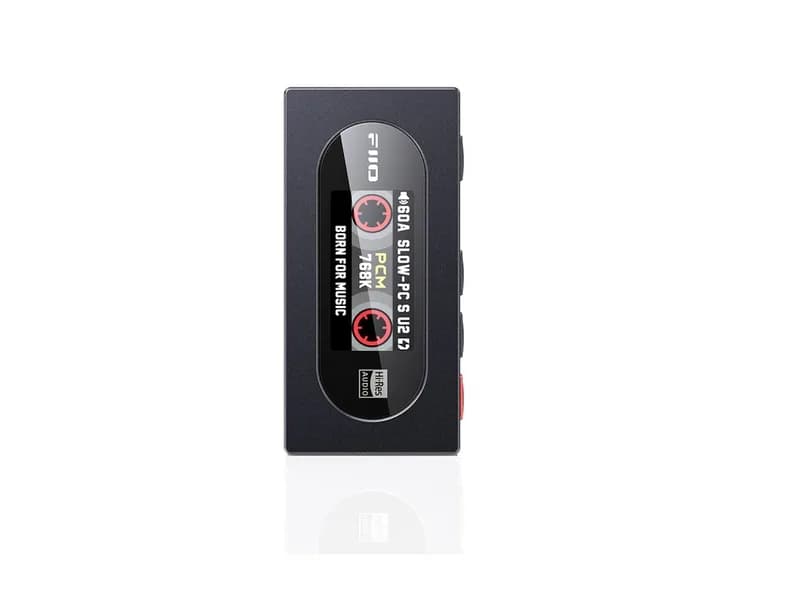
The FiiO KA15 is the most complete dongle DAC in this group. Its main advantage is not simply its power output, but the combination of power, physical controls, color display, PEQ, dual outputs, desktop mode, and relatively compact dimensions.
It uses dual CS43198 DACs and dual SGM8262 op-amps. It supports PCM up to 768kHz/32-bit and DSD256, with both 3.5mm single-ended and 4.4mm balanced outputs. FiiO rates the balanced output at up to 560mW + 560mW at 32Ω in Desktop Mode, while the 3.5mm output reaches 180mW + 180mW at 32Ω.
The 0.96-inch color LCD is one of its most distinctive features. You can see volume, sampling information, gain and other settings directly on the device instead of relying entirely on the phone or computer.
It also supports FiiO Control and a 10-band PEQ, making it much more flexible than a conventional plug-and-play dongle.
Sound-wise, the KA15 is generally positioned around a clean, neutral-to-slightly-warm presentation. Its strong output stage gives it good dynamic headroom, particularly when used with the 4.4mm balanced output.
The main drawback is that this is no longer the simplest possible dongle. The display, buttons, desktop mode and higher-power amplifier make it more feature-rich, but also slightly larger and more power-hungry than minimalist models.
Best for: users who want one dongle DAC to cover IEMs, headphones, EQ, portable listening and occasional higher-power use.
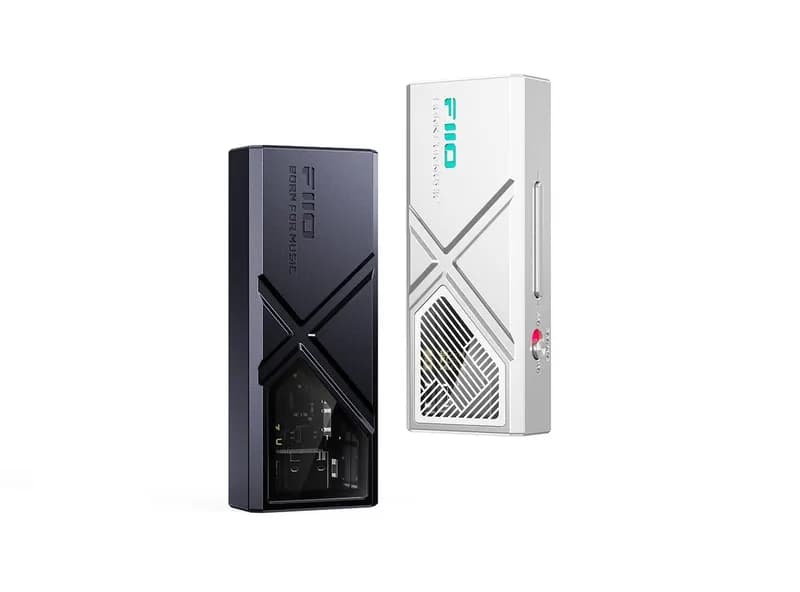
FiiO KA13 — 89/100
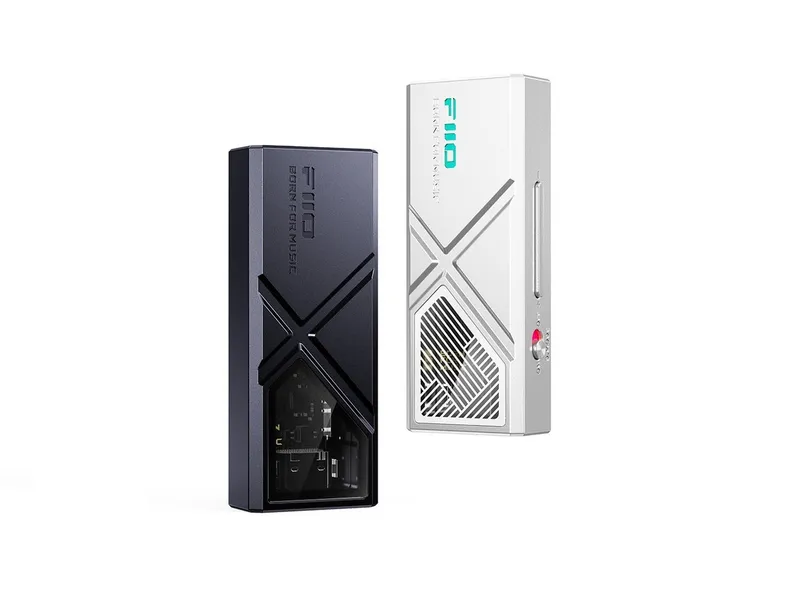
The FiiO KA13 remains one of the most power-oriented dongle DACs in this price range.
It uses dual CS43131 DACs and dual SGM8262 op-amps, with both 3.5mm and 4.4mm outputs. Its official specifications list up to 170mW + 170mW at 32Ω from the 3.5mm output and 550mW + 550mW at 32Ω from the 4.4mm balanced output, with Desktop Mode enabled.
That output capability makes the KA13 substantially more versatile than basic 3.5mm dongles. Efficient IEMs are easy, while many portable headphones can also benefit from the additional voltage and current headroom.
The sound is relatively clean and neutral, with good dynamics and a controlled low end. More importantly, the amplifier section does not feel like an afterthought. The KA13 behaves more like a miniature DAC/amp than a basic phone accessory.
It also has a detachable USB cable, FiiO Control support, RGB sampling-rate indication and SPDIF functionality through the 3.5mm output.
The trade-off is power consumption. Using Desktop Mode and high-power balanced output can put considerably more demand on the connected phone or tablet.
Best for: users who care about driving power but still want a compact dongle rather than a traditional desktop amplifier.
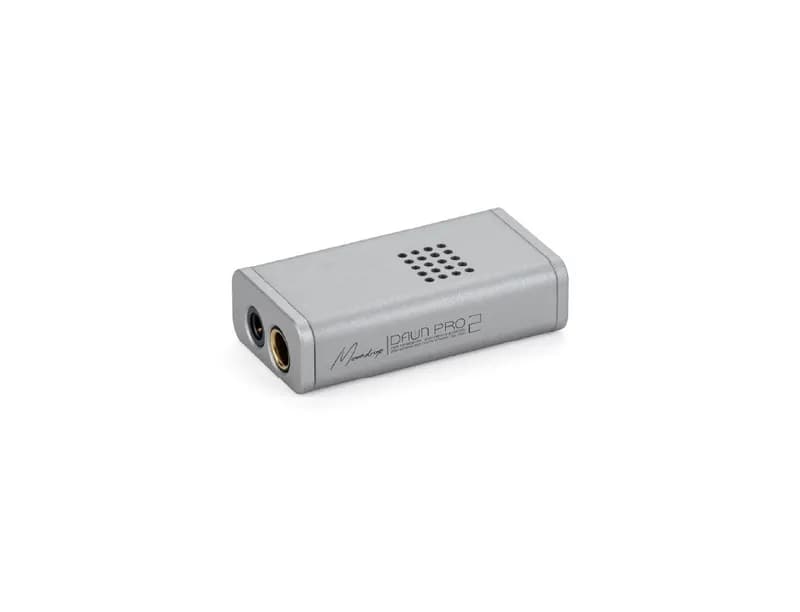
MOONDROP Dawn Pro 2 — 88/100
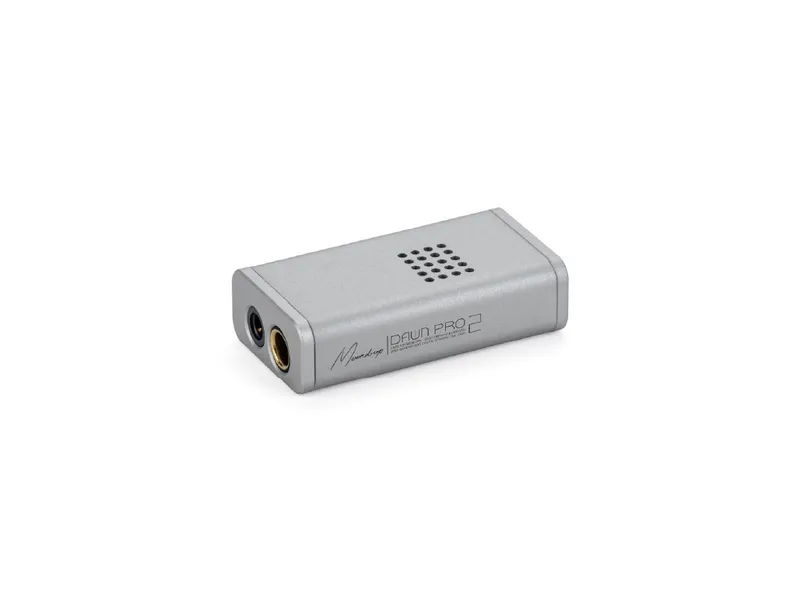
The MOONDROP Dawn Pro 2 should not be treated as a minor revision of the original Dawn Pro. It is a separate second-generation product with a different DAC architecture and a much stronger emphasis on DSP and user control.
The Dawn Pro 2 uses dual CS43198 DACs and supports 3.5mm single-ended and 4.4mm balanced outputs. Its official specifications list a maximum output level of around 4.1Vrms and 124mW + 124mW at 16Ω under the stated test conditions. It also supports PCM 384kHz/32-bit and DSD256.
Its most interesting feature is the second-generation DSP system. Instead of treating the dongle as a purely transparent DAC and amplifier, MOONDROP provides hardware and software controls for PEQ and filtering. The device also offers 100-step independent hardware volume control.
For IEM users, this can be more useful than chasing higher theoretical output numbers. The Dawn Pro 2 has very low noise and is designed to work well with sensitive earphones. Reviews have also reported essentially inaudible hiss with very sensitive IEMs.
Its limitation is straightforward: it is not intended to replace a powerful desktop headphone amplifier. Efficient IEMs and many portable headphones are a much more natural match than demanding planar headphones or high-impedance full-size headphones.
At roughly the same current official-store price as the original Dawn Pro, the Dawn Pro 2 also changes the value equation considerably.
Best for: IEM users who want low noise, DSP, hardware volume control and a more customizable listening setup.
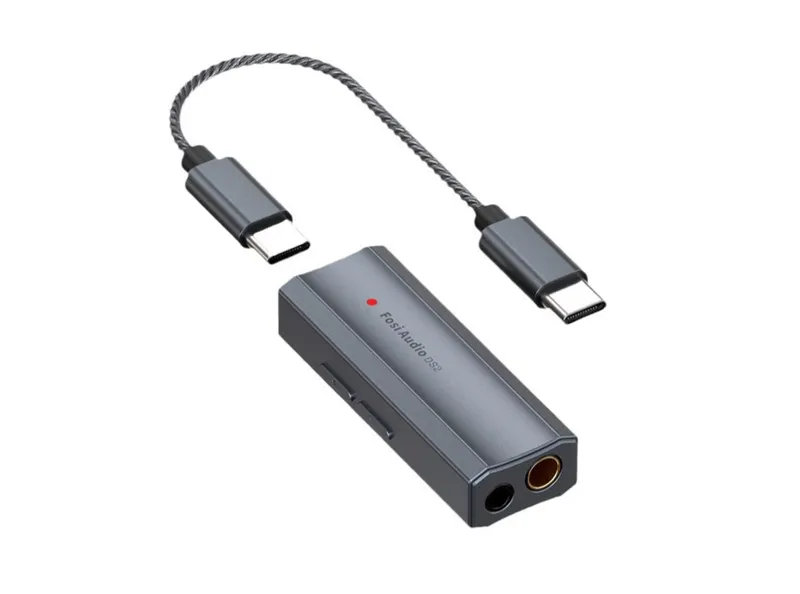
Fosi Audio DS2 2024 — 86/100
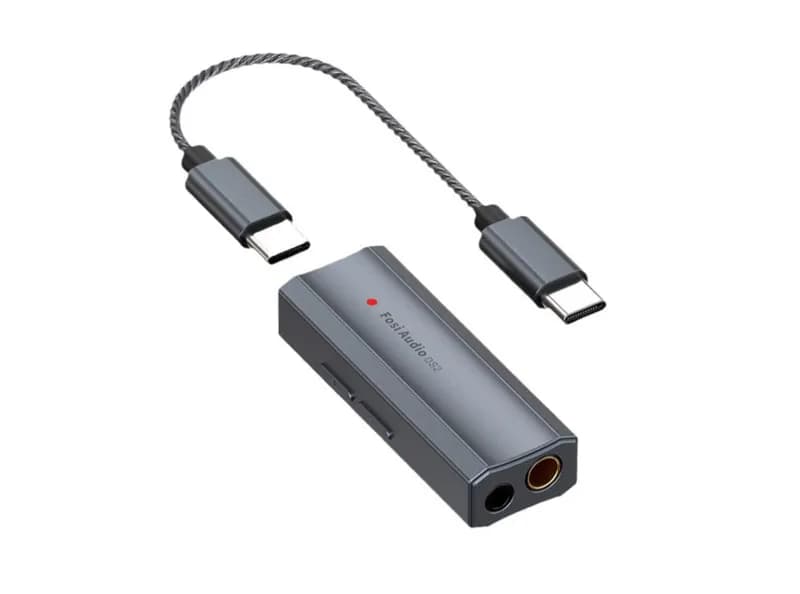
The Fosi Audio DS2 2024 is another strong value-oriented option, particularly for users who want high balanced output without moving to a larger portable amplifier.
The 2024 version is important because it uses dual CS43131 DACs. It should not be confused with the older DS2 version, which used dual ESS ES9018K2M chips. Fosi's 2024 user manual lists 128mW at 32Ω for single-ended output and 510mW at 32Ω for balanced output, along with 130dB S/N and 0.0002% THD+N.
The current product page presents somewhat different output figures, so buyers should pay attention to the exact specification sheet and version rather than assuming that every DS2 listing refers to the same hardware.
In practical use, the DS2 has a transparent, detailed presentation with a slightly energetic character reported in several reviews. Noise performance is good enough for sensitive IEMs, while the balanced output provides considerable headroom for portable headphones.
Its design is deliberately simple. There is no color display, sophisticated PEQ system or extensive menu structure. That can actually be an advantage if the goal is simply to connect headphones and listen.
Best for: users who prioritize output power, clean sound and value over advanced controls.
Shanling UA4 — 85/100
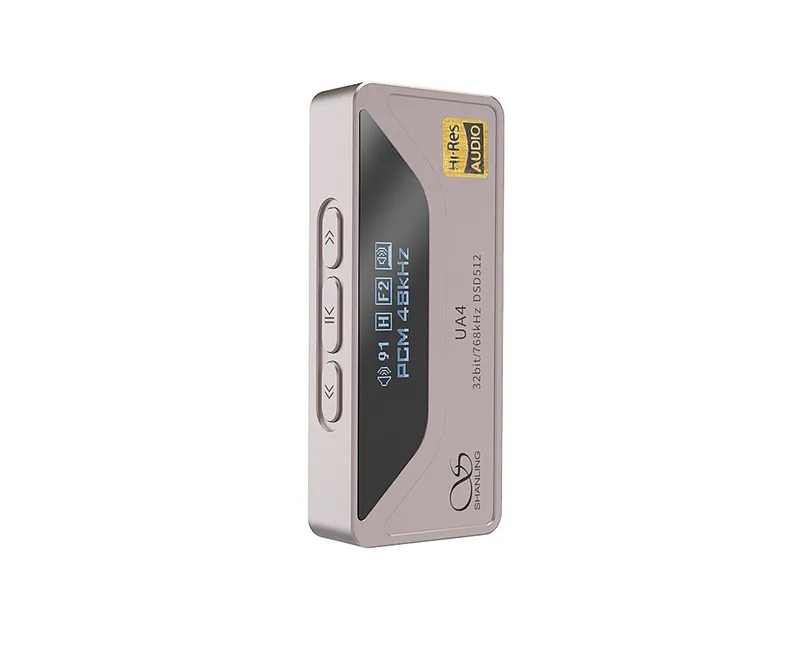
The Shanling UA4 takes a different approach from the FiiO KA13 and KA15. Instead of focusing primarily on maximum power, it emphasizes efficient operation, physical controls, a small OLED display and a clean output suitable for sensitive earphones.
It uses the ESS ES9069Q DAC together with dual Ricore RT6863 headphone amplifiers. The device has 3.5mm and 4.4mm outputs, three physical buttons and a 0.87-inch OLED display. Shanling originally specified up to 211mW at 32Ω, while current detailed specifications commonly list approximately 227mW at 32Ω for the balanced output.
One of the UA4's strongest characteristics is its low-noise design. Shanling specifically positions it for high-efficiency earphones, and its output impedance is low enough for a broad range of IEMs.
The OLED screen and three buttons are also genuinely useful. You can adjust hardware volume and navigate settings without constantly reaching for the phone.
The UA4 does not compete directly with the KA15 for maximum output power or DSP functionality. Instead, it makes a strong case as a practical daily-use dongle for IEMs and moderately demanding headphones.
Best for: IEM users who want physical controls, a screen, low noise and reasonable power consumption.
MOONDROP Dawn Pro — 83/100
The original MOONDROP Dawn Pro remains a capable compact DAC, especially for IEM users, but the existence of the Dawn Pro 2 makes its position more difficult.
It uses dual CS43131 DACs and offers 3.5mm and 4.4mm outputs. MOONDROP specifies very strong noise and dynamic-range performance, while third-party testing has reported around 120mW at 32Ω under its test conditions.
Its sound is generally clean and transparent, with good clarity and staging. It does not attempt to create a heavily colored presentation, which makes it suitable for a wide variety of IEMs.
The compact 13g body is another advantage. It is considerably easier to carry than some of the more feature-heavy models in this comparison.
The problem is not that the Dawn Pro is bad. Rather, the newer Dawn Pro 2 provides additional DSP functionality and hardware control while occupying a similar price bracket. That makes the original model more attractive when discounted or when simplicity is preferred.
Best for: users who want a small, clean IEM-oriented dongle and do not need extensive DSP controls.
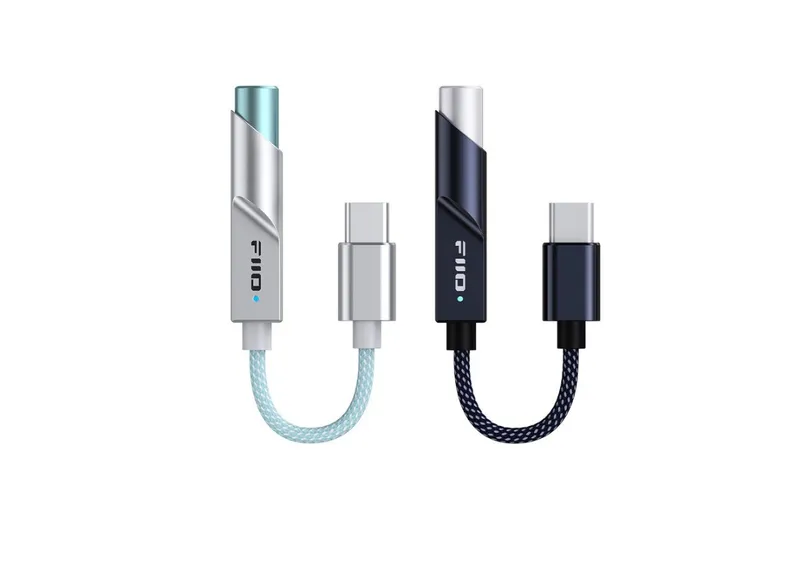
FiiO KA11 — 82/100
The FiiO KA11 is the simplest product in this comparison and also one of the easiest to recommend when portability is the main requirement.
It uses a CS43131 DAC and supports PCM 384kHz/32-bit and DSD256. Its tiny body weighs only around 8.5g, making it dramatically smaller and lighter than the KA15, KA13 and UA4. FiiO lists support for Android, iOS, Windows and Mac.
Its main limitation is the lack of a 4.4mm balanced output. This is a 3.5mm-only design, so it is primarily intended for IEMs and efficient headphones.
FiiO's official Chinese specifications list approximately 245mW + 245mW at 16Ω, while regional product pages use different headline output figures.
For ordinary IEMs, this is already more than enough power. The important point is that the KA11 does not try to compete with the KA13 or KA15 on features. It is designed around a much simpler proposition: plug it into a phone or laptop and get a better headphone output without carrying a large accessory.
Best for: users who want the smallest possible solution and primarily use 3.5mm IEMs.
How the Seven Models Compare
Best for portable everyday use
The KA11 has the clear advantage in physical size and weight. If the dongle will remain attached to a phone throughout the day, its minimalist design is valuable.
The Dawn Pro and Dawn Pro 2 are also highly portable, while the KA15 and UA4 add more controls at the cost of a somewhat larger body.
Best for driving power
The KA15 and KA13 sit at the top of this group when maximum output is important.
The KA15 can reach 560mW + 560mW at 32Ω through its balanced output in Desktop Mode, while the KA13 is rated at 550mW + 550mW under the same basic 32Ω balanced condition.
The Fosi DS2 2024 also has a powerful balanced output according to its official 2024 manual.
However, maximum power should not be interpreted as a guarantee that a DAC will sound better. It primarily gives the amplifier more headroom for headphones that actually need it.
Best for sensitive IEMs
For very sensitive IEMs, noise floor and output impedance matter more than huge power numbers.
The Dawn Pro 2, Dawn Pro, KA15 and UA4 are particularly interesting here. The Dawn Pro 2 is especially compelling if DSP and EQ are also important.
A high-power dongle is not automatically a better IEM dongle. With very sensitive earphones, excessive gain or amplifier noise can be more important than another few hundred milliwatts of theoretical output.
Best for high-impedance headphones
High-impedance headphones change the requirements considerably. Voltage swing becomes increasingly important, so a dongle's 32Ω power rating does not tell the whole story.
The KA15 and KA13 have the strongest overall case among these models because of their higher-voltage balanced outputs and Desktop Mode.
The UA4 can handle many moderate headphone loads, while the Dawn Pro 2 is better viewed as an IEM and efficient-headphone solution.
For genuinely demanding high-impedance headphones, however, a dedicated desktop amplifier may still be more appropriate.
Best 4.4mm option
All models except the KA11 in this comparison offer a 4.4mm balanced output.
The difference is what the balanced output is being used for.
On the KA13 and KA15, it is primarily a way to access substantially more amplifier power. On the Dawn Pro 2, it is part of a low-noise IEM-oriented design. On the UA4, it complements the device's compact control-focused design.
A balanced connection should therefore not be treated as automatically better sounding. Its practical advantage is usually the additional amplifier architecture and output capability.
Sound Quality: Are the Differences Really Large?
This is one area where dongle DAC rankings can become misleading.
All seven products use modern DAC implementations and have sufficiently strong measured specifications for transparent digital conversion in normal use. The audible differences are therefore generally smaller than the differences in amplifier power, controls, noise behavior or software.
The KA15 and KA13 tend to make more sense when you want a strong amplifier stage and a little more headroom.
The Dawn Pro 2 is attractive when neutrality, low noise and DSP flexibility are priorities.
The UA4 emphasizes a clean, controlled presentation and practical daily operation.
The DS2 2024 focuses on transparent reproduction and strong output for the money.
The KA11 is less about audiophile customization and more about providing a competent headphone output in an extremely small package.
For many IEM users, the difference between these products may be much smaller than the difference created by the IEM itself, its frequency response, ear tips and EQ settings.
Dongle DACs for Phones vs. Computers
All of these products can function as USB DACs with computers, but phone use introduces additional considerations.
On a laptop or desktop computer, power consumption is rarely a serious issue. The KA13 and KA15 can therefore take better advantage of their higher-power modes.
On a smartphone, power consumption becomes more relevant. High-output balanced modes can draw significantly more power from the host device.
This is one reason the KA11 remains attractive despite its lower overall feature set. If the primary use case is a phone plus efficient IEMs, additional amplifier power may have little practical benefit.
The KA15's power-management features also make it more interesting for mixed portable and desktop use. FiiO has implemented lower-power standby behavior and multiple power-saving functions in its firmware and hardware design.
Which Dongle DAC Should You Buy?
There is no single model that is ideal for every listener.
Choose the FiiO KA15 if you want the most complete feature set, high output power, a screen, physical controls and PEQ.
Choose the FiiO KA13 if driving power is your primary concern and you want a smaller, simpler alternative to a portable amplifier.
Choose the MOONDROP Dawn Pro 2 if you mainly use IEMs and want low noise, DSP and hardware volume control.
Choose the Fosi Audio DS2 2024 if you want strong balanced output and a relatively straightforward design with a focus on value.
Choose the Shanling UA4 if you want an OLED display, physical controls, low noise and efficient everyday operation.
Choose the MOONDROP Dawn Pro if you find it at a good price and prefer a compact, straightforward IEM-oriented DAC.
Choose the FiiO KA11 if portability and simplicity matter more than balanced output, EQ or advanced controls.
Frequently Asked Questions
Is a more powerful dongle DAC always better?
No. Output power matters when the connected headphones require it. For sensitive IEMs, noise, output impedance, volume control and tuning can matter more.
Is the FiiO KA15 better than the KA13?
They target slightly different priorities. The KA15 adds a display, more extensive controls and PEQ while offering similarly high balanced output. The KA13 is simpler and can be attractive if you mainly want high output power.
Is the Dawn Pro 2 a major upgrade over the Dawn Pro?
It is a separate second-generation design rather than simply a cosmetic refresh. The Dawn Pro 2 adds a different DAC platform, more extensive DSP functionality and hardware volume control. The original Dawn Pro remains relevant if it is substantially cheaper.
Do I need a 4.4mm balanced output?
Not necessarily. A good 3.5mm output is enough for many IEMs and headphones. A 4.4mm connection becomes more useful when the amplifier provides significantly more power through it or when your headphones already use a balanced cable.
Which one is best for sensitive IEMs?
The Dawn Pro 2, Dawn Pro, UA4 and KA15 are all strong candidates. For extremely sensitive IEMs, pay particular attention to noise and usable volume range rather than simply choosing the most powerful DAC.
Which dongle is best for demanding headphones?
The KA15 and KA13 are the strongest choices in this group when amplifier power is the main requirement. The DS2 2024 is also worth considering for its high balanced output.
Does the DAC chip determine sound quality?
No. The DAC chip is only one part of the circuit. The analog output stage, amplifier design, power supply, filtering, output impedance, implementation and tuning can all affect performance.
Will a dongle DAC improve every phone?
Not necessarily. A dongle bypasses the phone's internal headphone output, but the audible improvement depends on the quality of the original output, the headphones being used and the recording.
Is a dongle DAC better than a desktop DAC/amp?
For portability, a dongle is much more convenient. For difficult-to-drive headphones, a dedicated desktop DAC/amp can provide substantially more power and voltage headroom.
Final Ranking
Rank | Model | Score | Main reason |
|---|---|---|---|
1 | FiiO KA15 | 92/100 | Best combination of power, controls, display, PEQ and versatility |
2 | FiiO KA13 | 89/100 | Excellent amplifier power in a compact design |
3 | MOONDROP Dawn Pro 2 | 88/100 | Excellent IEM-oriented design with DSP and low noise |
4 | Fosi Audio DS2 2024 | 86/100 | Strong output and straightforward value |
5 | Shanling UA4 | 85/100 | Excellent controls, display and efficient operation |
6 | MOONDROP Dawn Pro | 83/100 | Compact and clean IEM-focused performance |
7 | FiiO KA11 | 82/100 | Extremely small and simple 3.5mm solution |
The most important takeaway is that the highest-ranked dongle is not automatically the right dongle for every listener. If you use sensitive IEMs, a low-noise compact model may make more sense than a high-power amplifier. If you use planar or high-impedance headphones, output capability becomes much more important. And if you listen primarily from a phone, power consumption and portability can matter as much as raw specifications.
For most users, the choice should therefore start with the headphones or IEMs being driven, followed by the required output, connectivity, controls and portability—not with the DAC chip alone.
Products in this guide
FiiO KA13 Dongle DAC
The FiiO KA13 is a compact USB DAC and headphone amplifier designed for listeners who want considerably more output power than a basic phone
¥373.96 (≈$52 USD)
MOONDROP Dawn Pro 2 Dongle DAC
The MOONDROP Dawn Pro 2 is a compact USB DAC/amp designed primarily for IEM users who want a cleaner headphone output, 4.4mm balanced connec
¥273.96 (≈$38 USD)
FiiO KA15 Dongle DAC
The FiiO KA15 is a feature-rich USB DAC dongle designed for listeners who want considerably more than a basic phone-to-headphone adapter. It
¥538.96 (≈$75 USD)
Fosi Audio DS2 Dongle DAC
The Fosi Audio DS2 is a small USB DAC/headphone amplifier designed for users who want substantially more output capability than a typical ph
¥273.96 (≈$38 USD)