Truthear ZERO:RED vs ZERO:BLUE2: Which One Should You Buy?
The Truthear ZERO:RED and ZERO:BLUE2 share a $64.99 price and a dual dynamic driver design, but they are two different tunings rather than an upgrade path. A comparison of bass, midrange, treble, source matching, comfort and gaming, with a clear recommendation by use case.
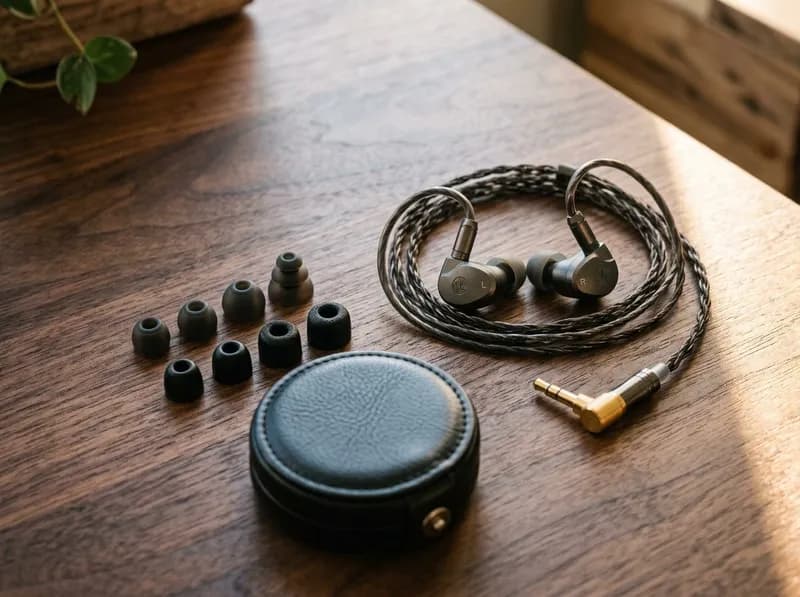
Truthear ZERO:RED vs ZERO:BLUE2: Which One Should You Buy?
The Truthear ZERO:RED and ZERO:BLUE2 cost the same $64.99 and share the same 10mm + 7.8mm dual dynamic driver architecture. They are, however, two different tunings rather than two generations of the same product — and which one suits you depends more on your music, your source and your ears than on which is newer.
Quick answer
Choose ZERO:RED | Vocals, acoustic and jazz, classical listening, long sessions, competitive shooters, or listening straight from a phone or basic dongle. |
Choose ZERO:BLUE2 | EDM, bass-heavy pop and hip-hop, cinematic games, smaller ears, or if you need an inline microphone. |
Main trade-off | The BLUE2 offers more sub-bass and a more forward upper range in exchange for a leaner midrange. The RED is more even and generally easier to live with over long sessions. |
Price | Both $64.99 officially. Neither is positioned as an upgrade over the other. |
Which Zero is which
Truthear's naming is a common source of confusion, and it occasionally leads people to buy the wrong model. There are four distinct products in the ZERO line.
Model | What it is | Status |
|---|---|---|
ZERO (white) | The original dual-DD model. Neutral-leaning Harman tuning, large nozzle. | Still sold |
ZERO:RED | The Crinacle collaboration. Adds low-end weight while keeping a smoother treble. Uses the IEF Neutral target above 1kHz. | Current |
ZERO:BLUE (original) | A separate, more bass- and treble-forward tuning aimed at gamers. | Superseded |
ZERO:BLUE2 | A redesign of the BLUE concept: new drivers, revised crossover, smaller nozzle, upgraded cable. | Current |
This article compares the two current models, ZERO:RED and ZERO:BLUE2.
At a glance
Specification | ZERO:RED | ZERO:BLUE2 |
|---|---|---|
Official price | $64.99 | $64.99 |
Driver | 10mm + 7.8mm DD | 10mm + 7.8mm DD, both revised |
Impedance | 17.5Ω ±15% | 5.8Ω ±15% |
Sensitivity | 117.5dB/Vrms | 119.5dB/Vrms |
THD | <1% @1kHz | <1% @1kHz |
Effective frequency response | 20–20kHz | 20–20kHz |
Impedance adapter | 10Ω | 5Ω |
Stock cable | 4-strand silver-plated | 2-strand copper + silver-plated coaxial |
Microphone cable option | Not offered | Available |
Ear tips | 6 pairs silicone (thick + thin) + 1 foam | 3 pairs silicone + 4 foam |
Nozzle | Large | Reduced, support angles adjusted |
Specifications from Truthear's official product pages, cross-checked against ShenzhenAudio. Some third-party spec databases list the BLUE2 at 17Ω and $60; the official listing is 5.8Ω and $64.99.
What reviewers found
Both models have been tested by outlets that measured them and listened for extended periods. Summarising those findings is more useful than repeating any single verdict.
Prime Audio — BLUE2: 3.5/5
Prime Audio rated the BLUE2 3.5 out of 5. On the positive side, they reported strong sub-bass extension, a spacious presentation with solid instrument separation, and a good stock cable. Against that, they found the midrange somewhat dry and less vibrant than they would like, particularly in the lower mids, and described a degree of sharpness and brittleness in the upper treble that could become tiring at higher volumes. They also found the BLUE2 harder to drive than its specifications suggest, and considered the included impedance adapter to push the bass further than was helpful.
Comparing it to the RED, Prime Audio described the RED as having a more even tonality, more lower-midrange body, less presence-region lift and less upper treble — with a narrower stage and less detail retrieval, but a less fatiguing character overall.
SoundGuys — BLUE2: 6.7/10
SoundGuys rated the BLUE2 6.7 out of 10. Their measurements showed a substantial bass lift of roughly 15dB extending to about 200Hz, a slightly recessed midrange, and a treble that rolls off above 4kHz — a balance they characterised as leaning dark, with bass dominating. Comfort was scored 4.0 out of 10, which they attributed to an ear hook they found too long and stiff rather than to the nozzle; the stock cable became uncomfortable after roughly two hours, and a third-party cable largely resolved the issue.
In games, SoundGuys found the BLUE2's spatial depth and width strong, but noted that team call-outs could become difficult to hear during chaotic engagements.
RTINGS — ZERO:RED
RTINGS assessed the ZERO:RED as suitable for wired gaming, with good reproduction of bass-heavy effects and a fit they considered comfortable for longer sessions.
Truthear's own positioning
Truthear's marketing language is narrower than much of the community discussion around it. The company describes the BLUE2 as "more dynamic and vivid" than the RED — a statement about character rather than rank — and describes the RED as well suited to long listening without fatigue. Truthear also reports better nonlinear distortion figures for the BLUE2 in some frequency ranges.
How to read this. Taken together, the findings point to a difference in emphasis rather than a difference in class. The BLUE2 adds low-end weight and upper-midrange presence; the RED keeps a more even balance. Neither review found one model to be universally preferable, and both sets of observations are consistent with the official specifications.
Bass
Both have substantial low-end output for a $65 IEM. The difference is in emphasis rather than capability.
The ZERO:RED carries its low-end weight with a relatively cohesive transition into the midrange. Bass is prominent without becoming the defining feature of every track, which is what allows vocals and instruments to retain their body.
The ZERO:BLUE2 leans further into sub-bass extension and impact. Prime Audio described its sub-bass as reaching notably deep, with mid-bass that stays tight rather than muddy, while noting that the combination produces a darker overall undertone. SoundGuys' measurement of roughly a 15dB lift extending to 200Hz is consistent with that description.
In practice
The BLUE2 offers more low-end quantity and extension. The RED offers more balance — weight without letting bass set the agenda. For EDM, hip-hop and modern pop, the BLUE2's low end is likely to be the more satisfying of the two. If you prefer bass to be present rather than dominant, the RED is the more even instrument.
Midrange and vocals
This is the area where the two models diverge most clearly, and it is the one worth weighing carefully if vocals and acoustic instruments make up most of your listening.
Prime Audio found the BLUE2's midrange drier and less vibrant than they would like, with notes that could feel somewhat thin, and observed that the body resonance of acoustic instruments was less pronounced than expected. They described the RED's tonality as more even, with additional lower-midrange body that gives male vocals, guitars and strings a fuller presentation.
SoundGuys' measurements support the general direction: they recorded a slightly recessed midrange on the BLUE2, alongside the substantial bass lift.
In practice
If vocals, acoustic instruments and timbre are your priority, the RED is the more natural fit. The BLUE2's leaner midrange can read as clean on electronic material and as thin on acoustic material — which is a matter of preference rather than a defect.
Treble and the detail question
The BLUE2 has more upper-frequency energy than the RED. Truthear's redesign specifically targeted high-frequency conversion efficiency, and Prime Audio described the treble as crisp and present with good clarity.
The same review added two qualifications worth noting: that the treble notes seemed to lack some weight behind them, and that there was a degree of sharpness and brittleness in the upper treble that could become fatiguing over longer sessions or at higher volumes. SoundGuys, measuring the same model, found the response rolls off above 4kHz.
Why this matters when reading reviews. A lift in the presence region can make an IEM sound more detailed, because small percussion, ambience and recording artifacts become more obvious. That is not the same thing as retrieving more information, and it is not the same as treble extension — SoundGuys' measurement suggests the BLUE2's response falls away above 4kHz rather than extending further.
In other words, the BLUE2's advantage in perceived detail is real, but it comes from forwardness rather than resolution. If you are sensitive to upper-frequency emphasis, that distinction is worth weighing.
The RED takes a different approach, with a smoother upper range that Prime Audio described as less fatiguing and Truthear describes as bright without being irritating.
One practical note: the BLUE2 ships with four pairs of foam tips, and foam tends to damp upper treble. If the BLUE2 sounds sharp to you, try the foam tips before drawing conclusions about the IEM itself.
Impedance and source matching
This is one of the more practical differences between the two models, and it receives relatively little attention in English-language comparisons.
The BLUE2's impedance is 5.8Ω; the RED's is 17.5Ω. That gap affects how each behaves across different sources.
Why low impedance matters
Every source has an output impedance. Together with the headphone, it forms a voltage divider, and the relationship between the two determines whether the frequency response shifts. A common engineering guideline is that a source's output impedance should be no more than one-eighth of the headphone's impedance.
IEM | Impedance | Source output impedance for a comfortable match |
|---|---|---|
ZERO:BLUE2 | 5.8Ω | Roughly 0.7Ω or below — this requires a low-output-impedance source |
ZERO:RED | 17.5Ω | Roughly 2.2Ω or below — most decent dongles and laptops qualify |
In practical terms, the BLUE2 asks more of the source than its sensitivity figure might suggest. With a source whose output impedance sits above that range, you may notice a shift in the bass response that reflects the pairing rather than the IEM's tuning.
Sensitivity works both ways
At 119.5dB/Vrms the BLUE2 is highly sensitive, which means it reaches a comfortable volume easily. High sensitivity can also make an IEM more revealing of a source's noise floor, so on a noisy laptop jack or a basic dongle you may hear some hiss between tracks.
This is consistent with Prime Audio's report that the BLUE2 felt more demanding to drive than its specifications would suggest, even without the impedance adapter. The issue is not volume — it is how sensitive the BLUE2 is to what it is paired with.
In practice
The RED is the more forgiving pairing. If you listen directly from a phone, a laptop or a basic dongle and have no plans to change your source, the RED's 17.5Ω load is the safer match. The BLUE2 tends to reward a cleaner, low-output-impedance source.
The two impedance adapters
Both models ship with a series impedance adapter, and they are not directly equivalent even though the BLUE2's carries the smaller number.
ZERO:RED | ZERO:BLUE2 | |
|---|---|---|
Adapter | 10Ω | 5Ω |
Resulting load | 27.5Ω | 10.8Ω |
Change to the IEM's own impedance | ×1.57 | ×1.86 |
Because the BLUE2 starts from a lower figure, adding 5Ω changes its electrical load proportionally more than adding 10Ω does to the RED. That is one reason the BLUE2's adapter tends to feel like the more significant intervention.
Prime Audio's assessment was that the adapter increases bass quantity considerably, but in their view "takes things too far and compromises the overall clarity," without addressing the upper-treble behaviour. On the RED, the 10Ω adapter is a more moderate change — a way to add low-end weight to an already balanced tuning.
Treat both adapters as optional experiments rather than part of the product. Raising the load in this way can also help if your source has a higher output impedance, so it is worth trying — but it adds bulk at the plug and changes the tuning more than the packaging implies.
Fit, comfort and small ears
The two models present different fit considerations, and separating them is more useful than treating "comfort" as a single quality.
The nozzle — the RED's constraint
The original ZERO shell was known for a large nozzle, and the RED retains that geometry. For listeners with smaller ear canals this is one of the more common objections to the model, and it is not something an accessory can correct.
The BLUE2 addresses it directly: Truthear reduced the nozzle size and adjusted the support angles, and Prime Audio confirmed that the change makes the shells more comfortable over longer sessions. If you have struggled with the original ZERO or the RED, this is the BLUE2's clearest practical advantage.
The ear hook — the BLUE2's constraint
The BLUE2 has a fit issue of its own, and it is not in the nozzle. SoundGuys scored its comfort 4.0 out of 10, attributing this to an ear hook they found too long and too stiff. Their tester managed around two hours with the stock cable, less when moving around, and swapping to a third-party cable largely resolved it.
These two findings do not conflict — they concern different parts of the product. The BLUE2 improved the nozzle geometry that limits the RED, while introducing a cable-related issue of its own.
Long listening sessions
Consideration | Leans toward | Why |
|---|---|---|
Physical comfort | ZERO:BLUE2 | Smaller nozzle and adjusted support angles, provided the stock cable is replaced |
Acoustic comfort | ZERO:RED | Smoother upper range; Truthear describes it as suited to long listening without fatigue |
If you listen for several hours at a time and are sensitive to upper-frequency emphasis, the RED is the more comfortable of the two. If your ears are small and the RED's nozzle causes discomfort early, the BLUE2's shell is likely to suit you better — with a replacement cable.
Genre and use case
The genre differences between these two follow directly from the tonal differences already described, so a summary table is more useful than repeating them at length.
Listening or use | Leans toward | Reason |
|---|---|---|
Vocals, singer-songwriter | ZERO:RED | Fuller lower-midrange body |
Classical and acoustic | ZERO:RED | More even tonality; smoother upper range flatters bright recordings |
Jazz and blues | ZERO:RED | Instrument weight and body |
Rock and metal | ZERO:RED | More controlled balance keeps dense material legible |
Pop | Either | Depends on whether you prefer balance or impact |
EDM and electronic | ZERO:BLUE2 | Sub-bass extension and impact |
Hip-hop and bass-heavy pop | ZERO:BLUE2 | Low-end weight |
Cinematic and open-world games | ZERO:BLUE2 | Deeper bass and a more immersive presentation |
Competitive shooters | ZERO:RED | Balanced tuning keeps positional cues from being masked |
Long daily sessions | ZERO:RED | Less upper-frequency fatigue |
Small ears | ZERO:BLUE2 | Reduced nozzle diameter |
Voice chat | ZERO:BLUE2 | Optional inline microphone cable |
For classical listening specifically, the RED's fuller midrange tends to suit instrument timbre, while the BLUE2 offers more perceived space at the cost of some midrange body. Neither is a specialist classical IEM; the Truthear HEXA is the more linear option in this price range if that is your priority.
Gaming
Both models work for gaming, and neither offers an automatic competitive advantage. The difference is narrower than the marketing around either suggests.
Competitive shooters
Imaging and separation matter considerably more than bass here, and a heavy low end can mask quieter positional cues. RTINGS assessed the RED as suitable for wired gaming with good reproduction of bass-heavy effects. SoundGuys found the BLUE2's spatial depth and width strong, making it easier to judge distance and direction, but also noted that team call-outs could become difficult to hear in chaotic engagements — a consideration for squad play.
Story-driven and cinematic games
The BLUE2's deeper bass is the more engaging option here. SoundGuys found its bass immersion effective in action titles, while noting that fatigue set in after around two hours.
The microphone consideration. The ZERO:RED ships without a microphone and no microphone option is offered. The ZERO:BLUE2 offers an optional cable with an inline mic. If you need voice chat and would rather not add a separate desk or clip-on microphone, the BLUE2 is the only one of the two that addresses this out of the box.
Upgrading, and owning both
If you own the RED, is the BLUE2 an upgrade?
Not in the conventional sense. The BLUE2 adds low-end emphasis, more presence-region energy, revised drivers, a smaller nozzle and an updated cable. If you specifically want a more energetic and bass-forward presentation, and you have a source that pairs well with a 5.8Ω load, it is a reasonable second purchase. If you enjoy the RED's smoother balance, the BLUE2 is likely to feel like a different flavour rather than a step forward.
If you own the BLUE2, is the RED worth adding?
The RED makes sense if you want fuller lower mids, a smoother upper range, a more even tonality or a different vocal presentation. It is less likely to satisfy anyone expecting a general improvement in technical performance, since the two sit at the same level rather than in different tiers.
Should you own both?
The two overlap considerably in architecture and price. Owning both is reasonable if you genuinely switch between tunings depending on what you are listening to. If your goal is variety rather than a second flavour of the same design, spending the second $65 on a structurally different IEM — a planar, a hybrid, or a single dynamic with a distinct character — may be more informative.
Which one should you buy
If you mainly… | Buy |
|---|---|
Listen to vocals, acoustic or singer-songwriter material | ZERO:RED |
Listen to classical and care about instrument timbre | ZERO:RED |
Listen to jazz and blues | ZERO:RED |
Prefer a relaxed, less fatiguing upper range | ZERO:RED |
Listen for several hours at a time | ZERO:RED |
Play competitive shooters or squad-based games | ZERO:RED |
Listen straight from a phone, laptop or basic dongle | ZERO:RED |
Listen to EDM, bass-heavy pop or hip-hop | ZERO:BLUE2 |
Want the most sub-bass available at this price | ZERO:BLUE2 |
Prefer a more energetic, vivid presentation | ZERO:BLUE2 |
Play cinematic or open-world games | ZERO:BLUE2 |
Need an inline microphone | ZERO:BLUE2 |
Have small ears or found the ZERO nozzle uncomfortable | ZERO:BLUE2 |
Already own the RED and enjoy it | Neither — a second ZERO is a sidegrade |
Own the BLUE2 and want smoother mids | ZERO:RED |
Final verdict
Choose the ZERO:RED if
Your priority is a more even and controlled presentation. It is the better fit for vocals, jazz, acoustic and classical listening, and for long sessions where upper-frequency fatigue is a concern. Its 17.5Ω load also makes it the more forgiving partner for phones and basic dongles. The large nozzle is the main practical consideration.
Choose the ZERO:BLUE2 if
You want deeper sub-bass, stronger contrast and a more vivid presentation, and you are comfortable with a leaner midrange and a presence-forward treble. It makes a strong case for EDM, modern pop and cinematic gaming, and its smaller nozzle and optional microphone cable are genuine practical advantages. It is also the more source-sensitive of the two, so it pairs best with a clean, low-output-impedance device.
At the same price, there is little reason to treat the BLUE2 as the automatic choice simply because it is the newer model. Both are interpretations of the same affordable dual-driver concept — one built around balance and endurance, one around impact and energy. The more useful question is not which measures better, but whether you want your music smooth and even, or deep and immediate.
FAQ
Is the ZERO:BLUE2 better than the ZERO:RED?
It is not universally better — it is a different tuning. The BLUE2 offers more sub-bass and more upper-midrange presence, but a leaner midrange. Prime Audio rated it 3.5/5 and noted it would not recommend it as an all-rounder for every genre. The two sit at the same level rather than in different tiers.
Should I upgrade if I already own the ZERO:RED?
Only if you specifically want a more energetic, bass-forward presentation and have a source that pairs well with a 5.8Ω load. It is better understood as a different flavour than a step up. If you enjoy the RED's balance, you are not missing out on an upgrade.
Which one is better for EDM and bass-heavy music?
The ZERO:BLUE2, generally. Its sub-bass extension is one of its strongest features, with tight mid-bass that Prime Audio described as punchy rather than muddy. SoundGuys measured roughly a 15dB bass lift extending to 200Hz. The RED also has substantial bass, but keeps it more balanced against the rest of the spectrum.
Which Zero is better for gaming?
It depends on the game. For competitive shooters, the RED's balanced tuning keeps positional information from being masked, and SoundGuys found the BLUE2's team call-outs could become hard to hear in chaotic fights. For cinematic and open-world games, the BLUE2's deeper bass is more immersive. The BLUE2 also offers an optional microphone cable, which the RED does not.
Why is the BLUE2's impedance only 5.8Ω, and does it matter?
It matters for source matching. At 5.8Ω, the BLUE2 pairs best with a source whose output impedance is roughly 0.7Ω or lower, which is a fairly demanding requirement. Combined with its 119.5dB sensitivity, this is consistent with Prime Audio's finding that it felt harder to drive than the specifications suggest. The RED's 17.5Ω is easier to match.
Should I use the included impedance adapter?
It is worth trying, but it should be treated as an optional experiment. Prime Audio found the BLUE2's 5Ω adapter increases bass considerably while compromising clarity in their view, and it does not address the upper-treble behaviour. On the RED, the 10Ω adapter is a more moderate change. Both raise the load, which can also help with higher-output-impedance sources.
Which one is more comfortable for long sessions?
Two separate considerations. Physically, the BLUE2 has the better shell because its nozzle is smaller. Acoustically, the RED is generally easier to live with because its upper range is smoother. If you are sensitive to treble, the RED is likely the better choice. If your ears are small, the BLUE2 is likely the better fit — with a replacement cable, since SoundGuys scored its stock ear hook poorly.
Does more treble mean more detail?
Not necessarily. A lift in the presence region can make small percussion, ambience and recording artifacts more obvious, which reads as detail — but that is different from retrieving more information. SoundGuys measured the BLUE2's response falling away above 4kHz, so its extra energy reflects forwardness rather than extension. The RED can be easier to follow on complex music because less upper energy competes for attention.
Which one is better for vocals?
The ZERO:RED, for most listeners. It carries more lower-midrange body, and Prime Audio described the BLUE2's midrange as drier and less vibrant, with acoustic instrument body less pronounced than expected.
Which Zero fits smaller ears better?
The ZERO:BLUE2. Truthear reduced the nozzle size and adjusted the support angles specifically to address the ZERO family's fit, and reviewers have confirmed the improvement. The RED retains the original large nozzle.
Do I need a better DAC or dongle for the BLUE2?
Not necessarily a better one, but one with low output impedance and a quiet noise floor. The BLUE2 is relatively sensitive to source quality because of its 5.8Ω impedance and 119.5dB sensitivity. If your only option is a noisy laptop jack, the RED is the safer pairing.
Is the BLUE2 a redesign or just a retune?
It is more than a retune. The drivers, crossover, nozzle, cable and acoustic system were all revised, and Truthear reports better nonlinear distortion than the RED in some frequency ranges. That said, a redesign is not the same as an improvement for every listener — the tuning moved in a specific direction, toward more bass and more presence with a leaner midrange.
Can I use the RED's 10Ω adapter on the BLUE2?
Electrically, yes — both are 3.5mm series adapters. But adding 10Ω to a 5.8Ω IEM raises its impedance substantially, which would push the bass further than the BLUE2's own 5Ω adapter already does. If you want less bass, the more straightforward option is to use no adapter at all.
Are there better options at this price?
Depending on your priorities, possibly. The Truthear HEXA (around $80–90) is more linear with stronger separation. The SIMGOT EW300 (around $70–80) uses a planar driver for faster low-frequency control. The Moondrop Aria 2 (around $89) is warmer and more musical. What the two ZEROs offer at $64.99 is a particular balance of bass capability and price rather than the last word in the bracket.
Sources
Specifications and pricing: Truthear official product pages for ZERO:RED and ZERO:BLUE2, cross-checked against ShenzhenAudio.
Review findings referenced: Prime Audio, Truthear x Crinacle Zero:Blue2 Review (3.5/5). SoundGuys, Truthear x Crinacle Zero: Blue 2 review (6.7/10). RTINGS, Truthear x Crinacle ZERO: RED review.
Third-party ratings and observations are attributed above and reflect the views of those outlets, not verified measurements taken for this article. Prices are approximate and fluctuate — confirm at checkout.
Related GuidesMore →
Best Lenovo Legion Gaming Laptops in 2026: Which Model Should You Buy?
Lenovo Legion's 2026 lineup includes gaming laptops, handheld PCs, Android tablets, desktop towers, and gaming monitors. This guide explains the differences between the Legion 5, Pro 5, 7i, Pro 7i, and flagship 9i, along with the newer 7a models and the entry-level LOQ series. Compare GPU power, displays, upgrade options, U.S. prices, and independent test results to find the right system for your budget and gaming needs.
Best 75% Keyboards in 2026: Top Picks for Gaming, Work, and Everyday Use
Looking for the best 75% keyboard for gaming, work, or everyday typing? This guide compares six keyboards across different budgets and priorities, including the Keychron V1 Max, EPOMAKER x AULA F75, WOBKEY Rainy75, NuPhy Air75 V3, Wooting 80HE, and ASUS ROG Azoth. Compare dimensions, connectivity, switch compatibility, battery claims, customization, and approximate U.S. prices to find a keyboard that fits your workflow and desk.
How to Choose a JBL Bluetooth Speaker: Go, Clip, Flip, Charge, Xtreme, and Boombox Compared
Choosing a JBL Bluetooth speaker is easier when you match the model to how you actually listen. This guide compares the Go 5, Clip 5, Grip, Flip 7, Charge 6, Xtreme 5, Boombox 4, and PartyBox lineup by sound, portability, battery life, durability, and price. Find out which JBL speaker suits travel, everyday listening, outdoor gatherings, or parties, and when an older generation may offer better value than the newest model.