How to Choose a JBL Bluetooth Speaker: Go, Clip, Flip, Charge, Xtreme, and Boombox Compared
Choosing a JBL Bluetooth speaker is easier when you match the model to how you actually listen. This guide compares the Go 5, Clip 5, Grip, Flip 7, Charge 6, Xtreme 5, Boombox 4, and PartyBox lineup by sound, portability, battery life, durability, and price. Find out which JBL speaker suits travel, everyday listening, outdoor gatherings, or parties, and when an older generation may offer better value than the newest model.
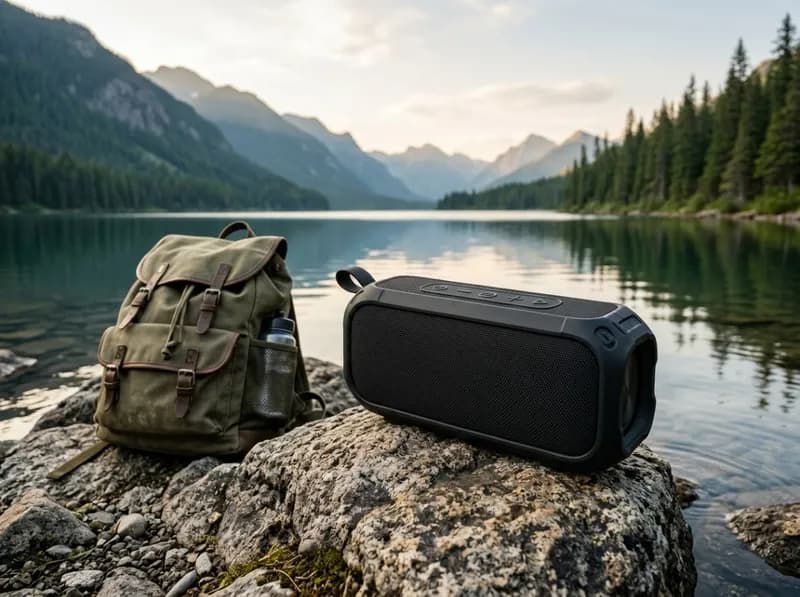
Choosing the best JBL Bluetooth speaker comes down to how you plan to use it. The JBL Go 5 is designed for personal listening in small spaces, the Clip 5 attaches to a backpack, and the Flip 7 is a versatile everyday speaker. The Charge 6 adds longer battery life and phone charging, while the Xtreme 5 and Boombox 4 deliver more sound for outdoor groups. If karaoke, microphone inputs, and lighting are priorities, the PartyBox range is a better fit.
There is one reason not to buy by model number alone: the newest JBL speaker is not always the best value. Independent measurements put the Flip 6 slightly ahead of the Flip 7 in one comparison database, while the Charge 6 loses the speakerphone microphones found on the Charge 5. Those differences matter if sound quality, calls, or price are more important to you than the latest features.
JBL's current U.S. portable lineup includes the Go 5, Clip 5, Grip, Flip 7, Charge 6, Xtreme 5, and Boombox 4. PartyBox speakers form a separate category for parties and karaoke, with the PartyBox 520 now serving as the headline model in that range.
Quick answer: Which JBL Bluetooth speaker should you buy?
Your main priority | Best place to start | Why it fits | What to consider |
|---|---|---|---|
An inexpensive speaker for personal listening | JBL Go 5 | Small enough for a desk, kitchen, or travel bag | Limited bass and volume |
Attaching a speaker to a backpack | JBL Clip 5 | Integrated carabiner and microphone for calls | Small mono sound |
Compact sound with ambient lighting | JBL Grip | Adds lighting and modern connectivity | Check whether a discounted Flip offers better value |
One speaker for everyday music and travel | JBL Flip 7 | Good balance of sound, size, and durability | Real-world battery life is much shorter than advertised |
Longer listening sessions and phone charging | JBL Charge 6 | Larger sound and built-in powerbank functionality | Heavier than the Flip; no speakerphone |
Outdoor gatherings and stronger bass | JBL Xtreme 5 | Higher output, shoulder strap, and replaceable battery | Large and expensive for casual listening |
Maximum bass and substantial portable output | JBL Boombox 4 | Large enclosure, strong bass, and long battery life | Heavy, expensive, and not the strongest value in its class |
Karaoke, microphones, and party lighting | JBL PartyBox | Built for parties and event-style playback | Too large for everyday carrying |
These are recommendations based on intended use, published specifications, and independent measurements, not a hands-on ranking. Prices and discounts can change the decision considerably. A discounted Flip 6 or Charge 5 may make more sense than paying full price for its successor, particularly if you do not need the newer connectivity features.
How this JBL speaker guide evaluates the lineup
Product specifications and U.S. pricing were checked against JBL's official product pages on October 20, 2026. Performance comparisons draw on published testing from RTINGS, SoundGuys, SpeakerRanking, and other independent measurement sources.
Manufacturer battery claims are identified separately from measured results. Where testing conditions differ or sources disagree, the figures are presented as approximate rather than treated as directly interchangeable. The guide does not claim first-hand testing.
Prices below are U.S. listing snapshots, not guaranteed current offers. Retailer promotions, colors, and stock can affect the price you actually pay.
Understanding the JBL Bluetooth speaker lineup
JBL Go 5: Best for personal listening
The JBL Go 5 is a palm-sized Bluetooth speaker for desks, hotel rooms, kitchens, and other situations where a larger speaker would be inconvenient.
JBL advertises up to 8 hours of playback, increasing to 10 hours with Playtime Boost. The Go 5 also offers Bluetooth 6.0, IP68 protection, ambient edge lighting, a seven-band app EQ, and AirTouch, which lets you tap two Go 5 speakers together for stereo pairing. USB-C lossless audio is another notable addition for a speaker this small.
JBL lists its output at 4.8W and its frequency range at 87Hz–20kHz. Those specifications help explain its limitations: the Go 5 is suited to nearby listening, not deep bass or filling a large outdoor space. It also lacks a microphone.
Buy the Go 5 if: you want a small speaker for podcasts, background music, or travel and can find it near its sale price of $39.95.
Skip it if: you regularly listen to bass-heavy music or want enough volume for a group. A Flip 7 is a more sensible starting point for those uses.
The Go 4 remains worth considering at a discount. The Go 5 adds lighting, Bluetooth 6.0, AirTouch, and an upgrade from IP67 to IP68 protection. If you only need basic personal listening, however, those additions may not justify a substantial price difference.
JBL Clip 5: Best for backpacks and hands-free carrying
The defining feature of the JBL Clip 5 is its integrated carabiner. Instead of taking up space inside a bag, it can attach to a backpack loop or strap, making it practical for walks, hikes, and day trips.
The Clip 5 has an IP67 rating, a five-band app EQ, Auracast support, and a microphone for calls. That microphone is unusual among JBL's current compact portables: the Go 5 and Flip 7 do not offer the same speakerphone function.
Its size still limits bass and coverage. The Clip 5 is a convenient personal speaker, not a smaller replacement for a Flip. Independent measurement databases have ranked it ahead of the Go 5 in one 2026-updated comparison, at No. 22 versus No. 28 among 61 speakers in the relevant class.
There is also a software limitation worth knowing: custom EQ is unavailable while the Clip 5 is participating in an Auracast group.
Buy the Clip 5 if: you want a speaker that attaches to your gear or need a compact JBL that can take calls.
Skip it if: the speaker will mostly sit on a table. In that case, a discounted Flip may deliver a more noticeable improvement in sound for the money.
JBL Grip: Best for compact sound with ambient lighting
The JBL Grip sits between the smallest carry speakers and the larger everyday models. Its main attraction is the combination of compact size, ambient lighting, app support, Auracast, and IP68 protection.
JBL advertises up to 12 hours of playback, plus another two hours with Playtime Boost. That makes 14 hours the combined headline figure, although the Boost mode has sound-quality compromises discussed later in this guide.
U.S. listings have shown a promotional price around $99.95 and a regular price of $129.95. Check the current listing before buying, as those prices may change.
Buy the Grip if: you want lighting effects and a compact speaker with more features than the basic pocket models.
Skip it if: sound quality per dollar is your main concern. A sale-priced Flip 7 may offer a more substantial audio upgrade at a similar price.
JBL Flip 7: Best all-round JBL portable speaker
For many buyers, the JBL Flip 7 is the most natural starting point. It is compact enough for travel, bedrooms, picnics, and everyday use, while offering fuller sound than the Go 5 or Clip 5.
Its features include IP68 water and dust protection, a drop-proof design, app-based EQ, Auracast, USB-C audio playback, and JBL's AI Sound Boost processing. Its enclosure still limits deep bass compared with the larger Charge and Xtreme models.
Two limitations deserve attention before you buy.
First, battery life. JBL advertises up to 14 hours, or 16 with Playtime Boost, but SoundGuys measured 6 hours and 16 minutes at 80dB. RTINGS reported roughly 5.6 hours under its testing conditions. For regular listening at substantial volume, plan around six hours rather than the advertised maximum.
Second, the Flip 7 has no microphone or speakerphone function. Calls need to go through your phone.
The independent sound measurements also complicate the upgrade story. In one large comparison database updated in 2026, the Flip 7 ranked No. 15 among 172 speakers in its class, slightly behind the Flip 6 at No. 13. The measured low-frequency extension was 59Hz for the Flip 7 versus 56Hz for the Flip 6, where the lower figure indicates deeper extension.
That does not make the Flip 7 a bad speaker. Its improvements include IP68 protection, Auracast, USB-C audio, and a new attachment system. The point is that its upgrades are more obvious in durability and connectivity than in measured sound performance.
Buy the Flip 7 if: you want one portable speaker for everyday listening and value its newer features.
Consider the Flip 6 if: it is heavily discounted and you do not need the newer connectivity options. The older model remains competitive on measured sound.
JBL Charge 6: Best for longer listening sessions and phone charging
The JBL Charge 6 is a better fit than the Flip 7 when listening time, fuller bass, and phone charging matter more than carrying weight. It has IP68 protection, a detachable handle, Auracast, USB-C audio, and powerbank functionality.
Its battery performance is more convincing than the Flip 7's in independent testing. One published test measured 23 hours and 12 minutes at 50% volume, 13 hours and 20 minutes at 75%, and around seven hours at maximum volume. The 24-hour advertised figure is therefore plausible at moderate volume, but not a reliable expectation at maximum output.
Full charging has been reported to take approximately 2.5–4 hours, depending on the source and conditions. In one published powerbank test, the Charge 6 took an iPhone 16 Pro from 18% to 64% in 90 minutes.
The biggest drawback is a feature removed from the previous generation: the Charge 6 no longer has the dual-microphone speakerphone found on the Charge 5.
Sound measurements show a similar distinction between refinement and bass depth. Both models measured 53Hz in one comparison database, while the Charge 6 improved its class ranking from No. 30 to No. 12. That suggests the newer speaker's advantage comes from tuning and other refinements rather than a deeper low-frequency extension.
Buy the Charge 6 if: you listen outdoors for long periods, share music with a group, or want to charge your phone from the speaker.
Consider the Charge 5 if: you need speakerphone calls, already own PartyBoost speakers, or find the older model at a substantially lower price.
The Charge 6 is regularly listed at $199.95, with official sale prices around $159.95. Discounts through other retailers have been lower, so check the street price before paying full retail.
JBL Xtreme 5: Best for backyard gatherings and outdoor groups
The JBL Xtreme 5 is a step up when a Charge 6 does not provide enough output or bass for your listening space. Its larger multi-driver design, shoulder strap, ambient lighting, built-in powerbank, and user-replaceable 9,444mAh battery make it better suited to campsites, backyards, and outdoor group listening.
One 2026 measurement database ranked the Xtreme 5 No. 2 among 105 speakers in its class, with maximum sound pressure measured at around 115dB. In that dataset, it also exceeded the Boombox 4's measured maximum output.
Those results need context. JBL rates the Xtreme 5's output higher when connected to AC power than when running on its battery, so the headline wattage does not describe every listening situation. Reviewers have also noted distortion at maximum Bluetooth volume. In one published comparison, USB-C lossless audio remained cleaner at maximum volume, making the wired connection useful if you intend to push the speaker hard.
Fast charging has been measured at roughly two hours of playback from a 10-minute charge. JBL advertises up to 24 hours of playback, or 28 hours with Playtime Boost, but treat the maximum figure as an optimistic target rather than a guarantee at high volume.
The package also omits a cable and adapter, unlike the Xtreme 4's packaging. The replaceable battery is a potential long-term advantage, but check replacement battery availability and cost before relying on it.
Buy the Xtreme 5 if: you need stronger outdoor sound, substantial bass, and more output than a Charge can provide.
Skip it if: portability and price matter more than volume. A Flip or Charge is easier to carry for everyday use.
If you already own an Xtreme 4, compare actual prices and the value of the new features before upgrading. The newer driver system, lighting, and connectivity are useful, but a model-number change alone is not a reason to replace a working speaker.
JBL Boombox 4: Best for bass presence and large outdoor gatherings
The JBL Boombox 4 is the largest model in JBL's regular portable Bluetooth speaker range. Its design combines two woofers, two tweeters, and three passive radiators, with IP68 protection, Auracast, Bluetooth LE Audio, and a replaceable battery.
It is designed for situations where sound presence and bass matter more than easy carrying. RTINGS' testing found strong output and bass, but also noted compression and pumping at maximum volume, below-average directivity, and higher latency when using the standard SBC Bluetooth codec. The low-latency LE Audio path requires a compatible Android phone.
Battery results vary considerably between sources. JBL advertises up to 28 hours, or 34 hours with Playtime Boost, while an RTINGS test-bench result has shown around 40 hours. Because testing conditions differ, these numbers should not be treated as a direct comparison. The consistent takeaway is that the Boombox 4 has substantial battery endurance.
Its price is harder to justify for every buyer. At an official list price of $549.95, it costs considerably more than the Xtreme 5. In one 2026 measurement database, the Boombox 4 ranked No. 20 among 100 speakers in its class, while the Xtreme 5 ranked No. 2 in its comparison group and measured louder in maximum SPL.
The Boombox 4 is therefore not automatically the better choice simply because it is bigger. Its case rests on bass depth, presence, and battery endurance rather than maximum loudness per dollar.
Buy the Boombox 4 if: you regularly host large outdoor gatherings and value its bass and endurance enough to accept the weight and price.
Consider the Xtreme 5 if: you want high output and strong bass with a better measured ranking in its class.
The Boombox 3 may also be worth considering if it is heavily discounted and you do not need the newer replaceable battery, Auracast, LE Audio, or revised drivers.
JBL PartyBox: Best for karaoke and proper party setups
A PartyBox is the better choice when a Bluetooth speaker needs to do more than play music. The range is built around parties and events, with features such as lighting, microphone inputs, and instrument connections on selected models.
The PartyBox Stage 320 remains available, with an official listing around $629.95. It has frequently appeared around $499.95 at Amazon and sold for $449.95 during Black Friday 2025. Its features include two 6.5-inch woofers, a light show, a telescopic handle, wheels, dual microphone/guitar inputs, and up to 18 hours of advertised battery playback.
The PartyBox 520 is the newer headline model, listed at $879.95 and rated at 400W. The PartyBox Ultimate 2, rated at 1,500W, is in pre-order.
One party-class comparison database ranked the Stage 320 No. 3 among 46 speakers in its category.
Choose a PartyBox if karaoke, microphones, instruments, and lighting are central to the event. For travel, picnics, or background music, a regular portable JBL is much easier to live with. The distinction is not simply which speaker is bigger or louder; it is whether you need a party system or a portable music speaker.
JBL speaker families compared
The table below compares the intended use of each family. Output and bass descriptions are relative editorial comparisons informed by published measurements, not guaranteed results at every volume or in every room.
Family | Main purpose | Portability | Relative output and bass | Standout feature | Main compromise |
|---|---|---|---|---|---|
Go | Personal listening | Pocketable | Low output, limited deep bass | Small size and low price | Can sound thin at high volume |
Clip | Bags and outdoor carry | Clips to gear | Low to modest output | Integrated carabiner and microphone | Limited bass and coverage |
Grip | Compact listening with extras | Small hand-carry size | Modest output | Ambient lighting | Price can overlap with better-value models |
Flip | Everyday use | Easy to pack | Moderate output; fuller than Go and Clip | Balance of sound and portability | Flip 7's battery results and lack of microphone |
Charge | Longer sessions and outdoor use | Noticeably heavier | Fuller bass and more headroom than Flip | Powerbank functionality | Extra weight; no microphone on Charge 6 |
Xtreme | Groups and larger outdoor spaces | Shoulder strap; best carried by car | High output and stronger bass | Replaceable battery, strap, and lighting | Heavy and expensive |
Boombox | Large outdoor gatherings | Handle, but bulky | Very high output and deep bass for its class | Long battery life and replaceable battery | Price, size, and weight |
PartyBox | Parties, karaoke, and events | Wheels or two-handed transport | Party-oriented high output | Lighting and microphone/instrument inputs | Not an everyday portable speaker |
JBL Go 5 vs. Clip 5 vs. Grip vs. Flip 7
These four models are all relatively compact, but each serves a different purpose. Price and microphone support can be just as important as size.
Model | U.S. price snapshot | Advertised battery life | Protection | 2026 measured class ranking* | Microphone |
|---|---|---|---|---|---|
Go 5 | $54.95 list; $39.95 sale | 8h; 10h with Boost | IP68 | No. 28/61 | No |
Clip 5 | $79.95 list; sale price varies | 12h; 15h with Boost | IP67 | No. 22/61 | Yes |
Grip | About $99.95 promotional; $129.95 regular | 12h; 14h with Boost | IP68 | Not available | No |
Flip 7 | $149.95 | 14h; 16h with Boost | IP68 | No. 15/172 | No |
*Rankings are from the cited 2026 comparison data and should be interpreted within the relevant class and testing methodology, not as a universal score across every speaker.
Which should you choose?
Choose the Go 5 for personal listening beside a desk, in a hotel room, or from a small bag.
Choose the Clip 5 if you want to attach the speaker to a backpack or need a microphone for calls.
Choose the Grip if its lighting and compact feature set justify the extra cost.
Choose the Flip 7 if music is a regular part of your day and you want a more substantial sound.
A common mistake is buying a Go or Clip for outdoor group listening and then finding that it cannot play loudly enough. If you expect to share music with several people, start with the Flip 7 instead of buying a small speaker and replacing it later.
JBL Flip 7 vs. Charge 6: Which is worth the upgrade?
The Flip 7 and Charge 6 share newer connectivity features, but the Charge 6 is designed for longer listening sessions and more demanding use.
Feature | JBL Flip 7 | JBL Charge 6 |
|---|---|---|
Regular U.S. price | $149.95 | $199.95 |
Advertised battery | Up to 14h; 16h with Boost | Up to 24h; 28h with Boost |
Independent battery results | 6h16m at 80dB (SoundGuys); about 5.6h (RTINGS) | 23h12m at 50%; 13h20m at 75%; about 7h at maximum |
Powerbank | No | Yes |
Microphone | No | No; Charge 5 had two |
Measured bass extension | 59Hz | 53Hz |
Portability | Smaller and lighter | Roughly twice the weight |
Protection | IP68; drop-proof design | IP68; drop-proof design |
Multi-speaker connection | Auracast | Auracast |
Best fit | Everyday listening and travel | Long sessions, groups, and phone charging |
The Charge 6 is worth the extra money if you regularly listen for long periods at moderate or high volume, need to charge a phone, or want fuller bass for group listening. Its measured battery life of more than 13 hours at 75% volume is especially useful for planning an outdoor day.
If you mostly listen alone at moderate volume, the Flip 7 is smaller and may be all you need. Just budget for a battery life closer to six hours under demanding listening conditions, not 14.
Do not compare these speakers using the advertised battery figures alone. Independent tests show a much larger gap between the Flip 7's claim and its measured runtime than between the Charge 6's claim and its results at moderate volume.
JBL Charge 6 vs. Xtreme 5 vs. Boombox 4
All three offer more capability than the Flip 7, but moving up the range is not simply a matter of paying more for progressively better performance.
Feature | Charge 6 | Xtreme 5 | Boombox 4 |
|---|---|---|---|
Regular U.S. list price | $199.95 | $399.95 | $549.95 |
Sale-price snapshot | $159.95 official; $119.95 at Woot | $349.95 | Varies by color |
Measured class ranking | No. 12 | No. 2/105 | No. 20/100 |
Measured maximum SPL | — | About 115dB | About 110dB |
Bass extension | 53Hz | Stronger output and bass | Deep bass presence |
Advertised battery | 24h; 28h with Boost | 24h; 28h with Boost | 28h; 34h with Boost; RTINGS test-bench result around 40h |
Powerbank | Yes | Yes | Check the current specification |
Replaceable battery | No | Yes, 9,444mAh | Yes |
Portability | Manageable daily carry | Shoulder strap, but heavy | Bulky; best for planned outings |
Best fit | Long sessions and phone charging | Backyards and campsites | Large gatherings and maximum bass presence |
The independent measurements challenge the assumption that the largest model must be the loudest or best-performing. In the cited dataset, the Xtreme 5 ranked higher and reached a higher maximum SPL than the Boombox 4.
The Boombox 4 still has a case for buyers who prioritize bass depth, presence, and battery endurance. But if you mainly want loud outdoor sound for the money, the Xtreme 5 is the stronger measured option in this comparison.
If you need microphones and a light show, compare the Boombox 4 with a PartyBox rather than assuming the largest regular portable speaker can replace a dedicated party system.
Is the newest JBL speaker worth buying?
Newer generations often add useful features, but the differences are uneven. The best choice depends on what changed, what you will actually use, and how much the older model costs.
Comparison | Meaningful changes | When to buy the newer model | When the older model still makes sense |
|---|---|---|---|
Go 5 vs. Go 4 | Lighting, Bluetooth 6.0, AirTouch, IP68 instead of IP67 | You want the new connectivity and protection | Go 4 is discounted and basic listening is enough |
Flip 7 vs. Flip 6 | IP68, Auracast, USB-C audio, new attachment system | You need the newer protection or connectivity | Flip 6 is heavily discounted and measured sound is your priority |
Charge 6 vs. Charge 5 | IP68, detachable handle, Auracast, improved measured ranking | You want the newer platform and refinements | Charge 5's microphones matter or it costs considerably less |
Xtreme 5 vs. Xtreme 4 | New driver system, lighting, connectivity, battery features | You want the new feature set | Xtreme 4 is discounted enough to offset the differences |
Boombox 4 vs. Boombox 3 | Replaceable battery, Auracast/LE Audio, revised drivers | You need the newer features | Boombox 3 is substantially cheaper |
JBL Flip 6 vs. Flip 7: The older speaker remains competitive
In a 2026-updated measurement database covering 172 speakers in the relevant class, the Flip 6 ranked No. 13 and the Flip 7 ranked No. 15. Measured bass extension also favored the Flip 6, at 56Hz compared with 59Hz for the Flip 7.
The Flip 7 still has meaningful advantages: IP68 protection, Auracast, USB-C audio, and a revised attachment system. Those improvements are more about durability and connectivity than a measurable leap in sound quality.
If the Flip 6 is available around $79.95–$99.95 through a discount retailer, it deserves serious consideration. At a much smaller price difference, the Flip 7's newer features may be worth paying for.
JBL Charge 5 vs. Charge 6: Better refinement, fewer call features
The Charge 6's ranking improvement from No. 30 to No. 12 in one comparison database points to better tuning and overall refinement. Its measured bass extension, however, remains at 53Hz, the same as the Charge 5.
The feature trade-off is more straightforward: the Charge 5 has a dual-microphone speakerphone, while the Charge 6 removes it. If you regularly take calls through a speaker, the newer model is not an automatic upgrade.
The Charge 5 remains officially listed at $139.95 in the price snapshot used here. At that price, it is a sensible choice for call-heavy users; the Charge 6 is more appealing if its newer platform and refinements matter more.
There is also a compatibility issue. The Charge 5 uses PartyBoost, while the Charge 6 uses Auracast. They cannot pair with each other. If you already own a Charge 5 and want a second speaker for linked playback, check compatibility before buying a newer model.
JBL Xtreme 4 vs. Xtreme 5
The Xtreme 5 brings a revised driver system, ambient lighting, newer connectivity, and a user-replaceable battery. These are practical differences, but they do not necessarily justify replacing an Xtreme 4 that already meets your needs.
Compare current street prices and check what is included in the package. The Xtreme 5 does not include a cable and adapter in its box, unlike the Xtreme 4's packaging.
JBL Boombox 3 vs. Boombox 4
The Boombox 4 adds a replaceable battery, Auracast, Bluetooth LE Audio, and revised drivers. Those changes matter if you need the newer connectivity or want the battery-replacement option.
If your priority is strong bass and high output rather than the latest connection standard, a substantially discounted Boombox 3 may be the better purchase.
JBL speaker battery life: Advertised vs. measured
Battery life is one of the most important things to check when choosing a portable Bluetooth speaker. JBL's advertised playback figures are obtained under specific conditions, and independent tests at higher listening levels can produce very different results.
Speaker | JBL's advertised playback | Independent measurements | Practical interpretation |
|---|---|---|---|
Go 5 | Up to 8h; 10h with Boost | No comparable figure included here | Expect the best results at low volume |
Clip 5 | Up to 12h; 15h with Boost | No comparable figure included here | The maximum depends on listening conditions |
Flip 7 | Up to 14h; 16h with Boost | SoundGuys: 6h16m at 80dB; RTINGS: about 5.6h | Plan around six hours at substantial volume |
Charge 6 | Up to 24h; 28h with Boost | 23h12m at 50%; 13h20m at 75%; about 7h at maximum | Strong endurance at moderate volume; less at high output |
Xtreme 5 | Up to 24h; 28h with Boost | Fast charging measured at about 2h playback from 10 minutes | The headline runtime is an optimistic target for loud group use |
Boombox 4 | Up to 28h; 34h with Boost | RTINGS test-bench result around 40h | Sources differ, but both indicate excellent endurance |
Two rules make these figures easier to use.
First, compare independent battery tests at similar volumes whenever possible. A result measured at 50% volume is not directly comparable with one measured at 80dB.
Second, allow extra battery capacity for outdoor group listening. If you need music for most of a day at fairly high volume, the Charge 6's measured 13 hours and 20 minutes at 75% volume is a more useful planning figure than its advertised 24 hours.
What does JBL Playtime Boost do to sound quality?
Playtime Boost extends the advertised runtime, but it comes with a noticeable trade-off. Independent reviewers have criticized the mode for reducing bass, disabling app EQ, and making the sound thinner. One review compared a Go speaker in Boost mode to an AM radio.
There is also a usability limitation: Playtime Boost must be enabled through the JBL Portable app rather than a dedicated physical button.
Treat it as a way to stretch the remaining battery in a pinch, not as the basis for choosing a speaker. If you care about bass and tonal balance, the regular listening mode is the better default.
Which JBL speakers have a microphone for calls?
Speakerphone support is easy to overlook when comparing Bluetooth speakers, but JBL has changed this feature between generations.
Model | Speakerphone microphone |
|---|---|
JBL Go 5 | No |
JBL Clip 5 | Yes |
JBL Flip 7 | No |
JBL Charge 6 | No |
JBL Charge 5 | Yes, dual microphones |
JBL Boombox 4 | No |
The Clip 5 is the notable exception among JBL's current small portables. The Charge 5 is also worth considering if calls are important, because the Charge 6 dropped its predecessor's dual microphones.
Do not assume every model in a product family retains the same features. Check the exact model's current specification before buying if you expect to use the speaker for conference calls or hands-free conversations.
JBL vs. Bose vs. Sony vs. budget Bluetooth speakers
JBL has a broad portable lineup, but it is not automatically the best option at every price. The alternatives below offer different sound profiles or features that may be more important than brand loyalty.
Bose SoundLink Flex 2: A premium compact alternative that competes with the Charge-class price range. The comparison used for this guide lists it at $279, although current pricing should be checked.
Sony ULT Field 1: A Flip-class alternative listed at $129. Its ULT-oriented sound emphasizes bass more aggressively than JBL's general tuning.
Anker Soundcore Motion 300: Listed at $79.99 in the cited price snapshot, it offers LDAC support and a speakerphone — two features missing from the $149.95 Flip 7.
EarFun UBoom L: Listed at $50 and highly rated in some measured comparisons of its size class. It is worth considering if you want to spend less without giving up too much performance.
UE Wonderboom 4, Marshall Emberton III, and Tribit StormBox Micro 2: Other compact alternatives with different designs, sound characteristics, and portability trade-offs.
For broader context, What Hi-Fi's September 2026 awards named the Charge 6 its best overall JBL speaker and the Flip 7 its best portable JBL. RTINGS' testing has favored the Boombox 4 as the best-performing JBL it has measured. These are different kinds of recognition, not proof that one JBL model is best for every buyer.
The practical takeaway is simple: choose JBL if you like its rugged design, punchy sound, and broad lineup. If features per dollar matter most, compare the Anker and EarFun options before paying full price for a Flip 7 without a microphone.
Where and when to buy JBL Bluetooth speakers
JBL's list prices are useful reference points, but sale prices often change the value calculation.
The following examples come from the price snapshots available for this guide:
Black Friday 2025: The Charge 6 reached $129.95, the Flip 6 $99.95, and the PartyBox Stage 320 $449.95.
Woot listings: The Flip 7 has appeared at $89.95, the Flip 6 at $79.95, and the Charge 6 at $119.95.
Official promotions in October 2026: The Charge 6 was listed at $159.95, the Charge 5 at $139.95, and the Go 4 had a discount of around 20%.
Black Friday and Prime Day have historically brought some of the deepest discounts, with older models often seeing further reductions in the months after a successor launches. Historical discount levels are not guarantees of future offers, so compare the actual price before buying.
Check JBL's official store, Amazon price history, and discount retailers such as Woot. Also compare the previous generation. If the Flip 6 is $89.95 and the Flip 7 is $149.95, the decision is not simply whether the newer model is better. It is whether its extra features justify the difference for your use.
Which JBL Bluetooth speaker features actually matter?
Water resistance: IP67 vs. IP68
An IP rating describes protection against dust or other solid particles and water under defined test conditions. The Go 5, Grip, Flip 7, Charge 6, Xtreme 5, and Boombox 4 are listed with IP68 protection, while the Clip 5 has an IP67 rating.
Neither rating means a speaker is immune to every kind of water exposure. Saltwater, sand, soap, worn seals, and physical damage can affect protection. Follow JBL's care instructions and rinse and dry the speaker after beach use where appropriate. Do not interpret an IP rating as permission for unrestricted underwater playback.
For most buyers, the more useful question is whether the speaker can tolerate the conditions in which it will actually be used: splashes by a pool, rain during a walk, or dust at a campsite.
Powerbank functionality
The Charge 6 and Xtreme 5 can charge a phone. That feature is valuable if you spend long periods outdoors and want one device to handle both music and emergency charging.
It does, however, use energy from the speaker's battery. Buy for the combination of playback and charging rather than treating powerbank functionality as a free extra.
Ambient lighting
The Go 5, Grip, and Xtreme 5 include edge lighting. It can add atmosphere during evening use, but it does not improve audio quality.
If your priority is sound per dollar, do not pay extra for lighting unless you know you will use it.
App controls and EQ
The JBL Portable app provides EQ and other settings on supported models. EQ can adjust tonal balance, but it cannot make a small speaker enclosure reproduce the deepest bass of a larger one.
There are also model-specific restrictions. The Clip 5 loses custom EQ while participating in an Auracast group, and Playtime Boost disables EQ while active.
Auracast vs. PartyBoost: Can JBL speakers pair across generations?
Not all JBL Bluetooth speakers can link together. The connection system matters if you plan to buy a second speaker for stereo or group playback.
The current lineup covered here uses the following systems:
Auracast: Flip 7, Charge 6, Xtreme 5, Boombox 4, Clip 5, and Grip.
PartyBoost: Flip 6, Charge 5, and other compatible earlier models.
Auracast and PartyBoost are incompatible. A Charge 5 will not link with a Charge 6, even though the models belong to the same family.
Stereo pairing can be more restrictive than general group playback. The Go 5, for example, supports stereo pairing with another Go 5, not with a Clip 5. If adding a second speaker is part of your plan, check both models' supported connection systems before making the first purchase.
USB-C audio, lossless playback, and AI Sound Boost
The Flip 7, Charge 6, Xtreme 5, and Boombox 4 support USB-C audio playback, including lossless playback in compatible setups.
This can be useful at high volume. Reviewers have reported that the Xtreme 5 remains cleaner at maximum volume over USB-C than over Bluetooth, where distortion has been noted. For casual listening at moderate volume, Bluetooth is usually sufficient; for demanding playback, the wired option can be worthwhile.
JBL's AI Sound Boost processing on newer models adjusts output near clipping to help keep loud playback cleaner. It is part of the newer platform's appeal, alongside updated connectivity and durability features.
Replaceable batteries
The Xtreme 5 and Boombox 4 have user-replaceable batteries. On the Xtreme 5, teardown documentation describes access using Torx screws.
A replaceable battery can extend the useful life of a speaker, but it is only a practical advantage if replacement parts are available at a reasonable cost. Check battery availability before treating the feature as a long-term ownership benefit.
Common JBL Bluetooth speaker buying mistakes
Expecting deep bass from the smallest model. The Go 5 and Clip 5 are designed for portability. If you need sound for an outdoor group, start with the Flip or Charge range.
Paying for a Boombox when an Xtreme or Charge would be enough. The Boombox 4 makes sense for its bass presence and endurance, not necessarily for maximum loudness per dollar.
Choosing by wattage alone. Rated power does not tell the whole story about loudness, distortion, or sound quality. Driver design, enclosure, tuning, and power source all matter.
Treating advertised battery life as a guarantee. The Flip 7's measured runtime can be around 40% of its headline claim at a demanding listening level, while the Boombox 4 has exceeded its advertised figure in one test-bench result. Conditions matter.
Relying on Playtime Boost for normal listening. It extends runtime at the expense of bass and EQ flexibility. Treat it as a backup mode.
Assuming water resistance means unrestricted underwater use. IP ratings apply under defined test conditions, and wear or exposure to other substances can affect protection.
Assuming all JBL speakers can pair together. Auracast and PartyBoost are incompatible. Verify the exact connection system before buying a second speaker.
Overlooking microphone support. The Flip 7, Charge 6, Go 5, and Boombox 4 lack speakerphone microphones. The Charge 6 also removes the feature from the Charge 5.
Paying full price for the newest generation without checking its predecessor. The Flip 6 and Charge 5 remain sensible options for specific buyers, particularly when discounted.
Buying a regular portable speaker for karaoke. If microphones, instruments, and party lighting are essential, choose a PartyBox rather than expecting a Boombox to fill the same role.
Frequently asked questions
Which JBL Bluetooth speaker is best for most people?
The JBL Flip 7 is a sensible starting point for everyday music, travel, and small gatherings. Its sound and portability are well balanced, but its measured battery life is closer to six hours at substantial volume than the advertised 14 hours, and it has no microphone.
If you need longer playback, fuller bass, or phone charging, the Charge 6 is the more capable choice. What Hi-Fi's September 2026 awards named it the best overall JBL speaker.
Is the JBL Flip 7 better than the Flip 6?
Not in every respect. In one 2026 measurement database, the Flip 6 ranked slightly higher and showed marginally deeper bass extension. The Flip 7 offers newer features, including IP68 protection, Auracast, USB-C audio, and an updated attachment system.
Choose the Flip 7 if those upgrades matter. If the Flip 6 is substantially cheaper and you care more about measured sound performance, the older model remains a reasonable buy.
How long does the JBL Flip 7 battery really last?
SoundGuys measured 6 hours and 16 minutes at 80dB, while RTINGS measured roughly 5.6 hours under its testing conditions. The advertised maximum is 14 hours without Playtime Boost.
For listening at substantial volume, plan around six hours and allow extra battery capacity if you need music throughout a full day.
What does JBL Playtime Boost do to sound quality?
Playtime Boost extends playback time but reduces bass, disables app EQ while active, and must be enabled through the JBL Portable app. Independent reviewers have generally treated it as an emergency feature rather than a mode for regular listening.
Can I take calls on the JBL Flip 7 or Charge 6?
No. Neither has a microphone for speakerphone calls. The Charge 5 had dual microphones that were removed on the Charge 6. The Go 5 and Boombox 4 also lack a microphone, while the Clip 5 is a notable compact JBL model that supports calls.
Is the JBL Charge 6 bass better than the Charge 5?
The measured bass extension in one comparison database is the same at 53Hz. The Charge 6's improvements are more about tuning, refinement, protection, and connectivity than deeper bass.
If you want a substantial move up in bass output, consider the Xtreme 5 rather than assuming the Charge 6's newer generation means dramatically deeper bass.
JBL vs. Bose vs. Sony: Which brand should I choose?
At comparable sizes and prices, the Bose SoundLink Flex 2 and Sony ULT Field 1 are alternatives worth comparing. Bose offers a different sound presentation, while Sony's ULT line emphasizes bass.
For features per dollar, the Anker Soundcore Motion 300 offers LDAC and a speakerphone at a lower listed price than the Flip 7, and the EarFun UBoom L is another budget option with strong published measurement results.
Choose JBL if its rugged design, punchy sound, and range of sizes fit your needs. Compare alternatives if you want the most features for the money or have a specific sound preference.
Is the JBL Boombox 4 worth $550?
It can be worth the price if deep bass, sound presence, and battery endurance are your priorities. Independent testing finds strong output, but also compression at maximum volume. One 2026 comparison database ranked it No. 20 among 100 speakers in its class and questioned its value.
The Xtreme 5 measured louder and ranked higher in its comparison group. Consider the Boombox 4 for its bass and endurance, not simply because it is the larger model.
Is the JBL Charge 5 still worth buying in 2026?
Yes, especially if you want speakerphone calls or already own compatible PartyBoost speakers. It retains the dual microphones removed from the Charge 6, and the two models have the same measured bass extension in one comparison database.
The Charge 6 is the better fit if you want Auracast, newer protection, and its other refinements. Compare sale prices before deciding.
Can the JBL Flip 6 pair with the Flip 7, or the Charge 5 with the Charge 6?
No. The Flip 6 and Charge 5 use PartyBoost, while the Flip 7 and Charge 6 use Auracast. These systems are incompatible, so the speakers cannot link together through those features.
Stereo pairing is more restrictive still and generally requires compatible matching models. Check the specific connection requirements before buying a second speaker.
Does USB-C lossless audio make a difference on JBL speakers?
It can, particularly at high output. Reviewers have reported cleaner maximum-volume playback from the Xtreme 5 over USB-C than over Bluetooth. At moderate volumes, Bluetooth is usually convenient and sufficient for casual listening.
You will need a compatible source and connection to use USB-C audio playback.
When is the best time to buy a JBL speaker?
Black Friday and Prime Day are worth watching, and older generations often receive deeper discounts after a successor launches. In the price snapshots used here, the Charge 6 reached $129.95 during Black Friday 2025, while the Flip 6 reached $99.95.
Those are historical examples, not guarantees for 2026. Check the current official price, retailer discounts, and the previous generation's price before buying.
Final recommendation: Which JBL speaker should you choose?
The best JBL Bluetooth speaker is the smallest model that comfortably meets your needs, bought at a price that makes sense.
Under about $60: Start with the Go 5 for personal listening, or consider a discounted Go 4 if its basic features are enough.
For backpack attachment or calls on a small JBL: Choose the Clip 5.
For compact size and ambient lighting: Consider the Grip, preferably at a discount.
For everyday music and travel: The Flip 7 is a balanced option. Compare it with a discounted Flip 6 before paying full price.
For longer outdoor listening and phone charging: Choose the Charge 6. The Charge 5 remains attractive if you need a speakerphone.
For stronger sound at a backyard gathering or campsite: The Xtreme 5 is a strong option, with impressive results in the cited independent measurements.
For deep bass and long battery life at large gatherings: Consider the Boombox 4, but weigh its price and size against the Xtreme 5.
For karaoke, microphones, and party lighting: Choose a PartyBox, with the Stage 320 and PartyBox 520 serving different budget and feature needs.
The biggest mistake is choosing a JBL speaker based only on its size, wattage, advertised battery life, or generation number. Think about how loud you listen, how long you need the battery to last, whether you need a microphone, and whether you plan to link multiple speakers. Then compare the current price with the previous generation.
That approach will usually lead to a better purchase than simply choosing the newest or most expensive JBL speaker.
Related GuidesMore →
Best Lenovo Legion Gaming Laptops in 2026: Which Model Should You Buy?
Lenovo Legion's 2026 lineup includes gaming laptops, handheld PCs, Android tablets, desktop towers, and gaming monitors. This guide explains the differences between the Legion 5, Pro 5, 7i, Pro 7i, and flagship 9i, along with the newer 7a models and the entry-level LOQ series. Compare GPU power, displays, upgrade options, U.S. prices, and independent test results to find the right system for your budget and gaming needs.
Best 75% Keyboards in 2026: Top Picks for Gaming, Work, and Everyday Use
Looking for the best 75% keyboard for gaming, work, or everyday typing? This guide compares six keyboards across different budgets and priorities, including the Keychron V1 Max, EPOMAKER x AULA F75, WOBKEY Rainy75, NuPhy Air75 V3, Wooting 80HE, and ASUS ROG Azoth. Compare dimensions, connectivity, switch compatibility, battery claims, customization, and approximate U.S. prices to find a keyboard that fits your workflow and desk.
2026 Smartwatch Innovations: Which New Features Are Worth Buying?
Smartwatches in 2026 bring new readiness scores, AI health coaches, dual-frequency GPS, sleep apnea notifications, and longer battery life—but not every upgrade is worth the money. This guide compares the latest Apple Watch, Samsung Galaxy Watch, and Google Pixel Watch models, separating manufacturer claims from independent testing. Find out which features justify an upgrade, which require a subscription, and when keeping your current watch is the smarter choice.