How to Choose Model Nippers: Single-Blade vs. Double-Blade
Choosing the right model nippers depends on the materials you cut, the size of the gates, and how clean you want the finished parts to look. This buying guide explains the differences between single-blade and double-blade nippers, when a two-tool workflow makes sense, and which features matter most. Compare options from GodHand, DSPIAE, and Tamiya, including blade geometry, jaw clearance, cutting limits, and price.
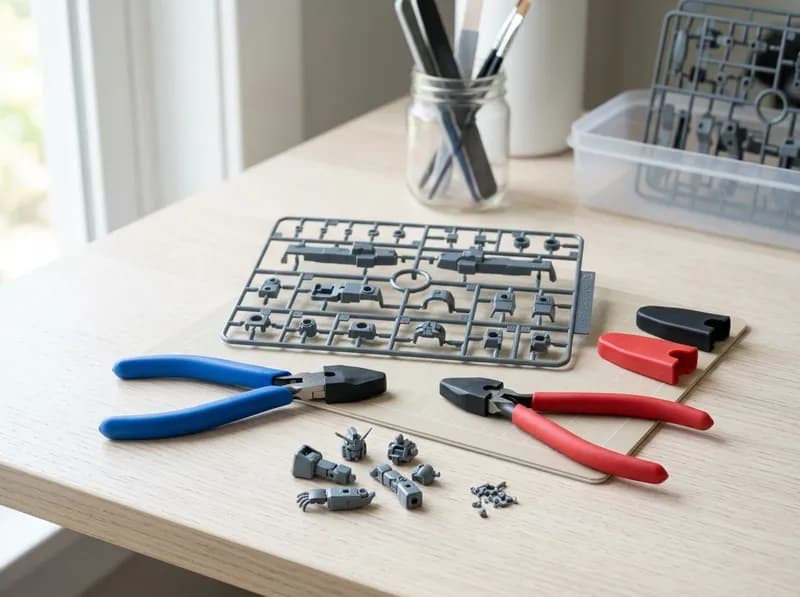
The best model nippers depend on what you need them to do. A pair for cutting parts off plastic runners has a different job from a precision nipper used to trim visible gate marks on a finished model.
For most beginners, a conventional double-blade nipper is the best place to start. It handles routine cuts, costs less than many specialist tools, and is less stressful to use while you learn how different plastics and gate connections behave. If you build Gunpla or plastic model kits regularly and want cleaner cuts with less sanding, a single-blade finishing nipper is worth considering.
You do not necessarily need both. The decision comes down to how often you build, how much cleanup you are willing to do, and whether the gates on your models are difficult to reach.
The Quick Answer: Which Model Nippers Should You Buy?
Your main task | Best starting point | Why |
|---|---|---|
Removing parts from plastic runners | General-purpose double-blade nippers | Suitable for routine cuts and a sensible choice for a first tool |
Trimming visible gate marks | Precision single-blade nippers | Can leave less material to clean up when used correctly |
Building Gunpla or model kits regularly | Two-nipper setup | Use a general-purpose cutter for removal and a precision nipper for finishing |
Cutting resin, metal, or unusually thick gates | Nippers specifically rated for that material | Plastic-model nippers are not automatically suitable for other materials |
Working in tight spaces | Slim-jaw or pointed nippers | Narrow tips can reach gates that wider jaws cannot access easily |
Cutting left-handed | A model designed for left-handed use, where available | Blade and supporting-jaw orientation can affect handling |
For most beginners, a double-blade nipper is the more practical first purchase. A premium single-blade nipper is an upgrade for cleaner finishing, not a requirement for building good-looking models.
If you buy only one pair, choose a model rated for the plastic and gate sizes you encounter. If you later find that gate cleanup takes too much time, add a dedicated finishing nipper.
Single-Blade vs. Double-Blade Model Nippers
The main difference is how the blades meet the material.
A double-blade nipper closes two cutting edges toward each other. This makes it a useful general-purpose tool for removing parts from runners, particularly when you plan to trim the remaining gate material afterward. A robust double-blade model can also be a sensible choice for a first cut through a thicker gate, provided the manufacturer allows it.
A single-blade nipper uses one cutting edge against a supporting jaw. Rather than squeezing the material between two cutting edges, the blade shears it against the support. This design can produce a cleaner cut and leave less material for sanding or scraping.
The trade-off is durability. Some precision single-blade nippers have very thin edges that can chip if you twist the tool, use it as a lever, or cut material beyond its rated capacity.
Neither design is automatically better for every task. Some double-blade nippers have narrow jaws for tight spaces, while single-blade models vary in blade thickness and intended use. Compare the specifications of the exact model rather than judging by the blade style alone.
Why Many Builders Use Two Nippers
A two-nipper setup separates part removal from final trimming.
Remove the part from the runner. Use a general-purpose double-blade nipper, leaving a small gate stub rather than cutting directly against the part when the connection is thick or awkward.
Trim the remaining gate. Use a precision single-blade nipper if the material and gate size fall within its stated limits.
Finish only where needed. Scrape or sand any remaining mark rather than removing more material than necessary with the cutting tool.
This approach keeps the precision blade away from the most demanding part of the cut. It also lets you start with an affordable tool and upgrade only if you find that cleaner gate marks make a meaningful difference to your builds.
What Does a Two-Nipper Setup Cost?
The following prices were observed on October 14, 2026. They are retailer listings, not guaranteed checkout prices, and may change with promotions, shipping, and stock.
Nipper | Retailer | Observed price |
|---|---|---|
GodHand PN-125 | $10.99 sale price | |
GodHand PN-125 | $12.67 | |
GodHand SPN-120 Ultimate Nipper 5.0 | $61.75 | |
GodHand SPN-120 Ultimate Nipper 5.0 | $61.75 | |
DSPIAE ST-A 3.0 | $34.99 | |
DSPIAE ST-A 3.0 | $39.95 |
Pairing the PN-125 with the SPN-120 comes to about $73–$75 before tax and shipping, using the listed prices above. The PN-125 paired with the DSPIAE ST-A 3.0 comes to roughly $46–$53.
The less expensive combination may be enough if you want to try a two-nipper workflow without spending heavily on a finishing tool. Before ordering, compare the final delivered price and confirm that the listing matches the exact model you want.
What to Look for in the Blade and Jaws
Blade Thickness and Cutting Geometry
A thin blade can reach narrow gates and make close finishing cuts. A thicker blade may tolerate more demanding work, but thickness alone does not tell you how a nipper will perform. Blade geometry, heat treatment, the supporting jaw, and the intended material all matter.
Be cautious about choosing a nipper based on product photos or claims such as “ultra-sharp.” Those descriptions do not establish its cutting capacity or resistance to damage.
For single-blade nippers, the supporting jaw is particularly important. GodHand's Ultimate Nipper FAQ explains that the standard SPN-120 is configured for right-handed use, with the cutting edge above the supporting jaw. The left-handed version reverses that arrangement.
Follow the instructions for your exact model. A grip or cutting direction that works for one nipper may not be appropriate for another.
Jaw Clearance and Tip Shape
Jaw shape matters when gates sit close to other parts or in recessed areas.
Slim, pointed jaws can reach narrow spaces more easily than wider jaws. If access is your main problem, a pointed double-blade cutter may be more useful than a premium single-blade nipper with a broader head.
Tamiya's Sharp Pointed Side Cutter models are designed around this kind of access. The 74035 and 74123 have separate product numbers and listings, so check the SKU rather than assuming that similar product names refer to the same tool.
Steel, Hardness, and Edge Durability
Steel grade, heat treatment, edge geometry, and blade thickness all affect how a nipper cuts and how well its edge holds up.
A hardness figure is only one specification. It cannot, by itself, tell you whether a thin edge will chip, how cleanly it will cut a particular gate, or how long it will remain sharp in regular use.
For model nippers, the more useful questions are whether the tool is intended for your material, whether its cutting capacity suits your gates, and how carefully you are prepared to handle it.
Model Nippers Worth Considering
These recommendations cover different jobs rather than forming a lab-tested performance ranking. Prices were checked on October 14, 2026, where stated. Confirm current stock, specifications, and checkout prices before purchasing.
GodHand PN-125: A Practical First Nipper
The GodHand PN-125 is a double-blade nipper intended for routine plastic-model work. GodHand lists a cutting capacity of up to 3 mm for specified plastics.
Its main appeal is straightforward: it gives beginners a general-purpose tool without requiring them to commit to an expensive precision blade. It is also a useful first-cut option in a two-nipper setup, where a small gate stub can be left for later trimming.
GodHand USA listed the PN-125 at $12.67, while USA Gundam Store showed a sale price of $10.99 against a regular price of $11.99 at the time checked.
The PN-125 is not designed to replace a dedicated finishing nipper in every situation. If your priority is cutting visible gates as close to the surface as possible, a second tool may still be worthwhile.
Tamiya 74035: Pointed Jaws for Narrow Spaces
The Tamiya 74035 Sharp Pointed Side Cutter is a double-blade cutter with thin, pointed jaws intended for removing delicate plastic parts from sprues.
Tamiya USA identifies the blade material as chrome-vanadium alloy and describes the blades as hand-finished. The pointed shape is useful when a gate sits close to an adjacent part or when a wider cutter cannot fit comfortably into the available space.
This is an access-focused tool, not a substitute for a single-blade finishing nipper. If you are comparing it with other Tamiya cutters, verify the product number and the delivered price rather than relying on a marketplace title.
Tamiya 74123: Another Slim-Jaw Option
The Tamiya 74123 Sharp Pointed Side Cutter is a separate model with its own product listing. Tamiya USA describes it as a 115 mm tool with slim jaws for reaching small parts where clearance is limited.
Do not assume that the 74123 and 74035 are interchangeable just because their names are similar. Check the exact SKU on the retailer page and packaging. If you are choosing between them, compare the jaw shape, included protection, and current price rather than assuming that a product described as newer is necessarily the better fit.
Tamiya 74129: For Thicker Plastic Gates and Certain Soft Metals
The Tamiya 74129 Craft Side Cutter is intended for a different range of work from a fine finishing nipper. Tamiya USA positions it for thicker plastic gates and softer metals such as brass, and describes its steel blades as having an anti-rust treatment.
That makes the 74129 worth considering when your work goes beyond delicate plastic gates. It does not mean the tool is suitable for every metal, wire, photo-etched part, or resin component.
Follow the manufacturer's material and thickness limits. When shopping, compare listings by the exact 74129 product number.
DSPIAE ST-A 3.0: A More Affordable Single-Blade Nipper
The DSPIAE ST-A 3.0 is a single-blade finishing nipper for builders who want cleaner gate cuts without moving directly to a premium flagship model.
Newtype described it as the current version compared with the previous 2.0, and USA Gundam Store also identifies its listing as the ST-A3.0. The observed prices were $34.99 at USA Gundam Store and $39.95 at Newtype. DSPIAE's own store listed it at $33 but showed it as sold out when checked.
That price difference makes it worth comparing retailer stock and shipping costs before ordering. The lowest displayed price is not always the lowest delivered price.
Use the ST-A 3.0 for controlled finishing cuts within its rated limits, not for forcing a thick runner connection. If you want a closer look at its strengths and limitations, see the DSPIAE ST-A 3.0 review. For a direct comparison with GodHand's premium option, read the DSPIAE ST-A 3.0 vs. GodHand SPN-120 guide.
GodHand SPN-120 Ultimate Nipper 5.0: For Precision Finishing
The GodHand SPN-120 Ultimate Nipper 5.0 is a thin single-blade nipper designed for clean cuts on plastic-model gates.
GodHand USA and USA Gundam Store both listed it at $61.75 when checked. Their product pages give the same stated capacity guidance: up to 3 mm for specified PS, PP, ABS, and PE plastics, and up to 1 mm for transparent or translucent material. A protective cap is included.
Those figures are limits for the specified materials, not a guarantee that every gate of that diameter can be cut flush against a finished part. A thick or awkward connection is still better handled with a general-purpose nipper first.
GodHand warns against twisting the blade or cutting material beyond its stated capacity. The SPN-120 is most relevant if you build regularly, spend a lot of time cleaning up gate marks, and are willing to handle a delicate cutting edge carefully.
GodHand PN-120 Blade One: A More Robust Single-Blade Option
GodHand describes the PN-120 Blade One as more durable and easier to handle than its Ultimate nippers, positioning it as an option for builders buying their first single-edge tool.
The U.S. listing gives a capacity of up to 3 mm for PS, PP, ABS, and PE, and up to 2 mm for transparent or semi-transparent material. These are model-specific specifications and should not be applied to other single-blade nippers.
When comparing the PN-120 Blade One with the SPN-120, focus on the manufacturer's stated differences in blade robustness and material limits. Do not assume that either model will produce better results in every situation. Read the instructions for both and consider whether you need a finishing tool or a cutter for more demanding initial cuts.
GodHand LTN-120 Lightning Nipper: For Careful Finishing Work
The GodHand LTN-120 Lightning Nipper is a single-edge nipper designed for plastic-model gates. GodHand describes it as an ultra-thin, sharp finishing blade.
Its handling requirements make it a specialist choice rather than the best one-tool solution for a beginner. The product page warns against twisting the blade or levering the tool free after a cut. It also advises working near the center of the blade instead of relying on the thinner tip.
Check the current listing for price and availability. If you are still learning how much pressure to apply or how much material to leave around a gate, start with a conventional cutter and consider a precision blade once your technique is more consistent.
GodHand PNS-135: A Stainless-Steel Single-Blade Nipper
The GodHand PNS-135 is a stainless-steel single-blade nipper for plastic, with a blade-lock function.
Stainless steel can be useful if corrosion is a concern, but it does not mean the tool is maintenance-free or incapable of rusting. Wipe it dry after use and follow the manufacturer's care instructions.
Consider the PNS-135 if you specifically want a stainless-steel single-blade tool. Do not assume that its construction makes it suitable for metal, or that it has a higher cutting capacity than another model without checking the published specifications.
GodHand GH-RCN-120: For Resin Model Kits
The GodHand GH-RCN-120 is a double-blade nipper designed specifically for resin-kit gates.
GodHand's Japanese direct shop listed a 3 mm cutting capacity for resin gates and a price of ¥6,050. Gundam Planet listed it at $84, while GodHand USA showed $83.33. The U.S. collection page displayed a lower maximum in its price filter, so the individual product listing is the more useful reference for the listed price.
This is the model to investigate if you work with resin kits rather than ordinary plastic runners. Gundam Planet also markets it for 3D-printed materials, but compatibility depends on the material and gate size. Check the manufacturer's instructions before using it on a particular resin or print.
A nipper intended for resin gates should not be treated as a universal cutter for every modeling material.
Left-Handed Builders: Check the GodHand SPN-120-L
Standard blade orientation can make a difference if you cut left-handed. GodHand's FAQ confirms the SPN-120-L, a left-handed version with the cutting and supporting jaws reversed from the standard arrangement.
If you are left-handed and considering the SPN-120, check the model suffix before ordering. The standard SPN-120 is configured for right-handed use, so a listing that simply says “Ultimate Nipper” is not enough to confirm that you have the correct version.
How to Buy Model Nippers Safely
Precision nippers are worth buying from a retailer that identifies the exact model and provides a clear return policy. This matters particularly for premium tools, where damage to a thin cutting edge can make the tool unsuitable for finishing work.
There have been community warnings about counterfeit GodHand nippers and retailer discussions about counterfeit products. However, GodHand's current public FAQ does not provide a comprehensive photo-by-photo authentication checklist.
A product photo, sticker, or forum checklist alone is not enough to establish whether a particular tool is genuine. If you want to reduce the risk, buy directly from GodHand USA or a specialist hobby retailer with a clear returns process. Keep the packaging and receipt until you have checked the tool.
How to Avoid Damaging a Single-Blade Nipper
GodHand's FAQ and nipper instructions warn against twisting the blade, exceeding the stated cutting capacity, and using the tip for cuts better made farther in on the blade.
A few habits help protect a precision nipper:
Use the right tool for the first cut. Leave thick or awkward gates to a general-purpose nipper.
Keep the blade aligned with the cut. Do not twist the tool to free a part that has not separated cleanly.
Do not force a difficult cut. If resistance feels unusually high, stop and reassess the gate size and material.
Avoid levering the blade. The cutting edge is not a pry tool.
Follow the model-specific instructions. Cutting limits and blade orientation vary between nippers.
A precision nipper is not a replacement for good cutting technique. If a gate is too thick or poorly positioned, leaving a small stub and trimming it in stages is usually the safer approach.
Can a Damaged GodHand Nipper Be Sharpened or Repaired?
I could not confirm from GodHand's current public FAQ whether an approved sharpening or repair service is currently available for every model. A Reddit discussion says an older resharpening service had stopped, but that post is not a current manufacturer announcement.
Before paying a premium for a precision nipper, ask the manufacturer or seller about the current service policy for the exact model. Do not assume that sharpening or repair will be available later.
Avoid filing or grinding a precision edge yourself unless the manufacturer explicitly approves the procedure. Altering the cutting geometry can make the tool perform worse or damage the blade further.
Nipper Care, Storage, and Replacement
A precision nipper does not need an elaborate maintenance routine, but it should not be treated like a disposable utility cutter either.
After use, brush plastic debris away from the jaws and pivot. GodHand's care guidance recommends applying a small amount of suitable oil to the moving joint and wiping away excess before cutting plastic.
Keep the tool dry, remove fingerprints, and use the supplied cap or case to prevent the cutting edge from striking other tools in a drawer. This is particularly important for single-blade nippers with thin edges.
There is no reliable universal replacement schedule based on the number of kits built. Inspect the tool instead. A visible chip, bent blade, persistent misalignment, or sudden deterioration in cutting quality is a reason to stop using it for precision work.
Before assuming the blade is damaged, clean the tool and check your cutting technique. If the problem remains, ask the manufacturer or seller whether inspection, repair, or replacement is available. Do not attempt an unapproved repair on a precision edge.
Frequently Asked Questions About Model Nippers
Why Does a Clean Cut Still Leave a White Mark?
A white mark can remain because of the gate shape, the type of plastic, the condition of the blade, or the way the part is supported during cutting.
A single-blade nipper can reduce the material squeezed between two cutting edges, but it cannot guarantee a completely mark-free finish. On a difficult gate, leave a small stub and trim it in a second pass instead of forcing a flush cut.
What Does a 3 mm Cutting Capacity Mean?
A 3 mm cutting capacity is the manufacturer's stated limit for a particular nipper and specified material. It does not mean that every 3 mm gate can be cut flush against a finished part.
The material matters, too. Transparent or translucent plastics may have a lower stated limit than other plastics. Always check the instructions for the exact model, and do not transfer one nipper's capacity to another just because the blades look similar.
Can Model Nippers Cut Photo-Etched Parts?
Only use a nipper for photo-etched parts if the manufacturer specifically rates it for that material.
Tamiya's 74129 Craft Side Cutter page mentions certain softer metals, but that does not establish that it is suitable for photo-etched brass or steel. Use a dedicated tool when the material is not listed in the manufacturer's specifications.
Are Single-Blade Nippers Better for Gunpla?
They can be better for final gate cleanup, especially when visible marks matter. A single-blade nipper may leave less material behind, reducing the amount of scraping or sanding needed.
That does not make it the best choice for every cut. Many builders use a double-blade nipper to remove parts from runners and a single-blade nipper for the final trim. If you are new to Gunpla, a conventional double-blade nipper is still a sensible first purchase.
Do Beginners Need GodHand Ultimate Nippers?
No. A premium nipper can make finishing cuts easier, but it is not essential for building plastic model kits. A general-purpose double-blade cutter can handle routine runner removal, while careful trimming and light sanding can deal with the remaining gate marks.
Consider a GodHand SPN-120 or another precision single-blade model if you build frequently and consistently want cleaner cuts. If you are still learning cutting technique, spend time with an affordable general-purpose tool before investing in a delicate finishing blade.
Should I Buy Tamiya or GodHand Nippers?
The answer depends on the job rather than the brand alone. Tamiya's pointed-jaw models are worth considering when access to narrow gates is the main concern. GodHand offers general-purpose cutters and several single-blade options aimed at different levels of finishing precision and blade robustness.
Compare the exact model, cutting capacity, jaw shape, and current delivered price. A pointed double-blade cutter and a premium single-blade nipper solve different problems, so choosing between them by brand name alone is not especially useful.
Can I Use Plastic Model Nippers on Resin or Metal?
Not unless the manufacturer specifically permits it for the material and thickness in question. Some cutters are designed for certain soft metals, and some are intended for resin-kit gates, but those specifications do not apply to every model nipper.
Check the exact instructions before cutting resin, brass, steel, wire, or 3D-printed material. If the material is not listed, use a tool designed for that job.
Final Recommendation
For most beginners, start with a general-purpose double-blade nipper such as the GodHand PN-125 or a suitable Tamiya model. If narrow gate access is your main challenge, prioritize jaw shape. If your main frustration is visible gate marks, consider adding a single-blade finishing nipper such as the DSPIAE ST-A 3.0 or GodHand SPN-120.
A two-nipper setup is useful for frequent builders, but it is not mandatory. Match the tool to the material, respect its cutting limits, and avoid forcing a precision blade through a gate it was not designed to handle. Those decisions matter more than buying the most expensive nipper on the shelf.
Related GuidesMore →
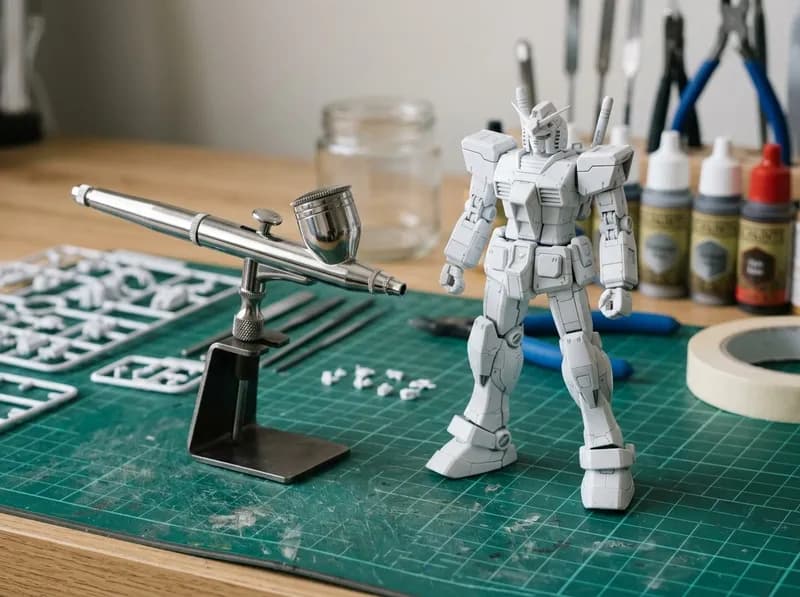
Best Airbrush for Miniatures and Model Kits: Top Picks for Gunpla, Plamo, and Scale Modeling
Looking for the best airbrush for model kits without overspending on features you may not need? This buying guide compares airbrushes for Gunpla, plamo, aircraft, tanks, and car models, from the entry-level Iwata NEO CN to the versatile Eclipse HP-CS and configurable Evolution 2024 CRplus. Learn how 0.3 mm, 0.35 mm, and 0.5 mm nozzles differ in practice, when a dual-action gravity-feed brush makes sense, and what to check before buying.
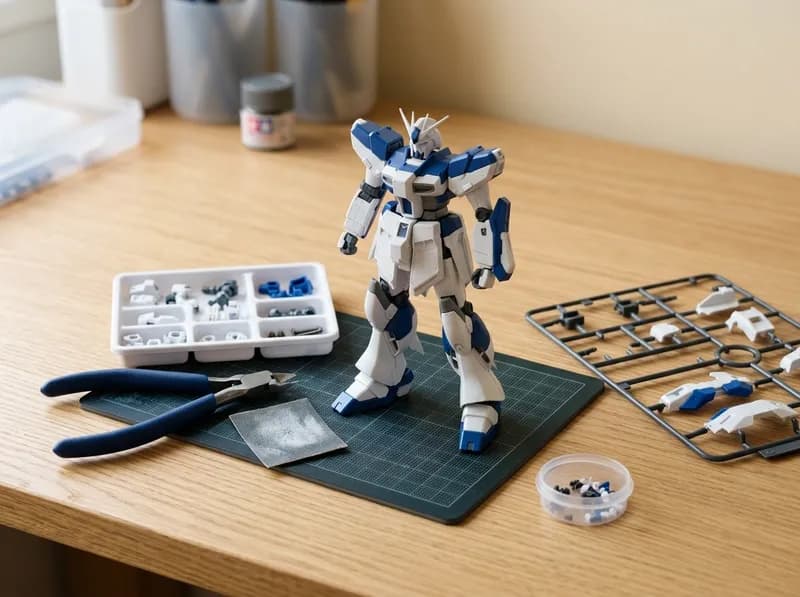
Best Model Tools for Beginners: What You Actually Need First
Looking for the best model tools for beginners? This practical buying guide separates essential supplies from optional upgrades, so you can spend money on tools you will actually use. Learn when basic double-blade nippers are enough, how files and sanding materials help clean up parts, and when a hobby knife, tweezers, cement, or painting supplies become useful. It also compares starter setups for different budgets and skill levels.
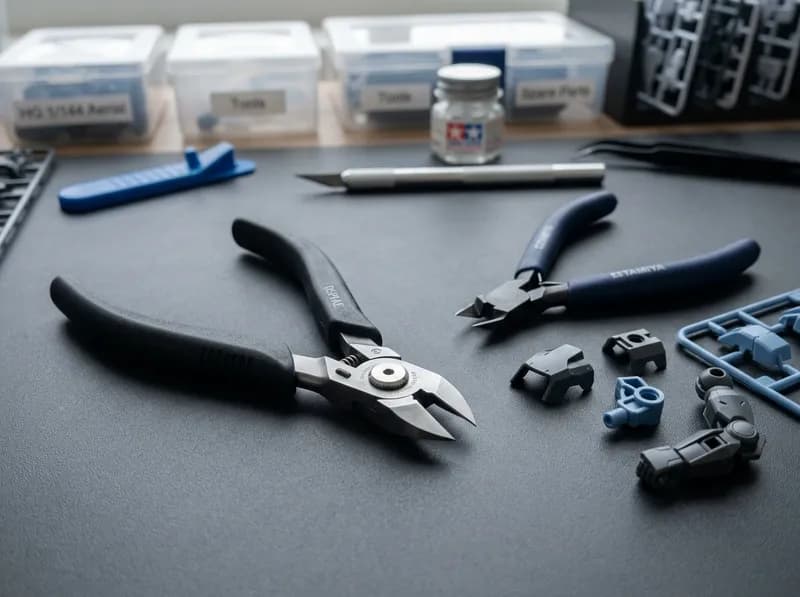
DSPIAE ST-A 3.0 vs GodHand SPN-120: Which Single-Blade Nipper Should You Buy?
The DSPIAE ST-A 3.0 and GodHand SPN-120 are two premium single-blade nippers designed for precise Gunpla gate removal. This comparison examines their cutting performance, handling, durability, limiter design, value, and suitability for different Gunpla grades. It also explains why a conventional nipper plus one precision single-blade tool is often a more practical setup than owning multiple premium nippers.