Best Pergolas of 2026: A Buying Guide to Roof Types, Weather Ratings, and Cost
Shopping for the best pergola in 2026? This buying guide compares wood, aluminum, retractable-canopy, and louvered pergolas, with product recommendations for different budgets and backyard layouts. Learn how to evaluate wind ratings, snow loads, roof drainage, anchoring, and installation requirements before you buy. It also explains why manufacturer specifications sometimes conflict with retailer listings and how to estimate the total cost beyond the advertised kit price.
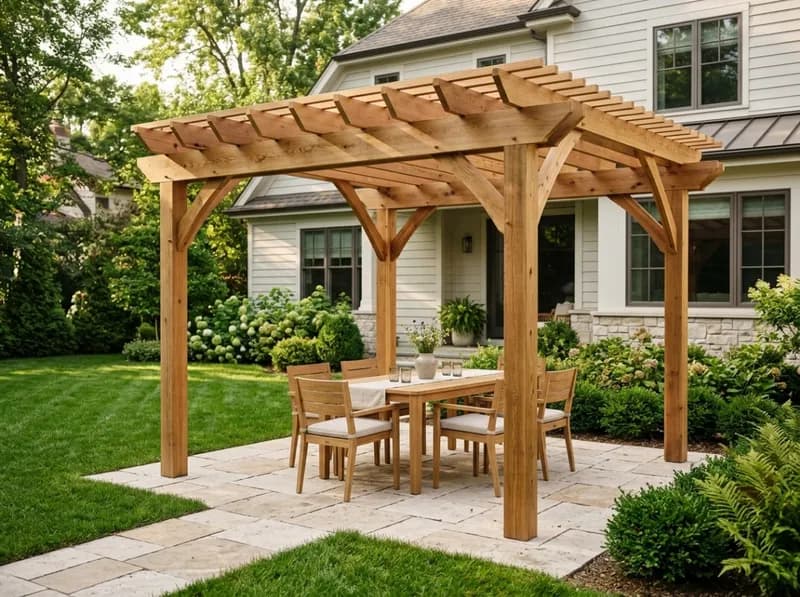
The best pergola depends on how you plan to use your outdoor space, the weather it needs to handle, and how much you're willing to spend on the complete installation. An open-rafter wood pergola works well for filtered shade, while a retractable canopy gives you more control over sunlight. If you want adjustable shade and better rain management, a louvered pergola may be worth the extra cost. For more consistent overhead protection, a fixed-roof pavilion or gazebo may make more sense.
Before choosing a model, look beyond the advertised price. Check the roof design, the manufacturer's wind and snow documentation, and the anchoring requirements for your patio, deck, or yard. A pergola that performs well on one property may not be suitable for another, even if the two installations use the same model.
This guide compares the best pergolas for different budgets and uses, explains how to evaluate conflicting weather ratings, and breaks down the costs that often get overlooked. Product specifications and prices can change, so confirm the current details before ordering.
Best pergolas in 2026: Quick picks
Pergola | Best for | Roof type | Frame | Price guide |
|---|---|---|---|---|
Backyard Discovery Beaumont 16 × 12 | Traditional wood appearance | Open rafters | Cedar | From $1,699 |
Backyard Discovery Sarasota 12 × 10 | Adjustable shade with published weather claims | Manual louvers | Galvanized steel | From $1,999 |
PURPLE LEAF Caesar | Flexible sizing | Manual louvers | Aluminum | $2,099–$6,000 |
MIRADOR 80S | Entry-level louvered design | Adjustable louvers | Aluminum | Varies by size |
Toja Grid Any Size 4 × 4 Kit | Custom DIY pergola | Depends on your design | Brackets and separately purchased lumber | $536 MSRP for the kit |
PERGOLUX Pergola PRO MAX | Premium motorized features | Motorized louvers | Aluminum | Verify current configuration |
Prices reflect the manufacturer or seller listings reviewed for this guide. Promotions, sizes, included components, and availability may change.
Which pergola should you buy?
Best for a traditional backyard: The Backyard Discovery Beaumont 16 × 12 offers a cedar frame and an open-rafter design for filtered shade.
Best for adjustable shade with published weather claims: The Backyard Discovery Sarasota 12 × 10 combines manual louvers with integrated drainage. Its conflicting third-party snow-load figures deserve careful attention before purchase.
Best for a tighter budget: A retractable-canopy pergola in the roughly $300–$600 range is a practical starting point. The Toja Grid kit is another option if you're comfortable sourcing lumber and handling the structural details.
Best for size flexibility: The PURPLE LEAF Caesar comes in a broad range of configurations, including long, narrow layouts.
Best premium candidate: The PERGOLUX PRO MAX offers motorized louvers and integrated features, although its exact price and structural documentation should be confirmed for the configuration you intend to install.
One important distinction: a manufacturer's published wind or snow rating is a product claim, not automatic proof that the pergola is suitable for your property. The installation method, foundation, roof position, and local conditions all matter.
Pergola vs. gazebo vs. pavilion vs. awning
These terms are often used loosely in retail listings. The roof and structural design tell you more about a product's performance than its name.
Structure | Typical roof | Rain protection | Best use | Main trade-off |
|---|---|---|---|---|
Pergola | Open rafters, fabric canopy, or adjustable louvers | Limited to substantial, depending on design | Outdoor seating, dining, and adjustable shade | Open-roof models offer little rain protection |
Gazebo | Usually a substantially covered roof | Often better overhead coverage | A defined outdoor shelter | Can take up considerable space |
Pavilion | Usually a fixed roof with open sides | Potentially good when properly designed and drained | Outdoor kitchens and larger gatherings | Foundations and structural requirements can increase costs |
Awning | Fixed or retractable cover | Depends on roof material and design | Shading windows, doors, and house-adjacent patios | Attachment and wind restrictions matter |
These are general descriptions, not universal building-code definitions.
Choose an open pergola if you want filtered sunlight and airflow. A retractable canopy makes sense if you want to switch between sun and shade. Adjustable louvers offer more control over sunlight and can direct rainwater into gutters when the system is designed for that purpose. If reliable overhead shelter is the priority, compare fixed-roof gazebos and pavilions before committing to a pergola.
Choose the roof before the brand
Roof type affects comfort, maintenance, rain protection, and structural demands. It's worth deciding what you need from the roof before comparing individual models.
Open-rafter pergolas: Best for filtered shade
An open-rafter pergola creates a defined outdoor space without fully enclosing it. The roof lets air circulate and allows some sunlight through, with the amount of shade changing throughout the day.
The simple design has fewer moving parts to maintain. However, rain passes through, and climbing plants can add weight as they mature. If you plan to grow vines over the roof, check whether the structure is designed to support them.
Retractable-canopy pergolas: Best for adjustable shade on a budget
A retractable fabric canopy lets you cover the seating area when the sun is strong and open it when you want more light. These models are often more affordable than louvered pergolas.
Fabric quality, UV treatment, tension, and drainage all affect performance. Dirt, mildew, fading, and eventual fabric replacement are part of ownership. Rain protection also varies by design, and standing water can damage a canopy.
Check the manufacturer's instructions for wind limits and when the fabric must be retracted. A retractable canopy should not be treated as a permanent roof.
Fixed-roof pergolas and pavilions: Best for consistent coverage
A solid roof can provide more dependable shade and rain protection, provided the structure has appropriate drainage and is designed for the local conditions.
Look at roof pitch, gutters, downspouts, and where runoff will go. A fixed roof can catch more wind and accumulate snow, so the foundations and structural design need to account for those loads.
If you regularly eat outdoors in wet weather, a properly designed fixed-roof pavilion may be a better fit than an open pergola.
Adjustable-louvered pergolas: Best for flexible roof control
Louvered pergolas use rotating slats to control sunlight and airflow. Some systems direct water through integrated gutters and downspouts when the louvers are closed.
That doesn't make every louvered roof completely waterproof. Water can still enter around joints, end caps, or other connections, particularly during sustained or wind-driven rain.
Manual models avoid motor and power requirements. Motorized systems are more convenient for frequent adjustments and may offer automation, but they introduce additional electrical and mechanical components. Check how the roof must be positioned in high winds or snow, and whether you can operate it if the motor fails.
Are louvered pergolas worth it?
A louvered pergola is worth considering if you want adjustable sunlight and better rain management without building a fully roofed outdoor structure. The premium buys flexibility, not immunity from the weather.
Three questions are especially important when comparing these systems.
Do louvered pergolas leak?
Some do, particularly during prolonged or wind-driven rain. Integrated gutters can handle ordinary rainfall when properly designed and installed, but the joints between louvers and the end caps remain potential leak points.
Performance depends on the roof design, seals, installation quality, maintenance, and weather conditions. Read owner reviews that specifically discuss rain, preferably for the exact model and size you're considering. Treat a marketing claim of "waterproof" as something to investigate rather than a guarantee of a completely dry outdoor room.
How long do louvered pergolas last?
Brand and retailer pages sometimes suggest service lives of 15–30 years, but those figures should not be treated as independently established lifespans without supporting studies.
Actual durability depends on the aluminum and its finish, hardware corrosion resistance, drainage, moving parts, motor reliability, and installation quality. Compare warranty coverage for the frame, finish, and operating mechanism separately. A long frame warranty does not necessarily mean the motor and other components receive the same protection.
Should you choose manual or motorized louvers?
Manual louvers are a sensible choice when the roof is within easy reach and you expect to adjust it occasionally. They have fewer electrical and mechanical components.
Motorized louvers are more convenient on large or high roofs and may be worthwhile if you adjust the roof frequently. Some premium systems offer rain-sensor automation, but power requirements, installation costs, and motor maintenance should be part of the budget.
Whichever system you choose, check the operating instructions for high winds and snow. Find out whether the louvers need to be opened or closed in specific conditions and what happens if the motor stops working during bad weather.
How to evaluate pergola wind ratings and snow loads
Weather claims deserve closer scrutiny than a product's color or accessory list. The most useful specification is one that identifies the exact model, explains the test or design basis, and states the installation conditions required to achieve the claimed performance.
Why pergola specifications conflict
Compare the same pergola across several retail websites and you may find different dimensions, wind ratings, or snow capacities. There are several reasons.
Different units: Pounds, pounds per square foot (psf), and inches of snow describe different things. Total load and distributed load are not interchangeable.
Different models or sizes: A rating for one footprint may not apply to a larger version of the same product line.
Copied specifications: Retailers sometimes reuse information from older listings or other configurations.
Different testing methods: Manufacturers may base their claims on different tests, calculations, or installation assumptions.
The safest approach is to trace each important figure back to the manufacturer's current product page, manual, or engineering documents.
A practical way to rank specification sources
Evidence level | Source | How to use it |
|---|---|---|
1 | Current manufacturer documentation or model-specific engineering documents | Best starting point, provided the rating's scope and installation assumptions are clear |
2 | Manufacturer marketing claims without supporting technical details | Useful context, but insufficient for a safety decision |
3 | Retailer listings, comparison articles, and forum posts | Leads for further investigation, not proof of a rating |
A manufacturer's own statement is still a claim. Independent testing or appropriate engineering documentation may be needed for a higher-confidence assessment.
When sources disagree, don't select the highest number. Ask the manufacturer to clarify the exact model and configuration in writing.
A real-world example: Conflicting snow-load claims
The Backyard Discovery Sarasota 12 × 10 steel louvered pergola illustrates why this matters. In the product information reviewed for this guide, the manufacturer's listing gives a snow-load claim of up to 2,100 pounds. Third-party listings have also displayed figures of 2,700 pounds, 3,800 pounds, and a claim of support for 12 inches of snow.
These figures should not be treated as equivalent.
Published claim | Source type | What it establishes |
|---|---|---|
Up to 2,100 lb | Manufacturer product page | A traceable manufacturer claim, subject to its installation assumptions |
2,700 lb | Third-party listings | An unverified figure unless supporting documentation is provided |
3,800 lb | Third-party listings | An unverified figure unless supporting documentation is provided |
12 inches of snow | Third-party listings | A depth claim, not a directly comparable structural load rating |
Snow depth alone doesn't establish weight. Twelve inches of light, dry snow can impose a very different load from the same depth of wet snow.
The practical conclusion is straightforward: the 2,100-pound figure is the traceable claim in this comparison, but it should still be confirmed against the current manual or engineering documents. The higher third-party figures shouldn't be relied on without evidence showing that they apply to the exact model.
What to check in a wind rating
A wind rating is meaningful only when you know what was rated and under what conditions.
Before relying on a published number, check:
The exact model, dimensions, and roof configuration.
Whether the figure applies to the complete assembled structure or a component.
Whether it represents a design rating, a test result, or an operating limit.
The required anchors, foundations, and installation method.
The specified position of the louvers or canopy.
Whether screens, curtains, privacy panels, or other accessories change the rating.
These distinctions matter. A wind speed associated with a tested assembly is not automatically comparable to an operating instruction telling you to retract a canopy above a certain speed.
If you live in a hurricane-prone area, including coastal Florida, the Gulf Coast, or the Carolinas, ask about applicable Florida product approval or a Miami-Dade Notice of Acceptance (NOA). Many residential pergola kits do not carry these approvals. Their absence does not automatically make a product unsuitable, but it may leave you with less independently documented evidence to evaluate.
Local building officials may require engineered plans or additional documentation for high-wind locations.
What to check in a snow-load rating
Snow loads may be expressed in pounds per square foot (psf). Some retail listings instead specify the depth of snow a roof can support.
Don't convert snow depth into structural capacity without reliable information about snow density and the applicable loading assumptions. Wet snow and uneven accumulation can impose substantial loads, and local ground snow-load figures are not automatically the same as the design load for a particular roof.
Check whether the manufacturer's figure applies to the exact roof configuration and whether it depends on particular anchors, foundations, or assembly procedures. If the documentation is missing, the product's snow suitability is undisclosed, not automatically safe or unsafe.
Examples of manufacturer weather claims
The reviewed product information for several brands illustrates why claims need to be evaluated individually.
Backyard Discovery: The company says its Pro-Tect pergolas and gazebos are tested for winds up to 100 mph when anchored as directed. That statement does not establish that every model is suitable for every hurricane-prone location.
MIRADOR: The company's 13 × 13-foot 111DA product page lists a 102 mph wind rating and a 26.6 psf snow load under specified assembly and anchoring conditions. Its FAQ also gives different figures for the broader product range, so the exact model's current documentation should be confirmed.
PERGOLUX: The PRO MAX is advertised with wind resistance up to 165 mph and snow-load configurations of 55, 65, or 75 psf. These are manufacturer claims; the reviewed pages do not establish an independent test basis for those figures.
These numbers are useful starting points for questions, not universal guarantees. For a property exposed to severe wind or heavy snow, request the applicable engineering documents and seek advice from local building officials or a qualified professional when necessary.
Anchoring and foundations: What your installation surface needs
A pergola's structural suitability depends on more than the frame. The foundation, anchors, connections, and installation surface all play a role.
Installation surface | Main concern | What to verify |
|---|---|---|
Concrete patio | Whether the slab can support the structure and specified anchors | Concrete condition, thickness, reinforcement where relevant, anchor type, embedment, and edge distances |
Pavers | Whether the finished surface has adequate structural support beneath it | Approved anchoring details and whether footings or another foundation are required |
Wood deck | Whether the framing can carry the added loads | Joists, beams, posts, load paths, connections, and waterproofing |
Soil or lawn | Whether the foundation resists uplift and movement | Soil conditions, footing design, climate, and frost-depth requirements where applicable |
House attachment | Whether the connection reaches suitable structural framing | Approved ledger details, flashing, siding, and building-envelope protection |
Can you install a pergola on a concrete patio?
Possibly, but an existing patio isn't automatically a suitable foundation. Slab thickness, condition, reinforcement, edge distances, and anchor requirements may affect whether it can support the structure.
Follow the manufacturer's approved anchor specifications. Don't substitute a generic anchor recommendation for the requirements of the exact model.
Can you install a pergola on pavers?
A paver patio is often a finished surface rather than a structural foundation. Anchoring only into individual pavers may not provide sufficient resistance to uplift or lateral forces.
Depending on the pergola and site, the approved solution may require footings or another anchoring system beneath the finished surface.
Can you attach a pergola to an existing deck?
It depends on the deck's framing and connections. Deck boards alone are not enough to establish whether the structure can support a pergola.
Check how the additional loads would transfer through the framing and into the foundation. If the deck's capacity is unknown, have it assessed before buying the pergola.
Attached vs. freestanding pergolas
A freestanding pergola sits on its own posts and foundations. It offers flexibility in placement and avoids connecting the structure to the house, but every post needs an appropriate foundation and anchoring system.
An attached pergola connects to the house, often through a ledger. It can provide convenient shade beside a kitchen or living room and may require fewer posts. However, the connection must reach suitable structural framing rather than exterior cladding, and flashing must prevent water intrusion.
Attachment details can also affect permit requirements. Confirm that the manufacturer provides approved connection details for your wall type before choosing an attached design.
This is a pre-purchase screening guide, not a substitute for structural design or foundation advice.
Do you need a permit for a pergola?
There is no single permit rule for every pergola in the United States. Requirements depend on the local jurisdiction and may vary with the structure's size, height, roof, attachment, foundation, and location.
The 2024 International Residential Code (IRC) includes permit requirements and exceptions for certain small, detached accessory structures. However, the IRC is a model code. Local authorities adopt and amend codes differently, so an exception in the model code does not automatically apply to your property.
Before ordering, check these requirements:
Building permit: Whether the structure needs approval before installation.
Zoning and setbacks: Whether it complies with property-line distances, easements, height restrictions, and lot-coverage rules.
HOA approval: Whether community rules restrict the location, size, or appearance.
Underground utilities: Whether utilities must be located before excavation.
Electrical permits: Whether motorized louvers, lighting, outlets, or other powered features require additional approval.
Structural documentation: Whether plans, calculations, or engineering documents are required.
A quick call to your local building department can help you identify the requirements before you commit to a model. Don't rely on a retailer's claim that permits are "usually not required."
Aluminum vs. steel vs. wood pergolas
Material affects appearance, maintenance, corrosion resistance, and cost. It doesn't independently establish how well a pergola will withstand wind or snow.
Material | Advantages | Trade-offs | What to check |
|---|---|---|---|
Aluminum | Relatively lightweight; suits modern designs; finished surfaces may need less routine care | Finish and hardware quality vary | Coating, replacement parts, connections, and structural documentation |
Steel | Rigid frame construction; common in modern and louvered designs | Corrosion protection and weight matter | Protective coating, damaged-finish repair, and hardware |
Wood | Traditional appearance; can be customized | May need sealing, staining, or protection against rot and insects | Wood species, grade, treatment, member sizes, and maintenance instructions |
Vinyl or composite | Some products require less painting or surface treatment | UV resistance, heat performance, formulation, and repair options vary | Outdoor durability, replacement components, and manufacturer guidance |
For wood pergolas, check whether the lumber is treated or needs a sealant. Backyard Discovery, for example, directs buyers to its manual for product-specific sealing guidance.
For metal structures, pay attention to the finish, fasteners, drainage, and replacement parts. Terms such as "rust-resistant" and "maintenance-free" don't tell you whether a product's design or installation is suitable for your site.
Best pergolas under $1,000
If your budget is under $1,000, a retractable-canopy pergola, small wood kit, or modular bracket system is usually a more realistic choice than a genuine louvered roof.
At this price point, prioritize shade, usability, and replacement-part availability. Model-specific wind and snow documentation is uncommon among the budget listings reviewed, so don't assume a low-cost pergola is suitable for severe weather.
Retractable-canopy pergolas: Roughly $300–$600
These models typically combine an aluminum or steel frame with a fabric canopy. They're a practical choice for patios where adjustable shade matters more than all-weather coverage.
Before buying, check the fabric's UV treatment, whether replacement canopies are available, how the canopy retracts, and the manufacturer's wind restrictions. Rope-and-cleat mechanisms and fabric are potential maintenance items.
DIY bracket kits: Toja Grid
The Toja Grid Any Size 4 × 4 kit is listed at $536 MSRP, excluding lumber. It gives you more control over the footprint and wood finish, but the kit price isn't the cost of a complete pergola.
You'll still need to buy the lumber, select suitable anchoring, and account for assembly. The structural design of the finished structure must be appropriate for the chosen dimensions and installation site.
Small open-rafter wood kits: Roughly $600–$1,000
Smaller cedar and treated-pine pergola kits are another option. They provide a traditional look without the mechanisms found in louvered systems.
Compare the included hardware, lumber dimensions, anchoring instructions, and maintenance requirements rather than judging by footprint alone.
Are louvered pergolas available under $1,000?
A genuine adjustable-louvered pergola with a functioning roof mechanism and drainage system is generally priced above this range. Low-priced listings may use fixed slats instead of adjustable louvers, so read the product description carefully.
Two rules are particularly useful for budget buyers: confirm that replacement parts are available, and verify specifications against the manufacturer's own documentation rather than relying on a retailer's weather-rating badge.
Is it cheaper to build or buy a pergola?
Building a pergola yourself can save money, but the result depends on your skills, materials, tools, and the complexity of the design.
A straightforward wood pergola is often less expensive to build from lumber, particularly if you already own the necessary tools. A bracket kit can simplify the connections while leaving you free to choose the dimensions and finish.
A manufactured kit may be the better value if you would otherwise need to buy tools or hire help. Louvered and motorized systems are harder to reproduce economically because their roof mechanisms, drainage components, and hardware require more specialized design.
Also account for your time. A substantial DIY pergola can take several days and may require two people. Permits, engineered plans, foundation work, and professional installation can narrow the savings considerably.
For severe-weather locations, a documented manufactured design may be a more practical starting point than a self-designed structure. Either way, the completed installation needs to suit the site and applicable requirements.
How to choose the right pergola size and location
Measure the area you can actually use before choosing a footprint. The product's listed dimensions may describe the overall frame, not the usable shaded space underneath.
Think about how you'll use the pergola:
Dining: Allow room for the table, pulled-out chairs, and people moving around them.
Lounge seating: Account for sofas, side tables, and walking routes.
Outdoor kitchen: Check appliance clearances, ventilation, heat sources, and utility access.
Doors and windows: Consider door swings, window access, and the effect on indoor daylight.
Sun direction: Observe where the sun falls during the hours you use the patio.
Drainage: Plan where roof runoff will go, especially near foundations, doors, and neighboring property.
Overhead obstructions: Check trees, roof eaves, utility lines, and nearby structures.
Accessories: Leave room for screens, curtains, lights, fans, or heaters if you plan to add them later.
For a narrow deck or patio, post placement can determine whether a model fits comfortably. Mark the proposed post locations and check all required clearances before ordering.
A larger footprint may also change the structural demands. A standard kit size isn't proof that the structure is suitable for your slab, deck, or yard.
How long does pergola assembly take?
The assembly time printed on a box is best treated as a planning estimate. The actual time depends on the number of components, the roof mechanism, the installation surface, and the experience of the people assembling it.
As a starting point:
Open-rafter wood or bracket kits: Allow a weekend for two reasonably handy adults, with additional time if new footings are needed.
Manual louvered aluminum kits: Plan for one to two days for two people, depending on the model and site preparation.
Motorized louvered systems: Allow additional time for wiring and any required professional installation.
Check the number of boxes and total delivery weight before installation day. Inspect components for shipping damage promptly, and read the warranty conditions to see whether professional assembly is required for particular claims.
If a wind rating depends on specified assembly or anchoring, the installation method is part of the rating—not an optional upgrade.
The complete cost of owning a pergola
The advertised pergola price is only one part of the project. Delivery, anchoring, foundations, labor, permits, electrical work, and accessories can all increase the final bill.
Cost category | Questions to ask |
|---|---|
Pergola kit | Which frame, roof, and standard components are included? |
Canopy or roof | Are fabric, louvers, motors, and roof panels included in the quoted configuration? |
Delivery | Is shipping included, and can the delivery vehicle access the property? |
Anchors and hardware | Are the required anchors included? |
Foundation work | Can the existing surface be used, or are new footings needed? |
Assembly | Is professional installation recommended or required? |
Permits and documents | Are plans, engineering documents, inspections, or permit fees required? |
Electrical work | Does a motorized roof or lighting system need an electrician? |
Accessories | Are screens, curtains, lights, fans, and heaters optional extras? |
Ongoing maintenance | Will the structure need sealing, cleaning, lubrication, fabric replacement, or repairs? |
Installation prices vary considerably with location, access, soil conditions, foundation requirements, and product complexity. Online estimates—even those described as national averages—may not reflect your particular project. Get a site-specific quote that identifies exactly what is included.
When is a premium pergola worth the money?
Above the kit market is a dealer-installed category of custom aluminum louvered systems, including brands such as StruXure, Azenco, and Hanso Home. Installer marketing commonly places some projects at roughly $10,000 for smaller configurations and $30,000 or more for larger installations.
These systems may offer dealer support, integrated home automation, and more extensive engineering documentation than a basic retail kit. Actual prices depend on the design, location, foundation, and installation scope.
You don't need to spend that much for ordinary backyard shade. However, if your project requires engineered wind or snow performance, compare properly documented installed systems rather than assuming a low-cost kit will meet the same requirements.
How costs vary by roof type
Open-rafter pergola: Usually the simplest roof configuration, with fewer moving parts. A bracket kit may exclude the lumber entirely, so compare complete material lists rather than kit prices.
Retractable-canopy pergola: Budget for fabric maintenance and eventual replacement. Check wind restrictions and whether the canopy must be removed or retracted during bad weather.
Louvered pergola: Costs more because of the roof mechanism, gutters, downspouts, and additional hardware. Motorized models may also need a power supply or electrician.
Fixed-roof pavilion: Roof materials, drainage, foundations, structural design, and installation can account for a substantial share of the final cost.
When comparing suppliers, ask each one to quote the same scope: structure, roof, delivery, anchors, foundations, assembly, permits, electrical work, and accessories.
Best pergolas: Product reviews and recommendations
The products below serve different needs rather than competing on a single universal ranking. Prices and specifications reflect the listings reviewed for this guide and should be confirmed before purchase.
1. Backyard Discovery Beaumont 16 × 12 Pergola
Best for a traditional wood pergola
<PRIVATE_PERSON>Manufacturer-listed price: from $1,699</PRIVATE_PERSON>
The Backyard Discovery Beaumont uses a cedar frame and an open-rafter roof, with a listed footprint of 16 × 12 feet and a height of 95 inches. The manufacturer lists a five-year warranty and says the pergola can withstand winds up to 100 mph when anchored as directed.
The open design suits buyers who want a substantial wood pergola for outdoor dining or seating without installing a solid roof. It provides filtered shade while keeping the space open to the air.
The main limitation is rain protection: the open rafters won't keep the seating area dry. Wood maintenance and the specified anchoring method also need to be part of your plan.
Before buying: Confirm the current assembly manual, the required anchors, and any model-specific snow-load documentation. The reviewed information supports the manufacturer's wind claim but doesn't establish a verified snow capacity here.
2. Backyard Discovery Sarasota 12 × 10 Steel Louvered Pergola
Best for adjustable shade with published weather claims
<PRIVATE_PERSON>Manufacturer-listed price: from $1,999</PRIVATE_PERSON>
The Sarasota combines a 12 × 10-foot footprint with a galvanized steel frame, adjustable louvers, integrated drainage, and a listed height of 100 inches. The manufacturer lists a five-year warranty and claims wind resistance up to 100 mph, along with a snow-load capacity of up to 2,100 pounds for the 12 × 10 model.
Its main appeal is the combination of adjustable sunlight and a drainage system. Compared with an open-rafter pergola, it offers more control over the roof and can provide better rain management when used as directed.
However, the snow-load figure needs careful handling. Third-party listings have shown higher capacities of 2,700 and 3,800 pounds, as well as a claim of support for 12 inches of snow. Those figures don't match the manufacturer's listed number, and the reviewed material doesn't establish that the higher claims apply to this model.
Before buying: Ask for the current model-specific engineering documents, the required foundation and anchoring details, and the assumptions behind both the wind and snow claims. Confirm the actual sale price and stock availability as well.
3. PURPLE LEAF Caesar Louvered Pergola
Best for buyers who need a flexible choice of sizes
<PRIVATE_PERSON>Listed price range: $2,099–$6,000</PRIVATE_PERSON>
The PURPLE LEAF Caesar uses an aluminum frame and adjustable louvers. The product line includes configurations ranging from approximately 10 × 12 to 13 × 30 feet, with a listed height of about 92.5 inches. The reviewed information lists a one-year warranty.
The range of sizes is its main advantage. Buyers with long patios or narrow outdoor areas may find a configuration that fits better than a standard square pergola.
The trade-off is that the reviewed listing doesn't establish a verified, model-specific wind or snow rating. The manufacturer's instructions also advise opening the louvers and raising or removing shade-screen accessories during high winds, snow, or other extreme weather.
Before buying: Request the engineering documents for your exact size, confirm the approved anchoring method, and ask how the roof should be operated in adverse weather. Compare the one-year warranty carefully with the coverage offered by other manufacturers.
4. MIRADOR 80S Louvered Pergola
Best for buyers entering the louvered-pergola market
<PRIVATE_PERSON>Price: varies by size and configuration</PRIVATE_PERSON>
The MIRADOR 80S is an aluminum louvered pergola line available in multiple sizes. Depending on the configuration, buyers may find manual or motorized operation.
Its appeal is straightforward: it provides an entry point into adjustable-louver ownership without necessarily moving into the premium dealer-installed market. It may suit buyers who want roof control and are willing to check the product documentation carefully.
The main concern is specification consistency. Retail listings for MIRADOR models can disagree on dimensions and weather ratings. The reviewed 111DA product page also lists figures that differ from its FAQ, making written confirmation particularly important.
Don't assume that all 80S configurations share the same performance claims, and don't treat aluminum construction as proof of high-wind or snow suitability.
Before buying: Confirm the exact dimensions, manual or motorized configuration, drainage design, anchors, and any published weather ratings. If choosing a motorized model, check the motor warranty separately.
5. Toja Grid Any Size Pergola Kit for 4 × 4 Wood Posts
Best for a customizable DIY pergola
<PRIVATE_PERSON>Kit MSRP: $536, excluding lumber</PRIVATE_PERSON>
The Toja Grid Any Size system uses modular brackets that let you choose the lumber and dimensions for a custom pergola. Its dealer listing shows a $536 MSRP for the 4 × 4 kit.
The system is appealing if you want to fit the pergola to an unusual patio layout or choose your own wood and finish. It can also be a relatively affordable way to build a modest structure, provided you already have suitable tools and can handle the installation.
The important limitation is that the bracket kit isn't a complete pergola. Lumber, anchoring, and any canopy or other roof materials cost extra. You also need to make sure the completed structure is appropriately designed for its dimensions and installation site.
Before buying: Check the kit's included components, lumber requirements, and anchoring guidance. The reviewed listing doesn't establish a model-specific wind or snow rating for a completed structure.
6. PERGOLUX Pergola PRO MAX
Best premium candidate for motorized features
<PRIVATE_PERSON>Price: verify the current configuration</PRIVATE_PERSON>
The PERGOLUX PRO MAX is a motorized aluminum pergola marketed with integrated LED features and a ten-year warranty for the core structure. Its product page advertises wind resistance up to 165 mph and snow-load configurations of 55, 65, or 75 psf.
The motorized roof and integrated lighting may appeal to buyers planning a more feature-rich outdoor living area. The longer core-structure warranty is also worth comparing with the shorter warranties offered by some retail pergola brands.
However, the advertised weather figures are manufacturer claims, not a universal determination of suitability for severe weather. The selected size, foundation, anchoring method, and operating conditions remain important.
Before buying: Obtain written confirmation of the wind and snow specifications for the exact configuration. Ask about foundation requirements, severe-weather operating instructions, electrical needs, professional installation, and what the quoted price includes.
Pergola comparison: Which model fits your needs?
Model | Main advantage | Roof | Weather documentation reviewed | Main trade-off |
|---|---|---|---|---|
Backyard Discovery Beaumont 16 × 12 | Traditional cedar appearance | Open rafters | Manufacturer claims up to 100 mph with specified anchoring; snow capacity not established here | Limited rain protection and wood maintenance |
Backyard Discovery Sarasota 12 × 10 | Adjustable shade and integrated drainage | Manual louvers | Manufacturer claims up to 100 mph and 2,100 lb snow load; third-party figures conflict | Verify ratings, price, and stock |
PURPLE LEAF Caesar | Broad range of sizes | Manual louvers | No verified model-specific wind or snow rating established in the reviewed listing | Weather documentation needs clarification |
MIRADOR 80S | Entry-level louvered design | Adjustable louvers | Verify for the exact size; specification inconsistencies exist within the product line | Check hardware, drainage, and ratings |
Toja Grid Any Size 4 × 4 | Custom DIY design | Depends on the finished build | No rating established for the completed structure | Lumber and anchoring cost extra |
PERGOLUX PRO MAX | Motorized operation and integrated features | Motorized louvers | Manufacturer advertises up to 165 mph and 55–75 psf options | Higher cost and more installation complexity |
This is a comparison of features and documented claims, not a safety ranking. The reviewed product information doesn't provide enough consistent, independent evidence to identify one model as universally best for hurricane-prone or heavy-snow locations.
Pergola buying checklist
Before placing an order, make sure you can answer these questions:
Does the roof provide the shade or rain protection you need?
Have you compared pergolas with gazebos, pavilions, and awnings?
Do the dimensions leave enough room for furniture, walkways, and post placement?
Are the wind and snow specifications documented for the exact model and configuration?
Have you resolved conflicting figures using current manufacturer documentation?
Is your patio, deck, soil, or wall suitable for the approved anchoring method?
Do local building permits, zoning rules, setbacks, or HOA restrictions apply?
Have you included delivery, foundation work, installation, electrical work, and accessories in the budget?
Are replacement parts available, and what does the warranty cover?
Has the manufacturer clarified any safety-critical specification in writing?
A kit may be suitable for DIY assembly when its instructions cover your installation, the site is appropriate, and you can follow the specified procedures. If structural capacity, foundations, anchoring, electrical work, or local requirements are uncertain, seek qualified help before proceeding.
Frequently asked questions
What is the difference between a pergola, gazebo, and pavilion?
A pergola usually provides open or adjustable shade. A gazebo generally has a more complete roof, while a pavilion is commonly a larger open-sided structure with a fixed roof. Retail terminology varies, so compare the actual design and installation requirements.
Is a pergola enough to protect a patio from rain?
An open-rafter pergola lets rain through. A fabric canopy may offer some protection, depending on its material and design. A properly designed louvered or fixed roof can provide better coverage, but drainage, installation, and wind-driven rain still matter.
Do louvered pergolas leak?
They can. Water may enter around louver joints and end caps, particularly during sustained or wind-driven rain. Integrated gutters can manage ordinary rainfall when the system is properly designed and installed, but performance varies by model and conditions.
Are louvered pergolas worth it?
They can be worth the extra cost if you want adjustable shade and better rain management. If you mainly need summer shade, an open-rafter or retractable-canopy pergola is usually a more economical choice. The premium buys roof control, not complete protection from the weather.
How long do louvered pergolas last?
Some brand and retailer pages cite lifespans of 15–30 years, but those figures aren't necessarily backed by published durability studies. Service life depends on materials, coatings, hardware, motors, installation, and maintenance. Compare warranty terms for the frame, finish, and moving components separately.
Are aluminum pergolas better than wood pergolas?
Neither is universally better. Aluminum suits buyers who prefer a modern appearance and potentially less routine finish maintenance. Wood offers a traditional look and more customization options but may need sealing or other care. Structural design and anchoring matter more than material alone when evaluating weather suitability.
How do I know whether a pergola can withstand high winds?
Check the manufacturer's documentation for the exact model and configuration. Verify the rating, required anchors, foundation, roof position, and restrictions on screens or curtains. If the documentation is incomplete, request written clarification rather than relying on a generic "wind-resistant" label.
Can a pergola handle snow?
Only if the structure and installation are suitable for the applicable snow conditions. Look for a model-specific snow-load rating, confirm its units and assumptions, and don't treat snow depth as a substitute for structural load information.
Do pergolas need to be anchored to concrete?
Not all pergolas use the same anchoring method. Some require anchors into suitable concrete, while others may need engineered footings or another approved foundation. Follow the installation requirements for the exact model and confirm that your surface is suitable.
Can I install a pergola on pavers?
Possibly, but the pavers themselves may not provide adequate structural support. Depending on the design, the approved installation may require footings or another anchoring method below the finished surface.
Can a pergola be attached to an existing deck?
Potentially, provided the deck framing and connections can support the additional loads. Deck boards alone aren't enough to establish suitability. If capacity is uncertain, have the framing and proposed connections assessed.
Is it cheaper to build or buy a pergola?
For small or medium-sized wooden pergolas, building from lumber or using a bracket kit can cost less, especially if you already own the tools. Manufactured louvered systems are often more practical once specialized hardware, engineering, and labor are included.
Do I need a building permit for a pergola?
It depends on local rules and the structure's size, location, roof, attachment, and foundation. Check with your local building department and zoning authority, and review any HOA requirements before ordering.
Are pergola kits suitable for DIY installation?
Some are designed for DIY assembly, but larger frames, heavy components, foundations, roof mechanisms, and electrical features can make installation more demanding. Follow the manual and any conditions attached to the product's weather ratings.
How long does pergola assembly take?
A simple wood or bracket kit may take a weekend for two people. Manual louvered systems can take one to two days, while motorized models may require additional time for electrical work. Actual assembly time varies by model and site preparation.
Does a pergola increase home value?
A pergola may improve the usability and appeal of an outdoor living area, but a specific return on investment shouldn't be assumed without relevant real-estate evidence. A well-built, appropriately permitted structure is generally a more sensible investment than one with unclear installation or approval status.
What should I check before buying a pergola for a windy or snowy area?
Start with model-specific wind and snow documentation, including the required anchors, foundation, and roof position. Confirm whether accessories affect the ratings. In hurricane-prone areas, ask about applicable Florida product approval or Miami-Dade NOA documentation, and consult local building officials or a qualified professional when needed.
Final verdict: Which pergola is best for you?
The right pergola starts with your intended use, local weather, and installation site—not the brand with the biggest claims.
For traditional outdoor shade: The Backyard Discovery Beaumont 16 × 12 is worth considering if you prefer cedar and don't need a solid roof.
For adjustable shade on a budget: Start with a retractable-canopy pergola in the roughly $300–$600 range, or consider the Toja Grid kit if you want a custom DIY build.
For adjustable louvers and rain management: Compare the Backyard Discovery Sarasota, PURPLE LEAF Caesar, and MIRADOR 80S. Check the drainage design and confirm weather claims for the exact configuration.
For premium motorized features: The PERGOLUX PRO MAX is a candidate if you want powered louvers and integrated features, provided the price and installation requirements fit your budget.
For high-wind or snowy locations: Put model-specific engineering documentation and an appropriate foundation ahead of appearance or convenience.
Before paying, calculate the complete project cost and confirm that the pergola is suitable for your property. If the manufacturer can't clarify a safety-critical specification in writing, a model with clearer documentation is the better place to start.
Related GuidesMore →
Best Metal Raised Garden Beds in 2026: 10 Options Compared
Choosing the best metal raised garden bed involves more than comparing dimensions and sticker prices. This 2026 guide compares options from Vegega, Vego Garden, Birdies, Epic Gardening, and budget brands, covering steel thickness, protective coatings, structural reinforcement, warranties, and assembly formats. It also explains how bed height affects growing conditions and soil costs, helping gardeners choose a setup that fits their space, budget, and long-term expectations.
Amazon Landscape Lighting Kits vs. Professional Brass/Copper Systems
Amazon landscape lighting kits can be excellent value for small DIY projects, but larger properties require more than inexpensive fixtures. This guide compares budget kits with professional brass and copper systems, covering fixture materials, cable gauge, voltage drop, transformers, connectors, replaceable bulbs, warranties, and replacement parts to help homeowners choose a system that fits both their property and long-term maintenance needs.
Best Low Voltage Landscape Lighting Kits (2026): A DIY Buying Guide
Compare the best low voltage landscape lighting kits for 2026, from budget DIY systems to premium brass setups. This guide looks beyond fixture count to transformer capacity, cable gauge, connectors, brightness, expandability, and replacement parts, helping homeowners choose a system that fits their yard and can handle future additions.