Best Low Voltage Landscape Lighting Kits (2026): A DIY Buying Guide
Compare the best low voltage landscape lighting kits for 2026, from budget DIY systems to premium brass setups. This guide looks beyond fixture count to transformer capacity, cable gauge, connectors, brightness, expandability, and replacement parts, helping homeowners choose a system that fits their yard and can handle future additions.
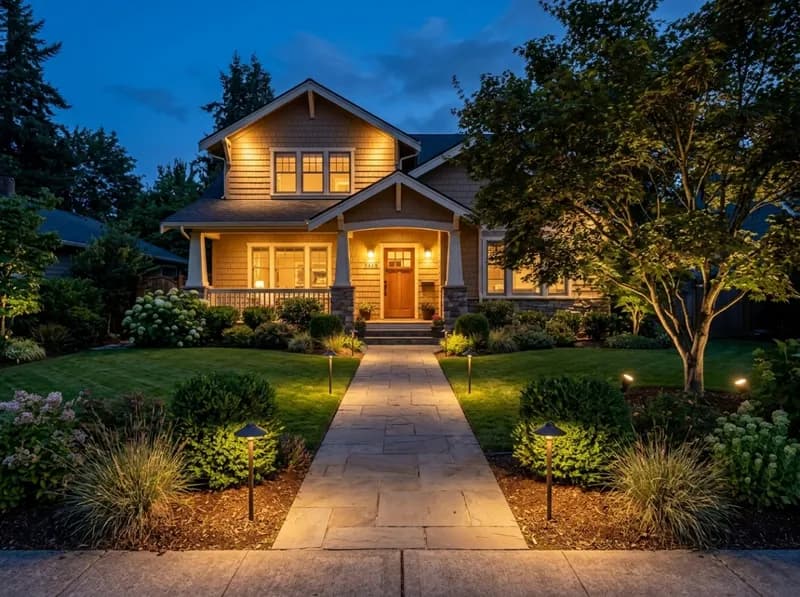
If you want to light a front walkway, driveway, garden beds, trees, or the front of your house without running household line voltage through the yard, a low voltage landscape lighting system is one of the easiest ways to do it yourself.
But don't choose a kit simply because it has the most lights.
The transformer, cable, connectors, and fixture wattage matter just as much as the number of fixtures in the box. A 12-light kit with a small transformer may be far less useful than an eight-light system with enough capacity to handle additional fixtures later.
There's another problem with shopping for these kits: the same product name can refer to different configurations. SUNVIE is a good example. Its 12-pack is sold with different transformer sizes, including 60W, 100W, and 300W versions. Those are not equivalent systems, even though the product name and fixture count may look almost identical.
This guide compares current U.S. low voltage landscape lighting kits based on the things that matter after installation: fixture quality, transformer capacity, cable, connectors, expandability, and long-term value.
Prices are U.S. prices checked in October 2026 and may change with promotions.
Best Low Voltage Landscape Lighting Kits at a Glance
Product | Best for | Fixtures | Transformer | Configuration notes | Main drawback |
|---|---|---|---|---|---|
SUNVIE 12-Pack 300W Kit | Best overall | 12 spotlights | 300W | Make sure you select the 300W version | Spotlight-only layout |
Gardenreet Spot + Path Combo | Best brass system value | 6 spot + 2 path | 150W | 100 ft cable included; cast brass | Newer brand with fewer reviews than VOLT |
VOLT 6 Spot + 4 Path Kit | Best premium system | 10 | 150W | 100 ft 14/2 cable; replaceable MR16 bulbs | Very expensive |
SUNVIE 6 Path + 2 Spot Kit | Best mixed starter | 8 | Included | Good combination of path and accent lighting | Less capacity than the 300W system |
ZUCKEO 12-Pack All-in-One | Best budget full system | 12 spotlights | 80W | 120 ft 16/2 wire included; 24V DC | Limited expansion headroom |
SUNVIE 8-Pack Pathway Kit | Best for walkways | 8 path lights | 60W | Designed specifically for pathway lighting | Not suitable for tree uplighting |
MEIKEE 6W Spotlight Kit | Best budget uplighting | 6 or 8 spotlights | Included | Up to 660 lm per fixture | Marketplace availability varies |
Hampton Bay Smart 2-Pack | Best smart starter | 2 RGB fixtures | Included | Hubspace app control | Too small for a whole yard |
EDISHINE 8-Pack Kit | Best expansion add-on | 6 path + 2 spot | Not included | Fixtures only; ETL wet-rated | Requires separate transformer and cable |
The best kit isn't necessarily the one with the highest fixture count. For most installations, a properly sized transformer, adequate cable, and a sensible mix of fixtures are more important than squeezing another few lights into the package.
Read the Configuration Before You Buy
The first thing to check on any landscape lighting kit is the exact configuration.
A product title such as "12-Pack Landscape Lighting Kit" doesn't tell you enough.
Check these four specifications:
Transformer wattage — determines how much total load the system can support.
Cable gauge and length — 16/2 is common in inexpensive kits; 14/2 and 12/2 are better choices for longer or heavier runs.
Fixture wattage — determines the actual electrical load.
What's included — some kits include everything, while others are fixtures only.
SUNVIE illustrates the problem particularly well. Its 12-light kits appear with 60W, 100W, and 300W transformers depending on the configuration. A 12-pack with low-wattage fixtures and a 60W transformer is a very different proposition from a 12-pack with higher-output fixtures and a 300W transformer.
VOLT has a similar issue when comparing kits. Its brass systems use different combinations of spotlights and path lights, with prices ranging from several hundred dollars to more than $1,000 depending on the package.
Before comparing prices, match the fixture count, fixture wattage, transformer capacity, cable gauge, and cable length.
A 12-light system isn't automatically more capable than an eight-light system. If the 12-light kit uses 3W fixtures on a 60W transformer while the eight-light system uses 6W fixtures on a 150W transformer, they're designed for different installations.
The Best Low Voltage Landscape Lighting Kits
1. SUNVIE 12-Pack with 300W Transformer — Best Overall
For a homeowner starting a medium-sized yard from scratch, the SUNVIE 12-pack with the 300W transformer is one of the most useful all-in-one options in the DIY market.
SUNVIE lists this configuration at about $259.99. The package includes twelve 12W LED spotlights rated at 900 lumens each, a 300W transformer, FastLock2 connectors, stakes, and the necessary control hardware.
The fixtures are 3000K warm white, with a 90-degree beam angle and 270-degree head adjustment. The aluminum housings are IP65 rated, and the system supports 12–24V AC/DC input.
The biggest advantage is the transformer.
Twelve 12W fixtures consume 144W in total, leaving more than 150W of additional transformer capacity. That gives the system considerably more room for expansion than many inexpensive 8- or 12-light kits.
The package includes:
12 × 12W LED spotlights
300W transformer with dusk-to-dawn photocell and programmable timer
FastLock2 connectors and stakes
3000K warm-white output
The limitation is the fixture selection. All 12 fixtures are spotlights, so this kit makes more sense for trees, walls, fences, and architectural features than for a property that needs a row of path lights.
Most importantly, check the transformer wattage before ordering. The same SUNVIE product family is available with smaller transformers.
Best for: medium and large yards, tree uplighting, house facades, and homeowners who expect to add fixtures later.
2. Gardenreet Spot + Path Combo Kit — Best Brass System Value
Gardenreet occupies an interesting middle ground between inexpensive aluminum kits and premium brass systems from brands such as VOLT.
Its current combo kit combines six cast-brass spotlights, two brass path lights, a 150W transformer, and 100 feet of cable.
The fixtures use replaceable MR16 LED bulbs and are rated IP65. The kit uses 2700K warm-white lighting, and Gardenreet offers a lifetime fixture warranty. The company also advertises 60-day free returns and free U.S. shipping above its stated threshold.
Third-party coverage of Gardenreet's individual fixtures has also been positive. A 2026 landscape spotlight roundup selected its brass spotlight as a professional pick, highlighting the brass construction, replaceable MR16 lamp, and approximately 4.7-star average from roughly 165 owner reviews.
Individual Gardenreet spotlights have been listed around $37, while path lights have appeared around $60. Complete-kit pricing can change, so the current package price is worth checking directly.
The main attraction is the construction. Cast brass costs more than painted aluminum, but it is designed for long-term outdoor use and can be maintained by replacing the lamp rather than the entire fixture.
Gardenreet is still a smaller brand than VOLT, however, and has a shorter track record in the landscape lighting market.
Best for: homeowners who want cast-brass fixtures and replaceable bulbs without moving all the way up to VOLT pricing.
3. VOLT 6 Spotlights + 4 Path Lights — Best Premium System
For a permanent landscape lighting installation, VOLT's brass systems sit firmly at the premium end of the market.
The 6 G2 Fat Boy Spotlight + 4 Max Spread Path Light Kit is listed at around $834.99. The package includes six cast-brass spotlights, four brass path lights, a 150W transformer with timer and photocell, 100 feet of 14/2 direct-burial cable, junction hubs, connectors, stakes, and conduit.
VOLT provides a lifetime warranty covering the fixtures, bulbs, and transformer.
The fixture combination is one of the main advantages. Instead of installing ten identical spotlights, you get dedicated fixtures for both trees and architectural features and for walkways.
The G2 Fat Boy spotlight uses a 5W MR16 LED rated at 400 lumens, with a 38-degree beam and 2700K color temperature. The Max Spread path lights use 3W G4 LED bulbs designed to distribute light across the ground.
Both are replaceable-lamp designs. When a bulb fails, you replace the bulb instead of throwing away the fixture.
The price is the obvious downside. At more than $800, this is excessive for a small walkway. Its value becomes easier to understand on a permanent installation where material quality, repairability, and warranty coverage matter.
Best for: homeowners building a long-term landscape lighting system where fixture construction and serviceability matter more than the initial price.
4. SUNVIE 6 Path Lights + 2 Spotlights — Best Mixed Starter System
A mixed system can make more sense than a large box of identical fixtures.
SUNVIE's 6 pathway + 2 spotlight kit includes both fixture types, along with a transformer and wire, for about $249.99.
The six path lights can handle walkways and garden-bed edges, while the two spotlights can highlight a tree, wall, or other focal point.
That combination is often more useful in a typical front yard than eight or twelve identical spotlights. Good landscape lighting depends on where the light goes, not simply how many fixtures are installed.
The main limitation is transformer capacity compared with SUNVIE's 300W system. If you already know that the project will eventually include many additional fixtures, starting with the larger transformer makes more sense.
Best for: front yards and walkways that need both pathway and accent lighting.
5. ZUCKEO 12-Pack All-in-One — Best Budget Full System
The ZUCKEO 12-pack is aimed at buyers who want a complete system without spending much more than the cost of a basic fixture set.
ZUCKEO lists the package at $139.99. It includes twelve 5W spotlights, 120 feet of 16/2 wire, 24 connectors, and an 80W transformer with a photocell and countdown timer.
The fixtures are 3000K, with a 90-degree beam and 270-degree adjustment. The transformer provides 24V DC output.
The 24V design is worth paying attention to. At the same wattage, a 24V system draws half the current of a 12V system. That reduces voltage drop for a given cable and load.
There is a catch: compatibility.
You can't assume that every 12V landscape fixture can be added to this system. Expansion fixtures need to be compatible with the transformer's voltage and output type.
The 80W transformer is also relatively limited. Twelve 5W fixtures consume 60W, leaving roughly 20W of headroom. That's enough for a few small additions, but not for turning the system into a much larger installation.
The included 16/2 cable is another limitation for long runs.
Best for: smaller yards and first-time DIY installations that are unlikely to expand significantly.
6. SUNVIE 8-Pack Pathway Kit — Best for Walkways
If your project is primarily a walkway, there is little reason to pay for a box full of spotlights.
SUNVIE's 8-pack pathway kit includes eight path lights, a 60W transformer, wire, and connectors. Pricing is around $245.99, depending on the current configuration and promotion.
Path lights spread illumination across the ground instead of concentrating a narrow beam on a tree or wall. That's exactly what you want along a front walkway or garden path.
Eight fixtures can provide overlapping pools of light across a typical residential path when spaced according to the fixture's actual coverage.
This isn't the right kit for a property that also needs substantial tree uplighting or architectural lighting.
Best for: front walkways, garden paths, patios, and short driveway approaches.
7. MEIKEE 6W Low Voltage Spotlight Kit — Best Budget Uplighting
MEIKEE's 6W spotlight kits are designed for homeowners who want more output from each fixture without moving into premium landscape lighting prices.
The current kits are available in six- and eight-light configurations. They support 12–24V input, use 2700K lighting, and feature IP66-rated aluminum housings with 45-degree beams and 270-degree adjustment.
The 6W fixtures are rated for up to 660 lumens.
MEIKEE lists its all-in-one kit at $79.99 on its direct site, although marketplace prices can be higher depending on the seller and configuration.
For trees, fences, and architectural features, six-watt fixtures provide useful output for the money.
The main question is long-term support. Marketplace-oriented products can be harder to match with replacement fixtures and components several years later than systems from established landscape lighting brands.
Best for: budget-conscious tree and architectural uplighting.
8. Hampton Bay Smart Low Voltage RGB Kit — Best Smart Starter Kit
If smart control is the reason you're shopping, Hampton Bay's Smart Low Voltage RGB Landscape Light Kit is a straightforward way to start.
The Home Depot kit includes two RGB fixtures and a transformer for about $99, with control through the Hubspace app.
Two lights aren't enough for a whole yard. They're better suited to a porch, small garden bed, single tree, or another small accent area.
The system makes the most sense if you already use Hubspace products and want app-controlled landscape lighting rather than a traditional timer and photocell.
Best for: small smart-lighting projects and existing Hubspace users.
9. EDISHINE 8-Pack Low Voltage Landscape Kit — Best Expansion Add-On
EDISHINE takes a different approach from the complete kits above.
Its eight-light package includes six 3.2W pathway lights and two 3.2W spotlights, but does not include a transformer or cable.
The fixtures are aluminum, IP65 rated, 3000K, and designed for 12–24V AC/DC systems. The package uses quick connectors and is ETL certified for wet locations.
That makes it more useful as an expansion package than as a first installation.
Manufacturer pricing has appeared around $180, although promotional pricing can vary.
If you're starting from zero, remember that the advertised price isn't the final system cost. You'll still need a compatible transformer and cable.
Best for: adding a combination of path and accent fixtures to an existing low-voltage system.
What Is Low Voltage Landscape Lighting?
Most U.S. homes receive electricity at 120V. A low voltage landscape lighting system uses a transformer to reduce that voltage before power reaches the outdoor fixtures.
UL treats low-voltage landscape lighting as a separate product category under UL 1838. These systems are commonly used for pathways, patios, gardens, and other outdoor areas.
Low voltage does not mean that installation has no electrical requirements. The transformer still connects to household power, and its mounting location needs to follow the manufacturer's instructions. Outdoor installations commonly use a GFCI-protected receptacle, with the transformer positioned according to the required clearances.
The basic idea is simple:
Household power → transformer → low-voltage cable → outdoor fixtures
The yard-side wiring is relatively straightforward. The transformer connection is where the installation needs more care.
12V vs. 24V Landscape Lighting
Neither 12V nor 24V is automatically the right choice for every property.
The electrical difference is straightforward. At the same wattage, a 24V circuit draws half the current of a 12V circuit. Lower current means less voltage drop through the same cable.
For example, at 12V:
Run length + load | Approximate voltage drop | Practical result |
|---|---|---|
50 ft, 60W | ~10% | Usable, but fixtures at the end may be dimmer |
100 ft, 120W | ~20% | Too much; use heavier cable or split the run |
150 ft, 180W | ~30% | Not practical; consider 24V, heavier cable, or multiple runs |
These are useful planning figures rather than universal limits. Actual voltage drop depends on the conductor resistance, total circuit length, load distribution, connections, and system voltage.
For most residential projects, 12V remains the easier default because the fixture ecosystem is larger and replacement parts are widely available.
A system such as ZUCKEO's uses a 24V DC transformer with fixtures rated for 12–24V. That can help with longer runs, but it also means you need to pay closer attention to compatibility when adding fixtures later.
The important question isn't simply "12V or 24V?"
It's whether the transformer, fixtures, cable, connectors, and planned run lengths are designed to work together.
Transformer Sizing: The 80% Rule
The transformer is the power hub of a low voltage landscape lighting system, so it's one of the first components to size correctly.
Start by adding the wattage of every fixture.
For example:
10 × 5W fixtures = 50W
Four additional 5W fixtures = another 20W
Planned total = 70W
Then leave some headroom.
VOLT recommends keeping transformer use at or below roughly 80% of rated capacity. Gardenreet provides similar guidance by recommending at least 20% more transformer capacity than the fixture load. Kichler also provides comparable load guidance.
The practical rule is simple:
Try to keep the planned load at roughly 80% or less of the transformer rating.
Common transformer sizes include 60W, 75W, 100W, 120W, 150W, 200W, and 300W.
A short path might only need 60W. A larger property with multiple zones may need 150W–300W.
If you already know you're going to add fixtures later, size the transformer for that future system rather than the box you're opening today.
Voltage Drop and Wire Gauge
Voltage drop is one of the main reasons landscape lighting gets progressively dimmer farther away from the transformer.
It becomes more noticeable with:
longer cable runs
higher fixture loads
thinner cable
lower system voltage
poor or loose connections
For landscape cable, a lower AWG number means a thicker conductor. Common sizes include 16/2, 14/2, 12/2, and 10/2.
Using a 5% voltage-drop target for 12V systems, approximate maximum run lengths look like this:
Total load | 16 AWG | 14 AWG | 12 AWG | 10 AWG |
|---|---|---|---|---|
10W | ~89 ft | ~142 ft | ~226 ft | ~360 ft |
20W | ~44 ft | ~71 ft | ~113 ft | ~180 ft |
30W | ~29 ft | ~47 ft | ~75 ft | ~120 ft |
50W | ~17 ft | ~28 ft | ~45 ft | ~72 ft |
The exact result depends on the actual cable and circuit design, but the pattern is what matters.
16/2 cable works well for short, lightly loaded runs.
14/2 is a useful middle ground.
12/2 becomes much more attractive as runs get longer or loads increase.
For long installations, don't just keep adding fixtures to the end of one cable. Splitting the system into branches can produce a more even result.
Hub Wiring vs. Daisy-Chaining
Daisy-chaining fixtures means each fixture is connected along the same cable path.
A hub or T configuration instead sends separate branches from a central junction.
For larger installations, branching can help keep voltage more consistent across the yard because the cable does not carry the entire load through one long chain.
Some multi-tap transformers also offer higher-voltage taps such as 13V, 14V, or 15V to compensate for voltage loss on longer runs.
Whatever wiring method you use, test the system before burying the cable.
It's much easier to move a fixture, change the cable gauge, or split a run while everything is still sitting on the ground.
Fixture Materials: Why Brass Costs More
The fixture body is one of the biggest differences between inexpensive landscape lighting and premium systems.
Material | Typical outdoor lifespan* | Long-term behavior |
|---|---|---|
Plastic / thin painted aluminum | 3–5 years | Can become brittle, crack, or lose its finish |
Powder-coated cast aluminum | 15–20 years | Durable, but the coating eventually wears |
Solid brass / copper | 30–50+ years | Develops a protective patina rather than rusting |
*Actual lifespan varies with climate, installation, finish, maintenance, and component quality.
Brass fixtures cost substantially more. Individual brass spotlights can cost roughly $37–$100 or more, compared with only a few dollars per fixture when purchased as part of some inexpensive bundled kits.
But the fixture body isn't the only advantage.
Replaceable Bulbs Matter
VOLT and Gardenreet use replaceable MR16 or G4 lamps in many of their fixtures.
That means the bulb can be replaced independently of the fixture.
If the lamp fails, you replace the lamp.
If you want a different color temperature or beam pattern later, you can often change the lamp.
With an integrated LED fixture, the LED is part of the fixture itself. Once the electronics fail, replacing the entire fixture may be the practical solution.
Brass isn't automatically worth the extra money for every homeowner. A renter or someone lighting a small walkway may have little reason to spend hundreds of dollars on permanent fixtures.
But if you're planning to install the system once and keep it for decades, fixture material and replaceability deserve as much attention as the initial price.
Types of Low Voltage Landscape Lights
Different fixtures solve different lighting problems.
Path lights spread light across walkways, driveways, and garden-bed edges. They should generally create overlapping pools rather than a perfectly uniform row.
Spotlights concentrate light on trees, columns, walls, statues, and architectural details. Their adjustable heads make them useful for uplighting.
Floodlights cover a wider area and work well for walls, large planting beds, and broader landscape features.
Well lights sit in or near ground level and provide uplighting without placing a visible fixture above the planting bed.
Step lights are designed for stairs, retaining walls, decks, and other changes in elevation.
The right kit is therefore the one that contains the fixtures your yard actually needs.
How Bright Should Landscape Lighting Be?
Lumens are useful, but they don't tell the whole story.
A 500-lumen spotlight with a narrow beam can look much brighter on a tree than a 500-lumen fixture spreading light across a wide area.
Typical ranges for wired low-voltage landscape lighting are roughly:
Path lights: 100–200 lumens
Spotlights: 200–500+ lumens
For comparison, many basic solar path lights produce only around 5–60 lumens.
Beam angle also matters. A narrow beam concentrates light, while a wider beam spreads it across a larger area.
Color temperature changes the appearance too:
2700K: warm and slightly amber; traditional choice for gardens, trees, and classic homes
3000K: cleaner white while remaining relatively warm; common in many current landscape lighting kits
4000K+: cooler and more contemporary, but can look stark around plants and traditional architecture
There isn't one correct color temperature. Match the lighting to the house, landscaping, and the atmosphere you're trying to create.
Are Low Voltage Lights Better Than Solar?
For permanent landscape lighting, wired low voltage systems generally offer more brightness, consistency, and control than solar.
Typical wired fixtures can produce around 100–200 lumens for path lighting and 200–500+ lumens for spotlights. Basic solar fixtures may produce only 5–15 lumens, while better models can reach roughly 40–60 lumens.
Solar output also depends on the weather and placement. Shade, cloudy conditions, and shorter winter days can reduce both brightness and operating time. Solar batteries may also need replacement every few years.
Wired systems provide consistent output every night and can be controlled from a central transformer.
Solar still has advantages.
It requires no trenching, works in places where running cable is inconvenient, and is useful for renters or temporary installations. A mailbox at the end of a long driveway is a good example.
A mixed approach can also work: wired low-voltage lighting for the main house, trees, paths, and steps, with solar lights in a remote sunny area where running cable isn't worth the effort.
For stairs, entries, and other areas where dependable illumination matters, wired lighting is the more predictable option.
How Hard Is It to Install Low Voltage Landscape Lighting?
A basic residential system is well within the range of many DIY homeowners.
The process is essentially:
Plan → calculate → connect → test → position → bury → adjust
A practical installation sequence looks like this:
Sketch the yard and mark fixture locations.
Add up fixture wattage and size the transformer.
Choose cable gauge based on load and run length.
Install the transformer according to its instructions near an appropriate outdoor receptacle.
Lay the fixtures and cable out on the surface.
Connect the system.
Turn it on at dusk.
Check for dim fixtures and uneven output.
Adjust cable routing, gauge, or branches if necessary.
Bury and protect the cable.
Set fixture angles and program the timer or photocell.
Don't bury the cable before testing the system.
That one step can save a lot of unnecessary digging.
Loose connections and excessive voltage drop are common reasons for dim sections, so troubleshoot those before covering the cable.
Professional landscape lighting installation can cost roughly $150–$300 per hour, with a 10-fixture residential installation often landing around $1,500–$3,500 depending on the property and installation requirements.
That is the main economic argument for DIY: you're buying the hardware and doing the planning and installation yourself rather than paying for the labor.
The transformer still connects to household electrical power. Follow the manufacturer's instructions and use a qualified electrician where required.
Connectors and Waterproofing
Connectors aren't exciting to shop for, but they're one of the places where landscape lighting systems can fail.
Outdoor cable connections are exposed to moisture, soil, temperature changes, and movement. A poor connection can result in intermittent operation or dim fixtures that are difficult to diagnose later.
Common connection methods include:
clamp connectors
gel-filled connectors
waterproof wire nuts
direct-burial connectors
proprietary quick-connect systems
SUNVIE, for example, uses FastLock2 connectors on some kits.
Quick connectors make installation easier, but check compatibility before assuming that another manufacturer's fixture can be plugged into the same system.
For fixtures, look for an IP rating when the manufacturer provides one. IP65 is common, while IP66 provides greater protection against water exposure.
The same principle applies to the transformer and cable connections: an IP-rated fixture doesn't make an improperly sealed splice waterproof.
Do You Need Smart Landscape Lighting?
Smart control is useful when you actually need it.
A standard photocell can turn the lights on at dusk, while a timer can turn them off later. That's enough for many installations.
Smart systems add features such as:
app control
scheduling
remote access
voice control
integration with other smart-home devices
separate control over lighting zones
Ring takes a different approach with its Smart Lighting Transformer. It can power compatible non-Ring low-voltage fixtures up to 200W and integrates with the Ring ecosystem and Alexa through the Ring Bridge.
That's useful if you already use Ring products.
If your only goal is "turn the lights on at sunset," a photocell is usually the simpler solution.
Low Voltage Landscape Lighting Budget Guide
Under $100
Expect small starter systems, basic spotlights, smaller transformers, and limited cable.
This range works for a short path, a few garden features, or a small accent installation.
MEIKEE and Hampton Bay's smart two-light system fall into this general range.
$100–$250
This is where many complete DIY systems sit.
You can find 8–12 fixture packages, larger transformers, aluminum fixtures, and combinations of path and spot lighting.
ZUCKEO and several SUNVIE configurations fit here.
$250–$500
This range starts to make sense for larger installations where transformer capacity and expansion matter.
SUNVIE's 300W system sits just above the $250 mark.
$500+
At this point, you're usually paying for materials and system longevity rather than simply more light.
VOLT's roughly $835 brass kit is a good example. Gardenreet's brass systems occupy a lower price tier while offering many of the same material advantages.
With premium systems, you're paying for brass construction, replaceable lamps, warranty coverage, and serviceability.
For comparison, a professionally installed 10-fixture system can cost roughly $1,500–$3,500.
Are Cheap Landscape Lighting Kits Worth It?
They can be.
A $70–$100 kit can be perfectly reasonable for a short walkway or a handful of garden features.
The problem is using a small starter kit as the foundation for a large property.
Budget kits typically compromise in areas such as:
transformer capacity
cable thickness
fixture output
connector quality
replacement parts
expansion options
That doesn't make them bad products. It means they're better suited to smaller projects.
For a large yard, spending more on the transformer and cable infrastructure can be cheaper than replacing an undersized system later.
Check Replacement Parts Before You Buy
A complete kit is only part of the ownership equation.
Before buying, check whether the manufacturer sells:
individual replacement fixtures
replacement bulbs
transformers
connectors
additional cable
expansion fixtures
Also check whether the fixture uses an integrated LED or a replaceable lamp.
A kit that costs $50 less today isn't necessarily cheaper if a failed fixture forces you to replace half the system later.
This is one reason replaceable-lamp systems such as many VOLT and Gardenreet fixtures are attractive for long-term installations.
How to Choose a Low Voltage Landscape Lighting Kit
Before clicking Buy, check the following:
☐ Exact transformer wattage confirmed
☐ Fixture wattage confirmed
☐ Cable gauge and length confirmed
☐ Transformer has roughly 20–30% capacity remaining
☐ Fixture types match the areas being lit
☐ Output and beam angle suit the target
☐ Color temperature fits the house and landscaping
☐ Cable gauge is adequate for the longest run
☐ Fixtures have an appropriate outdoor rating
☐ Connector type is documented
☐ Expansion fixtures are available
☐ Replacement bulbs or fixtures can be purchased
☐ Timer, photocell, or smart control meets your needs
☐ Warranty coverage is clear
☐ The lighting plan is based on the actual yard rather than an evenly spaced grid
FAQ
What is the best low voltage landscape lighting?
For a medium-sized DIY installation, the SUNVIE 12-pack with the 300W transformer offers a strong combination of fixture count, transformer capacity, and expansion room.
For a brass system, Gardenreet's combo kits offer cast-brass construction and replaceable lamps at a lower price than many premium systems.
For a premium permanent installation, VOLT's brass kits emphasize replaceable lamps, matched fixture sets, warranty coverage, and long-term serviceability.
Which SUNVIE kit should I buy?
Look at the transformer rather than the fixture count.
SUNVIE's 12-pack is available with different transformer sizes, including 60W, 100W, and 300W configurations. If you want meaningful expansion capacity, the 300W version is the one to look for.
Always confirm the transformer wattage in the exact listing you're buying.
What size transformer do I need for landscape lighting?
Add the wattage of all your fixtures, then choose a transformer with at least about 20% additional capacity.
For example, twelve 5W lights require 60W of fixture power. A 75W–100W transformer provides more practical headroom than a 60W unit.
If you plan to add more lights later, size the transformer for the future load.
How many landscape lights can I put on one transformer?
It depends on the total wattage, not simply the number of fixtures.
A common design target is to keep the load around 80% or less of the transformer's rated capacity.
For example, a 150W transformer should not be treated as a 150W lighting load if you want room for normal operating variation and future expansion.
How far can you run low voltage landscape lighting?
Run length depends on voltage, cable gauge, and total load.
At 12V with a 5% voltage-drop target, a 30W load can run roughly 75 feet on 12 AWG cable, while a 50W load is closer to 45 feet on the same gauge.
For longer or heavier runs, use thicker cable, split the circuit, use hub wiring, or consider a higher-voltage system.
What gauge wire should I use for landscape lighting?
16/2 is suitable for short, lightly loaded runs.
14/2 works well for moderate installations.
12/2 is a better starting point for longer runs or heavier loads, particularly when the cable run is more than about 50 feet.
10/2 is useful for particularly long or heavily loaded circuits.
Is 12V or 24V landscape lighting better?
12V remains the simpler choice for most residential systems because there is a larger selection of compatible fixtures and replacement parts.
24V has an electrical advantage on longer runs because it draws less current at the same wattage and therefore experiences less voltage drop.
The important part is matching the fixtures to the transformer. Don't mix 12V-only fixtures into a 24V system unless the manufacturer specifically says they are compatible.
Why are brass landscape lights worth more?
Brass costs more because it is designed for long-term outdoor use and doesn't rust like steel.
Solid brass fixtures can remain in service for decades and develop a protective patina over time.
Replaceable-lamp designs add another advantage: when the bulb fails, you can replace the lamp instead of the entire fixture.
Are low voltage landscape lights better than solar?
For permanent landscape lighting, wired low voltage systems generally provide more consistent brightness and longer operating times.
Solar is still useful where wiring is impractical, such as remote parts of a property, and it can make sense for renters or temporary decorative lighting.
Can I mix landscape lighting brands?
Sometimes.
Check three things before mixing brands:
Voltage and current requirements
Connector compatibility
Transformer capacity
The brand name itself isn't the important part. Electrical compatibility is.
Can I install low voltage landscape lighting myself?
Many homeowners can install a basic low-voltage system with a plug-in transformer.
The outdoor fixtures and low-voltage cable are relatively straightforward. The transformer connection to household power needs to follow the manufacturer's instructions and local requirements.
Use a qualified electrician when the installation requires electrical work beyond what you're comfortable or authorized to perform.
How much does professional landscape lighting installation cost?
A 10-fixture residential landscape lighting installation can cost roughly $1,500–$3,500, with labor rates often around $150–$300 per hour depending on the installer and project.
DIY kits in this guide range from roughly $80 to more than $800, so much of the potential savings comes from doing the planning, cable installation, fixture placement, and setup yourself.
How deep should landscape lighting wire be buried?
Follow the instructions for your specific system and local requirements.
Some manufacturers specify burial depths of no more than six inches for low-voltage cable. Residential installations commonly use relatively shallow trenches or slits rather than deep electrical conduit, but the exact requirement depends on the product and installation.
Are cheap landscape lighting kits worth it?
For a small project, they can be.
A low-cost kit makes sense for a short path or a few accent lights. For a large property, an undersized transformer and thin cable can become expensive limitations later.
Can I expand a landscape lighting kit later?
Only if the transformer, cable, connectors, and fixture ecosystem can support the expansion.
Before buying, check whether the manufacturer sells additional fixtures and whether the transformer has enough unused capacity.
A system with a larger transformer and thicker cable is generally easier to expand than a starter kit built close to its maximum load.
Final Verdict
The best low voltage landscape lighting kit is the one that fits the installation you're actually building.
For a medium-sized DIY system, the SUNVIE 12-pack with the 300W transformer provides substantial transformer capacity and room for future expansion. Just make sure the listing you're buying is the 300W configuration.
For a brass system at a lower price than premium options, Gardenreet's combo kits offer cast-brass fixtures, replaceable lamps, a 150W transformer, and cable in one package.
For a premium permanent installation, VOLT's brass kits focus on construction quality, replaceable MR16 lamps, matched fixture combinations, and long-term warranty coverage.
For walkways, choose path lights rather than buying a box of spotlights and trying to make them work.
For trees and architecture, adjustable spotlights with an appropriate beam angle are the better fit.
For smart lighting, a small Hampton Bay system makes sense when app control is actually useful, rather than simply because the system offers RGB lighting.
And for any larger installation, pay attention to the parts that are easy to overlook: transformer capacity, cable gauge, wiring layout, and connectors.
Three things are worth checking before you order:
Read the exact configuration, not just the fixture count.
Size the transformer and cable for the system you expect to have later.
Decide whether you want inexpensive fixtures now or a serviceable system that can stay in the yard for decades.
Related GuidesMore →
Best Pergolas of 2026: A Buying Guide to Roof Types, Weather Ratings, and Cost
Shopping for the best pergola in 2026? This buying guide compares wood, aluminum, retractable-canopy, and louvered pergolas, with product recommendations for different budgets and backyard layouts. Learn how to evaluate wind ratings, snow loads, roof drainage, anchoring, and installation requirements before you buy. It also explains why manufacturer specifications sometimes conflict with retailer listings and how to estimate the total cost beyond the advertised kit price.
Best Metal Raised Garden Beds in 2026: 10 Options Compared
Choosing the best metal raised garden bed involves more than comparing dimensions and sticker prices. This 2026 guide compares options from Vegega, Vego Garden, Birdies, Epic Gardening, and budget brands, covering steel thickness, protective coatings, structural reinforcement, warranties, and assembly formats. It also explains how bed height affects growing conditions and soil costs, helping gardeners choose a setup that fits their space, budget, and long-term expectations.
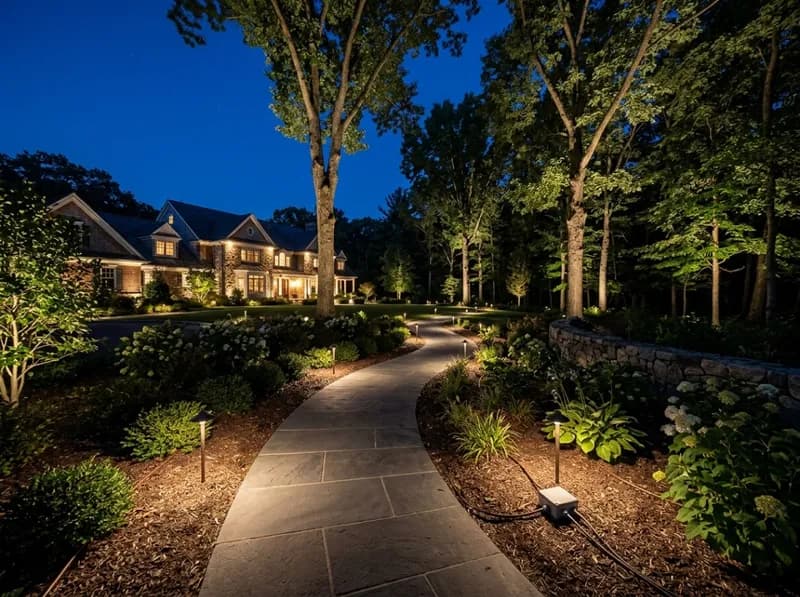
Amazon Landscape Lighting Kits vs. Professional Brass/Copper Systems
Amazon landscape lighting kits can be excellent value for small DIY projects, but larger properties require more than inexpensive fixtures. This guide compares budget kits with professional brass and copper systems, covering fixture materials, cable gauge, voltage drop, transformers, connectors, replaceable bulbs, warranties, and replacement parts to help homeowners choose a system that fits both their property and long-term maintenance needs.