Best Metal Raised Garden Beds in 2026: 10 Options Compared
Choosing the best metal raised garden bed involves more than comparing dimensions and sticker prices. This 2026 guide compares options from Vegega, Vego Garden, Birdies, Epic Gardening, and budget brands, covering steel thickness, protective coatings, structural reinforcement, warranties, and assembly formats. It also explains how bed height affects growing conditions and soil costs, helping gardeners choose a setup that fits their space, budget, and long-term expectations.
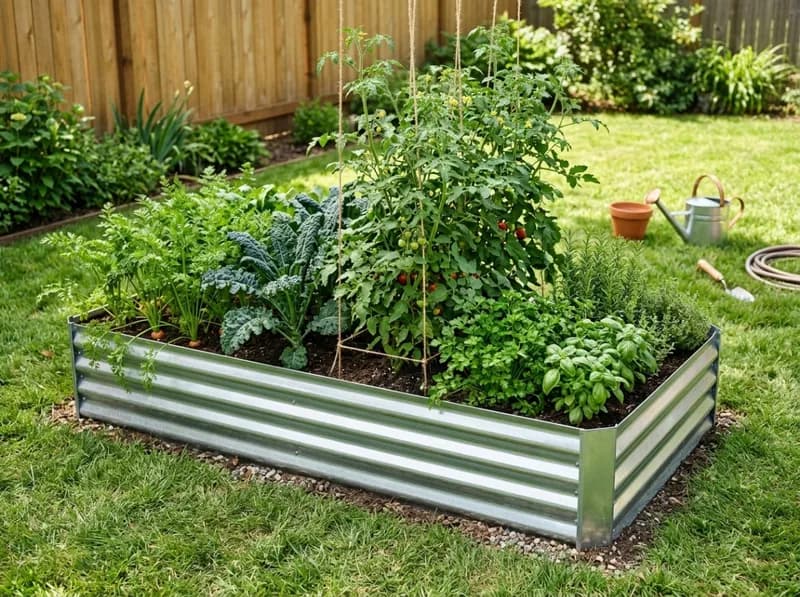
Metal raised garden beds are easy to assemble and generally require less maintenance than wood, but the price of the frame is only part of the cost. You still need to fill it with soil, and a deeper bed can require hundreds of dollars' worth of growing mix before you plant anything.
For US gardeners, the main choices range from inexpensive galvanized steel kits to coated-steel beds from Vegega and Vego Garden, with Birdies beds sold by Epic Gardening at the more premium end. Prices run from about $20 for some budget kits to $350 for more elaborate designs. Regular promotions also make advertised prices worth checking before you order.
The differences are not just cosmetic. Panel thickness, reinforcement, coating type and warranty terms all affect how a bed holds up outdoors. A manufacturer's claim of a 20-year lifespan is useful context, but it tells you less about your protection if the steel starts rusting than the actual warranty does.
This guide compares the best metal raised garden beds in 2026 by price, dimensions, construction, coating, warranty and intended use. It also covers soil costs, galvanized steel safety, bed height and when a wooden or elevated planter makes more sense.
The best metal raised garden beds at a glance
If you want… | Bed to consider | Listed price |
|---|---|---|
An affordable, compact metal bed | Vegega 17-inch Round, 42-inch diameter | $119.90 |
A standard backyard vegetable garden | Vegega 17-inch 8 × 4 ft, 10-in-1 | $199.95 |
Long-term structural warranty coverage | Epic Gardening / Birdies | $129–$299 |
A tall bed without paying premium rectangular-bed prices | Vegega 32-inch Round, 42-inch diameter | $159.95 |
A configurable bed with a broad accessory range | Vego Garden 17-inch 10-in-1 Jumbo | $199.95 |
A traditional wooden look | Greenes Fence Premium Cedar | From $139.99 |
Maximum growing space for very little money | Land Guard 8 × 4 ft two-pack | About $19.99 |
Prices are US listings recorded on October 13, 2026, and may change with promotions or availability. The individual product sections below explain the trade-offs behind each recommendation.
For most gardeners starting a permanent vegetable patch, a 17-inch bed is a sensible place to begin. The Vegega 10-in-1 offers a conventional 8 × 4 ft layout, while the Vego Garden Jumbo provides an alternative with a different coating system and accessory ecosystem. If documented material testing and warranty coverage matter more than matching a particular height, Epic / Birdies deserves a closer look.
Metal raised garden bed prices in 2026
Vegega and Vego Garden are useful starting points because both publish product specifications and sell modular coated-steel beds directly. Their products overlap in size and price, although the configurations and warranty terms are not identical.
Vegega prices by height and configuration
Configuration | Approximate dimensions | 11-inch height | 17-inch height | 32-inch height |
|---|---|---|---|---|
2-in-1 | 3.5 × 2 ft | — | $109.95 | — |
4-in-1 | 5 × 2 ft | — | $140.95 | $219.95 |
6-in-1 | 6.5 × 2 ft | — | $140.90 | $259.95 |
9-in-1 | 8 × 2 ft | $149.90 | $165.90 | $289.95 |
10-in-1 | 8 × 4 ft | $179.90 | $199.95 | $339.95 |
Round | 42-inch diameter | — | $119.90 | $159.95 |
The "in-1" designation refers to the number of possible assembly configurations, not the number of panels. Check the product listing for the exact layout you intend to build.
Vego Garden and Epic Gardening prices
Brand and model | Height | Listed price |
|---|---|---|
Vego Garden 17-inch 10-in-1 Jumbo | 17 inches | $199.95 |
Vego Garden 17-inch X-in-1 Giant | 17 inches | $229.95 |
Vego Garden Modern Pro, 42 × 83 inches | 17 inches | $349.95 |
Epic Round | 15 / 29 inches | $129 / $199 |
Epic Small | 15 / 29 inches | $139 / $199 |
Epic Medium | 15 / 29 inches | $169 / $249 |
Epic Large | 15 / 29 inches | $199 / $299 |
The heights are not directly interchangeable. Vegega's standard options include 11, 17 and 32 inches, while Epic / Birdies offers 15- and 29-inch beds. Compare the actual dimensions and usable soil depth rather than choosing by the product name alone.
Why round metal raised beds are worth considering
The Vegega 17-inch Round costs $119.90 for a 42-inch-diameter bed. It is an inexpensive way to get a relatively deep metal planter from a brand that publishes a warranty.
A small rectangular kit may cost slightly less, but it also provides less growing area. The round bed can accommodate herbs, salad greens, peppers and a few compact tomato plants, depending on spacing and variety.
Its shape has another advantage: soil pressure is distributed around a curved wall rather than concentrated at four corners. That can help the structure retain its shape, although reinforcement and construction still matter.
The compromise is layout. A round bed is less convenient for long rows, and it cannot sit as neatly along a fence as a narrow rectangle. It also does not share the same fit with Vegega's listed wall and arched trellises, so check accessory compatibility before planning an expandable garden.
Is an 11-inch or 17-inch raised bed better value?
For Vegega's 8 × 2 ft 9-in-1, the listed prices are $149.90 at 11 inches and $165.90 at 17 inches. The difference is only $16.
That small premium makes the 17-inch model attractive for gardeners who want flexibility across a wider range of vegetables. The shallower version can work well for leafy greens, herbs and other relatively shallow-rooted crops, especially when it sits directly on garden soil. The deeper version gives you more room for root development and a larger soil reservoir.
The biggest jump in price comes when moving from 17 to 32 inches. Vegega's 8 × 2 ft model rises from $165.90 to $289.95, while the 8 × 4 ft model rises from $199.95 to $339.95.
A tall bed may be worth the extra money if bending is difficult, but the additional soil can be expensive. Calculate the fill cost before deciding that a waist-high planter is the better deal.
The warranty matters more than the advertised lifespan
A metal raised bed can remain usable for many years, but manufacturers do not all provide the same protection against corrosion. The distinction is particularly important because soil, moisture and fertilizer can affect the coating over time.
Brand | Advertised lifespan or positioning | Warranty | Corrosion coverage |
|---|---|---|---|
Vego Garden | 20+ years | 2-year limited | Corrosion is explicitly excluded |
Vegega | No specific lifespan figure stated | 3 years for its metal-bed series | Certain corrosive chemicals and environmental conditions outside intended use are excluded |
Birdies | 20+ years | Limited lifetime for direct purchases | Normal surface rust and cosmetic patina are excluded |
Epic Metal Beds | 20+ year structural lifespan | Limited lifetime structural warranty, prorated from year 6 | Normal surface rust is excluded; ASTM B117 salt-spray testing is reported |
The table summarizes the stated terms in the original product research. Read the warranty for the exact model and sales channel before purchasing, because exclusions and eligibility can change.
What does a limited lifetime warranty actually cover?
Birdies and Epic / Birdies offer lifetime-style warranty coverage, but their terms are not identical.
Birdies' direct-purchase warranty applies to the original purchaser for as long as they own the bed, subject to its conditions. The purchase channel matters: buying through a reseller may not qualify.
Epic Gardening's Limited Lifetime Structural Warranty covers the first five years without charge. From year six, the stated coverage becomes prorated: 50% of the current retail price in years 6–10, 60% in years 11–15 and 75% from year 16 onward. Epic also offers a 120-day trial, which gives buyers a longer opportunity to evaluate the bed in their own garden.
Neither policy should be read as a promise that the bed will remain rust-free for life. Surface rust, cosmetic changes and certain environmental conditions are excluded. The original research also identifies coastal or marine salt exposure and unstable ground as important restrictions to check.
If you garden close to the ocean, do not assume that a long advertised lifespan or lifetime structural warranty will protect you against corrosion. Ask the manufacturer how its exclusions apply to your location.
Steel thickness: what does 0.6 mm mean?
Panel thickness is useful when comparing metal raised garden beds, but product listings do not always report it consistently.
US retailers often use steel gauge, where a lower gauge number generally means thicker steel within the same standard. Millimetres are easier to compare directly, although you still need to know whether the number refers to the bare steel or the finished coated sheet.
Stated gauge or thickness | Approximate measurement | Where it appears in product descriptions |
|---|---|---|
24 gauge | About 0.61 mm | Epic / Birdies, described as 24-gauge cold-rolled steel |
22 gauge | About 0.76 mm | Occasionally quoted by mid-range sellers |
20 gauge | About 0.91 mm | Sometimes claimed in third-party listings |
0.6 mm | 0.6 mm | Vegega and Vego Garden product pages |
0.5 mm | 0.5 mm | Common in budget imports; some sellers state it explicitly |
These figures should not be treated as directly comparable unless the measurement method is clear. The bare-steel thickness excludes the coating, while a finished-sheet measurement may include it.
The original research found conflicting third-party descriptions for some products. One source listed Vego steel at 0.8 mm, while another described a Vegega 17-inch bed as 20 gauge, or approximately 0.91 mm. Those figures do not match the respective manufacturers' published 0.6 mm specifications. Birdies is described as 24 gauge by Epic, while another review gives a 0.50 mm base-metal measurement.
When sources disagree, the safest approach is to use the manufacturer's published specification, note any uncertainty and avoid assuming that a higher gauge claim means a stronger finished bed.
Why reinforcement can matter more than thickness
Wet soil pushes outward against the walls of a raised bed. Long panels with little support can bow under that pressure, placing additional strain on corner joints and fasteners.
That is why you should check the reinforcement as well as the steel thickness. Interior support bars, U-shaped stiffeners and cross-rods help longer panels hold their shape. Curved designs also distribute pressure differently from rectangular beds, although their overall rigidity still depends on the complete structure.
For an 8-foot-long bed, look for details about the support system before choosing between two similar thickness claims. A well-supported panel may perform better than a thicker panel with a long unsupported span.
Galvanized steel vs. Aluzinc vs. VZ 2.0
The coating protects the steel from corrosion, so it is an important part of a metal raised bed's construction.
Galvanized steel uses a zinc coating. It is common in budget beds and can be a reasonable choice in a mild climate with good drainage. Corrosion often becomes most visible near the bottom edge, where moisture and soil contact persist.
Aluzinc is a zinc-aluminium alloy coating. Vego Garden's published figures describe corrosion rates several times lower than conventional galvanizing, although the actual result depends on the environment and test conditions. Those figures are manufacturer claims, not a guarantee of a particular service life in every garden.
VZ 2.0 is Vego Garden's name for its zinc-aluminium-magnesium coating system. The company says the coating can help protect cut edges. Vegega describes its coating as Zn-Al-Mg, which belongs to the same broad alloy-coating family.
The brands use different product names and testing claims, so do not assume that two similarly described coatings are identical in formulation or performance.
When is ordinary galvanized steel enough?
A premium alloy coating is not essential for every garden. A standard galvanized bed may be sufficient if the following conditions apply:
The bed has an open bottom and drains freely.
Your soil pH is within a suitable range for vegetable gardening.
The bed is not exposed to persistent coastal salt air.
You avoid damaging the protective coating during assembly or use.
Soil chemistry also matters. Very acidic soil and certain fertilizers can accelerate corrosion. Epic Gardening's care guidance specifically warns about fresh chicken manure, which can expose the coating to ammonia and acidity.
For a garden in a mild inland climate, a budget galvanized bed may be perfectly adequate. If the bed will stay in one location for years, or you garden in a harsher environment, the coating and warranty deserve more weight in the decision.
Choosing between 11-, 17- and 32-inch raised beds
Bed height affects both what you can grow and how much soil you need to buy.
Height | Best suited to | Main limitation |
|---|---|---|
11 inches | Herbs, greens, strawberries and other relatively shallow-rooted crops | Less usable soil depth when placed on a hard surface |
15–17 inches | General vegetable gardening, including many tomatoes and peppers | Requires more soil and may still require bending |
29–32 inches | Reduced bending, easier access and deeper soil volume | Higher frame and filling costs |
An open-bottomed bed sitting on garden soil is not limited to the depth of the metal walls. Roots can continue into the ground below, assuming the underlying soil is suitable and not blocked by hardpan or another barrier.
A bed on concrete, a deck or a balcony is different. Without access to the ground, the growing medium inside the frame is the entire root zone. For that reason, check the manufacturer's recommended soil volume and the needs of the crops you intend to grow rather than relying on external height alone.
A 17-inch bed is a useful general-purpose option. An 11-inch bed can save money and soil when placed over good ground, while a 29- or 32-inch model may be worthwhile if accessibility is the priority.
The best metal raised garden beds: 10 models compared
The following comparison uses the specifications and US prices recorded in the original research on October 13, 2026. Models are grouped by their intended use rather than ranked strictly by price.
Bed | Height | Footprint | Panel thickness | Coating | Warranty | Bottom | Price |
|---|---|---|---|---|---|---|---|
Vegega Round | 17 in | 42-in diameter | 0.6 mm | Zn-Al-Mg | 3 years | Open | $119.90 |
Vegega Round | 32 in | 42-in diameter | 0.6 mm | Zn-Al-Mg | 3 years | Open | $159.95 |
Vegega 9-in-1 | 11 in | 8 × 2 ft | 0.6 mm | Zn-Al-Mg | 3 years | Open | $149.90 |
Vegega 9-in-1 | 17 in | 8 × 2 ft | 0.6 mm | Zn-Al-Mg | 3 years | Open | $165.90 |
Vegega 10-in-1 | 17 in | 8 × 4 ft | 0.6 mm | Zn-Al-Mg | 3 years | Open | $199.95 |
Vego 10-in-1 Jumbo | 17 in | Configurable | 0.6 mm | VZ 2.0 | 2 years | Open | $199.95 |
Vego Modern Pro | 17 in | 83 × 42 in | Not published | Powder-coated galvanized steel | 2 years | See manual | $349.95 |
Epic / Birdies | 15 or 29 in | Three widths | 24 ga / 0.61 mm | Aluzinc | Lifetime, prorated | Open | $129–$299 |
Greenes Fence Cedar | 10.5 in | Multiple sizes | ¾-in boards | Untreated cedar | Not published | Open | From $139.99 |
Land Guard two-pack | 24 in | 8 × 4 ft | Not published | Galvanized steel | Not published | Open | About $19.99 |
Two entries have particularly important gaps in their specifications. Vego does not publish a steel thickness for the Modern Pro in the original research, and Land Guard does not provide a panel-thickness or coating-grade figure there. That makes a direct construction comparison difficult.
How much product information do manufacturers disclose?
Brand | Published thickness | Coating information | Independent laboratory testing in the original research | Warranty terms available |
|---|---|---|---|---|
Vegega | 0.6 mm | Zn-Al-Mg | Not identified | Yes |
Vego Garden | 0.6 mm; Modern Pro not published | VZ 2.0 or powder-coated galvanized steel, depending on model | Not identified | Yes |
Epic / Birdies | 24 gauge / 0.61 mm | Aluzinc | REACH, Prop 65 and ASTM B117 testing reported | Yes |
Greenes Fence | ¾-in wood boards | Untreated cedar | Not applicable | Not identified in the original research |
Land Guard | Not published | Galvanized steel; grade not published | Not identified | Not identified in the original research |
Epic / Birdies stands out for the testing documentation identified in the source material. That does not establish that every competing bed is unsafe or inferior; it means there is more publicly described test information available for this product line.
1. Vegega 17-inch Round, 42-inch diameter — $119.90
<text>Best for: a first metal raised bed or a compact herb and vegetable garden.</text>
The 17-inch Vegega Round combines 0.6 mm Zn-Al-Mg coated steel, an open bottom, stainless-steel screws and full-length rubber edging. The listed warranty is three years, and assembly is estimated at roughly 30–35 minutes.
At $119.90, it is one of the less expensive ways to buy a metal bed with a published warranty and a relatively generous depth. The 42-inch circle can accommodate a useful mix of herbs, salad greens, peppers and compact tomato plants, depending on spacing.
The curved shape also avoids the four sharp corners of a rectangular frame, although that alone does not guarantee long-term durability. The trade-off is growing layout: a circle is less convenient for long rows and is harder to position tightly against a fence.
Vegega's listed wall trellis and arched trellis are designed for certain rectangular beds, not this round model. If you plan to add climbing crops or a cover system later, check compatibility before buying.
Choose it if you want one manageable bed to get started. Skip it if you already know you need long planting rows or room for many full-size tomato plants.
2. Vegega 32-inch Round, 42-inch diameter — $159.95
<text>Best for: gardeners who want a taller bed without paying for a large rectangular frame.</text>
This model uses the same 0.6 mm Zn-Al-Mg panels and open-bottom design as the 17-inch round bed, but raises the working height to 32 inches. At a $159.95 list price, it is an affordable option for people who want to reduce bending.
The 42-inch diameter is useful here. You can generally reach the centre from one side without stepping into the growing area, something that becomes awkward with a wide, waist-high rectangular bed.
The additional height does increase the amount of soil required, and a round bed will not use every part of a rectangular garden plot efficiently. It is a practical choice for accessibility, but less attractive if your main goal is to maximize planting area.
Choose it if reducing the need to bend is the main reason you want a raised bed. Skip it if you need a large, continuous planting area for root crops or sprawling vegetables.
3. Vegega 11-inch 8 × 2 ft 9-in-1 — $149.90
<text>Best for: shallow-rooted crops on an existing garden bed.</text>
The 11-inch version is $16 cheaper than the 17-inch model with the same general footprint. It uses 0.6 mm Zn-Al-Mg coated panels, has an open bottom and offers nine possible configurations.
Its suitability depends heavily on where you put it. On good garden soil, roots can grow below the metal frame, making it more versatile than the external height suggests. On concrete or a deck, the soil inside is the full growing zone, so deeper-rooted vegetables have less room.
The 8-foot length also gives you more flexibility for trellises and long planting rows than the round beds. Vegega lists wall and arched trellis accessories for compatible rectangular frames, though you should confirm the exact fit for your chosen configuration.
Choose it if the bed will sit directly on suitable ground and you mainly plan to grow greens, herbs, radishes or strawberries. Skip it if it will sit on concrete or you want generous soil depth for carrots, parsnips or full-size tomatoes.
4. Vegega 17-inch 8 × 2 ft 9-in-1 — $165.90
<text>Best for: narrow yards, fence lines and compact vegetable gardens.</text>
The 17-inch 9-in-1 is a versatile choice for a suburban yard. At 8 × 2 ft, it can run alongside a fence or driveway edge while remaining accessible from both sides. The configurable design also gives you the option to change the layout if the first arrangement does not suit your garden.
Its 0.6 mm Zn-Al-Mg coated panels, open bottom and three-year warranty match the general specification of the other Vegega beds in this range.
The narrower footprint is not ideal for everything. Squash and pumpkins can spread well beyond the bed, and a two-foot width leaves less room for sprawling plants than a larger rectangular bed. Smaller configurations may be cheaper if you do not need the full eight-foot run.
Choose it if you have a narrow strip of usable ground. Skip it if you want a broad planting area for large, sprawling vegetables.
5. Vegega 17-inch 8 × 4 ft 10-in-1 — $199.95
<text>Best for: a general-purpose backyard vegetable garden.</text>
This is the standard rectangular bed to consider if you want space for several types of vegetables in one place. Its 32-square-foot footprint and 17-inch height can accommodate tomatoes, peppers, beans, kale and carrots, provided you plan the spacing and support requirements of each crop.
The 0.6 mm Zn-Al-Mg panels, open bottom and three-year warranty make it a straightforward option to compare against the Vego Garden Jumbo at the same listed price.
The main drawback is the amount of soil required. Filling an 8 × 4 ft bed to 17 inches takes roughly 45 cubic feet of growing mix. Depending on the soil blend and delivery options available locally, the fill can cost as much as — or more than — the frame.
Choose it if you have a permanent location and want a conventional backyard kitchen garden. Skip it if you are still deciding where the bed should go. Once filled, a bed this size is not something you will want to move.
6. Vego Garden 17-inch 10-in-1 Jumbo — $199.95
<text>Best for: gardeners planning to expand their setup over time.</text>
The Vego Garden Jumbo is a direct alternative to the Vegega 8 × 4 ft bed. It uses Vego's VZ 2.0 zinc-aluminium-magnesium coating and supports multiple configurations. Vego also offers a broader ecosystem of compatible accessories, including trellises, cover systems, irrigation kits and extension panels.
The original research lists irrigation kits at $89.95–$109.95, a retractable hose reel at $169.95–$189.95 and an elevated 2 × 4 ft bed at $219.95. These extras are not necessary to grow vegetables, but they may be useful if you want a more integrated setup.
The coating is a key part of Vego's pitch. Its VZ 2.0 finish is an alloy coating rather than conventional zinc galvanizing, and the company publishes corrosion-performance claims for it. However, the listed warranty is two years and excludes corrosion damage. Consider both the material claims and the exclusions when judging the value.
Choose it if you expect to add compatible accessories or multiple beds over several seasons. Skip it if a longer written warranty is your main priority; Vegega lists a three-year warranty for its metal-bed series.
7. Vego Garden Modern Pro, 42 × 83 inches — $349.95
<text>Best for: a more finished appearance in a visible part of the garden.</text>
The Modern Pro is the most expensive bed in this comparison. It combines powder-coated galvanized steel panels, aluminium posts and a double-wall profile. The listed dimensions are 42 × 83 inches, with a height of 17 inches.
Its double-wall construction creates an air gap between the walls, which is intended to stiffen the structure. Aluminium posts also give the bed a different appearance from designs that rely on folded steel corners.
The problem is specification transparency. The original research did not find a published panel-thickness figure for this model. That makes it difficult to judge its construction against cheaper beds using thickness alone.
At roughly $150 more than the Vego 10-in-1 Jumbo, the premium is easiest to justify if appearance, finish and the double-wall design matter to you. If you are choosing strictly by growing area per dollar, the less expensive model is easier to defend.
Choose it if the bed will be prominently visible and you prefer its finished look. Skip it if cost per square foot of planting space is your main concern.
8. Epic / Birdies Modular Metal Raised Beds — $129–$299
<text>Best for: buyers who value published testing and longer warranty coverage.</text>
Epic Gardening sells Birdies raised beds in the US. The product line uses 24-gauge cold-rolled steel with an Aluzinc coating, a food-safe finish and food-grade stainless-steel hardware. The beds have an open bottom and a Limited Lifetime Structural Warranty, with a 120-day trial offered by Epic.
One reason this line stands out is its published testing documentation. The original research identifies REACH screening across more than 240 substances, Prop 65 testing for lead, cadmium and phthalates, ASTM B117 salt-spray corrosion testing and alloy-composition verification.
That documentation provides more information for buyers who want to understand the materials used in their garden beds. It does not mean competing products are automatically unsafe; their published evidence may simply be less extensive.
Epic offers 15- and 29-inch heights across Round, Small, Medium and Large designs. The 29-inch Large at $299 is a possible alternative to the 32-inch Vegega Round, while the 15-inch Round at $129 provides a relatively inexpensive entry point.
Multipacks can also change the economics. The original research lists a four-pack of 15-inch Small beds at $500.40, or about $125 per bed.
The warranty is an advantage, but read the terms carefully. The first five years are covered without charge, with prorated coverage afterward, and normal surface rust is excluded. The tallest listed height is 29 inches, so these beds do not directly match a 32-inch option if working height is essential.
Choose it if material-testing documentation and long-term structural coverage matter to you. Skip it if you specifically need a 32-inch bed or want a warranty that covers all forms of corrosion.
9. Greenes Fence Premium Cedar — from $139.99
<text>Best for: gardeners who prefer wood and want a frame that is easy to modify.</text>
Metal is not the right choice for every garden. Greenes Fence Premium Cedar uses untreated North American cedar boards, listed at ¾ inch thick, with routed corner posts and interlocking joints.
Cedar is naturally resistant to rot, and ordinary woodworking tools make it easy to cut or reshape. If one board becomes damaged, you may be able to replace that board rather than the entire frame. The wood also provides a different look from coated steel and insulates better than a metal wall.
The trade-off is maintenance and service life. Climate, ground contact and assembly all affect how long the wood lasts, and boards may need replacement before a well-maintained metal bed reaches the end of its useful life. In hot weather, the insulating properties of wood can also be an advantage over steel, which conducts heat into the soil near the wall.
Choose it if appearance, workability and the option to repair individual boards matter more than minimizing long-term maintenance. Skip it if you want a coated-steel bed that you can assemble and leave in place for years with little attention.
10. Land Guard 8 × 4 ft, 24-inch two-pack — about $19.99
<text>Best for: a low-cost trial garden or temporary setup.</text>
The Land Guard two-pack is the budget outlier. The original research lists two 8 × 4 ft beds at 24 inches deep for about $19.99, with galvanized steel panels, an open bottom, crossbars and ground piles.
At that price, the amount of growing space is hard to ignore. But several important specifications are not published in the source material: panel thickness, coating grade and warranty coverage.
The original research also notes reports from buyers about sharp edges during assembly and hardware rusting around the soil line. Those reports are reasons to inspect the kit carefully rather than proof that every unit will have the same problems.
For a first growing season, a rental property or an experiment to see whether you enjoy raised-bed gardening, the low entry price may be acceptable. For a permanent installation that you expect to last a decade, the lack of published specifications and warranty protection makes it a riskier purchase.
Choose it if maximizing growing volume for very little money is the priority and you are prepared for possible replacement. Skip it if you want a long-term bed with clearly documented materials and warranty coverage.
Metal vs. wood raised garden beds
The comparison between metal and wood is often reduced to which lasts longer, but the right choice also depends on appearance, maintenance and how easily you want to modify the frame.
Factor | Coated steel | Cedar |
|---|---|---|
Service life | Can last 15–20 years or longer in suitable conditions; less in harsh environments | Boards may need replacement after several years, depending on climate and ground contact |
Maintenance | Protect the coating and monitor corrosion-prone areas | Inspect for rot and replace or refinish boards as needed |
Heat transfer | Conducts heat into soil near the walls | Insulates better than metal |
Repairability | Depends on whether replacement panels and compatible parts remain available | Individual boards can often be cut and replaced |
Initial cost | Varies from very cheap kits to premium designs | Depends on timber quality and construction |
Long-term value | Higher initial cost can be offset by a longer service life | May be cheaper to modify or repair, but replacement boards add to the cost |
Cedar's strongest arguments are its appearance, workability and insulating properties. Coated steel's main appeal is a durable frame that requires relatively little maintenance when installed in suitable conditions.
For either material, drainage and moisture exposure matter. With metal, the lower edge and hardware deserve particular attention because they can be exposed to persistent moisture and soil contact.
Are raised beds with legs worth buying?
Elevated planters are often included in the same lists as open-bottomed metal garden beds, but they serve a different purpose.
A bed with legs typically has a solid floor. Roots cannot grow into the ground underneath, so the planter's internal depth defines the entire growing zone. Soil may also dry out more quickly than in a ground-level bed of similar volume, increasing watering requirements.
These planters are useful for gardening from a seated or standing position, and for patios or balconies without accessible ground soil. They can be an excellent choice for someone who needs a more accessible working height.
If you have suitable soil to plant into, however, an open-bottomed raised bed can provide more root space for the same external height. It is usually the more economical choice for large vegetable crops.
Are galvanized steel raised garden beds safe for vegetables?
Galvanized steel is widely used in agricultural settings, and zinc is an essential micronutrient for plants. The relevant question is whether the soil conditions and coating are suitable for the intended use, not simply whether the material contains zinc.
University extension guidance, including guidance from the University of Maryland cited in the original research, treats galvanized raised beds as suitable for ordinary food crops under appropriate conditions. Soil pH and the materials used to construct the bed still deserve attention.
Soil pH and zinc
Acidic soil can increase the solubility of zinc. The University of Maryland guidance advises additional care when soil pH falls below 6.0 and recommends asking manufacturers about their coating processes and potential impurities.
Most vegetable gardens are managed within a pH range around 6.0–7.0, although individual crops have different preferences. Testing the soil is more useful than assuming every metal bed presents the same risk.
Fresh manure and corrosive materials
Fresh chicken manure is another consideration. Its ammonia content and acidity can attack a protective zinc coating, which is why Epic Gardening's care guidance warns against using it before composting.
Use properly composted manure, avoid unnecessarily damaging the coating and follow the manufacturer's instructions for fertilizers and other soil amendments.
What to check before buying
Choose a bed specifically designed and marketed for gardening rather than repurposed industrial sheet metal.
Ask the manufacturer for coating documentation if the material specification is unclear.
Be cautious with products that use unknown coatings or have no meaningful product information.
Inspect the panels and fasteners for damage during assembly.
Treat corrosion as a maintenance issue and follow the manufacturer's care guidance.
A powder-coated finish is not, by itself, a safety certification. It is a type of finish, and the materials underneath it still matter. Likewise, a manufacturer's "food-safe" statement is more useful when supported by clear documentation about the coating and testing.
How much does it cost to fill a metal raised bed?
Soil is often the largest overlooked cost when buying a raised bed. An inexpensive frame can still require a substantial budget for growing medium, especially at 24 or 32 inches tall.
For a rectangular bed, estimate the volume by multiplying length, width and fill depth in feet. An 8 × 4 ft bed filled to 17 inches needs approximately:
8 × 4 × 1.42 = 45.4 cubic feet.
Actual requirements depend on the internal dimensions, fill level and how much the mix settles.
Bed size | Approximate fill at the stated height | 2-cu-ft bags | Illustrative soil cost |
|---|---|---|---|
42-inch round, 17 inches high | About 14 cu ft | 7 | $60–$120 |
8 × 2 ft, 17 inches high | About 22 cu ft | 11 | $90–$180 |
8 × 4 ft, 17 inches high | About 45 cu ft | 23 | $180–$360 |
8 × 4 ft, 32 inches high | About 85 cu ft | 43 | $340–$680 |
These are planning estimates, not current quotes from soil suppliers. The listed bag counts are rounded up, and the price ranges depend on the mix and retailer.
Check the volume printed on the bag rather than judging by weight. A 40-pound bag may contain around 1.3 cubic feet, while some products contain only 0.75 cubic feet. That difference can turn an estimate of 23 bags into a much larger order.
For larger beds, bulk delivery may cost less per cubic foot than bagged soil. The original research estimates potential savings of 40%–60% at volumes above roughly one cubic yard, but many suppliers have minimum delivery quantities of two to three yards. Local delivery fees and the composition of the mix can change the comparison.
Can you use hugelkultur to reduce the soil bill?
You do not have to fill every inch of a deep bed with purchased soil mix. A hugelkultur-inspired approach places branches, leaves, grass clippings and untreated wood scraps in the bottom, with the growing mix above.
For a 32-inch bed, this can reduce the amount of purchased soil needed. The exact savings depend on the amount of material used and the crops you plan to grow. Organic material settles as it decomposes, so expect to add compost or growing mix later.
Avoid treated or painted wood and do not assume the bottom layer eliminates the need for suitable growing medium around the roots. A practical starting mix might contain topsoil, compost and an aerating ingredient such as perlite or coarse sand, adjusted to suit the crops and the properties of the materials available.
Should you put gravel at the bottom of a raised bed?
Usually not. A layer of coarse gravel beneath finer soil does not automatically improve drainage. The difference in pore sizes can create a perched water table, leaving water held in the finer soil above the gravel rather than draining freely.
The surface beneath the bed matters more. An open-bottomed bed on suitable ground can drain into the soil below. A bed on concrete needs a drainage plan, while an impermeable plastic sheet can trap water if used without appropriate drainage.
If drainage is a concern, start by checking the underlying surface and the soil mix instead of automatically adding gravel.
Frequently asked questions about metal raised garden beds
How long do metal raised garden beds last?
Service life depends on the coating, construction, soil chemistry, drainage and local climate. A coated steel bed may remain serviceable for 15–20 years or longer in suitable conditions, but persistent moisture and coastal salt exposure can shorten that period.
Treat a manufacturer's lifespan claim as an estimate, not a guarantee. The warranty tells you what the company is contractually prepared to cover, subject to its exclusions.
Do I need to line a galvanized raised bed?
Not usually if the bed has an open bottom and sits over suitable garden soil. A liner may be useful when you need to separate the growing mix from contaminated ground or contain soil on a hard surface.
However, a poorly chosen liner can trap moisture against the metal and make corrosion harder to inspect. Check the manufacturer's guidance before adding one.
Can you grow tomatoes in a metal raised garden bed?
Yes. The material of the frame is not normally the limiting factor. Tomatoes need sufficient usable soil depth, good drainage, room for their roots and support for their stems.
The original research cites UC Agriculture and Natural Resources guidance recommending roughly 12–18 inches of depth for tomatoes. A 17-inch open-bottomed bed can provide that depth in the growing mix, with roots able to extend into suitable soil below. Leave enough room for the variety you are growing and for cages or stakes.
Does the color of a metal raised bed matter?
Yes, particularly in climates with hot summers. Dark finishes absorb more solar radiation and can warm the soil near the wall, which may help during cooler weather but can be a disadvantage in hot conditions. Lighter or more reflective finishes generally absorb less solar energy.
Vegega publishes a soil-temperature comparison involving a dark-blue and an off-white bed. If you garden in a hot region, that comparison may be useful, but actual soil temperatures also depend on sunlight, irrigation, ambient temperature and the position of the bed.
Is Aluzinc better than galvanized steel?
Aluzinc is a zinc-aluminium alloy coating and may provide better corrosion resistance than conventional galvanizing under certain conditions. The result depends on the specific coating, exposure and maintenance.
Vego Garden publishes corrosion-performance claims for its coating system, but those claims should not be treated as a guaranteed lifespan for every garden. If the price difference matters, compare the coating information, panel construction and warranty exclusions together.
Is a 32-inch raised bed worth the extra cost?
It can be if you want to reduce bending or need a higher working surface. The extra height also increases the soil bill, and a tall bed is not automatically better for every crop.
If your main goal is growing vegetables economically, a 17-inch open-bottomed bed on suitable soil is often a better starting point. If accessibility is the priority, compare the working height, reach distance and total cost of filling a taller bed before choosing.
What is the best metal raised garden bed for beginners?
For a small garden, the Vegega 17-inch Round at $119.90 is an accessible starting point. For a more conventional vegetable patch, the Vegega 17-inch 8 × 4 ft 10-in-1 at $199.95 offers more planting area.
If you are unsure whether raised-bed gardening suits your space, start with a smaller bed rather than committing to a large frame and a substantial soil purchase. If documented material testing is a priority, compare the Epic / Birdies options and their warranty terms before making the final decision.
Final recommendation
The best metal raised garden bed depends on where it will sit, what you want to grow and how long you expect to keep it.
For most backyard vegetable gardens, start by comparing the Vegega 17-inch 8 × 4 ft 10-in-1 with the Vego Garden 17-inch 10-in-1 Jumbo. Both are listed at $199.95, so the choice comes down to the coating system, warranty, configuration and accessories you value.
The Vegega 17-inch Round is a practical choice for a smaller garden, while the 32-inch Round makes more sense if reducing bending is the main goal. Epic / Birdies is worth considering if published testing and longer structural warranty coverage are high on your list. For temporary gardens or strict budgets, a Land Guard kit can provide a great deal of space, but its missing specifications and warranty information make it harder to recommend for long-term use.
Before ordering, measure the location, check the actual dimensions, read the corrosion exclusions and calculate the soil volume. Those details will do more to determine whether the purchase is worthwhile than the product's advertised lifespan alone.
Related GuidesMore →
Best Pergolas of 2026: A Buying Guide to Roof Types, Weather Ratings, and Cost
Shopping for the best pergola in 2026? This buying guide compares wood, aluminum, retractable-canopy, and louvered pergolas, with product recommendations for different budgets and backyard layouts. Learn how to evaluate wind ratings, snow loads, roof drainage, anchoring, and installation requirements before you buy. It also explains why manufacturer specifications sometimes conflict with retailer listings and how to estimate the total cost beyond the advertised kit price.
Amazon Landscape Lighting Kits vs. Professional Brass/Copper Systems
Amazon landscape lighting kits can be excellent value for small DIY projects, but larger properties require more than inexpensive fixtures. This guide compares budget kits with professional brass and copper systems, covering fixture materials, cable gauge, voltage drop, transformers, connectors, replaceable bulbs, warranties, and replacement parts to help homeowners choose a system that fits both their property and long-term maintenance needs.
Best Low Voltage Landscape Lighting Kits (2026): A DIY Buying Guide
Compare the best low voltage landscape lighting kits for 2026, from budget DIY systems to premium brass setups. This guide looks beyond fixture count to transformer capacity, cable gauge, connectors, brightness, expandability, and replacement parts, helping homeowners choose a system that fits their yard and can handle future additions.