Best IEMs Under $100: A Practical Guide to Sound, Fit, and Value
Looking for the best IEMs under $100? This guide compares popular budget in-ear monitors, including the Truthear Pure, Hexa, ZERO:RED, Simgot EW300, Moondrop Aria 2, and 7Hz Salnotes Zero 2. Instead of relying on a simple ranking, it explains how sound tuning, bass response, vocal clarity, treble, and fit affect the listening experience. Find recommendations for different music preferences, gaming, and everyday use.
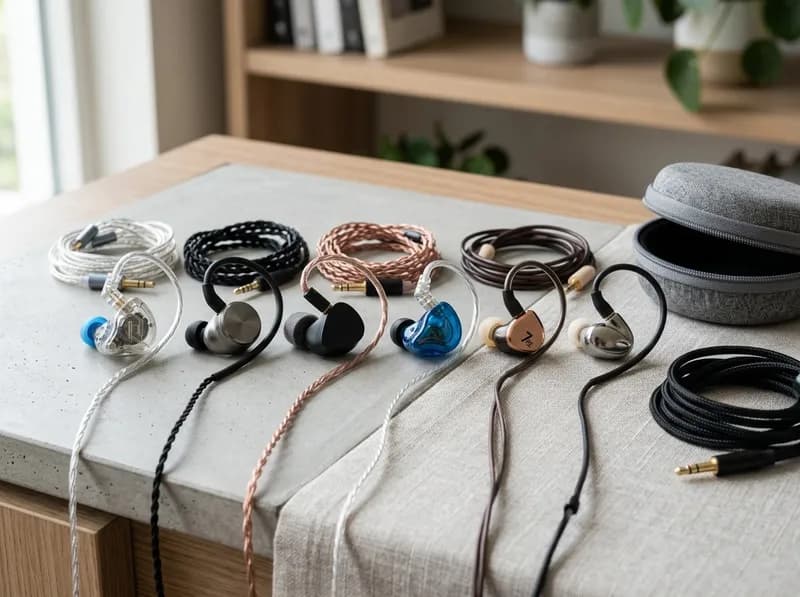
Choosing the best IEMs under $100 is less about finding a universal winner and more about deciding what you want to hear. If you enjoy deep bass, a lean, reference-oriented earphone may leave you underwhelmed. If clear vocals matter most, a bass-heavy model may make singers sound less distinct. And if you are sensitive to sharp treble, an IEM praised for its detail can become tiring during longer listening sessions.
This guide approaches the category by listening preference, fit, and everyday use rather than treating every model as a competitor in a single ranking. The Truthear Pure and Hexa are the two main options for balanced sound, the ZERO suits listeners who want more bass, and the Simgot EW300 offers a livelier presentation. The Moondrop Aria 2 is worth considering for its metal construction, while the 7Hz Salnotes Zero 2 is an inexpensive way to try wired in-ear monitors for the first time.
There are also good options below $30. The Truthear GATE is particularly worth a look if you need a microphone, while the Moondrop Chu II is a common recommendation for people with smaller ears.
A note on sources and pricing: Sound descriptions in this article summarize published reviews and community impressions; no listening tests were conducted for this guide. Technical specifications are based on manufacturer-published information where available. Unverified details are omitted rather than estimated. Prices are approximate U.S. street-price targets, not guaranteed current offers. Check the exact model, seller, and final checkout price before buying.
Best IEMs Under $100 at a Glance
The models below serve different needs, so the best starting point depends on your priorities.
IEM | Best for | Approx. U.S. price | Sound character | Main consideration |
|---|---|---|---|---|
Truthear Pure | Balanced everyday listening | $80–$90 | Warm-leaning, smooth, controlled treble | Vocals may sound less forward than on the Hexa |
Truthear Hexa | Clarity and neutral-leaning sound | $80–$90 | Leaner bass, clear mids, crisp treble | Shell and nozzle fit are not universal |
Truthear ZERO | Bass with a balanced foundation | $50–$65 | Emphasized sub-bass, controlled mids | Relatively large nozzle |
Simgot EW300 | Energetic, engaging sound | $60–$80 | Lively bass and treble | Version and treble preference matter |
Moondrop Aria 2 | Metal-bodied everyday alternative | $70–$90 when competitively priced | Balanced, generally warm-leaning | Value depends on the current price |
7Hz Salnotes Zero 2 | First-time IEM buyers | $20–$30 | Accessible tuning with added bass | Less refinement than the pricier options |
If you are unsure where to start, compare the Truthear Pure and Truthear Hexa. Both aim for a broadly balanced sound, but the Pure leans warmer and smoother, while the Hexa places more emphasis on a lean, clear presentation.
For more low-end impact, consider the ZERO. If you would rather spend around $20–$30, start with the Zero 2 or read the budget recommendations below.
How to Choose an IEM Under $100
Start with tuning, not driver count
Tuning describes the balance between bass, midrange, and treble. It has a major influence on how an IEM sounds, but terms such as neutral, warm, and bright are descriptive shorthand rather than standardized measurements.
Many IEM discussions compare products with the Harman target, a research-based frequency-response preference curve. It provides a useful reference, but it is not a universal definition of good sound. Individual preferences and ear anatomy can lead listeners to prefer a different balance.
Neutral or balanced: No single frequency range dominates the presentation, although different neutral targets can sound noticeably different.
Warm: More emphasis in the bass or lower midrange gives voices and instruments extra body.
Bass-focused: Stronger low frequencies add rumble and impact, but excessive mid-bass can obscure parts of the midrange.
Vocal-forward: Voices stand out more clearly against the instruments, which can work well for singer-songwriters, podcasts, and vocal-heavy music.
Bright: More upper-midrange or treble energy creates a crisp presentation, but can also make some recordings sound sharp.
V-shaped: Bass and treble are emphasized relative to the midrange, often creating an exciting sound while pushing vocals further back.
Frequency-response graphs help explain tonal differences, but they cannot predict every aspect of the listening experience. Measurement rigs, insertion depth, ear tips, and individual ear anatomy all affect the results, particularly in the treble. Use measurements to understand tonal balance, not as a complete score for sound quality.
Bass quantity is not the same as bass quality
Bass quantity describes how prominent low frequencies sound. Bass quality is a broader judgment involving note definition, separation, and how well the bass stays out of the way of vocals and other instruments.
Sub-bass supplies the deep rumble heard in electronic music. Mid-bass contributes much of the punch in kick drums and bass guitars. Too much mid-bass can make lower voices and guitars sound thick, while a leaner bass response leaves more room for the midrange but may feel underwhelming if you want physical impact.
The Truthear ZERO is a sensible starting point if you want stronger low-end weight without moving to an extremely bass-heavy tuning. The Hexa is better suited to listeners who prefer less bass emphasis. Neither approach is inherently superior; the choice comes down to your music and taste.
Pay attention to vocals and the midrange
The midrange carries much of the character of voices, guitars, and pianos. More lower-midrange energy can make a sound feel fuller, while added upper-midrange energy can bring vocals forward and make them seem clearer.
Think about how you want singers to sit in the mix. Do you prefer an intimate vocal presentation, or would you rather hear voices blend naturally into the arrangement? A tuning that makes one singer sound rich may make another recording seem congested. Likewise, a bright presentation can help vocals stand out on one track and become harsh on another.
The Pure and Hexa illustrate these differences well. In Headphones.com's published comparison, the Hexa retained more midrange clarity, while the Pure sounded smoother and richer. That is a reviewer observation rather than a guarantee that every listener will hear the same difference.
More treble does not automatically mean more detail
Treble affects the perceived sharpness of cymbals, hi-hats, and consonants. Additional energy in this range can make a recording sound crisp, but too much emphasis in a sensitive region can lead to sibilance or listening fatigue.
Brightness and resolution are not interchangeable. A bright IEM can make certain details easier to notice because it emphasizes their frequency range; that does not necessarily mean it reproduces more information than a smoother model. A well-tuned IEM can handle complex music without pushing every cymbal or consonant to the foreground.
If sharp “s” sounds bother you, or you regularly listen for several hours at a time, a smoother tuning is a sensible place to start. The Pure is worth comparing if the Hexa sounds too sharp to your ears, although no model is guaranteed to be fatigue-free.
Understand separation, imaging, and soundstage
Reviews often use technical terms to describe how an IEM presents music:
Separation: How easily you can distinguish instruments playing together.
Layering: How clearly different sounds appear to occupy different positions in a mix.
Imaging: How precisely sounds seem to be positioned across the stereo field.
Soundstage: The perceived size and openness of the listening space.
Transient presentation: How sharply attacks, such as snare hits or picked strings, are rendered.
These qualities depend partly on the recording and are not always judged consistently between reviewers. A presentation that sounds wide does not necessarily provide more accurate imaging, and a high driver count does not guarantee better separation.
For gaming, precise positional cues matter more than a general claim of a wide soundstage. For music, a tonal balance that suits your preferences is usually a better starting point than small differences in perceived spaciousness. The Hexa is known for its balanced frequency response, while RTINGS notes that in-ear designs generally do not reproduce the strong sense of space possible with some open-back headphones.
Fit can matter more than sound quality on paper
An IEM can receive excellent reviews and still be a poor purchase if you cannot wear it comfortably. Shell size, nozzle diameter, nozzle length, insertion depth, and the shape of your outer ear all influence fit.
A proper seal also affects sound. If the ear tip does not seal your ear canal, bass may sound weak, isolation can suffer, and the tonal balance may change as the earpiece moves.
The ZERO deserves particular attention because its nozzle is relatively large. Specialist buying guides regularly flag this as a potential problem for people with small ear canals. If you have struggled with bulky in-ear designs before, do not choose it on reputation alone.
For smaller ears, the Moondrop Chu II is worth investigating because of its compact metal shell. But shell dimensions alone do not guarantee comfort. Some listeners find foam tips easier to seal with less pressure; others dislike their texture or the sensation of a fuller seal. The best fit is the one you can wear comfortably for an entire listening session.
Isolation is passive: it comes from the seal between the tip and your ear canal rather than active noise cancellation. Foam tips may help, but comfort and sealing vary from person to person.
Ear tips are often the first upgrade worth trying
Before buying a new cable or another accessory, experiment with the tips included in the box. A better seal can improve bass response and consistency more noticeably than many inexpensive hardware changes.
Try all included sizes, including different sizes in each ear if necessary.
Look for a secure, comfortable seal without excessive pressure.
If bass sounds unusually weak or changes significantly when you move your jaw, check the seal.
Silicone tips are generally durable and easy to clean. Foam tips can help some listeners seal more easily but may need more frequent replacement.
Try different tip shapes and sizes before assuming the IEM itself is the problem.
This process is often called tip rolling. It costs little if you start with the included tips and can make a meaningful difference to comfort and sound.
Check the cable, connector, and microphone
For most buyers, a few practical details matter more than the cable's price.
Detachable cable: A replaceable cable is useful if the original gets damaged. Many models in this guide use a 0.78 mm two-pin connection, but the connector design can vary. Confirm whether the connection is recessed or flush before buying a replacement.
Cable noise: A cable rubbing against clothing can transmit noise into your ears. Wearing the cable over your ears and using a shirt clip may help.
Storage: A case protects the shells and reduces tangling.
Microphone: Many IEMs are supplied with a cable that has no inline microphone. If you need calls, online classes, or gaming voice chat, check the included cable before ordering.
For a budget IEM with a microphone included, the Truthear GATE, at around $22, is a practical choice. If you choose another model, you may need a replacement cable with an inline microphone, assuming a compatible version is available.
A replacement cable can improve convenience or make a damaged cable easier to replace. Its price alone is not evidence that it will improve sound quality.
Detailed Reviews: Best IEMs Under $100
The following recommendations are based on published specifications, independent reviews, and community impressions. Sound descriptions are summaries of those sources, not claims of personal listening experience.
1. Truthear Pure — Best Balanced All-Rounder for Most Listeners
<text>Approx. price: $80–$90</text>
The Truthear Pure is a strong starting point for listeners who want balanced sound but find some neutral-leaning IEMs too lean or sharp. It uses one dynamic driver and three balanced-armature drivers, according to the manufacturer.
The Pure is positioned as a warmer alternative to the Hexa. In Headphones.com's direct comparison, its midrange sounded richer and its treble more relaxed. That makes it worth considering for everyday listening across different genres, particularly if you want clarity without a consistently crisp or forward presentation.
Sound and performance
The Pure's additional mid-bass weight and more relaxed upper frequencies give instruments a fuller character. In the published comparison, vocals sounded richer than on the Hexa, although they could be less distinct within a dense mix. That is the central trade-off: the Pure favors smoothness and body, while the Hexa gives greater prominence to midrange contrast.
It is not a bass-first IEM, nor is it intended to be a strict reference monitor. Its appeal is the balance between clarity, warmth, and everyday listenability.
Specifications and fit
Truthear lists an impedance of 13.8Ω and sensitivity of 124 dB/Vrms at 1 kHz. The Pure uses a recessed 0.78 mm two-pin detachable cable and comes with silicone tips in two bore styles and a pair of foam tips.
The manufacturer says the housing is smaller than the Hexa-style design to improve wearability. That may help some listeners, but fit remains personal, and a smaller shell does not guarantee a comfortable nozzle or secure seal.
Strengths
Warmer, smoother presentation than the Hexa in published comparisons.
Balanced enough for a broad range of music.
Detachable cable and a useful selection of included tips.
Weaknesses
Vocals may sound less forward than on the Hexa.
The hybrid shell may still be uncomfortable for some ears.
At around $90, it competes with several established alternatives.
Buy it if: You want a balanced daily-listening IEM with some warmth and a less prominent treble presentation.
Skip it if: You prefer leaner bass, a more analytical sound, or stronger low-end impact. Compare the Hexa for a clearer midrange focus or the ZERO for more bass weight.
Verdict: The Pure is the most approachable balanced-leaning choice in this guide if you prefer a smooth presentation over an aggressively crisp one.
2. Truthear Hexa — Best for Clarity and Neutral-Leaning Sound
<text>Approx. price: $80–$90</text>
The Truthear Hexa remains a compelling option for listeners who want restrained bass and a clear midrange without spending hundreds of dollars. It uses one dynamic driver and three balanced-armature drivers. Truthear has listed it at $89.99, while some U.S. retailers have offered it for less.
Sound and performance
The Hexa's relatively lean bass keeps low frequencies from dominating the midrange. Its presentation is more direct than the Pure's, making it a good match for acoustic music, vocals, and listeners who prefer to hear the arrangement clearly.
The trade-off is that bass impact may feel modest, particularly with electronic music and hip-hop. Headphones.com's comparison describes the Hexa as retaining more midrange clarity than the Pure, while noting that an upper-treble peak can make cymbals sound sharper on some recordings. RTINGS finds its overall frequency response closely balanced, although the perceived treble character can vary with frequency and listener.
Specifications and fit
Truthear lists an impedance of 20.5Ω and sensitivity of 120 dB/Vrms at 1 kHz. The Hexa uses a recessed 0.78 mm two-pin cable and includes silicone tips in two styles alongside foam tips.
RTINGS found the fit comfortable and stable in its testing. However, other listeners report that the angular shell or nozzle does not suit their ears. Both experiences can be true: an IEM's physical fit is difficult to generalize from one person's review.
Strengths
Neutral-leaning balance and a clean midrange.
Well suited to acoustic music, vocals, and complex arrangements when the fit works.
Replaceable cable and multiple tip options.
Weaknesses
Bass impact may disappoint listeners who want a strong low end.
Treble can sound too crisp on some recordings.
Shell comfort is not universal.
Buy it if: You prioritize midrange clarity, modest bass, and tonal balance over an energetic presentation.
Skip it if: You want substantial bass impact or know you are sensitive to sharp treble. The Pure is the warmer alternative, while the ZERO offers more low-end weight.
Verdict: The Hexa remains a strong clarity-focused IEM, but it is no longer the automatic starting point for every beginner. If you prefer warmth and smoothness, the Pure deserves an equally close look.
Is the Truthear Hexa outdated in 2026?
Not necessarily. Truthear continues to list the Hexa, and it remains available through major retailers, although stock and pricing can vary by seller.
What has changed is its position in the market. Some 2026 buying guides now favor the newer Pure as their balanced recommendation because of its warmer tuning and more relaxed treble. Reviewers who prefer the Hexa's leaner presentation and greater emphasis on upper-frequency detail may still find it the better fit.
The practical choice is straightforward: compare the two at their current prices. Choose the Pure if warmth and smoothness are priorities; choose the Hexa if you want a leaner sound with a clearer sense of midrange contrast. Claims about one model having universally better resolution should be treated as reviewer judgments rather than objective guarantees.
3. Truthear ZERO — Best for Bass with a Balanced Foundation
<text>Approx. price: $50–$65</text>
The Truthear ZERO adds sub-bass weight without adopting an extremely bass-heavy tuning. It is a sensible option for hip-hop, electronic music, and pop if you want kick drums and basslines to have more impact while keeping vocals and instruments reasonably clear.
Truthear lists the ZERO at $64.99. Its design uses two dynamic drivers.
Sound and performance
Compared with the Hexa, the ZERO gives the low end more presence. Its bass-oriented balance makes electronic basslines and kick drums more prominent without necessarily overwhelming the rest of the mix.
The included 10Ω impedance adapter changes the electrical load and can increase bass emphasis. Think of it as an additional tuning option, not an accessory that everyone must use.
Specifications and fit
Truthear specifies a 10 mm plus 7.8 mm dual-dynamic-driver arrangement, an impedance of 17.5Ω, and sensitivity of 117.5 dB/Vrms at 1 kHz. It uses a recessed 0.78 mm two-pin cable and includes six pairs of silicone tips in two styles, a pair of foam tips, and the 10Ω adapter.
The main concern is physical fit. The nozzle is relatively large, which can make the ZERO uncomfortable or difficult to seal for some listeners. A poor seal can also undermine the bass response that makes this model attractive in the first place.
Strengths
More low-end weight without abandoning a broadly balanced presentation.
Included impedance adapter offers another bass-oriented option.
Competitive value at its listed price.
Weaknesses
Large nozzle can be a deal-breaker.
Less suitable for listeners who want a lean, strictly neutral bass response.
Poor fit can compromise both comfort and sound.
Buy it if: You enjoy bass-heavy music but still want vocals and instruments to remain reasonably clear.
Skip it if: You have small ear canals or regularly struggle with large nozzles. The Pure or Hexa may be more comfortable alternatives, depending on your ears.
Verdict: The ZERO is one of the stronger value choices for bass-conscious listeners under $100, provided its nozzle fits comfortably. Check the physical fit before committing to its sound reputation.
4. Simgot EW300 — Best for an Energetic, Engaging Sound
<text>Approx. price: $60–$80, depending on version and seller</text>
The Simgot EW300 is worth considering if you find restrained, neutral-leaning IEMs too polite. Community comparisons have praised its lively presentation, particularly for listeners who want bass impact and treble energy rather than a relaxed sound. Those impressions are subjective, so it is best viewed as a preference-driven recommendation.
Sound and performance
The EW300 is commonly described as energetic, with impactful bass and upper-frequency emphasis that brings out attack and sparkle. This can suit pop, electronic music, rock, and gaming.
The trade-off is that some listeners hear a metallic edge or excessive treble energy, especially with recordings that are already bright. Community opinions differ on whether its timbre sounds natural or slightly artificial. If you are sensitive to sibilance, this is not the safest blind purchase in the guide.
Specifications and fit
Check the exact version before ordering. Simgot has sold standard and HBB-related variants, and tuning options or included accessories may differ. Independent frequency-response data is available through Squiglink, but graphs should be considered alongside listening impressions rather than treated as a complete measure of performance.
Electrical specifications have not been independently verified for this guide, so they are intentionally omitted.
Strengths
Lively alternative to restrained tuning.
Engaging presentation for listeners who enjoy energetic bass and treble.
Worth comparing if the Hexa or Pure sounds too subdued.
Weaknesses
Treble character and timbre divide listeners.
Exact version and package contents need checking.
Poor fit for buyers who are sensitive to bright treble.
Buy it if: You want an engaging sound and enjoy some extra treble energy.
Skip it if: You prefer a consistently smooth presentation or already know that bright IEMs cause fatigue. Compare it with the Pure, ideally through a seller with a practical return policy.
If your budget can stretch toward $90–$110, the Simgot EA500LM is another model worth researching when detail retrieval is a priority. Check its current price before treating it as an under-$100 alternative.
Verdict: The EW300 belongs on the shortlist for listeners who want excitement, but its energetic tuning makes it a less universal recommendation than a smoother option.
5. Moondrop Aria 2 — Best Metal-Bodied Everyday Alternative
<text>Approx. price: $70–$90 when available at a competitive price</text>
The Moondrop Aria 2 is worth a look if you want a single-dynamic-driver IEM with a metal shell and a broadly balanced everyday sound. Unlike the less expensive options in this guide, its value depends heavily on the price you can actually find.
Sound and performance
Community comparisons often place the Aria 2 among the more relaxed all-rounders in this group, although impressions vary. It may suit listeners who want something less lean than the Hexa and less energetic than the EW300.
A single dynamic driver does not automatically make an IEM sound more natural, just as a metal shell does not guarantee better sound. Judge the Aria 2 by its tuning, fit, and current price rather than by its construction alone.
Specifications and fit
Moondrop specifies an impedance of 33Ω and sensitivity of 122 dB/Vrms at 1 kHz. The Aria 2 uses a 0.78 mm two-pin cable, a zinc-alloy shell, and a brass nozzle. Its package includes interchangeable 3.5 mm and 4.4 mm plugs, ear tips, and a storage case.
The metal construction is a tangible difference from plastic-shell alternatives, but the shell's weight and shape may not suit every ear. Confirm the included cable configuration and accessories on the seller's page.
Strengths
Straightforward single-dynamic-driver design.
Metal shell and useful cable accessories.
Worth considering when priced below the Pure or EW300.
Weaknesses
Value becomes less compelling near the price of newer competitors.
Metal construction does not guarantee better fit or longevity.
Community comparisons of sound remain subjective.
Buy it if: You find it at a competitive price and prefer its construction and sound character to the alternatives.
Skip it if: It costs nearly as much as the Pure and you have no particular preference for its build.
Verdict: The Aria 2 is a reasonable alternative rather than an automatic winner. Compare the final price against the Pure and EW300 before choosing it.
6. 7Hz Salnotes Zero 2 — Best Low-Cost First IEM
<text>Approx. price: $20–$30</text>
The 7Hz Salnotes Zero 2 makes sense for first-time buyers who want to try wired IEMs without committing most of their budget to an unfamiliar product. It is inexpensive enough to let you explore different tuning preferences before moving to a more expensive model.
Sound and performance
Compared with a leaner, reference-oriented tuning, the Zero 2 gives bass more presence. That makes it a reasonable choice for pop, casual gaming, and mixed playlists. Headphones.com's buying guide describes it as a revision of the original Zero with more bass and better-controlled treble, while noting that fit remains personal.
It does not offer the same level of refinement as the Pure or Hexa, but that is not necessarily a problem for someone entering the hobby. The price difference is substantial, and a well-fitting $25 IEM may be a better purchase than a more expensive model that feels uncomfortable.
Specifications and fit
The Zero 2 uses a single dynamic driver. Before ordering, check the current seller's specification sheet for impedance, sensitivity, cable termination, and included accessories. Generic retailer descriptions can omit important differences.
Its shell is simple, but no IEM is universally comfortable. Try the included tips before deciding whether you need an accessory upgrade.
Strengths
Low-cost way to try wired IEMs.
Accessible tuning with added bass.
Leaves room in the budget for ear tips or a compatible USB audio adapter.
Weaknesses
Less refinement than the Pure or Hexa.
Fewer tuning options than some pricier alternatives.
Fit and tip selection still affect the result.
Buy it if: You are new to IEMs and want to learn what sound signature you like before spending $80–$90.
Skip it if: You already know you want a more polished midrange or a specific neutral-leaning sound.
Verdict: The Zero 2 is a sensible first IEM. You do not need to spend $100 just to find out whether wired in-ear listening suits you.
Best IEMs Under $30: Four Budget Options Worth Knowing
The sub-$30 market is competitive enough that spending more is not always necessary. These four models cover different needs, including small-ear fit, vocal-focused listening, and a built-in microphone.
Truthear GATE — Best Budget IEM with a Microphone
<text>Approx. price: $22</text>
The GATE is a practical option for calls, online classes, and gaming voice chat if you want an included inline microphone rather than having to find a replacement cable. Its tuning is commonly described as vocal-forward with a slightly warm midrange, which can work well for podcasts, voices, and everyday listening.
If you need a budget IEM that doubles as a headset, check the current package details and microphone configuration before buying. Cable versions can differ by seller.
Moondrop Chu II — Best for Small Ears and Metal Construction
<text>Approx. price: $20</text>
The Chu II is frequently recommended for smaller ears because of its compact housing. Its all-metal shell is also unusual at this price, and its detachable cable adds practical value.
Its tuning is aimed more at pleasant everyday listening than at an especially aggressive or analytical presentation. Still, a compact shell does not guarantee a perfect fit: nozzle shape, tip size, and insertion depth remain important.
7Hz Salnotes Zero 2 — Best for Bass on a Tight Budget
<text>Approx. price: $25</text>
The Zero 2 is the bass-friendlier option for buyers who want a low-cost introduction to IEMs. It is an easy place to start if you listen to pop, electronic music, or mixed playlists and do not yet know which tuning you prefer.
Tangzu Wan'er S.G — Best for Warm, Easy Listening
<text>Approx. price: $19</text>
The Wan'er S.G remains a popular budget choice for listeners who prefer a warm, smooth presentation. It is worth comparing if the Zero 2 has more bass than you want or if you find the GATE's vocal focus too prominent.
Which budget IEM should you choose? Pick the GATE if you need a microphone, the Chu II if a compact shell is your priority, the Zero 2 if you want a bass-friendly first IEM, or the Wan'er S.G if you prefer a warmer, easygoing sound.
At roughly $20–$25, any of these can help you discover whether wired IEMs suit you without requiring a large initial investment.
Direct Comparisons: Which IEM Should You Buy?
Truthear Hexa vs. Truthear Pure
This is the most useful comparison if you want a balanced sound.
Choose the Hexa for leaner bass and a clearer, more forward midrange.
Choose the Pure for more warmth and a smoother, more relaxed treble presentation.
Consider fit: Truthear says the Pure's housing is smaller, but comfort still depends on your ears.
Compare prices: At similar prices, neither model is an automatic winner.
Headphones.com's direct comparison supports the main distinction: the Pure sounds warmer and more relaxed, while the Hexa retains more midrange contrast and a more prominent sense of upper-treble detail.
If you already know that you dislike lean bass or sharp treble, the Pure is a sensible starting point. If vocal clarity is your priority, the Hexa remains compelling.
Truthear ZERO vs. Truthear Hexa
These models suit different preferences rather than representing two levels of quality.
Choose the ZERO for stronger sub-bass weight and impact.
Choose the Hexa for leaner bass and a clarity-focused presentation.
Check fit: The ZERO's relatively large nozzle is its biggest drawback.
Consider value: The ZERO is generally less expensive.
For electronic music and hip-hop, the Red is a logical first choice if you want a fuller low end. If you listen mainly to acoustic music or vocals and prefer restrained bass, compare the Hexa instead.
Truthear ZERO vs. 7Hz Salnotes Zero 2
Both can work for first-time buyers, but the extra spending goes toward a different sound and a more demanding fit.
Choose the Zero 2 if you want to spend as little as possible while exploring wired IEMs.
Choose the ZERO if you want a more substantial bass presentation and its larger nozzle fits comfortably.
Consider your budget: The Zero 2 leaves more money for tips or an audio adapter, while the Red is worth considering when sound quality is already a priority.
If you do not yet know your preferences, starting with the Zero 2 is a low-risk way to learn what you like.
Simgot EW300 vs. Moondrop Aria 2
This comparison comes down to presentation, construction, and price.
Choose the EW300 if you want a more energetic sound with lively treble.
Choose the Aria 2 if you prefer its metal construction and a more relaxed everyday alternative.
Consider treble sensitivity: Community impressions of the EW300 are divided, so it is not a safe blind purchase for everyone.
Compare current prices: If the Aria 2 costs close to the Pure, the Pure deserves a look as well.
There is no clear technical winner for every listener. Decide whether the EW300's energy, the Aria 2's construction, or another model's smoother balance best suits your preferences.
Best IEMs Under $100 for Different Music and Use Cases
Listening preference or use case | Start with | Why |
|---|---|---|
Hip-hop, EDM, bass-heavy music | Truthear ZERO | Extra low-end weight without an extreme bass-first presentation |
Rock and busy mixes | Truthear Hexa or Simgot EW300 | Hexa for a leaner, clearer balance; EW300 for more energy |
Vocals, acoustic music, singer-songwriters | Truthear Hexa or Pure | Hexa for clearer midrange contrast; Pure for warmth and smoothness |
Classical, orchestral, jazz | Truthear Hexa | A balanced presentation with restrained bass |
Podcasts and everyday listening | Truthear Pure or 7Hz Zero 2 | Pure for a more polished option; Zero 2 for a low-cost start |
Gaming and positional audio | Truthear Hexa or Simgot EW300 | Clarity and imaging matter more than soundstage claims |
Gaming with voice chat | Truthear GATE or a compatible mic cable | The GATE offers an included microphone option |
Long sessions or treble sensitivity | Truthear Pure | Its warmer, more relaxed presentation may suit sensitive listeners |
First IEM, uncertain preferences | 7Hz Salnotes Zero 2 | An inexpensive way to discover your preferred tuning |
Genre is only a starting point. Two rock fans may want very different things: one may prefer thick guitars and powerful drums, while the other wants vocals and cymbals to stand out. Use the table to narrow the field, then consider fit and tuning before buying.
Is the Truthear Hexa good for gaming?
The Hexa is a reasonable wired IEM for gaming because its balanced presentation can keep dialogue, effects, and positional cues intelligible. However, no IEM guarantees better competitive performance. Results depend on the game's audio engine, the earphone's imaging, fit and seal, and your own perception.
For competitive shooters, clarity in the upper-midrange is often important for hearing footsteps and other cues. The roughly 2–5 kHz region is a useful part of that discussion, but there is no single frequency range that determines positional accuracy. Imaging, separation, the game mix, and your ability to interpret the sound all matter.
A presentation that sounds spacious can still blur lateral movement. The Hexa's tonal balance makes it a sensible option to compare, while the ZERO also appears in budget gaming recommendations. Test with the games you actually play rather than relying solely on reviews.
One practical detail is easy to overlook: most IEM cables do not include a microphone. If you need voice chat, check the package or budget for a compatible mic cable. The Truthear GATE is an alternative if you want a microphone included from the start.
Do You Need a DAC or Amplifier for IEMs Under $100?
For most buyers, the answer is no. Try your IEM with your existing phone, computer, or audio adapter before spending more on source equipment.
The terminology can be confusing:
DAC: A digital-to-analog converter turns digital audio into an analog signal.
Amplifier: Raises the analog signal to a level that can drive headphones or IEMs.
USB audio adapter: Provides audio output from a USB-C or Lightning port and usually includes both conversion and amplification.
DAC/amp combo: Combines these functions, sometimes with additional controls or output options.
An inexpensive adapter may be all you need if your phone lacks a headphone jack. Apple's USB-C-to-3.5 mm adapter, for example, has been listed at $9 in the U.S. store. Check the current price, connector, and compatibility for your device before ordering.
Consider a different audio source if:
You cannot reach a comfortable listening level without turning the volume all the way up.
You hear persistent background hiss when music is paused.
Your phone or computer has no compatible headphone output.
Your existing output produces audible noise or distortion.
You need physical volume controls or another specific feature.
Do not buy an expensive DAC simply because your IEM has multiple drivers. Extra hardware makes sense when it solves a real problem, not because it is a required step in the hobby.
Impedance and sensitivity: what matters in practice
Impedance, measured in ohms, describes how much a device resists alternating current. Sensitivity describes how much sound pressure an IEM produces for a given electrical input. Both influence how easily an IEM can be driven, but neither tells the entire story.
Sensitivity can be expressed in dB/mW or dB/Vrms. These units are not directly interchangeable without conversion, so a rating of 120 dB/Vrms should not be compared with 100 dB/mW as if the figures used the same scale.
Output impedance can also affect frequency response, particularly with multi-driver IEMs whose impedance varies across frequencies. A low-output-impedance source is a sensible general preference, but it does not guarantee identical results across every device and IEM combination.
Balanced output is not inherently better for everyday listening, either. Choose additional hardware for a specific need rather than assuming it will improve sound simply because it is more expensive.
Are More Drivers or Newer IEMs Always Better?
No. Driver count and release date are poor shortcuts for judging sound quality.
A single dynamic driver can sound excellent. The Zero 2 and Aria 2 demonstrate that a relatively simple configuration can remain competitive with hybrid designs. More drivers do not automatically mean better separation, either. Crossover design, acoustic implementation, tuning, and driver quality all influence the final result.
The Pure and Hexa use similar driver configurations but have different tonal presentations. That is a useful reminder that driver count does not tell you how an IEM will sound.
Newer models are not automatically better than older ones. A newer release may improve a specific weakness, but the release date itself is not evidence of superior performance.
Planar magnetic IEMs have also become less common among mainstream recommendations under $100 as some popular models have moved above this price range. The Letshuoer S12, for example, should not be assumed to fall within the budget at its current price. Check current offers rather than relying on older roundups.
Measurements are useful, but they are not definitive. The measurement rig, target curve, insertion depth, and your own anatomy all affect how results should be interpreted.
For most buyers, tuning, fit, and comfort matter more than whether an IEM has one driver, several drivers, or a planar design.
What to Know Before Buying Chi-Fi IEMs
“Chi-Fi” is an informal term for audio products from Chinese manufacturers. It covers a wide range of brands and price points, including most of the models in this guide. It should not be treated as a guarantee of either quality or poor customer service.
Confirm the exact model and seller
Related products can differ in tuning, drivers, connectors, and accessories, even when their names look similar. Check the complete model name, version, cable termination, and package contents before paying.
This is particularly important when using older buying guides. Some lists continue to recommend models that no longer represent the current price bracket, while others contain incorrect specifications. Verify technical details against manufacturer documentation whenever possible.
Treat sale prices as temporary
Prices can differ substantially between official storefronts, established U.S. retailers, and marketplace sellers. A discount does not automatically establish good value, and a low listing price may not be the cheapest option after shipping and taxes.
Compare the final checkout total with at least one other reputable seller. If a model is attractive only when heavily discounted, consider whether a more consistently priced alternative would be a better purchase.
Check returns and warranty coverage
A return policy and a manufacturer's warranty are different forms of protection. A return policy determines whether you can send a product back under the retailer's conditions. A warranty covers eligible defects according to its terms.
Before ordering, check:
Whether the seller is the manufacturer, an authorized retailer, or a marketplace seller.
The return window and whether opened in-ear products are eligible.
Who pays for return shipping.
What the warranty covers and how long it lasts.
Whether warranty service is available in the U.S. or requires international shipping.
Do not assume that a marketplace seller offers the same protection as buying directly from a manufacturer or established retailer.
Read quality-control reports in context
Online complaints can help identify recurring problems, but isolated reports do not establish a model's overall failure rate. One damaged cable or loose connector is not proof that every unit is unreliable.
Look for repeated, specific reports across independent sources, and make sure you understand the seller's return process. A detachable cable makes replacement easier, but it does not make the IEM immune to damage. Store the shells in a case, avoid pulling the cable by the wire, and keep moisture away from the connectors.
Frequently Asked Questions
What is the best IEM under $100?
For balanced everyday listening, start with the Truthear Pure or Hexa. The Pure has a warmer, smoother presentation, while the Hexa offers a leaner sound with a clearer sense of midrange contrast. If you want more bass, consider the ZERO. There is no universal winner because tuning and fit are personal.
Are IEMs under $100 worth buying?
Yes. You can find well-tuned wired IEMs for much less than $100, provided you choose a model that suits your preferences and fits comfortably. The 7Hz Salnotes Zero 2 is a reasonable starting point, while the Pure, Hexa, and ZERO offer different options at higher prices.
Are wired IEMs better than wireless earbuds?
Not in every respect. Wired IEMs do not need batteries and can offer strong sound quality for the price. Wireless earbuds provide convenience, app features, built-in microphones, and often active noise cancellation. The better choice depends on whether you prioritize sound, battery-free use, or wireless features.
Which IEM under $100 has the best bass?
The Truthear ZERO is a strong starting point if you want more bass while keeping the overall presentation reasonably balanced. Its large nozzle is the main reason to check fit before buying. For a much smaller budget, the 7Hz Salnotes Zero 2 offers a bass-friendly tuning below $30.
Which IEM under $100 is best for vocals?
The Truthear Hexa suits listeners who prefer a clearer, more forward midrange. The Pure is worth considering if you prefer vocals with a warmer, smoother character. At the budget end, the Truthear GATE is another option with a vocal-forward presentation. The best match still depends on the singer, recording, and your preferred sound.
Which IEM under $100 is best for gaming?
The Hexa and EW300 are reasonable models to compare, while the ZERO is another popular budget option. For competitive gaming, clarity and imaging matter more than marketing claims about soundstage width. If you use voice chat, confirm that the cable includes a microphone or plan for a compatible replacement.
Which budget IEM has a microphone for calls?
The Truthear GATE, at around $22, is worth checking first if you need an included inline microphone. Most other budget IEMs in this guide are commonly sold with cables that lack a microphone. Confirm the exact package before ordering.
Has the Truthear Hexa been discontinued?
Truthear continues to list the Hexa, and it has remained available through retailers, although availability and prices can vary. Some 2026 buying guides favor the newer Pure as a balanced recommendation because of its warmer tuning. The Hexa remains a relevant choice for listeners who prefer a leaner, clarity-focused presentation.
Do IEMs need burn-in?
There is little reliable evidence that routine driver burn-in produces a meaningful audible improvement in typical IEM use. Changes in fit, ear-tip seal, and familiarity with a new tuning can have a much more noticeable effect on what you hear.
Give a new pair some normal listening time before deciding whether you like it, but there is no established need to run music through it for dozens or hundreds of hours. If bass seems weak or inconsistent, check the seal before attributing the change to burn-in.
Which IEMs fit small ears?
Start with shell size and nozzle diameter rather than tuning alone. The Moondrop Chu II is frequently recommended because of its compact metal housing, while the ZERO's large nozzle can be a concern for smaller ear canals. Foam tips may help some listeners achieve a comfortable seal, but fit varies from person to person.
Are single-driver IEMs better than multi-driver IEMs?
Neither design is automatically better. A single dynamic driver can sound excellent, and a hybrid can also perform well. Tuning, acoustic implementation, fit, and quality control matter more than driver count alone.
Do I need a DAC for IEMs under $100?
Usually not. Try the IEM with your current phone or computer first. A USB audio adapter may be necessary if your device lacks a compatible headphone output. A different source is worth considering if you experience persistent hiss, distortion, or insufficient volume.
How do I choose ear tips for a better fit?
Start with the included tips and try different sizes in each ear if needed. Aim for a comfortable seal without excessive pressure. If bass sounds weak or changes dramatically when you move, the seal may be incomplete. Silicone and foam tips feel different, so choose based on both comfort and sound.
Are budget Chi-Fi IEMs reliable?
Reliability varies by model, production quality, and seller. Look for repeated reports from independent sources rather than drawing conclusions from isolated complaints. A clear return policy and practical warranty are particularly useful when buying from an unfamiliar seller.
Can I use IEMs with an iPhone, Android phone, or laptop?
Yes, provided the device has a compatible audio output. A device with a 3.5 mm headphone jack can use a standard 3.5 mm IEM plug. Devices without one may need a compatible USB-C or Lightning audio adapter. Check connector compatibility and microphone support before ordering.
Conclusion: Choose the IEM That Matches Your Preferences
The best IEM under $100 is not necessarily the most expensive model or the one with the most drivers. It is the one that combines a sound signature you enjoy with a comfortable fit and the practical features you need.
For balanced, warmer everyday listening: Truthear Pure.
For a leaner, clarity-focused sound: Truthear Hexa.
For bass with a balanced foundation: Truthear ZERO, if the nozzle fits.
For an energetic presentation: Simgot EW300, if you enjoy its treble character.
For a metal-bodied alternative: Moondrop Aria 2, when competitively priced.
For a low-cost first IEM: 7Hz Salnotes Zero 2.
For a budget IEM with a microphone: Truthear GATE.
For smaller ears: Consider the Moondrop Chu II, while checking fit rather than relying on shell size alone.
For warm, easy listening under $30: Tangzu Wan'er S.G.
If you do not have a strong preference yet, compare the Pure and Hexa as two different approaches to balanced sound. Move to the ZERO if you want more bass, or start with the Zero 2 if you would rather spend less while learning what you like.
Before ordering, check the current price, exact version, cable configuration, and return policy. Try the included ear tips before buying accessories, and do not spend extra on a DAC or premium cable unless it solves a specific problem.
The goal is not to find an IEM that wins every comparison. It is to find one that sounds right to you and remains comfortable enough to enjoy.
Related GuidesMore →
Best 75% Keyboards in 2026: Top Picks for Gaming, Work, and Everyday Use
Looking for the best 75% keyboard for gaming, work, or everyday typing? This guide compares six keyboards across different budgets and priorities, including the Keychron V1 Max, EPOMAKER x AULA F75, WOBKEY Rainy75, NuPhy Air75 V3, Wooting 80HE, and ASUS ROG Azoth. Compare dimensions, connectivity, switch compatibility, battery claims, customization, and approximate U.S. prices to find a keyboard that fits your workflow and desk.
How to Choose a JBL Bluetooth Speaker: Go, Clip, Flip, Charge, Xtreme, and Boombox Compared
Choosing a JBL Bluetooth speaker is easier when you match the model to how you actually listen. This guide compares the Go 5, Clip 5, Grip, Flip 7, Charge 6, Xtreme 5, Boombox 4, and PartyBox lineup by sound, portability, battery life, durability, and price. Find out which JBL speaker suits travel, everyday listening, outdoor gatherings, or parties, and when an older generation may offer better value than the newest model.
2026 Smartwatch Innovations: Which New Features Are Worth Buying?
Smartwatches in 2026 bring new readiness scores, AI health coaches, dual-frequency GPS, sleep apnea notifications, and longer battery life—but not every upgrade is worth the money. This guide compares the latest Apple Watch, Samsung Galaxy Watch, and Google Pixel Watch models, separating manufacturer claims from independent testing. Find out which features justify an upgrade, which require a subscription, and when keeping your current watch is the smarter choice.