How to Choose an IEM in 2026: A Use-Case Buying Guide
A use-case-first IEM buying guide for 2026. What to look for in vocals, classical, rock, metal, EDM, FPS gaming, movies and commuting — with specific models and US prices.
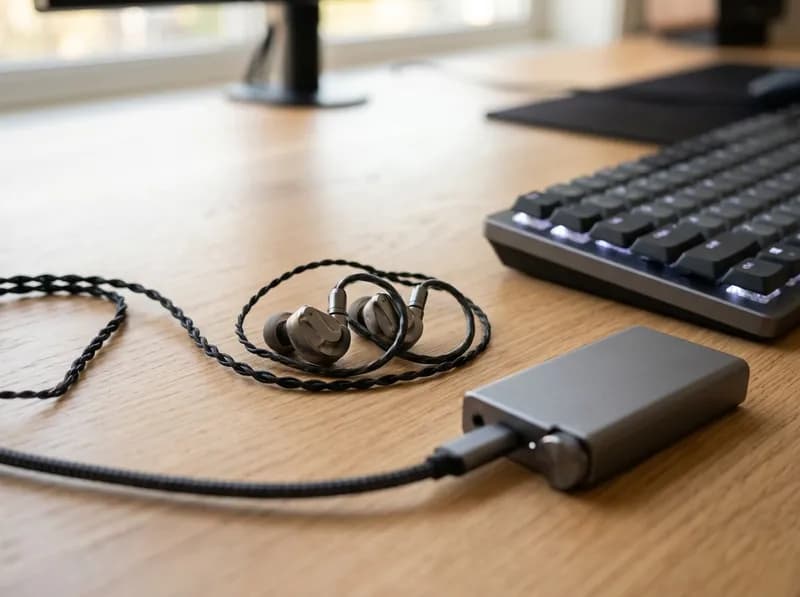
There is no single in-ear monitor that is objectively the best for every listener. The right pick depends on what you actually listen to, how you use the IEM, the sound signature you prefer, how long you wear it, and what you are plugging it into.
A vocal-focused IEM can make singers sound intimate and natural. A set with stronger sub-bass is far more satisfying for EDM or hip-hop. Classical music rewards controlled bass, separation, imaging and spatial layering, while competitive FPS gaming cares far more about imaging and positional cues than about bass quantity.
That is why a useful IEM buying guide should not simply rank products from first to last. It should start with the use case, identify the sonic characteristics that matter for that use case, and then find IEMs that fit the requirement — at a price you are willing to pay. That is exactly what this guide does.
The traits that actually matter
Before choosing a model, it helps to understand what the standard evaluation categories actually mean. These are the terms reviewers use, and they map to real listening outcomes.
Category | What it affects |
|---|---|
Bass | Sub-bass extension, punch, speed and control |
Midrange | Vocals, guitars, piano and overall tonal balance |
Treble | Detail, air, brightness and potential fatigue |
Resolution | Retrieval of small musical details |
Separation | Ability to distinguish instruments |
Soundstage | Perceived width, depth and spatial presentation |
Imaging | Accuracy of left/right and positional information |
Dynamics | Contrast between quiet and loud passages |
Timbre | Naturalness of voices and instruments |
Comfort | Fit, weight, nozzle size and long-session usability |
Isolation | How effectively outside noise is blocked |
Driveability | Whether a phone, dongle or amplifier is necessary |
Value | Performance relative to the current street price |
The important point is that these categories do not carry equal weight in every situation. A competitive FPS player benefits more from accurate imaging and separation than from powerful bass. A vocal listener cares more about midrange tonality than about an enormous soundstage. Read the rest of this guide with that in mind.
Start with tuning, not driver count
Tuning is the single most important variable in whether you will enjoy an IEM, and it is the one thing a spec sheet cannot tell you. These labels are shortcuts — two "warm" IEMs can sound very different — but they are a useful starting filter.
Tuning | What it sounds like | Good for |
|---|---|---|
Neutral / balanced | Relatively even tonal presentation | Mixed music, vocals, classical, general listening |
Warm | Emphasis on lower frequencies, more body | Vocals, jazz, relaxed listening, treble-sensitive listeners |
V-shaped | Bass and treble elevated relative to the mids | Energetic pop, rock, EDM, casual entertainment |
Bass-heavy | Built around substantial low-frequency presence | EDM, hip-hop, bass-focused listeners |
Vocal-focused | Greater emphasis on the midrange | Singers, acoustic music, dialogue |
Bright | Emphasis on upper-frequency information | Listeners who prioritize clarity, perceived detail and air |
Two things the labels hide. First, a brighter IEM is not automatically more detailed — it is simply more forward in the treble, and it will tire you out sooner. Second, driver count is a hardware configuration, not a measure of quality. A well-designed single dynamic driver regularly outperforms a poorly implemented multi-driver design on tuning, coherence and timbre. The Truthear GATE is a single dynamic driver at around $22 and it is a better listen than plenty of $100 hybrids.
What your budget really buys
Price is useful, but it should not determine the ranking by itself. Here is what each tier genuinely gets you in the 2026 US market.
Tier | What you get | Representative models |
|---|---|---|
~$20–50 | Genuinely competent tuning. Compromises show up in technical performance, accessories and build. | Moondrop Chu II ~$19 · Truthear GATE ~$22 · 7Hz Salnotes Zero 2 ~$25 · Tangzu Wan'er ~$25 · Kiwi Ears Cadenza ~$35 · KZ ZS10 Pro ~$45 |
~$50–100 | Arguably the most competitive part of the market. Real tuning sophistication and technical ability. | Truthear ZERO:RED ~$55–65 · SIMGOT EW300 ~$70–80 · Truthear HEXA ~$80–90 · Moondrop Aria 2 ~$89 · Truthear PURE ~$90 |
~$100–200 | Stronger technical performance, more sophisticated driver configurations, better refinement. | Etymotic ER2XR ~$100 · Oriveti Dynabird ~$100 · Sennheiser IE200 ~$120–150 · Sony INZONE E9 ~$150 · Meze Alba ~$159 · Truthear NOVA ~$150–170 |
~$200–500 | Differences become increasingly dependent on tuning preference, technical performance, build and personal fit. | Moondrop Blessing 3 ~$320 and similar |
Diminishing returns are real. A $320 IEM does not automatically make more sense for a particular listener than an $89 model. Above roughly $100, you are increasingly buying tuning preference and build quality rather than raw improvement. Prices also move constantly — treat every figure here as a street-price snapshot and confirm at checkout.
IEMs for vocals: female and male voices
If vocals are your priority, start with the midrange, not the driver count. A good vocal IEM needs a convincing balance between vocal presence, density, upper-midrange clarity and treble control. If bass is too prominent, vocals sound thick or recessed. If the upper midrange and treble are excessive, female vocals turn sharp and sibilant.
Female vocals
Clear upper mids
Good treble extension
Air around the voice
Controlled sibilance
Accurate vocal positioning
An excessively bright IEM can sound detailed for the first ten minutes and tiring by the fortieth.
Male vocals
Sufficient lower-midrange body
Natural vocal density
Controlled mid-bass
Good harmonic texture
An overly thin tuning makes male singers lose chest and resonance.
What to actually buy
Truthear PURE ~$90 — a 1DD+1BA hybrid tuned specifically for vocals. The elevated upper midrange brings the singer to the front of the mix and the treble is rolled off enough to stay non-fatiguing. This is the most vocal-specific pick in the Truthear line, and it is the one to buy if the human voice is most of your library.
Truthear HEXA ~$80–90 — neutral-reference with a modified Harman target. Cleaner and more analytical than the PURE, with better detail retrieval, but leaner in the bass and less forgiving of bright recordings.
Moondrop Aria 2 ~$89 — warmer and more musical than the HEXA, with a ceramic-coated dynamic driver. The easier listen of the two if you want vocals with body rather than analysis.
Kiwi Ears Cadenza ~$35 — the budget entry into natural vocal tone. A single beryllium dynamic driver that does surprisingly little wrong for the money.
For listeners who mainly consume vocals, an IEM that keeps the singer clearly positioned and tonally natural is more satisfying than one with a larger stage and a recessed midrange.
IEMs for pop music
Modern pop is one of the easiest genres to enjoy on a well-balanced IEM, because it combines vocals, bass, electronic elements, percussion and layered production. A good pop IEM should provide clear vocals, punchy but controlled bass, enough sub-bass, clean treble, good separation and long-term comfort.
There are three broad approaches:
Vocal-oriented — emphasizes the midrange and keeps the singer forward. Good if you mainly care about vocals.
Balanced all-rounder — bass, mids and treble kept relatively even. The safest choice for someone who listens to many different artists.
V-shaped entertainment tuning — bass and treble emphasized. Makes modern pop sound more energetic, especially when the production leans on drums and synthesized bass.
What to actually buy
Truthear GATE ~$22 — warm-neutral, with vocals forward and a treble that never bites. Sounds like a well-mastered speaker setup rather than an audiophile tool. The single best value pick in this guide for pop, R&B and indie.
Truthear ZERO:RED ~$55–65 — the V-shaped option. Elevated sub-bass, slightly recessed midrange, safe treble. Lively straight out of a phone with no EQ, and it ships with a Bass+ adapter if you want more.
Moondrop Aria 2 ~$89 — the balanced step up, with better technical performance than either of the above.
If you listen to pop most of the time but do not want multiple IEMs, a balanced set with a modest bass lift is the most flexible direction.
IEMs for classical music
Classical exposes weaknesses that compressed pop recordings hide. The characteristics that matter are imaging, instrument separation, soundstage, dynamic contrast, tonal accuracy, treble extension and bass control.
The most common misconception in this genre: a wider soundstage does not automatically make an IEM better for classical music. A huge but vague stage makes orchestral positioning less convincing, not more. What matters is the combination of space, imaging, separation and coherent timbre — a narrow but precise presentation beats a wide but blurry one every time.
Small ensembles
For chamber music and string quartets, prioritize instrument timbre, imaging, midrange naturalness and microdynamics.
Large orchestras
Large-scale recordings place greater demands on separation, layering, dynamic range, spatial organization and bass control. An IEM that becomes congested when many instruments play at once will struggle here even if it sounds impressive on simple tracks.
Piano and strings
Piano benefits from fast transient response, natural upper-midrange reproduction, controlled treble and accurate harmonic decay. The goal is not maximum brightness — too much upper-frequency emphasis makes piano notes sound harder than they should. Strings need a balance between detail and smoothness; an aggressive treble exaggerates bow texture and makes violins tiring.
What to actually buy
Truthear HEXA ~$80–90 — the reference pick at this price. Precise imaging, excellent separation, extended treble that reveals detail without sharpness. Lean in the bass, which suits orchestral material.
Etymotic ER2XR ~$100 — a unique presentation with an extremely in-your-head sound courtesy of its deep-fit triple-flange tips. A modern take on diffuse-field tuning with a touch of low-end warmth. Its weakness is a rolled-off treble and narrow imaging — the opposite trade-off from what most people expect.
Truthear NOVA ~$150–170 — 1DD+4BA tuned to Harman 2019 V2. Genuine bass extension and weight while staying controlled, clean midrange, detailed treble without grain, and confident instrument placement. It competes with IEMs that cost $200–250.
IEMs for jazz and blues
Jazz is particularly sensitive to timbre and spatial relationships. A good jazz-oriented IEM reproduces upright or electric bass, brass texture, cymbals, drum attacks, vocal positioning and room ambience.
The bass needs enough texture to follow a bass line without overwhelming the ensemble. Brass should sound energetic without becoming painfully bright, and cymbals need enough extension to retain their metallic character without turning into exaggerated treble.
What to actually buy
Truthear GATE ~$22 — warm-neutral with generous low-end and natural instrument tone. For acoustic jazz and blues it is remarkably hard to beat at the price.
Moondrop Aria 2 ~$89 — the warmer, more textured step up. Better microdynamics and a more convincing sense of room.
For jazz, a natural, balanced or mildly warm IEM is easier to live with than an aggressively V-shaped model.
IEMs for rock and metal
Rock does not simply mean "more bass." What rock and metal need is fast, controlled low-frequency reproduction and strong dynamics: drum impact, bass guitar definition, electric guitar texture, treble energy, separation and dynamic contrast.
For punk and alternative rock, a lively all-rounder works extremely well. For heavier metal, separation becomes more important because dense guitar layers, double-kick drums and vocals occupy the same frequency range.
A bass-heavy IEM is not automatically better for metal. Excessive mid-bass makes fast drum patterns and guitar riffs harder to distinguish, not easier. A good rock IEM delivers energy without turning complex passages into a wall of sound.
What to actually buy
SIMGOT EW300 ~$70–80 — a 1DD+1Planar+1PZT hybrid with a mildly V-shaped, energetic presentation. The planar driver gives it speed that most budget dynamics cannot match, which is exactly what fast metal needs. Note that it is absent from several major 2026 roundups despite strong review coverage — it is genuinely underrated.
Truthear NOVA ~$150–170 — the step up. Four balanced armatures plus a dynamic driver give it the separation to keep layered guitars legible.
IEMs for EDM and electronic music
Electronic music is one of the genres where sub-bass performance matters most. Look for deep sub-bass extension, strong bass impact, controlled mid-bass, good bass texture, fast enough bass response, treble extension and spatial presentation.
Bass quantity and bass quality are different things. An IEM can produce enormous bass and still sound muddy if the mid-bass spills into the lower mids. The useful combination for EDM is deep sub-bass + controlled mid-bass + clean mids + extended treble.
Different electronic genres, different requirements
Sub-genre | What it needs |
|---|---|
House | Punchy bass and rhythmic impact |
Techno | Controlled repetitive bass and good timing |
Dubstep | Deep sub-bass and strong dynamic contrast |
Trance | Spaciousness, treble extension, atmospheric presentation |
Drum & bass | Speed, separation, controlled low frequencies |
Hip-hop | Sub-bass depth and vocal clarity |
"EDM tuning" is not a single category, and any guide that treats it as one is oversimplifying.
What to actually buy
Truthear ZERO:RED ~$55–65 — neutral plus sub-bass, with excellent bass quality and a very well-controlled treble for the price. The included Bass+ adapter gives you a second, more aggressive low-end profile. The single best budget entry into EDM.
SIMGOT EW300 ~$70–80 — better bass speed and texture than the ZERO:RED, which matters for drum & bass and techno where the low end is fast and repetitive.
KZ ZS10 Pro ~$45 — 4BA+1DD with bright highs and a strong low end. A popular bass-forward budget option, though its treble is more aggressive than the two above.
IEMs for FPS and competitive gaming
Gaming is where IEM recommendations should be approached differently. For competitive FPS, the important characteristics are imaging, positional accuracy, separation, spatial information, midrange clarity, comfort and isolation — not bass.
Bass actively hurts competitive play. A bass-heavy IEM makes explosions and gunshots exciting, but excessive bass masks the quiet positional information — footsteps, reloads, ability cues — that actually wins rounds. If you play ranked FPS, buy for imaging, not for impact.
What to actually buy for competitive FPS
Truthear HEXA ~$80–90 — excellent separation and precise imaging, with flat-ish bass that keeps positional cues audible. Note that RTINGS rated it poorly for gaming on the strength of its soundstage width; the counterpoint is that its imaging accuracy and isolation are exactly what competitive players need. Buy it for precision, not for spectacle.
Truthear ZERO:RED ~$55–65 — the budget pick. Its relatively balanced tuning keeps important game information from being overwhelmed by bass, and it remains one of the most frequently recommended inexpensive gaming IEMs. Just be aware its nozzle is unusually wide and may not fit smaller ears.
SIMGOT EW300 ~$70–80 — sold explicitly as a gaming-capable IEM, with a hybrid driver setup that keeps detail intact during busy fights.
Sony INZONE E9 ~$150 — a purpose-built competitive option that prioritizes separation, isolation and spatial width over musicality.
RPG and open-world games
The priorities change completely: soundstage, atmosphere, bass, music, environmental sounds and dynamic impact. For large open-world games, an overly clinical competitive tuning actually reduces enjoyment. Look toward a balanced or W-shaped set — the Truthear ZERO:RED and Meze Alba ~$159 both fit here.
Story-driven games
Dialogue becomes much more important. A balanced midrange keeps voices intelligible while music and environmental effects stay convincing. The Truthear GATE ~$22 is the value pick here for exactly this reason.
The microphone problem nobody mentions. Most audiophile IEMs do not include a microphone. If you need voice chat, you will need a separate clip-on mic, a USB desk mic, or a cable with an inline mic — and not all IEMs support aftermarket mic cables, since the 2-pin or MMCX connector has to match. Decide this before you buy, not after.
IEMs for movies and streaming
For Netflix, movies and TV series, the ideal IEM depends heavily on the content — but the most important characteristic for general viewing is dialogue intelligibility.
An IEM with huge bass and recessed mids sounds impressive during action scenes while making quiet dialogue sound unnatural. If you watch a lot of drama and dialogue-driven content, buy for the midrange first.
Dialogue-heavy content — prioritize midrange clarity, vocal positioning, moderate bass and long-term comfort.
Action movies — bass and dynamics become more important. Explosions and impacts benefit from controlled low-frequency extension.
Science fiction — spatial presentation and deep bass add considerably to the experience.
What to actually buy
Truthear GATE ~$22 — warm-neutral with forward vocals. For dialogue-driven series this is the most sensible cheap pick, and it is comfortable enough for a full season binge.
Kiwi Ears Cadenza ~$35 — a natural, non-fatiguing tuning that handles both dialogue and score without drawing attention to itself.
Truthear ZERO:RED ~$55–65 — if your watchlist leans action and sci-fi, its sub-bass makes the big moments land without gutting the midrange.
IEMs for commuting and daily use
The ideal IEM for a quiet desktop is not necessarily the ideal IEM for a train. For commuting, the priorities are passive isolation, comfort, weight, fit stability, long-term fatigue, driveability and cable practicality.
A highly resolving IEM is less useful on public transport. Environmental noise masks the very details you paid for. On a subway, isolation beats resolution every time — and isolation comes mostly from the fit and the ear tips, not from the price.
Train and subway — isolation is the single most important factor.
Air travel — isolation and low-frequency comfort matter, but IEMs cannot match the active low-frequency cancellation of ANC headphones.
Office — moderate isolation is useful, but comfort and awareness of your surroundings may matter more.
Coffee shops — a comfortable, relatively neutral IEM beats a highly energetic tuning over several hours.
What to actually buy
Etymotic ER2XR ~$100 — the isolation benchmark. Its deep-fit triple-flange tips block more outside noise than almost anything else at this price. The trade-off is a genuinely unusual fit that some people cannot tolerate.
Shure SE215 — rated for up to 37 dB of passive noise isolation and built for professional wear and tear, with a secure over-ear cable routing that survives being yanked. If your commute involves a crowded train and a bag, this is the practical choice.
Kiwi Ears Cadenza ~$35 — light, comfortable and neutral enough for hours. The budget commuter pick.
IEMs for long listening sessions
If you listen for four to six hours a day, sound quality is only half the equation. Pay attention to nozzle diameter, shell size, weight, ear-tip selection, treble intensity, bass pressure, isolation and cable comfort.
A bright IEM can sound exciting for thirty minutes and exhausting after several hours. But that does not mean a darker IEM is automatically better — the goal is a signature that does not constantly demand your attention, combined with a physically comfortable fit.
What to actually buy
Truthear GATE ~$22 — warm-neutral, smooth treble, comfortable shell. Explicitly built to be an IEM that "disappears."
Moondrop Chu II ~$19 — small, light and unobtrusive. Easy to wear for hours, even lying down.
Truthear PURE ~$90 — rolled-off treble keeps fatigue low while the vocal-forward tuning stays engaging over a long session.
Fit is highly individual. A shell that is comfortable for one listener creates pressure points for another. No review can tell you how an IEM will feel in your ears — which is why buying from a seller with a reasonable return policy matters more than a half-point difference in a review score.
The best IEM type if you listen to everything
For a "one IEM for everything" buyer, avoid extreme tuning. A good all-rounder has moderate bass, natural mids, controlled treble, reasonable technical performance, good imaging and a comfortable fit. The key point is that an all-rounder is not the best specialist — it is valuable because it avoids major weaknesses across many use cases.
What to actually buy
Truthear ZERO:RED ~$55–65 — a neutral-balanced approach that adapts across music and gaming, with a Bass+ adapter for when you want more. Its one real weakness is a very wide nozzle that causes problems for smaller ears.
SIMGOT EW300 ~$70–80 — a different philosophy: a dynamic driver plus planar plus PZT driver, with multiple tuning options depending on version and nozzle configuration. More flexible than the ZERO:RED and better for anyone who wants to experiment.
Truthear NOVA ~$150–170 — if your budget allows one step up, this is the pick that stops the upgrade itch. It does not specialize like the PURE or HEXA; it simply does everything well.
Fit, nozzles and ear tips: the cheapest upgrade you are ignoring
Three practical factors change your experience more than a modest step up in price.
Nozzle diameter
The Truthear ZERO:RED is one of the most recommended budget IEMs in the world, and its single most common complaint is a nozzle wide enough to be uncomfortable in smaller ear canals. If your ears are on the small side, the Truthear HEXA, GATE or PURE are safer shapes at similar or lower prices. Buy the one that fits, not the one that scores highest.
Ear tips
Ear tips are the cheapest and most effective tuning tool you have. Silicone tips give a balanced sound with lighter bass. Foam tips seal deeper and add perceived bass — typically 2–3 dB — because they isolate better. A poor seal costs you both bass response and isolation, no matter what the IEM cost. Before buying a new IEM to "get more bass," try a different tip.
Isolation figures
Isolation is measured in decibels, and the numbers are worth checking if you commute. The Shure SE215, for example, is rated for up to 37 dB of passive isolation — a figure most budget ChiFi IEMs do not publish. If blocking noise is your priority, isolation specs matter more than frequency response graphs.
Phone or dongle DAC?
Most modern IEMs do not automatically require an expensive amplifier. The relevant specifications are impedance, sensitivity, required volume, the output impedance of your source, and background noise.
A low-impedance, highly sensitive IEM reaches adequate volume directly from a phone or laptop. A dongle DAC is still useful for better connection compatibility, cleaner output, lower noise, convenient USB-C connectivity, and more output power when needed.
Buying a more powerful amplifier does not automatically make an IEM sound better. For an easy-to-drive IEM, spending $150 on amplification will often deliver less benefit than choosing better ear tips — or, more importantly, selecting an IEM with a tuning you actually prefer. A $30 dongle is usually enough. Fix tuning first, amplification last.
Many IEMs in this guide sit below 30 ohms with sensitivity above 100 dB, which means a phone or laptop drives them adequately. Check the sensitivity and impedance figures rather than assuming every Hi-Fi IEM needs an amplifier.
A simple IEM buying decision tree
If this is you | Then do this |
|---|---|
Mainly listen to vocals | Prioritize midrange, vocal positioning and timbre. Start with the Truthear PURE. |
Mainly listen to classical | Prioritize imaging, separation, dynamics and tonal naturalness. Start with the Truthear HEXA. |
Mainly play competitive FPS | Prioritize imaging, positional accuracy and separation — not bass. Start with the HEXA or ZERO:RED. |
Mainly listen to EDM | Look for deep sub-bass and controlled mid-bass. Start with the ZERO:RED or EW300. |
Mainly listen to rock or metal | Look for dynamics, bass speed and separation rather than maximum bass. Start with the SIMGOT EW300. |
Watch movies frequently | Prioritize dialogue clarity and controlled dynamics. Start with the Truthear GATE. |
Commute every day | Prioritize fit and isolation before chasing detail. Start with the Etymotic ER2XR or Shure SE215. |
Listen for several hours daily | Comfort and treble fatigue become major criteria. Start with the Truthear GATE or Moondrop Chu II. |
Listen to everything | Start with a balanced all-rounder. The ZERO:RED or EW300. |
Only use a phone | Check sensitivity and impedance before buying amplification. A cheap dongle is usually enough. |
Scene × IEM quick guide
Use case | Preferred sound | Key priorities | Example direction |
|---|---|---|---|
Female vocals | Clear, smooth mids | Vocal tone, treble control | Truthear PURE |
Male vocals | Full and natural | Lower mids, density | Truthear PURE, Moondrop Aria 2 |
Pop | Balanced with bass | Vocals, punch, comfort | Truthear GATE, ZERO:RED |
Classical | Spacious and controlled | Stage, imaging, dynamics | Truthear HEXA, ER2XR |
Jazz | Natural | Timbre, layering, microdynamics | Truthear GATE, Aria 2 |
Rock | Energetic | Dynamics, bass speed | SIMGOT EW300 |
Metal | Fast and separated | Imaging, separation, transient control | SIMGOT EW300, NOVA |
EDM | Deep and controlled | Sub-bass, slam | Truthear ZERO:RED, EW300 |
Hip-hop | Powerful low end | Sub-bass, vocals | KZ ZS10 Pro, ZERO:RED |
FPS | Clean and positional | Imaging, separation | Truthear HEXA, ZERO:RED |
RPG | Immersive | Stage, bass, atmosphere | Meze Alba, ZERO:RED |
Movies | Full but clear | Dialogue, dynamics | Truthear GATE |
Commuting | Comfortable and isolating | Fit, isolation | Etymotic ER2XR, Shure SE215 |
Long listening | Smooth and comfortable | Fit, treble fatigue | Truthear GATE, Chu II |
Mixed genres | Flexible | Overall balance | Truthear ZERO:RED, NOVA |
These are selection directions, not absolute rankings. Your ear shape, hearing sensitivity and music preferences can easily change the result.
Final buying advice
The most important lesson when choosing an IEM is that there is no universal "best IEM." A vocal listener, a classical listener, an EDM fan and a competitive FPS player may reasonably choose four completely different products. The differences are not about one product being objectively better — they are about whether its tuning and technical characteristics match the job.
If you mainly listen to vocals, focus on midrange quality, vocal positioning and treble control. Classical listeners should pay more attention to imaging, separation, dynamics and natural timbre. Rock and metal benefit from dynamic impact and controlled bass, while EDM places greater emphasis on sub-bass extension and impact. Competitive gamers should prioritize imaging, positional information and separation, rather than assuming more bass or more treble automatically means better gaming performance.
If you want one IEM for almost everything, a balanced all-rounder is the most sensible starting point — the Truthear ZERO:RED and SIMGOT EW300 represent two different approaches to that category, with the former emphasizing a balanced presentation and the latter offering a more flexible driver and tuning concept.
Most importantly, do not choose an IEM simply because somebody calls it the "best." Start with your music, your games, your environment, your ears and your budget. Then select the sound characteristics that solve your particular problem.
FAQ
What type of IEM is best for vocals?
A balanced or vocal-focused IEM with clear, natural mids and controlled treble. Bass should provide enough warmth without masking the singer. The Truthear PURE is tuned specifically for this; the HEXA is the more analytical alternative.
What IEM is best for classical music?
Look for good imaging, separation, dynamic contrast and natural instrument timbre. Soundstage is useful, but width alone does not determine classical performance — a precise, narrow stage beats a wide, vague one.
Are IEMs good for FPS gaming?
Yes. A well-tuned IEM provides excellent positional information, and many players find them more comfortable than a headset over long sessions. For competitive FPS, imaging and separation matter far more than bass — excessive bass masks footsteps.
What's the difference between a gaming IEM and a music IEM?
There is no strict technical category separating them. Gaming-oriented choices typically emphasize imaging, separation, comfort and positional cues, while music-oriented choices may prioritize timbre and musical balance. Most IEMs sold as "gaming" IEMs are simply well-tuned IEMs with a marketing label.
What tuning is best for EDM?
Strong sub-bass extension, good impact and controlled mid-bass. Excessive mid-bass is what makes electronic mixes muddy. The Truthear ZERO:RED and SIMGOT EW300 are both good starting points.
What IEM is good for rock and metal?
A lively IEM with strong dynamics, controlled bass and good separation. More bass is not automatically better — excessive mid-bass blurs fast drum patterns and guitar riffs. Speed matters more than quantity.
What IEM is best for pop music?
A balanced all-rounder with clean vocals, moderate bass and non-fatiguing treble. The Truthear GATE at around $22 is the value pick; the Moondrop Aria 2 is the step up.
What IEM is best for long listening sessions?
Comfortable shell geometry matters as much as sound. A balanced or mildly warm tuning with controlled treble reduces fatigue, but individual ear sensitivity matters more than any review can capture.
Should an IEM be paired with a DAC?
Not necessarily. Many IEMs are easy to drive from phones and laptops. A dongle DAC becomes useful when you need USB connectivity, cleaner output or additional power — but it will not fix a tuning you do not like.
Can a phone drive an IEM directly?
Many can. Check the IEM's sensitivity and impedance rather than assuming every Hi-Fi IEM requires an amplifier. Most IEMs here are under 30 ohms with sensitivity above 100 dB.
Should I prioritize resolution or tuning?
For most listeners, tuning comes first. An extremely resolving IEM with a sound signature you dislike is unlikely to become enjoyable simply because it retrieves more detail.
Are multi-driver IEMs automatically better than single-driver models?
No. Driver count is a hardware configuration, not a direct measure of sound quality. A well-designed single dynamic driver — like the Truthear GATE — can outperform a poorly implemented multi-driver IEM on tuning, coherence and timbre.
What is the safest choice for someone who listens to everything?
Start with a balanced all-rounder. Avoid extremely bass-heavy, extremely bright or heavily vocal-focused tuning unless you already know that is what you prefer.
Do audiophile IEMs have a microphone?
Usually not. Most IEMs in this guide ship without a mic, and aftermarket mic cables only work if the connector type matches (2-pin or MMCX). If you need voice chat, plan for a separate mic.
Why does the Truthear ZERO:RED fit some people badly?
Its nozzle is unusually wide, which causes discomfort in smaller ear canals. If that is a risk for you, the HEXA, GATE or PURE are safer shapes at similar prices.
The best IEM is not necessarily the one at the top of a ranking. It is the one whose sound, fit, technical characteristics and price make sense for the way you actually listen.
Prices are approximate US street prices as of early 2026 and fluctuate with sales, region and seller. Confirm current pricing before purchase.
Related GuidesMore →
Best Lenovo Legion Gaming Laptops in 2026: Which Model Should You Buy?
Lenovo Legion's 2026 lineup includes gaming laptops, handheld PCs, Android tablets, desktop towers, and gaming monitors. This guide explains the differences between the Legion 5, Pro 5, 7i, Pro 7i, and flagship 9i, along with the newer 7a models and the entry-level LOQ series. Compare GPU power, displays, upgrade options, U.S. prices, and independent test results to find the right system for your budget and gaming needs.
Best 75% Keyboards in 2026: Top Picks for Gaming, Work, and Everyday Use
Looking for the best 75% keyboard for gaming, work, or everyday typing? This guide compares six keyboards across different budgets and priorities, including the Keychron V1 Max, EPOMAKER x AULA F75, WOBKEY Rainy75, NuPhy Air75 V3, Wooting 80HE, and ASUS ROG Azoth. Compare dimensions, connectivity, switch compatibility, battery claims, customization, and approximate U.S. prices to find a keyboard that fits your workflow and desk.
How to Choose a JBL Bluetooth Speaker: Go, Clip, Flip, Charge, Xtreme, and Boombox Compared
Choosing a JBL Bluetooth speaker is easier when you match the model to how you actually listen. This guide compares the Go 5, Clip 5, Grip, Flip 7, Charge 6, Xtreme 5, Boombox 4, and PartyBox lineup by sound, portability, battery life, durability, and price. Find out which JBL speaker suits travel, everyday listening, outdoor gatherings, or parties, and when an older generation may offer better value than the newest model.