Best TRUTHEAR IEMs in 2026: GATE, ZERO:RED, HEXA, PURE and More
TRUTHEAR's IEM lineup is not a simple progression from cheaper to better. This comparison explains the differences between its single-dynamic, dual-dynamic, and hybrid models, using published laboratory results, reviewer measurements, and owner reports. Discover why ZERO:RED is a strong value candidate, HEXA suits more analytical listening, and PURE offers a warmer, smoother alternative despite sharply divided reviews.
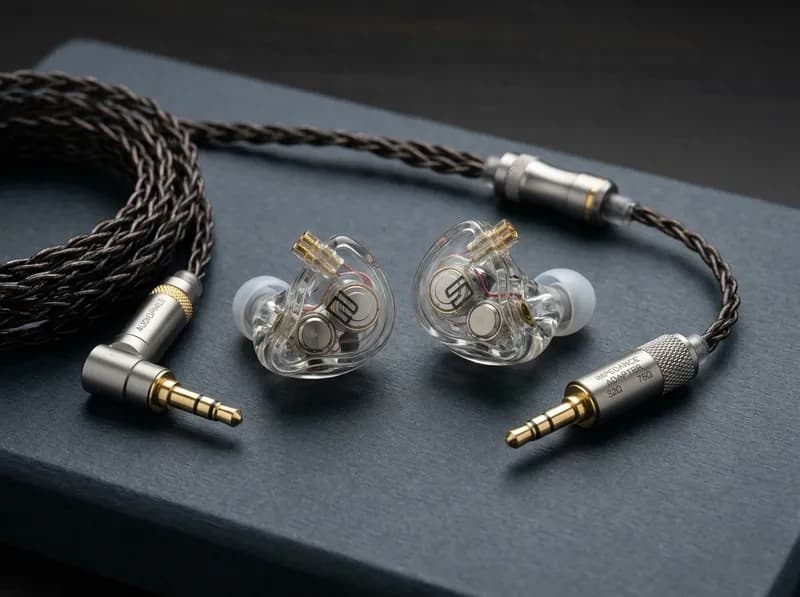
This guide compares every documented TRUTHEAR wired in-ear monitor (IEM), including current models, discontinued products, and models with conflicting availability information. Prices are in U.S. dollars and reflect manufacturer catalog pages and U.S. retail listings checked in November 2026; they are not live checkout quotes. Specifications come from TRUTHEAR unless another source is identified. No personal listening tests or original laboratory measurements were conducted. Measurement figures are attributed to the lab, reviewer, or measurement aggregation that published them.
TRUTHEAR has built its reputation on affordable wired IEMs with measurement-informed tuning. Its lineup is not a simple progression in which each more expensive model sounds better. GATE, ZERO:RED, HEXA, PURE, NOVA, and ZERO:BLUE2 use different driver configurations and target different listening preferences. For many buyers, practical details matter just as much as tuning: nozzle width, shell shape, and whether a low-impedance model such as ZERO:BLUE2 works quietly with a particular USB-C dongle.
A few product-name mix-ups are worth clearing up before comparing models. CHU and CHU II are made by Moondrop, not TRUTHEAR. SHIO is a TRUTHEAR USB DAC, not an IEM. Both distinctions matter because these products sometimes appear in loosely assembled lineup lists. It is also worth treating phrases such as “Harman-tuned” and “close to the target curve” as descriptions, not automatic quality judgments. Research published in 2025–2026 questions how consistently preference targets translate across listeners and measurement systems. The model with the strongest measured preference score is not necessarily the one with the highest owner satisfaction.
Quick Verdict: The Best TRUTHEAR IEMs
Buying situation | Model to start with | Why | The catch |
|---|---|---|---|
Spend as little as possible | GATE ($21.99 official displayed price) | Detachable 0.78 mm 2-pin cable, easy to drive, light shell, 75% positive sentiment in RedditRecs’ sample | SoundGuys scored it 6.9/10 and measured a large 10 kHz dip; the mic version is a separate SKU |
Best overall value for most buyers | ZERO:RED ($54.99–$64.99 depending on listing) | Highest discussion volume in RedditRecs’ ranking, SpeakerRanking Harman preference score of 86, Frieve’s cost-performance calculation of 1.0 | 6.8 mm nozzle; 59% of aggregated owner reports call fit a deal-breaker |
Highest positive sentiment | PURE ($89.99, or $99.99 for PURE: WHITE) | 74% positive in RedditRecs, tuned by Listener (Griffin Silver) with the Sennheiser HD 650 as a reference | Reviews range from 10/10 to 2/10 on the same measured response; dark upper treble divides listeners |
Lean, analytical, neutral-leaning | HEXA ($79.99–$89.99) | SoundGuys’ 8.1/10 with a response unusually close to its preference curve; strong channel matching in RTINGS’ data | AmperHeads’ October 2026 sub-$100 ranking removed it, while other 2026 lists still put it first for accuracy |
Stronger bass without leaving a balanced tuning | ZERO:RED with the included 10Ω adapter | Audiowords’ 55-rig aggregation quantifies the change: +2.7 dB at 20–60 Hz, about −0.5 dB above 1 kHz | The adapter is a tuning option, not an amplifier or a universal upgrade |
Warmer, darker, treble-sensitive listening | PURE | Smooth upper frequencies with no sharp peaks, which Headphones.com’s Listener calls a better EQ starting point | Presence region sits 4.5–7 dB below Harman in Audiowords’ 37-rig consensus |
More elaborate hybrid, larger budget | NOVA ($169.99 official, $149.99 launch price) | 1DD + 4BA with a three-way crossover; balanced presentation | extremehifi’s database lists it as discontinued while the official store still sells it |
Newest dual-dynamic design | ZERO:BLUE2 ($64.99) | New Harman-target tuning, revised driver structures, optional mic cable | SoundGuys scored it 6.7/10, “beats 5% of in-ear monitors,” with comfort at 4.0/10 |
In brief, ZERO:RED is the strongest starting point for buyers weighing price against measurement evidence. GATE is the least expensive current option, while PURE has high owner sentiment but also unusually divided reviews. ZERO:BLUE2 deserves a careful audition rather than an automatic upgrade over ZERO:RED. HOLA is discontinued and makes sense only as genuine, discounted leftover stock.
The TRUTHEAR Lineup Explained
TRUTHEAR is a brand of Shenzhen Chuer Technology, founded in 2022. Its resin shells are 3D-printed in collaboration with HeyGears. The official website groups GATE (1DD), PURE (1DD+3BA), ZERO:BLUE2 (2DD), NOVA (1DD+4BA), and ZERO:RED (2DD) under “New Products,” with HEXA listed separately as a current product.
The brand describes PURE as drawing on HRTF research using a BK5128 head-and-torso simulator, ZERO:BLUE2 as using “New Harman Target Tuning,” and ZERO:RED as using “Crinacle New Target Tuning.” A product page does not necessarily confirm continuous production or reliable U.S. availability.
Model | Architecture | Reference price | Status as of November 2026 research |
|---|---|---|---|
GATE | 1DD, 10 mm | $21.99 | Current; separate microphone-cable and no-mic SKUs are both documented, so “standard cable has no mic” is not universal |
HOLA | 1DD, 11 mm | $18.99 | Discontinued by TRUTHEAR; GATE is the replacement documented by Headphones.com, Pragmatic Audio, Tekzone, and Frieve |
ZERO | 2DD, 10 mm + 7.8 mm | Historical budget tier | Older design, listed in official documentation; primarily clearance or used-market relevance |
ZERO:RED | 2DD, 10 mm + 7.8 mm | $54.99–$64.99 | Current; both prices appear in U.S. listings, so check the checkout price rather than an old review |
ZERO:BLUE2 | 2DD, 10 mm + 7.8 mm | $64.99 | Current, newer generation — a distinct model, not a colorway of ZERO:RED |
HEXA | 1DD + 3BA | $79.99–$89.99 | Current on the official page; one 2026 sub-$100 ranking removed it as superseded by PURE, another still lists it first for accuracy |
PURE | 1DD + 3BA | $89.99 | Current; PURE: WHITE is a separate $99.99 SKU with a multi-layer sprayed shell and glass faceplate |
NOVA | 1DD + 4BA | $169.99 official / $149.99 launch | Official product page and Shenzhenaudio both list $169.99 as of late October 2026; extremehifi’s database marks it discontinued |
HOLA’s discontinuation has practical consequences. Headphones.com’s GATE review explicitly introduces GATE as the successor after TRUTHEAR discontinued what it called “arguably their most universally-beloved IEM.” The change also prompted discussion among owners because HOLA had been one of the brand’s least controversial tunings. Remaining stock is finite; it should not be treated as a regularly available current model.
NOVA’s availability remains unclear. The official store and Shenzhenaudio listed it at $169.99, while a third-party product database marked it discontinued. Its $149.99 launch price is historical, not a current discount. The same price-check caution applies to HEXA, which appears at $79.99 in older U.S. listings and $89.99 on the official page, and ZERO:RED, listed at both $54.99 and $64.99. PURE: WHITE is a separate $99.99 SKU.
TRUTHEAR’s announcement, reported by Shenzhenaudio, says its linear and nonlinear distortion are highly consistent with the black PURE, although measurements differ slightly. The official site also lists OWS1 (open-ear), TWS1, HPL1 (planar), and HDD1 (dynamic) under “Futured Projekt,” with 2025 projections. Independent checks in August 2026 still described them as future projects, so they are not included as available wired IEMs.
Why These Models, and Why Not CHU II or SHIO
This is a TRUTHEAR lineup guide rather than a cross-brand ranking. A model is included only when TRUTHEAR documents it on an official product page or in its official catalog as a wired IEM. That includes discontinued and older models because they still appear in clearance listings and on the used market.
The following products and claims are excluded:
Moondrop CHU and CHU II, which are competing $22.99 single-dynamic-driver IEMs from Moondrop. Some online buying guides mistakenly identify CHU II as a TRUTHEAR single-DD model. It is not part of the TRUTHEAR product lineup.
TRUTHEAR SHIO, a portable USB DAC/amp. It belongs in an accessory discussion, not an IEM lineup.
Rumored or unlaunched Futured Projekt items, which are noted as roadmap context but carry no prices, specifications, or purchase advice.
Third-party specification claims that conflict with official pages. Specifications below follow TRUTHEAR’s product pages and catalog; materially different figures are flagged rather than averaged or silently substituted.
Competing brands are covered separately, with their own U.S. price references, so the TRUTHEAR lineup remains limited to products the brand actually documents.
Official Specifications Compared
Model | Drivers | Impedance | Sensitivity | Frequency response (manufacturer) |
|---|---|---|---|---|
GATE | 1DD | 28Ω | 122 dB/Vrms | 10 Hz–45 kHz |
HOLA | 1DD | 28Ω | 120 dB/Vrms | 20 Hz–20 kHz (effective) |
ZERO | 2DD | 10Ω ±15% | 117.5 dB/Vrms | Not consistently stated on the current listing |
ZERO:RED | 2DD | 17.5Ω | 117.5 dB/Vrms | 20 Hz–40.5 kHz |
ZERO:BLUE2 | 2DD | 5.8Ω ±15% | 119.5 dB/Vrms | 9 Hz–41 kHz |
HEXA | 1DD + 3BA | 20.5Ω | 120 dB/Vrms | 8 Hz–40 kHz (20 Hz–20 kHz effective) |
PURE | 1DD + 3BA | 13.8Ω | 124 dB/Vrms | 7 Hz–40 kHz (20 Hz–20 kHz effective) |
NOVA | 1DD + 4BA | 14.8Ω | 123 dB/Vrms | 8 Hz–40 kHz (20 Hz–20 kHz effective) |
Three points are important when comparing these specifications.
Sensitivity is stated in dB/Vrms. A figure in dB/mW is not directly comparable, because the two use different reference quantities. The conversion is:
SV=SmW+10⋅log10(1000/R)SV=SmW+10⋅log10(1000/R)
where R is impedance in ohms. With a constant-voltage source such as a phone dongle, dB/Vrms is the more useful way to judge how loud a model will play; a high dB/mW number on a very low-impedance IEM can look impressive while saying little about real-world volume.
A “7Hz–40kHz” specification is a nominal published range, not a claim about audible bandwidth or sound quality. TRUTHEAR separately gives an effective range of 20 Hz–20 kHz for HEXA, PURE, and NOVA, understood against the IEC 60318-4 coupler’s −3 dB convention. Comparing a 45 kHz upper limit with a 40 kHz upper limit tells you nothing about which IEM is brighter, more detailed, or better tuned.
Impedance is a single number describing a load that varies with frequency. Multi-driver IEMs with crossover networks can swing from roughly 8Ω to 60Ω across the band, which is why a low nominal figure such as ZERO:BLUE2’s 5.8Ω has consequences beyond “easy to drive.”
Specification errors circulating in search results
One ranking for “best TRUTHEAR IEM 2026” publishes specifications that conflict with official product pages across nearly the entire lineup: ZERO:RED as a single 10 mm CNT driver at 32Ω/126 dB, HEXA as a Crinacle collaboration, PURE as 1DD+1BA at 18Ω/120 dB, GATE at $79, and PURE described as a “tribrid.” Another describes ZERO:BLUE2 as “1DD 11.3 mm + 1BA” and its adapter as 5.8Ω.
These are not harmless rounding differences: they change driver architecture, sensitivity, and price at once. They are excluded from the fact chain here and mentioned only so a reader who has seen them knows why the numbers differ. When a spec matters to a purchase, the official product page is the tiebreaker.
What Independent Measurements Actually Show
Manufacturer specifications describe the hardware, but they do not establish how an IEM measures or how listeners respond to it. The table summarizes the main independent evidence, keeping individual review scores separate from multi-rig measurement aggregations and owner-sentiment samples.
Source | Model | Published finding |
|---|---|---|
SoundGuys | GATE | 6.9/10; MDAQS 4.8/5 (Timbre 4.9, Distortion 4.2, Immersiveness 3.6); large 10 kHz dip; faint continuous hiss on the mic version; comfortable over six hours; reviewed May 31, 2024 at $22.99 |
SoundGuys | HEXA | 8.1/10; foam tips delivered 44–54 dB isolation above 5 kHz; response unusually close to its preference curve with slight excess treble; suggested −3 dB shelf EQ at 1 kHz; small-ear-canal fit warning; no microphone |
SoundGuys | ZERO:BLUE2 | 6.7/10, “beats 5% of in-ear monitors”; Comfort 4.0/10, Durability 6.5/10; bass nearly 15 dB above its preference curve and elevated through 200 Hz; MDAQS Immersiveness 4.8; ear hooks caused irritation at two hours and required removal at three; published March 6, 2025 |
Audiowords | ZERO:RED | Aggregation of 35–55 rigs/sources: bass shelf +6.2 dB at 20 Hz, +5.5 dB at 60 Hz, +3.1 dB at 100 Hz relative to 500 Hz, yet 40–200 Hz still 1.1–2.3 dB below Harman; 3 kHz pooled −2.3 dB, 5 kHz −4 dB; 59% report weak separation, 68% soft transients |
RTINGS | ZERO:RED | 48 of 49 measured units showed channel mismatch within 2 dB, so imaging complaints are unlikely to be channel imbalance |
SpeakerRanking (oratory1990 / AutoEQ / squig.link derived) | ZERO:RED | Harman preference score 86, deviation 1.10 dB, rank 11 of 1,488; 3–6 kHz about 2.2 dB under target, 10.3 kHz dip of 3.9 dB |
SpeakerRanking | PURE | Median of 38 squig.link measurements: score 67, deviation 2.37 dB, 1–3 kHz about 3 dB low, presence 5.5 dB low, 6.3 kHz dip of 6.3 dB |
Audiowords | PURE | 37 rigs agree on “HEXA plus roughly 1.5 dB lower-midrange quantity, same sub-bass, presence 4.5–7 dB below Harman,” while review scores span 10/10 to 2/10; 10 of 12 discussion topics show disagreement |
IEMRanking | HEXA / ZERO:RED | HEXA 6.5/10 across 15 expert reviews, ZERO:RED 6.2/10 across 16; community scores 7.0 versus 6.5; HEXA ahead on midrange (+0.8) and treble (+0.6), ZERO:RED on bass (+0.5) and imaging (+0.3) |
Frieve | ZERO:RED / HEXA | Cost-performance calculation: ZERO:RED 1.0 (lowest price for the same measured performance), HEXA 0.72 |
RedditRecs | Whole lineup | Sentiment ranking drawn from 6,745 Reddit users, October 2025–October 2026: ZERO:RED #1 (67% positive, 251 people), PURE #2 (74%, 160), GATE #3 (75%, 85), HEXA #4 (64%, 243), ZERO:BLUE series #5 (60%, 146), NOVA #6 (64%, 44), HOLA #8 (83%, 12) |
Headphones.com (Listener) | PURE vs HEXA | Concluded the two “tie” across the library, would personally buy HEXA, but recommends PURE to others because its peak-free, smooth treble is a better EQ starting point; explicitly warns against treating “closer to the target line” as automatically better |
Two distinctions are important when interpreting these results.
Discussion volume is not the same as satisfaction: ZERO:RED leads in the number of people discussing it, while GATE and PURE have higher positive rates in the cited sample.
Measurement agreement also does not guarantee agreement among listeners. Audiowords’ 37 rigs show a consistent PURE response, yet reviewer scores range from 10/10 to 2/10. Measurements describe the response; personal preference determines whether that response is appealing.
GATE: The Budget Starting Point
GATE uses a 10 mm dynamic driver with a carbon-LCP dome, PU suspension, N52 magnet, and dual-cavity magnetic circuit in a lightweight PC+ABS shell. The detachable 0.78 mm two-pin cable makes replacement cheap, and the package includes seven pairs of silicone tips in two bore sizes. At $21.99 on the official page (SoundGuys quoted $22.99 at its May 2024 review), it is the least expensive way into the brand.
SoundGuys’ lab work is more specific than the usual “good for the price” verdict: 6.9/10 overall, MDAQS 4.8/5 with Timbre 4.9 and Distortion 4.2 but Immersiveness 3.6, a large dip around 10 kHz, and a faint continuous hiss on the microphone-equipped version. The reviewer wore it for six hours without discomfort.
Headphones.com’s review, written after HOLA was discontinued, describes the tuning as lean and somewhat shouty, with an upper-midrange lift that can make some vocals nasal and electric guitars sharp; it also reports the shell’s rear corner irritating the ear after one to two hours. Pragmatic Audio and Tekzone both treat GATE as the HOLA replacement.
GATE Detail
Strengths
Lowest entry price
Light shell
Detachable cable
Seven tip pairs
Easy to drive
75% positive owner sentiment in RedditRecs’ sample
Weaknesses
Measured 10 kHz dip
Restrained treble
Plastic shell
Weak passive isolation
Mic and no-mic SKUs are easy to confuse
Best for: First wired IEM, podcasts and audiobooks, dialogue-heavy games, a cheap spare pair
Skip if: You want strong bass impact, maximum detail, or an upgrade over an existing $50–$100 IEM
Buy GATE when the goal is to spend as little as possible without buying a disposable earbud. Compare it with Moondrop CHU II and the 7Hz Salnotes Zero:2 at roughly the same price before assuming the TRUTHEAR option wins on tuning. If you need a microphone for calls, confirm which SKU you are ordering — “GATE has an optional mic cable” and “the standard GATE has no mic” are both true of different packages.
HOLA: Discontinued, Not Merely “Legacy”
HOLA used an 11 mm dynamic driver with a PU suspension and LCP dome in a 3D-printed resin shell with an aluminum-alloy faceplate, specified at 28Ω and 120 dB/Vrms. Its appeal was a warm, relaxed, treble-restrained presentation rather than technical showmanship, and at $18.99 it became one of the brand’s early budget successes.
The buying context changed when TRUTHEAR discontinued it. Headphones.com called it “arguably their most universally-beloved IEM” in the same review that introduced GATE as the successor, and RedditRecs’ small HOLA sample carries the lineup’s highest positive rate at 83% — from just 12 people, so the number is a signal of fondness, not a statistically robust ranking. Pragmatic Audio and Frieve also describe GATE as the replacement.
HOLA Detail
Strengths
Warm, relaxed tuning
Lightweight resin shell
Detachable cable
Multiple tip options
Weaknesses
Officially discontinued
Older acoustic design
No current production or warranty clarity on old stock
Limited reason to pay a premium for leftovers
Best for: Someone who already knows they like a warm, relaxed budget IEM and finds genuine new-old stock cheaply
Skip if: You are a first-time buyer who can get GATE at its regular price
Do not read “still listed on some retailer pages” as “still made.” For a discontinued hygiene-sensitive product, prioritize sealed new stock from an authorized seller, and treat used units as a fit-and-cable gamble. If a listing prices HOLA above GATE, the nostalgia premium is doing the work, not the specification sheet.
ZERO: The Original Dual-Dynamic Model
The original ZERO was a collaboration with Crinacle built around a 10 mm driver for bass and a 7.8 mm driver for upper frequencies, with a PU+LCP composite diaphragm, 10Ω ±15% impedance, 117.5 dB/Vrms sensitivity, a silver-plated detachable cable, and a 3.5 mm plug. It is more bass-forward than ZERO:RED, with an energetic presentation that suits pop, hip-hop, and electronic music.
Its practical issues are the ones that carried into later ZERO models: low impedance and a large nozzle. It remains a legitimate used-market or clearance purchase if you specifically prefer its bass emphasis and find a genuine unit at a real discount. For most new buyers, ZERO:RED and ZERO:BLUE2 are the more relevant dual-dynamic models, and the original ZERO’s age means less current warranty and accessory support.
ZERO:RED: The Value Benchmark With a Fit Problem
ZERO:RED keeps the 10 mm + 7.8 mm dual-dynamic arrangement but revises the internal configuration and tuning in collaboration with Crinacle. Official figures are 17.5Ω, 117.5 dB/Vrms, and 20 Hz–40.5 kHz, with a 0.78 mm 2-pin connector, 3.5 mm plug, foam and silicone tips, and an included 10Ω impedance adapter. U.S. listings show both $54.99 and $64.99; both are quoted here rather than choosing one.
The measurement case is unusually well documented. Audiowords’ aggregation of 35–55 rigs and sources finds a bass shelf of +6.2 dB at 20 Hz, +5.5 dB at 60 Hz, and +3.1 dB at 100 Hz relative to 500 Hz, while the 40–200 Hz region still sits 1.1–2.3 dB below Harman — which explains why the same IEM is described as both “bass-light” and “bass-heavy” depending on the reference. The pooled response is 2.3 dB low at 3 kHz and 4 dB low at 5 kHz.
SpeakerRanking’s oratory1990/AutoEQ-derived scoring gives it a Harman preference score of 86, deviation of 1.10 dB, and 11th place among 1,488 entries, while noting 3–6 kHz roughly 2.2 dB under target, a 3.9 dB dip at 10.3 kHz, and −1.8 dB at 30 Hz. RTINGS found 48 of 49 measured units within 2 dB of channel matching, which is strong evidence that imaging complaints are about tuning and fit, not unit imbalance. Frieve’s cost-performance index puts ZERO:RED at 1.0 — the lowest price for that measured performance in its comparison — against HEXA’s 0.72.
Owner evidence is less flattering on two fronts. In Audiowords’ aggregation, 59% report weak separation, 68% report soft transients, and a durability tail runs from two months to three years with one channel getting quieter and warranty emails going unanswered. RedditRecs ranks it first overall on 251 people at 67% positive, but its “large nozzle discomfort” topic runs 44 negative to 7 positive, and Amazon fit comments run 39 negative to 24 positive. SoundGuys’ measurements found a bass-emphasized response against its preference target while its listening notes called the overall presentation enjoyable and technically competent.
ZERO:RED Detail
Strengths
Strong sub-bass extension
More balanced than the original ZERO
Included 10Ω adapter
Detachable cable
Strongest measurement-and-price case in the lineup
Weaknesses
6.8 mm nozzle
59% of aggregated owner reports call fit a deal-breaker
Comfort rated 1.5/10 against 5.3/10 for sound in one listener ranking
No mic on the standard cable
No IP rating
Thin stock cable
Best for: Pop, hip-hop, electronic, rock, films and games; buyers whose ears accommodate a wide nozzle
Skip if: You have struggled with large nozzles, want strict neutrality, or want a warm/darker presentation
ZERO:RED is compelling because of its price, measurement record, and overall balance — not simply because it has two drivers. Its wide nozzle is a meaningful fit risk, so check the retailer’s return terms before buying.
ZERO:BLUE2: The Case for Caution
ZERO:BLUE2 updates the dual-dynamic platform with a 10 mm silicone-suspension LCP-dome driver, a 7.8 mm PU-suspension LCP-dome driver, N52 and N55 magnets, a revised crossover, a DLP-printed housing, and an optional microphone cable. Official figures are 5.8Ω ±15%, 119.5 dB/Vrms, 9 Hz–41 kHz, a 5Ω impedance adapter, and a 3.5 mm connection. TRUTHEAR positions it around a “New Harman Target Tuning.” It is a new model, not a ZERO:RED colorway.
Independent evidence is markedly less favorable than the launch positioning. SoundGuys scored it 6.7/10 — “beats 5% of in-ear monitors” — with Comfort 4.0/10 and Durability 6.5/10. Its measurements show bass close to 15 dB above the site’s preference curve, sustained through 200 Hz, with energy above 4 kHz lacking; the supplied ear hooks were long and stiff enough that the reviewer reported irritation at two hours and had to remove them at three. MDAQS Immersiveness was 4.8, the one strong subscore.
The reviewers do not even agree on the treble. SoundGuys describes a dark, bass-heavy, fatiguing balance; Prime Audio and Ichos report the upper range turning hard and sharp at higher volumes, with foam tips offering some relief. Driveability is similarly split: SoundGuys says any source will power it, Ichos warns that some USB-C dongles produce audible hiss and draw notable current at such low impedance, and Prime Audio finds it more demanding than the spec suggests. All three agree the adapter turns BLUE2 into a basshead IEM at the cost of midrange clarity, and Ichos notes the 5Ω adapter is intended for the 3.5 mm single-ended connection only. RedditRecs puts the ZERO:BLUE series sixth at 60% positive, the lowest positive rate of any current TRUTHEAR family in its sample.
ZERO:BLUE2 Detail
Strengths
Revised dual-driver design
Updated housing and nozzle
Detachable cable
Optional mic cable for gaming and calls
Competitive $64.99 official price
Weaknesses
6.7/10 and 4.0/10 comfort from SoundGuys
Near-15 dB bass excess
Three-way reviewer disagreement on treble
5.8Ω source sensitivity
Short long-term ownership record
Best for: Buyers who specifically want the newest ZERO platform, a mic-cable option, and are comfortable auditioning and returning
Skip if: You want a well-documented, low-risk purchase, or you prefer a neutral balance
A $64.99 IEM with a 4.0/10 comfort score is a strong argument for buying from a retailer with a long return window. If BLUE2 is the model you want, choose the seller before choosing the color.
HEXA: Still the Analytical Reference, Depending on Who You Ask
HEXA combines a 10 mm PU+LCP dynamic driver with three balanced armatures at 20.5Ω and 120 dB/Vrms, with an 8 Hz–40 kHz nominal range and a 20 Hz–20 kHz effective range. It is the leanest, most restrained tuning in the lineup: controlled bass, clear and relatively neutral mids, and treble that can turn sharp on some recordings. Prices appear as both $79.99 in older U.S. listings and $89.99 on the official page.
SoundGuys scored it 8.1/10, found its response unusually close to its preference curve with slight excess high-frequency energy, measured 44–54 dB of isolation above 5 kHz with foam tips, suggested a −3 dB shelf EQ at 1 kHz, and warned about fit in small ear canals. RTINGS found good audio reproduction accuracy and strong channel matching. IEMRanking aggregates 15 expert reviews at 6.5/10 with a 7.0 community score, ahead of ZERO:RED on midrange and treble.
HEXA’s place in 2026 sub-$100 recommendations is disputed. AmperHeads’ October 10, 2026 sub-$100 ranking removed HEXA alongside the old Moondrop Aria and the original Salnotes Zero, named “Truthear Pure #3 — Replaces the Truthear Hexa,” and put Moondrop Aria 2 first, Simgot EA500LM second, ZERO:RED fourth at $55, Kiwi Ears Cadenza II fifth, GATE sixth at $22, and 7Hz Zero:2 seventh. TrueRank and chrisputer-style lists still place HEXA first for sub-$100 accuracy. These rankings reflect different criteria; driver count alone does not settle the comparison.
HEXA Detail
Strengths
Clear midrange
Restrained bass
Good perceived detail
SoundGuys’ highest score in this lineup
Strong value for analytical listening
Weaknesses
Lean bass
Occasional treble sharpness
No microphone
Fit concerns for small ears
Contested 2026 ranking position
Best for: Acoustic, classical, jazz, vocals, podcasts, and editing or monitoring work
Skip if: You want bass weight, are treble-sensitive, or already own a neutral-leaning hybrid
PURE: The Model Listener Built, and the Most Divisive
PURE shares HEXA’s 1DD + 3BA nominal driver count but not its tuning. Official figures are 13.8Ω, 124 dB/Vrms, 7 Hz–40 kHz nominal and 20 Hz–20 kHz effective, with a silver-plated copper coaxial cable and a smaller DLP-printed housing. The official page describes goals based on HRTF work with a BK5128 HATS.
PURE’s tuning background helps explain its unusual presentation. PURE was tuned by Listener — Griffin Silver of Headphones.com — with the Sennheiser HD 650 as the inspiration, a detail documented by Pragmatic Audio and Audiowords. That context explains the tuning’s priorities: a smooth, peak-free treble and a fuller lower midrange rather than a graph that hugs a target line.
Headphones.com’s own PURE versus HEXA review concludes the two “tie” across the library, says the reviewer would personally buy HEXA, and recommends PURE to other people precisely because its smooth treble is a better EQ starting point — with an explicit warning not to mistake “closer to the preference line” for “better.”
The measurements agree with each other and the opinions do not. Audiowords’ 37-rig consensus describes HEXA plus roughly 1.5 dB of lower-midrange quantity, the same sub-bass, and a presence region 4.5–7 dB below Harman — yet review scores run from 10/10 to 2/10, with 10 of 12 topics split over “natural” versus “underwater.” SpeakerRanking’s median of 38 squig.link measurements gives a Harman preference score of 67 with 2.37 dB deviation, 1–3 kHz about 3 dB low, presence 5.5 dB low, and a 6.3 kHz dip of 6.3 dB, which fits the “dark” description. A 10Ω source impedance trims a further 1.8 dB from 3–12 kHz, so the dongle can audibly change the balance.
SoundGuys’ November 2025 review found elevated bass at 20–30 Hz, a mid-bass region that adds body to male vocals, and a substantially reduced upper-treble shelf, cautioning that cymbals and metallic sounds lose brilliance; it also reported uncomfortable ear hooks, black-finish wear at sharp edges, and some units failing within a year — individual review observations, not proof of a widespread defect. Audiowords likewise notes the silver-plated cable upgrade alongside those hook and finish complaints.
RedditRecs gives PURE 74% positive across 160 people, second-highest in the lineup, and AmperHeads’ 2026 list treats it as HEXA’s replacement. PURE: WHITE, the $99.99 SKU with a multi-layer sprayed shell and glass faceplate, is a cosmetic and construction variant; TRUTHEAR says its linear and nonlinear distortion closely track the black version while measurements differ slightly.
PURE Detail
Strengths
Full bass
Smooth dark treble
HD 650-informed tuning
74% positive owner sentiment
Excellent EQ platform
Smaller housing than HEXA
Weaknesses
Presence 4.5–7 dB below Harman
10/10-to-2/10 reviewer split
Nozzle and ear-hook complaints
Dark treble can dull cymbals
Source-impedance sensitive
Best for: Hip-hop, electronic, pop, action films and games, long sessions for treble-sensitive listeners, anyone who plans to EQ
Skip if: You want airy cymbals, acoustic brilliance, or a bright reference balance
PURE is not “a warmer HEXA” in the sense of an upgrade. It is a different design brief, and the wide reviewer spread is a genuine warning: if you can, buy it where returns are cheap.
NOVA: The Higher-Tier Hybrid With an Unresolved Status
NOVA uses a 10 mm dynamic driver, two balanced armatures for midrange and part of the treble, and two more for higher frequencies, in a three-way crossover. Official figures are 14.8Ω, 123 dB/Vrms, 8 Hz–40 kHz nominal and 20 Hz–20 kHz effective, with a four-strand OCC copper cable and 3.5 mm plug. TRUTHEAR describes its tuning as slightly below the Harman IE 2019 bass gain with a high-frequency response informed by its own HRTF work.
Headfonics’ review praised vocal timbre, low sibilance, and non-intrusive bass while flagging fit and insufficient male-vocal weight. RedditRecs places it sixth at 64% positive from 44 people.
The main buying concerns are its current price and uncertain availability. The official product page and Shenzhenaudio listed $169.99 in an October 26, 2026 check, while the launch price was $149.99 and extremehifi’s database marks the model Discontinued. The available sources do not resolve the contradiction. Check the official product page and an authorized U.S. retailer before ordering; treat “$149.99 NOVA” as a launch-era price, not a current quote. The roughly $80 gap to HEXA or PURE buys a different presentation and a more elaborate crossover, not a guaranteed improvement in enjoyment.
NOVA Detail
Strengths
Five-driver hybrid
Clear balanced presentation
Good vocal timbre
Controlled bass
Extensive accessory package
Weaknesses
Highest price
In-sale/discontinued status conflict
Price rose from launch
Large shell
Male vocals may lack weight
Best for: Experienced listeners who specifically want a balanced multi-BA hybrid and have confirmed current stock and warranty
Skip if: You are budget-conscious, prefer darker tuning, or have not established that you prefer its sound over PURE or HEXA
The Impedance Adapter, Explained Properly
Search results are full of vague claims that the included adapter — often searched as the 10 ohm adapter — “increases the electrical load seen by the source” and therefore adds bass. That framing is imprecise about both the mechanism and what changes.
ZERO:RED’s 10Ω adapter and ZERO:BLUE2’s 5Ω adapter are resistors placed in series between the source and the earphone cable. Because the two dynamic drivers share a crossover network, adding series resistance attenuates the 7.8 mm mid/high driver relative to the 10 mm bass driver. Bass is not amplified; upper frequencies are reduced relative to it, and you turn the volume up slightly to compensate. Tekzone’s summary of Prime Audio, Ichos, and Headphones.com describes exactly this.
Audiowords’ aggregation of 55 measurement rigs quantifies it for ZERO:RED, with only 0.2 dB of spread between 39 of those rigs:
Added series resistance | Measured effect on ZERO:RED |
|---|---|
Source | — |
10Ω (included adapter) | +2.7 dB at 20–60 Hz, +2.2 dB at 100 Hz, +1.3 dB at 200 Hz, about −0.5 dB above 1 kHz |
75Ω | Roughly +8 dB of relative bass |
200Ω | Roughly +10.5 dB of relative bass |
For ZERO:BLUE2, the included adapter is 5Ω on the official specification and in most coverage; one site lists 5.8Ω, which appears to be a conflation with the IEM’s nominal impedance. Ichos notes the adapter applies to the 3.5 mm single-ended connection, and reviewers broadly agree it pushes BLUE2 toward a basshead balance at the cost of midrange clarity. It is a tuning switch, not a power upgrade, and it cannot turn one IEM into another model.
Why 5.8Ω changes which dongle you should use
The rule of thumb known as the 1/8 rule, associated with NwAvGuy, says source output impedance should be no more than one eighth of the headphone’s minimum impedance. Multi-driver IEMs complicate this because their impedance varies with frequency — an 8Ω nominal load can swing toward 60Ω — so the voltage divider between source and earphone changes across the band and shifts frequency response by several dB. Sonarworks measured 797 headphones and found 57% with frequency-dependent impedance; the Shure SE535, rated 32Ω, drops to about 9Ω and shows up to 7.5 dB of response shift across 1–50Ω sources.
Applied to ZERO:BLUE2’s 5.8Ω, the 1/8 rule implies a source output impedance below about 0.73Ω. That is the physical reason the same IEM can sound different — or hiss — on different dongles, and why Ichos, Prime Audio, and SoundGuys report different driveability. Hiss itself is not caused by low impedance; it comes from high sensitivity exposing the source’s noise floor. So the practical question is not “is the dongle powerful enough” but “is it quiet and low-impedance enough.”
Do TRUTHEAR IEMs Need a DAC?
For GATE, HOLA, ZERO, ZERO:RED, HEXA, PURE, and NOVA, a competent USB-C to 3.5 mm dongle is generally sufficient; an expensive external DAC is not a prerequisite. ZERO:BLUE2 is the exception worth checking, because of its 5.8Ω load and 119.5 dB/Vrms sensitivity.
Most modern phones lack a 3.5 mm socket, so budget for Apple’s USB-C adapter or a suitable USB-C dongle for Android, and a Lightning adapter for older iPhones. Output levels of Apple’s adapter vary by regional version. A 4.4 mm balanced cable does not inherently improve sound; it helps only if your source has a balanced output or you need more power.
Fit: The Nozzle Problem and What to Do About It
Fit is the single most under-discussed purchase variable in this category, and TRUTHEAR’s ZERO family is where it bites hardest. Audiowords measured ZERO:RED’s nozzle at 6.8 mm with a caliper, with the nozzle body roughly 11 mm. In its aggregation, 41% of owners found comfort acceptable and 59% called it a deal-breaker; a listener ranking put comfort at 1.5/10 against 5.3/10 for sound. RedditRecs’ “large nozzle discomfort” topic runs 44 negative to 7 positive, and Amazon fit comments run 39 negative to 24 positive. SoundGuys separately warns that HEXA’s shell and nozzle may not suit small ear canals, while Headphones.com reports GATE’s rear shell corner irritating the ear after one to two hours. SoundGuys’ BLUE2 review describes stiff, over-long ear hooks and a 4.0/10 comfort score.
Ear tips change both comfort and measured response. SoundGuys measured 44–54 dB of isolation above 5 kHz with foam tips on HEXA, and Pragmatic Audio found silicone and foam tips produce different upper-treble response on ZERO:BLUE2. If an IEM sounds thin, loses bass, or fails to isolate, try different silicone sizes, narrower or wider bores, foam tips, and different insertion depths before concluding the tuning is wrong. Rolling tips is a real adjustment, not an accessory upsell.
Three practical points follow:
Do not tolerate pain for the sake of a particular frequency response.
A reviewer’s comfort report is only one data point, not a fit guarantee; individual ear-canal HRTF differences can produce 15–20 dB of high-frequency variation between listeners.
If fit is uncertain, the retailer’s return policy should be part of the buying decision.
Head-to-Head Comparisons
GATE vs. HOLA
GATE is the newer design with a more controlled bass and more forward vocals; HOLA is warmer, softer, and more relaxed in the treble. TRUTHEAR has discontinued HOLA, so this is no longer a choice between two current models. For a new purchase, GATE wins by default. HOLA makes sense only if you specifically prefer its warmth, find sealed genuine stock at a clear discount, and accept that warranty support on old inventory is uncertain.
ZERO vs. ZERO:RED
Both use 10 mm + 7.8 mm dual-dynamic drivers. The original ZERO is more bass-forward and energetic; ZERO:RED is more controlled through the midrange and includes the 10Ω adapter. ZERO:RED also has by far the deeper independent measurement record — Audiowords’ 35–55 rigs, SpeakerRanking’s 86 preference score, RTINGS’ channel-matching data. Choose the original only for a specific tonal preference at a genuinely lower price.
ZERO:RED vs. HEXA
This is the lineup’s central value decision. ZERO:RED brings stronger bass impact, a lower price, and Frieve’s 1.0 cost-performance figure. HEXA brings a leaner, more analytical balance, SoundGuys’ 8.1/10, and IEMRanking’s expert aggregate of 6.5/10 to ZERO:RED’s 6.2/10, with 12 shared reviewers split between them. Neither is a guaranteed fit for small ears. The extra money buys a different architecture and tuning, not an automatic upgrade; Frieve’s index actually favors ZERO:RED on measured performance per dollar.
HEXA vs. PURE
Same nominal driver count, opposite briefs. HEXA is lean, clear, and analytical; PURE is fuller in the bass and 4.5–7 dB lower in the presence region, with a smooth, peak-free treble. Headphones.com’s Listener calls it a tie, would buy HEXA himself, and recommends PURE to others as the better EQ platform. AmperHeads’ 2026 list frames PURE as HEXA’s replacement; TrueRank-style lists still rank HEXA first for sub-$100 accuracy. Choose by preference, not by release date.
HEXA vs. NOVA
NOVA adds a fourth balanced armature and a three-way crossover for roughly $80 more ($169.99 official versus $79.99–$89.99). It has more complete sub-bass and a more elaborate high-frequency design; HEXA is the stronger value if you like its leaner balance. Both are shell-size dependent for fit. Verify NOVA’s current availability before treating this as a live comparison.
NOVA vs. PURE
PURE is the more economical choice for bass-oriented listening at $89.99; NOVA at $169.99 is for listeners who want its balanced hybrid presentation and more extended treble. PURE’s fit risk is the nozzle, NOVA’s is the large shell. The price gap is not a universal sound-quality upgrade, and PURE: WHITE at $99.99 adds a cosmetic option without changing the calculus.
GATE vs. ZERO:RED
Spend about $22 or about $55–$65. GATE is lighter, cheaper, and easier to fit; ZERO:RED adds sub-bass extension, a dual-driver presentation, and the adapter, but introduces the 6.8 mm nozzle risk. Do not buy ZERO:RED merely because it has two drivers — the fit disadvantage is real enough that a well-fitted GATE can be the better purchase.
ZERO:BLUE2 vs. ZERO:RED
Both are $64.99-class dual-dynamic models. ZERO:RED has the deeper measurement record, the higher RedditRecs position, SpeakerRanking’s 86 preference score, and Frieve’s 1.0 value index. SoundGuys scored BLUE2 6.7/10 with Comfort 4.0/10 and bass nearly 15 dB above its preference curve, and its treble is described three different ways by three reviewers. BLUE2 counters with newer driver structures, a revised housing, an optional mic cable, and a 5Ω adapter. For a low-risk purchase, ZERO:RED is better documented. If you want BLUE2, treat the audition and the return window as part of the cost.
Which TRUTHEAR IEM Fits How You Listen
Genre and use-case suggestions are starting points, not rankings. Recording quality, individual hearing, ear-tip selection, and fit all change the result.
Listening preference | First model to consider | Alternative | Why |
|---|---|---|---|
Pop, rock, EDM | ZERO:RED | NOVA | Sub-bass shelf with a more balanced overall response |
Hip-hop, bass-heavy recordings | PURE | ZERO:RED with the 10Ω adapter | Fuller, darker low end versus a tunable bass lift |
Female vocals | NOVA | HEXA | Clearer upper-midrange and more extended treble |
Male vocals | PURE | ZERO:RED | Fuller lower midrange adds body |
Classical, acoustic, jazz | HEXA | NOVA | Controlled bass and clear mids |
Metal | HEXA | ZERO:RED | Leaner balance keeps dense mixes separated |
Gaming, cinematic | PURE | GATE | Low-frequency weight versus clear dialogue |
Competitive gaming | ZERO:RED or HEXA | GATE | Positional cues and comfort matter more than bass quantity |
Podcasts, audiobooks | GATE | HEXA | Clear midrange at the lowest price |
Long sessions | GATE | PURE | Lightweight shell or smooth treble, subject to fit |
Treble sensitivity | PURE | GATE | Reduced upper-treble energy, provided the treble dip suits you |
EQ and measurement tinkering | PURE | ZERO:RED | Smooth peak-free treble as an EQ base, or a well-documented adapter response |
The price ladder runs roughly $19–$25 (HOLA, GATE), $55–$65 (ZERO:RED, ZERO:BLUE2), $80–$100 (HEXA, PURE, PURE: WHITE), and $170 (NOVA). These are tiers, not a measured sound-quality scale. Moving from GATE to ZERO:RED buys a different architecture, more sub-bass, and the adapter; moving from ZERO:RED to HEXA or PURE buys a different presentation rather than a universal improvement; moving to NOVA buys a more elaborate crossover and a specific tuning. Diminishing returns become relevant above roughly $80–$90, which is a statement about how much of the practical experience the cheaper models already deliver, not a claim that NOVA is bad value.
If you dislike TRUTHEAR’s shell shapes, want a metal housing, want a different tuning target, want replaceable acoustic filters or a planar driver, or need better warranty terms, look outside the brand rather than climbing the ladder. A well-tuned single dynamic driver can be more enjoyable than a poorly matched multi-driver product.
Harman Tuning Is a Reference, Not a Verdict
TRUTHEAR markets ZERO:RED around Crinacle’s target, ZERO:BLUE2 around a “New Harman Target Tuning,” and PURE around HRTF-based goals. It is tempting to rank those models by how closely their graphs approach a reference line. Current research says to be careful.
The JM-1 / “New Meta” discussion concerns how targets transfer between the B&K 5128 and the older 711 coupler systems. IEF Preference 2025 acknowledges that different driver types interact differently with measurement systems. Individual ear-canal HRTF can produce 15–20 dB of high-frequency variation between listeners. PEQdB’s 403-person virtual listening test found the Harman target only moderately preferred and found IEF Preference 2025 performing worst of the tested targets in the in-ear group. Targets are useful design and comparison tools; they are not a scoreboard.
The most revealing finding is the gap between measurement agreement and listener preference. PURE’s 37 measurement rigs agree on its curve while reviewers award everything from 10/10 to 2/10, and AmperHeads’ 2026 list calls PURE HEXA’s replacement while other lists keep HEXA first for accuracy. Frequency response describes the stimulus. Preference, fit, and source impedance determine the experience.
TRUTHEAR vs. the 2026 Competition
The sub-$100 IEM market has continued to change, while TRUTHEAR’s catalog has remained relatively stable. As a result, 2026 buying lists do not agree on which models deserve a place near the top.
AmperHeads’ October 10, 2026 price-checked list ranks Moondrop Aria 2 first, Simgot EA500LM second, TRUTHEAR PURE third as HEXA’s replacement, ZERO:RED fourth at $55, Kiwi Ears Cadenza II fifth, GATE sixth at $22, and 7Hz Zero:2 seventh — explicitly removing HEXA alongside the older Aria and original Salnotes Zero. TrueRank and chrisputer-style lists still place HEXA first for sub-$100 accuracy. The rankings differ, and the available evidence does not establish a single definitive winner.
Competitor | Observed 2026 U.S. price | Competing TRUTHEAR model | Why it comes up |
|---|---|---|---|
Tangzu Wan’er S.G | $19.80 | GATE | Warmer, midrange-oriented budget single DD |
Moondrop CHU II / 7Hz Salnotes Zero | $22.99 | GATE | The most-cited $20 alternatives; CHU II is a Moondrop product |
7Hz Salnotes Zero:2 | About $25 | GATE | Fuller low end than the original Zero:2 predecessor |
Kiwi Ears Cadenza | $35–$50 | GATE | Warmer conventional single DD |
Kiwi Ears Cadenza II | About $50 | GATE / ZERO:RED | 2026 refresh, fifth on AmperHeads’ list |
Simgot EW300 | $69 | ZERO:RED / HEXA | Hybrid with three interchangeable nozzles |
Artti T10 | $69.99 | HEXA | Planar alternative at hybrid money |
Dunu Titan S2 | $79 | HEXA | Single-DD alternative with a metal shell |
Letshuoer S08 | $85 | HEXA / PURE | Planar option in the hybrid price band |
Moondrop Aria 2 | $89–$110 | HEXA / PURE | Warmer single DD, metal shell, top of AmperHeads’ 2026 list |
Simgot EA500LM | $89–$110 | HEXA | More energetic single DD, second on that list |
AFUL Explorer | $109 | PURE / NOVA | Higher-priced hybrid alternative |
At $80–$100, compare HEXA, PURE, Aria 2, EA500LM, and S08 before ordering. At $20–$30, compare GATE, CHU II, Wan’er S.G, and Zero:2. TRUTHEAR’s advantage is the breadth of tuning choices at accessible prices — entry-level single DD, dual DD, and affordable hybrids — not a claim that it wins every price point.
Where to Buy in the U.S. and What Returns Actually Cost
TRUTHEAR’s official authorized-retailer directory lists two U.S. dealers: Headphones Inc. (headphones.com, Auburn, Washington) and Bloom Audio (Gibbsboro, New Jersey), plus LUXE Sound in Canada. The brand recommends authorized dealers for authenticity. Amazon and international retailers such as Shenzhenaudio also appear in U.S. searches, but buying outside the authorized list changes who handles warranty claims and returns.
For a product category with a 6.8 mm nozzle and a 59% fit-deal-breaker rate, the return policy is a specification. The two authorized U.S. dealers are not interchangeable.
Policy item | Bloom Audio | |
|---|---|---|
Return window | 365 days | 30 days for products without batteries |
Refund form | Original payment method within 30 days, store credit afterward | Original payment method |
Restocking fee | Conflicting: the product page still states a 10% IEM restocking fee, while a policy page updated June 5, 2024 says restocking fees were eliminated | 10% restocking fee plus deduction of original shipping |
Return shipping | Customer-facing conditions apply | Buyer pays |
Other conditions | Eartips final sale for hygiene; +25% for dirty items or more than two returns within 365 days; +30% if not shipped within seven days | Serial-number check; maximum three returns, cancellations, or exchanges per household in 12 months |
The Headphones.com restocking-fee contradiction is real and unresolved: both statements are on the retailer’s own site. Confirm the current terms in writing before ordering an IEM you may need to return. If fit is your main risk, the 365-day window is a materially different proposition from 30 days with a 10% fee, and that difference can outweigh a small price gap between sellers.
Warranty terms carry the same kind of spread. TRUTHEAR’s official warranty is one year. The Trihear support pages give a 30-day refund window in one language version and 45 days in another, and some authorized channels such as Shenzhenaudio list two years of coverage. Cross-border purchases may not be covered by local warranty service, non-defect returns generally leave shipping to the buyer, and liquid damage, disassembly, or missing proof of purchase void coverage.
Before ordering, verify:
The warranty duration for the exact product
Whether the seller handles claims
Whether repairs require international shipping
Who pays return shipping
Whether opened IEMs qualify for return
Authenticity checks that take a minute:
Confirm the seller against the official authorized-retailer page
Verify the listing is for the exact model and revision (ZERO:RED versus ZERO:BLUE2, GATE with or without mic, PURE versus PURE: WHITE)
Check whether the unit is new or open-box
Confirm the original accessories and filters are included
Get the return terms for opened IEMs in writing
For these prices, a fake or a no-returns clearance unit is a worse deal than paying the authorized retailer’s full price.
How Long Do These Last?
There is no verified universal lifespan, but the failure modes are well documented and worth planning for.
Moisture condensing inside the shell can unbalance or kill balanced armatures in hybrid models such as HEXA, PURE, and NOVA; a sealed case with a desiccant packet is cheap insurance. Faceplate screws corrode, and 0.78 mm two-pin sockets are vulnerable to bent pins. Two-pin solder-joint fatigue is an industry-wide issue: repeated bending creates micro-cracks, producing crackling, channel imbalance, or one side going silent, with sweat accelerating electrochemical corrosion.
ZERO:RED has no IP rating, ships with a thin cable, and includes replacement metal mesh filters and a pouch. Audiowords’ ZERO:RED aggregation also records a durability tail from two months to three years, with one channel getting quieter and warranty emails unanswered.
The detachable cable is the main structural advantage: when the cable fails, you replace the cable rather than the IEM. Store them dry, avoid sharp bends at the connector, use the included case, and treat a quiet channel as a moisture or connection issue to check before assuming the driver has died.
Research Method and Evidence Standards
The model list follows TRUTHEAR’s official catalog rather than search-result frequency. Products are included when an official product page or catalog identifies them as wired IEMs. Discontinued and older models remain in the comparison because they still appear in clearance and used listings, but their status is clearly labeled.
Specifications and prices are taken from official product pages, the brand’s storefront, and authorized retailers. When third-party sources disagree, the discrepancy is identified rather than silently resolved. The comparison covers the documented wired-IEM lineup, its driver architectures, and prices from roughly $19 to $170.
Evidence is separated by type. Official manuals and product pages establish manufacturer specifications. Laboratory and reviewer measurements come from SoundGuys, RTINGS, Headphones.com, Pragmatic Audio, Tekzone, Ichos, and Prime Audio. Aggregated measurements and rankings come from Audiowords, SpeakerRanking, IEMRanking, RedditRecs, and Frieve; community reports are treated as owner experiences rather than controlled tests. Sites whose specification tables systematically conflict with official product pages are not used as factual authorities, although their conflicting claims are noted where relevant.
Conflicts involving NOVA’s status, HEXA’s 2026 ranking, ZERO:BLUE2’s treble, retailer fees, warranty periods, and prices are identified rather than guessed away. No original listening tests or laboratory measurements were conducted for this article. Each measurement is attributed to the lab, reviewer, or aggregation that published it. Prices and catalog status reflect research conducted in November 2026 and may change; confirm current availability, the exact SKU, and the checkout price before purchasing.
Frequently Asked Questions
Which TRUTHEAR IEM should I buy in 2026?
ZERO:RED is the most defensible starting point for most buyers: SpeakerRanking gives it a Harman preference score of 86, Frieve’s cost-performance index puts it at 1.0, and RedditRecs ranks it first on discussion volume. If you want to spend less, GATE at $21.99 is the low-risk entry. If you want the highest owner satisfaction and a smooth, EQ-friendly treble, PURE at $89.99 has 74% positive sentiment. HEXA remains the analytical choice, while ZERO:BLUE2 and NOVA need their specific caveats checked first.
Is CHU II a TRUTHEAR IEM?
No. CHU and CHU II are Moondrop products, priced around $22.99, and they compete with GATE rather than belonging to the TRUTHEAR lineup. The distinction is easy to miss in some online buying guides, but CHU II is not part of TRUTHEAR’s product lineup. SHIO is a TRUTHEAR product, but it is a USB DAC/amp, not an IEM.
Is HOLA discontinued, or can I still buy it?
TRUTHEAR has discontinued it. Headphones.com’s GATE review is explicitly framed around the discontinuation of what it calls the brand’s most universally-beloved IEM, and Pragmatic Audio, Tekzone, and Frieve all identify GATE as the replacement. Remaining stock is finite, so buy only sealed genuine units from a seller whose return and warranty terms are clear.
Is the NOVA discontinued or still $169.99?
The sources conflict. The official TRUTHEAR product page and Shenzhenaudio listed NOVA at $169.99 in late October 2026, while extremehifi’s database marks it discontinued. Its launch price was $149.99, so the current figure is a price increase rather than a discount. Verify stock, price, and warranty on the official page and an authorized U.S. retailer on the day you buy.
Who tuned the PURE, and why do reviews range from 10/10 to 2/10?
PURE was tuned by Listener (Griffin Silver of Headphones.com) with the Sennheiser HD 650 as the inspiration, a detail documented by Pragmatic Audio and Audiowords. Audiowords’ 37 measurement rigs agree on the curve — HEXA plus about 1.5 dB of lower-midrange quantity, the same sub-bass, presence 4.5–7 dB below Harman — yet review scores span 10/10 to 2/10, with owners split between “natural” and “underwater.” The measurements are consistent; the preference is not.
What does the 10Ω adapter actually do?
It is a series resistor between the source and the cable, not an amplifier. Because ZERO:RED’s two dynamic drivers share a crossover, the added resistance attenuates the 7.8 mm mid/high driver relative to the 10 mm bass driver, so bass is elevated relative to the rest and you raise the volume slightly. Audiowords’ 55-rig aggregation measures +2.7 dB at 20–60 Hz, +2.2 dB at 100 Hz, +1.3 dB at 200 Hz, and about −0.5 dB above 1 kHz; 75Ω yields roughly +8 dB and 200Ω roughly +10.5 dB of relative bass.
Does the ZERO:BLUE2 5Ω adapter work with any connection?
The official specification is a 5Ω adapter — the “5 ohm adapter” of U.S. search results; one third-party site lists 5.8Ω, which appears to conflate it with the IEM’s nominal impedance. Ichos notes the adapter is intended for the 3.5 mm single-ended connection, and reviewers agree it turns BLUE2 into a basshead-tuned IEM at the cost of midrange clarity. It is a tuning switch, not a power upgrade.
Why does the ZERO:BLUE2 hiss or sound different on different dongles?
Its 5.8Ω nominal impedance and 119.5 dB/Vrms sensitivity make it unusually sensitive to source output impedance. The 1/8 rule implies a source below about 0.73Ω; higher output impedance interacts with a frequency-dependent multi-driver load and shifts the response by several dB. Hiss is not caused by low impedance itself — high sensitivity simply exposes the source’s noise floor. Ichos warns that some USB-C dongles hiss and draw notable current here, while SoundGuys says any source can drive it; the two reports differ, and the available evidence does not resolve the disagreement.
Will the ZERO:RED fit my ears?
It depends on your ear canals. Audiowords measured the nozzle at 6.8 mm with a caliper (roughly 11 mm nozzle body) and found 41% of owners acceptable versus 59% calling comfort a deal-breaker; one listener ranking gave comfort 1.5/10 against 5.3/10 for sound. RedditRecs’ large-nozzle topic runs 44 negative to 7 positive. If you have struggled with wide nozzles before, buy from a retailer with a long return window or choose GATE instead.
Which U.S. retailer should I buy from if fit is a gamble?
TRUTHEAR lists two U.S. authorized dealers. Headphones.com advertises a 365-day return window, with refunds to the original payment method within 30 days and store credit afterward, though its product page still states a 10% IEM restocking fee while a 2024 policy update says such fees were eliminated. Bloom Audio offers 30 days for non-battery products with a 10% restocking fee, deduction of original shipping, buyer-paid return shipping, and a three-return limit per household per year. For a fit-sensitive IEM, the longer window is the stronger hedge — but confirm the fee contradiction in writing first.
Do TRUTHEAR IEMs need a DAC?
For most models, no expensive DAC is required; a competent USB-C to 3.5 mm dongle is sufficient for GATE, HOLA, ZERO, ZERO:RED, HEXA, PURE, and NOVA. ZERO:BLUE2 is the exception worth checking because of its 5.8Ω load. Most modern phones need an adapter anyway: USB-C to 3.5 mm for Android and recent iPhones, Lightning for older iPhones. Output levels from Apple’s USB-C adapter vary by regional version.
Are balanced cables or upgraded cables worth it?
All standard models in this lineup ship with 3.5 mm single-ended cables and detachable 0.78 mm two-pin connectors. A 4.4 mm balanced cable helps only if your source has a balanced output or you need more power; it does not inherently improve sound. Replacement cables are worthwhile when the original is damaged, you need an inline microphone, you prefer a lighter cable, or you need a different termination — not because a premium conductor material justifies spending $100 on a $65 IEM.
Is HEXA still the best sub-$100 neutral IEM?
There are two live answers. AmperHeads’ October 2026 list removed HEXA from its sub-$100 ranking, named PURE as its replacement at #3, and put Moondrop Aria 2 first. TrueRank and similar lists still place HEXA first for sub-$100 accuracy. SoundGuys’ 8.1/10 and its close-to-target measurement support the second view; the 2026 product cycle supports the first. Neither position can be treated as definitive from the available evidence.
What is the actual warranty and return policy in the U.S.?
TRUTHEAR’s official warranty is one year. The Trihear support pages state a 30-day refund window in one language version and 45 days in another, and some authorized channels such as Shenzhenaudio list two years. Cross-border purchases may fall outside local warranty service, non-defect return shipping is generally the buyer’s cost, and liquid damage, disassembly, or missing proof of purchase void coverage. Retailer return windows are separate from the manufacturer warranty.
How long do TRUTHEAR IEMs last?
There is no verified universal lifespan. Documented failure modes include moisture condensing into the shell and unbalancing or killing balanced armatures, corroded faceplate screws, bent 2-pin sockets, and solder-joint fatigue at the connector causing crackling, channel imbalance, or one side going silent. Audiowords’ ZERO:RED aggregation records failures from two months to three years. Store them dry with a desiccant, avoid sharp bends at the connector, and use the detachable cable as the replaceable part it is.
Does “Harman-tuned” actually mean better?
No. JM-1 / “New Meta” work questions how targets transfer between B&K 5128 and 711 couplers, IEF Preference 2025 acknowledges driver-type and measurement-system interactions, individual ear-canal HRTF can create 15–20 dB of high-frequency variation, and PEQdB’s 403-person virtual listening test found Harman only moderately preferred while IEF Preference 2025 performed worst in the in-ear group. A target is a design tool, not a quality score.
Are there better options than TRUTHEAR at each price?
At $20–$30, compare GATE with Moondrop CHU II, Tangzu Wan’er S.G ($19.80), and 7Hz Zero:2 (about $25). At $55–$70, look at Simgot EW300 ($69, three interchangeable nozzles) and Artti T10 ($69.99). At $80–$110, compare HEXA and PURE with Moondrop Aria 2, Simgot EA500LM, Dunu Titan S2 ($79), Letshuoer S08 ($85), and AFUL Explorer ($109). AmperHeads’ 2026 list ranks Aria 2 first and PURE third; other lists still favor HEXA.
Which TRUTHEAR IEM is best for bass?
PURE if you want a fuller, darker low end with smooth treble; ZERO:RED if you want a strong sub-bass shelf without moving as far from a balanced tuning. ZERO:RED’s included 10Ω adapter adds a measured +2.7 dB at 20–60 Hz, and ZERO:BLUE2’s 5Ω adapter pushes bass much further — SoundGuys measured BLUE2’s stock bass at close to 15 dB above its preference curve.
Which TRUTHEAR IEM is best for vocals?
NOVA and HEXA are the usual starting points for female vocals and vocal-focused music, with clearer upper mids and more treble extension. PURE suits fuller male vocals thanks to its lower-midrange quantity, though its reduced upper-treble energy changes the sense of air. ZERO:RED sits between them with a 2.3 dB pooled dip at 3 kHz in Audiowords’ data.
Are TRUTHEAR IEMs good for gaming?
Yes, with the right expectations. GATE is an inexpensive option for dialogue-heavy games, PURE adds weight to explosions and low-frequency effects, and ZERO:RED or HEXA suit competitive play where positional cues and comfort matter more than bass. None of these is a specialized gaming headset, and the standard packages generally lack a microphone — GATE and ZERO:BLUE2 have or offer mic-cable configurations, so check the SKU.
Can I use TRUTHEAR IEMs with an iPhone?
Yes. Use a compatible USB-C to 3.5 mm adapter for recent iPhones or a Lightning adapter for older ones, then connect the standard 3.5 mm cable. Apple’s USB-C adapter is inexpensive, though available output levels vary by regional version.
Which TRUTHEAR model is best for people sensitive to treble?
PURE is the first choice, with its presence region 4.5–7 dB below Harman and a smooth, peak-free upper range; HOLA was the relaxed budget option but is discontinued. GATE is a milder alternative with restrained treble, though SoundGuys measured a large 10 kHz dip rather than a uniformly warm balance. Ear-tip choice matters too — foam tips can reduce upper-treble energy.
Is ZERO:BLUE2 better than ZERO:RED?
Not on the available evidence for most buyers. SoundGuys scored BLUE2 6.7/10 with Comfort 4.0/10 and bass nearly 15 dB above its preference curve, and reviewers disagree about its treble and driveability. ZERO:RED has SpeakerRanking’s 86 preference score, Frieve’s 1.0 value index, RTINGS’ channel-matching data, and a much longer ownership record. BLUE2’s advantages are its newer driver structures, revised housing, optional mic cable, and 5Ω adapter.
What is PURE: WHITE, and is it worth $10 more?
PURE: WHITE is a $99.99 SKU with a multi-layer sprayed shell and glass faceplate, announced in TRUTHEAR’s own news and reported via Shenzhenaudio. The brand says its linear and nonlinear distortion are highly consistent with the black PURE while measurements differ slightly. On the published information, the extra $10 buys finish and construction, not a different tuning.
How do I compare dB/Vrms with dB/mW?
They use different reference quantities, so the raw numbers are not comparable. Use:
SV=SmW+10⋅log10(1000/R)SV=SmW+10⋅log10(1000/R)
with R in ohms. For a constant-voltage source such as a phone dongle, dB/Vrms is the more useful figure for judging loudness; a high dB/mW number on a very low-impedance IEM can be misleading.
What is the 1/8 rule, and why does it matter here?
Associated with NwAvGuy, it says source output impedance should be at most one eighth of the headphone’s minimum impedance. Multi-driver IEMs have frequency-dependent impedance, so a high-impedance source creates a voltage divider that shifts response across the band. Sonarworks found 57% of 797 measured headphones show frequency-dependent impedance. For ZERO:BLUE2 at 5.8Ω, that means a source below about 0.73Ω.
Is GATE a replacement for HOLA?
Effectively yes. GATE is the newer single-dynamic-driver design with revised cavity and driver structure, and Headphones.com, Pragmatic Audio, Tekzone, and Frieve all describe it as HOLA’s successor after TRUTHEAR discontinued HOLA. GATE is leaner and more forward in the vocals; HOLA is warmer and more relaxed. For new purchases, GATE is the practical choice.
Do I need an amplifier for ZERO:RED?
No. At 17.5Ω and 117.5 dB/Vrms, ZERO:RED is straightforward to drive from an ordinary dongle. The bundled 10Ω adapter is a tuning resistor, not an amplifier or a device that makes the IEM harder to drive. If anything, ZERO:BLUE2 is the model that needs source scrutiny, not ZERO:RED.
Should I buy a discontinued model at a discount?
Only with clear eyes. HOLA’s supply is finite, older ZERO stock has a large nozzle and no current warranty clarity, and NOVA’s status is contested between the official store and a third-party database. A discount is only a discount if the unit is sealed and genuine, the seller accepts opened-IEM returns, and you know who handles a warranty claim. For hygiene reasons, eartips are commonly final sale.
Final Buying Advice
For most U.S. buyers, four models cover substantially different needs:
GATE for the cheapest low-risk entry
ZERO:RED for the best measurement-and-price case
HEXA for analytical listening
PURE for warm, smooth, EQ-friendly sound
NOVA is worth auditioning only after you confirm its current status, price, and warranty. ZERO:BLUE2 deserves an audition from a retailer with a long return window, not a blind order on the strength of being the newer generation.
Three checks before ordering:
Fit: If you have any history with wide nozzles, read the 6.8 mm and 59% numbers again and buy where returns are cheap.
The actual checkout price and SKU: HEXA, ZERO:RED, and NOVA all carry conflicting price figures, GATE comes in mic and no-mic versions, and PURE: WHITE is a separate SKU.
The seller’s written return and warranty terms, including the unresolved restocking-fee contradiction at one authorized dealer.
TRUTHEAR’s real strength is not that its more expensive IEMs have more drivers. It is that a small catalog offers genuinely different listening experiences without a large budget. In this price range, choosing the right tuning and getting a comfortable fit matter considerably more than buying the most complicated driver configuration — and a $65 IEM that fits is a better purchase than a $170 one that hurts after two hours.
Related GuidesMore →
Fosi Audio DAC Lineup Explained: From Portable Dongles to Desktop Hubs
Fosi Audio's 2026 DAC lineup includes everything from affordable USB-C dongles to feature-rich desktop systems. This buying guide compares the ZD3, ZH3, K7, ZH1, Q6, SK02 and portable models by price, connectivity, headphone power and intended use. It also examines independent measurements, firmware issues, warranty terms and competing alternatives to help you choose a DAC that fits your actual setup.
Which Schiit DAC Should You Buy? Every Model, Architecture and Ownership Cost Compared
Not sure whether to buy a Schiit Modi 5, Mimir, Bifrost 3, or Yggdrasil+? This comprehensive comparison explains the differences between Mesh, True Multibit, Multiform, and Singular architectures without treating them as a simple quality ladder. It also examines independent measurements, blind-listening evidence, ownership costs, and real-world system compatibility to help you decide where spending more actually makes sense.
eero Router Buying Guide 2026: eero 7 vs. Pro 7 vs. Max 7
Choosing an eero mesh Wi-Fi system in 2026 means weighing more than Wi-Fi generations. This guide compares the eero 7, Pro 7, Max 7, PoE 7, Outdoor 7, Pro 6E, and older eero 6 models using official specifications, independent test results, and current U.S. prices. Find the right system for your internet speed, home layout, Ethernet wiring, and budget, while understanding warranty differences and subscription costs.