Fosi Audio DAC Lineup Explained: From Portable Dongles to Desktop Hubs
Fosi Audio's 2026 DAC lineup includes everything from affordable USB-C dongles to feature-rich desktop systems. This buying guide compares the ZD3, ZH3, K7, ZH1, Q6, SK02 and portable models by price, connectivity, headphone power and intended use. It also examines independent measurements, firmware issues, warranty terms and competing alternatives to help you choose a DAC that fits your actual setup.
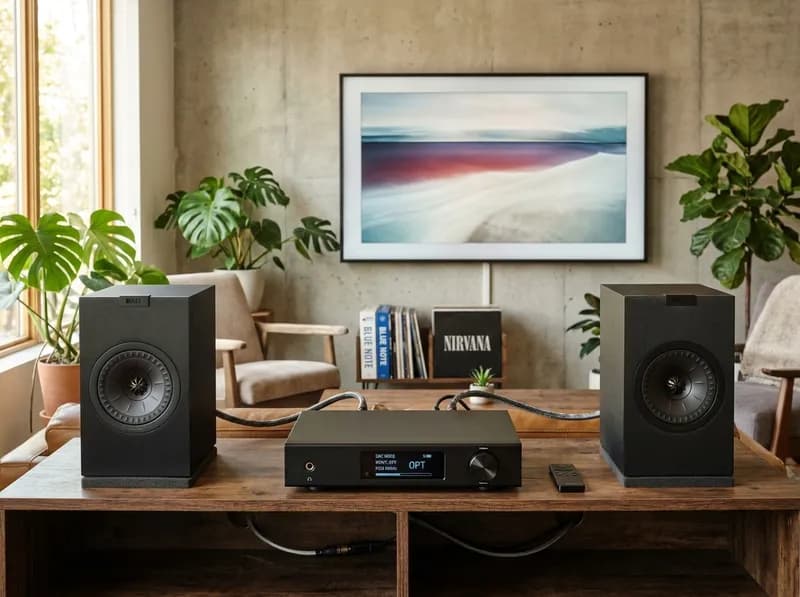
Fosi Audio's 2026 DAC lineup ranges from a $59.99 USB-C dongle to a $199.99 desktop hub. The models in between are not arranged in a simple progression from basic to premium. The ZD3 is a standalone DAC and preamp with HDMI ARC but no headphone output. The ZH3 and K7 both sell for $199.99 and use the AKM AK4493SEQ, yet they serve different setups: the ZH3 has XLR line outputs and an analog input, while the K7 adds Bluetooth and a microphone jack. The Q6 is a fixed-output DAC that Fosi explicitly says cannot control volume. Even the DS2 has two different official power ratings.
That makes choosing by model number or DAC chip a poor strategy. Start with the job the device needs to do. A stereo system may need several digital inputs and a proper volume control. A headphone setup needs enough voltage and current for its headphones. A gaming desk may need a microphone path. A phone needs a compact, bus-powered dongle. Fosi makes products for all four situations, but the differences are easy to miss if you compare specifications without considering how each unit will be used.
There is also a difference between a manufacturer's specification and an independent measurement. The three SINAD figures repeated most often in Fosi comparisons — 117 dB for the ZD3, 116 dB for the K7 and 113 dB for the ZH3 — come from three separate full reviews by Amir at Audio Science Review (ASR). The SK02 and DS2 have full ASR bench reviews as well. All five review samples were supplied by Fosi Audio, a disclosure worth keeping alongside the results.
Those reviews contain more useful buying information than the headline numbers alone. They document an HDMI-CEC problem affecting some ZD3 and LG TV combinations, firmware updates and their limitations, a gain switch that only changes the volume scale, and an SK02 shutdown with a demanding planar headphone at maximum volume. The ZH3 review also records a limitation in the testing: its analog input was not tested.
This guide covers the current U.S. lineup, independent measurements, firmware and compatibility issues, warranty and return conditions, recent price history, and alternatives from SMSL, Topping, FiiO, iFi, Schiit and Apple. Conflicting figures are identified rather than averaged into a number that no source actually published.
No new testing was performed for this article. Measured results are attributed to the reviews that produced them; manufacturer specifications and owner reports are identified separately.
Quick Verdict: The Best Fosi Audio DAC for Most People
Use case | Recommendation | U.S. price | Why it makes sense |
|---|---|---|---|
TV and stereo system | ZD3 | $179.99 | HDMI ARC, Bluetooth, RCA/XLR, display, remote and volume control |
Headphones and powered monitors | ZH3 | $199.99 | XLR and RCA line outputs, analog input, remote and headphone amplifier |
Wireless or gaming desk | K7 | $199.99 | Bluetooth, microphone input, 4.4 mm output and tone controls |
Hardware EQ and headphone tuning | ZH1 | $149.99 | Smart PEQ assistant, but no independent bench yet |
Fixed-output DAC | Q6 | $84.99 | USB, optical and coaxial inputs with RCA and subwoofer outputs |
Compact headphone desk | SK02 | $99.99 | Small desktop DAC/amp with USB and optical inputs |
Portable DAC/amp | DS2 | $59.99 | Affordable dongle with a full ASR bench review |
Portable EQ and gaming features | DS3 | $129.99 | Hardware PEQ, selectable filters and spatial mode |
For a stereo system: The ZD3 is the most complete choice at $179.99. It accepts USB, optical, coaxial, HDMI ARC and Bluetooth, then sends audio to RCA or XLR outputs. A display, remote and real volume control make it useful as a system hub. ASR's November 2024 review found that HDMI ARC performed similarly to USB and measured 117 dB SINAD. The main caveat is the documented HDMI-CEC behavior with some LG televisions, along with intermittent echo reports. It has no headphone jack.
For a combined headphone and speaker desk: The ZH3 costs $199.99 and includes XLR and RCA line outputs, an analog RCA input, a remote and a 12 V trigger. ASR found that the headphone amplifier did not clip up to 2.5 W. Its drawbacks include awkward front-panel menu navigation, possible noise with ultra-sensitive IEMs and a weak 0.3/1.0 reliability score in Frieve's aggregation, which cites audio gating and firmware-update failures.
For a wireless gaming desk: The K7 is also $199.99. It adds Bluetooth, a 3.5 mm microphone input, bass and treble controls, and a 4.4 mm balanced headphone output. MyHiFi measured 2.016 W balanced and 547.6 mW single-ended at 32 ohms, close to Fosi's published ratings of 2.1 W and 600 mW. ASR described its headphone power as medium but found transparent RCA output at 2 V. The microphone path works only in USB Audio Class 1.0, so it cannot run alongside 32-bit/384 kHz UAC 2.0 playback. The K7 also needs its external 12 V supply.
For headphone EQ: The ZH1 is the interesting September 2026 launch. It uses an ESS ES9039Q2M, XMOS XU316 and two TI TPA6120 amplifier chips. Fosi specifies 2,300 mW balanced output at 32 ohms and includes a web-based smart PEQ assistant. However, its own product page carries a 3.0/5 rating, with reports of failed firmware updates, a non-working web portal, excessive knob resistance and features tied to the web app. No independent bench review is available yet.
For fixed-output conversion: The Q6 costs $84.99. It accepts USB-C, optical and coaxial input and provides RCA and a subwoofer output. It has no volume adjustment and cannot act as a preamp. The subwoofer output is line level and cannot be adjusted independently.
For a small headphone-only desk: The SK02 costs $99.99. ASR considered its performance competent, but identified weak ultrasonic filter attenuation, non-zero output impedance and shutdown at maximum volume with Dan Clark E3 headphones. Its gain switch changes the volume scale rather than providing a different amplifier gain stage.
For a portable setup: The DS2 remains the value choice at $59.99 if a basic USB-C dongle is all that is needed. The DS3 costs more at $129.99 and adds hardware PEQ, selectable filters and a spatial mode. Its independent Audio Precision measurements were still described as forthcoming in the reviews cited here.
Four things to understand before buying
There are five full ASR reviews, not just three headline SINAD figures. The ZD3 was reviewed on November 21, 2024; the K7 on July 3, 2025; the ZH3 on September 19, 2025; the SK02 on March 12, 2024; and the DS2 on September 18, 2024. Fosi supplied all five samples.
The DS2's 510 mW rating belongs to the 2024 specification history. Fosi's current product page lists 128 mW single-ended and 170 mW balanced at 32 ohms. Its DS2 (2024) instruction page still lists 128 mW and 510 mW. A manual mirror says earlier promotional material citing 510 mW was incorrect and has since been updated. Independent reviews of the 2024 sample describe the higher-power version. Buyers should not assume a newly purchased DS2 has the same output capability.
The ZH1 and ZH3 are different products. The ZH1 uses an ESS ES9039Q2M and two TPA6120 chips. The ZH3 uses an AKM AK4493SEQ and four OPA1612 op-amps. Their power ratings and connections also differ. Some comparison guides have carried the ZH3's specifications over to the ZH1.
Fosi's 30-day return policy has conditions. Original packaging is required. Buyers pay return shipping for non-quality returns, and more than five return requests can remove free return shipping and trigger handling or restocking deductions. The program applies to official-store purchases, not authorized retailers or physical stores, and order cancellation has a 24-hour window.
Why the Fosi Audio Lineup Is Confusing
Fosi sells several types of products under the DAC label. Some are standalone converters, some combine a DAC with a headphone amplifier, and others add preamp controls, Bluetooth, a tube stage or portable phone connectivity.
Category | What it does | 2026 examples | Main limitation |
|---|---|---|---|
Standalone DAC / preamp | Converts digital audio to line-level analog, sometimes with volume control | ZD3, Q6 | Cannot drive headphones directly; Q6 has no volume control |
DAC / headphone amp / preamp | Combines conversion, headphone amplification and system control | ZH3, K7, ZH1, GR40 | Connections and features vary substantially |
Compact desktop DAC/amp | Provides digital input and headphone output in a small chassis | SK02, Q4, K5 Pro | Not a full replacement for a stereo preamp or powerful headphone amplifier |
Portable USB-C dongle | Bus-powered conversion and headphone amplification | DS1, DS2, DS3, MD3 | No Bluetooth receiver and limited output power |
Tube-flavored DAC/preamp | Adds a tube analog stage and tone controls | GR40 | Not aimed at the lowest possible distortion |
The price overlap makes the distinctions even more important. The ZH3 and K7 both cost $199.99 and use the same AKM AK4493SEQ, but the ZH3 is better suited to a stereo or headphone-and-monitor system. It has XLR line outputs, an analog input, a remote and a 12 V trigger. The K7 is aimed at a desk where Bluetooth and a microphone input matter more.
The Q6 and ZD3 are not simply two quality levels of the same product. The Q6 costs $84.99 and provides fixed-output conversion. The ZD3 costs $179.99 because it adds HDMI ARC, Bluetooth, XLR, a display, a remote and volume control. If the system already has a volume control downstream, the Q6 may be all that is needed.
New and discontinued model names
IFA 2026, held September 4–8 at Hall 10.2, Booth 101, brought several new Fosi products into view. The ZH1, Carbon12 IEM, DISC Nano CD player and S3 Lite streamer were among the products shown. A C3 AI gaming sound card also appeared at CanJam NYC 2026.
Not every product shown at an event belongs in a DAC comparison. Some are headphones, streamers, CD players or gaming accessories. The table below separates current U.S. DAC listings from model names that should not be treated as confirmed current products.
Model name | Status at research date | Buying guidance |
|---|---|---|
ZD1 | No current U.S. official listing verified | Check the exact seller and model; do not infer its position from the number |
ZD2 | No current U.S. official listing verified | Do not confuse it with the portable DS2 |
K7 Pro | No current U.S. official listing verified | The current model found is K7 |
DS1 Plus | No current U.S. official listing verified | The current official listing is DS1 |
K5 Pro ESS | No separate current U.S. official listing verified | Do not assume it is a distinct current SKU |
ZP3, S3 Lite, DISC Nano, Carbon12, IM4, i5, C3 | 2026 products outside this DAC shortlist | Real products, but not direct DAC substitutes |
ZD3, ZH3, K7, ZH1, Q6, SK02, DS1, DS2, DS3, MD3, GR40, Q4, K5 Pro | Current official U.S. listings | Covered in this guide |
A model appearing in an old review or marketplace listing does not prove that it remains in production. Conversely, a lineup guide that covers only the ZD3, K7, SK02 and DS2 misses several current products and the 2026 launches.
How the Models Were Selected
The comparison starts with Fosi's current official U.S. DAC collection, 2026 IFA and CanJam announcements, and legacy products that remain listed on the official storefront.
A model receives a full section when it is currently sold through the U.S. channel, has core specifications available from an official product page, and represents a distinct use case. That includes stereo preamps, desktop DAC/amp hubs, gaming desks, compact headphone amplifiers, fixed-output converters and portable dongles.
Older model names that appear only in reviews or marketplace listings are retained in the status table rather than presented as current products. Products whose main function is not DAC conversion are excluded from the main comparison. Specifications found only in AI-generated roundups are not used as established facts.
No sales-volume, popularity or best-seller claims are made without verified data. Competitor products are included later so that buyers can compare Fosi against realistic alternatives, including Apple's inexpensive USB-C adapter.
Independent Measurements: What the ASR Reviews Actually Show
The SINAD figures most often quoted for Fosi's desktop DACs are useful, but they are only part of the picture. ASR's full reviews cover five products. Each sample was supplied by Fosi Audio.
Model | ASR review date | Price at review | Headline result | Findings that matter to buyers |
|---|---|---|---|---|
SK02 | Mar 12, 2024 | $99.99 | Not primarily a SINAD story | Competent performance; ESS IMD hump; weak ultrasonic filter attenuation; gain switch only rescales volume; non-zero output impedance; shutdown at maximum volume with Dan Clark E3 |
DS2 | Sep 18, 2024 | $55 | Among the strongest portable results reported at the time | Described as topping the portable-device chart; drove HD650 and Dan Clark E3; about 1.7 W playback draw |
ZD3 | Nov 21, 2024 | $179.99 | 117 dB SINAD | HDMI ARC performed like USB; noise-bound result; near-5 V output helped the measurement; one default filter; ESS IMD hump; 72.3% of 336 poll voters rated it Great |
K7 | Jul 3, 2025 | $199 | 116 dB SINAD | Full transparency at 2 V over RCA; headphone power described as medium; an owner questioned the 2.1 W claim in the review thread |
ZH3 | Sep 19, 2025 | $199 | 113 dB SINAD | No clipping up to 2.5 W; awkward front-knob menu; possible noise with ultra-sensitive IEMs; analog RCA input was not tested |
The numbers should not be read as a simple ranking. A 117 dB result does not automatically make the ZD3 a better-sounding DAC than a 113 dB ZH3. Both are already operating at a level where the rest of the audio chain is likely to matter more.
Other reviews and measurements add context:
Product / measurement | First result | Second result | What the difference means |
|---|---|---|---|
ZH3 SINAD | ASR: 113 dB | Pragmatic Audio: 115 dB, SNR 121 dB | Different test setups can produce different results; neither number describes reliability |
ZH3 reliability | Strong ASR bench result | Frieve: 0.3/1.0, citing audio gating and firmware issues | A clean measurement and a poor ownership record can coexist |
K7 balanced power at 32 ohms | Fosi: 2.1 W | MyHiFi: 2.016 W | The measured result is close to the manufacturer's claim |
K7 single-ended power at 32 ohms | Fosi: 600 mW | MyHiFi: 547.6 mW | A modest difference, not a reason to assume the amplifier is unusable |
K7 RCA SINAD | Fosi specification | MyHiFi: 115.8–116.7 dB | Similar figures from different setups are not identical test conditions |
SK02 balanced output | Fosi: 755 mW at 32 ohms | Some aggregators: 1,100 mW | ASR's shutdown finding with Dan Clark E3 is more useful than the largest headline number |
Three measurement principles help make sense of the results.
SINAD is not a sound-quality score. It combines noise and distortion at a particular output level, bandwidth and load. It is useful for identifying a poor implementation, but it does not establish that one already-clean DAC will sound better than another. A 117 dB ZD3 and a 113 dB ZH3 both have strong measured DAC performance.
Headphone power is an amplifier specification, not a DAC specification. It needs to be read alongside load impedance and distortion limits. Fosi's 2,570 mW and 2,100 mW figures are specified at 32 ohms with THD+N below 1%. They do not tell buyers how much power is available at 300 ohms. High-impedance headphones are often voltage-limited, and a recommended 16–300 ohm range is not a substitute for a full power curve.
THD+N and SNR need test conditions. A figure without output level, bandwidth, load and measurement method is incomplete. Fosi also does not publish a consistent output-impedance figure across the lineup. That matters for some multi-driver IEMs, where amplifier output impedance can affect frequency response.
The practical takeaway is straightforward: the ZD3, K7 and ZH3 already have strong DAC measurements. If a system has audible hiss, distortion or insufficient volume, check the headphone amplifier, gain setting, source configuration, grounding and headphones before assuming that a more expensive DAC is the solution.
The DS2 Power Conflict: 170 mW or 510 mW?
The DS2 (2024) is one of the least expensive Fosi products with a full independent bench review. It is also a model whose published power figures need careful reading.
Fosi's current product page lists 128 mW single-ended and 170 mW balanced at 32 ohms. The DS2 (2024) instruction page lists 128 mW and 510 mW. A third-party manual mirror says earlier promotional material citing 510 mW was incorrect and has since been updated.
At the same time, several independent reviews describe the higher-power 2024 sample.
Date / period | Source | Single-ended at 32 ohms | Balanced at 32 ohms | What it establishes |
|---|---|---|---|---|
2024 launch | Fosi DS2 (2024) instruction page | 128 mW | 510 mW | The high-power figure appeared in Fosi documentation |
Sep 18, 2024 | ASR review of a $55 company-supplied sample | Not the headline figure | High-power behavior | Reviewer described it as topping the portable-device chart at the time and driving HD650 and Dan Clark E3 |
Dec 2024 | Pragmatic Audio review | — | High-power 2024 sample | Independent coverage of the earlier version |
2024–2025 | TNT-Audio, Frieve and Mobile Audiophile | — | 510 mW-era unit | Additional reviews of the high-power sample |
Current listing | Fosi DS2 product page | 128 mW | 170 mW | The current official product page uses the lower figure |
Current documentation | Third-party manual mirror | — | — | Says earlier 510 mW promotional material was incorrect and has been updated |
2025 onward | Fosi community discussions | — | — | Some owners describe DS2-2024 and DS2-2025 as functionally identical apart from the cable |
The safest interpretation is to distinguish the 2024 review sample from the current product listing. A high-power DS2 was promoted and independently reviewed in 2024. Fosi later revised the power information, while older documentation continued to show the earlier figure.
For a newly purchased DS2, use the current product-page rating unless Fosi confirms the exact revision and output specification in writing. The 2024 ASR review is useful evidence about the sample tested in 2024; it is not proof that every current DS2 will deliver the same output.
The core specifications are less disputed: USB-C input, dual Cirrus Logic CS43131 DAC chips, 3.5 mm and 4.4 mm outputs, PCM up to 32-bit/384 kHz and DSD256. Fosi's DS2 instructions also warn against using a 3.5 mm-to-4.4 mm adapter to turn a single-ended headphone cable into a balanced connection. A balanced output requires separate left and right returns; changing the plug does not make a headphone cable balanced.
Complete Fosi Audio DAC Lineup and U.S. Prices
The following prices reflect U.S. storefront and review information observed around November 6, 2026. They are not guaranteed checkout prices or permanent MSRP. Street prices, Prime-only promotions and authorized-dealer prices are shown separately where available.
Model | Main role | Official U.S. price | Other observed price | Price context |
|---|---|---|---|---|
ZD3 | Standalone DAC / preamp with HDMI ARC | $179.99 | $189.99 Amazon list; $152.99 Prime-only low on Oct 6, 2026 | 36-day Basketprice record |
ZH3 | DAC / headphone amp / preamp | $199.99 | $169.99 Prime-only low on Oct 6, 2026 | 36-day Basketprice record |
K7 | DAC / headphone amp with Bluetooth and mic | $199.99 | $199 at ASR review | July 2025 review price |
ZH1 | DAC / headphone amp with smart PEQ | $149.99 | Launch pricing not independently verified | September 2026 launch |
Q6 | Fixed-output DAC | $84.99 | $105.48 at an authorized dealer | Dealer markup |
SK02 | Compact desktop DAC/amp | $99.99 | $99.99 at ASR review | Company-supplied sample |
DS1 | Portable USB DAC/amp | $79.99 | — | ESS ES9038Q2M |
DS2 (2024) | Portable USB DAC/amp | $59.99 | $55 at ASR review | Power-rating history requires care |
DS3 | Portable DAC/amp with hardware PEQ | $129.99 | $99.99 launch price reported in Jan 2026 | Headfonia and Pragmatic Audio used $129.99 |
MD3 | Magnetic portable DAC/amp | $149.99 | — | Conflicting published weight figures |
GR40 | Tube DAC / preamp / headphone amp | $119.99 | — | Tube stage and tone controls |
Q4 | Entry-level DAC/amp | $69.99 | — | USB limited to 24-bit/96 kHz |
K5 Pro | Gaming DAC/amp | $79.99 | — | Older design with microphone input |
Two price details are worth checking before ordering. Basketprice's 36-day Amazon record shows the ZD3's $189.99 list price above every recorded street price in that period. The lowest tracked price was $152.99 on October 6, 2026, but required Prime membership. The ZH3 reached $169.99 on the same date, also as a Prime-only price.
Fosi announced BestBuy.com availability in June 2026. Buying through a retailer may provide a different return process from buying directly from Fosi, so check the seller's terms rather than assuming the official-store 30-day program applies.
Fosi ZD3 ($179.99): Best for a TV and Stereo System
The ZD3 is a standalone DAC and preamp. Its inputs include USB, optical, coaxial, HDMI ARC and Bluetooth. Outputs are RCA and XLR. It also has a display, remote, volume control, preamp bypass and 12 V trigger input/output.
Fosi specifies an ESS ES9039Q2M DAC, XMOS XU316 USB interface, QCC3031 Bluetooth module and LME49720 op-amps. Supported formats include:
USB: PCM up to 32-bit/768 kHz and DSD512
Optical and coaxial: PCM up to 24-bit/192 kHz
HDMI ARC: PCM up to 24-bit/192 kHz
Bluetooth: SBC, AAC, aptX and aptX HD
Analog output: 5 Vrms balanced XLR and 2.5 Vrms RCA
There is no headphone jack, LDAC or aptX Adaptive.
What the ASR review found
ASR's November 2024 review of a company-supplied $179.99 sample reported 117 dB SINAD. HDMI ARC performed similarly to USB, and the result was noise-bound. The reviewer also noted that the near-5 V balanced output helped the measurement. The unit had one default filter and an ESS IMD hump.
In ASR's 336-vote poll, 72.3% of respondents rated the ZD3 Great. That is a strong result, but the HDMI ownership reports deserve attention before connecting it to a television.
HDMI-CEC and firmware history
Period | Report | Source / context | Counter-report |
|---|---|---|---|
Late 2024 | Some LG B4/C4 owners reported that the ZD3 powered back on 15–20 seconds after the TV was switched off, sometimes turning the TV back on | ASR first-look and review threads | Other owners reported normal HDMI handshakes with Hisense TVs |
Late 2024–2025 | Intermittent echo or audio glitches reported on some units | ASR discussion threads | Other users reported flawless USB and Toslink operation |
Firmware v1.04–v1.06 | Fosi support distributed firmware revisions; some users said the echo remained after v1.06 | Support-related posts in ASR threads | Several owners praised Fosi's response and replacement support |
Late 2025 | Support checklist recommended v1.0.8, firmware reinstallation, selecting HDMI rather than Auto on the TV, using Pass Through, changing inputs and disabling CEC | ASR support-quote posts | A December 2025 user was still asking whether CEC had been fixed |
2026 | A Fosi community post described an Honor Magic8 Pro forcing ZD3 volume to maximum or zero while locked | Fosi community | No independent reproduction located |
For a TV connection, use the TV's HDMI ARC port rather than a standard HDMI input. Select the external audio system in the TV's sound settings and set digital audio output to PCM or stereo PCM. The ZD3 is not a multichannel decoder: it does not decode Dolby Digital or DTS bitstreams.
If the DAC powers itself back on or the TV changes audio output unexpectedly, check the TV's CEC settings. Optical is a simpler alternative when stereo PCM is all that is needed and HDMI control is not important.
The ZD3 uses HDMI ARC, not HDMI eARC. Its appeal is the combination of inputs, remote volume and balanced outputs, not multichannel decoding. Reports about Fosi's op-amp-rolling marketing and claims of a particular sonic warmth are less useful than the features that can be verified directly.
Buy the ZD3 if you need a central volume control for a TV, streamer, CD transport or computer, and will use its HDMI ARC, Bluetooth or XLR connections.
Skip it if the system is headphone-first, already has volume control elsewhere, or uses an LG television whose CEC behavior cannot be checked during the return period. If all you need is fixed-output conversion, the Q6 costs $95 less.
Fosi ZH3 ($199.99): A Desktop Hub for Headphones and Speakers
The ZH3 combines a DAC, headphone amplifier and preamp. Fosi specifies an AKM AK4493SEQ DAC, XMOS XU316 interface and four OPA1612 op-amps.
Its connections include USB, optical and coaxial digital inputs, an analog RCA input, RCA and XLR line outputs, and 6.35 mm and 4.4 mm headphone outputs. It also has a remote, 12 V trigger and bass/treble controls with six filters.
Published headphone output at 32 ohms is 640 mW single-ended and 2,570 mW balanced per channel, with THD+N below 1%. Fosi gives a recommended headphone impedance range of 16–300 ohms, but does not publish a complete power curve across that range.
ZH3 vs K7: Same price, different jobs
Feature | ZH3 | K7 | Why it matters |
|---|---|---|---|
U.S. listed price | $199.99 | $199.99 | Neither is a premium version of the other |
DAC chip | AKM AK4493SEQ | AKM AK4493SEQ | Same converter; connections and amplifier functions decide the purchase |
Bluetooth | No | Bluetooth 5.0 | Wireless playback favors K7 |
Microphone input | No | 3.5 mm | Useful for gaming and headset setups |
Headphone outputs | 6.35 mm + 4.4 mm | 3.5 mm + 4.4 mm | Check existing headphone cables |
Balanced / SE power at 32 ohms | 2,570 mW / 640 mW | 2,100 mW / 600 mW | Both figures are at 32 ohms |
RCA line output | Yes | Yes | Both can feed powered speakers |
XLR line output | Yes | No | Useful for balanced speaker connections |
Analog RCA input | Yes | No | Allows use of the ZH3's amplifier stage with an external analog source |
Remote / 12 V trigger | Yes / Yes | No / No | More complete system control on the ZH3 |
EQ | Bass/treble, six filters | Bass/treble | ZH3 offers more filter options |
Measurements and ownership reports
ASR's September 2025 review of a company-supplied $199 sample reported 113 dB SINAD and no clipping up to 2.5 W. The reviewer found the front-knob menu frustrating and noted possible noise with ultra-sensitive IEMs. The analog RCA input was not tested.
Pragmatic Audio reported a second measurement caliber of 115 dB SINAD and 121 dB SNR. Frieve's reliability score was much weaker at 0.3 out of 1.0, citing audio gating that cuts the beginning of audio, firmware-update failures around v1.15 and single-ended power limitations.
Other reviews and owner discussions mention that the front and rear headphone outputs are not simultaneous, and that high gain can add hiss with sensitive IEMs. These findings do not cancel out the strong ASR measurement. They describe different parts of ownership: electrical performance, usability and reliability.
Buy the ZH3 if you want one desktop component for headphones and powered monitors, need XLR line outputs, have an analog source, or value remote and trigger control.
Skip it if you need Bluetooth or a microphone input, mainly use ultra-sensitive IEMs, or require a microphone path during high-resolution playback. The K7 is the more suitable gaming and wireless option.
Fosi K7 ($199.99): Wireless Audio and Gaming
The K7 combines an AKM AK4493SEQ DAC with an XMOS XU208 USB interface, Qualcomm QCC3031 Bluetooth module and TI TPA6120 headphone amplifier.
Inputs include USB-C, optical, coaxial and Bluetooth 5.0. Supported Bluetooth codecs are SBC, AAC, aptX, aptX HD and aptX Low Latency. There is no LDAC or aptX Adaptive.
The outputs are 3.5 mm and 4.4 mm headphone jacks plus RCA line out. Fosi rates headphone power at 600 mW single-ended and 2,100 mW balanced per channel at 32 ohms. USB supports PCM up to 32-bit/384 kHz and DSD256; optical and coaxial support PCM up to 24-bit/192 kHz.
The K7 has a display and bass/treble controls, but no XLR line output, analog input, remote or 12 V trigger. It also lacks a 6.35 mm headphone jack.
Independent measurements
ASR's July 2025 review of a company-supplied $199 unit reported 116 dB SINAD and found transparent performance at 2 V over RCA. The reviewer described headphone power as medium. An owner questioned the 2.1 W rating in the same discussion.
MyHiFi's lab measurements provide a more detailed power comparison:
Balanced output: 2.016 W at 32 ohms
Single-ended output: 547.6 mW at 32 ohms
RCA SINAD: 115.8–116.7 dB
These results are close to Fosi's published power figures. The more important question is whether the K7 has enough voltage and current for the headphones being used.
Gaming and connection limitations
The microphone input works only in USB Audio Class 1.0. It cannot operate alongside 32-bit/384 kHz UAC 2.0 playback. The K7 handles one active input at a time.
The bass and treble controls provide shelves of approximately ±12 dB and ±6 dB, respectively, without presets. The chassis weighs about 522 g.
The USB connection carries data only. The K7 needs its external 12 V / 2 A power supply, so it cannot run directly from a laptop or phone as a bus-powered dongle.
Buy the K7 if your PC desk needs Bluetooth, a microphone input, headphone amplification and RCA speaker output in one box.
Skip it if you need balanced XLR line outputs, an analog input, remote control, a 6.35 mm headphone jack or a microphone path that works during 384 kHz playback.
Fosi ZH1 ($149.99): The September 2026 Launch
The ZH1 is one of Fosi's newest DAC/amp products and one of the easiest to misdescribe. It appeared at IFA 2026 alongside the Carbon12 IEM, DISC Nano CD player and S3 Lite streamer. Fosi's Chinese product listing is dated September 23, 2026.
Its headline feature is a smart acoustic assistant that generates parametric EQ settings based on a preferred sound profile or headphone presets. Users can make further adjustments through a web interface.
The ZH1 has USB, optical and coaxial inputs. Headphone outputs include 3.5 mm, 6.35 mm and 4.4 mm, alongside RCA line out. Fosi lists UAC 1.0 compatibility for consoles such as PS5 and Nintendo Switch.
ZH1 specifications: What is confirmed and what is not
Specification | Fosi official product page | Figures appearing in other coverage |
|---|---|---|
DAC chip | ESS ES9039Q2M | AKM AK4493SEQ — the ZH3's chip |
USB interface | XMOS XU316 | XMOS XU316 |
Amplifier stage | Two TI TPA6120 chips | Four OPA1612 — the ZH3's op-amps |
Balanced output at 32 ohms | 2,300 mW | 2,000 mW in IFA material; 2.3 W in SoundStage! Solo show reporting |
Single-ended output at 32 ohms | 589 mW | 640 mW — the ZH3's figure |
Noise floor | 1.9 uV, 3.2 uV and ≤1.7 uV all appear on the same page | No consistent figure |
SNR / dynamic range | At least 124 dB | — |
THD+N | At most 0.0002% | — |
Headphone impedance | 8–300 ohms | — |
Power supply | DC 12–15 V | — |
Remote | None | Some comparisons imply ZH3-style remote functionality |
Store rating | 3.0/5 across 4–6 reviews, depending on regional page | NetGuide says IFA technical figures are not independently verified |
The confusion is understandable: the ZH1 and ZH3 share a similar product category and several visible features. But their DAC chips, amplifier stages, power ratings, outputs and controls are different. The ZH1 does not simply become a ZH3 with a different name or lighting.
There are also unresolved specification differences. Fosi's product page lists 2,300 mW balanced output, while IFA material cites 2,000 mW and SoundStage! Solo reports 2.3 W. Fosi's own page contains three different noise-floor values.
The webapp and firmware question
Fosi's own ZH1 storefront page carries a 3.0/5 rating. Reviews include reports of a firmware update failure, a web portal that did not work, excessive knob resistance, a hot-running base and features that require the web app.
Those complaints matter because the web-based tuning assistant is central to the ZH1's appeal. A failed firmware update or unavailable portal affects more than an optional convenience feature.
As of November 6, 2026, there is no independent bench review, teardown or established long-term owner record for the ZH1. Manufacturer-hosted reprints of Headfonia or Z Reviews coverage elsewhere on Fosi's website should not be mistaken for independent testing of this specific model.
Buy the ZH1 if hardware PEQ and headphone tuning are your main priorities, you are comfortable with a web-based control system, and you can buy through a retailer with a straightforward return process.
Skip it if this is your first desktop DAC, you need a remote or XLR line outputs, or you would rather buy a product with independent measurements and a longer ownership history.
Fosi Q6 ($84.99) and SK02 ($99.99): Fixed-Output Conversion vs Compact Headphone Amplification
The Q6 is a good example of why the word DAC does not tell you enough about a product. It accepts USB-C, optical and coaxial input and provides RCA plus a dedicated subwoofer output. Its main components include an AKM AK4493S, XMOS XU316 and OPA1612.
Fosi lists USB support up to PCM 32-bit/768 kHz and DSD512, optical and coaxial up to 24-bit/192 kHz, SNR of at least 121 dB and THD below 0.00012%.
The key limitation is explicit: the Q6 has no volume adjustment and cannot function as a preamp. Its subwoofer output is line level and cannot be adjusted independently.
There are a few practical details to check:
USB bus power may introduce noise depending on the host device.
Some owners report misaligned input-knob labels.
Optical and coaxial cables are not included.
The official page lists an AK4493S, while some third-party listings use AK4493SEQ.
The Q6 is a sensible $84.99 purchase when an integrated amplifier or powered speakers already control volume. It is not suitable when the DAC itself needs to control the system's listening level. In that situation, the ZD3 is the more complete choice, or the GR40 if a tube stage and tone controls are specifically wanted.
SK02: A compact headphone DAC/amp
The SK02 takes USB and optical input and provides 3.5 mm and 4.4 mm headphone outputs. Its 3.5 mm line output can also function as optical out.
Fosi specifies an ESS ES9038Q2M, USB support up to 32-bit/384 kHz PCM and DSD256, and optical support up to 24-bit/192 kHz. Published power is 190 mW single-ended and 755 mW balanced per channel at 32 ohms. Some aggregator pages instead cite 1,100 mW balanced.
ASR's March 2024 review of a company-supplied $99.99 sample is a more useful reference than the largest figure in an aggregator. The reviewer described performance as competent but identified several limitations:
An ESS IMD hump.
Insufficient ultrasonic filter attenuation, affecting wideband THD+N; upsampling to 192 kHz helps.
A gain switch that only changes the volume scale.
Non-zero output impedance.
Shutdown at maximum volume with Dan Clark E3 headphones.
Only 26.7% of 240 ASR poll voters rated the SK02 Great.
Buy the SK02 if you want a compact desktop headphone DAC/amp for ordinary dynamic headphones or moderately efficient planars and do not need Bluetooth, a microphone, HDMI ARC or XLR.
Skip it if you use demanding planar headphones, multi-driver IEMs sensitive to output impedance, or need a full stereo preamp.
Portable Fosi DACs: DS2, DS1, DS3 and MD3
All four models handle USB audio and headphone amplification. They differ in their DAC chips, power ratings, physical design and software features. None is a Bluetooth receiver.
Model | DAC chip | Outputs | Published power at 32 ohms | Main feature |
|---|---|---|---|---|
DS1 | ESS ES9038Q2M | 3.5 mm + 4.4 mm | 120 mW SE / 220 mW balanced | Earlier high-resolution dongle, PCM 32-bit/768 kHz and DSD512 |
DS2 (2024) | Dual CS43131 | 3.5 mm + 4.4 mm | 128 mW SE / 170 mW balanced on current page; 128 / 510 mW in 2024 instructions | Low-cost dongle with a full ASR review and a complicated specification history |
DS3 | ESS ES9039Q2M | 3.5 mm + 4.4 mm | 120 mW SE / 220 mW balanced, per Headfonia | Hardware PEQ, selectable filters, spatial mode and dual UAC modes |
MD3 | ESS ES9039Q2M | 3.5 mm + 4.4 mm | 80 mW SE / 180 mW balanced | Magnetic phone attachment, rear display and pass-through charging |
DS3: More features, higher street price
Headfonia described the DS3 as a sub-$150 portable reference and gave it 4.5/5. Pragmatic Audio rated it 5/5 while noting that independent Audio Precision measurements were still forthcoming.
The price has changed since launch. eCoustics reported $99.99 in January 2026, while Headfonia and Pragmatic Audio coverage in March and August used $129.99. Buyers comparing current prices should use the newer figure rather than assuming the launch price is still available.
DS3 detail | First published figure | Other figure | Current interpretation |
|---|---|---|---|
U.S. price | $99.99 at Jan 2026 launch | $129.99 in later coverage | Use $129.99 as the more recent comparison price |
XMOS core | 16-core at 1.6 GHz in some material | 800 MHz per core or dual-core in other material | No independently verified specification |
PEQ | 8 bands currently | 32 bands on a roadmap | Roadmap features should not be treated as available |
Measurements | Listening reviews at 4.5/5 and 5/5 | AP measurements described as forthcoming | No independent bench located |
MD3 weight | 20 g on official page | 50 g in one show report | Conflicting figures; eCoustics also flags the difference |
MD3 amplifier | ES9039Q2M listed alone | ES9039Q2M plus four ES9603Q amplifier chips in other material | Unresolved |
MD3 balanced output | 180 mW at 32 ohms | — | Suitable for IEMs and efficient headphones, not a high-power planar amplifier |
Headfonia's direct DS3 and MD3 comparison describes similar sound, with the choice largely coming down to features. The DS3 has a screen, PEQ and gaming modes; the MD3 has magnetic mounting and pass-through charging.
At 180 mW balanced, the MD3 is not a substitute for a powerful desktop planar headphone amplifier. For a buyer who only needs a basic dongle, the DS2 at $59.99 is better value. The DS3 makes sense when its EQ and gaming features will actually be used.
GR40, Q4 and K5 Pro: Tube Sound and Older Desktop Combos
The GR40 at $119.99 combines a tube DAC/preamp stage with Bluetooth, USB, optical and coaxial inputs. It has active-speaker and headphone outputs, an ESS ES9028Q2M and a QCC3031 Bluetooth module.
Supported Bluetooth codecs include aptX, aptX HD and aptX Low Latency. USB supports PCM up to 32-bit/384 kHz and DSD256. The GR40 also has preamp volume control and bass/treble adjustments.
This is a legitimate option for someone who wants a tube analog stage and tone controls. It is not the right purchase for someone focused on the lowest possible distortion. Owner reports also mention low output voltage with some AVRs and repeated iOS pairing attempts.
The Q4 and K5 Pro are older, less expensive designs. Their appeal is primarily price, physical controls and particular connections.
Model | Why it remains relevant | Limitations |
|---|---|---|
Q4 ($69.99) | Low price, simple tone controls and three digital inputs | USB capped at 24-bit/96 kHz; headphone power listed as 100 mW in one specification and 160 mW RMS in another |
K5 Pro ($79.99) | Microphone input and physical controls for a gaming desk | Frequency-response deviations, IEM hiss, low-volume channel imbalance and no gain switch |
GR40 ($119.99) | Tube stage, Bluetooth, tone controls and preamp volume | A deliberately different sound and feature choice, not a measurement-first product |
Third-party frequency-response measurements of the K5 Pro show bass down by about 4 dB and treble by about 2 dB. Other reported limitations include hiss with sensitive IEMs, channel imbalance from the analog potentiometer at low volume, microphone noise, and no gain switch. A PS5 optical connection does not return microphone signal.
The K5 Pro's USB input is capped at 24-bit/96 kHz. Published headphone output is 500 mW at 32 ohms and 80 mW at 300 ohms.
For a new music-focused setup, the SK02 or Q6 is usually a better starting point. The Q4 and K5 Pro make sense when their physical controls, low price or gaming connections are the deciding factors.
Bluetooth, HDMI ARC, USB and 4.4 mm Compatibility
Bluetooth codec support is easy to misread. A DAC may list a codec, but the phone and DAC still have to negotiate a compatible format. No model in Fosi's verified current Bluetooth lineup lists LDAC or aptX Adaptive.
Model | Listed Bluetooth codecs | Notes |
|---|---|---|
ZD3 | SBC, AAC, aptX, aptX HD | No LDAC or aptX Adaptive |
K7 | SBC, AAC, aptX, aptX HD, aptX Low Latency | No LDAC |
GR40 | aptX, aptX HD, aptX Low Latency | AAC not listed |
ZH3 | No Bluetooth input listed | — |
Q6 | No Bluetooth input listed | — |
SK02 | No Bluetooth input listed | — |
DS1 / DS2 / DS3 / MD3 | USB audio only | No Bluetooth receiver function |
iPhones generally use AAC or SBC with these products. Android codec behavior varies by manufacturer, model and operating-system settings. The Bluetooth developer options can show the active codec, but the negotiated result depends on the receiver as well.
For a fixed desktop setup, USB avoids Bluetooth codec negotiation and usually has lower latency. LDAC's higher available bitrate does not guarantee better results when the wireless connection is unstable.
Connecting the ZD3 to a TV
The ZD3's HDMI ARC connection is not eARC. It does not decode Dolby Digital or DTS and requires two-channel PCM output from the TV.
A typical setup is:
Connect the TV's HDMI ARC port to the ZD3's ARC input.
Select the external audio system in the TV's sound settings.
Set digital audio output to PCM or stereo PCM.
If there is no sound, check whether the TV is sending a Dolby or DTS bitstream.
If the DAC powers on unexpectedly or changes the TV's audio behavior, check HDMI-CEC settings.
Optical is a simpler alternative for stereo PCM when ARC control is unnecessary. Given the ZD3's CEC reports, it is worth testing the HDMI connection before the return period expires.
USB sample rates are not a quality ranking
A DAC supporting 768 kHz PCM is not automatically better than one supporting 384 kHz or 192 kHz. Most music listening does not require extreme sample rates.
The practical questions are whether the operating system recognizes the device, whether the music player's formats are supported, whether the output connects correctly to the amplifier or headphones, and whether the system has the volume and gain controls it needs.
Fosi documents macOS and Linux compatibility for several newer USB products. Older models such as the Q4 may require checking the Windows driver instructions. UAC 1.0 modes are available for console compatibility on products such as the ZH1 and K7, but they trade high-resolution sample-rate support for that compatibility.
4.4 mm balanced headphone connections
A 4.4 mm connector is not automatically a better connection, and a standard single-ended headphone cable should not be connected to a balanced output using an improvised adapter.
Balanced headphone outputs use separate left and right returns. A cable does not become balanced simply because its plug fits a 4.4 mm socket. Fosi's DS2 instructions specifically warn against using a 3.5 mm-to-4.4 mm adapter to convert a single-ended headphone cable.
Where the Money Actually Goes
Fosi's price bands are not quality bands. The Q6 at $84.99 already provides digital-to-analog conversion. Spending more generally buys additional inputs, outputs, controls, headphone amplification or software features.
Budget | Models worth considering | What the extra money buys |
|---|---|---|
Under $50 | No standout current Fosi model; Apple's $9 USB-C adapter is the baseline | Basic conversion and a 3.5 mm output |
$50–$100 | DS2 $59.99, Q6 $84.99, SK02 $99.99 | Portability, three digital inputs, subwoofer output or a compact headphone amplifier |
$100–$150 | GR40 $119.99, DS3 $129.99, ZH1 $149.99, MD3 $149.99 | Tube stage, hardware PEQ, smart EQ or magnetic mounting |
$150–$200 | ZD3 $179.99 | HDMI ARC, Bluetooth, XLR, display, remote and preamp volume |
Around $200 | ZH3 or K7 at $199.99 | XLR and analog input, or Bluetooth and microphone connectivity |
Above $200 | Compare alternatives outside Fosi | LDAC, deeper PEQ, higher headphone output or a different conversion architecture |
Three upgrades are easy to justify when they solve a real problem:
Inputs: HDMI ARC or another digital input can connect a source that otherwise has no path into the system.
Amplifier capability and control: A 4.4 mm output, gain control, usable volume adjustment or XLR connection can change how the system works.
EQ: Hardware PEQ on the DS3 or web-based PEQ on the ZH1 can be useful when headphone tuning is part of the plan.
Three specifications are much weaker reasons to spend more: a higher maximum sample rate, a newer DAC chip number and a headline power figure quoted only at 32 ohms.
The $199.99 level is a reasonable stopping point within Fosi's current range. The ZH3 and K7 have independent bench coverage and cover most desktop use cases. If the desired feature is LDAC, deeper PEQ, substantially more headphone headroom or an R-2R ladder, the next step is likely a different brand rather than a more expensive Fosi model.
Recommended systems
System | Configuration | Approximate cost | Why it works |
|---|---|---|---|
Powered speakers with their own volume control | Q6 + existing speakers | $84.99 plus speakers | Fixed output is sufficient when volume is controlled downstream |
Powered speakers with central volume | ZD3 + powered speakers | $179.99 plus speakers | Remote volume, ARC, Bluetooth and XLR |
Passive speakers and power amplifier | ZD3 in preamp mode + power amp | $179.99 plus amp | 5 Vrms XLR output; check amplifier input sensitivity |
TV-focused stereo | ZD3 over HDMI ARC, TV set to stereo PCM | $179.99 | One connection for stereo audio; test CEC behavior |
Headphones and monitors on one desk | ZH3 + headphones + powered monitors | $199.99 | XLR line out, analog input, remote and headphone amplification |
Wireless gaming desk | K7 + headset + powered speakers | $199.99 | Bluetooth, microphone input and RCA line out |
Small headphone-only desk | SK02 + efficient dynamic headphones | $99.99 | USB/optical input and 3.5/4.4 mm outputs |
Phone and IEMs | DS2 or DS1 + IEMs | $59.99–$79.99 | Low-cost portable audio |
Phone with EQ and gaming modes | DS3 + IEMs | $129.99 | Hardware PEQ and spatial mode |
Magnetic phone-mounted setup | MD3 + IEMs | $149.99 | Pass-through charging and rear display |
One common overspend is buying both the ZD3 and ZH3 without a clear reason. They overlap in digital inputs, line outputs and volume control, and the ZH3 already contains a DAC. Separate units make sense when the headphone amplifier and stereo preamp need to be placed separately or upgraded independently. Otherwise, one device is usually enough.
Ownership: Warranty, Returns, Service and Price Timing
Fosi advertises a 24-month limited warranty and a 30-day return period for official-store purchases. The conditions attached to those policies matter, particularly on a $99 or $199 purchase.
Term | Official policy / reported condition | What buyers should know |
|---|---|---|
Warranty | 24 months for qualifying parts and labor defects | One aggregator reports 12 months; the official policy is the primary reference |
Return window | 30 days for qualifying official-store purchases | Does not cover authorized retailers or physical stores |
Cancellation | 24-hour window | Contact support quickly if an order needs to be cancelled |
Packaging | Original packaging required | Keep the box and accessories through the return period |
Return shipping | Buyer pays for non-quality returns | Shipping can materially affect the cost of returning a low-priced product |
Repeat returns | More than five return requests can forfeit free return shipping and trigger handling or restocking deductions | The headline return benefit has limits |
Refund timing | 3–5 business days after processing | Processing time is not the same as the date the item is shipped back |
Return location | U.S. and EU regional warehouses; some other regions ship to China | Confirm the return address before ordering |
Power and cables | Full-size desktop models generally need external power; dongles are USB-powered | Check whether the required adapter and optical/coaxial cables are included |
Fosi customer-service reports
The service record is mixed, and the available ratings do not describe the same review population or snapshot date.
Frieve cites 2.9/5 as of February 2026. An ASR thread quotes roughly 3/5. The Maker Depot reports 3.3/5, with two different review totals — 50 and 51 — in the same coverage. A Trustpilot mirror shows 4.0/5 with 34 reviews.
The complaint details are more useful than trying to average these scores. Some owners describe warranty troubleshooting that asks them to disassemble units or use a multimeter. Others report that op-amp or knob swaps can void warranty coverage, despite Fosi's own videos promoting op-amp rolling. UK courier disputes and poor resolution rates for complex cases also appear in owner discussions.
There is positive feedback too. Many owners describe support as fast and helpful, and two Reddit cases involving delayed refunds were eventually resolved.
Published contact information is inconsistent across official and third-party pages. Support hours appear as 24 hours, 09:00–18:30 GMT+8 or Monday–Friday PST. Phone numbers also differ between some pages and manuals. Use the contact information shown on the current official support page rather than relying on an old manual.
Recent prices and sale timing
Price detail | Observed value | Source / context | Buying implication |
|---|---|---|---|
ZD3 tracked price | $179.99 | Basketprice, 36-day record | Lower than its $189.99 Amazon list price |
ZD3 Prime-only low | $152.99 on Oct 6, 2026 | Basketprice | About 15% below the official-store price |
ZH3 tracked price | $199.99 | Basketprice | Matches the official storefront |
ZH3 Prime-only low | $169.99 on Oct 6, 2026 | Basketprice | Promotion required Prime |
Next major sale period | Black Friday, likely Nov 19–30, 2026 | Price-tracker calendar | Close to the November 6 guide date |
U.S. retail channel | BestBuy.com availability announced June 2026 | Fosi announcement | Retailer return and warranty terms may differ |
Q6 dealer price | $105.48 vs $84.99 official | Authorized-dealer listing | Check the seller before paying a premium |
For a buyer shopping immediately after November 6, 2026, Black Friday is close enough to justify checking the ZD3 and ZH3 prices before paying full list. A list price is not necessarily the normal street price, particularly when the tracked price has been consistently lower.
ZH3 reliability deserves a separate check
The ZH3 illustrates why bench performance and ownership history should be read together. ASR found 113 dB SINAD and no clipping up to 2.5 W. Pragmatic Audio reported 115 dB. Frieve's 0.3/1.0 reliability score cites audio gating, firmware-update problems around v1.15 and single-ended power limitations.
A buyer who needs the ZH3's XLR output and analog input may still find it worthwhile. The important step is to test the functions that matter during the return window and keep the original packaging.
The ZD3 has a similar balance: a strong bench result, reports of HDMI-CEC and echo problems with some televisions, and counter-reports from owners whose setups work normally. Neither product should be judged from one measurement or one owner's experience alone.
Fosi vs the Competition: Alternatives at Similar Prices
Fosi's main advantage is the number of functions it puts into relatively inexpensive products. The ZD3 combines HDMI ARC, Bluetooth, XLR, RCA, a display and remote volume at $179.99. The K7 combines Bluetooth, a microphone input and headphone amplification at $199.99.
That does not make Fosi the best choice for every buyer. The alternatives below show where another brand offers a feature that Fosi does not.
Alternative | Approx. 2026 U.S. price | What it adds | Where Fosi remains attractive |
|---|---|---|---|
SMSL DL100 | About $179.99 / EUR 199.95 | Quad CS43131, HDMI ARC, LDAC and aptX HD Bluetooth, XLR/RCA and 6.35/4.4 mm outputs | ZD3's display, remote and established ASR review |
SMSL D-6S | Budget tier | 117 dB SINAD and LDAC | ZD3's HDMI ARC and system-control features |
Topping DX1 II | Below ZD3 pricing | 121 dB SINAD | ZD3 adds HDMI ARC, Bluetooth and XLR |
Topping DX5 II | About $299 | Dual ES9039Q2M, Bluetooth 5.1 with LDAC and aptX Adaptive, 10-band PEQ, color display and 6.4 W at 32 ohms | Fosi costs less and covers basic desktop functions |
FiiO K11 R2R | About $170 | Discrete 24-bit R-2R conversion, NOS/OS modes, 1,300 mW balanced at 32 ohms and 220 mW at 300 ohms | ZH3 adds XLR line outputs, analog input and remote |
iFi ZEN DAC 3 | About $229 | Different DAC implementation and 4.4 mm balanced connectivity | Fosi offers higher published headphone power and more digital inputs |
FiiO K7 / K13 R2R | About $220 / $319 | Established desktop platform / R-2R architecture | Fosi's price and feature density |
Schiit Magni Unity + DAC card | $199 | Modular separates and U.S. assembly | Fosi integrates ARC, Bluetooth and preamp features |
FiiO KA11 / iFi GO Link Max | About $30–$33 / $79 | Small, inexpensive dongles | DS2 has a full ASR review |
Apple USB-C to 3.5 mm adapter (MW2Q3AM/A) | $9 | Basic conversion | Fosi adds power, inputs, outputs and control |
Do you need a DAC more expensive than Apple's $9 adapter?
The Apple USB-C to 3.5 mm adapter is a useful baseline. For efficient headphones and IEMs, a basic dongle may already provide transparent conversion. A commonly cited threshold is around 90 dB SINAD under level-matched conditions, although the actual result depends on the device and test setup.
Spending more makes sense when the system needs something the adapter cannot provide:
More output power for demanding headphones.
Additional digital inputs such as optical, coaxial or HDMI ARC.
A proper volume control for powered speakers or a power amplifier.
Hardware or software EQ.
A microphone input for gaming.
Balanced outputs for compatible equipment or longer cable runs.
Those are practical reasons to spend more. "Better sound" without a defined difference is not.
Some search results for the question of whether a DAC is necessary cite blind tests with no clear methodology or verifiable source. This guide does not use participant counts, listening results or noise figures that cannot be traced to a named test.
How to assess review sources
Fosi's official pages are the primary source for its current specifications and prices. Named ASR benches, Pragmatic Audio, MyHiFi, Headfonia, eCoustics, SoundStage! Solo and NetGuide provide independent testing or editorial coverage. Owner forums and community threads help identify reliability patterns, but individual reports are not controlled tests. Price trackers provide historical prices rather than guaranteed current checkout prices.
Fosi also republishes some Headfonia and Z Reviews content on its own website. Manufacturer-hosted copies should not be treated as independent testing. The same distinction applies to IFA launch articles that repeat manufacturer specifications without verifying them.
Which Fosi DAC Should You Buy? 18 Buyer Profiles
Stereo system with a TV: Choose the ZD3, provided the TV outputs stereo PCM and HDMI-CEC behaves correctly during the return period.
Powered speakers with their own volume control: The Q6 at $84.99 is enough. The ZD3's preamp functions would be unnecessary unless you need its additional inputs or remote.
Headphones and powered monitors on one desk: The ZH3 is the stronger fit because it has XLR, RCA, an analog input and a remote.
Gaming desk with a headset microphone: Choose the K7, accepting that its microphone path operates in UAC 1.0 only.
Wireless-first desktop: Consider the K7 or ZD3. Neither supports LDAC, and iPhones generally use AAC or SBC.
PEQ enthusiast: The ZH1 offers a web-based smart assistant, while the DS3 provides hardware PEQ in a portable device. Consider the ZH1's first-party firmware and webapp complaints before buying.
Ultra-sensitive IEM owner: Be cautious with the ZH3 because of high-gain hiss reports and with the SK02 because ASR found non-zero output impedance. A dongle with a documented noise floor may be a safer starting point.
300-ohm headphone owner: Look for a published voltage or power figure at 300 ohms. Fosi's 32-ohm power headlines and 16–300 ohm recommended ranges do not answer that question.
Planar headphone owner: The ZH3 or K7 is a more plausible starting point than the SK02 or portable dongles. Check the actual load requirements rather than relying on a 32-ohm headline.
Phone-only listener: The DS2 at $59.99 is the basic value option. The DS3 makes sense only if its PEQ and spatial features will be used.
Magnetic phone-mounted setup: The MD3 at $149.99 adds magnetic mounting and pass-through charging. Its 180 mW balanced rating is not intended for demanding planars.
Interested in a tube stage: The GR40 at $119.99 is the relevant option. Treat it as a feature and sound preference rather than a measurement-first purchase.
Tightest budget: Consider the Q4 or K5 Pro only when their physical controls and gaming connections are decisive. Otherwise, the Q6 or SK02 is a better starting point.
LDAC requirement: None of the verified Fosi Bluetooth models lists LDAC. Look at the Topping DX5 II or SMSL DL100 instead.
Need an independent bench for the exact model: The ZD3, K7, ZH3, SK02 and DS2 have full ASR reviews. The ZH1, DS3, MD3, Q6 and GR40 do not have an equivalent published bench in this comparison.
Want an R-2R DAC: Consider the FiiO K11 R2R at about $170 or K13 R2R at about $319. Fosi does not have an R-2R model in this lineup.
Concerned about firmware: Pay attention to the ZD3's unresolved LG CEC reports and the ZH1's first-party firmware-failure review. Avoid relying on either product's software-dependent features until the specific setup has been tested.
Likely to return equipment: Read the official-store conditions carefully. More than five return requests can remove free return shipping, and the 30-day program does not cover authorized retailers.
Final Verdict: Which Fosi Audio DAC Is Worth Buying?
The best Fosi DAC depends on the system, not the converter chip.
The ZD3 at $179.99 is the stereo-system choice when HDMI ARC, Bluetooth, XLR, a display and remote volume are useful. Its 117 dB ASR result is strong, but buyers using LG televisions should check the CEC and echo reports before the return window closes.
The ZH3 at $199.99 is the better combined headphone-and-speaker hub when XLR line outputs, an analog input and a remote matter. Its ASR measurement is 113 dB SINAD, Pragmatic Audio reports 115 dB, and Frieve's reliability score is 0.3/1.0. Those results describe different aspects of the product and should all be considered.
The K7 at $199.99 is the wireless and gaming option. Bluetooth and a microphone input are its defining advantages, not its DAC chip. Its microphone path is limited to UAC 1.0, and it has no XLR line output.
The Q6 at $84.99 is the sensible fixed-output DAC when volume control already exists downstream. The DS2 at $59.99 is the low-cost portable option, provided buyers distinguish the current power rating from the higher-power 2024 review sample.
The ZH1 is an interesting new product with smart PEQ and substantial published headphone output, but it is difficult to recommend without an independent bench or longer ownership history. Its own storefront reviews raise questions about firmware and webapp reliability. The DS3 offers a useful portable feature set, but its current price is higher than the launch figure and independent measurements were still pending in the reviews cited here.
For most buyers, the decision comes down to the ZD3 versus the ZH3, with the K7 taking over when Bluetooth and gaming connections matter more than XLR. The simplest way to avoid overspending is to identify the specific feature the extra money buys: another input, a headphone output, a volume control, EQ, or a connection the system actually needs.
If none of those features matters, the cheaper device — or even Apple's $9 USB-C adapter — may be the right purchase.
Frequently Asked Questions
1. Which Fosi Audio DAC should I buy in 2026?
Choose the ZD3 at $179.99 for a stereo system that needs HDMI ARC, Bluetooth, XLR and remote volume. Choose the ZH3 at $199.99 for a desktop setup combining headphones and powered monitors, especially if you need an analog input. The K7 at $199.99 is better for a wireless or gaming desk with a microphone. The Q6 at $84.99 is for systems that already have volume control, while the DS2 at $59.99 is the basic portable choice.
The right model depends on the job, not the DAC chip.
2. Are Fosi's SINAD figures independent measurements?
The 117 dB ZD3, 116 dB K7 and 113 dB ZH3 figures come from full ASR reviews by Amir, dated November 21, 2024, July 3, 2025 and September 19, 2025. ASR also reviewed the SK02 on March 12, 2024 and the DS2 on September 18, 2024. All five samples were supplied by Fosi Audio.
These are independent measurements of company-supplied samples. They should be distinguished from SNR and THD+N specifications published by Fosi itself.
3. What is the real DS2 output power: 170 mW or 510 mW?
Both figures appear in Fosi documentation, but they relate to different points in the DS2's specification history. The current product page lists 128 mW single-ended and 170 mW balanced at 32 ohms. The DS2 (2024) instruction page lists 128 mW and 510 mW.
A manual mirror says earlier promotional material citing 510 mW was incorrect and has since been updated. Pragmatic Audio, TNT-Audio, Frieve, Mobile Audiophile and ASR's September 2024 review describe the higher-power 2024 sample.
For a current purchase, use the current product-page figure unless Fosi confirms the exact revision. Treat the ASR review as evidence about the sample tested in 2024, not proof of the output power of every unit sold today.
4. Is the ZD3's HDMI ARC reliable with LG TVs?
There are documented problems and counter-reports. ASR discussions describe LG B4/C4 televisions where the ZD3 powered back on 15–20 seconds after the TV was switched off, sometimes turning the TV back on. Other reports mention blocked audio-output switching and intermittent echo.
Firmware moved from v1.04 to v1.06, but some owners continued to report echo. Fosi support's late-2025 checklist recommended v1.0.8. Other owners reported normal HDMI handshakes with Hisense TVs and flawless USB or Toslink operation.
The sensible approach is to test the exact TV and DAC combination during the return period.
5. Does Fosi Audio support LDAC?
No model in the verified current Fosi Bluetooth lineup lists LDAC or aptX Adaptive. The ZD3 supports SBC, AAC, aptX and aptX HD. The K7 adds aptX Low Latency. The GR40 lists aptX, aptX HD and aptX Low Latency.
iPhones generally negotiate AAC or SBC, while Android behavior varies by device. If LDAC is essential, the SMSL DL100 or Topping DX5 II is a more suitable alternative.
6. Is the Fosi ZH1 worth buying?
The ZH1 launched in September 2026 at $149.99. It uses an ESS ES9039Q2M, XMOS XU316 and two TPA6120 chips. Fosi specifies 2,300 mW balanced and 589 mW single-ended at 32 ohms, along with a web-based smart PEQ assistant.
The concern is product maturity. Fosi's own page shows a 3.0/5 rating, with reports of failed firmware updates, a non-working web portal, excessive knob resistance and features locked behind the web app. There is no independent bench or established long-term owner record yet.
It may suit buyers who specifically want headphone EQ and are comfortable with the software dependency. It is harder to recommend as a first desktop DAC.
7. How much power do the K7 and ZH3 deliver at 300 ohms?
Fosi publishes 2,100 mW balanced and 600 mW single-ended for the K7, and 2,570 mW balanced and 640 mW single-ended for the ZH3. These are 32-ohm figures with THD+N below 1%. Fosi also lists a recommended impedance range of 16–300 ohms, but does not provide a complete power curve.
MyHiFi measured 2.016 W balanced and 547.6 mW single-ended for the K7 at 32 ohms. ASR found no clipping up to 2.5 W on the ZH3.
High-impedance headphones are often voltage-limited. A 32-ohm power figure does not establish how well either amplifier will drive a 300-ohm headphone. Look for a 300-ohm power or voltage rating before buying.
8. What does Fosi's warranty actually cover?
Fosi advertises a 24-month limited warranty covering qualifying parts and labor defects, plus a 30-day return program for official-store purchases.
The conditions include original packaging, buyer-paid return shipping for non-quality returns, a 24-hour cancellation window, and a possible loss of free return shipping after more than five return requests. Handling or restocking deductions may apply. Refunds are generally processed within 3–5 business days after the return is processed.
The 30-day program excludes authorized retailers and physical stores. U.S. and EU returns may go to regional warehouses, while some other regions ship to China. One aggregator reports a 12-month warranty, but Fosi's official policy states 24 months.
9. Can Fosi Audio customer service be trusted?
The available record is mixed. Frieve cites 2.9/5 in February 2026, an ASR thread mentions roughly 3/5, The Maker Depot reports 3.3/5 with inconsistent review totals, and a Trustpilot mirror shows 4.0/5 from 34 reviews.
Complaints include troubleshooting that requires a multimeter or disassembly, warranty disputes involving op-amp or knob swaps, courier problems and poor resolution of complex cases. Other owners report fast and helpful support, and some delayed-refund cases were eventually resolved.
Support hours and phone numbers also vary across official and third-party pages. Use the current contact details on Fosi's official support page.
10. Is the Fosi Q6 a preamp?
No. Fosi explicitly says the Q6 has no volume adjustment and cannot function as a preamp. Its subwoofer output is line level and cannot be adjusted independently.
Use the Q6 with an integrated amplifier, power amplifier or powered speakers that already have volume control. Choose the ZD3 or ZH3 when the DAC itself needs to control system volume.
Other practical notes: USB bus noise can depend on the host, some units have misaligned input-knob labels, and optical or coaxial cables are not included.
11. Is the SK02 powerful enough for demanding headphones?
ASR's March 2024 review described the SK02's performance as competent but found weak ultrasonic filter attenuation, an ESS IMD hump, a gain switch that only rescales the volume control, non-zero output impedance and shutdown at maximum volume with Dan Clark E3 headphones.
Only 26.7% of 240 ASR poll voters rated it Great. It is a reasonable $99.99 option for ordinary dynamic headphones, but demanding planars are better served by the ZH3 or K7. Multi-driver IEM owners should also consider the SK02's output impedance.
12. Is the Fosi K5 Pro still worth buying?
Only when its low price, microphone input and physical controls are the main reasons for choosing it.
Third-party frequency-response measurements show bass down about 4 dB and treble down about 2 dB. Other reported issues include hiss with sensitive IEMs, low-volume channel imbalance from the analog potentiometer, microphone noise and no gain switch. PS5 optical connections do not return microphone signal.
Its USB input is limited to 24-bit/96 kHz. For a new music-focused setup, the SK02 or Q6 is usually a better starting point.
13. What is a discounted Fosi DAC worth?
Basketprice's 36-day Amazon record shows the ZD3 at $179.99, with a Prime-only low of $152.99 on October 6, 2026. The ZH3 was $199.99, with a Prime-only low of $169.99 on the same date.
Amazon's $189.99 ZD3 list price was higher than every recorded street price in that period. Compare a sale against the tracked price, not just the list price.
Black Friday 2026 is expected around November 19–30. Fosi also announced BestBuy.com availability in June 2026, and an authorized dealer listed the Q6 at $105.48 compared with Fosi's $84.99 official price.
14. Do I need a Fosi DAC instead of a $9 Apple adapter?
Not necessarily. Apple's USB-C to 3.5 mm adapter (MW2Q3AM/A) costs $9 in the U.S. and may be sufficient for efficient IEMs and headphones.
A more expensive DAC makes sense when you need more output power, HDMI ARC, optical or coaxial input, a proper volume control, EQ, a microphone path or balanced connections.
If none of those features matters, a basic dongle may already be enough.
15. Which Fosi products are new in 2026?
IFA 2026, held September 4–8, introduced the ZH1, Carbon12 IEM, DISC Nano CD player and S3 Lite streamer. A C3 AI gaming sound card appeared at CanJam NYC 2026.
The ZH1's Chinese listing is dated September 23, 2026. The DS3 launched at $99.99 in January 2026 and was listed at $129.99 in later reviews. The MD3 is the newer magnetic portable DAC/amp.
NetGuide notes that the IFA technical figures are manufacturer data that have not yet been independently verified. Other 2026 products, including the ZP3, IM4 and i5, are outside this DAC comparison.
16. What is the difference between the ZD3, ZH3 and K7?
The ZD3 is a standalone DAC/preamp with HDMI ARC, Bluetooth, RCA/XLR outputs and remote volume. It has no headphone jack.
The ZH3 is a DAC/amp/preamp with XLR line outputs, an analog RCA input, a remote and up to 2,570 mW balanced headphone output at 32 ohms. It has no Bluetooth or microphone input.
The K7 is a DAC/amp with Bluetooth, a microphone input, up to 2,100 mW balanced output at 32 ohms and RCA line out. It has no XLR line output, analog input or remote.
The ZH3 and K7 both cost $199.99 and use the AKM AK4493SEQ, but they are designed for different setups.
17. Can the K7 microphone input work during high-resolution playback?
No. The microphone path operates only in USB Audio Class 1.0, so it cannot be used during 32-bit/384 kHz UAC 2.0 playback.
The K7 also handles one input at a time, offers bass and treble shelves of approximately ±12 dB and ±6 dB without presets, has no 6.35 mm headphone jack and weighs about 522 g. It needs an external 12 V / 2 A power supply because USB carries data only.
18. Are the ZH1 and ZH3 the same hardware?
No. The ZH1 uses an ESS ES9039Q2M, XMOS XU316 and two TI TPA6120 chips. Fosi specifies 2,300 mW balanced and 589 mW single-ended at 32 ohms, an 8–300 ohm headphone range and no remote.
The ZH3 uses an AKM AK4493SEQ and four OPA1612 op-amps. Its published output is 2,570 mW balanced and 640 mW single-ended at 32 ohms. It also has XLR line outputs, an analog input, a remote and a 12 V trigger.
Guides that give the ZH1 the ZH3's DAC chip, op-amps and power ratings are mixing up the two models. The ZH1 also has unresolved launch-era specification differences: IFA material cites 2,000 mW, SoundStage! Solo reports 2.3 W / 589 mW, and Fosi's own page lists multiple noise-floor values.
Related GuidesMore →
Which Schiit DAC Should You Buy? Every Model, Architecture and Ownership Cost Compared
Not sure whether to buy a Schiit Modi 5, Mimir, Bifrost 3, or Yggdrasil+? This comprehensive comparison explains the differences between Mesh, True Multibit, Multiform, and Singular architectures without treating them as a simple quality ladder. It also examines independent measurements, blind-listening evidence, ownership costs, and real-world system compatibility to help you decide where spending more actually makes sense.
eero Router Buying Guide 2026: eero 7 vs. Pro 7 vs. Max 7
Choosing an eero mesh Wi-Fi system in 2026 means weighing more than Wi-Fi generations. This guide compares the eero 7, Pro 7, Max 7, PoE 7, Outdoor 7, Pro 6E, and older eero 6 models using official specifications, independent test results, and current U.S. prices. Find the right system for your internet speed, home layout, Ethernet wiring, and budget, while understanding warranty differences and subscription costs.
Best Lenovo Legion Gaming Laptops in 2026: Which Model Should You Buy?
Lenovo Legion's 2026 lineup includes gaming laptops, handheld PCs, Android tablets, desktop towers, and gaming monitors. This guide explains the differences between the Legion 5, Pro 5, 7i, Pro 7i, and flagship 9i, along with the newer 7a models and the entry-level LOQ series. Compare GPU power, displays, upgrade options, U.S. prices, and independent test results to find the right system for your budget and gaming needs.