SpotOn vs Halo Collar: Which GPS Dog Fence Is Right for You?
SpotOn and Halo Collar take different approaches to GPS dog fencing. This 2026 comparison looks at their virtual fence systems, GPS accuracy, tracking, training, battery life, subscription costs and support for large properties and multiple dogs. It also compares SpotOn Nova with Halo Collar 5 and explains which system may fit different dogs, properties and budgets.
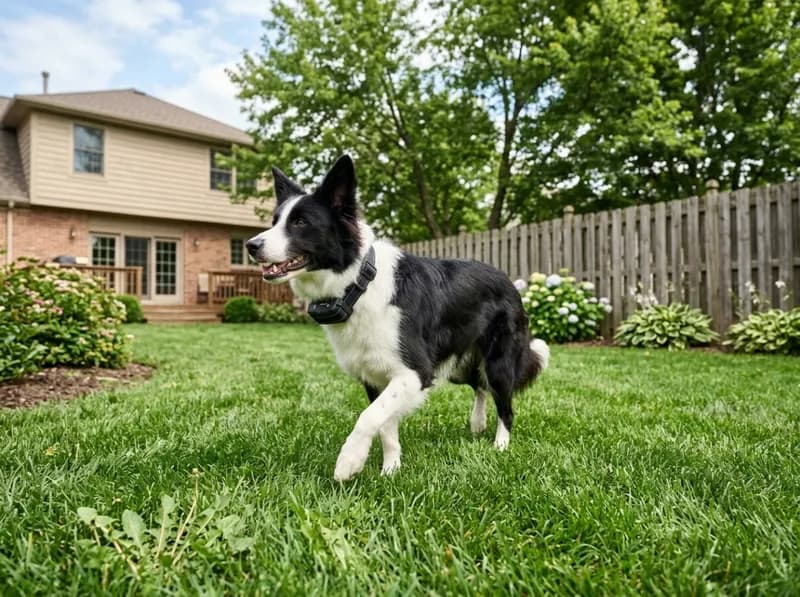
SpotOn and Halo are two of the most recognizable GPS dog fence systems for owners who want a virtual boundary without installing buried wire. Both can create a wireless fence, train a dog to respond to the boundary, and provide location information. The way they do it, however, is quite different.
For 2026, the current models are the SpotOn Nova Edition and Halo Collar 5. SpotOn's Nova costs about $999, while the older Omni Edition is still available for $899. Halo lists the Collar 5 at $599, although it is currently discounted to $524. The previous-generation Collar 4 is also being sold for $424 while supplies last.
There is another major difference before you even get to the hardware price. SpotOn's GPS containment works without a subscription. Halo requires a Pack Membership for each collar. SpotOn also offers an optional tracking plan, while Halo bundles tracking and cellular service into its membership.
That makes this comparison less about which collar has the longest feature list and more about how each system fits your property, your dog, and the way you expect to use it.
Prices were checked against manufacturer pages in October 2026 and can change with promotions.
Quick Answer
Category | SpotOn Nova | Halo Collar 5 |
|---|---|---|
Current hardware price | About $999; Omni $899 | $524 sale price; $599 MSRP |
Older model | SpotOn Omni, $899 | Halo Collar 4, $424 clearance |
Subscription | Not required for containment | Required, from $9.99/month |
Virtual fences | Unlimited | 5 Bronze / 20 Silver / Unlimited Gold |
GPS tracking | Optional paid plan | Included with membership |
Fence creation | Walk the boundary | Create in the app/map |
GPS technology | Dual-band, dual-feed antenna; 151-satellite network | Dual-frequency L1+L5 + Precision+ |
Battery claim | 33+ hours with tracking | Up to 48 hours |
Charging | — | About 1 hour |
Minimum dog size | 15 lb | 10 lb; 5+ months |
Neck size | 10–26 inches | 8–30 inches |
Training | DIY program + free 1-on-1 support | In-app training with Cesar Millan content |
Feedback | Tone, vibration, optional static | Sound, vibration, static |
Tracking plan | Optional, $9.95/month | Included in membership |
Main difference | Containment without a required subscription | Fence + tracking + training in one system |
If you mainly need a GPS dog fence and don't want another monthly bill, SpotOn's model is straightforward: buy the collar and use the containment system without subscribing.
Halo takes a different approach. The collar is designed as a connected system, with GPS tracking, cellular service, virtual fencing and training tied to the Pack Membership.
Neither approach is automatically right for every owner. A large rural property, a small suburban lot, a dog that likes to chase wildlife, and a dog that already understands boundary training can all lead to different requirements.
Before Comparing: SpotOn Nova vs Omni and Halo Collar 5 vs 4
One reason older SpotOn vs Halo comparisons can be confusing is that both brands now have multiple generations available.
SpotOn currently sells the Nova Edition and Omni Edition. Nova is the newer model, with a larger dual-feed antenna, dual-feed receiver, access to a 151-satellite network, a smaller minimum fence size of about one-third acre, and a claimed 33+ hours of battery life with tracking. It also adds features such as custom voice commands, activity tracking with heatmaps and improved cellular reception.
The Omni starts at a lower price of $899. Its minimum fence size is about one-half acre, its claimed battery life is lower, and its GPS accuracy specifications are slightly behind Nova.
Halo's current model is the Collar 5. It increases location updates to 20 per second, raises the claimed battery life to as much as 48 hours and supports one-hour charging. The Collar 4 remains available at $424 while supplies last.
The rest of this comparison focuses on SpotOn Nova vs Halo Collar 5, since those are the current flagship models.
SpotOn vs Halo: How the GPS Fences Work
Both systems replace a traditional buried-wire fence with a virtual boundary.
You create a fence, put the GPS collar on your dog, and train the dog to respond when approaching the boundary. If the dog continues toward or crosses the boundary, the collar provides a warning through sound, vibration or static correction, depending on the settings.
The biggest difference is how the fence itself is created.
SpotOn's Nova uses its True Location system and asks you to physically walk the property boundary when creating a fence. That can take some time, particularly on a large property, but it gives you direct control over where the line is placed.
Halo uses a map-based system. You can create a fence from the Halo app, adjust it on the map and store it on the collar. This is much quicker when you already know exactly where you want the boundary.
For a 10-acre property with an irregular perimeter, walking the entire boundary isn't a trivial task. On the other hand, some owners may prefer physically walking the property rather than relying on a line drawn on a satellite map.
GPS Accuracy: SpotOn vs Halo Collar 5
GPS accuracy is one of the more difficult parts of this comparison because the manufacturers use different systems and testing methods.
SpotOn says Nova uses True Location technology and a dual-band, dual-feed antenna. The company reports GPS drift in the roughly 3–6-foot range and has published Spirent testing that reported an average drift of 2.3 feet for Nova, along with 100% reliability for the alert and correction events tested.
Those results were commissioned by SpotOn, so they are useful manufacturer evidence rather than independent head-to-head testing.
Halo says the Collar 5 uses dual-frequency L1+L5 GPS with Precision+ and reports outdoor positioning accuracy within about 0.6 meters, or roughly 2 feet, in independent verification. The collar can process GPS positions up to 20 times per second.
There is also a 2026 field comparison from Pampered Pup that tested the two systems under partial tree cover. The reported results were:
Measurement | SpotOn | Halo |
|---|---|---|
Average correction drift | 8.2 inches | 25 inches |
Standard deviation | 16.6 inches | 79.8 inches |
Missed warnings | — | 2 of 5 trials |
The test is useful because it looked beyond the average measurement. Consistency matters for a virtual fence. A system that normally places the warning close to the boundary but occasionally produces a much larger error behaves differently from one with a smaller but more consistent variation.
There are limits to what can be concluded from a single field test, though. GPS performance depends heavily on the property. Trees, buildings, terrain and reflected satellite signals can all affect positioning.
Halo's map-based fence creation also introduces another variable: the line on the map may not perfectly correspond to the physical boundary on the ground.
One point is easy to overlook: GPS tracking accuracy and GPS fence accuracy are not the same thing. A tracker can show where a dog is generally located while still having enough positioning variation to affect when a virtual boundary warning is triggered.
Virtual Fence Setup
SpotOn Nova
SpotOn's approach is simple but hands-on. You walk the perimeter with the collar and create the fence as you go.
Nova supports fences starting at roughly one-third of an acre, large properties, overlapping fences and Keep Out Zones. You can also create fences at locations away from your home.
The obvious drawback is the setup time. If you're fencing a large rural property, creating the boundary can mean a fairly long walk.
Halo Collar 5
Halo takes the opposite approach. The fence is created from the app using a map. You can search for an address, move around the map and adjust the boundary before saving it.
The fence is stored on the collar, so the virtual boundary can continue working when cellular coverage isn't available.
The number of fences depends on the membership tier:
Bronze: 5 fences, $9.99/month
Silver: 20 fences, $14.99/month
Gold: unlimited fences, $19.99/month
For someone who only needs a home fence, five locations may be more than enough. The difference becomes more relevant if you travel frequently and want to maintain multiple properties or locations.
What Happens When Your Dog Approaches the Boundary?
SpotOn uses audio warnings followed by vibration and optional static correction. The system can provide an initial tone around 10 feet from the boundary and another warning closer to it, followed by vibration or static depending on the configuration.
SpotOn recommends starting with tone-based training and using static correction only when necessary.
Halo also offers sound, vibration and static feedback. It has separate feedback settings for boundary approaches and escapes, along with features such as a return whistle and optional Bluetooth Keep Away beacons for indoor areas.
The important thing to understand is that neither collar creates a physical barrier.
A GPS dog fence cannot physically stop a dog from running through the boundary. If the dog ignores the warning and keeps going, the collar cannot block the escape.
That is why training is not an optional part of the process, regardless of which GPS fence you buy.
Training: SpotOn vs Halo
Training is one of the clearest differences between the two systems.
SpotOn provides a DIY boundary-training program as well as free one-on-one video support with certified trainers. The basic approach is to introduce the dog to the boundary gradually, starting with the audio cue and adding other feedback when necessary.
Halo puts more of the training experience inside its app. Its program includes training content developed with Cesar Millan and is integrated into the Halo membership.
The practical question is less about which company has more training content and more about how much work you're willing to put into training your dog.
A dog that already understands boundary cues may need a different introduction from a dog that has never used a containment system. Dogs that are highly motivated to chase wildlife or other animals may also require more careful training and supervision.
GPS Tracking: Included or Optional?
This is another major difference between SpotOn and Halo.
Halo Collar 5 is built around connected tracking. AlwaysOn GPS and cellular connectivity are part of the system, and tracking is included in the required Pack Membership.
SpotOn can also track your dog, but the live tracking features are part of its optional Real-Time Tracking Plan. The plan is currently $9.95 per month, $101.88 per year or $179.76 for two years.
Without the tracking plan, SpotOn's core containment features continue to work.
That makes the two systems particularly different for owners who don't care about live location tracking. With SpotOn, you don't have to pay for a tracking service you don't intend to use. With Halo, tracking is part of the subscription whether or not it is your primary reason for buying the collar.
If your only concern is finding your dog after an escape, rather than keeping the dog inside a virtual boundary, a dedicated GPS dog tracker such as Tractive or Fi may be a better category to investigate.
Battery Life: Manufacturer Claims vs Everyday Use
Battery life deserves some attention because the published numbers don't necessarily tell you how often you'll actually charge the collar.
Halo Collar 5 is rated for up to 48 hours and supports a roughly one-hour full charge. That's a substantial increase over the Collar 4's approximately 30-hour rating.
SpotOn's official Nova specification is 33+ hours with tracking, compared with 25+ hours for the Omni.
Real-world reports can be less optimistic, particularly when tracking and cellular functions are used heavily. Some SpotOn owners report getting closer to a day of practical use and charging the collar overnight.
That doesn't mean the official specification is incorrect. Battery life changes with tracking frequency, cellular reception, GPS conditions and how often the collar is communicating with the network.
For either product, maximum battery life should be treated as a manufacturer's best-case figure rather than a guaranteed daily runtime.
Subscription Cost: SpotOn vs Halo
The hardware price is only part of the cost.
SpotOn
SpotOn Nova costs about $999.
The containment system itself does not require a subscription. The optional Real-Time Tracking Plan currently costs:
$9.95/month
$101.88/year
$179.76 for two years
If you only want GPS containment, the hardware price is therefore the main purchase cost.
Halo
Halo requires an active Pack Membership for each collar.
Current monthly pricing is:
Bronze: $9.99/month
Silver: $14.99/month
Gold: $19.99/month
The plans include cellular service, GPS tracking, real-time alerts and Halo's training content. Annual and two-year plans reduce the effective monthly cost.
This distinction is worth keeping in mind when comparing the advertised hardware prices. The $524 Halo Collar 5 price does not represent the complete cost of owning the system over several years.
Real Cost Over Three, Four and Five Years
Using the current hardware prices and monthly membership rates gives a clearer picture.
Cost | SpotOn Nova | Halo Collar 5 |
|---|---|---|
Hardware | ~$999 | $524 |
Required subscription | $0 | $9.99–$19.99/month |
1-year subscription | $0 | ~$120–$240 |
3-year subscription | $0 | ~$360–$720 |
3-year hardware + subscription | ~$999 | ~$884–$1,244 |
4-year hardware + subscription | ~$999 | ~$1,004–$1,484 |
5-year hardware + subscription | ~$999 | ~$1,124–$1,724 |
At the Bronze monthly rate, Halo starts at a considerably lower total cost because of the $524 hardware price. The gap gets smaller each year as the membership continues.
This calculation also changes if you use annual or two-year billing, buy another collar, or decide to add SpotOn's optional tracking plan.
For that reason, there isn't one universal "cheaper" answer. The important number for your situation is the total cost of ownership, not the price shown on the product page.
Large Properties and Rural Homes
GPS dog fences make the most sense on properties where installing buried wire would be expensive, difficult or impractical.
SpotOn is particularly suited to large and irregular properties because the owner can physically walk the boundary and create a custom fence. It also supports overlapping fences and Keep Out Zones.
Halo can handle large virtual fences as well, and its map-based setup is much quicker.
For a large rural property, the choice may come down to setup preference. If you want to physically define the boundary and don't want a required subscription, SpotOn's approach has a clear appeal. If you want to create the fence from your phone and have live tracking built into the same system, Halo offers that workflow.
GPS conditions still matter on both systems. A large property surrounded by dense trees or difficult terrain may present more challenges than an open field.
Multiple Dogs
Both systems can be used with multiple dogs, but every dog needs its own collar.
Halo also requires a Pack Membership for each collar, starting at $9.99 per month.
SpotOn does not require a per-collar containment subscription and currently offers $100 off additional collars.
For households with several dogs, the recurring membership cost can therefore become a much larger part of the Halo ownership cost.
Are GPS Dog Fences Safe?
A GPS dog fence is a training-based containment system, not a physical fence.
The American Kennel Club notes that dogs need to be trained to respond appropriately to virtual boundaries. That training matters because the collar is relying on the dog's learned response rather than a physical obstruction.
A virtual fence also doesn't prevent another animal or person from entering your property.
For properties next to busy roads, steep drop-offs, pools, livestock or other serious hazards, owners should be particularly cautious. Initial training should be supervised, and the dog should not be assumed to understand the boundary simply because the collar has been configured.
Static correction, when available, should be used according to the manufacturer's instructions and only as part of an appropriate training process.
Alternatives to SpotOn and Halo
SpotOn and Halo are not the only GPS dog fence options.
PetSafe Guardian GPS
PetSafe Guardian GPS is a lower-cost alternative, with pricing around $449.99 and an MSRP of $499.99.
It uses AccuGuard GPS technology with real-time motion detection and claims up to five days of battery life. One base can support up to five dogs.
The base model does not include tracking or portable use, has a minimum property size of about three-quarters of an acre and a 25-pound minimum dog weight. PetSafe also sells a Guardian GPS + Tracking version with a subscription.
Dogtra GPS Fence
Dogtra's GPS Fence is positioned much lower on price, at about $199.99 for dogs weighing 15–100 pounds.
It supports GPS containment without a subscription and has a minimum property size of about three-quarters of an acre.
Dogtra also sells products such as FieldGuard and Pathfinder 2, which are aimed more at e-collar, hunting and working-dog use than the consumer smart-pet market.
Tracking-First Products
If containment isn't actually what you need, products such as Tractive and Fi are worth looking at. They are primarily GPS dog trackers rather than virtual-fence systems.
Garmin is another category to consider for hunting and field use, where long-range location tracking is often more important than residential virtual fencing.
And if you need a barrier that physically prevents a dog from leaving, a buried-wire system or traditional physical fence solves a different problem entirely.
Which One Fits Your Situation?
SpotOn Nova
SpotOn makes more sense if your priority is GPS containment without a required subscription.
It's particularly relevant for:
Large or irregular properties
Owners who want unlimited virtual fences
Dogs weighing 15 pounds or more
Owners who prefer to define the boundary by walking it
Households that don't want another monthly service
Owners planning to keep the system for several years
The main trade-off is the high upfront price.
Halo Collar 5
Halo makes more sense if you want a GPS fence, live tracking and training in one connected system.
It's particularly relevant for:
Owners who prefer map-based fence creation
Dogs weighing 10 pounds or more
Owners who want integrated GPS tracking
People who value app-based training
Owners who prefer a lower initial hardware cost
Users who are comfortable paying for a membership
The recurring membership is the main long-term consideration.
SpotOn Omni
The Omni is worth considering if the Nova's newer features aren't important to you.
At about $899, it saves $100 compared with Nova while retaining the basic SpotOn containment system. You give up some of Nova's improvements in battery life, GPS hardware and additional features.
Halo Collar 4
The Collar 4 is the lower-cost Halo option while the remaining stock lasts.
At around $424, it is only slightly cheaper than the discounted Collar 5, so the price difference should be weighed against the newer model's longer battery life and faster GPS update rate.
PetSafe Guardian GPS
PetSafe is worth considering if you want a mainstream no-subscription GPS containment system and your dog and property meet its size requirements.
Its five-day battery claim and support for multiple dogs are notable, although the feature set is different from both SpotOn and Halo.
Dogtra GPS Fence
Dogtra is aimed at buyers who want to spend considerably less.
At roughly $200, it sits far below SpotOn and Halo on hardware price. It makes more sense for owners with straightforward containment requirements who don't need the connected features of the more expensive systems.
A Dedicated GPS Tracker
If the real problem is "I want to find my dog" rather than "I need to keep my dog inside a boundary," a tracking-first product may be a better fit.
A Physical Fence
A physical fence remains the only option here that actually blocks a dog from leaving and prevents other animals or people from entering.
SpotOn Nova vs Halo Collar 5: Pros and Cons
SpotOn Nova | Halo Collar 5 | |
|---|---|---|
Pros | No required subscription for containment; unlimited fences; custom boundary walking; strong accuracy results in available testing; $100 off additional collars | Lower upfront price; up to 48-hour battery; one-hour charging; dual-frequency GPS; integrated tracking and training; supports smaller dogs |
Cons | High upfront cost; tracking costs extra; 15-lb minimum; battery may be shorter in heavy real-world use; relatively large collar | Required membership for each collar; fence count depends on plan; map-based setup can introduce alignment differences; recurring ownership cost |
FAQ
Is SpotOn better than Halo Collar?
The two systems are built around different priorities.
SpotOn focuses more heavily on GPS containment without a required subscription and gives owners direct control over the boundary by having them walk the perimeter.
Halo combines GPS containment with tracking, cellular connectivity and a structured training program, but requires a Pack Membership.
The better fit depends on which of those differences matters more for your property and your dog.
Does SpotOn require a subscription?
No. SpotOn's GPS containment, virtual fences, Keep Out Zones and training functions work without a subscription.
A paid Real-Time Tracking Plan is needed for live tracking, breach alerts and other connected tracking features.
Does Halo Collar 5 require a subscription?
Yes. Halo requires an active Pack Membership for each collar.
Current plans start at $9.99 per month for Bronze, with Silver at $14.99 and Gold at $19.99.
Which is cheaper long-term, SpotOn or Halo?
It depends on how long you keep the collar and which Halo membership you use.
SpotOn has the higher upfront hardware price but no required containment subscription. Halo starts at a much lower hardware price, but its membership continues as long as you use the connected system.
At the current Bronze monthly price, the two systems get much closer in total cost after several years.
Which GPS dog fence is more accurate?
Available 2026 field testing reported lower average drift and lower variation for SpotOn in the tested environment, while Halo publishes its own positioning accuracy results for the Collar 5.
GPS performance varies by property, trees, buildings, terrain and boundary setup. A single test should not be treated as a guarantee for every location.
What's the difference between SpotOn Nova and Omni?
Nova is the newer SpotOn model. It has a larger dual-feed antenna and receiver, a 151-satellite network, a smaller minimum fence size, longer claimed battery life and additional features such as voice commands and activity tracking.
The Omni costs about $100 less.
Is the Halo Collar 4 still worth buying at $424?
The Collar 4 remains a lower-priced option while inventory lasts.
The Collar 5 offers longer claimed battery life, faster location updates and faster charging, so the relatively small price difference between the clearance Collar 4 and discounted Collar 5 is worth considering.
How long does the SpotOn battery really last?
SpotOn rates the Nova for 33+ hours with tracking.
Actual runtime depends on GPS and cellular activity, signal conditions and usage. Some owner reports describe closer to a day of heavy use, which means overnight charging may be necessary for some users.
Can a GPS dog fence replace a physical fence?
A GPS fence can provide containment for a trained dog, but it does not create a physical barrier.
It won't prevent another animal from entering the property, and it cannot physically stop a dog that ignores the boundary warning.
Are GPS dog fences safe?
They are training-based containment systems. Owners should follow the manufacturer's training and fitting instructions and supervise the dog during the initial training period.
Extra caution is appropriate around roads, cliffs, pools, livestock and other hazards.
Can two dogs share one GPS fence?
Yes. Multiple dogs can use the same virtual boundary, but each dog needs its own collar.
Halo requires a membership for each collar. SpotOn does not require a per-collar containment subscription and currently offers a discount on additional collars.
What happens if GPS signal is lost?
Both systems can become less reliable when GPS positioning is degraded.
Dense trees, buildings, terrain and other obstructions can affect GPS performance. Conservative boundary placement and proper training remain important even when the system normally performs well.
Conclusion
The biggest difference between SpotOn vs Halo Collar is the ownership model.
SpotOn Nova costs considerably more upfront, but its GPS containment works without a mandatory subscription. Halo Collar 5 starts at a much lower hardware price and combines the virtual fence with GPS tracking, cellular service and training through its Pack Membership.
For a buyer who only wants containment, the two products therefore have very different cost structures. For someone who wants tracking and training as part of the same system, Halo's subscription covers services that SpotOn treats separately.
The property itself also matters. SpotOn's walk-the-boundary setup can be useful when you want to define an irregular property yourself. Halo's map-based setup is faster and easier when you prefer to create the fence from your phone.
Before buying either one, check four things: your dog's weight and age, the size and shape of your property, how much GPS tracking you actually need, and the total cost over the number of years you expect to use the collar.
If neither system fits those requirements, PetSafe Guardian GPS and Dogtra GPS Fence offer lower-cost alternatives, while Tractive and Fi are better suited to owners who need tracking rather than containment. And for properties where a physical barrier is essential, a conventional fence remains a different and more direct solution.
Sources and Evidence Notes
Hardware prices, subscription tiers, fence limits and product specifications were checked against manufacturer information in October 2026. SpotOn's published accuracy results are identified as manufacturer-commissioned testing. The independent accuracy figures cited above come from a 2026 Pampered Pup field comparison and should be viewed as results from a specific test environment rather than a universal measurement.
Battery figures distinguish manufacturer specifications from real-world owner reports. Prices for PetSafe and Dogtra are approximate U.S. prices and can change with promotions or inventory.
Related GuidesMore →

Best Dog Ramps for Cars and Beds: Top Picks and How to Choose
Choosing the best dog ramp starts with measuring your vehicle's cargo-floor height or your bed's surface, then matching the ramp length to a manageable incline. This guide compares popular dog ramps for cars, SUVs, trucks, couches, and beds, including options from PetSafe, WeatherTech, HerCcreta, Pet Gear, and DoggoRamps. Learn how to compare slope, traction, width, stability, storage, and weight capacity before buying.

Best Cat Trees: Stable Picks for Large Cats, Multi-Cat Homes, and Small Spaces
A tall cat tree is not necessarily a stable one. This buying guide compares popular models from New Cat Condos, Feandrea, Frisco, Yaheetech, and Mau, using published specifications and owner feedback rather than claiming hands-on testing. Learn how base geometry, construction, platform layout, and wall anchoring affect your choice, along with the trade-offs between budget towers and premium designs.

Dog Crate End Table Dimensions: A Buying Guide to Size, Design, and Cost
Furniture-style dog crates can double as end tables or living-room furniture, but their usable space, door openings, materials, and prices vary considerably. This guide compares seven popular dog crate furniture models from New Age Pet, Fable, Diggs, Casual Home, and Unipaws. It examines interior dimensions, space efficiency, price per square foot, and practical design differences to help you find a crate that fits both your dog and your home.