Which Roborock Should You Buy in 2026? Saros, Qrevo, and Q Series Explained
Choosing a Roborock in 2026 means looking beyond advertised suction and comparing navigation, brush design, mop systems, dock features, and real-world test results. This guide covers the Saros, Qrevo, Q, and legacy S8 families, with recommendations for carpet-heavy homes, pet owners, hard floors, low furniture, and tighter budgets. It also examines current U.S. pricing, maintenance costs, warranty terms, app privacy, and the implications of new FCC rules.
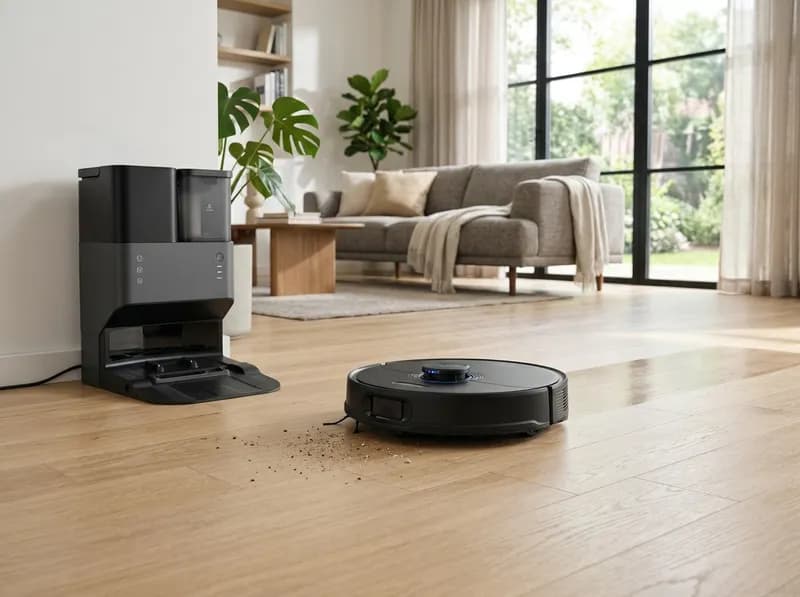
The best Roborock for most households in 2026 is the Saros 10R, not the newest flagship. RTINGS has rated it the best robot vacuum it has tested, and WIRED also recommends it among its top performers. Its current Amazon price is about $899.99, although its recent low was $884.99.
The newer Saros 20 is worth considering if carpet and pet-hair pickup are your priorities. However, RTINGS found that it is less reliable around pet waste and performs worse than the 10R on stain cleaning. The Qrevo Curv 2 Flow takes a different approach with a self-cleaning roller mop, but Vacuum Wars recorded weak dried-stain results. For routine cleaning on a tighter budget, the Q7 M5+ makes more sense at sale prices around $237–$250 than at its official $429.99 list price.
Roborock's lineup is large, but the buying decision comes down to a few practical questions: what kind of flooring you have, how much mopping you need, whether your home has pets, and how much maintenance you want to handle.
Three findings deserve particular attention before you buy:
Pet-hair test results vary widely. Tom's Guide measured 98% carpet pet-hair pickup from the Saros 10R, while TechGearLab measured 56%. Different test methods can produce different results, so neither figure should be treated as a universal prediction.
A newer model isn't automatically better. RTINGS found that the Saros 20 improves carpet and pet-hair pickup over the 10R but loses ground in obstacle avoidance and stain cleaning. Vacuum Wars also measured substantially better coffee-stain removal from the less expensive Qrevo CurvX than from the Curv 2 Flow.
U.S. availability has a policy risk. The FCC added foreign-produced advanced robotic devices to its Covered List on July 28, 2026, restricting new equipment authorizations for covered devices. Existing authorizations are not automatically revoked, so this is primarily a concern about future product launches, not a blanket ban on buying or using current models. FCC notice.
This guide compares Roborock's main U.S. robot-vacuum families using manufacturer specifications, independent testing, available prices, and ownership considerations. Where measurements or specifications conflict, the differences are identified rather than averaged away.
Quick verdict: Which Roborock should you buy?
Your priority | Model to start with | Price reference | What to know |
|---|---|---|---|
Best overall for most homes | Saros 10R | About $899.99 | Strong overall test record, low profile and capable obstacle avoidance; pet-hair results vary by lab |
Carpet and shedding pets | Saros 20 | Check current listing | Better carpet and pet-hair pickup than the 10R in RTINGS' comparison, but less reliable around pet accidents |
Low furniture and clutter | Saros 10R | About $899.99 | Its 3.14-inch body fits beneath furniture that blocks a raised LiDAR turret |
Frequent mopping on hard floors | Qrevo Curv 2 Flow | $699.99 Amazon listing | Self-cleaning roller handles fresh spills and hair well, but struggles with dried stains |
Better tested stain removal | Qrevo CurvX | $749.99 | Vacuum Wars measured 163 coffee-stain points, compared with 51 for the Curv 2 Flow |
Experimental object pickup | Saros Z70 | $999.99 | The five-axis arm is unusual, but Vacuum Wars measured pickup success at roughly 50% |
Budget under $350 | Q7 M5+ | About $237–$250 on sale | Good routine debris pickup for the money; basic mopping and no camera-based obstacle avoidance |
Discounted former flagship | Qrevo Master | $799.97–$899.99; refurbished units around $518 | Strong historical test results, but its small onboard bin is a drawback in pet homes |
Very low-clearance furniture | Qrevo Slim | Check current listing | Slim 8.2-cm body; consider it when discounted against the better-tested 10R |
Prices are snapshots or reported ranges, not guaranteed offers. Check the exact model, color, dock bundle, seller, and return policy before purchasing.
1. Roborock's 2026 U.S. lineup at a glance
Roborock's robot vacuums fall into four main families: Saros, Qrevo, Q, and S8. They cover different combinations of navigation, vacuuming, mopping and dock automation. The F-series wet-dry cleaners are a separate product category and are not included as robot vacuums.
The following table summarizes the principal models discussed in this guide. Suction ratings are manufacturer-advertised figures, not directly comparable cleaning-performance scores.
Model | Advertised suction | Mop system | Main distinction | Price reference |
|---|---|---|---|---|
Saros 20 | 36,000 Pa | Dual rotating pads | AdaptiLift 3.0; official threshold claim up to 3.46 inches; 212°F mop washing; up to 13 N mop pressure | Check current listing |
Saros 20 Sonic | 36,000 Pa | VibraRise 5.0 vibrating mop | Alternative mop mechanism on the Saros 20 platform | Check current listing |
Saros 20 Flow | 36,000 Pa | SpiraFlow 2.0 roller | RetractSense LiDAR; 8.98-cm body; 100°C wash and 63°C drying | $1,499.99 sale / $1,699.99 list |
Saros Z70 | 22,000 Pa | Dual pads plus mechanical arm | Five-axis OmniGrip arm, up to 300 g; StarSight 2.0 | $999.99 vs. $2,599.99 reference |
Saros 10R | Verify exact listing | Dual rotating pads | StarSight solid-state LiDAR; low-profile body; split DuoDivide brush | About $899.99 on Amazon |
Saros 10 | Verify exact listing | Different configuration from 10R | Raised LiDAR turret | Check current listing |
Qrevo CurvX | 22,000 Pa | Dual pads | 7.98-cm body; RetractSense; Reactive AI 3.0; Dock 3.0 Thermo+ | $749.99 vs. $1,499.99 reference |
Qrevo Curv 2 Flow | 20,000 Pa | Self-cleaning roller | Roller shield for carpets; hot-water dock | $999.99 store / $699.99 Amazon |
Qrevo Curv | 18,500 Pa | Dual rotating pads | DuoDivide brush and AdaptiLift chassis | Check current listing |
Qrevo Edge 2 | 25,000 Pa | Upgraded mop system | FlexiArm edge cleaning | $1,099.99 listed; historical low $784.99 |
Qrevo Edge 3 Pro | 36,000 Pa | Dual pads | AdaptiLift 3.0, StarSight 2.0, up to 14 N mop force | $1,299.99 sale / $1,499.99 list |
Qrevo 2 Pro | 20,000 Pa | Dual pads, automatic detachment | Mop modules can be left at the dock for carpet cleaning | $549.99–$799.99 |
Qrevo S Pro | 18,500 Pa | Multifunction dock | Reactive Tech obstacle avoidance | $429.99 Amazon listing |
Qrevo Master | 10,000 Pa | Extending side brush and mop | Multifunction dock; Matter added through 2025 firmware | $799.97–$899.99; refurbished around $518 |
Qrevo Pro | 7,000 Pa in listed specifications | Rotating pads | Older dock; 10-mm mop lift | Around $329 while stock lasts |
Qrevo Slim | 11,000 Pa | Extending side brush and mop | StarSight navigation; 8.2-cm body | Check current listing |
Q7 M5+ | 10,000 Pa | Vacuum-and-mop combo | PreciSense LiDAR and auto-empty dock | $429.99 list; black sale around $249.99 |
Q7 L5 | 8,000 Pa | Vacuum and mop | Three water-flow levels; simpler dock | $249.99 |
Q10 X5+ | 10,000 Pa | Liftable mop | Auto-empty dock | $319.99 |
Q10 S5+ | Verify exact listing | Vacuum and mop | A 2026 test recorded 96% carpet and 96% pet-hair pickup | $329.99 sale |
S8 MaxV Ultra | 10,000 Pa | VibraRise 3.0 | Hot-water washing, heated drying, detergent dispensing and video-call features | $799.99 shown; out of stock |
S8 Max Ultra | Conflicting figures: 8,000–10,000-Pa class | VibraRise | Refill-and-drainage dock option | $599.99 |
A few specification and pricing distinctions are easy to miss:
Saros 20 mop pressure: Roborock's U.S. Saros 20 page specifies up to 13 N. The 15 N figure in this lineup belongs to the SpiraFlow roller system, while the Edge 3 Pro listing specifies up to 14 N. Do not automatically assign 14 N to the Saros 20 Sonic.
Saros 20 Flow and Z70: These models have published specifications beyond the basic suction and mop descriptions. The Flow uses a 36,000-Pa rating, a 16-duct roller spinning at 240 RPM, retractable LiDAR, and a dock with 100°C washing and 63°C drying. The Z70 specifies 22,000 Pa, a five-axis arm for objects up to 300 g, and recognition of 108 object types.
Q7 M5+ pricing: The official list price is $429.99, but the commonly quoted $249.99 is a sale price for the black version. ZDNET tracked a low of $237, while other listings have shown $279.99. These prices describe different points in the market, not one universal price.
The catalog extends beyond the best-known models. Roborock's U.S. store also lists the QV 35A and Qrevo S5V. The Q10 S5+ is another model worth checking before settling on a budget option.
2. What independent testing says
Manufacturer specifications explain how a robot is designed. Independent tests help show how it performs on carpet, hard floors, hair, obstacles and dried messes.
Saros 10R vs. Saros 20: newer isn't better at everything
RTINGS' comparison identifies a clear trade-off. The Saros 20 improves carpet and pet-hair pickup, but the 10R handles carpet more reliably in obstacle-avoidance scenarios and is better at avoiding pet waste. The 10R also detects soiled areas and spends extra time cleaning them, a behavior that the Saros 20 does not replicate in the same way. RTINGS has also flagged fine-particle leakage around the Saros 20's dock and higher recurring consumable costs.
That makes the choice fairly straightforward:
Choose the Saros 20 if carpet pickup is the main priority and you are comfortable preparing the floor before each run.
Choose the Saros 10R if you want a more balanced record across navigation, stain handling and general household use.
Neither should be treated as a completely unattended solution in a home where pet accidents are likely. RTINGS' reviews describe limitations in both robots, although the 10R has the advantage in this specific comparison.
Pet-hair results depend on the test method
The Saros 10R illustrates why one lab score cannot tell the whole story. Tom's Guide measured 98% pet-hair pickup on carpet and 100% on hard floors. TechGearLab measured 56% carpet pickup in its own test.
The gap is large, but it does not automatically mean one test is wrong. Hair type, carpet pile, how deeply the hair is embedded, the number of passes and the testing protocol can all affect the result. Consumer Reports uses a different procedure involving one gram of Maine coon fur worked into medium-pile carpet.
RTINGS has also found the MOVA P50 Pro Ultra stronger than the Saros 10R on pet hair and carpet in its comparison. If pet hair is your main concern, compare models tested under the same protocol whenever possible.
The Qrevo Curv 2 Flow's roller mop has a measurable weakness
Vacuum Wars' results are more specific than simply calling the Curv 2 Flow's cleaning performance mixed:
Dried-stain removal: 25 points at medium water flow and 38 at maximum, against a category average of 112.
Combined mopping score: 13.7, against an average of 22.75.
Coffee-stain test: 51 points, compared with 163 for the Qrevo CurvX.
Hair tangling: 0% in its reported test, compared with a 21% average.
Carpet deep-cleaning: 87%, compared with a 76.7% average.
These results point to a specific use case. The roller is convenient for regular mopping, fresh spills and hair management. It is much less convincing when the task is scrubbing away dried-on stains.
The best robot overall isn't always the best for your task
Independent rankings also identify strong alternatives outside Roborock. Vacuum Wars named the Dreame X60 Max Ultra Complete its overall leader in May 2026. RTINGS, TechRadar and Vacuum Wars have highlighted the Eufy X10 Pro Omni as a value option, while other tests favor models from Ecovacs and Narwal for specific mopping or pet-hair tasks.
The useful comparison is not simply which brand wins. It is which model performs best at your priority, within your budget, under a comparable test method.
One additional caveat: RTINGS has updated its testing methodology across review generations. Scores from different versions should not automatically be treated as directly comparable, so the model-to-model findings and documented strengths are more useful than trying to combine every published score into a single ranking.
3. The Saros family: 20, 20 Sonic, 20 Flow, Z70, 10R and 10
The Saros family is Roborock's flagship range, but the models differ in navigation, mopping and automation. The name alone does not tell you which is best for your home.
Saros 20: for carpet-heavy homes
The Saros 20 combines advertised suction of 36,000 Pa with AdaptiLift Chassis 3.0, dual rotating mop pads and a multifunction dock. Roborock advertises threshold clearance of up to 3.46 inches and mop washing at 212°F. The official mop-pressure figure is up to 13 N.
Its strongest argument is carpet performance. RTINGS found better carpet and pet-hair pickup than the Saros 10R. Its weaknesses are equally important: obstacle avoidance is less consistent in some situations, pet-waste avoidance is unreliable, and stain cleaning regressed compared with the older model. The higher recurring cost of consumables also matters if you run it daily.
Buy it for stronger carpet pickup, not simply because it is newer. If pet accidents are a realistic risk, the 10R deserves serious consideration instead.
Saros 20 Sonic vs. Saros 20
The Saros 20 Sonic replaces the rotating pads with a VibraRise 5.0 vibrating mop and an extending pad. That is a real hardware difference, but there is no independent head-to-head test of these exact 2026 variants establishing that one cleans better overall.
The sensible choice is therefore based on the mop design and the specific package available, rather than a claimed performance winner. Use the Saros 20's official 13 N figure as the reference unless Roborock publishes a separate specification for the Sonic.
Saros 20 Flow: premium roller mopping
The Saros 20 Flow uses the SpiraFlow 2.0 roller rather than rotating pads. Its published specifications include:
36,000 Pa advertised suction.
A roller with 16 clean-water ducts, spinning at 240 RPM under 15 N of force.
RetractSense LiDAR that retracts when needed.
An 8.98-cm body.
A dock that washes at 100°C and dries at 63°C.
An advertised double-layer threshold capability of 8.8 cm.
Its U.S. price has been listed at $1,499.99 on sale against a $1,699.99 list price. That places it far above the Qrevo Curv 2 Flow, which offers the same general roller-mop concept for around $699.99 on Amazon.
Independent test data for the Saros 20 Flow remain limited. Given the Curv 2 Flow's weak dried-stain results, buyers should not assume the more expensive Flow solves that problem without direct evidence.
Saros Z70: the mechanical arm is the main attraction
The Saros Z70 is unusual because its five-axis OmniGrip arm can pick up small objects weighing up to 300 g. It also includes StarSight 2.0 navigation, recognition of 108 object types, advertised suction of 22,000 Pa and a 3.14-inch body.
Its official U.S. price has been shown at $999.99 against a $2,599.99 reference price. The price history matters: the model launched at a much higher price, and its current price is substantially lower. A reference price, however, does not tell you how often a product actually sells at that amount.
Vacuum Wars recorded arm pickup success of roughly 50% during its testing. It also reported a 180-ml onboard dustbin, one of the smallest it had measured, along with below-average carpet, pet-hair and crevice performance. The Z70 did better in obstacle avoidance and dried-stain cleaning than some of its weaker categories suggest.
The decision is simple: buy the Z70 if the arm is the feature you want to explore. If cleaning performance per dollar matters more, the Saros 10R is the more defensible starting point.
Saros 10R: the strongest all-around choice
The Saros 10R remains one of Roborock's strongest options because its performance is balanced. RTINGS and WIRED have both recommended it among the leading robot vacuums they tested.
Its main features include StarSight solid-state LiDAR instead of a tall rotating turret, a split DuoDivide main brush, an extending side brush, dual rotating mop pads and a multifunction dock. The low-profile body is approximately 3.14 inches tall, making it suitable for furniture that a conventional LiDAR turret cannot clear.
The documented trade-offs are more specific than a general claim that it cleans well:
Fine debris can remain along carpet edges and in corners.
Pet-hair pickup on carpet varies considerably across testing labs.
Cautious obstacle-avoidance settings can cause it to skip some areas.
Low-profile navigation helps under furniture but does not eliminate cable or rug-tassel problems.
There is also a specification discrepancy around mop-washing temperature. Launch materials describe 176°F (80°C), while support documentation lists 70°C. Until Roborock reconciles those figures, buyers who care about the exact temperature should use the lower published value as the conservative reference.
Price history provides another reason to consider it. Amazon direct pricing has been reported around $899.99, with a 30-day average of $951.60. Third-party listings reached $884.99 in June 2026. The current price is below the recent average but above that low, so buyers who do not need a robot immediately may prefer to watch for another discount.
Saros 10: consider it when the discount is substantial
The Saros 10 differs from the 10R in navigation and mop configuration and retains a raised LiDAR turret. That turret makes it less suitable for very low furniture.
For most buyers comparing the two, the question is whether the Saros 10 is discounted enough to justify giving up the 10R's low-profile design and stronger overall independent-test record. Compare the exact SKU and dock package rather than assuming the shared name means the machines are otherwise identical.
4. Qrevo flagships: CurvX, Curv 2 Flow and the Edge models
Qrevo Curv 2 Flow: convenient daily mopping, weak dried-stain removal
The Curv 2 Flow is Roborock's roller-mop option in the Qrevo range. Its SpiraFlow roller rinses itself while cleaning, and the dock washes at 167°F and dries at 131°F. A roller shield helps protect carpets, while advertised suction is 20,000 Pa.
Roborock's store has listed it at $999.99, while Amazon has shown $699.99 with 1,094 reviews averaging 4.0 stars.
Vacuum Wars' standardized tests found weak dried-stain removal and a combined mopping score well below the category average. It also recorded 16/24 on obstacle avoidance, compared with 20/24 for the CurvX. RTINGS found reasonable everyday hard-floor debris pickup but reported problems with embedded pet hair, edge cleaning and obstacle avoidance on carpet. Tom's Guide observed streaking at default water settings and better results after increasing water flow.
The strengths are real, too. Vacuum Wars measured 0% hair tangling and 87% carpet deep-cleaning. A roller that rinses itself as it works is useful for frequent light mopping, and its design can reduce hair buildup.
For fresh spills and regular maintenance on hard floors, the Curv 2 Flow's mechanism makes sense. For dried sauce, grease and other stubborn stains, its measured results are a reason to look elsewhere.
Qrevo CurvX: a stronger option for stain removal
The CurvX has been listed at $749.99 against a $1,499.99 reference price. Its features include a 7.98-cm body, RetractSense navigation, Reactive AI 3.0, a dual anti-tangle system, AdaptiLift and the Multifunction Dock 3.0 Thermo+.
The key distinction is its performance on stains. Vacuum Wars measured 163 points on its coffee-stain test, compared with 51 for the Curv 2 Flow. It also scored 20/24 on obstacle avoidance.
That makes the CurvX the more compelling option for buyers who prioritize stain removal over the convenience of a self-cleaning roller. Its promotional reference price should be treated cautiously, but the test result is useful independently of the discount.
The original Qrevo Curv is also worth considering if it is meaningfully cheaper. RTINGS' comparison found it ahead of the Curv 2 Flow on hard-floor and carpet debris pickup, although the two models use different mop systems.
Qrevo Edge 2 vs. Edge 3 Pro
The Edge 2 and Edge 3 Pro sit near the top of the Qrevo family. The Edge 2 advertises 25,000 Pa and FlexiArm edge cleaning. The Edge 3 Pro moves to 36,000 Pa, StarSight 2.0, AdaptiLift 3.0 and up to 14 N of mop force.
The Edge 3 Pro has been listed at $1,299.99 on sale against a $1,499.99 list price. Its store rating of 4.6 stars is based on roughly 29 reviews, a small sample for a high-priced purchase.
The additional specifications may be useful, but no independent head-to-head test of these exact models establishes how much better the Edge 3 Pro cleans. If both options cost more than $1,000, the tested Saros 10R at around $900 is easier to recommend on the available evidence.
Qrevo 2 Pro and Qrevo S Pro
The Qrevo 2 Pro combines 20,000 Pa of advertised suction with dual anti-tangle hardware and automatic mop detachment. The ability to leave mop modules at the dock is useful in homes with substantial carpet because it offers more complete mop protection than simply lifting the pads. Listings have ranged from $549.99 to $799.99, depending on the bundle and promotion.
The Qrevo S Pro has 18,500 Pa, a multifunction dock and Reactive Tech obstacle avoidance. An Amazon listing has shown $429.99, with 6,050 reviews averaging 4.1 stars. Its large review base provides more owner feedback than many newer models, although customer ratings are not a substitute for controlled performance testing.
Before buying either model, verify the exact dock, mop features and included accessories. Qrevo names cover multiple configurations.
5. Qrevo Master, Qrevo Pro and Qrevo Slim: buying older hardware
Qrevo Master: a former top performer at a lower price
The Qrevo Master is an interesting legacy option. Vacuum Wars previously rated it its overall No. 1 robot vacuum, with a score of 3.45/5 against a 2.58 field average. At the time, it competed with much more expensive flagship models.
Its current price has been reported around $799.97–$899.99, with refurbished units near $518. Matter support arrived through a 2025 firmware update, and Roborock's record of providing updates to older devices makes the Master more attractive than a model that has already lost software support.
The main physical drawback is its 220-ml onboard dustbin. In homes with pets, reports suggest it can fill substantially before the robot returns to the dock, leading to more frequent interruptions. Cables can also remain a problem.
The Master is worth considering when it is substantially cheaper than the Saros 10R and you can confirm the refurbished unit's condition, warranty and parts availability.
Qrevo Pro: low price, higher ownership risk
The Qrevo Pro has disappeared from Roborock's U.S. store, where its product page now redirects. Remaining offers are likely to be third-party stock, with street prices around $329.
Its listed specifications include 7,000 Pa suction, 140°F mop washing and multi-floor mapping. Those features can look attractive at the price, but owner reports describe recurring cliff-sensor faults and left-wheel open-circuit errors. Replacement parts may also be harder to find as the model ages.
These reports do not establish that every Qrevo Pro will fail. They do, however, make parts availability and warranty coverage especially important. A cheap discontinued robot is only a bargain if it can be repaired when something goes wrong.
Qrevo Slim: for furniture clearance
The Qrevo Slim is designed around a low 8.2-cm body, StarSight navigation, 11,000 Pa advertised suction, an extending side brush and recognition of 73 object types. It has been listed with a 4.2-star average across 383 ratings.
Its main advantage is physical access beneath furniture. Before buying, measure the clearance at the lowest point, including trim and uneven flooring. A nominal body height does not guarantee that a robot can move freely beneath every sofa or cabinet.
The Saros 10R is also low-profile and has a stronger overall independent-test record. The Slim makes the most sense when it is substantially cheaper or its specific dimensions suit your furniture better.
6. The Q series: budget Roborock models
The Q family cuts costs by using simpler navigation and docks. That can be a good trade if your home is reasonably tidy and you mainly want routine vacuuming rather than advanced obstacle avoidance or automated mop maintenance.
Q7 M5+: the budget default at the right price
The Q7 M5+ combines 10,000 Pa advertised suction, PreciSense LiDAR, a dual anti-tangle system and an auto-empty dock.
ZDNET gave it 4.0/5, measuring 94% pickup on hard-floor lanes and 86% on carpet. Its review described the mopping as “a damp wipe at best” and noted the lack of camera-based obstacle avoidance.
Pricing is the deciding factor. The official list price is $429.99, the black version has been advertised around $249.99, and ZDNET tracked a low of $237. At roughly $237–$250, it is a sensible choice for routine debris. At $429.99, it is harder to justify when the Qrevo S Pro has been available at a similar price with a more capable dock.
Q7 L5: simple cleaning for uncluttered homes
The Q7 L5 advertises 8,000 Pa suction and three water-flow levels, with a listed price of $249.99. It is a straightforward option for smaller homes with limited clutter and modest mopping needs.
The trade-off is less automation. Expect to handle more of the mop and dock maintenance yourself, and do not expect advanced object recognition.
Q10 X5+: a middle step
The Q10 X5+ advertises 10,000 Pa suction, a liftable mop and an auto-empty dock. At $319.99, it sits between the entry-level Q models and the more automated Qrevo series.
It is worth considering for mixed-floor homes that want a basic vacuum-and-mop combination without paying for a full multifunction dock.
Q10 S5+: a budget model worth checking
The Q10 S5+ is easy to overlook in lineup comparisons. It has been listed at $329.99 on sale, and one 2026 test recorded 96% carpet pickup and 96% pet-hair pickup.
Those are promising numbers, but they come from a single test source and should not be treated as a settled ranking. If the Q10 S5+ and Q7 M5+ are similarly priced, compare the exact dock, navigation, carpet results and warranty rather than choosing by suction rating alone.
Across the Q series, the common trade-offs are simpler obstacle handling, more manual preparation around cables and clutter, and docks that generally empty dust without washing the mop. The “+” suffix alone does not guarantee a premium multifunction dock, so check the specifications for the exact SKU.
7. S8 legacy models and the F-series distinction
S8 MaxV Ultra
The S8 MaxV Ultra combines 10,000 Pa advertised suction with VibraRise 3.0, hot-water mop washing, heated-air drying, automatic detergent dispensing, Reactive AI 2.0 and video-call features. Its listed Wi-Fi support is limited to 2.4 GHz.
Roborock's U.S. store has shown a price of $799.99, but the product was out of stock at the time of the price check. An out-of-stock price is not a real offer. Consider this model only if you find available stock from a seller with a clear return policy and warranty.
S8 Max Ultra
The S8 Max Ultra with a refill-and-drainage system has been listed at $599.99. It may suit homes with compatible plumbing, but verify that the bundle includes all components required for installation.
There is also a published suction-specification conflict: one 2026 catalog snapshot lists 8,000 Pa, while other materials use figures in the 10,000-Pa class. Check the exact model documentation rather than assuming all S8 Max Ultra packages share one specification.
Older Roborock models can remain usable for years, and continued firmware support improves the value of discounted hardware. That does not remove the need to check replacement parts, warranty terms and actual availability.
F-series wet-dry cleaners are not robot vacuums
Models such as the F25 are manually guided wet-dry floor cleaners. They are designed for hard floors and wet messes, not autonomous room cleaning. They belong in a separate comparison because their use cases and maintenance requirements are different.
8. Suction, brushes and pet hair: what does Pa tell you?
Roborock's advertised suction figures have reached 36,000 Pa on several current models. That number looks impressive, but it does not tell you how much dirt a robot will remove from carpet.
Pa measures pressure, not total cleaning performance. Brush geometry, airflow, floor contact, navigation and the robot's ability to revisit dirty areas all influence the result.
The Qrevo Curv 2 Flow is a useful example. Although it advertises 20,000 Pa, Vacuum Wars measured sealed suction of 0.47 kPa against a category average of 0.97 kPa. Yet its carpet deep-cleaning result was 87%, above the reported 76.7% average. The brush and carpet interaction helped compensate for a weaker suction measurement.
Vacuum Wars' cross-model brush tests also found higher debris pickup from dual-roller designs, at roughly 95–97%, than from bristle brushes, at roughly 74–88%. These figures reflect its testing protocol, but they illustrate why suction ratings should not be used as a standalone ranking.
For practical buying decisions:
Look at carpet pickup, not just Pa. The amount of embedded debris removed is more useful than the advertised pressure figure.
Separate anti-tangle performance from hair pickup. A brush can resist wrapping while the robot still leaves hair embedded in carpet.
Check the test method for pet hair. The Saros 10R's 98% and 56% carpet results show how much protocols can differ.
Consider side-brush design and navigation. A robot that avoids narrow areas or skips parts of a room cannot clean dirt it never reaches.
If you have thick carpet and shedding pets, prioritize independent carpet and pet-hair tests over the largest number on the box.
9. Mopping: rotating pads vs. vibrating plates vs. rollers
Roborock's 2026 lineup uses three main mop mechanisms. Each is designed around a different cleaning approach, and the available evidence does not support treating them as interchangeable.
Mop system | Models | Strengths | Limitations |
|---|---|---|---|
Dual rotating pads | Saros 20, 10R, 10, Z70, Curv, CurvX and Edge models | Strong results in some dried-stain tests; the 10R can detect soiled areas and clean them again | Pads need regular washing; results depend on pressure, coverage and dock maintenance |
Vibrating mop | Saros 20 Sonic with VibraRise 5.0 | Scrubbing action and an extending pad for edge coverage | No independent head-to-head test establishes superiority over the exact pad-based variants |
Self-cleaning roller | Qrevo Curv 2 Flow and Saros 20 Flow | Continuous rinsing during cleaning; useful for fresh spills and hair management | Curv 2 Flow performed poorly in dried-stain tests and can leave streaks at default settings |
Carpet protection also varies by model:
Mop lifting: raises the pads, but the mop may still touch a thick rug.
Automatic mop detachment: the Qrevo 2 Pro can leave mop modules at the dock, offering more complete separation from carpet.
Roller shielding: the Curv 2 Flow covers its roller when moving over carpet.
Carpet avoidance: the robot changes its route or cleaning behavior based on settings and detection.
Verify the mechanism on the exact model. “Qrevo” is a product family, not a specification.
For dried stains, the current evidence favors choosing by measured results rather than the novelty of the mop design. Vacuum Wars' CurvX coffee-stain score of 163 substantially exceeded the Curv 2 Flow's 51. The roller remains useful for frequent light mopping, but it is not a replacement for manual scrubbing on every dried-on spill.
10. Navigation, obstacle avoidance and threshold climbing
Roborock uses several navigation approaches across its current lineup.
Raised LiDAR: Models such as the Q series and Saros 10 use a conventional turret. This is a mature mapping approach, but the turret adds height and can prevent the robot from reaching beneath low furniture.
StarSight solid-state LiDAR: The Saros 10R, Z70, Qrevo Edge 3 Pro and Qrevo Slim use low-profile navigation hardware. Removing the raised turret improves access beneath sofas and cabinets, although obstacle avoidance still depends on sensors and software.
RetractSense LiDAR: Models such as the Qrevo CurvX and Saros 20 Flow can retract the LiDAR assembly when clearance is limited. This provides a different way to balance mapping and low-height access.
Obstacle recognition also varies. Roborock advertises recognition of 108 object types for the Z70 and 73 for the Slim. The Q series lacks the camera-based avoidance found on some premium models.
None of these systems makes floor preparation unnecessary. RTINGS found that the Saros 10R could handle many obstacles well but still struggled with USB cables and rug tassels. Vacuum Wars' Curv 2 Flow score of 16/24, compared with the CurvX's 20/24, also shows that robots in the same brand family can differ substantially.
Pet-waste avoidance deserves particular caution. RTINGS found the Saros 20 unreliable around pet accidents, so owners of accident-prone pets should not rely on the robot as their only safeguard.
Thresholds: the advertised maximum is not a guarantee
Roborock advertises clearance of up to 3.46 inches for the Saros 20 and related configurations. The Saros 20 Flow has a separate 8.8-cm double-layer threshold claim, described as two stages of 4.5 cm and 4.3 cm.
These figures are not directly interchangeable. Actual performance depends on the obstacle's shape, approach angle, surface grip and whether the transition is vertical, sloped, rounded or gapped.
Before buying a robot specifically to cross a threshold:
Measure the actual transition.
Identify its shape and whether there is a gap or rounded edge.
Confirm that the advertised figure applies to the exact model and configuration.
Look for independent tests involving similar obstacles if crossing the threshold is essential.
A robot's maximum advertised clearance is a useful starting point, not a guarantee that it will cross every obstacle of that height.
11. Docks, maintenance and running costs
A multifunction dock can reduce daily work, but it does not make a robot maintenance-free.
Dock feature | What it handles | What you still need to do |
|---|---|---|
Auto-empty | Transfers dust into a bag or dock bin | Replace bags and check for blockages; small onboard bins may still trigger frequent returns |
Water refill and collection | Supplies clean water and stores dirty water | Refill, empty and clean tanks unless the model is plumbed in |
Mop washing | Washes pads or rollers with water | Clean the wash tray and remove accumulated grime |
Heated drying | Dries pads or rollers with warm air | Check for trapped debris and odor |
Detergent dispensing | Doses cleaning solution on supported docks | Refill the correct solution and check model-specific requirements |
Automatic mop detachment | Leaves mop modules at the dock on supported models | Inspect modules and dock for buildup |
The ongoing costs include dust bags, filters, main and side brushes, mop pads or roller assemblies, cleaning solution and wash-tray cleaning. Those costs can add up for a robot that runs every day.
RTINGS has specifically flagged higher recurring consumable costs for the Saros 20 compared with the 10R. That difference is worth considering alongside the initial price, particularly if you intend to keep the robot for several years.
For discontinued or discounted models, check parts availability before buying. The Qrevo Pro is a useful warning: a low purchase price becomes less attractive if essential replacement parts are hard to find.
12. Warranty, app reliability, privacy and the FCC rule
Warranty and returns
Roborock's U.S. terms describe a one-year warranty for new machines, a 30-day return window for store purchases and six months of coverage for certified refurbished units. Store returns may require the original packaging, and missing accessories can affect the refund.
Two clauses deserve attention:
Firmware or software modifications can void warranty coverage. This matters if you are considering local-control projects such as Valetudo.
Repaired units are covered for the longer of 90 days or the remaining original warranty, according to the terms described in the source material.
Retailer policies can differ from Roborock's own store policy, so check the seller's terms before ordering.
App and Wi-Fi considerations
Reported issues include promotional notifications, setup failures on certain Wi-Fi configurations, and difficulty connecting to networks with special characters in the SSID. Some users have also reported that disabling promotional notifications affects service alerts. These are reported pain points, not proof that every owner will encounter them.
The S8 MaxV Ultra is specified for 2.4 GHz Wi-Fi only. If your network uses a 5 GHz- or 6 GHz-only configuration, verify compatibility before buying. A dual-band router that supports 2.4 GHz is a different situation from a network that has disabled that band entirely.
Support and app complaints should be treated as signals rather than definitive failure rates, especially when based on a single review platform or one collection of user reports.
Privacy and connected-home features
Roborock's privacy policy, effective June 22, 2026, identifies data centers in China, Germany, Russia and the United States. The available research also reports a shift toward China-based processing beginning in March 2025 and three Meta advertising SDKs in the app.
The S8 MaxV Ultra's video-call and pet-monitoring features are reported to be off by default and gated by hardware controls. The academic “LidarPhone” attack published in 2020 required root access; there is no documented real-world abuse established by that research alone.
These details do not automatically make a Roborock unsuitable. They are relevant considerations for a device that maps your home and may include cameras or microphones. Review the current privacy policy and app permissions if you are uncomfortable with cloud-connected home devices.
What the FCC's 2026 rule means for robot vacuums
On July 28, 2026, the FCC added foreign-produced advanced robotic devices to its Covered List. The rule applies to covered devices meeting specified criteria, including autonomous movement, environmental sensing, network connectivity and a weight threshold. It restricts new equipment authorizations for covered foreign-produced devices, subject to applicable exemptions and approvals. FCC notice and subsequent clarification.
This is not a blanket prohibition on buying, selling or using every foreign-made robot vacuum. The distinction is whether a device is covered and whether it already has the necessary authorization. Existing authorizations are not automatically revoked by the addition of the category to the Covered List.
The practical implications are:
Current models with valid existing authorizations are not automatically removed from the market.
Future foreign-produced models may face additional barriers to U.S. authorization, unless an applicable approval or exemption is granted.
The long-term effect on new model availability is uncertain and will depend on subsequent regulatory decisions and manufacturers' production plans.
For buyers, the rule adds uncertainty to the future product pipeline. It does not mean that a currently authorized Roborock is suddenly illegal to purchase. If you are deciding between a tested model at a good price and waiting for a future generation, the possibility of slower or more complicated launches is worth considering, but it should not be treated as a guarantee of shortages or price increases.
Matter and smart-home support
Smart-home compatibility is model-specific. The research for this guide identifies native Matter support for the Saros 20 and Qrevo Edge 2 and Edge 3 Pro, while the Qrevo Master gained Matter through a 2025 firmware update. Newer flagships also advertise the onboard “Hello Rocky” voice feature.
Do not assume Matter support across the whole Roborock lineup. Check the exact model's current compatibility list and the features available in your preferred smart-home platform.
13. Roborock alternatives: Dreame, Eufy, Ecovacs, Narwal, MOVA and Roomba
Roborock is not the only brand worth considering in the premium robot-vacuum market. The best alternative depends on the task and the price.
Alternative | Price reference | Why to consider it |
|---|---|---|
Dreame X60 Max Ultra Complete | $1,360–$1,600 | Vacuum Wars' overall leader in May 2026; strong results in its carpet, flattened-hair and obstacle tests |
Eufy X10 Pro Omni | About $699 | A value option highlighted by RTINGS, TechRadar and Vacuum Wars; the stock brush is a known weak point |
Ecovacs Deebot X8 Pro Omni | About $730 | PCMag Editors' Choice; worth comparing for mopping |
Ecovacs Deebot T90 Pro Omni | About $699 | Vacuum Wars reported 100% pet-hair pickup in its test, against an 82% average |
Narwal Freo X10 Pro | $549.99 | A model to consider for mop-and-vacuum use; recommended by Wirecutter |
MOVA P50 Pro Ultra | About $450–$460 | RTINGS found it stronger than the Saros 10R on pet hair and carpet; pet-waste avoidance and long-term support remain considerations |
Samsung Jet Bot | Varies | Consumer Reports has highlighted Samsung in its robot-mopping recommendations |
Roomba / iRobot | Varies | A changing lineup following iRobot's Chapter 11 restructuring; compare the exact new model's test record before buying |
These results come from different testing programs and should not be treated as one unified leaderboard. A model that leads on pet hair may not be the best at mopping, and an overall winner may cost more than a robot that is good enough for your particular home.
The useful approach is to compare similarly priced models on the same tasks: hard-floor pickup, carpet pickup, pet hair, obstacle avoidance, mopping, maintenance, warranty and parts availability.
14. Which Roborock fits your home?
Household or priority | Start with | Why | Main caveat |
|---|---|---|---|
Best all-around choice | Saros 10R | Strong overall test record, low profile and capable obstacle handling | Pet-hair carpet results differ by lab; fine debris can remain at carpet edges |
Carpet and shedding pets | Saros 20 | Better carpet and pet-hair pickup than the 10R in RTINGS' comparison | Pet-waste avoidance and stain cleaning are weaker |
Mostly hard floors, frequent light mopping | Qrevo Curv 2 Flow | Self-cleaning roller, good hair management and fresh-spill performance | Weak dried-stain scores |
Mopping with more emphasis on stain removal | Qrevo CurvX | Stronger coffee-stain result in Vacuum Wars' test | Pad washing and maintenance remain necessary |
Low sofas and cabinets | Saros 10R or Qrevo Slim | Low-profile bodies | Measure the actual clearance, including trim |
High thresholds | Saros 20 or Saros 20 Flow | Advertised high-clearance mechanisms | Shape, angle and surface grip affect results |
Long human hair | Curv 2 Flow or CurvX | Reported anti-tangle performance | Anti-tangle does not guarantee embedded-hair removal |
Cluttered floors | Saros 10R | Strong obstacle handling for its class | Cables and tassels can still cause problems |
Budget below $350 | Q7 M5+ or Q10 S5+ | Lower entry price; promising test results for routine cleaning | Basic mopping and limited obstacle recognition; the S5+ evidence is limited |
Minimal daily maintenance | Saros 20 or Edge 3 Pro | Full-service docks with washing and drying | Consumables cost more; docks still need cleaning |
Multiple floors | A model with multi-level mapping | Can retain maps for different floors | You still need to carry the robot between levels |
Smart-home integration | Saros 20, Edge 2 or Edge 3 Pro | Models identified with native Matter support | Confirm compatibility for the exact model and platform |
Frequently asked questions
1. Which Roborock robot vacuum is best in 2026?
The Saros 10R is the strongest all-around starting point based on the independent testing record cited here. RTINGS and WIRED have both recommended it among their top robot vacuums. The Saros 20 is worth considering for carpet and pet-hair pickup, while the Q7 M5+ is a practical budget option when discounted to around $237–$250.
2. Is the Saros 20 worth buying instead of the Saros 10R?
It depends on your floors and pets. RTINGS found better carpet and pet-hair pickup from the Saros 20, but weaker stain cleaning and less reliable pet-waste avoidance. The Saros 20 also has higher reported recurring consumable costs. For carpet-heavy homes where pet accidents are unlikely, it may be worth the upgrade. For mixed-floor homes that need reliable obstacle handling, the 10R remains a strong choice.
3. Which Roborock is best for pet hair on carpet?
There is no single answer that every test supports. Tom's Guide measured 98% carpet pet-hair pickup from the Saros 10R, while TechGearLab measured 56% using a different protocol. RTINGS found the MOVA P50 Pro Ultra stronger than the 10R on pet hair and carpet in its comparison. The Saros 20 also performed better than the 10R in RTINGS' carpet and pet-hair tests. Compare the test methods and your carpet type before choosing.
4. Is the Saros Z70's mechanical arm worth the price?
Only if the arm is a feature you specifically want. Vacuum Wars measured pickup success at roughly 50%, and reported a small 180-ml dustbin and below-average results in some cleaning categories. The armless Saros 10R is easier to recommend if your priority is cleaning performance per dollar. The Z70's much lower current price makes the arm more accessible, but it does not turn the arm into a proven necessity.
5. Is the Qrevo Curv 2 Flow's roller mop better than rotating pads?
It is better suited to some tasks and worse at others. Its self-rinsing roller is convenient for fresh spills and hair management, and Vacuum Wars measured 0% hair tangling in its test. However, its dried-stain results were weak: 25–38 points against a category average of 112. The CurvX scored 163 on the coffee-stain test. Choose the Flow for regular light mopping, not as a guarantee that dried messes will disappear.
6. What does a robot vacuum's Pa rating tell you?
Pa measures pressure, not cleaning performance by itself. Brush design, airflow, floor contact and navigation also affect how much debris a robot removes. Vacuum Wars' tests found that the Curv 2 Flow's 87% carpet deep-cleaning result exceeded the reported 76.7% average, despite a relatively low sealed-suction measurement. Compare independent pickup results instead of buying solely on the largest Pa number.
7. Are robot vacuums being banned in the United States?
The FCC's July 28, 2026 action restricts new equipment authorizations for covered foreign-produced advanced robotic devices. It does not automatically ban every existing robot vacuum or revoke every prior authorization. Current models with valid authorizations can remain available, subject to applicable rules. The main uncertainty is how the action will affect future product launches and availability.
8. How long is the Roborock warranty?
Roborock's U.S. terms describe a one-year warranty for new machines and six months for certified refurbished units. The official store's return window is 30 days, with conditions involving original packaging and accessories. Firmware or software modification can void coverage, and repaired units may receive the longer of 90 days or the remaining original warranty. Check the current terms for your seller and exact product.
9. Is the Q7 M5+ the best budget Roborock?
It is a sensible choice when the price is around $237–$250. ZDNET measured 94% hard-floor and 86% carpet pickup and rated it 4.0/5, but described its mopping as basic and noted that it lacks camera-based obstacle avoidance. At its full $429.99 list price, the Qrevo S Pro may offer better value if available at a similar price. The Q10 S5+ is another model to investigate, although its strong reported carpet and pet-hair results come from a single test.
10. Which Roborock fits under low furniture or crosses high thresholds?
For low furniture, start with the Saros 10R or Qrevo Slim. Their low-profile bodies avoid the height of a conventional raised LiDAR turret. For high thresholds, the Saros 20 and Saros 20 Flow advertise specialized clearance mechanisms. Measure your actual furniture and threshold before buying: nominal body height and maximum threshold claims do not guarantee clearance in every home.
11. Can a Roborock remove dried stains?
Some models perform better than others, but none should be expected to remove every dried spill. Vacuum Wars recorded weak dried-stain results for the Curv 2 Flow, while the CurvX scored much higher in the coffee-stain test. For dried grease or old food spills, manual cleaning may still be necessary regardless of the robot.
12. Does Roborock support Matter?
Support varies by model. The research for this guide identifies native Matter support for the Saros 20, Qrevo Edge 2 and Edge 3 Pro. The Qrevo Master received Matter support through a 2025 firmware update. Check the manufacturer's current compatibility information rather than assuming all Qrevo or Saros models support Matter.
13. Is the Qrevo Master or Qrevo Pro worth buying at a discount?
The Qrevo Master is the more compelling legacy option. It has a strong historical Vacuum Wars result, continued firmware support and Matter compatibility added later. Its small onboard bin can be inconvenient in pet homes. The Qrevo Pro carries more ownership risk because it has been removed from Roborock's U.S. store and owner reports describe recurring sensor and wheel errors, with parts potentially harder to obtain. Check warranty and repair availability before choosing the Pro.
14. What data does the Roborock app collect, and are there known setup issues?
Roborock's June 2026 privacy policy identifies data centers in China, Germany, Russia and the United States. The research also identifies Meta advertising SDKs in the app and reports of promotional-notification and Wi-Fi setup problems. These details warrant a review of the current privacy policy and app permissions, but they do not establish that every owner will encounter the same problems. Check Wi-Fi requirements for the exact model, especially if your network does not provide 2.4 GHz connectivity.
15. Is the S8 MaxV Ultra worth buying at a discount?
Only if you find genuine stock with a clear warranty and return policy. Its U.S. store listing showed $799.99 while out of stock, so that price was not a currently available offer. Its mop system, dock automation and video-call features may still be useful, but availability and replacement parts matter more for an older model. Compare any real offer with the Saros 10R and Qrevo Master before deciding.
16. How does Roborock compare with Dreame, Ecovacs, Eufy, Narwal and Roomba?
The best choice depends on the task. Vacuum Wars named the Dreame X60 Max Ultra Complete its overall leader in May 2026. The Eufy X10 Pro Omni is a value alternative, while Ecovacs and Narwal have models worth comparing for mopping. RTINGS found the MOVA P50 Pro Ultra stronger than the Saros 10R on pet hair and carpet in its comparison. New Roomba models should be evaluated individually rather than relying on older brand rankings. No brand wins every category, so compare models at similar prices and under comparable tests.
Final verdict: which Roborock should you buy?
For most households, start with the Saros 10R. It has a strong overall independent-test record, a low-profile body and capable obstacle handling. Its current price is below its recent average, though it remains worth watching for another discount.
Choose the Saros 20 if carpet and pet-hair pickup matter more than the 10R's advantages in obstacle handling and stain cleaning. Choose the Qrevo Curv 2 Flow if you want a self-cleaning roller for regular light mopping and understand its limitations with dried stains. If stain removal is a higher priority, the Qrevo CurvX has the stronger result in Vacuum Wars' coffee-stain test. For a tight budget, the Q7 M5+ makes the most sense around $237–$250, rather than at its official list price.
Before buying, work through six questions:
What are your floors like? Prioritize carpet pickup for carpeted homes and everyday debris plus mopping performance for mostly hard floors.
Do you have shedding pets? Compare pet-hair tests and their methods. Anti-tangle performance alone does not guarantee good carpet pickup.
How much automation will you use? A full-service dock is valuable for daily cleaning and frequent mopping, but it adds cost and recurring maintenance.
Will the robot fit your home? Measure low furniture and thresholds, and do not rely solely on advertised maximum clearance.
Is the price genuinely good? Separate list prices, current sale prices, third-party offers and historical lows. A large reference discount does not prove a model is good value.
Can you support it long term? Check the warranty, consumables, replacement parts, app compatibility and current availability before buying discounted or discontinued hardware.
The best Roborock in 2026 is not necessarily the newest model or the one with the highest advertised suction. It is the robot whose tested performance, mop system, navigation and maintenance requirements match your home. For most buyers, that still makes the Saros 10R the best place to start.
Related GuidesMore →
Which Ergotron Monitor Arm Should You Buy? LX, LX Pro, HX, and More
Ergotron makes monitor arms for everything from lightweight office displays to large curved gaming monitors, but the models aren't interchangeable. This guide compares the Ergotron LX, LX Pro, HX, MXV, and TRACE to help you choose the right arm for your display. Learn how weight capacity, screen depth, desk-clamp compatibility, adjustment range, and current U.S. pricing affect the decision, with independent testing and owner feedback providing additional context.
Levoit Humidifiers Explained: Models Compared, Features, Prices, and What to Know Before Buying
Levoit’s humidifier lineup includes several distinct families, from budget-friendly Classic and NeoClassic models to warm-mist OasisMist units and mist-free Superior evaporative humidifiers. This guide compares tank capacities, humidity controls, app connectivity, cleaning requirements, water recommendations, and verified U.S. prices. Independent test results from Wirecutter, Good Housekeeping, RTINGS, Better Homes & Gardens, and Popular Mechanics help you choose a model based on real-world performance rather than specifications alone.
Best TCL TVs in 2026: Which Series Is Right for You?
TCL's 2026 TV lineup ranges from affordable QLED and entry-level Mini-LED models to premium SQD-Mini LED sets and the RGB-Mini LED RM9L. This guide compares the major series, including the QM7L, QM8L, and X11L, using current U.S. prices, manufacturer specifications, and independent test results. Learn which models offer the best value, which suit bright rooms or HDR movies, and what compromises to consider before spending more.