Best TCL TVs in 2026: Which Series Is Right for You?
TCL's 2026 TV lineup ranges from affordable QLED and entry-level Mini-LED models to premium SQD-Mini LED sets and the RGB-Mini LED RM9L. This guide compares the major series, including the QM7L, QM8L, and X11L, using current U.S. prices, manufacturer specifications, and independent test results. Learn which models offer the best value, which suit bright rooms or HDR movies, and what compromises to consider before spending more.
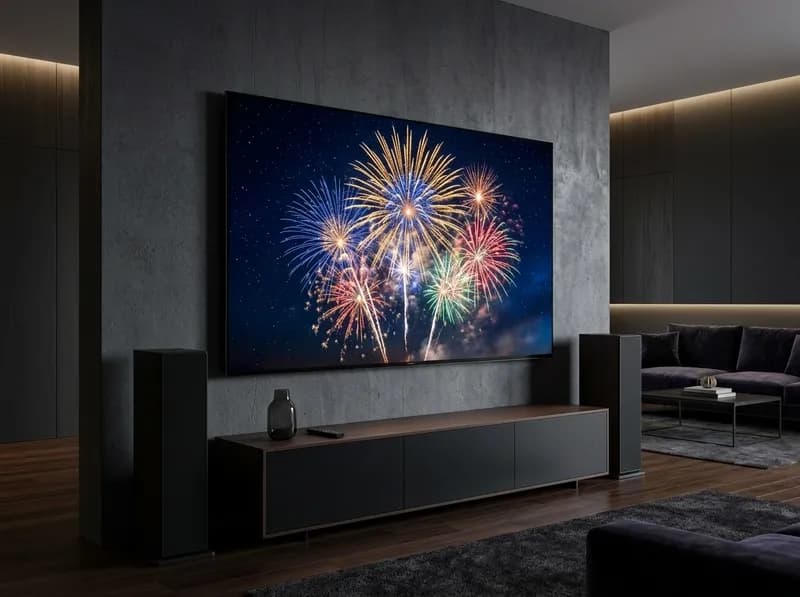
For most U.S. households, the TCL QM7L is the best place to start in 2026. It combines SQD-Mini LED, a 144Hz panel and a starting price of $699.99. Buyers who watch a lot of HDR movies or need more gaming bandwidth should also consider the QM8L, while discounted 2025 models can deliver better value than their newer replacements.
The flagship X11L is a different proposition. Its launch MSRP starts at $6,999.99 for the 75-inch model, but verified retail prices have fallen to around $3,997.99–$4,999.99. It is an exceptionally capable LCD television, but it is not a $2,999.99 TV, and its extraordinary peak brightness does not make it the best choice for every room.
TCL's 2026 U.S. lineup ranges from basic QLED televisions to SQD-Mini LED sets and the experimental RGB-Mini LED RM9L. The distinctions matter, but so do real-world picture quality, HDMI bandwidth, motion clarity and current prices. A TV advertised at up to 6,000 or 10,000 nits will not sustain that brightness across every scene, and a 144Hz label does not guarantee sharp motion during fast gameplay.
This guide reflects U.S. pricing and availability checked on October 23, 2026. Manufacturer specifications are distinguished from independent measurements and buying recommendations. A few details are especially important this year: the QM6L has been announced but is not yet available to buy in the United States; RM9L brightness claims vary by screen size; and some Costco-channel TCL models carry a different warranty from their standard retail counterparts.
1. Best TCL TVs for different buyers
Buying priority | Model to consider | Why it stands out | Price reference (Oct. 23, 2026) | Main drawback |
|---|---|---|---|---|
Best TCL TV for most people | QM7L | SQD-Mini LED, 144Hz and strong value | From $699.99; 65-inch seen at $897.99 | Only HDMI 1–2 support full 4K/144; Game Mode motion blur is worse than on the QM7K |
Premium brightness for the money | QM8L | Very high measured HDR brightness and four full-bandwidth HDMI 2.1 ports | 65-inch around $1,077.99–$1,298 | HDR accuracy remains problematic after calibration; fast motion can look blurry |
Best clearance alternative | QM8K (2025) | Bright Mini-LED picture at a reduced price | 65-inch lows around $898–$997.99 | Only two full-bandwidth HDMI 2.1 inputs |
Bright rooms and HDR highlights | QM8L or X11L | Measured peak brightness of 3,719 nits on the QM8L; the X11L exceeded RTINGS' standard meter range | QM8L 75-inch around $1,598–$1,698; X11L 75-inch from $3,997.99 | Neither eliminates direct reflections |
Dark-room HDR movies | QM8L, or an OLED alternative | Strong local dimming and deep blacks | QM8L 65-inch around $1,078–$1,298 | An LG C6 OLED at about $1,499.99 is worth comparing if accuracy and motion matter more |
PS5 or Xbox Series X | QM8L | Four full 4K/144 HDMI 2.1 inputs | From around $1,078 | High pixel response times can soften fast action |
Large screen on a budget | QM7L 98-inch | A 98-inch SQD-Mini LED at a relatively accessible price | Seen at $2,797.99 | Its zone count is the 98-inch model's figure, not a specification shared by every size |
Entry-level Mini-LED | QM6K | Local dimming at a low starting price | From $499.99 | The QM7K is brighter and more colorful |
Lowest-priced large Mini-LED option | QM5K | Best Buy-exclusive 75-inch model | $599 for 75 inches | Entry-level performance and limited availability |
Experimental RGB picture technology | RM9L | Separate red, green and blue Mini-LED emitters | 85-inch at $5,999 at Best Buy | Color cross-talk, a blue-leaning default picture and no Dolby Vision 2 |
Art and interior design | NXTVISION A300W | Art mode and lifestyle styling | 55–85 inches | You pay for presentation as well as the screen |
One number helps put the flagship in perspective: RTINGS gave the X11L an 8.6 score, the highest LCD-TV score recorded under its V2.2/V2.3 methodology at the time covered here. That is a remarkable result, but it does not erase the TV's weaknesses in built-in audio, calibration and gaming motion.
2. TCL TV prices in 2026: MSRP versus current retail prices
TCL televisions often fall substantially below launch prices. That makes it important to distinguish a manufacturer's suggested retail price (MSRP), a retailer's current price and a historical sale low. A starting price can also refer to a smaller screen than the one being compared.
Model | Launch MSRP | TCL.com starting price or current listing | Verified retail-price reference |
|---|---|---|---|
QM6K (2025) | — | $499.99 | — |
QM7L (2026) | $1,199.99 for 55-inch; up to $3,999.99 for 98-inch | $699.99 | 65-inch seen at $897.99; 98-inch at $2,797.99 |
QM8L (2026) | $2,499.99 for 65-inch; up to $5,999.99 for 98-inch | $1,199.99 | 65-inch around $1,298 at Amazon and $1,299.99 at Best Buy; 75-inch around $1,698 |
X11L (2026) | $6,999.99 for 75-inch; $7,999.99 for 85-inch; $9,999.99 for 98-inch | — | 75-inch around $3,997.99 at P.C. Richard to $4,999.99 at Best Buy; 85-inch reached $6,000 on Prime Day |
RM9L (2026) | $7,999.99 for 85-inch; $9,999.99 for 98-inch; $29,999.99 for 115-inch | — | Best Buy: $5,999, $8,999 and $24,999, respectively |
QM8K (2025) | — | $1,399.99 | 65-inch lows around $898; a recorded price was $997.99 |
QM9K (2025) | — | $1,599.99 | Compare the exact size and retailer before buying |
QM7K (2025) | — | $749.99 | Lineup now includes sizes up to 115 inches |
Three things stand out.
First, don't use MSRP as your main buying benchmark. TCL prices can fall sharply after launch, with Black Friday promotions often making a substantial difference. ShopSavvy's historical tracking has placed TCL among the faster-depreciating TV brands, with discounts reaching 60% during Black Friday 2025.
Second, the older model can be the better deal. The 2025 QM9K has a claimed maximum of 6,000 local-dimming zones, exceeding the QM8L's advertised 4,000-plus zones. When a previous-generation set costs less than the newer model, the generation label alone does not settle the question.
Third, flagship discounts are large in dollar terms. A $2,000–$3,000 reduction from the X11L's 75-inch launch MSRP is significant, but the remaining price is still high enough to justify a close comparison with the QM8L.
Be cautious if you see the X11L advertised as starting at $2,999.99. That figure does not match the verified listings used for this guide.
3. TCL's 2026 lineup at a glance
The U.S. lineup is easier to understand when grouped by technology and intended buyer.
Flagship and premium: X11L, QM8L and the separate RGB-Mini LED RM9L.
Mainstream premium: QM7L, plus discounted 2025 QM7K, QM8K and QM9K models.
Value Mini-LED: QM6K and the Best Buy-exclusive QM5K. The QM6L has been announced but is not yet available for U.S. purchase.
Budget and lifestyle: Q3K Full HD QLED televisions, remaining Q651G stock and the NXTVISION A300W art TV.
Two less commonly covered variants deserve attention. The QM64L is a Fire TV variant associated with the QM6L generation, rather than a standard Google TV model. Its exact specification mix should be checked against the complete SKU before purchase. The QM7L Pro and QM6K Pro are Costco-channel variants; the important difference is their documented warranty coverage, not necessarily their picture quality.
TCL has also announced the RM7L, a lower-priced RGB-Mini LED line intended to sit below the RM9L. Buyers interested in RGB technology but unwilling to spend flagship money should verify U.S. availability before making a decision.
Main TCL TV series compared
Series | Generation | Display technology | U.S. sizes | Native refresh rate | Local dimming | Brightness claim and independent findings |
|---|---|---|---|---|---|---|
X11L | 2026 | SQD-Mini LED, WHVA 2.0 | 75, 85, 98 inches | 144Hz | Up to 20,736 zones on 98-inch; 11,520 on 75-inch | Up to 10,000 nits; RTINGS' standard meter range was exceeded |
QM8L | 2026 | SQD-Mini LED, WHVA 2.0 Ultra | 65–98 inches | 144Hz | 4,000-plus at the largest size; 2,584 on the tested 75-inch | Up to 6,000 nits; measured 3,719 nits on a 10% window by RTINGS |
QM7L | 2026 | SQD-Mini LED, HVA 2.0 Pro | 55–98 inches | 144Hz | Up to 2,100-plus on 98-inch | Up to 3,000 nits; measured 2,270 nits on a 10% window by Tom's Guide |
RM9L | 2026 | RGB-Mini LED | 85, 98, 115 inches | 144Hz | 2,912 / 3,840 / 5,616 by size | Claimed 4,000 / 6,000 / 9,000 nits by size |
QM9K | 2025 | QD-Mini LED | 65–98 inches | Up to 144Hz | Up to 6,000 zones | Up to 6,500 nits; RTINGS found exceptionally high brightness |
QM8K | 2025 | QD-Mini LED, WHVA | 65–98 inches | Up to 144Hz | Varies by size | High-brightness HDR; strong dark-room and bright-room performance, with factory-accuracy caveats |
QM7K | 2025 | QD-Mini LED | 55–98 inches and 115 inches | Up to 144Hz | Varies by size | Strong contrast and bright SDR performance |
QM6K | 2025 | QD-Mini LED | 55–98 inches | Up to 144Hz | Varies by size | Entry-level Mini-LED; the QM7K is brighter and more colorful |
QM5K | 2025/2026 | Mini-LED | Includes 75-inch | Check exact SKU | Entry-level | Best Buy exclusive; $599 for the 75-inch model |
Q3K | 2025 | Conventional direct-lit QLED | 32, 40, 43 inches | 60Hz | None | Full HD, with HDR10 support |
Q651G | 2024-era | Conventional QLED | Remaining stock | Varies | Not equivalent to QM-series local dimming | Clearance purchase; confirm the exact model number |
Why screen size matters when reading TCL specifications
An "up to" specification often describes the largest model in a series, not every size in the range. For example:
The QM8L's 4,000-plus-zone claim applies to the largest model; the 75-inch unit tested by RTINGS has 2,584 zones.
The X11L reaches 20,736 zones at 98 inches, compared with 11,520 at 75 inches.
The RM9L's brightness claims vary by size: 4,000 nits at 85 inches, 6,000 at 98 inches and 9,000 at 115 inches.
These differences matter when comparing two TVs you can actually buy. A zone count without a screen size is incomplete information.
The RM9L is sometimes described as a "6,000-nit TV," but that number refers to the 98-inch version. The 85-inch and 115-inch models have different advertised figures. Similarly, a listing for a supposedly discounted 50-inch QM6L should be treated cautiously: the series had been announced, but U.S. sales had not begun as of October 23, 2026.
4. TCL TV series explained: measured performance and drawbacks
TCL X11L: the flagship for extreme HDR brightness
The X11L is TCL's most ambitious conventional LCD television. It combines SQD color technology, a WHVA 2.0 panel and an unusually large local-dimming system. The 75-inch model has 11,520 dimming zones, rising to 20,736 on the 98-inch version. TCL advertises peak brightness of up to 10,000 nits.
RTINGS' results put the X11L in rare company. Its score of 8.6 was the highest LCD-TV score recorded under the site's V2.2/V2.3 methodology at the time, and its peak brightness exceeded the range of RTINGS' standard meter. Testing required a second instrument.
That performance is real, but the X11L has several meaningful drawbacks:
Built-in sound is underwhelming. RTINGS found the audio disappointing despite the Bang & Olufsen branding. A soundbar or separate audio system is worth budgeting for.
Full calibration is restricted. Its processing does not allow a complete professional calibration, which matters to viewers who want the most accurate picture possible.
Factory accuracy is not class-leading. Extreme brightness does not automatically translate into accurate colors or tone mapping.
Fast gaming motion can look blurry. Game Mode has cadence-related issues at low refresh rates, along with color artifacts during fast transitions.
The glossy screen can show rainbow-like diffraction smears under certain lighting conditions.
Peak brightness is not sustained brightness. Brief HDR highlights can reach extraordinary levels, but an entire screen does not remain at 10,000 nits during normal viewing.
The X11L makes sense for buyers planning a large home theater, particularly at 85–98 inches, who want the strongest HDR highlights an LCD can deliver and are comfortable with the price.
For most other households, compare the QM8L first. At the prices seen in October 2026, a 75-inch X11L costs several times as much as a QM8L. Its advantage is most apparent in demanding HDR scenes, not necessarily in everyday streaming or television broadcasts.
TCL QM8L: the premium sweet spot, with a processing problem
The QM8L combines SQD-Mini LED, a WHVA 2.0 Ultra panel and TCL's Deep Color System. Its advertised specifications reach 6,000 nits and more than 4,000 dimming zones on the largest size.
RTINGS measured 3,719 nits on a 10% window on its 75-inch test unit, along with 518 nits of SDR full-screen brightness and 2,584 dimming zones. PCMag measured input lag of 5.1 ms at 1080p/120Hz. These are strong results for a television in this price bracket.
The main concern is picture processing. RTINGS found that HDR accuracy remained poor even after calibration, including an issue with PQ EOTF tracking that cannot be fully corrected through ordinary picture-menu adjustments.
Other limitations include:
Fast-moving games can look noticeably blurry because of relatively slow pixel response.
Bright moving objects in sports footage can show edge artifacts.
Picture quality degrades quickly when viewed from the side.
Direct reflections are not handled especially well.
At roughly $1,078–$1,298 for the 65-inch model, those compromises may be acceptable. The QM8L offers exceptional measured brightness for the money, making it a strong option for HDR-heavy viewing and rooms where the screen needs substantial light output.
It is less compelling for viewers who prioritize accurate HDR tone mapping, crisp competitive gaming or wide seating arrangements. Those buyers should compare OLED televisions at similar prices before committing.
TCL QM7L: the best starting point for most buyers
The QM7L is the mainstream premium choice in TCL's 2026 lineup. It starts at $699.99, with the 65-inch model seen at $897.99 and the 98-inch version at $2,797.99.
That 98-inch price is particularly aggressive: it brings a very large SQD-Mini LED television below $2,800, making the QM7L one of the most interesting big-screen values in TCL's U.S. range.
Tom's Guide gave its 75-inch test unit an Editor's Choice award. Measurements included:
2,270 nits peak brightness on a 10% window, versus TCL's 3,000-nit claim.
723 nits of full-screen brightness.
9.4 ms input lag.
90.28% Rec.2020 color coverage.
The measured color coverage is wide, even though it falls short of TCL's "100% BT.2020" panel-level marketing claim.
Two issues deserve attention before buying.
HDMI bandwidth is split across the four ports. TCL's comparison information specifies full 4K/144Hz support on HDMI inputs 1 and 2. Inputs 3 and 4 have reduced bandwidth. Published descriptions of the lower-port limits differ, so check the manual for the exact screen size you plan to buy. For a gaming PC and console, reserve inputs 1 and 2 for those devices.
Game Mode motion clarity is a regression from the QM7K. RTINGS found the QM7L's pixel response slow enough to produce more motion blur than the 2025 QM7K. That is an important distinction: input lag measures the delay between a controller input and the screen response, while pixel response affects how sharply moving objects appear. The QM7L can respond quickly to your controls and still show blurry motion.
For casual gaming, streaming, movies and general television viewing, this may not be a major issue. Competitive gamers and anyone sensitive to motion blur should compare the QM7K or an OLED model.
TCL QM6K: the entry point for Mini-LED
At $499.99 from TCL.com, the QM6K brings local dimming into a price range traditionally dominated by conventional QLED sets.
It is a legitimate upgrade over basic LCD televisions, particularly for viewers who want improved contrast without spending much. But the dimming system has limits. Subtitles over a dark sky, isolated stars and small bright objects against black backgrounds can reveal blooming or less precise light control.
RTINGS found the QM7K brighter, more colorful and stronger in contrast. If the price difference is modest at the same screen size, compare those two before choosing the QM6K. The QM7L is another step up, although its motion-blur drawback makes the decision less straightforward for gaming.
TCL RM9L: RGB-Mini LED at a flagship price
The RM9L is different from TCL's SQD-Mini LED models. Instead of using blue LEDs with quantum dots to produce color, its backlight uses separate red, green and blue Mini-LED emitters.
Screen size | Dimming zones | Advertised peak brightness | Launch MSRP | Best Buy price reference |
|---|---|---|---|---|
85 inches | 2,912 | 4,000 nits | $7,999.99 | $5,999 |
98 inches | 3,840 | 6,000 nits | $9,999.99 | $8,999 |
115 inches | 5,616 | 9,000 nits | $29,999.99 | $24,999 |
RTINGS' 85-inch testing found extremely high brightness, deep blacks and vivid colors. It also identified drawbacks that matter in normal viewing:
Adjacent saturated colors can influence one another, causing tint or cross-talk artifacts.
The default picture balance leans too blue.
Direct reflections remain visible.
The 85-inch version weighs roughly 114 pounds, according to WIRED's coverage, so installation requires planning.
The RM9L is as much a showcase for RGB backlighting as it is a conventional television recommendation.
There is also a format limitation: the RM9L does not support Dolby Vision 2. FlatpanelsHD reports that the RM series is excluded. The QM8L and X11L, by contrast, are scheduled to receive Dolby Vision 2 Max through a future software update.
Choose the RM9L for its RGB technology, vivid color potential and enormous screen sizes—not because RGB automatically makes it superior to SQD-Mini LED.
The 2025 QM9K, QM8K and QM7K are still relevant
The older K-series models should not be dismissed simply because the L-series is newer.
The QM9K advertises up to 6,000 dimming zones and 6,500 nits, and RTINGS found it exceptionally bright. Its maximum zone count exceeds the QM8L's advertised 4,000-plus figure. The QM8K also remains a capable bright-room and gaming television, while the QM7K has an advantage in measured Game Mode motion clarity over the QM7L.
Their biggest limitation is connectivity: the QM7K, QM8K and QM9K have only two full-bandwidth HDMI 2.1 inputs. If you connect a console, gaming PC and receiver, that can be more consequential than a modest difference in peak brightness.
Q3K, Q651G and NXTVISION A300W
The Q3K is a basic 32-, 40- or 43-inch Full HD QLED television with a 60Hz refresh rate. It is suitable for a bedroom or kitchen, but it is not a 4K home-theater model.
The Q651G belongs to an older generation of conventional QLED TVs. Remaining stock can be worth considering at a clearance price, but verify the complete SKU and specifications rather than relying on the series name alone.
The NXTVISION A300W is aimed at buyers who want a television that doubles as a decorative display. Its art mode and lifestyle design are the main attractions. A QM-series Mini-LED television at a similar price will generally make more sense for buyers focused on HDR performance per dollar.
5. TCL QM6L: announced, but not available in the U.S. yet
The QM6L was announced at CES 2026 as the successor to the QM6K. TCL included it in its North American press materials, and Wirecutter confirmed the announcement.
However, as of October 23, 2026, the QM6L was not available to purchase in the United States. TCL's U.S. Mini-LED collection still listed the QM6K, and pricing and availability for the QM6L had not been announced.
That means a supposed U.S. sale on a 50-inch QM6L should be treated with caution. Confirm that a listing points to a real, purchasable product with an official SKU before paying.
For buyers shopping now:
Choose the QM6K if you want an inexpensive Mini-LED television and the $499.99 starting price fits your budget.
Compare the QM7L if you can spend around $200 more. It offers a higher performance tier, although its Game Mode motion blur is worth considering.
Wait for the QM6L only if you specifically want that model. New televisions typically launch above their eventual street prices, so waiting may not produce an immediate bargain.
The QM64L Fire TV variant and the lower-priced RM7L RGB-Mini LED series should also be checked carefully for actual U.S. availability. An announcement is not the same as a product being in stock.
6. TCL model numbers explained: L, K, Pro and Fire TV
Identifier | What it generally means | Examples |
|---|---|---|
L | 2026 generation in the premium TCL lineup | QM7L, QM8L, X11L |
K | 2025 QM-series generation | QM6K, QM7K, QM8K, QM9K, QM5K |
G | Older U.S. naming generation | Q651G |
Pro | Specific retail-channel model family, including Costco variants | QM7L Pro, QM6K Pro, Q77K/Q77L |
Fire TV variant | A different smart-TV platform from Google TV | QM64L |
A300W | NXTVISION lifestyle/art TV family | A300W |
Q3K | Entry-level QLED family, including Full HD sets | 32Q3K, 40Q3K, 43Q3K |
Keep four rules in mind when comparing models.
L and K are different generations. The QM8L is a 2026 SQD-Mini LED model with four full-bandwidth HDMI 2.1 ports. The QM8K is a 2025 QD-Mini LED model with two. Similar names do not mean identical hardware.
Pro is not a universal picture-quality upgrade. It identifies a retail-channel SKU family. The documented warranty difference can be important, but do not assume every specification is identical without checking.
Regional models are not interchangeable. European TCL C-series televisions, for example, are not automatically equivalent to U.S. QM-series sets. Make sure the specification page applies to the U.S. model.
Check the full SKU. Screen size, suffix and retailer-specific variant can affect specifications, ports, dimming zones and warranty terms.
7. QLED vs. QD-Mini LED vs. SQD-Mini LED vs. RGB-Mini LED
These terms describe different parts of a television's display system. They are not interchangeable performance ratings.
QLED: quantum-dot color on an LCD television
QLED uses quantum dots to improve color reproduction. It does not automatically mean the television has Mini-LED backlighting, advanced local dimming, high brightness or a high refresh rate. A budget QLED model can display vivid colors but still struggle with dark HDR scenes.
QD-Mini LED: smaller backlight LEDs with local dimming
The 2025 K-series uses QD-Mini LED technology. Its backlight is divided into many independently controlled zones, allowing the TV to brighten highlights while dimming darker parts of the picture.
That improves contrast and HDR impact, but the zones are larger than individual pixels. Blooming around bright objects can still occur.
SQD-Mini LED: TCL's 2026 premium generation
The 2026 QM7L, QM8L and X11L use TCL's SQD-Mini LED branding, combining Mini-LED backlighting with its Super Quantum Dot and Deep Color System approach.
Independent measurements provide a more useful picture of performance than the advertised maximum alone.
Measurement | TCL's advertised claim | Independent result |
|---|---|---|
QM7L peak brightness | Up to 3,000 nits | 2,270 nits on a 10% window; 723 nits full-screen, Tom's Guide, 75-inch |
QM8L peak brightness | Up to 6,000 nits | 3,719 nits on a 10% window, RTINGS, 75-inch |
X11L peak brightness | Up to 10,000 nits | Exceeded RTINGS' standard meter range and required a second instrument |
QM7L color gamut | "100% BT.2020" panel claim | 90.28% Rec.2020 measured by Tom's Guide |
Those measured results are strong. The QM7L's 2,270-nit peak and QM8L's 3,719-nit peak are excellent for LCD televisions, and 90.28% Rec.2020 is broad color coverage.
The important distinction is that a manufacturer's "up to" figure describes a best-case capability under specific conditions. It does not guarantee the same result on every screen size or during every scene in a film.
RGB-Mini LED: a different approach to color
The RM9L uses separate red, green and blue emitters in its backlight. The technology aims to deliver very high brightness and color volume, but the implementation can produce cross-talk artifacts and tinted whites.
RTINGS' comparison work found the SQD-based X11L performed better overall than the RM9L, despite the latter's impressive color and brightness capabilities. RGB-Mini LED is a parallel approach, not an automatic upgrade over SQD-Mini LED.
What local-dimming zones actually mean
More zones can improve control over bright and dark areas in the same frame, particularly in scenes with subtitles, stars or small light sources against a dark background.
But zone count is only one factor. The dimming algorithm, panel contrast, zone layout and response speed all affect blooming and shadow detail. And because zone counts change with screen size, comparisons must use the same size wherever possible.
8. QM7L vs. QM8L vs. X11L: which one is worth the upgrade?
Feature | QM7L | QM8L | X11L |
|---|---|---|---|
Position | Mainstream premium | Premium | Flagship |
Panel | HVA 2.0 Pro | WHVA 2.0 Ultra | WHVA 2.0 |
Peak brightness claim | Up to 3,000 nits | Up to 6,000 nits | Up to 10,000 nits |
Independent brightness result | 2,270 nits, 10% window, Tom's Guide | 3,719 nits, 10% window, RTINGS | Beyond RTINGS' standard meter range |
Local dimming | 2,100-plus zones on 98-inch | 4,000-plus on largest size; 2,584 at 75 inches | 11,520 at 75 inches; 20,736 at 98 inches |
Refresh rate | 144Hz | 144Hz | 144Hz |
Full 4K/144 HDMI 2.1 inputs | 2 of 4 | 4 of 4 | 4 of 4 |
U.S. screen sizes | 55–98 inches | 65–98 inches | 75–98 inches |
Price reference | From $699.99; 65-inch around $897.99 | 65-inch around $1,078–$1,298; 75-inch around $1,598–$1,698 | 75-inch around $3,998–$5,000 |
Main documented drawback | Game Mode blur; limited full-bandwidth ports | HDR accuracy and fast-motion clarity | Audio, calibration restrictions and Game Mode artifacts |
QM7L vs. QM8L: the upgrade most buyers should consider
The QM8L delivers substantially more measured peak brightness than the QM7L—3,719 versus 2,270 nits, a difference of roughly 64%. It also has more dimming zones and four full-bandwidth HDMI 2.1 ports rather than two.
That extra brightness is most useful for HDR movies, demanding highlights and daytime viewing. For ordinary SDR streaming and casual gaming, the difference may not justify the higher price.
The trade-off is that the QM8L's weaknesses are tied to picture processing and pixel response. Its HDR accuracy remains problematic even after calibration, and fast gameplay can look blurry. The QM7L's port limitation is easier to work around if you only have one console and a streaming device.
At October 2026 street prices, either model can make sense. Choose the QM8L if brightness and port flexibility are priorities. Choose the QM7L if you would rather save the money and its two full-bandwidth ports are enough.
QM8L vs. X11L: who needs the flagship?
The X11L's extreme HDR highlights and 11,520 zones on the 75-inch model put it in a different performance class on paper. In a large, dark theater room, demanding HDR material can reveal a difference.
For everyday streaming, sports and standard television, the advantage is less consistent. Sustained brightness is lower than brief peaks, and many scenes do not contain the tiny, intensely bright highlights where the flagship has its clearest advantage.
At around $3,998 or more for 75 inches, the X11L is a deliberate luxury purchase. The QM8L is the more sensible choice for most buyers who want a bright, premium TCL television.
QM7L vs. X11L: should you skip the middle tier?
For buyers who want a 55- or 65-inch television, the X11L is not an option because it starts at 75 inches.
At 75 inches and above, compare the X11L with the QM8L first. Jumping straight from the QM7L to the X11L makes sense mainly when you have a very large room, specifically want record-setting HDR highlights and are comfortable spending several thousand dollars more.
SQD-Mini LED vs. RGB-Mini LED
The RM9L is worth considering if you want a huge RGB-Mini LED screen and accept its color cross-talk limitations. It is not the automatic choice over the QM8L or X11L.
The RM9L also lacks Dolby Vision 2 support. Buyers who want the more established SQD approach, lower prices and a broader feature package should focus on the QM8L or X11L instead.
9. Are the 2025 TCL K-series TVs still worth buying?
Yes. A discounted previous-generation television can be a better purchase than a newer model, particularly when the older TV performs better in a specific area.
QM9K vs. QM8L
The QM9K's advertised maximum of 6,000 dimming zones exceeds the QM8L's 4,000-plus figure, and its advertised peak brightness reaches 6,500 nits. RTINGS also found it exceptionally bright.
Its limitation is connectivity: only two HDMI 2.1 inputs support full bandwidth, compared with four on the QM8L.
A QM9K is attractive when its actual price is low enough to compensate for the older platform and reduced port flexibility. Compare the exact screen size and retail price rather than relying on the starting price alone.
QM8K vs. QM8L
The QM8K remains a strong bright-room television with high contrast and gaming features. Its 65-inch price has reached approximately $898–$998, making it a compelling alternative to a QM8L at around $1,078 or more.
If you connect only one console and a streaming device, two full-bandwidth HDMI 2.1 inputs may be sufficient. If you have a gaming PC, console and receiver, the QM8L's four full-bandwidth inputs are more useful.
There is one specification discrepancy worth checking: sources disagree on whether the QM8K uses a native 144Hz panel or a 120Hz panel with a higher refresh mode. ZDNET describes it as 120Hz boosted to 144Hz, while RTINGS and T3 list 144Hz native. This is less important for PS5 and Xbox Series X, which top out at 120Hz, but PC gamers should confirm the specification for their exact model.
QM7K vs. QM7L
The QM7K remains an appealing gaming television with strong contrast and low input lag. RTINGS found that the 2026 QM7L has more Game Mode motion blur than its 2025 predecessor.
That reverses the usual assumption that the newer generation is automatically better. If motion clarity matters more to you than the QM7L's newer display technology, a discounted QM7K deserves serious consideration.
What counts as a good clearance deal?
Compare the same screen size, not the starting price of two different series. A 55-inch model at a low advertised price is not a fair comparison with a 75-inch model at a higher one.
A K-series television is worth buying when it undercuts its L-series successor by a meaningful amount, has the ports you need and comes with acceptable warranty and return terms. With TCL prices changing quickly, check the current checkout price before deciding.
10. Gaming on TCL's 2026 TVs: input lag is low, but motion blur matters
Gaming performance has two separate measurements that are easy to confuse.
Input lag measures how long it takes for a controller action to appear on the screen. The QM7L measured 9.4 ms in Tom's Guide's testing, while PCMag measured 5.1 ms on the QM8L at 1080p/120Hz. Those are strong results.
Pixel response time affects how sharply moving objects appear. Here, the 2026 SQD models have a weakness:
RTINGS found more Game Mode motion blur on the QM7L than on the QM7K.
The QM8L can look very blurry during fast action.
The X11L shows cadence-related blur at low refresh rates and color artifacts during fast transitions.
For cinematic games, RPGs, adventure titles and simulation games, these limitations may be acceptable. Competitive shooters and fast esports games put a higher premium on motion clarity, making OLED alternatives worth comparing.
HDMI ports: check them before connecting your console
Model | Full 4K/144 HDMI 2.1 inputs | Practical implication |
|---|---|---|
QM7L | Inputs 1 and 2 | Put your console and gaming PC on these ports; check the manual for exact limits on inputs 3 and 4 |
QM8L | All four | Most flexible port selection in the mainstream premium lineup |
X11L | All four | Good for multiple high-bandwidth devices |
QM7K, QM8K and QM9K | Two of four | May be sufficient for one console and a streamer, but less flexible for complex setups |
QM6K | Check the specification for the exact size | Confirm supported refresh rates and resolutions before buying for high-refresh gaming |
The PS5 and Xbox Series X support up to 4K/120Hz, so all three 144Hz SQD models can accommodate their maximum output. The question is how many devices need full-bandwidth ports at the same time.
For PC gaming, a suitable graphics card can make 4K/144Hz useful, but the refresh-rate label should not outweigh motion clarity. Also, TCL's "Game Accelerator" terminology can refer to reduced-resolution high-refresh modes rather than the panel's native resolution at its maximum refresh rate.
11. Dolby Vision 2 Max: what is supported and what is still coming?
The Dolby Vision 2 Max rollout is one of the more important software details in TCL's 2026 lineup.
X11L and QM8L: Confirmed for a free over-the-air Dolby Vision 2 Max update using the MediaTek Pentonic 800 platform. The rollout slipped from summer 2026 to late 2026.
QM7L: Dolby Vision IQ, but not Dolby Vision 2, according to FlatpanelsHD's reporting.
RM9L and the RM series: No Dolby Vision 2 support.
Content availability: Dolby Vision 2 content is still limited, with only around three streaming services reported to offer it at the time covered here.
For buyers considering the X11L or QM8L, the update should be treated as a future feature rather than something already available on the television. For RM9L buyers, the exclusion matters only if Dolby Vision 2 is a specific priority.
The practical advice is simple: do not choose a television solely because of a promised HDR format. Current picture quality, price, screen size and connectivity are more immediate factors in everyday viewing.
12. Best TCL TV by room and use case
Bright living room: QM8L. Its 3,719-nit measured peak and strong SDR output make it a compelling option for bright viewing environments. The caveat is reflection handling: RTINGS found direct reflections remain noticeable. Curtains, room layout and screen placement can matter more than moving to an even brighter model.
Dark-room movies: QM8L or an OLED. The QM8L's local dimming produces deep blacks, and the X11L offers more extreme HDR highlights for larger budgets. But the QM8L's HDR accuracy remains problematic after calibration. The LG C6 OLED at around $1,499.99 for 65 inches is a fair alternative for viewers who prioritize pixel-level blacks, motion clarity and accuracy. The Samsung S90H matte OLED at a similar price is also worth considering if glare is the main concern.
PS5 or Xbox Series X: QM8L for ports, QM7L for value. Both offer 4K/120 support, VRR, ALLM and low input lag. The QM7L is sufficient for a simpler setup with one console and one streaming device, provided the two full-bandwidth HDMI inputs are enough.
PC gaming: QM7L or QM8L, with a motion-blur warning. Both support 4K/144Hz, although the QM7L offers full bandwidth only on inputs 1 and 2. Competitive players should compare OLED response times before making a decision.
Sports: QM7L or QM8L. The QM8L's extra brightness is helpful for daytime viewing, but wide seating arrangements should take its viewing-angle limitations into account. Fast-moving bright objects can also show edge artifacts in sports footage.
Big-screen value: QM7L 98-inch. At a seen price of $2,797.99, it makes a 98-inch SQD-Mini LED screen more accessible. Its 2,100-plus-zone figure is the specification for this size, not for the entire QM7L range.
An enormous statement screen: RM9L. Best Buy price references are $5,999 for 85 inches, $8,999 for 98 inches and $24,999 for 115 inches. The RGB color potential is impressive, but so are the installation requirements. The 85-inch model alone weighs around 114 pounds, and the series does not support Dolby Vision 2.
Bedroom or kitchen: Q3K. The 32–43-inch Full HD range is suitable for secondary viewing. It is not designed to compete with TCL's 4K home-theater models.
Art and décor: NXTVISION A300W. Choose it for its art mode and lifestyle design. If picture quality per dollar is the priority, a QM-series Mini-LED set is the better fit.
Best previous-generation alternatives: The QM8K is worth considering at around $898–$998 for 65 inches if two full-bandwidth ports are sufficient. Motion-sensitive gamers should compare the QM7K with the QM7L. The QM9K can be a strong option when a discounted unit reaches an attractive price at the required size.
13. Choosing the right screen size and room setup
Screen size | Typical use | What to check |
|---|---|---|
55 inches | Bedrooms and smaller living rooms | Viewing distance and available wall space |
65 inches | General-purpose living rooms | Often the most competitive price point |
75 inches | Larger living rooms and home theaters | The QM8L's street price makes this size worth comparing |
85 inches | Cinematic viewing | Stand width, delivery route and mounting requirements |
98 inches | Very large living rooms | The QM7L makes this size more accessible; verify installation logistics |
115 inches | Statement-screen installations | RM9L availability, panel weight, wall strength and professional delivery |
Before ordering a television of 85 inches or larger, measure the wall, cabinet and entire delivery route into the room. Check the distance between the stand feet, VESA mounting pattern and mount weight rating. A screen can fit on the wall and still be impossible to get through a doorway or up a staircase.
Also, do not assume every size within a series has identical hardware. Local-dimming zones, brightness claims and port specifications can vary. The RM9L, for example, has advertised peak-brightness figures ranging from 4,000 to 9,000 nits across its three sizes.
One useful rule: if upgrading the series means buying a smaller screen, compare the larger lower-tier TV with the smaller premium model in the actual room. For many viewers, the increase in screen size has a more obvious effect on immersion than a moderate increase in brightness.
14. Smart TV software, sound, warranty and ownership
Google TV and Fire TV
Google TV is used across much of TCL's current U.S. lineup, providing access to major streaming services. Interface speed and responsiveness can vary by model and firmware, so reviews of the specific TV are more useful than assumptions based on the platform alone.
Fire TV variants such as the QM64L use a different interface. If you depend on a particular streaming service or app, verify compatibility before purchasing.
Built-in audio: don't rely on the Bang & Olufsen badge
TCL advertises Bang & Olufsen tuning on the QM7L, QM8L and X11L, but RTINGS found the X11L's built-in sound disappointing. The branding should not be taken as a guarantee of home-theater-quality audio.
Budget for a soundbar or AV receiver if sound quality matters. If you plan to connect an external system, confirm eARC support and compatibility on the exact model. The QM8L and X11L also list FlexConnect wireless expansion; check the compatible hardware and costs before including it in your setup.
TCL TV warranty: standard versus Costco Pro models
TCL North America's standard television warranty provides one year of parts and labor coverage. However, TCL's two-year warranty document covers a specific group of Costco-channel models, including QM7L Pro, QM6K Pro and Q77K/Q77L variants. The document also includes the 98Q672G.
That means the retail channel and complete SKU can affect your coverage. If you're considering a QM7L, comparing the standard model with the Costco QM7L Pro is not just a price comparison—it is also a warranty comparison.
Check the warranty document for the exact SKU before checkout. Do not assume that every product with "Pro" in its name receives identical coverage.
Returns and reliability
Large-screen televisions are difficult to assess fully before delivery. Reflections, panel uniformity and viewing-angle problems can become obvious only after the TV is installed in your room.
Inspect the panel during the retailer's return window, retain the packaging until you are satisfied and confirm the retailer's large-TV return terms before ordering.
There is not enough reliable public model-by-model failure-rate data to conclude that TCL televisions are inherently more or less durable than competing brands. Owner reports can flag potential problems, but anecdotes do not establish failure rates. Firmware behavior also changes over time, so recent reports about the exact model number are more useful than broad claims about the brand.
15. Common TCL TV buying mistakes
Trusting prices without checking dates. Launch MSRP, current street price and a historical sale low are different numbers. The X11L's verified 75-inch street prices are around $3,997.99–$4,999.99, not the frequently repeated $2,999.99 figure.
Assuming a higher series number always offers better value. The 2025 QM9K has a higher advertised maximum zone count than the 2026 QM8L. Compare actual prices and specifications.
Confusing L-series and K-series models. The QM8L and QM8K are different generations with different display technology and HDMI connectivity.
Treating peak brightness as sustained brightness. The 2,270-nit QM7L and 3,719-nit QM8L measurements are already strong, but they are not full-screen, sustained results.
Taking "100% BT.2020" as an independent measurement. Tom's Guide measured 90.28% Rec.2020 on the QM7L—wide color coverage, but not 100%.
Comparing zone counts without screen sizes. The QM8L's 75-inch test unit has 2,584 zones, while the 4,000-plus claim applies to the largest model. The X11L's 20,736-zone figure belongs to the 98-inch version.
Assuming four HDMI sockets mean four full-bandwidth ports. The QM7L has two full 4K/144 inputs; the QM7K, QM8K and QM9K also have only two full-bandwidth HDMI 2.1 inputs.
Equating refresh rate with motion clarity. A 144Hz panel can still have slow pixel response. RTINGS found more Game Mode blur on the QM7L than on the previous-generation QM7K.
Waiting for a QM6L sale before the TV is available. The QM6L was announced at CES 2026 but was not available for U.S. purchase as of October 23, 2026. The QM6K is the current entry-level deal.
Buying the RM9L for a format it does not support. The RM series is excluded from Dolby Vision 2. Check the format requirements before paying a premium.
Ordering a huge TV without measuring. Stand width, delivery access, mounting requirements and panel weight all matter—especially at 98 and 115 inches.
Missing the warranty difference between SKUs. Standard TCL coverage is one year; certain Costco Pro models have two-year coverage under TCL's documented terms.
Ignoring clearance K-series models. A QM8K around $898–$998 for 65 inches can be a better buy than a QM8L if two full-bandwidth ports are enough.
Trusting every lineup or deal page. A supposed QM6L sale or an RM9L brightness figure that ignores the screen-size differences is a reason to verify the exact SKU against TCL's U.S. specifications.
16. Frequently asked questions about TCL TVs
What is the best TCL TV to buy in 2026?
For most households, start with the QM7L. It combines SQD-Mini LED, a 144Hz panel and a $699.99 starting price. Choose the QM8L if you want substantially higher measured peak brightness and four full-bandwidth HDMI 2.1 ports. A discounted QM8K is also worth considering if two full-bandwidth ports are enough.
How much does the TCL X11L actually cost?
The launch MSRP is $6,999.99 for 75 inches, $7,999.99 for 85 inches and $9,999.99 for 98 inches. Verified 75-inch street prices have been around $3,997.99–$4,999.99. Check current retailer listings before buying because prices change frequently.
Is the TCL QM8L worth the extra money over the QM7L?
It depends on your priorities. The QM8L measured 3,719 nits compared with 2,270 nits on the QM7L, and it has four full-bandwidth HDMI 2.1 inputs instead of two. However, RTINGS found the QM8L's HDR accuracy remained poor after calibration and its fast-motion clarity was limited. Choose it for brightness and connectivity; compare the QM7L or OLED models if motion clarity and accuracy matter more.
Does the TCL QM6L exist?
Yes. TCL announced it at CES 2026 as the QM6K successor. But as of October 23, 2026, it was not available to purchase in the United States. The QM6K at $499.99 is the current entry-level Mini-LED option.
Which TCL TV has the most local-dimming zones?
The 98-inch X11L has the highest figure in this lineup, with 20,736 zones. The 75-inch X11L has 11,520. The 2025 QM9K also has an advertised maximum of 6,000 zones, exceeding the QM8L's 4,000-plus claim for its largest size. Always compare the same screen size.
How bright are TCL's 2026 TVs in independent testing?
Tom's Guide measured 2,270 nits on a 10% window for the QM7L. RTINGS measured 3,719 nits for the QM8L. The X11L exceeded RTINGS' standard meter range and required a different instrument. These are excellent peak-brightness results, but full-screen and sustained brightness are lower.
Does TCL really achieve 100% BT.2020 color coverage?
That is a panel-level marketing claim, not a guarantee of independently measured performance. Tom's Guide measured 90.28% Rec.2020 on the QM7L. That is still wide color coverage, but it is not the same as a measured 100%.
Are TCL's 2026 TVs good for fast gaming?
They offer low input lag and support refresh rates up to 144Hz, but pixel response is a weakness. RTINGS found more Game Mode blur on the QM7L than on the QM7K, while fast action can look blurry on the QM8L. For cinematic games, the trade-off may be acceptable. Competitive players should compare OLED televisions.
Which QM7L HDMI ports support full bandwidth?
TCL's official comparison identifies inputs 1 and 2 as supporting 4K at 144Hz. Inputs 3 and 4 have reduced bandwidth. Because published descriptions of their exact limits differ, check the manual for your specific screen size and connect your highest-bandwidth devices to inputs 1 and 2.
Does the TCL RM9L support Dolby Vision 2?
No. The RM series is excluded from Dolby Vision 2. The QM8L and X11L are scheduled to receive a free Dolby Vision 2 Max update, while the QM7L supports Dolby Vision IQ. The update was expected in late 2026, and compatible content remained limited at the time covered here.
How long is TCL's U.S. TV warranty?
The standard warranty provides one year of parts and labor coverage. Certain Costco-channel models, including the QM7L Pro and QM6K Pro, are covered by TCL's documented two-year warranty terms. Verify the complete SKU and warranty document before purchase.
Is the TCL QM8K still worth buying in 2026?
Yes, especially if the 65-inch model is around $898–$998. It remains a capable bright-room and gaming television. Its main limitation is having two full-bandwidth HDMI 2.1 inputs rather than the QM8L's four. PC gamers should also verify the exact refresh-rate specification for their model.
Should I buy TCL or Hisense at the same price?
The Hisense U7SG 65-inch at around $1,000 is a reasonable comparison with the QM7L 65-inch at around $897.99. The U7SG offers a native 165Hz panel, four full-bandwidth HDMI 2.1 inputs and measured brightness around 2,867–3,000 nits. The QM8L, at around $1,078–$1,298 for 65 inches, measured 3,719 nits and uses TCL's SQD color system. Buyers who prioritize port flexibility and refresh rate should examine the Hisense; buyers focused on brightness and HDR impact should compare the QM8L.
Is OLED worth considering at the same price?
Yes. The 65-inch LG C6 OLED at around $1,499.99 is a strong alternative for viewers who want pixel-level blacks, accurate picture reproduction and better motion clarity. The Samsung S90H matte OLED is another option if reflections are a concern. TCL's strongest argument is peak brightness for the money, particularly on the QM8L.
What is the cheapest TCL Mini-LED TV?
The 75-inch QM5K is a Best Buy-exclusive model priced at $599 in the listings checked for this guide. The QM6K starts at $499.99 and is the lower-priced entry into TCL's mainstream Mini-LED range. Compare screen size, features and local availability before deciding which is the better deal.
Do brightness and zone-count specifications apply to every size?
No. The QM8L has 2,584 zones on the tested 75-inch model, while its largest size is advertised with more than 4,000. The X11L has 11,520 zones at 75 inches and 20,736 at 98 inches. The RM9L's brightness claims range from 4,000 to 9,000 nits across its 85-, 98- and 115-inch models. Check the exact size's specification sheet.
When will Dolby Vision 2 Max arrive on the QM8L and X11L?
TCL confirmed a free over-the-air update for both models, but the rollout slipped from summer to late 2026. The QM7L is limited to Dolby Vision IQ, and the RM9L will not receive Dolby Vision 2. Treat the update as a potential bonus rather than the main reason to buy.
Are TCL TVs reliable?
Public model-by-model failure-rate data is not sufficient to rank TCL conclusively against competing brands. Check recent reports for the exact model, buy from a retailer with a reasonable return window and inspect the panel after delivery. Where eligible, a documented two-year Pro-model warranty may provide additional peace of mind.
17. Final verdict: which TCL TV should you buy?
For most households: TCL QM7L. It starts at $699.99, with the 65-inch model seen at $897.99 and the 98-inch version at $2,797.99. It delivers strong measured brightness and wide color coverage at competitive prices. Its two main compromises are the two full-bandwidth HDMI inputs and Game Mode motion blur. If motion clarity is a priority, compare the discounted QM7K.
For premium HDR impact: TCL QM8L. Its measured 3,719-nit peak, deep blacks and four full-bandwidth HDMI 2.1 ports make it a compelling choice. The 65-inch model has been around $1,078–$1,298, while the 75-inch has been around $1,598–$1,698. Before buying, weigh its HDR accuracy and motion limitations against an OLED at a similar price.
For clearance value: QM8K or QM7K. The QM8K is worth a close look around $898–$998 for 65 inches. The QM7K is particularly relevant to gamers who care about motion clarity, given RTINGS' finding that it performs better in Game Mode motion than the QM7L.
For extreme LCD performance: X11L. It has the highest LCD-TV score recorded under RTINGS' cited methodology and can produce extraordinary HDR highlights. Buy it when the price is near a verified retail low and you have a room that benefits from a 75-inch-or-larger screen. Its disappointing built-in audio, calibration restrictions and motion artifacts are reasons to compare it carefully with the QM8L before spending $4,000 or more.
For enormous RGB-Mini LED: RM9L. The 85-, 98- and 115-inch versions offer an unusual approach to color and brightness, but their prices remain high. Account for the RGB cross-talk findings, installation requirements and lack of Dolby Vision 2 before buying.
The most useful buying rule for TCL in 2026 is to choose your screen size first, then compare the current street prices of the QM7L, QM8L and discounted K-series models at that size. This year's price drops have changed the value equation, and last year's recommendations do not automatically apply.
Move to the X11L only if you specifically want its extreme HDR performance and the price makes sense for your room. Above all, verify the complete model number and size against TCL's U.S. specifications before checkout. A QM6L announcement is not a QM6L sale, an RM9L brightness claim is not the same across all sizes, and an MSRP is not the same as today's price.
Related GuidesMore →
Levoit Humidifiers Explained: Models Compared, Features, Prices, and What to Know Before Buying
Levoit’s humidifier lineup includes several distinct families, from budget-friendly Classic and NeoClassic models to warm-mist OasisMist units and mist-free Superior evaporative humidifiers. This guide compares tank capacities, humidity controls, app connectivity, cleaning requirements, water recommendations, and verified U.S. prices. Independent test results from Wirecutter, Good Housekeeping, RTINGS, Better Homes & Gardens, and Popular Mechanics help you choose a model based on real-world performance rather than specifications alone.
Lasko Space Heater Lineup: Every Major Type Explained and How to Choose
Lasko makes a wide range of space heaters, from low-wattage MyHeat personal models to ceramic towers, Ellipse heaters, infrared quartz units, and bathroom-specific designs. This guide explains the major Lasko heater families, compares key models, and highlights differences in wattage, controls, prices, and safety features. Learn which options make sense for a desk, bedroom, or larger living area—and why checking the exact model number matters before buying.
Hisense TV Lineup 2026: Every Series Explained and Which One to Buy
Choosing the best Hisense TV in 2026 requires more than comparing series names or advertised brightness. This buying guide explains the differences between conventional Mini-LED and RGB Mini-LED, compares key U6, U7, U8, and UR models, and highlights the trade-offs found in independent testing. It also covers discounted 2025 televisions, size-specific specification differences, and why the newest flagship models may not be the best value for every buyer.