Which MOONDROP IEM Should You Buy in 2026? Every Model Compared
Choosing a MOONDROP IEM involves more than comparing specifications. Some models use conventional analog connections, while others depend on USB-C audio, DSP tuning and the MOONDROP Link app. This guide explains the differences, compares published measurements for models such as the BLESSING 3, HARMON and STELLARIS, and highlights compatibility and reliability concerns that may affect the ownership experience.
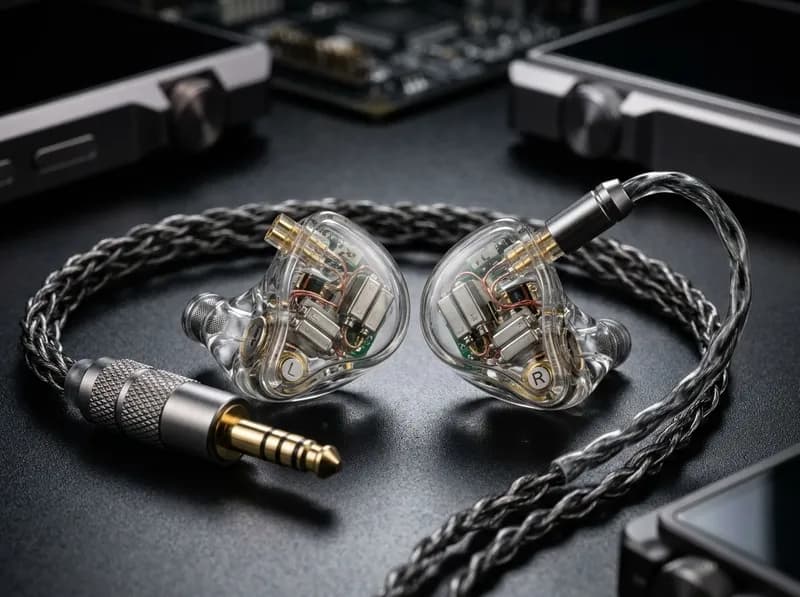
MOONDROP's wired IEM lineup covers an unusually wide price range in 2026, from the $19.99 QUARK2 to the $2,999 SOLIS II. The catalog includes 23 current or newer models, another 12 older models that remain visible on official product pages, and several USB-C earphones that rely on digital signal processing rather than a conventional analog connection.
Price and driver count alone tell you very little about which one to buy. The $22.99 CHU II uses a single dynamic driver, the $129.99 STELLARIS has a 14.5 mm planar driver, the $359.99 BLESSING 3 combines two dynamic drivers with four balanced armatures, and the $2,399 PSYCHE uses a ten-driver hybrid arrangement. These are different designs aimed at different listeners, not successive steps on a predictable upgrade ladder.
There are three things worth checking before choosing a model.
First, make sure you understand the connection. QUARK2, JIU, MAY, RAYS and CONCERTO are USB-C products. The x Crinacle DUSK also includes a USB-C DSP cable alongside its analog cable. Their advertised tuning features depend on digital hardware and, in some cases, the Moondrop Link Android app. The app has no published iOS, Windows or macOS version. Android app listings report 21 requested permissions, while owners have described APK sideloading requirements for certain functions. Headphones.com has also criticized the DUSK FreeDSP cable as incomplete and malfunctioning. Buying one of these models for its DSP features without checking software compatibility is an easy mistake.
Second, look beyond tuning descriptions. The independent measurement record for several MOONDROP models is more useful than generic labels such as balanced, detailed or warm. BLESSING 3 has been measured across more than 30 rigs, with a Crinacle preference score of 79 and 38 squig.link measurement files. The aggregate shows a 3.8 dB dip near 6.9 kHz and a 3.6 dB peak near 8.1 kHz. HARMON has a separate 10-rig aggregate, while TechPowerUp measured an air-region peak exceeding 18 dB on STELLARIS. These findings provide more specific guidance than driver specifications alone.
Third, account for returns and warranty coverage. Linsoul lists a seven-day return window with a 35% restocking fee on opened in-ear monitors. HiFiGo lists seven days with a 30% restocking fee plus a 10% packaging fee. Apos lists a 20% processing fee, and ShenzhenAudio may require returns to be shipped to China. At 35%, returning a $549.99 METEOR costs approximately $192.50 before shipping. Some dealers refuse opened IEMs altogether.
Availability also matters. CHU III is now a confirmed U.S. product, with SoundGuys recording a September 15, 2026 release at $24.99 and Micro Center listing the model with a one-year limited warranty. MAY presents the opposite situation: its $74.99 official listing remains visible, but major U.S. retailers show it unavailable, sold out or discontinued.
This guide compares the complete MOONDROP IEM lineup using official specifications, independent reviews, published measurements, retailer prices, availability records and ownership reports. Conflicting prices are shown separately rather than averaged. No new laboratory testing was performed for this article, and measured findings are attributed to their original sources.
Quick Verdict: The Best MOONDROP IEM for Most Buyers
Best first analog IEM under $30: CHU II — $22.99
The CHU II remains an inexpensive entry point, with a 10 mm dynamic driver, detachable 0.78 mm 2-pin cable and replaceable acoustic filters. CHU III at $24.99 is now a legitimate alternative, although its independent measurement and long-term ownership record is less established. CHU II owners have reported brass nozzle oxidation, green discoloration and clogged filters. Keeping the earphones dry and using silica gel during storage can help reduce moisture-related problems.
Best all-rounder: ARIA 2 — $89.99 to $99.99
ARIA 2 is the most straightforward step up for someone who wants a conventional analog MOONDROP IEM. Its official catalog price is $99.99, while SoundGuys and Amazon-related listings show $89.99. The single dynamic-driver design offers a more substantial package than the entry-level models, although the relatively heavy shell and chunky nozzle deserve attention. At this price, compare it with the Truthear ZERO:RED, Simgot EW300 and Simgot EA500LM before ordering.
Best documented hybrid: BLESSING 3 — $305.99 to $359.99
BLESSING 3 has one of the strongest independent measurement records in the MOONDROP lineup. More than 30 rigs place it close to Harman IE 2019, with a Crinacle preference score of 79. Its treble response is not perfectly smooth, however: published aggregates show a dip around 6.9 kHz and a peak near 8.1 kHz. The large shell and relatively thin stock cable are additional ownership considerations.
Best analog-plus-DSP flexibility: x Crinacle DUSK — $305.99 to $399.99
DUSK combines two dynamic drivers, two balanced armatures and two planar drivers. It includes both analog and USB-C DSP cables, giving buyers two ways to use it. The analog connection is the safer part of the package. The FreeDSP cable has received criticism from Headphones.com, and owners have reported digital noise under certain signal conditions. Moondrop Link also lacks iOS, Windows and macOS support. Used prices around $165 to $290 make the model considerably more attractive, although used purchases generally sacrifice return protection.
Best avoided by treble-sensitive listeners: STELLARIS — $129.99
STELLARIS is a 14.5 mm planar IEM with a distinctive treble presentation. TechPowerUp measured an air-region peak exceeding 18 dB and described the sound as extremely bright, shouty and piercing. This is not simply a mildly treble-forward alternative. It is better suited to listeners who specifically want that kind of presentation.
Best USB-C budget options: QUARK2 and JIU — $19.99 and $24.99
Both are digital earphones rather than conventional passive analog IEMs. Check USB-C audio compatibility and the availability of the required tuning features before buying. Neither offers the same straightforward connection flexibility as CHU II or CHU III.
Best MOONDROP flagship: No clear default recommendation
PSYCHE costs $2,399 and SOLIS II costs $2,999. An aggregator ranking places the less expensive PSYCHE above SOLIS II, while neither has an independent measurement record comparable to BLESSING 3. ARMATURE ART 24 also carries a substantial regional price difference, with a $1,499 U.S. listing against approximately $1,030 in China. At these prices, shell fit, personal tuning preference and warranty support matter more than the number of drivers.
MOONDROP IEM Buying Recommendations at a Glance
Buyer situation | Model to compare | Published price | Main consideration |
|---|---|---|---|
First analog IEM under $30 | CHU II or CHU III | $22.99 / $24.99 | CHU II maintenance reports; CHU III has a shorter review history |
USB-C phone without a headphone jack | QUARK2 or JIU | $19.99 / $24.99 | No analog fallback; verify device and app support |
Everyday all-rounder | ARIA 2 | $89.99–$99.99 | Heavy shell and chunky nozzle |
Detail-focused hybrid | BLESSING 3 | $305.99–$359.99 | Documented treble variation and large shell |
Analog and DSP flexibility | DUSK | $305.99–$399.99 | FreeDSP reliability and app compatibility |
Bright planar sound | STELLARIS | $129.99 | TechPowerUp measured an air-region peak above 18 dB |
Premium tribrid | METEOR | $494.99–$618.74 | Polarizing fit and expensive returns |
Flagship | PSYCHE or SOLIS II | $2,399 / $2,999 | Limited independent evidence at this price level |
Understanding the MOONDROP IEM Lineup
MOONDROP's catalog is easier to navigate when divided into four categories: connection type, driver architecture, product generation and price source.
Connection Type
The first distinction is between passive analog IEMs and USB-C DSP products.
Most conventional MOONDROP earphones use a 3.5 mm connection, with some models offering 4.4 mm balanced cables. USB-C products have their own digital decoding hardware and may rely on software for tuning or additional features.
This distinction affects source compatibility, replacement cable costs and whether the advertised DSP functions can actually be used.
Driver Architecture
The lineup includes:
Single dynamic driver (DD)
Multiple dynamic drivers
Balanced armature (BA)
Planar magnetic
Dynamic driver and balanced armature hybrids
Dynamic driver, BA and planar tribrids
Dynamic driver and electrostatic hybrids
xMEMS and planar combinations
More drivers do not automatically produce better sound. Driver integration, crossover design, acoustic chambers, nozzle geometry and tuning all contribute to the final result.
Product Generation
Some models are new 2026 releases, others remain active catalog products, and several older generations still appear on MOONDROP's official website.
A product page does not establish that a model is still manufactured or available from a U.S. authorized retailer. MAY is a good example: the official listing remains visible, but major U.S. sales channels no longer show normal availability.
Price Source
MOONDROP prices can differ between featured product pages, the main catalog, U.S. dealers, Amazon, AliExpress and Chinese retail channels.
The DUSK, for example, appears at $359.99 in one official listing and $399.99 in another. METEOR ranges from $494.99 at Linsoul to $618.74 in an AliExpress listing. These figures should not be treated as interchangeable.
Classification | Meaning | Examples |
|---|---|---|
U.S. listed | A U.S. retailer has a live product listing | CHU II, CHU III, ARIA 2, BLESSING 3, DUSK |
Official only | Official product page exists, but U.S. dealer stock is unconfirmed | MAY, JIU, CONCERTO, several newer flagships |
Multi-channel | Several dealers list the product at different prices | METEOR, DUSK, ARIA 2 |
Legacy still-listed | Older product remains on the official catalog | KATO, VARIATIONS, S8, BLESSING 2 |
Used or regional | Availability is primarily second-hand or outside the U.S. | Used DUSK, ARMATURE ART 24 in China |
Two examples illustrate why specifications and model names need to be checked carefully.
LAN II REF and LAN II POP share the same $59.99 hardware platform but have different tunings. ILLUSTRIOUS and DARKSABER both cost $899.99 despite having very different driver configurations: one uses a single 11 mm dynamic driver, while the other combines two dynamic drivers with eight balanced armatures.
The same distinction applies to the flagship models. PSYCHE is a ten-driver tribrid at $2,399, while SOLIS II is an eight-driver EST tribrid at $2,999. Neither price nor driver count establishes which one will sound better.
How the Models Were Evaluated
The comparison covers MOONDROP's official U.S. IEM collection and the older products that remain visible on its official pages.
Core specifications and listed prices come from manufacturer material. Independent reviews and laboratory measurements are used where available. Retailer listings help establish U.S. pricing and availability, while owner reports provide additional context on fit, durability and software problems.
The evidence is not equally strong for every model.
BLESSING 3, HARMON, STELLARIS and METEOR have identifiable measurement or review records that support more detailed discussion. ILLUSTRIOUS, DARKSABER, ARMATURE ART 12, ARMATURE ART 24, CONCERTO and JIU have much more limited independent measurement coverage.
For those models, the discussion is restricted to published specifications, availability and pricing. Driver count is not used as a substitute for measured performance.
Frequency-response measurements also need to be interpreted correctly. A graph can show how an IEM's frequency response compares with a target curve, but it cannot establish soundstage, resolution, comfort, isolation or long-term reliability by itself.
Independent Measurements: What the Numbers Actually Show
Several MOONDROP models have enough published measurement data to support more specific buying advice.
Source and measurement | Model | Published finding | Why it matters |
|---|---|---|---|
More than 30 aggregated rigs, Harman IE 2019 | BLESSING 3 | Close to Harman IE 2019 across the aggregate | Provides a measurable reference for its tuning |
Crinacle preference score | BLESSING 3 | 79 | Preference-target score, not an overall quality rating |
38 squig.link measurement files | BLESSING 3 | 3.8 dB dip near 6.9 kHz; 3.6 dB peak near 8.1 kHz | Shows a specific upper-treble response |
Owner reports in review coverage | BLESSING 3 | Large shell, thin stock cable, scratched mirror faceplates and thin male vocals | Identifies potential ownership problems |
10-rig measurement aggregate | HARMON | Harman score 81; 6.9 dB dip near 10.3 kHz; treble roughly 2 dB below target from 6–10 kHz | Provides a more detailed picture than a simple bass-emphasized description |
TechPowerUp laboratory measurement | STELLARIS | Air-region peak exceeding 18 dB | A substantial deviation relevant to treble-sensitive listeners |
Aggregator measurement summary | SOLIS II | 4.7 dB peak near 8.1 kHz | A published treble feature on a flagship model |
Aggregator measurement summary | PSYCHE | 5.9 dB peak near 8.2 kHz | Shows that the less expensive flagship is not automatically smoother |
IEMRanking, six expert reviews | METEOR | 7.4/10 average | Mixed critical reception at a premium price |
Audio Amigo review | METEOR | Polarizing fit and disappointing accessories | Fit and package value remain concerns |
SoundGuys and Amazon-related listings | ARIA 2 | $89.99 against $99.99 official price | More realistic street-price reference |
SoundGuys | CHU III | September 15, 2026 release at $24.99 | Confirms U.S. availability |
DUSK FreeDSP cable | Described as incomplete and malfunctioning | Raises questions about the DSP portion of the package |
The BLESSING 3 measurements are particularly useful because they show why a general description such as clear and detailed does not tell the whole story. Its response is close to Harman IE 2019 in the aggregate, but the upper-treble dip and peak are still worth considering.
HARMON presents a different case. Its triple-dynamic-driver configuration is unusual, but the published 10-rig aggregate shows a measurable upper-treble shortfall. The EPZ K9 and Myer Audio SL224 also appear as less expensive comparison options in the associated measurement discussion.
STELLARIS is the clearest warning in the group. TechPowerUp's measured peak above 18 dB is large enough that treble-sensitive listeners should not treat it as a routine planar alternative.
The flagship figures require more caution. PSYCHE and SOLIS II have aggregator measurement summaries, but the underlying rig lists and weighting are not fully disclosed. They are useful for identifying potential differences, not for establishing a definitive ranking.
What Measurement Scores Can and Cannot Tell You
A Harman preference score describes how closely a response follows a particular target. It does not directly measure resolution, imaging, build quality, comfort or value.
Likewise, a squig.link frequency-response file is useful for comparing tonal balance, but results can vary between measurement rigs, couplers, insertion depths and individual ears.
The most useful approach is to combine measurement data with independent listening reviews, fit reports and return policies. No single graph should determine a purchase.
MOONDROP VDSF, Harman IE 2019 and the Newer Target Curves
MOONDROP's VDSF stands for Virtual Diffuse Sound Field. The company describes it as a frequency-response target developed using the head-related transfer function of a B&K HATS measurement system in a diffuse-field environment, combined with an ideal-room preference curve.
VDSF is a design reference, not a guarantee that every MOONDROP IEM will sound neutral to every listener.
There is also an important distinction between the target used by a manufacturer and the target used by an independent reviewer.
Many BLESSING 3 and HARMON measurements are compared against Harman IE 2019 because that is the reference used by the relevant squig.link and Crinacle measurement tools. More recent target-curve discussions and some 2026 MOONDROP materials refer to JM-1, PopAvg-DF and New Meta.
The official Chinese ARMATURE ART 24 material, for example, describes B&K 5128C measurement and a PopAvg-DF basis with a slight bass lift.
Reference | Where it appears | What it tells you |
|---|---|---|
VDSF | MOONDROP design and evaluation material | The manufacturer's intended tonal framework |
Harman IE 2019 | Crinacle scores and many squig.link comparisons | How closely a measured response follows a widely used preference target |
JM-1 / PopAvg-DF / New Meta | Newer target-curve discussions and product material | Alternative reference points for evaluating tonal balance |
B&K 5128C | Official ARMATURE ART 24 material | The measurement system and reference described for that product |
A score against Harman IE 2019 should not be compared directly with a result calculated against PopAvg-DF unless the measurement and scoring methods are compatible.
This distinction matters when comparing older MOONDROP models with newer products. A different reference curve does not automatically mean that a new model is better tuned, and an older Harman-based score does not become invalid simply because a newer target is available.
Analog or USB-C DSP? The Most Important Decision Before Buying
MOONDROP's USB-C lineup includes QUARK2, JIU, MAY, RAYS and CONCERTO. The x Crinacle DUSK also comes with a USB-C DSP cable.
These products are different from conventional passive IEMs. Their digital decoding and tuning functions depend on the supplied cable or built-in electronics, and some features require Moondrop Link.
USB-C MOONDROP Models Compared
Model | Connection | DSP or app dependency | Reported concerns |
|---|---|---|---|
QUARK2 | USB-C only | USB-C audio; digital tuning where supported | Limited independent coverage |
JIU | USB-C only | USB-C decoding | Limited independent coverage |
MAY | USB-C only | Moondrop Link tuning | Faceplate and DSP cable failure reports; limited U.S. availability |
RAYS | USB-C only | Gaming DSP and microphone functions | Owner reports of cable and microphone bugs |
CONCERTO | USB-C only | xMEMS and planar drivers with digital decoding | No independent bench located |
DUSK DSP cable | USB-C, alongside analog cable | FreeDSP and Moondrop Link | Headphones.com criticism and owner noise reports |
The Moondrop Link app is the main compatibility issue.
Published Android app listings report a version requesting 21 permissions. Some owners describe manually installing APK files to access certain functions. Users have also reported that parametric EQ does not stack with presets.
There is no published iOS, Windows or macOS application. That means an iPhone, Windows laptop or Mac owner should not assume that all advertised DSP features will be available.
Owner reports also describe signal-dependent digital noise on some DSP cables. These reports are not laboratory measurements, but they are relevant when considering a product whose selling point includes digital tuning.
Before Buying a MOONDROP USB-C IEM
Check | What to verify |
|---|---|
Source device | Whether the phone, tablet or computer supports USB-C audio |
Operating system | Whether the required app is available for the buyer's platform |
App installation | Whether APK sideloading is necessary for the desired functions |
Permissions | Whether the requested Android permissions are acceptable |
EQ behavior | Whether presets and parametric EQ can be used together |
Cable replacement | Whether a replacement DSP cable is available and how much it costs |
Returns | Whether the dealer accepts opened USB-C in-ear monitors |
A DSP cable is not interchangeable with an ordinary 0.78 mm 2-pin analog cable. It contains the decoding hardware, so losing or damaging it can remove the main functionality that distinguishes the product.
For buyers who simply want an IEM that works with a conventional headphone output, the analog models are the safer choice.
Complete MOONDROP IEM Lineup and Prices in 2026
The following table includes current and newer products with their published configurations and prices. The official price column reflects the figures available in the catalog or featured listings. Other prices are shown separately when a meaningful discrepancy exists.
Model | Driver configuration | Connection | Official listed price | Other published prices | U.S. status |
|---|---|---|---|---|---|
QUARK2 | Micro dynamic | USB-C DSP | $19.99 | — | Official only |
CHU II | 1 × 10 mm DD | 3.5 mm, detachable | $22.99 | — | U.S. listed |
CHU III | Single DD | 3.5 mm | — | $24.99 (SoundGuys) | U.S. listed |
JIU | Single DD | USB-C | $24.99 | — | Official only |
LAN II REF | 1 × 10 mm DD | 4.4 mm reported | $59.99 | About $51 street | Multi-channel |
LAN II POP | 1 × 10 mm DD | 4.4 mm reported | $59.99 | About $51 street | Multi-channel |
MAY | 1 DD + 1 planar | USB-C DSP | $74.99 | — | Effectively unavailable in U.S. channels |
ARIA 2 | Single DD | 3.5 mm | $99.99 | $89.99 (SoundGuys and Amazon-related listings) | U.S. listed |
RAYS | 1 DD + 1 planar | USB-C DSP | $99.99 | — | Official only |
STARFIELD II | Single DD | 3.5 mm | $129.99 | — | Official only |
STELLARIS | 14.5 mm planar | 3.5 mm | $129.99 | — | Multi-channel |
KADENZ | 1 × 10 mm ULT-Gen2 DD | 3.5 mm | $219.99 | — | Multi-channel |
HARMON | 3 DD | 3.5 mm / 4.4 mm | $349.99 | — | Multi-channel |
BLESSING 3 | 2 DD + 4 BA | 3.5 mm | $359.99 | $319.99 launch; $305.99 Amazon | U.S. listed |
x Crinacle DUSK | 2 DD + 2 BA + 2 planar | Analog + USB-C DSP | $359.99 featured / $399.99 catalog | $339.99; $305.99 Amazon; $165–$290 used | U.S. listed |
CONCERTO | xMEMS + planar | USB-C | $379.99 | — | Official only |
METEOR | 1 DD + 2 BA + 4 planar | 3.5 mm / 4.4 mm | $499.99 featured / $549.99 catalog | $494.99 Linsoul; $549.99 Bloom and HiFiGo; $618.74 AliExpress | Multi-channel |
ARMATURE ART 12 | 12 BA per side | 3.5 mm | $799.99 | — | Official only |
ILLUSTRIOUS | 1 × 11 mm DD | 3.5 mm | $899.99 | — | Official only |
DARKSABER | 2 DD + 8 BA | 3.5 mm | $899.99 | — | Official only |
ARMATURE ART 24 | 24 BA per side | 3.5 mm | $1,499 | 6,999 RMB, about $1,030, in China | Regional price gap |
PSYCHE | 2 DD + 4 BA + 4 planar | 3.5 mm | $2,399 | — | Official only |
SOLIS II | 2 DD + 2 BA + 4 EST | 3.5 mm | $2,999 | — | Official only |
Two DUSK names are particularly easy to confuse. The older Crinacle-partnered DUSK was based on BLESSING 2. The current x Crinacle DUSK uses two dynamic drivers, two balanced armatures and two planar drivers. It is not simply a BLESSING 3 variant.
BLESSING 2 itself uses one dynamic driver and four balanced armatures, while BLESSING 3 uses two dynamic drivers and four balanced armatures.
Under $30: QUARK2, JIU, CHU II and CHU III
The entry-level MOONDROP lineup contains two different types of earphones.
CHU II and CHU III are conventional analog IEMs. QUARK2 and JIU use USB-C connections and digital decoding. Buyers should decide which connection they need before comparing their prices.
CHU II: The Established Budget Option
CHU II costs $22.99 and uses a 10 mm dynamic driver. Its detachable cable and replaceable acoustic filters are useful features at this price.
Its main ownership concern is moisture-related maintenance. Community reports describe brass nozzle oxidation, green discoloration and clogged filters. Keeping the earphones dry and storing them with silica gel can help, although it does not eliminate the possibility of filter or nozzle problems.
CHU III: A Confirmed U.S. Alternative
CHU III is listed at $24.99 by SoundGuys, which records a September 15, 2026 release date. Micro Center also has a product listing with a one-year limited warranty.
That makes CHU III a genuine alternative to CHU II rather than a Japan-only announcement.
The main limitation is its shorter independent review and measurement history. Buyers who prefer a model with more established community feedback may still favor CHU II.
QUARK2 and JIU: Digital Budget Earphones
QUARK2 costs $19.99, while JIU is listed at $24.99. Both are USB-C products, so neither should be treated as a direct analog replacement for CHU II.
They make sense for compatible devices when a low-cost digital connection is the priority. Their lack of an analog fallback and limited independent coverage are the main drawbacks.
Model | Connection | Price | Evidence | Main caveat |
|---|---|---|---|---|
CHU II | 3.5 mm analog | $22.99 | SoundGuys review and broad U.S. availability | Nozzle oxidation and filter clogging reports |
CHU III | 3.5 mm analog | $24.99 | September 2026 release; Micro Center listing | Shorter independent measurement record |
QUARK2 | USB-C DSP | $19.99 | Official listing | No analog input |
JIU | USB-C | $24.99 | Official listing | No analog input |
7Hz Salnotes Zero:2 | 3.5 mm analog | About $25 | Established budget alternative | Different tuning and fit |
For a first analog IEM, CHU II and CHU III should be compared directly with the 7Hz Salnotes Zero:2. The choice is more about fit, preferred tuning and maintenance than about a meaningful price difference.
$50–$100: LAN II, ARIA 2, MAY and RAYS
This price range contains several of MOONDROP's most relevant everyday models, but the differences are not always obvious from the specifications.
LAN II REF and POP
Both LAN II versions are listed at $59.99, with a typical U.S. street price around $51.
REF and POP share the same hardware but use different tuning profiles. The choice therefore comes down to sound preference rather than driver configuration.
One important connection detail deserves attention: owner discussions report a 4.4 mm-only cable. Buyers without a compatible balanced output may need to purchase another cable. There are also community reports of channel failures and disagreement about the treble presentation.
Compare LAN II with the approximately $55 Truthear ZERO:RED and $70 Simgot EW300 before deciding.
ARIA 2
ARIA 2 has a $99.99 official price, although SoundGuys and Amazon-related listings show $89.99.
The price difference is worth keeping in mind because several alternatives sit below or around $100:
Simgot EA500LM: approximately $80–$90
Truthear Hexa: approximately $80
Etymotic ER2SE: approximately $100
ARIA 2's main physical considerations are its relatively heavy shell and chunky nozzle. Buyers who are sensitive to earphone weight or nozzle size should check fit before choosing it as an everyday IEM.
MAY
MAY is officially listed at $74.99 and uses one dynamic driver plus one planar driver over USB-C DSP.
Its current U.S. availability is poor. Amazon lists it as unavailable, Apos and ShenzhenAudio show it sold out, Linsoul no longer carries it, and Bloom Audio marks it discontinued.
Owner reports also mention faceplate and DSP cable failures. With limited availability and an app dependency, MAY is better treated as a discontinued or regional product than a normal U.S. recommendation.
RAYS
RAYS costs $99.99 and targets gaming users with a dynamic-driver-plus-planar configuration, USB-C connection, microphone and gaming DSP functions.
Its value depends on those digital features working reliably. Owner reports mention cable and microphone bugs, so buyers should check device compatibility and retailer return terms before paying for the gaming functions.
Models to Compare in This Price Range
MOONDROP model | Published price | Alternative | Main comparison |
|---|---|---|---|
CHU II / CHU III | $22.99 / $24.99 | 7Hz Salnotes Zero:2, about $25 | Budget analog tuning |
LAN II REF / POP | $59.99 official; about $51 street | Truthear ZERO:RED, about $55; Simgot EW300, about $70 | Tuning, shell fit and cable connection |
ARIA 2 | $89.99–$99.99 | Simgot EA500LM, about $80–$90; Truthear Hexa, about $80 | Single-DD versus hybrid design |
ARIA 2 | $89.99–$99.99 | Etymotic ER2SE, about $100 | Fit and reference-oriented tuning |
MAY | $74.99 official; unavailable | CHU II, LAN II or ARIA 2 | Whether a discontinued DSP product is worth pursuing |
RAYS | $99.99 | Analog IEM plus separate microphone | Gaming features versus software dependency |
For most buyers, ARIA 2 is the easiest model in this group to shortlist. LAN II is worth considering for a lower budget, provided the cable connection is compatible. MAY should only be considered if a seller can confirm stock, condition, warranty and return eligibility.
$120–$230: STARFIELD II, STELLARIS and KADENZ
Three MOONDROP models occupy this price range, but they offer very different listening experiences.
STARFIELD II — $129.99
STARFIELD II is a single-dynamic-driver model and the newer generation of the STARFIELD family.
Its official listing places it at the same price as STELLARIS. Buyers should compare its tuning and fit with ARIA 2 before assuming that the newer model or higher price represents a substantial upgrade.
STELLARIS — $129.99
STELLARIS uses a 14.5 mm planar driver.
The important consideration is its measured treble response. TechPowerUp found an air-region peak exceeding 18 dB and described the sound as extremely bright, shouty and piercing.
That makes STELLARIS a specialized choice. It is not a safe recommendation for listeners who are sensitive to upper-frequency peaks or prefer a smoother presentation.
KADENZ — $219.99
KADENZ is a premium single-dynamic-driver model built around MOONDROP's ULT-Gen2 driver. Its official specifications include a TAC diamond-coated dome composite diaphragm and replaceable nozzles.
The question is whether those improvements justify the price over ARIA 2, rather than whether a more advanced diaphragm material automatically produces better sound.
KATO is another model worth considering. Although it is a legacy product listed at $189.99, it has Headphoneer and RTINGS review coverage and may be available on the used market.
Model | Architecture | Price | Published evidence | Buying consideration |
|---|---|---|---|---|
STARFIELD II | Single DD | $129.99 | Official catalog | Compare with ARIA 2 |
STELLARIS | 14.5 mm planar | $129.99 | TechPowerUp bench | Extremely bright measured response |
KADENZ | 10 mm ULT-Gen2 DD | $219.99 | Official specifications; Headfonics review | Whether the driver and accessory package justify the premium |
KATO | Legacy single DD | $189.99 | Headphoneer and RTINGS reviews | Used-market alternative |
A single dynamic driver can produce a more coherent presentation than a poorly integrated multi-driver system. Diaphragm material alone does not determine sound quality; the complete acoustic design, including chamber, nozzle, damping and tuning, matters more.
$350–$400: BLESSING 3, DUSK, HARMON and CONCERTO
This is the most interesting section of the current MOONDROP lineup. It includes the models with the strongest measurement records, a highly debated DSP product and an experimental digital design.
BLESSING 3 — $305.99 to $359.99
BLESSING 3 combines two dynamic drivers with four balanced armatures.
Its official catalog price is $359.99, while the launch price was $319.99 and an Amazon-related listing shows $305.99.
The model has extensive measurement coverage:
More than 30 rigs place it close to Harman IE 2019.
Crinacle's preference score is 79.
38 squig.link measurement files are available.
Aggregated measurements show a 3.8 dB dip near 6.9 kHz and a 3.6 dB peak near 8.1 kHz.
RTINGS, SoundGuys and Headphones.com have also published reviews.
BLESSING 3 is a reasonable step up for listeners who want a revealing hybrid and value a well-documented tuning profile. Its shell is relatively large, however, and owner reports mention a thin stock cable, scratched mirror faceplates and thin male vocals.
The treble measurements also make an audition or a favorable return policy particularly useful for buyers sensitive to upper-frequency peaks.
x Crinacle DUSK — $305.99 to $399.99
DUSK uses two dynamic drivers, two balanced armatures and two planar drivers. The package includes an analog cable and a USB-C DSP cable.
Published prices are inconsistent:
$359.99 in a featured official listing
$399.99 in the main catalog
$339.99 in another listing
$305.99 on Amazon
Approximately $165–$290 on the used market
Reviewer value opinions are split at roughly 55/45.
The analog connection is the straightforward part of the product. The DSP connection is more complicated. Headphones.com has described the FreeDSP implementation as incomplete and malfunctioning, while owners have reported signal-dependent digital noise. The Moondrop Link app also lacks iOS, Windows and macOS support.
It makes more sense to evaluate DUSK as two products:
A conventional analog hybrid IEM.
A DSP-enabled IEM whose extra functions depend on compatible software and cable hardware.
An analog-only buyer should compare its price with BLESSING 3, AFUL Performer models and ThieAudio midrange hybrids. Anyone paying extra for DSP should first confirm that the app works on their device.
HARMON — $349.99
HARMON uses three dynamic drivers and supports 3.5 mm and 4.4 mm connections.
A 10-rig measurement aggregate reports a Harman score of 81, a 6.9 dB dip near 10.3 kHz and treble roughly 2 dB below target from 6 to 10 kHz.
This provides a more useful description than simply calling it full-bodied or bass-emphasized.
The EPZ K9 and Myer Audio SL224 also appear as less expensive comparison options in the measurement discussion. Buyers should compare those models before spending $349.99.
CONCERTO — $379.99
CONCERTO combines an xMEMS driver with a planar driver and uses a USB-C digital connection.
No independent measurement bench was located for this guide. Its published specifications establish an unusual driver combination, but they do not establish how it compares acoustically with BLESSING 3 or DUSK.
Its USB-C connection also brings the same software compatibility questions as the other digital MOONDROP models.
Model | Configuration | Connection | Price | Evidence and main caveat |
|---|---|---|---|---|
BLESSING 3 | 2 DD + 4 BA | 3.5 mm | $305.99–$359.99 | Extensive measurement coverage; large shell and specific treble response |
DUSK | 2 DD + 2 BA + 2 planar | Analog + USB-C DSP | $305.99–$399.99 | FreeDSP criticism and app limitations |
HARMON | 3 DD | 3.5 mm / 4.4 mm | $349.99 | 10-rig aggregate; upper-treble shortfall |
CONCERTO | xMEMS + planar | USB-C | $379.99 | No independent bench located |
$500–$900: METEOR, ILLUSTRIOUS and DARKSABER
METEOR — $494.99 to $618.74
METEOR is a seven-driver tribrid with one dynamic driver, two balanced armatures and four planar drivers.
It also has one of the widest published price ranges in the MOONDROP catalog.
Seller or listing | Published price |
|---|---|
MOONDROP featured listing | $499.99 |
MOONDROP main catalog | $549.99 |
Linsoul | $494.99 |
Bloom Audio | $549.99 |
HiFiGo | $549.99 |
AliExpress listing | $618.74 |
IEMRanking's aggregation of six expert reviews gives METEOR an average of 7.4/10. Audio Amigo has criticized its fit and accessories, describing the value proposition at $550 as difficult.
These findings make fit and return terms particularly important. A $55 difference between two sellers is less significant than a return policy that could cost more than $190 if the earphones do not fit.
At a 35% restocking rate, returning a $549.99 METEOR costs approximately $192.50 before shipping.
ILLUSTRIOUS — $899.99
ILLUSTRIOUS uses a single 11 mm dynamic driver.
No independent measurement bench was located for this guide, so there is not enough evidence to make a confident performance ranking against other premium MOONDROP models.
DARKSABER — $899.99
DARKSABER combines two dynamic drivers with eight balanced armatures.
It shares the same listed price as ILLUSTRIOUS but uses a much more complex driver arrangement. That difference does not establish that it is the better earphone.
Both models are best treated as premium catalog entries rather than proven upgrades over BLESSING 3 or DUSK.
$1,499–$2,999: ARMATURE ART 12, ART 24, PSYCHE and SOLIS II
The flagship section of the MOONDROP catalog includes several technically ambitious products, but independent evidence is limited.
ARMATURE ART 12 and ART 24
ARMATURE ART 12 uses 12 balanced armatures per earpiece and costs $799.99.
ARMATURE ART 24 doubles that number to 24 balanced armatures per side and carries a U.S. listed price of $1,499.
The regional price difference is notable. Chinese pricing is reported at 6,999 RMB, approximately $1,030.
Official Chinese material describes B&K 5128C measurements and a PopAvg-DF reference with a slight bass lift. This is different from treating every MOONDROP product as a straightforward VDSF design.
Neither ART 12 nor ART 24 has an independent measurement bench located for this guide. The driver count and official specifications therefore provide the main basis for comparison, not a verified performance ranking.
PSYCHE — $2,399
PSYCHE is a ten-driver tribrid using two dynamic drivers, four balanced armatures and four planar drivers.
An aggregator ranking places it above SOLIS II despite its lower price. An aggregator measurement summary also reports a 5.9 dB peak near 8.2 kHz.
The underlying ranking and measurement methodology is not fully disclosed, so these figures should be treated as comparison signals rather than proof of superior sound quality.
SOLIS II — $2,999
SOLIS II uses two dynamic drivers, two balanced armatures and four electrostatic drivers.
Its aggregator measurement summary reports a 4.7 dB peak near 8.1 kHz. The same aggregator places it below PSYCHE in its ranking.
That is enough to show why the $2,999 model should not automatically be considered the best MOONDROP IEM.
Model | Configuration | U.S. listed price | Other price | Evidence |
|---|---|---|---|---|
ARMATURE ART 12 | 12 BA per side | $799.99 | — | No independent bench located |
ARMATURE ART 24 | 24 BA per side | $1,499 | About $1,030 in China | Official B&K 5128C and PopAvg-DF description |
PSYCHE | 2 DD + 4 BA + 4 planar | $2,399 | — | Aggregator ranks above SOLIS II; 5.9 dB peak near 8.2 kHz |
SOLIS II | 2 DD + 2 BA + 4 EST | $2,999 | — | Aggregator ranks below PSYCHE; 4.7 dB peak near 8.1 kHz |
At this price level, buyers should prioritize personal audition, shell fit, warranty coverage and after-sales support. A high driver count or premium material specification is not enough to justify a purchase costing several thousand dollars.
Older MOONDROP IEMs Still Listed on the Official Catalog
Twelve older products remain visible on MOONDROP's official pages. Their presence does not confirm that new U.S. stock is available.
Some are still worth considering on the used market, particularly KATO and BLESSING 2, but warranty coverage and return eligibility need to be checked carefully.
Legacy model | Listed price | Review or catalog evidence | U.S. buying situation |
|---|---|---|---|
CHU | $19.99 | Original generation, fixed cable | Used or clearance; CHU II is the newer entry |
ARIA | $79.99 | Original ARIA tuning | Used alternative to ARIA 2 |
ARIA SE | $79.99 | Same generation | Primarily used market |
SSR | $39.99 | Legacy listing | New U.S. stock unconfirmed |
SSP | $39.99 | Legacy listing | New U.S. stock unconfirmed |
STARFIELD | $109.99 | Legacy listing | STARFIELD II is the newer generation |
KATO | $189.99 | Headphoneer and RTINGS reviews | Documented used single-DD option |
BLESSING 2 | $319.99 | Basis of the older Crinacle DUSK | Do not confuse with BLESSING 3 or current DUSK |
VARIATIONS | $599 | 1 DD + 2 BA + 2 EST | Legacy premium tribrid |
S8 | $699.99 | Eight BA per side | Legacy all-BA design |
ILLUMINATION | $799.99 | Single DD | Legacy premium single-DD |
SOLIS | $1,099.99 | Older flagship | Different product from SOLIS II |
KATO is the most straightforward legacy model to consider because it has independent review coverage and remains relevant to the single-dynamic-driver category.
BLESSING 2 also deserves attention, but buyers should distinguish it from both BLESSING 3 and the current x Crinacle DUSK.
Imported and second-hand products may not receive the same warranty support as a new purchase from an authorized U.S. retailer. Opened IEMs may also be excluded from returns.
Do MOONDROP IEMs Need a DAC or Amplifier?
Most passive MOONDROP IEMs do not require an expensive desktop amplifier. A basic dongle DAC with sufficiently low output impedance is generally adequate.
There are, however, a few technical details worth checking.
Sensitivity Units
Sensitivity figures in dB/Vrms cannot be compared directly with figures in dB/mW.
KADENZ is specified in official material as a 35-ohm IEM with 122 dB/Vrms sensitivity. Those units should not be compared directly with a competing model whose sensitivity is quoted per milliwatt.
Source Output Impedance
ARMATURE ART 24 has a reported impedance of just 5.8 ohms. With a multi-driver IEM, a high-output-impedance source can interact with the earphone's impedance curve and change its frequency response.
A low-output-impedance dongle is the sensible choice.
3.5 mm and 4.4 mm Connections
A 3.5 mm single-ended connection is sufficient for most models.
A 4.4 mm balanced connection is useful when the source has a compatible balanced output, but it does not automatically improve sound quality.
LAN II is an exception worth checking because owner discussions report a 4.4 mm-only cable. Buyers without a balanced output may need a replacement cable.
Cable and Ear Tip Considerations
Most conventional MOONDROP models use 0.78 mm 2-pin cables. DSP cables are different because they contain digital decoding hardware.
Replacing a standard cable can improve comfort or solve a connection problem, but an expensive cable is not a reliable way to improve an IEM's sound quality.
Ear tips have a more direct effect on everyday listening. A poor seal can reduce bass response, change perceived treble balance and weaken passive isolation. Trying different tip sizes is worthwhile before concluding that an IEM lacks bass.
Fit also varies substantially between models. BLESSING 3's large shell, ARIA 2's chunky nozzle and METEOR's polarizing fit are all reasons to pay attention to return conditions.
MOONDROP IEM Price Tiers: Where Does the Money Go?
The biggest price increases in the MOONDROP lineup do not translate into proportional improvements in sound quality.
The differences become increasingly dependent on tuning preference, fit and product design above approximately $300.
Price range | Models and alternatives | What buyers should consider |
|---|---|---|
Under $30 | CHU II $22.99; CHU III $24.99; 7Hz Zero:2 about $25 | Basic analog tuning and fit |
$40–$100 | LAN II about $51–$59.99; ARIA 2 $89.99–$99.99; ZERO:RED about $55; EW300 about $70 | Cable compatibility, shell design and tuning |
$100–$250 | STELLARIS $129.99; KADENZ $219.99; EA500LM about $80–$90 | Driver design versus actual tuning and measurement evidence |
$300–$500 | BLESSING 3 $305.99–$359.99; DUSK $305.99–$399.99; HARMON $349.99; CONCERTO $379.99 | Hybrid architecture, measurements and DSP compatibility |
$500–$900 | METEOR $494.99–$618.74; ILLUSTRIOUS and DARKSABER $899.99 | Fit, accessories and limited independent evidence |
$1,000 and above | ART 24 $1,499; PSYCHE $2,399; SOLIS II $2,999 | Personal preference and warranty support |
Are MOONDROP Upgrade Paths Worth the Money?
Upgrade | Price difference | What changes |
|---|---|---|
CHU II to ARIA 2 | About $67–$77 | Larger price step, different shell and single-DD implementation |
ARIA 2 to KADENZ | About $120–$130 | Premium single-DD design and accessory package |
ARIA 2 to BLESSING 3 | About $206–$270 | Major change from single DD to hybrid architecture |
BLESSING 3 to DUSK | Varies by seller | Additional planar drivers and DSP connection option |
DUSK to METEOR | About $135–$313 | More elaborate tribrid configuration and higher ownership costs |
PSYCHE to SOLIS II | $600 | Different flagship architecture, without clear evidence that the more expensive model is better |
The used market also changes the calculation. DUSK listings around $165–$290 are substantially cheaper than new prices.
The trade-off is reduced buyer protection. A used IEM may not be returnable, and its warranty status may be unclear. On a product where shell fit and personal comfort matter so much, the lower purchase price should be weighed against that risk.
Best MOONDROP IEMs by Music Genre and Use Case
Genre-based recommendations are useful as starting points, but they should not replace fit and tuning preferences.
Listening situation | Models to compare | Important consideration |
|---|---|---|
Pop and rock | ARIA 2, DUSK, BLESSING 3 | BLESSING 3 has a documented upper-treble peak |
Female vocals | BLESSING 3, KADENZ | Upper-frequency presentation may be prominent |
Male vocals | ARIA 2, DUSK, HARMON | BLESSING 3 owners have reported thin male vocals |
Acoustic and classical | ARIA 2, KADENZ, BLESSING 3, DUSK | Fit and long-session comfort matter |
Hip-hop and EDM | DUSK, VARIATIONS, HARMON | HARMON has a documented upper-treble shortfall |
Gaming | RAYS, DUSK | DSP and microphone reliability need checking |
Long listening sessions | ARIA 2 or DUSK, if fit is comfortable | BLESSING 3 and METEOR have documented fit concerns |
There is no universally best MOONDROP IEM for a particular genre. A listener who dislikes strong treble will have a different shortlist from someone who prioritizes upper-frequency detail.
Warranty, Returns and U.S. Dealer Policies
Return policies can have a substantial effect on the real cost of a MOONDROP IEM.
The main issue is hygiene. Some dealers do not accept opened in-ear monitors, even when their general return policy appears flexible.
Other retailers allow returns but charge substantial restocking or processing fees.
Dealer | Published return window | Published fee | Additional condition |
|---|---|---|---|
Linsoul | 7 days | 35% restocking on opened IEMs | Opened IEM restrictions apply |
HiFiGo | 7 days | 30% restocking plus 10% packaging fee | Packaging conditions apply |
Apos | 15–45 days | 20% processing fee | Fee depends on applicable policy |
ShenzhenAudio | Policy-dependent | Up to 20% restocking | Return shipment to China |
Several U.S. dealers | No opened-IEM returns | — | Hygiene restrictions |
Micro Center (CHU III) | Store policy | Not established | One-year limited warranty listed |
How Much Does a Restocking Fee Cost?
The following figures are calculated using the published percentages, excluding return shipping and additional packaging charges.
Restocking fee | $99.99 ARIA 2 | $359.99 BLESSING 3 | $399.99 DUSK | $549.99 METEOR |
|---|---|---|---|---|
20% | $20.00 | $72.00 | $80.00 | $110.00 |
30% | $30.00 | $108.00 | $120.00 | $165.00 |
35% | $35.00 | $126.00 | $140.00 | $192.50 |
A $494.99 METEOR with a 35% restocking fee would cost approximately $173.25 to return, compared with $192.50 for the $549.99 version.
The difference between sellers therefore involves more than the purchase price. Return fees, shipping costs and hygiene restrictions can easily outweigh a small discount.
MOONDROP Warranty Coverage
Bloom Audio's manufacturer warranty page documents a one-year warranty for MOONDROP IEMs and three months for cables.
Micro Center lists a one-year limited warranty for CHU III.
Before buying, confirm whether the seller honors the manufacturer's warranty, particularly for imported products. It is also worth asking whether a USB-C DSP cable is classified as an accessory and whether it receives the same coverage as the IEM itself.
MOONDROP Alternatives: What Else Should You Compare?
MOONDROP is not the only brand offering competitive IEMs at these prices.
The following alternatives provide useful price comparisons across the lineup.
MOONDROP model | Price | Alternative | What to compare |
|---|---|---|---|
CHU II / CHU III | $22.99 / $24.99 | 7Hz Salnotes Zero:2, about $25 | Budget analog tuning |
LAN II | About $51–$59.99 | Truthear ZERO:RED, about $55 | Bass and treble balance |
LAN II | About $51–$59.99 | Simgot EW300, about $70 | Shell fit and tuning |
ARIA 2 | $89.99–$99.99 | Simgot EA500LM, about $80–$90 | Single-DD presentation |
ARIA 2 | $89.99–$99.99 | Truthear Hexa, about $80 | Single-DD versus hybrid design |
ARIA 2 | $89.99–$99.99 | Etymotic ER2SE, about $100 | Reference-oriented tuning and deep insertion fit |
HARMON | $349.99 | EPZ K9 and Myer Audio SL224 | Whether the triple-DD design justifies its price |
BLESSING 3 | $305.99–$359.99 | AFUL Performer and ThieAudio hybrids | Tuning, shell fit and value |
DUSK | $305.99–$399.99 | AFUL Performer 5+2 and other midrange hybrids | Whether DSP is worth the extra complexity |
METEOR | $494.99–$549.99 | Premium tribrid alternatives | Measured performance and fit |
ARMATURE ART 24 | $1,499 | 64 Audio and other premium IEMs | Fit, service and regional pricing |
For budget buyers, the 7Hz Salnotes Zero:2, Truthear ZERO:RED and Simgot EW300 are particularly relevant because they offer alternatives at prices close to the entry-level MOONDROP models.
For buyers considering BLESSING 3 or DUSK, the AFUL Performer series and ThieAudio's midrange hybrids deserve a direct comparison.
Which MOONDROP IEM Should You Buy? Final Recommendations
The best MOONDROP IEM depends on your budget, connection requirements and tolerance for different tuning styles.
Buyer profile | Recommended starting point | Why | Check before buying |
|---|---|---|---|
First IEM with a 3.5 mm headphone jack | CHU II or CHU III | Inexpensive analog entry | CHU II maintenance reports |
First IEM with USB-C only | QUARK2 | Lowest listed digital option | App and device compatibility |
Wants a lively single-DD presentation | LAN II POP | Same hardware as REF with different tuning | 4.4 mm cable compatibility |
Wants a planar experiment | STELLARIS | Distinct driver architecture | Very bright measured response |
Treble-sensitive listener | ARIA 2 or DUSK analog | More practical alternatives to STELLARIS | BLESSING 3 also has a documented treble peak |
Wants a conventional all-rounder | ARIA 2 | Straightforward analog design | Shell weight and nozzle size |
Wants a detailed hybrid | BLESSING 3 | Extensive independent measurement coverage | Large shell and upper-treble response |
Wants analog and DSP options | DUSK | Two connection methods | FreeDSP and app limitations |
Android user interested in PEQ | DUSK | Moondrop Link support | Permissions, APK installation and EQ behavior |
iPhone, Windows or Mac user | ARIA 2 or BLESSING 3 | No dependency on Moondrop Link | Do not pay for unused DSP features |
Gaming with a microphone | RAYS | Purpose-built gaming functions | Reported cable and microphone bugs |
Wants a premium tribrid | METEOR | Seven-driver configuration | 7.4/10 aggregate and return costs |
Wants a flagship | PSYCHE before SOLIS II | Lower price and higher aggregator ranking | Limited independent measurement evidence |
The strongest everyday recommendations remain relatively modestly priced.
CHU II and CHU III are both legitimate U.S. options under $25. ARIA 2 is a sensible all-rounder around $90–$100, provided its shell suits your ears. BLESSING 3 is the most thoroughly documented hybrid step-up in the lineup, although its treble response and large shell are worth considering before purchase.
DUSK is best evaluated as an analog IEM first. Its DSP functions should be treated as an additional feature rather than the main reason to buy it, particularly given the reported cable problems and limited app support.
MAY is not a practical U.S. purchase at the research date, and STELLARIS is a specialized choice rather than a general recommendation. At the top of the lineup, the available independent evidence is not strong enough to identify a default winner between the flagship models.
Ultimately, MOONDROP offers a broad range of interesting designs, but the most expensive model is not necessarily the best one. A well-fitting IEM with a tuning you enjoy and a retailer willing to accept returns is a better purchase than a technically impressive model that does not suit your ears.
Frequently Asked Questions
1. Which MOONDROP IEM should I buy in 2026?
For a first analog IEM, compare CHU II at $22.99 with CHU III at $24.99. ARIA 2 at $89.99–$99.99 is a sensible all-rounder, while BLESSING 3 at $305.99–$359.99 is the most thoroughly documented hybrid upgrade. DUSK is another option if you want both analog and USB-C DSP connections, but check the app and cable limitations first.
2. Is MOONDROP CHU III available in the U.S.?
Yes. SoundGuys records a September 15, 2026 release date and a $24.99 price. Micro Center also has a CHU III product listing with a one-year limited warranty. The earlier Japan-only description reflected the announcement stage rather than its later U.S. availability.
3. Can I still buy MOONDROP MAY in the U.S.?
Availability is very limited. Amazon lists it as currently unavailable, Apos and ShenzhenAudio show it sold out, Linsoul no longer carries it, and Bloom Audio marks it discontinued. The official $74.99 listing does not establish that a U.S. retailer has stock. Owner reports also mention faceplate and DSP cable failures.
4. What does the MOONDROP Link app require?
Android app listings report a version requesting 21 permissions. Some owners have described manual APK sideloading for certain functions. There is no published iOS, Windows or macOS application, and users report that parametric EQ does not stack with presets. Buyers should check these limitations before paying extra for DSP features.
5. Is MOONDROP DUSK worth buying as an analog IEM?
Yes, it can be considered as a conventional analog hybrid independently of its DSP features. The model combines two dynamic drivers, two balanced armatures and two planar drivers. Its analog connection avoids the software dependency, while the USB-C FreeDSP cable has received criticism from Headphones.com. Compare its $305.99–$359.99 street pricing with BLESSING 3 and competing AFUL and ThieAudio models.
6. Does the MOONDROP DUSK DSP cable produce noise?
Some owners have reported signal-dependent digital noise. These are user reports rather than controlled laboratory measurements, but they are worth checking before purchase. The DSP cable contains decoding hardware and cannot be replaced with an ordinary 0.78 mm 2-pin analog cable.
7. Is MOONDROP STELLARIS suitable for treble-sensitive listeners?
It is not a safe general recommendation for treble-sensitive listeners. TechPowerUp measured an air-region peak exceeding 18 dB and described the presentation as extremely bright, shouty and piercing. ARIA 2 is a more practical starting point for buyers who prefer a less aggressive treble presentation.
8. Is MOONDROP BLESSING 3 a genuine upgrade from ARIA 2?
BLESSING 3 is a substantially different hybrid design with much more extensive independent measurement coverage. More than 30 rigs place it close to Harman IE 2019, and Crinacle gives it a preference score of 79. However, its published response includes a 3.8 dB dip near 6.9 kHz and a 3.6 dB peak near 8.1 kHz. Owner reports also mention its large shell and thin stock cable. It is a different listening proposition, not a universally better earphone.
9. Is MOONDROP HARMON worth $349.99?
HARMON uses three dynamic drivers. A 10-rig aggregate reports a Harman score of 81, a 6.9 dB dip near 10.3 kHz and treble approximately 2 dB below target from 6 to 10 kHz. EPZ K9 and Myer Audio SL224 are less expensive comparisons cited in the same measurement discussion. Compare their tuning and prices before choosing HARMON.
10. Is MOONDROP METEOR worth $500–$550?
METEOR's published prices range from $494.99 at Linsoul to $549.99 at several other retailers, with a higher AliExpress listing at $618.74. IEMRanking's six-review aggregate gives it 7.4/10, while Audio Amigo reports polarizing fit and disappointing accessories. A 35% restocking fee on a $549.99 purchase amounts to approximately $192.50, making return policy an important part of the decision.
11. Does the $2,999 SOLIS II beat the $2,399 PSYCHE?
The available aggregator ranking places PSYCHE above SOLIS II despite its lower price. Aggregator summaries report a 5.9 dB peak near 8.2 kHz for PSYCHE and a 4.7 dB peak near 8.1 kHz for SOLIS II. These results do not prove that PSYCHE sounds better, but they provide little support for assuming that the more expensive model is automatically superior. Neither has an independent measurement record comparable to BLESSING 3.
12. How much does it cost to return a MOONDROP IEM?
The cost depends on the dealer. Linsoul lists a seven-day return period with a 35% restocking fee on opened IEMs. HiFiGo lists seven days with a 30% restocking fee plus a 10% packaging fee. Apos lists a 20% processing fee, and ShenzhenAudio may require returns to China with up to 20% restocking.
At 35%, returning a $359.99 BLESSING 3 costs approximately $126, a $399.99 DUSK costs $140, and a $549.99 METEOR costs $192.50. Shipping and other charges may be additional, and some dealers refuse opened IEMs entirely.
13. How long is the MOONDROP warranty?
Bloom Audio's manufacturer warranty information lists one year for MOONDROP IEMs and three months for cables. Micro Center lists a one-year limited warranty for CHU III. Imported products may have different coverage, so confirm the applicable terms with the seller before ordering.
14. What is MOONDROP VDSF tuning?
VDSF stands for Virtual Diffuse Sound Field. MOONDROP describes it as a target derived from B&K HATS diffuse-field measurements combined with an ideal-room preference curve. It is a design reference rather than a guarantee of neutral sound.
Many published BLESSING 3 and HARMON comparisons use Harman IE 2019, while newer target-curve discussions include JM-1, PopAvg-DF and New Meta. Official ARMATURE ART 24 material also references B&K 5128C measurement and PopAvg-DF. Always check which target was used when comparing measurement scores.
15. Which cheaper IEMs should I compare with MOONDROP?
Useful alternatives include:
7Hz Salnotes Zero:2: approximately $25
Truthear ZERO:RED: approximately $55
Simgot EW300: approximately $70
Truthear Hexa: approximately $80
Simgot EA500LM: approximately $80–$90
Etymotic ER2SE: approximately $100
For HARMON, compare EPZ K9 and Myer Audio SL224. For BLESSING 3 and DUSK, consider AFUL Performer and ThieAudio midrange hybrids. Used DUSK listings around $165–$290 are another option, although they generally offer less buyer protection.
16. Do MOONDROP IEMs need a DAC or amplifier?
Most passive MOONDROP IEMs work well with a basic low-output-impedance dongle DAC. Expensive desktop amplification is unnecessary for most models. ARMATURE ART 24's reported 5.8-ohm impedance makes source output impedance particularly relevant. Remember that sensitivity figures in dB/Vrms cannot be compared directly with dB/mW measurements.
USB-C DSP models use their own digital decoding hardware rather than relying on an external analog DAC.
17. Is MOONDROP LAN II a 3.5 mm IEM?
Owner discussions report that LAN II comes with a 4.4 mm-only cable. Buyers without a compatible balanced output may need a replacement cable. Both REF and POP versions are listed at $59.99, with a reported typical U.S. street price around $51.
18. Are older MOONDROP models still worth buying?
KATO is worth considering as a used single-dynamic-driver option because it has Headphoneer and RTINGS review coverage. BLESSING 2 is also relevant, but it should not be confused with BLESSING 3 or the current x Crinacle DUSK.
Other older models, including CHU, ARIA, ARIA SE, SSR, SSP, STARFIELD, VARIATIONS, S8, ILLUMINATION and SOLIS, remain visible on official pages without confirmed new U.S. stock. Check the seller, revision, warranty and return policy before buying.
Related GuidesMore →
Best TRUTHEAR IEMs in 2026: GATE, ZERO:RED, HEXA, PURE and More
TRUTHEAR's IEM lineup is not a simple progression from cheaper to better. This comparison explains the differences between its single-dynamic, dual-dynamic, and hybrid models, using published laboratory results, reviewer measurements, and owner reports. Discover why ZERO:RED is a strong value candidate, HEXA suits more analytical listening, and PURE offers a warmer, smoother alternative despite sharply divided reviews.
Fosi Audio DAC Lineup Explained: From Portable Dongles to Desktop Hubs
Fosi Audio's 2026 DAC lineup includes everything from affordable USB-C dongles to feature-rich desktop systems. This buying guide compares the ZD3, ZH3, K7, ZH1, Q6, SK02 and portable models by price, connectivity, headphone power and intended use. It also examines independent measurements, firmware issues, warranty terms and competing alternatives to help you choose a DAC that fits your actual setup.
Which Schiit DAC Should You Buy? Every Model, Architecture and Ownership Cost Compared
Not sure whether to buy a Schiit Modi 5, Mimir, Bifrost 3, or Yggdrasil+? This comprehensive comparison explains the differences between Mesh, True Multibit, Multiform, and Singular architectures without treating them as a simple quality ladder. It also examines independent measurements, blind-listening evidence, ownership costs, and real-world system compatibility to help you decide where spending more actually makes sense.