KitchenAid Stand Mixer Buying Guide 2026: Which Model Should You Buy?
Choosing a KitchenAid stand mixer in 2026 means comparing more than bowl size and price. This guide covers the Classic, Deluxe, Artisan, Artisan Mini, Artisan Plus, Luminaire, and bowl-lift models, with current U.S. pricing, capacity limits, and practical differences. Learn which mixer fits everyday baking, small batches, or heavy dough, and how independent testing, warranty terms, and repairability can help you make a more informed purchase.
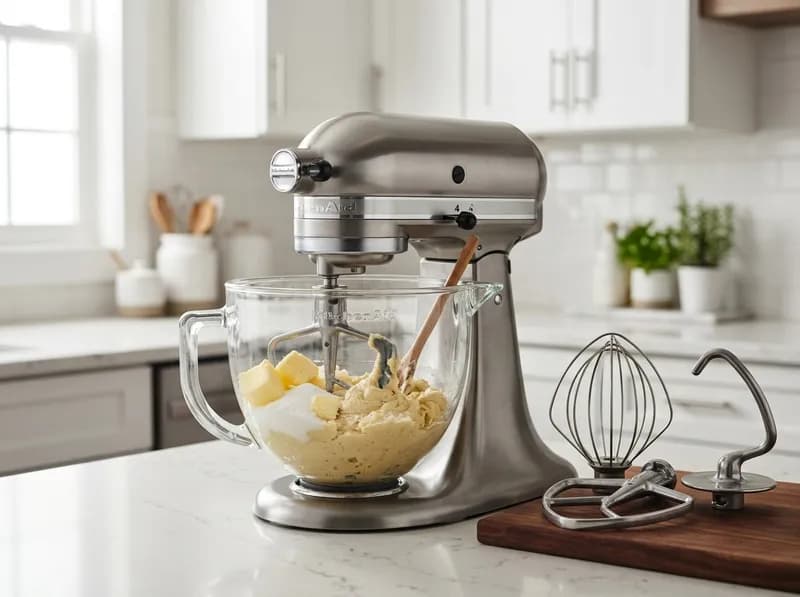
For most home bakers, the KitchenAid Artisan 5 Quart is still the best place to start. It has enough capacity for everyday cookies, cakes, frosting, and occasional bread, and it offers the bowl handle and color selection that make it more convenient than the entry-level Classic. The catch is price: an Artisan at $299–$329 is a strong buy, while one at $379.99 is much less compelling.
The rest of the KitchenAid stand mixer lineup is easier to sort out once you look beyond bowl size. The Artisan Plus adds a bowl light, half-speed settings, and a dedicated folding speed, but independent testing has found little practical improvement in mixing performance. The 5.5-quart and 7-quart bowl-lift models make more sense for heavy dough and larger batches, while the Artisan Mini is a better fit for small kitchens and smaller recipes.
There is also a longer-term consideration. KitchenAid mixers have a well-established repair ecosystem, but not every generation has the same serviceability. Traditional tilt-head models use a familiar mechanical design, whereas teardown reports have raised concerns about the gearboxes in newer bowl-lift machines and the additional electronics in the Artisan Plus.
This guide covers every major KitchenAid stand mixer series available to U.S. buyers in 2026, including current prices, bowl capacities, dough limits, warranties, repair considerations, and the situations where a competing brand makes more sense.
Quick Answer: Which KitchenAid Stand Mixer Should You Buy?
If you... | Start with | Why |
|---|---|---|
Bake occasionally and want to spend less | Classic 4.5 Quart | Core mixing functions without paying for extra capacity |
Bake cookies, cakes, and frosting most weeks | Artisan 5 Quart | The best balance of capacity, convenience, and price |
Have limited counter space | Artisan Mini 3.5 Quart | Smaller and lighter, with a genuine 3.5-quart bowl |
Want more precise control over delicate mixing | Artisan Plus | Half-speed settings, a folding speed, and a bowl light |
Frequently knead stiff dough | 5.5 or 7 Quart Bowl-Lift | Three-point bowl support and a more suitable design for heavy mixing |
Make large batches for a household or crowd | 7 Quart Bowl-Lift | More room for large recipes and fewer split batches |
Bake bread several times a week | Ankarsrum Assistent Original | Worth comparing before committing to a KitchenAid |
Care most about appearance | Luminaire or Spearmint | A glass bowl or distinctive finish, with different accessory packages |
Shop primarily by price | Artisan at $299–$329; 5.5 Quart Bowl-Lift at $299 | Strong value when those promotional prices are available |
Prices can change the recommendation. A 5.5-quart bowl-lift at $299 is a very different proposition from the same machine at $379.99. Before buying, compare the exact model number, included accessories, and final checkout price rather than relying on the series name alone.
KitchenAid Stand Mixer Lineup for 2026: Models Compared
The current U.S. range includes the Classic, Deluxe, Artisan, Artisan Mini, Artisan Plus, Luminaire Design Series, Spearmint Color of the Year edition, and two main bowl-lift sizes. Older Professional and Pro Line models remain available through used sellers and leftover retail inventory, but their condition, warranty, and parts availability need closer scrutiny.
The prices below reflect the October 28, 2026 snapshot used for this guide. They are not guaranteed current prices.
Series and example model | Bowl | Design | U.S. price checked | Best for |
|---|---|---|---|---|
Classic (K45SSWH) | 4.5 qt | Tilt-head | $299.99 promotional | Occasional baking |
Deluxe (KSM97) | 4.5 qt | Tilt-head | $299.99 listed | Entry-level buyers comparing bundles |
Artisan (KSM150PS) | 5 qt | Tilt-head | $399.99 promotional | Everyday home baking |
Artisan Mini (KSM3316XIC) | 3.5 qt | Tilt-head | $349.99 promotional | Small kitchens and small batches |
Artisan Plus (KSM50PKVX) | 5 qt | Tilt-head | $599.99 listed | Extra mixing controls and bowl lighting |
Luminaire (KSM50GSVXBP) | 5 qt | Tilt-head | $699.99 listed | Design-focused kitchens |
Spearmint Color of the Year (KSM195PSSD) | 5 qt plus 3 qt companion bowl | Tilt-head | $549.99 listed | Buyers who want two bowls and a distinctive finish |
5.5 Quart Bowl-Lift (KSM55 series) | 5.5 qt | Bowl-lift | $299.99–$379.99 observed promotional range | Heavier everyday mixing |
7 Quart Bowl-Lift (KSM70SKXX) | 7 qt | Bowl-lift | $549.99 versus $649.99 reference | Large batches and frequent baking |
7 Quart Premium Touchpoints (KSM70SNDX) | 7 qt | Bowl-lift | $599.99 versus $699.99 reference | Large batches with upgraded controls and finishes |
Price notes: Promotional and reference prices are distinguished where available. Listings can vary by color, bundle, retailer, and model suffix. Confirm the precise SKU and accessories before checking out.
Tilt-Head vs. Bowl-Lift: Which Design Makes More Sense?
The biggest structural difference in the KitchenAid lineup is how the bowl is supported. That choice affects everyday convenience, stability during heavy mixing, and how much space the machine occupies.
<AsyncImageGroup query={["KitchenAid Artisan tilt head stand mixer raised head stainless steel bowl","KitchenAid 7 quart bowl lift stand mixer raised bowl lever mechanism"]} aspectRatio="5:4" layout="bento" size="lg"/>
Tilt-head mixers
The Classic, Deluxe, Artisan, Artisan Mini, Artisan Plus, and Luminaire use a tilt-head design. The motor head lifts back, leaving the bowl open for adding ingredients, scraping the sides, and changing attachments.
That makes tilt-head models especially convenient for cookies, cakes, frosting, and other recipes that require frequent ingredient additions. The full-size versions are also easier to work with when you need to remove a bowl or switch attachments mid-recipe.
The trade-off is stability during heavy mixing. The head and its locking mechanism are part of the structure supporting the mixing action, so stiff dough can place more stress on the machine. A tilt-head is not automatically unsuitable for bread, but dough weight, mixing speed, and duration matter.
KitchenAid's buying information puts full-size tilt-head models at roughly 14.5 inches tall and around 26 pounds, although exact dimensions vary.
Bowl-lift mixers
On a bowl-lift model, the motor head stays fixed while a lever raises the bowl into position. The bowl is supported at three points, making this architecture a sensible choice for heavier mixtures and larger batches.
The 5.5-quart and 7-quart families are worth considering if you make bread, pizza dough, or large quantities of cookie dough regularly. The downside is a less convenient workflow: you lower the bowl to add ingredients or remove it, and the machines are generally taller and heavier. KitchenAid's buying information puts these models at approximately 16.5 inches tall and 29–32 pounds, depending on the configuration.
Neither design wins every task.
Baking habit | Better starting point | Reason |
|---|---|---|
Occasional cakes, cookies, and frosting | Classic or Artisan | Convenient access and straightforward operation |
Weekly cookies and cake batches | Artisan | Handled 5-quart bowl and broad accessory ecosystem |
Small batches in a compact kitchen | Artisan Mini | Smaller footprint and lower weight |
Frequent stiff dough or large bread batches | Bowl-lift | Three-point bowl support |
Whipping a single egg white | Smaller tilt-head bowl | Large bowls can leave ingredients below the beater |
Delicate folding and gradual ingredient additions | Artisan Plus | Dedicated folding speed and intermediate speed settings |
Limited cabinet clearance | Measure before buying | Head clearance and overall height affect storage |
Is a bowl-lift always better for bread?
No. Bowl-lift construction helps with stability, but it does not eliminate dough-capacity limits or the need to follow KitchenAid's operating instructions.
A large bowl can actually be less effective with a tiny batch because the beater may not reach enough of the ingredients. Meanwhile, a tilt-head Artisan can handle occasional yeast bread within its stated limits.
If bread is an occasional weekend project, a full-size tilt-head may be sufficient. If you regularly knead stiff dough or make multiple loaves in one session, start with a bowl-lift model and compare its documented dough capacity with your recipes.
KitchenAid Stand Mixer Capacity: Flour, Bread, and Dough Limits
Bowl capacity in quarts is only part of the story. Flour quantity, dough weight, and the minimum batch a beater can reach are more useful when deciding which mixer will work for your recipes.
KitchenAid's use and care documentation provides capacity guidance for different families. The following figures are useful reference points, but they should not be treated as interchangeable specifications for every model or recipe.
Mixer family | Flour | Bread loaves | Cookies | Mashed potatoes |
|---|---|---|---|---|
5–5.5 qt models | 10–12 cups | About 6 | About 9 dozen | 6.5 lb |
Legacy 6–6.5 qt bowl-lifts | 13–14 cups | About 8.25 | About 13 dozen | 8 lb |
For dough weight, KitchenAid's bread guidance puts the tilt-head maximum at approximately 4.5 pounds. Its 7-quart bowl-lift guidance allows more than 8.5 pounds under the specified conditions.
Those numbers matter more than the bowl's advertised volume if you bake bread regularly. Repeatedly exceeding a model's documented limits can strain the drivetrain and motor.
The Speed 2 rule for bread dough
KitchenAid's instructions are explicit: heavy dough should be kneaded at Speed 2, not at higher speeds. The manual warns that kneading heavy dough at other speeds creates a high potential for stand mixer failure.
The operating guidance also calls for short kneading sessions, typically around five to six minutes at Speed 2, followed by a 20-minute rest before further heavy work. Follow the instructions for your exact model and dough rather than assuming that a larger bowl permits longer continuous operation.
A practical buying rule follows: choose your mixer around the largest dough recipe you make regularly, not the biggest recipe you might attempt once a year.
KitchenAid Classic 4.5 Quart: Best for Occasional Bakers
<AsyncImage query="KitchenAid Classic 4.5 quart tilt head stand mixer white K45SSWH stainless bowl" aspectRatio="5:4" width="100%"/>
Example model: K45SSWH
Price checked: $299.99 promotional, October 28, 2026
The Classic is the straightforward entry point into the KitchenAid stand mixer lineup. It has a 4.5-quart bowl, ten speeds, the standard beater, dough hook, and wire whip, plus the attachment hub that supports KitchenAid's wider accessory ecosystem.
America's Test Kitchen has selected the Classic as its best mid-priced stand mixer option. That makes it a particularly useful starting point for buyers who want reliable everyday mixing without paying for a larger bowl or premium features.
The main compromise is capacity and convenience. The bowl does not have a handle, which can make pouring thick batter less comfortable, especially when removing it from the mixer. Buyers who bake every week may also appreciate the Artisan's additional half-quart and handled bowl.
Buy the Classic if you bake occasionally, mostly make cakes and cookies, and want the core KitchenAid experience at a lower price.
Consider the Artisan instead if you bake regularly or expect to make larger batches. A modest price difference during a sale can make the upgrade worthwhile.
KitchenAid Deluxe 4.5 Quart: Compare the SKU, Not the Name
Example model: KSM97
Price checked: $299.99 listed
The Deluxe is another 4.5-quart tilt-head option. It is not a capacity upgrade over the Classic, and the differences between configurations can come down to finishes, included accessories, and specific product numbers.
That makes the exact SKU more important than the word Deluxe on the listing. Compare the supplied bowl and attachments, check whether the accessories match your baking needs, and look at the final price.
If a Deluxe package costs the same as a Classic and includes useful extras, it may be the better purchase. If the bundle does not add anything you would otherwise buy, there is little reason to pay more for the name.
KitchenAid Artisan 5 Quart: The Best All-Around Choice
<AsyncImage query="KitchenAid Artisan 5 quart tilt head stand mixer stainless steel handled bowl classic countertop" aspectRatio="5:4" width="100%"/>
Example model: KSM150PS
Price checked: $399.99 promotional, October 28, 2026
For most home bakers, the Artisan is the easiest KitchenAid model to recommend. Its 5-quart handled stainless steel bowl provides more room than the Classic's bowl, while the tilt-head design keeps ingredient additions and attachment changes simple.
It is suited to everyday cookies, cakes, frosting, quick breads, and occasional yeast breads, provided you stay within the documented dough limits and use the recommended speed.
The Artisan also has one of the broadest color selections in the stand mixer market, along with access to KitchenAid's established attachment ecosystem. That combination has helped it remain a popular recommendation in buying guides, including Wirecutter's long-running coverage.
There is an important distinction between the Artisan and Artisan Plus, however. The standard Artisan is not a new mixing architecture with a substantially different motor system. Its advantage over the Classic is mainly the handled 5-quart bowl, additional capacity, and everyday convenience.
Who should buy it: Most households that bake regularly and want one mixer for a wide range of recipes.
Who can save money: Occasional bakers who rarely fill a 4.5-quart bowl.
Good price target: $299–$329. Around $349 is reasonable; $379.99 is a much less attractive deal.
KitchenAid Artisan Mini 3.5 Quart: Small Size, Real Trade-Offs
<AsyncImage query="KitchenAid Artisan Mini 3.5 quart tilt head stand mixer compact kitchen stainless steel bowl" aspectRatio="5:4" width="100%"/>
Example model: KSM3316XIC
Price checked: $349.99 promotional, October 28, 2026
The Artisan Mini is approximately 13.3 inches tall and weighs about 18 pounds, according to KitchenAid's buying information. That makes it easier to accommodate in a compact kitchen or move in and out of storage.
It works well for small cookie batches, frosting, sauces, and other everyday tasks that fit within its 3.5-quart bowl. It can also handle a loaf of bread at a time within its limits. The attachment hub preserves much of the flexibility that makes KitchenAid mixers attractive.
The limitations are worth understanding before buying.
Small quantities: Some buyers report that the optional glass bowl leaves the whisk unable to reach the very bottom, making small amounts of egg white or cream harder to whip. A stainless bowl and correctly adjusted beater are worth considering if you frequently work with small quantities.
Bowl-mounted accessories: KitchenAid explicitly lists the ice cream maker and precise heat mixing bowl as incompatible with the Mini. Hub attachments and bowl-mounted accessories are different categories, so compatibility should be checked separately.
Batch size: KitchenAid rates the Mini for smaller batches than full-size tilt-head mixers. It is not the right choice if doubling cookie recipes or preparing several loaves is routine.
At $349.99, the Mini is not necessarily the budget option. Its value comes from its size and lighter weight, not from offering more mixing capacity per dollar.
KitchenAid Artisan Plus: Are the Upgrades Worth $200?
<AsyncImage query="KitchenAid Artisan Plus stand mixer bowl light half speed controls stainless bowl 2026" aspectRatio="5:4" width="100%"/>
Example model: KSM50PKVX
Price checked: $599.99 listed
The Artisan Plus adds several features to the familiar 5-quart tilt-head format. According to KitchenAid's specifications, it has a 350-watt motor, compared with 325 watts for the standard Artisan, along with a bowl light, intermediate half-speed settings, a dedicated folding speed, and redesigned stainless steel accessories, including a double-edge flex beater.
The bowl light switches on automatically for five minutes, and the Plus is offered in 14 colors. KitchenAid also retains compatibility with hub attachments.
The question is whether those additions justify the premium. Reviews from WIRED, America's Test Kitchen/Cook's Country, and Business Insider point to a fairly consistent conclusion: the Plus improves control and convenience, but does not clearly outperform the standard Artisan at mixing.
What independent reviews found
WIRED — 8/10, May 2026
WIRED praised the additional control and bowl lighting. Its review also found that thick bread dough could still challenge the machine and raised questions about the practical difficulty of replacing the light.
America's Test Kitchen / Cook's Country — October 2026
Their side-by-side testing found the Artisan Plus broadly comparable to the standard Artisan in mixing performance. Testers did not identify a practical difference attributable to the new Precision Mode, and they raised concerns about the added electronics complicating future repairs.
The review also questioned the significance of the higher wattage rating, suggesting that some of the increase offsets the additional drag from the redesigned scraper-equipped beater rather than producing a clear improvement in mixing results.
Business Insider
Business Insider highlighted the slow-start function as one of the more useful additions, particularly when adding flour without sending it out of the bowl. The review also encountered limitations with stiff dough and noted that the bowl light is not user-replaceable.
Artisan Plus vs. Artisan: Which should you buy?
The Artisan Plus is best understood as a control and convenience upgrade, not a demonstrated performance upgrade.
Feature | Artisan | Artisan Plus |
|---|---|---|
Bowl capacity | 5 qt | 5 qt |
Motor specification | 325W | 350W |
Bowl light | No | Yes |
Intermediate half-speed settings | No | Yes |
Dedicated folding speed | No | Yes |
Redesigned scraper-equipped beater | Standard accessory configuration | Included |
Hub attachment compatibility | Yes | Yes |
Mixing performance in comparative testing | Reference point | Broadly comparable |
Repair considerations | Established mechanical design | Additional electronics |
The Plus makes sense if you regularly fold delicate ingredients, gradually add dry ingredients, or value better visibility into the bowl. At around $499.99, a price it has already reached on KitchenAid's own store, the premium is easier to justify.
At $599.99, most people are better off buying the standard Artisan on sale and keeping the difference. If your main recipes are cookies, cakes, and frosting, there is little evidence that the Plus will produce a better result.
KitchenAid Luminaire and Spearmint: What Are You Paying For?
Design Series Luminaire
<AsyncImage query="KitchenAid Luminaire Design Series stand mixer fluted glass bowl KSM50GSVXBP" aspectRatio="5:4" width="100%"/>
Example model: KSM50GSVXBP
Price checked: $699.99 listed
The Luminaire combines the Artisan Plus platform with a fluted glass bowl made in Italy. The bowl and overall design are the defining differences; capacity and mixing architecture remain in the same general category as the Plus.
At roughly $100 above the Artisan Plus, the Luminaire is a design-led purchase. Its glass bowl is visually distinctive, but it is heavier than stainless steel and may be less convenient for everyday handling. Livingetc's review also raised concerns about its practicality and delicate feel.
Choose it if the bowl and finish are central to your decision. If mixing performance and long-term practicality matter more, the standard Artisan or Artisan Plus is easier to justify.
Spearmint Color of the Year
<AsyncImage query="KitchenAid Spearmint Color of the Year stand mixer KSM195PSSD two stainless steel bowls" aspectRatio="5:4" width="100%"/>
Example model: KSM195PSSD
Price checked: $549.99 listed
The Spearmint edition offers more than a distinctive finish. Its package includes a 5-quart stainless steel bowl, a 3-quart companion bowl, and six accessories, including a pastry beater and flex-edge beater.
The second bowl is a practical advantage. You can use the large bowl for the main batch and the smaller one for frosting, whipped cream, or another component without stopping to wash the first bowl.
If you would otherwise buy a companion bowl and the included accessories, the Spearmint package may be more attractive than its price suggests. If you only want the color, compare it with the standard Artisan and Plus before paying the premium.
Are KitchenAid bundles worth it?
KitchenAid also sells Artisan packages that combine the mixer with accessories such as a Fresh Prep slicer/shredder. A bundle is worthwhile when the included equipment replaces something you would otherwise purchase separately.
For example, a $559.99 Fresh Prep bundle is not automatically a bargain if you rarely shred vegetables. Compare the bundle with the bare mixer plus the accessories you genuinely need, especially during November sales, when standalone attachments can be discounted by 25–30%.
KitchenAid Bowl-Lift Mixers: 5.5 Quart vs. 7 Quart
5.5 Quart Bowl-Lift (KSM55 series)
<AsyncImage query="KitchenAid KSM55 5.5 quart bowl lift stand mixer stainless steel bowl lever" aspectRatio="5:4" width="100%"/>
The 5.5-quart bowl-lift is one of the more interesting value options in the 2026 lineup. KitchenAid's reference price is $499.99, but promotional listings have ranged from $299.99 to $379.99. Best Buy has listed the model at $299.99.
At the lower end of that range, it offers a larger bowl, three-point bowl support, and 11 speeds for less than many buyers expect to pay for a KitchenAid. For frequent dough preparation, that structural change can matter more than the half-quart difference between it and a standard Artisan.
There are two reasons not to buy it automatically. First, bowl-lift operation is less convenient for adding ingredients and removing the bowl. Second, the newest bowl-lift generation has repairability concerns discussed later in this guide.
Buying advice: At $299, it is a strong candidate for heavy everyday mixing. At $379.99, compare it with the Artisan, the 7-quart model on sale, and competing bread-focused mixers.
7 Quart Bowl-Lift (KSM70SKXX)
<AsyncImage query="KitchenAid 7 quart bowl lift stand mixer KSM70SKXX stainless steel bowl" aspectRatio="5:4" width="100%"/>
Price checked: $549.99 versus a $649.99 reference price
The 7-quart bowl-lift is designed for large batches. KitchenAid's bread guidance puts its capacity at more than 8.5 pounds of dough under the specified conditions, making it a better fit for households that bake multiple loaves or regularly double recipes.
Serious Eats has selected the 7-quart bowl-lift as its overall stand mixer pick. For large-volume baking, its capacity can eliminate the need to split recipes into separate batches.
The downside is that it is a substantial appliance. A large bowl does not work equally well with every quantity, and a single egg white can sit below the beater's effective reach. Use a suitable smaller companion bowl or a hand mixer for tiny jobs.
If your usual recipes are one batch of cookies or a single cake, the Artisan is easier to live with and costs less.
7 Quart Premium Touchpoints (KSM70SNDX)
Price checked: $599.99 versus a $699.99 reference price
This model retains the 7-quart bowl-lift platform while adding redesigned controls and finish details. At the listed prices, the premium over the standard 7-quart version is $50.
One specification deserves particular attention: KitchenAid's FAQ identifies the KSM70SN variant as carrying a two-year warranty, compared with the usual one-year U.S. coverage. Check the complete model number and the warranty attached to the exact listing before buying; a family name alone is not enough to establish coverage.
Professional 600 vs. the New Bowl-Lift Models
The discontinued KitchenAid Professional 600 remains a common recommendation for bread bakers, particularly in the used market. Its 575-watt rating, older drivetrain, and history of repairability make it worth comparing with the current 5.5- and 7-quart bowl-lift models.
The decision is not simply old versus new.
Why the Professional 600 still attracts buyers
Its older drivetrain has a well-established repair history.
The sacrificial worm gear can often be replaced without replacing the entire motor assembly.
Used examples can be substantially cheaper than a new bowl-lift model.
Its established design makes it familiar to independent repairers.
There is a caveat: iFixit identifies the older friction-fit planetary head as a known weakness that KitchenAid addressed with a retaining pin in newer machines. Anyone buying a used Pro 600 should check the planetary-head design and the machine's repair history.
What the new bowl-lifts do better
The KSM55, KSM60, and KSM70 families offer current parts support, a new-machine warranty, three-point bowl locking, and half-speed options on applicable models.
However, iFixit's teardown reporting flags the newer bowl-lift gearbox as a potential failure point and notes that replacement gears are not sold separately. Depending on the failure, repair can involve replacing the motor assembly rather than changing an inexpensive individual gear.
That makes the comparison more nuanced than the wattage numbers suggest.
Model | Main advantage | Main concern | Buying advice |
|---|---|---|---|
Professional 600 | Established drivetrain and repair ecosystem | Discontinued; condition and planetary-head design matter | Buy used only at a substantial discount |
Professional 5 Plus | Older large-capacity option | Exact configuration and parts compatibility need checking | Verify the complete model number |
Professional 6500 Design | Premium legacy design | Variants differ | Check the exact configuration and service support |
Pro Line 7 Quart | Premium legacy platform | No new-machine warranty on used units | Buy only when price and condition justify the risk |
Current 5.5/7 qt bowl-lift | Current warranty and parts support | Gearbox serviceability concerns | Best starting point for most new-machine buyers |
For occasional bread baking, a new bowl-lift with a warranty is the straightforward choice. For a dedicated bread mixer bought used at a substantial discount, a verified-condition Professional 600 can still make financial sense.
What does not make sense is paying close to new-machine prices for an old mixer without a warranty.
Buying a Refurbished or Used KitchenAid Stand Mixer
KitchenAid's U.S. factory-refurbished program can offer a lower-cost route into the lineup, but the warranty terms are not identical to those of a new machine.
The published refurbished-unit terms describe a one-year limited parts warranty covering mechanical defects, with cosmetic defects excluded, plus a 60-day free-return window. Replacement accessories may be new or refurbished.
The discount needs to be large enough to compensate for those differences. A refurbished Artisan at $279 is less appealing when a new one is on sale for $299 than when new-stock prices are much higher.
For a private used purchase, ask for:
The full model number and a clear photograph of the rating label.
A demonstration of all available speeds.
A check for head wobble, scraping, unusual noise, or grease leakage.
Confirmation that the bowl and accessories match the model.
Any available repair history and details of previous gearbox or planetary-head work.
Also verify warranty eligibility. KitchenAid's U.S. warranty can extend to a succeeding owner, but the exact terms and remaining coverage should be confirmed for the individual machine.
KitchenAid Stand Mixer Attachments: What Works Across Models?
One reason buyers stay with KitchenAid is the attachment hub. Pasta rollers, food grinders, slicers/shredders, grain mills, and other hub-powered accessories can extend the mixer's usefulness well beyond baking.
KitchenAid states that its hub attachments fit its mixers regardless of age, although individual products and configurations should still be checked for compatibility.
Bowl-mounted accessories are a separate matter. The ice cream maker and precise heat mixing bowl, for example, are not compatible with the Artisan Mini. Accessories designed for a specific bowl size may also be unsuitable for other configurations.
The attachment ecosystem is most valuable when the mixer stays on the counter and you use multiple accessories regularly. If you make pasta once a year or shred vegetables occasionally, a dedicated appliance may be cheaper, easier to store, and easier to clean.
There is also a timing advantage to buying accessories separately. During major sales, standalone attachments can receive substantial discounts, making a bare mixer plus individually discounted accessories less expensive than a bundle.
KitchenAid Stand Mixer Warranty: U.S. Coverage in 2026
Warranty terms vary by model and purchase type. A simple statement that KitchenAid mixers have a one-year warranty misses several important distinctions.
Purchase | Published U.S. coverage | What to check |
|---|---|---|
New tilt-head models | 1 year | Mechanical defects; replacement or authorized repair under KitchenAid's terms |
5.5 qt bowl-lift | 1 year | Confirm the exact model and current warranty |
KSM70SN 7 qt variant | 2 years, according to KitchenAid's FAQ | Verify the complete SKU |
Factory-refurbished mixer | 1-year limited parts warranty | Mechanical defects only; 60-day free-return window |
Commercial use | Excluded from standard residential coverage | Confirm terms for the intended use |
KitchenAid's U.S. one-year warranty describes a hassle-free replacement arrangement in which the company may provide a replacement unit or authorized repair. The published terms also refer to the original purchaser and succeeding owners, a useful distinction for buyers considering a recently purchased used machine.
The comparison with other brands is worth noting. Cuisinart covers the SM-50 for three years, Hamilton Beach offers a three-year warranty on its Eclectrics line, and Ankarsrum provides a seven-year motor warranty.
International terms differ. KitchenAid offers longer coverage on some UK and Australian models than it does in the United States. Those terms should not be assumed to apply to a U.S.-market purchase.
KitchenAid Mixer Repairability: What Owners Should Know
KitchenAid mixers have a strong reputation for longevity, and many older machines remain in service for decades. That reputation is supported by a familiar mechanical design, widely available repair information, and an established supply of replacement parts.
Still, longevity is not guaranteed, and the newest models do not all share the same repair profile.
The sacrificial worm gear
Traditional KitchenAid tilt-head mixers use a nylon worm gear designed to fail before more expensive drivetrain components. The gear is relatively inexpensive, often around $10–$15, although the total repair bill is higher once labor is included.
Repair-shop estimates can range from roughly $80 to $280, depending on location, labor, and whether the machine also needs fresh grease.
This is one reason older KitchenAid mixers can remain economical to repair. A failed gear does not necessarily mean the motor has reached the end of its life.
Buy genuine replacement parts
Repair guides warn about counterfeit worm gears being sold through online marketplaces. Parts that look similar are not necessarily manufactured to the same specifications.
Use KitchenAid or an established parts distributor when buying replacements. If a repair depends on a specific gear or planetary component, confirm the part number and compatibility before disassembly.
Grease leakage and maintenance
Older mixers may develop grease leakage around the planetary head after years of use. A common repair involves disassembling the relevant components and replacing the old grease with suitable food-grade grease.
KitchenAid also recommends running a mixer periodically during extended periods of inactivity to help keep the internal grease distributed.
A small amount of grease seepage does not automatically mean the motor has failed, but persistent leakage, unusual noise, or changes in mixing behavior warrant inspection.
Head wobble and the dime test
A wobbling tilt-head or a beater that scrapes the bowl may need a neck-pin adjustment or a change in beater-to-bowl clearance.
KitchenAid's official dime test is designed to check clearance in a stainless steel bowl: place a dime in the bowl and run the mixer. The beater should move it approximately a quarter- to half-inch around the bowl with each pass.
If the beater never contacts the dime, clearance may be too large. If it hits the dime continuously, clearance may be too small. Follow the adjustment instructions for the specific model.
The test is intended for stainless steel bowls. Glass bowls sit differently and should not be used as the reference for this procedure.
Do modern KitchenAid mixers last as long as older ones?
The claim that modern KitchenAid mixers are universally less durable is too broad. Wirecutter's teardown reporting has found substantial continuity between modern machines and older Hobart-era designs, including the basic mechanical architecture and sacrificial worm gear.
The more meaningful distinction is where the repair risk lies. The Artisan Plus adds a control board, while iFixit's reporting has raised concerns about the gearboxes in the newest bowl-lift generation.
That does not mean either family will fail prematurely. It does mean that repair costs and parts availability deserve more attention when buying a model with additional electronics or a less serviceable gearbox.
For a buyer who wants a mixer to keep for many years, the traditional tilt-head models remain an attractive combination of price, repair knowledge, and parts availability. The newest bowl-lifts may be the better choice for heavy workloads, but their serviceability deserves a closer look.
What Is a Good Price for a KitchenAid Artisan?
KitchenAid runs promotions frequently, so the list price is not a reliable measure of value. For the standard 5-quart Artisan, several U.S. deal trackers have identified recurring price thresholds.
Artisan 5 qt price | Value assessment |
|---|---|
$379.99 | Weak deal; commonly seen as a routine sale price |
Around $349 | Reasonable purchase |
$299–$329 | Strong buy |
$250–$299 | Excellent deal |
Under $250 | Exceptional price, typically associated with major promotions |
These are historical shopping benchmarks, not guaranteed future prices. Color, retailer, bundle, and stock levels can all change the final number.
Recent price reference points
Black Friday 2025 promotions included an Artisan at $349 on Amazon, an Artisan Mini at $309, a 5.5-quart bowl-lift at $299 at Target, and an Ultra Power Plus at $279. Walmart has also listed a Classic configuration at $249.99.
The Artisan Plus has reached $499.99 on KitchenAid's own store. Buyers who want its added controls and bowl light should consider that a more attractive target than the $599.99 listed price.
Can coupons make a bigger difference?
Yes. Kohl's has previously offered an Artisan with a Fresh Prep bundle for $349.99, with Kohl's Cash bringing the effective cost to roughly $244 for shoppers able to use the rewards. During past promotional events, 40%-off codes have also brought the net price of an Artisan below $200.
Those offers are historical examples, not standing discounts. Check eligibility, exclusions, shipping, and the actual value of store rewards before treating a coupon or bundle as a saving.
Attachments can also become substantially cheaper during November promotions. If you need multiple accessories, comparing the mixer alone with a build-your-own bundle can produce a better total price.
When Should You Buy a Different Stand Mixer Brand?
KitchenAid is a strong all-around choice, but it is not automatically the best mixer for every baking routine. Three alternatives deserve a serious look.
Ankarsrum Assistent Original: Best to Compare for Serious Bread Baking
<AsyncImage query="Ankarsrum Assistent Original stand mixer stainless steel bowl roller scraper bread dough" aspectRatio="5:4" width="100%"/>
Typical price reference: Around $799
America's Test Kitchen named the Ankarsrum Assistent Original its overall stand mixer winner for 2026. It uses a roller-and-scraper system rather than the familiar planetary mixing arrangement, and its design is particularly well suited to large quantities of bread dough.
King Arthur has also described the Ankarsrum as a leading choice for bread baking. Its seven-year motor warranty is another advantage for buyers who expect to use the machine frequently.
If you bake two or more loaves every week, compare the Ankarsrum before buying a KitchenAid bowl-lift. If bread is just one of several things you make, KitchenAid's conventional mixing setup and attachment ecosystem may be more useful overall.
Bosch Universal Plus: Large Dough Capacity at a Lower Price
<AsyncImage query="Bosch Universal Plus kitchen stand mixer plastic bowl dough hook bread baking" aspectRatio="5:4" width="100%"/>
The Bosch Universal Plus offers an 800-watt motor, a 6.5-quart bowl, and published capacity claims of roughly 14 pounds of dough. That makes it worth considering for high-volume dough preparation, particularly when a 7-quart KitchenAid is outside your budget.
The trade-off is the design. Its plastic bowl and overall mixing arrangement look and feel different from a traditional metal-bowl stand mixer. Buyers who prioritize appearance and the KitchenAid attachment hub may prefer KitchenAid even if they do not need the extra capacity.
Cuisinart Precision Master SM-50: A Longer Warranty for Less
<AsyncImage query="Cuisinart Precision Master SM-50 stand mixer stainless steel bowl" aspectRatio="5:4" width="100%"/>
Price reference: Approximately $229–$350, with a $319.95 list price cited for comparison
The Cuisinart SM-50 offers a 5.5-quart bowl, a 500-watt motor specification, 12 speeds, and a three-year warranty. That warranty is considerably longer than KitchenAid's standard one-year U.S. coverage.
Hamilton Beach's Eclectrics line is another lower-cost alternative, with metal gears and a three-year warranty cited for the range.
Neither brand offers exactly the same product ecosystem or model selection as KitchenAid. Still, if warranty length and purchase price are your main priorities, both deserve a place on the shortlist.
Why do major reviewers disagree about the best stand mixer?
Different test outlets emphasize different tasks. Wirecutter has recommended the Artisan for years, America's Test Kitchen's 2026 selections include the Ankarsrum overall and Classic as its best mid-priced option, Serious Eats favors the 7-quart bowl-lift, and Consumer Reports has leaned toward tilt-head models.
Those differences are useful rather than confusing. A mixer that excels at large bread batches may be less convenient for frosting a small cake, while a compact tilt-head can be ideal for everyday baking but unsuitable for frequent heavy dough work.
The most important variables are the weight and stiffness of your dough, how often you bake, your usual batch size, and how much counter space you can spare.
Best KitchenAid Stand Mixer by Buyer Type
Buyer | Best starting point | Why |
|---|---|---|
Occasional baker on a budget | Classic 4.5 qt | Core mixing functions and a lower price |
Most home bakers | Artisan 5 qt | Capacity, handled bowl, and accessory compatibility |
Small kitchen | Artisan Mini | Compact footprint and lighter weight |
Frequent baker who values delicate control | Artisan Plus around $499 or less | Extra speed settings and bowl lighting |
Stiff dough and regular heavy mixing | 5.5 qt Bowl-Lift under $350 | Three-point bowl support at an attractive price |
Large batches and bigger households | 7 qt Bowl-Lift | More capacity for large recipes |
Serious weekly bread baking | Compare Ankarsrum first | Specialized dough performance and longer motor warranty |
Design-focused buyer | Luminaire or Spearmint | Glass bowl or distinctive finish; Spearmint adds a second bowl |
Deal-driven shopper | Artisan at $299–$329 | Strong value against its usual promotional pricing |
Prices can change the ranking. An Artisan priced just $50 above a Classic is a more compelling upgrade than one priced $150 higher. Likewise, a 5.5-quart bowl-lift at $299 may be the best value for a bread baker, while the Artisan remains the better everyday choice for someone who mainly makes cookies and cakes.
Final Recommendations
For most U.S. households, the KitchenAid Artisan 5 Quart is the best all-around KitchenAid stand mixer, provided you buy it at a sensible price. Aim for $299–$329, consider $349 reasonable, and be cautious about paying $379.99 simply because a listing labels it a sale.
The Classic 4.5 Quart is the better value for occasional baking. The Artisan Mini is worth buying when counter space and batch size matter more than capacity per dollar. The Artisan Plus offers genuinely useful controls and lighting, but its mixing performance has not shown a clear advantage over the standard Artisan; around $499.99 is a more attractive target than $599.99.
For frequent heavy dough work, the bowl-lift models deserve priority. The 5.5-quart version can be an especially good buy near $299, while the 7-quart model is better suited to large batches. If bread is your main reason for buying a mixer, compare the Ankarsrum Assistent Original before making a final decision.
Finally, consider the long-term cost, not just the checkout price. KitchenAid's established repair ecosystem is a genuine advantage, but the newer bowl-lift gearboxes and the Artisan Plus control electronics introduce different serviceability considerations. Understanding your capacity limits, following the Speed 2 rule for heavy dough, and knowing how to recognize common maintenance issues can make a bigger difference to the life of your mixer than paying for another feature.
FAQ: KitchenAid Stand Mixers
Is the KitchenAid Artisan Plus worth the extra money?
The Artisan Plus adds a bowl light, intermediate half-speed settings, a dedicated folding speed, and redesigned accessories. WIRED praised its additional control, while America's Test Kitchen found its mixing performance broadly comparable to the standard Artisan and raised concerns about the added electronics.
At $599.99, it is difficult to recommend for ordinary cookie and cake baking. Around $499.99, the premium is easier to justify if you frequently fold delicate mixtures or value the extra control. For most home bakers, the standard Artisan offers better value.
How long is the KitchenAid stand mixer warranty in the U.S.?
Most new residential KitchenAid mixers carry a one-year warranty under which KitchenAid may provide a replacement unit or authorized repair for covered defects. The KSM70SN 7-quart variant is listed with a two-year warranty in KitchenAid's FAQ.
Factory-refurbished models have a separate one-year limited parts warranty covering mechanical defects, with a 60-day free-return window. Commercial use is excluded from standard residential coverage. Check the exact model and current warranty terms before purchasing.
Are refurbished KitchenAid mixers worth buying?
They can be, especially when the discount is substantial. KitchenAid's published refurbished terms describe a one-year limited parts warranty for mechanical defects and a 60-day free-return window. Cosmetic defects are excluded, and replacement accessories may be new or refurbished.
Compare the refurbished price with promotional new-stock prices. A refurbished Artisan at $279 is less attractive when a new one costs $299 than when the new model is selling for considerably more.
How long do KitchenAid mixers last?
Many KitchenAid mixers remain in service for 15–25 years or longer, although actual lifespan depends on usage, maintenance, and repair history.
Traditional tilt-head models have a well-established repair ecosystem. Their sacrificial nylon worm gear, often a $10–$15 part, can fail before more expensive components and may be replaceable without replacing the motor assembly. The Artisan Plus's control board and the newest bowl-lift gearboxes introduce additional repair considerations, so longevity should not be treated as guaranteed.
How much flour or dough can a KitchenAid stand mixer handle?
KitchenAid's use and care guidance lists approximately 10–12 cups of flour for 5–5.5-quart models and 13–14 cups for certain legacy 6–6.5-quart bowl-lifts. Exact limits depend on the model and recipe.
For dough weight, KitchenAid's guidance puts the tilt-head maximum at about 4.5 pounds, while the 7-quart bowl-lift can handle more than 8.5 pounds under specified conditions. Follow the capacity table for your exact mixer rather than assuming every model with a similar bowl size has identical limits.
What speed should I use to knead bread dough in a KitchenAid?
Use Speed 2 for heavy dough. KitchenAid warns that kneading heavy dough at other speeds creates a high potential for stand mixer failure.
Its operating guidance also calls for short kneading sessions, typically around five to six minutes, followed by a 20-minute rest before additional heavy work. Check your model's manual for the applicable instructions.
Why is my KitchenAid mixer head wobbling?
A loose neck pin or incorrect beater-to-bowl clearance can cause wobbling or scraping on a tilt-head model. KitchenAid provides an adjustment procedure for the neck pin and a dime test for checking clearance.
For the dime test, place a dime in a stainless steel bowl and run the mixer. The beater should move the dime roughly a quarter- to half-inch around the bowl with each pass. If it never contacts the dime or hits it continuously, the clearance may need adjustment. The test is not intended for glass bowls.
What is a good price for a KitchenAid Artisan?
For the standard 5-quart Artisan, around $349 is a reasonable purchase price, while $299–$329 is a strong buy. Prices between $250 and $299 are excellent, and prices below $250 have occurred during major promotions.
A $379.99 listing is generally a weak deal, even if described as a sale. Check the retailer, color, included accessories, and final checkout price before buying.
Should I buy a used Professional 600 or a new 7-quart bowl-lift?
A used Professional 600 can be a sensible purchase at a substantial discount, particularly for buyers who value its established drivetrain and repair history. However, check the planetary-head design, overall condition, parts availability, and previous repairs.
The current 7-quart bowl-lift provides a new-machine warranty and current parts support, but iFixit's teardown reporting raises concerns about gearbox repairability. For most buyers, a new machine is the lower-risk option. A used Professional 600 is worth considering when its condition is verified and the price reflects the lack of a new warranty.
Can the KitchenAid Artisan Mini handle bread?
Yes, within its capacity limits. The Artisan Mini can make a loaf at a time, but its 3.5-quart bowl is not ideal for large or repeated bread batches.
Buyers should also check accessory compatibility. KitchenAid lists the ice cream maker and precise heat mixing bowl as incompatible with the Mini, and some users report that the optional glass bowl's whisk reach can be problematic for very small quantities.
Is a 5-quart KitchenAid big enough for a family?
For most households, yes. The Artisan's 5-quart bowl is suitable for everyday cookies, cakes, frosting, and many standard bread recipes.
A bowl-lift model makes more sense if you routinely double recipes, bake for large groups, or knead more than approximately 4.5 pounds of dough at a time. For very small jobs, however, a large bowl can be inconvenient because the beater may not reach the ingredients effectively. A 3-quart companion bowl, included with the Spearmint package, can help.
Is KitchenAid or Ankarsrum better for bread?
For frequent, serious bread baking, the Ankarsrum Assistent Original deserves the first comparison. America's Test Kitchen selected it as its overall stand mixer winner for 2026, and its roller-and-scraper design is particularly well suited to dough. It also carries a seven-year motor warranty.
KitchenAid remains a strong all-around choice for households that bake a mixture of cakes, cookies, frosting, and occasional bread. Its attachment ecosystem and familiar tilt-head design make it more versatile for many general-purpose kitchens. For frequent large or stiff dough batches, compare the Ankarsrum with KitchenAid's bowl-lift models before deciding.
Related GuidesMore →

Best Baratza Coffee Grinder for 2026: A Complete Buying Guide
Which Baratza grinder should you buy for home espresso or everyday filter coffee? This 2026 buying guide compares the Encore, Encore ESP, ESP Pro, Virtuoso+, Sette 270, and higher-end models using official specifications, independent testing, and owner feedback. Learn why the least expensive option can be the smartest choice for brewed coffee, when stepless adjustment matters, and which models have notable trade-offs in noise, reliability, or dosing accuracy.
OXO 8-Cup vs. 12-Cup Coffee Maker: Which Is Better for You in 2026?
The OXO 8-Cup and 12-Cup Coffee Makers share SCA certification and pod-free brewing, but they suit different routines. This comparison examines coffee taste, brew speed, capacity, single-serve performance, programming, and carafe design to help you choose. Learn why the compact 8-Cup is better suited to smaller households, while the 12-Cup offers more capacity, a thermal carafe, and scheduling features for people who regularly brew full pots.

Best Breville Espresso Machine in 2026: Every Series Explained and How to Choose
Breville's espresso machine lineup ranges from compact entry-level models to premium automated systems, but the differences go beyond price and appearance. This buying guide compares the Bambino, Barista Express, Barista Pro, Touch Impress, and Oracle Jet to help you decide which features are worth paying for. You'll also find practical trade-offs, warranty information, pricing context, and alternatives to discontinued models such as the Dual Boiler BES920 and Oracle Touch BES990.