Best Baratza Coffee Grinder for 2026: A Complete Buying Guide
Which Baratza grinder should you buy for home espresso or everyday filter coffee? This 2026 buying guide compares the Encore, Encore ESP, ESP Pro, Virtuoso+, Sette 270, and higher-end models using official specifications, independent testing, and owner feedback. Learn why the least expensive option can be the smartest choice for brewed coffee, when stepless adjustment matters, and which models have notable trade-offs in noise, reliability, or dosing accuracy.
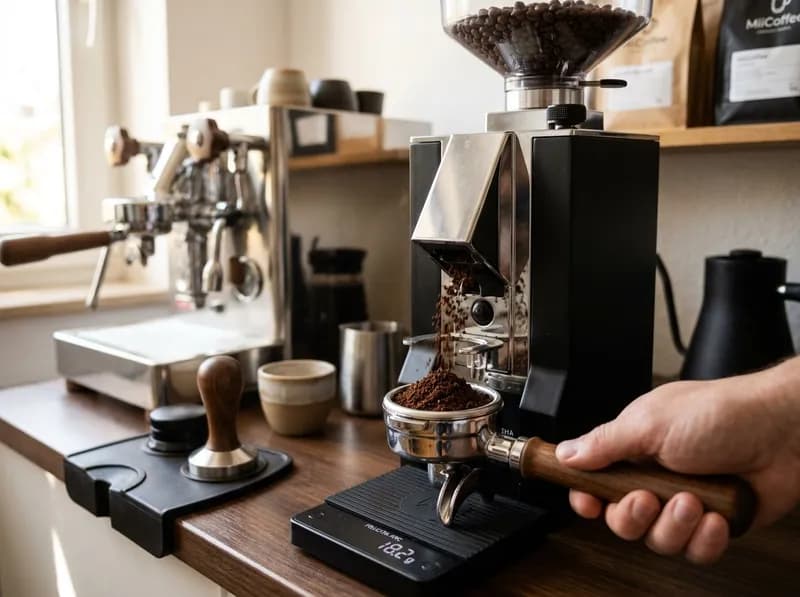
Choosing a Baratza coffee grinder comes down to one question: Are you making filter coffee, espresso, or both? That decision narrows the lineup far more effectively than comparing prices or burr sizes.
For drip coffee, pour-over, French press, and other brewed methods, the Baratza Encore at $149.95 remains a dependable starting point. Wirecutter has recommended it as its top grinder pick since 2017. If you also make espresso with a non-pressurized basket, the Encore ESP at $199.95 offers a much more suitable adjustment range. The Encore ESP Pro at $299.95 adds stepless adjustment and flexible dosing, while the Sette 270 at $399.95 is built around a dedicated espresso workflow.
The more expensive models serve narrower needs. The Virtuoso+ adds timed grinding for everyday brewed coffee. The Vario+ and Vario W+ offer 54 mm flat burrs and finer control, while the Forté AP and Forté BG target demanding home setups and higher-volume brewing.
Price alone won't tell you which one to buy. The Encore ESP, for example, has repeatedly dropped to $149, making its full $199.95 list price less attractive. The ESP Pro has received strong reviews from major publications, but its owner feedback includes reports of clogging and inconsistent bean feeding. The Forté AP offers extensive adjustment, yet an independent lab measured it at 89.4 dB.
This guide compares Baratza coffee grinders using three kinds of evidence: manufacturer specifications, independent testing, and owner experiences. Where those sources disagree, the differences are identified rather than averaged away.
Quick verdict: Which Baratza grinder should you buy?
Grinder | U.S. list price | Best for | Main consideration |
|---|---|---|---|
Baratza Encore | $149.95 | Filter coffee and everyday brewing | Not ideal for dialing in espresso |
Baratza Encore ESP | $199.95 | Affordable espresso and filter coffee | Frequently discounted to $149 |
Baratza Encore ESP Pro | $299.95 | Espresso and filter with finer adjustment | Strong test results, but check owner complaints and return policies |
Baratza Virtuoso+ | $249.95 | Timed grinding for brewed coffee | Not the best choice for espresso |
Baratza Sette 30 | $299.95 | Fast grinding for coarse-to-medium brewing | Its 30 coarse settings limit espresso adjustment |
Baratza Sette 270 | $399.95 | Dedicated home espresso | Loud operation and a history of gearbox issues |
Baratza Sette 270Wi | $599.95 | Espresso dosing by weight | The scale's accuracy deserves scrutiny |
Baratza Vario+ | $529.95 | Flat-burr brewing and espresso enthusiasts | Requires more calibration and adjustment |
Baratza Vario W+ | $599.95 | Weight-based filter brewing | Steel flat burrs; no portafilter cradle |
Baratza Forté AP | $849.95 | Higher-volume all-purpose grinding | Expensive, loud, and subject to a motor-hour warranty limit |
Baratza Forté BG | $899.95 | High-volume batch and filter coffee | A specialist filter grinder, not an espresso model |
Prices above are Baratza's listed U.S. prices checked October 28, 2026, unless otherwise noted. Retail promotions and availability can change.
The short answer: Buy the Encore for filter coffee, the Encore ESP for affordable espresso, and the ESP Pro if you want more adjustment freedom in one electric grinder. Choose the Sette 270 if espresso is your main hobby. Consider the Vario or Forté only when their flat-burr design, weighing features, or higher-volume workflow addresses a specific need.
1. Baratza's complete U.S. grinder lineup in 2026
Baratza's current U.S. lineup includes the Encore, Encore ESP, Encore ESP Pro, Virtuoso+, Sette 30, Sette 270, Sette 270Wi, Vario+, Vario W+, Forté AP, and Forté BG.
The main differences are adjustment precision, burr design, dosing method, and intended brewing style. Retention and noise also matter, particularly if you weigh individual doses or make coffee early in the morning.
Model | List price | Burr type | Retention and testing notes | Best use |
|---|---|---|---|---|
Encore | $149.95 | 40 mm conical steel | About 0.5 g in Wirecutter's test | Filter coffee |
Encore ESP | $199.95 | 40 mm conical steel, M2 | One test reported about 2.5 g at worst; another reported less than 1 g to several grams | Espresso and filter |
Encore ESP Pro | $299.95 | 40 mm conical steel | Near-zero retention in Bon Appétit's test protocol; feeding complaints reported | Espresso and filter |
Virtuoso+ | $249.95 | 40 mm conical steel | Independent retention figure not established here | Timed brewed coffee |
Sette 30 | $299.95 | 40 mm conical steel | Low-retention design; loud operation | Coarse-to-medium grinding |
Sette 270 | $399.95 | 40 mm conical steel | Low-retention design; owner-reported gearbox issues | Espresso |
Sette 270Wi | $599.95 | 40 mm conical steel | Low retention; weighing accuracy is a separate question | Weight-based espresso dosing |
Vario+ | $529.95 | 54 mm ceramic flat | Low retention; micro-adjustment lag noted in a specialist review | Espresso and filter |
Vario W+ | $599.95 | 54 mm steel flat | Low retention; integrated scale | Weight-based filter brewing |
Forté AP | $849.95 | 54 mm ceramic flat | Up to about 2 g in Prima Coffee's test; 89.4 dB in a lab test | Higher-volume all-purpose grinding |
Forté BG | $899.95 | 54 mm steel flat | No comparable independent retention figure established here | Batch and filter coffee |
These retention figures come from different testing methods and bean conditions, so they are not perfectly interchangeable. They should be treated as reported results, not guaranteed performance for every setup.
Two details deserve particular attention.
First, the Vario W+ is generally identified by specialist retailers as using steel flat burrs, while the Vario+ uses ceramic flat burrs. Baratza's regional product information has not always been consistent, so verify the burr set for the exact unit you intend to purchase.
Second, the Sette 30 should not be confused with a cheaper version of the Sette 270 for espresso. Its 30 coarse adjustment positions don't provide the same fine control. If espresso is the goal, compare it with the Encore ESP Pro before spending $299.95.
The Sette and flat-burr models remain listed in Baratza's U.S. lineup. Older Vario and Forté revisions can also appear on the used market, but parts availability should be checked by exact model and revision.
2. What independent grinder tests tell us
Specifications help narrow the choices, but testing reveals where the differences matter in daily use.
Wirecutter: The Encore remains a strong filter grinder
Wirecutter has kept the Encore as its top grinder pick since 2017, testing it against newer competitors over time. Its testing process has included particle-size analysis, Kruve sifting, and refractometer measurements of brewed coffee.
The Encore retained about 0.5 g of coffee and ground 68 g in approximately 35–40 seconds in Wirecutter's reported testing. Its results held up against grinders costing considerably more.
Wirecutter's current recommendations also include the Encore ESP Pro as an upgrade pick, the OXO Brew Conical as a budget option, and the Timemore Chestnut C5 Pro as a manual grinder.
Bon Appétit: The ESP Pro impresses, with one important caveat
Bon Appétit named the Encore ESP Pro its best espresso grinder in 2026 testing. The publication highlighted its fine adjustment range, single-dose and timed modes, and near-zero retention under its test protocol.
However, its testers also encountered a bean-feeding problem during single-dose use. That matters because low retention is only useful if the grinder feeds beans consistently enough to finish the dose.
Kaffeemacher: The Forté AP is exceptionally loud
In kaffeemacher.de's grinder database, the Forté AP measured 89.4 dB, the highest noise reading in a library of more than 30 grinders. The lab also recorded an average grounds-exit temperature of 38.2°C.
These results don't establish that the Forté AP makes poor coffee. They do show that an $850 grinder can have practical drawbacks that aren't obvious from its specifications.
Prima Coffee and CoffeeGeek: More detail on the premium models
Prima Coffee measured up to about 2 g of retention on the Forté AP, compared with Baratza's approximately 1 g specification, and noted that the portafilter fork could slip during use.
CoffeeGeek praised the Vario+'s grind quality but noted that its micro-adjustment mechanism could lag a click under load. This is worth knowing if you frequently change settings while dialing in espresso.
What the testing means for buyers
The evidence is strongest for the Encore as a straightforward filter grinder and more mixed for the premium models. The ESP Pro has earned substantial praise, but the reported feeding problems warrant attention. The Forté AP is capable, but its price doesn't buy quiet operation.
Don't assume that the most expensive Baratza automatically makes the best coffee for your brewing method.
3. Baratza Encore: The best starting point for filter coffee
List price: $149.95
The Baratza Encore is designed for people who make drip coffee, pour-over, French press, AeroPress, or cold brew and want a reliable electric grinder without paying for espresso-focused features.
Its appeal is straightforward: 40 numbered grind settings, a conventional bean hopper, replaceable parts, and a long record of independent recommendations.
Wirecutter's reported measurements of about 0.5 g retention and 35–40 seconds to grind 68 g of beans give buyers a more useful reference than a generic claim about consistency.
What makes the Encore worth buying?
The numbered settings are easy to learn and repeat. If your morning coffee tastes good at setting 18, for example, you can return to that position without having to recalibrate a stepless adjustment system.
The hopper is convenient for households that keep beans loaded, and the Encore leaves room in the budget for other equipment. A decent scale, fresh beans, and an appropriate brewing technique can make a bigger difference than spending another $100 on a grinder with features you won't use.
Baratza's repair-oriented design is another advantage. Replacement components, manuals, and parts diagrams help extend the useful life of the machine.
Can the Baratza Encore grind espresso?
It can produce fine grounds, but that doesn't make it a good choice for dialing in espresso with a non-pressurized basket.
Each of its 40 settings changes the burr spacing by roughly 90 microns. Espresso often requires smaller adjustments, and the ideal setting may fall between two clicks. A pressurized basket can make the limitation less noticeable, but a conventional espresso setup exposes it.
An enthusiast modification known as the Encoreoso swaps the burr set for an M2/M3 configuration. Published parts prices vary, with estimates around $30–45, and warranty implications should be checked before proceeding. It's a modification project rather than the best route for someone shopping for a new espresso grinder.
Brewing method | Encore suitability |
|---|---|
Drip and batch brew | Very good |
Pour-over | Very good |
French press | Good |
Cold brew | Good |
Espresso with a pressurized basket | Possible, with limitations |
Espresso with a non-pressurized basket | Not recommended for most users |
Buy the Encore if: you primarily make brewed coffee and want a repairable grinder with a strong testing record.
Skip it if: espresso is part of your current setup or a likely next purchase.
Verdict: The Encore remains one of the most sensible Baratza coffee grinders for filter-only households. Its historical sale prices of approximately $107–113 make it particularly attractive during major promotions.
4. Baratza Encore ESP: Affordable espresso and filter grinding
List price: $199.95
The Encore ESP takes the familiar Encore platform and changes the adjustment scale to make espresso grinding more practical.
Its first 20 settings provide approximately 20-micron adjustments, while the remaining settings use coarser steps of roughly 90 microns. This gives espresso users finer control without sacrificing the ability to grind for filter coffee.
The grinder uses Baratza's M2 conical burr set and includes a dosing cup.
Why choose the ESP over the regular Encore?
The key difference isn't simply that the ESP grinds finer. It's that its adjustment range makes it easier to find a workable setting for a non-pressurized espresso basket.
It also remains practical for drip coffee, pour-over, and French press. For someone buying one electric grinder for multiple brewing methods, that versatility is the main selling point.
Independent reviews have been generally positive. BaristaBench scored it 7.7/10, Roastworthy scored it 8.6/10, and WIRED described it as suitable for a broad range of coffee styles.
What are the Encore ESP's limitations?
Retention varies across tests. RoastAroma reported approximately 2.5 g in a worst-case test, while BaristaBench reported results ranging from less than 1 g to several grams depending on the beans and settings. Wirecutter's approximately 0.5 g figure applies to the regular Encore, not the ESP.
Motor-speed specifications also conflict: published reviews cite 450 RPM and 550 RPM. The available information doesn't establish a definitive figure, and the difference is less important to most buyers than grind adjustment and workflow.
Finally, the ESP uses stepped adjustment. If one setting produces a shot that runs too quickly and the next produces one that runs too slowly, you cannot choose an intermediate position.
Encore ESP vs. DF54
The MiiCoffee DF54 is worth considering if you prefer single dosing, weigh every dose, or frequently experiment with light-roasted espresso beans.
The DF54 lists at approximately $229 and uses 54 mm flat burrs with stepless adjustment. One 2026 comparison reported about 0.1 g retention, considerably less than the ESP's highest reported figure.
The ESP still has advantages: a conventional hopper, repeatable numbered settings, a mature parts ecosystem, and frequent discounts. At its recurring $149 promotional price, the value proposition becomes especially strong.
Choose the Encore ESP if… | Consider the DF54 if… |
|---|---|
You prefer a hopper workflow | You weigh beans for each shot |
You want numbered, repeatable settings | You want stepless adjustment |
You make both espresso and filter coffee | You prioritize low retention |
You want Baratza's repair ecosystem | You want to experiment with flat-burr espresso |
Buy the Encore ESP if: you want an affordable electric grinder for espresso and brewed coffee.
Skip it if: minimal retention and stepless adjustment are your main priorities.
Verdict: For most budget-conscious home baristas, the Encore ESP is a strong all-rounder under $200. If the price reaches $149, it's an especially compelling purchase.
5. Baratza Encore ESP Pro: More control, but check the owner feedback
List price: $299.95
The Encore ESP Pro occupies the space between the original ESP and the dedicated Sette espresso grinders. It offers stepless-style adjustment through a high-resolution mechanism, along with single-dose and timed grinding modes.
It's also the most complicated recommendation in the lineup because its independent reviews are enthusiastic while some owner reports describe recurring problems.
Why reviewers like it
Wirecutter selected the ESP Pro as its upgrade pick, while Bon Appétit named it the best grinder for espresso in its 2026 testing.
Its main advantages include:
Fine adjustment for dialing in espresso without the conventional ESP's fixed-click limitation.
Single-dose and timer modes, with timer adjustments reported in 0.1-second increments.
Anti-static treatment and a flow-control disk intended to improve day-to-day handling.
Low retention in Bon Appétit's testing protocol.
The adjustment-count terminology varies across sources. Baratza describes a high-resolution, stepless mechanism; Wirecutter describes 60 settings with 40 espresso-focused positions and half-steps; Bon Appétit counted 119 positions. These descriptions should not be treated as identical specifications.
What problems have owners reported?
Baratza's own review pages include reports of:
Clogging or stalling at certain fine espresso settings.
Inconsistent automatic stopping.
Occasional display problems.
Beans failing to feed consistently during coarse single-dose grinding.
One owner reported encountering the same feeding problem on two replacement units. Bon Appétit's testers also encountered a feeding issue during their own testing.
These reports don't establish how frequently the problems occur across all units, but they're relevant enough to consider before purchasing.
Encore ESP Pro vs. Sette 270
The ESP Pro costs $299.95, while the Sette 270 lists at $399.95.
The ESP Pro is the more versatile choice if you want one grinder for espresso and filter coffee, with flexible dosing and fine adjustment. The Sette 270 is more explicitly built around espresso preparation, including its macro/micro adjustment system and portafilter workflow.
The ESP Pro's retention results are promising, but feeding problems can undermine that advantage. Buy from a retailer with a straightforward return policy and test the grinder thoroughly during the return window.
Buy the ESP Pro if: you want a versatile grinder with more adjustment freedom and can accommodate the possibility of exchanging a problematic unit.
Skip it if: you only make filter coffee or prefer a dedicated espresso grinder with a more established workflow.
Verdict: The ESP Pro is one of the most interesting Baratza grinders available in 2026. Its strong independent reviews make it worth considering, but the owner feedback should be part of the purchase decision.
6. Baratza Virtuoso+: A better daily routine, not an espresso upgrade
List price: $249.95
The Virtuoso+ sits above the Encore in price, but it isn't a universal upgrade. Its main advantages are a digital timer adjustable in 0.1-second increments, a more polished housing, and a conical burr design aimed at everyday brewed coffee.
If you grind approximately the same amount of beans every morning, the timer can make the routine more convenient. If you weigh beans before every brew, much of that advantage disappears.
Virtuoso+ vs. Fellow Ode Gen 2
The Fellow Ode Gen 2 is a more specialized alternative for pour-over and other filter methods.
Fellow's store listed the Ode Gen 2 at a promotional $345 on October 28, 2026, against a $399.95 MSRP. In Brew Path Finder's reported comparison, the Ode retained less than 0.1 g and was the quietest grinder under $500 in that test group. Serious Eats also reported better particle consistency and greater flavor clarity than the Virtuoso+ in its testing, although both grinders produced balanced coffee.
The Ode Gen 2 is designed for filter brewing and isn't an espresso grinder.
Feature | Baratza Virtuoso+ | Fellow Ode Gen 2 |
|---|---|---|
Main advantage | Hopper and timed grinding | Filter-focused grind performance |
Dosing style | Hopper-based | Single-dose oriented |
Espresso | Not the preferred choice | Not supported |
Retention | No comparable figure established here | Under 0.1 g in one reported test |
Best buyer | Someone who values a timed routine | Someone who weighs beans and prioritizes pour-over |
Buy the Virtuoso+ if: you want timed, repeatable grinding and prefer Baratza's repair ecosystem.
Choose another grinder if: espresso is on your roadmap or you primarily single-dose for pour-over.
Verdict: The Virtuoso+ makes sense when its timer and hopper workflow are genuinely useful. Its higher price doesn't make it a better espresso grinder than the Encore ESP.
7. Baratza Sette 30, 270, and 270Wi compared
The Sette family is Baratza's espresso-oriented range. Its direct grinding path is designed to reduce retention, and its operating speed supports a quick workflow.
The three models differ mainly in adjustment precision and dosing.
Sette 30: Don't mistake it for an entry-level espresso grinder
List price: $299.95
The Sette 30 uses the same basic grinding platform as the higher models but provides only 30 coarse adjustment positions.
That makes it a poor choice for users who need to dial in espresso precisely. Its low-retention design doesn't compensate for the lack of fine adjustment.
At $299.95, the Encore ESP Pro is a more logical alternative for someone who wants an espresso-capable grinder at this price.
Sette 270: The dedicated espresso option
List price: $399.95
The Sette 270 combines 30 macro positions with nine micro-adjustments per position, producing the 270-position adjustment system reflected in its name. It also offers programmable timed dosing and a portafilter cradle.
This is the model to consider if you make espresso regularly and adjust your grind frequently as beans age or change.
Its two most important drawbacks are noise and reliability history.
The Sette is widely described by reviewers as loud. Baratza's product page has also carried an average rating of 3.3/5, with owner reports describing gearbox and motor assembly failures, including a case involving roughly five years of light use.
Early units had a plastic worm gear that became a known failure point, with later production revisions addressing the design. The condition and revision of a used unit therefore matter.
Owner experiences with Baratza support vary: some describe repairs outside the warranty period, while others report difficulty obtaining a response. The availability of replacement parts helps, but it doesn't make repair costs or downtime irrelevant.
Sette 270Wi: Is grind-by-weight worth another $200?
List price: $599.95
The 270Wi adds an integrated scale to the Sette 270 workflow. Its portafilter fork supports weight-based dosing, and the grinder uses previous grinding cycles to help reach a programmed target. Three presets are available.
The system is designed around a hopper-fed workflow rather than true single dosing. Baratza's documentation warns that the weight-based behavior relies on previous grinding cycles, so running it with very few beans can affect accuracy.
LifeStyle Lab's long-term testing raised another concern: the cantilevered scale can deliver consistent doses without necessarily matching the target weight accurately against an external scale. Its zeroing procedure can also require care.
The comparison with the standard Sette 270 is revealing. A full-hopper timed dose on the 270 has reportedly landed within approximately ±0.2–0.3 g. Against that baseline, the 270Wi's premium may provide only around 0.1 g of improvement, along with the convenience of removing a separate scale from the counter.
That convenience may be worthwhile for households making several milk drinks every day. For many home baristas, the regular 270 is the better value.
Model | Best fit | Main drawback |
|---|---|---|
Sette 30 | Coarse-to-medium brewing | Insufficient fine adjustment for espresso |
Sette 270 | Regular espresso dialing-in | Noise and gearbox history |
Sette 270Wi | Repeated weight-based espresso dosing | $200 premium and accuracy trade-offs |
Verdict: Choose the Sette 270 for espresso-focused use if you accept its noise and maintenance considerations. Buy the 270Wi only if weight-based dosing meaningfully improves your daily routine.
8. Baratza Vario+ vs. Vario W+: Which flat-burr grinder makes sense?
The Vario family uses 54 mm Ditting-designed flat burrs and a macro/micro adjustment system. These grinders are aimed at people who want finer control across brewing methods and don't mind a more involved workflow.
Vario+: Ceramic flat burrs and manual adjustment
List price: $529.95
The Vario+ uses ceramic flat burrs and offers separate macro and micro adjustments. Its range covers espresso through coarser brewing, giving enthusiasts more control than the Encore family.
CoffeeGeek praised the grind quality but noted that the micro-adjustment mechanism could lag a click under load. In practice, this means users may need to pay attention to calibration rather than assume every adjustment produces an immediate, exact change.
The metal grind chamber also draws on the Forté design.
Vario W+: Steel flat burrs and weight-based dosing
List price: $599.95
The Vario W+ adds integrated weighing and uses steel flat burrs, according to specialist product information. It grinds into a vessel rather than a portafilter cradle, so espresso users should examine the workflow carefully before buying.
Its $70 premium over the Vario+ primarily pays for weight-based dosing, not an across-the-board improvement in grind quality.
The difference in burr material is worth verifying before purchase because Baratza's regional product information has been inconsistent. Check the specifications of the actual unit and replacement burr assembly rather than relying on a generic comparison chart.
Feature | Vario+ | Vario W+ |
|---|---|---|
Burr material | Ceramic flat | Steel flat |
Adjustment | Macro/micro | Macro/micro |
Integrated weighing | No | Yes |
Portafilter workflow | Check the configuration | No portafilter cradle |
Best fit | Enthusiasts who want adjustment control | Weight-based filter brewing |
Buy a Vario if: you specifically want a flat-burr grinder and will make use of its adjustment system.
Skip the range if: you mainly make ordinary drip coffee or want a simple espresso workflow. The Encore or ESP family is easier to justify for most casual users.
9. Baratza Forté AP vs. Forté BG: Premium grinders with practical trade-offs
The Forté range sits at the top of Baratza's lineup, with heavier construction, 54 mm flat burrs, weight-based dosing features, and 260 adjustment positions.
The Forté AP lists at $849.95 and the Forté BG at $899.95. These prices put them in a different category from the Encore and Sette grinders.
Forté AP: Capable, expensive, and very loud
The Forté AP uses ceramic flat burrs and is intended for all-purpose grinding, including espresso and filter coffee.
Its independent measurements are unusually important at this price. Kaffeemacher.de recorded 89.4 dB, the loudest result in its library of more than 30 grinders. It also measured an average grounds-exit temperature of 38.2°C and a main particle-distribution peak at 261 µm.
Prima Coffee reported retention of up to approximately 2 g, compared with Baratza's roughly 1 g specification, and noted that the portafilter fork could slip during use.
None of these results alone makes the Forté AP unsuitable. They do mean that its premium price shouldn't be mistaken for an absence of practical compromises.
Forté BG: Built for brewed coffee
The Forté BG uses steel flat burrs and is focused on batch brewing and filter coffee. It's a more natural fit for offices, high-volume brewed coffee, and other settings where throughput and repeatability matter.
It isn't the right purchase if you expect the espresso capabilities of the AP.
Read the Forté warranty carefully
Baratza's U.S. warranty terms specify coverage of one year or 50 cumulative motor-run hours for the Forté AP and BG, whichever comes first.
In a high-volume environment, 50 hours of motor operation can accumulate much faster than a calendar year. Anyone considering a Forté for commercial or near-commercial use should read the applicable warranty terms before treating the grinder as a long-term business investment.
Verdict: The Forté models make sense when their specific workflow and volume justify the expense. Most households will find the Encore ESP Pro, Sette 270, or Vario+ more proportionate to their needs.
10. Coffee retention, noise, and single dosing
Retention refers to coffee that remains inside the grinder after a dose. It matters most when you weigh beans individually, switch between different coffees, or want the amount entering the grinder to closely match the amount leaving it.
Noise becomes more important in shared living spaces or early-morning routines.
Grinder | Reported retention | Noise considerations |
|---|---|---|
Encore | About 0.5 g in Wirecutter's test | Moderate |
Encore ESP | Up to about 2.5 g in one test; results vary | Typical of this conical-grinder class |
Encore ESP Pro | Near-zero in Bon Appétit's protocol | Test the actual unit and workflow |
Sette 270/270Wi | Low-retention design; under 0.5 g class reported | Frequently described as loud |
Vario+/W+ | Generally low | No directly comparable figure established here |
Forté AP | Up to about 2 g in Prima's test | 89.4 dB in kaffeemacher.de's lab |
MiiCoffee DF54 | About 0.1 g in a reported comparison | Test-dependent |
Fellow Ode Gen 2 | Under 0.1 g in Brew Path Finder's test | Quietest under $500 in that test group |
These measurements come from different sources and protocols, so use them as practical reference points rather than a definitive ranking.
How to reduce retention and static
If you already own a Baratza grinder, a few simple techniques can help:
RDT (Ross Droplet Technique): Add a very small amount of water to the beans before grinding. One or two drops for approximately 18 g is a commonly used starting point, but avoid introducing excess moisture.
Bellows: A compatible bellows or single-dose hopper can help clear grounds from the grinding chamber. Confirm compatibility with your exact model before buying an accessory.
Purge: On a grinder with noticeable retention, grinding and discarding a small amount before preparing the next coffee can reduce the effect of older grounds.
Weigh in and weigh out: Use a scale to measure the beans entering and the grounds leaving your grinder. This is the most direct way to establish retention in your own setup.
The Encoreoso burr modification is sometimes discussed as an espresso upgrade, but it is a separate enthusiast project and may affect warranty coverage. It isn't necessary for ordinary filter brewing.
11. Repairability, warranty, and long-term ownership
One of Baratza's strongest advantages is its repair-oriented approach. The company provides replacement parts, manuals, and exploded diagrams, and it has continued supporting some discontinued models with documentation and parts.
That matters when comparing grinders over several years. A machine that can be repaired economically may offer better long-term value than one that needs to be replaced after a relatively minor failure.
What does Baratza's warranty cover?
According to the U.S./Canada warranty terms described in the supplied research:
Standard grinders generally carry a one-year warranty covering defects in materials and workmanship, including parts and labor.
Forté AP and BG coverage is limited to one year or 50 cumulative motor-run hours, whichever comes first.
Refurbished grinders carry a one-year warranty for U.S. use.
A grinder purchased in the U.S. and taken abroad may receive parts-only coverage, leaving shipping, duties, and labor to the owner.
Confirm the terms that apply to your exact model, seller, and purchase location before relying on these conditions.
What about repairs outside the warranty?
Owner reports vary. Some describe Baratza repairing grinders after the warranty expired, while others report delays or difficulty obtaining support. The parts ecosystem can make a repair feasible, but parts availability doesn't guarantee that every repair will be free or straightforward.
For used grinders, check the exact revision, look for signs of wear, and verify that important replacement components remain available. Older Sette units deserve particular attention because of the gearbox history.
When should you replace the burrs?
Replace burrs based on condition and performance rather than a universal mileage figure. Changes in grind quality, unusually slow output, and visible wear can indicate that inspection or replacement is appropriate.
The service life depends on how much coffee you grind, the beans you use, and the burr material. There isn't one replacement interval that applies to every household.
12. Baratza grinder prices and the best time to buy
Baratza's list prices are useful for comparing models, but the Encore and Encore ESP in particular have a history of meaningful discounts.
Model | Price reference | Buying advice |
|---|---|---|
Encore | About $107–113 during major sales | A strong buy near $110 |
Encore ESP | Repeated promotions at $149 | Check for discounts before paying $199.95 |
Encore ESP Pro | $299.95 list price | Compare the price with the Sette 270 and check return terms |
Virtuoso+ | Occasionally around $229 | Consider only if you value the timer |
Sette 270 | About $379 at specialist retailers | Compare the delivered price with the ESP Pro |
Sette 270Wi | $599.95 list price | Pay the premium only if weighing features matter |
Vario+/W+ | $529.95/$599.95 | Discounts are less common |
Forté AP/BG | $849.95/$899.95 | Treat list price as a realistic starting point |
Fellow Ode Gen 2 | $345 promotional price in the cited October 28 check | A strong filter-only alternative |
MiiCoffee DF54 | About $229 direct | Compare warranty and seller support |
Historical price data in the supplied research shows the Encore ESP reaching $149 on March 27 and April 8, 2026, with a reported all-time low of $144.78. The cited average running price was $193.55.
An open-box or like-new Encore ESP has also appeared around $114. That can be an attractive deal, but only if the condition, included accessories, and return policy are acceptable.
The general rule is simple: spend time tracking prices on the entry models, where discounts are common. For the Vario and Forté, the list price is more likely to reflect what you'll actually pay.
13. When another coffee grinder is the better choice
Baratza isn't the best fit for every buyer. The following alternatives are worth comparing when their specific strengths line up with your brewing habits.
MiiCoffee DF54: For single-dose espresso
The DF54 is a strong alternative to the Encore ESP if you prefer weighing beans individually and want stepless adjustment. Its reported retention of approximately 0.1 g in one comparison is appealing to single-dosers.
It also offers 54 mm flat burrs at a listed price of about $229. Check the seller's warranty and service arrangements before buying.
Fellow Ode Gen 2: For pour-over
The Ode Gen 2 is designed for filter brewing rather than espresso. It offers low retention and has performed well in particle-consistency and flavor-clarity comparisons.
At the reported promotional price of $345, it deserves a close look from anyone whose main interest is pour-over and who doesn't need a hopper-based espresso workflow.
Fellow Opus 2: Another all-purpose option
The Fellow Opus 2, introduced in April 2026 according to the supplied research, is listed at $199.95. Its cited features include 48 mm conical burrs, stepless adjustment, an anti-static ionizer, and a two-year warranty.
Compared with the Encore ESP, the Opus 2 offers a different adjustment approach and longer stated warranty coverage. The ESP has a deeper testing history and an established replacement-parts ecosystem. Neither is automatically the better choice for every household.
OXO Brew Conical: For a tighter budget
Wirecutter's budget recommendation, the OXO Brew Conical, has been listed at approximately $82–99. It's worth comparing if your budget is below the Encore's list price.
Kingrinder K6: For manual grinding
The Kingrinder K6, listed at around $110 in the supplied research, is an option for people who don't mind grinding by hand. Wirecutter has named it among its manual-grinder picks.
Eureka Mignon Specialità: For a quieter espresso workflow
The Eureka Mignon Specialità is worth comparing if you want stepless espresso adjustment and place a high value on noise. Prices vary by seller, so compare current offers and confirm the exact model.
Breville owns Baratza, but the two brands' grinders remain distinct product lines. Compare specific machines and their workflows rather than assuming products from the same corporate group offer equivalent features.
14. Common mistakes when buying a Baratza grinder
Mistake 1: Assuming the more expensive grinder is automatically better.
The Virtuoso+ costs more than the Encore ESP but isn't the preferred choice for espresso. Its advantage is a timed filter-brewing workflow, not broader capability.
Mistake 2: Buying the Sette 30 for espresso.
Its 30 coarse positions don't offer the fine adjustment most users need for dialing in espresso. Compare the Encore ESP Pro at the same list price.
Mistake 3: Paying $200 extra for the Sette 270Wi without checking accuracy.
The integrated scale is convenient, but consistent dosing isn't necessarily accurate dosing. For many home baristas, the regular Sette 270 and a separate scale are better value.
Mistake 4: Treating the Vario W+ as a Vario+ with a scale.
The burr material and workflow differ. The W+ is aimed at weight-based grinding into a vessel and doesn't include a portafilter cradle.
Mistake 5: Ignoring noise.
The Sette family has a reputation for loud operation, and the Forté AP measured 89.4 dB in the cited lab test. Noise should be part of the buying decision, especially in a shared household.
Mistake 6: Reading awards without checking owner reports.
The ESP Pro has received strong recommendations from Wirecutter and Bon Appétit, but reports of clogging, feeding problems, and inconsistent auto-stop behavior deserve attention. A good return policy matters.
Mistake 7: Paying full price without checking promotions.
The Encore ESP has repeatedly dropped to $149, while the Encore has reached roughly $107–113 during major sales. On these models, timing can save a meaningful amount.
Mistake 8: Assuming every online specification is consistent.
Burr material, RPM, retention, and adjustment counts can vary across published sources. Verify the specifications for the exact model and revision you're buying, especially when a detail changes how the grinder will be used.
15. Final recommendations: Which Baratza should you buy?
For most buyers, three questions narrow the decision.
If you only make filter coffee
Buy the Baratza Encore. It has a strong independent-testing record, a straightforward workflow, and a repairable design. At approximately $110 on sale, it's particularly good value.
The Virtuoso+ is worth considering if timed grinding genuinely improves your routine. If you single-dose for pour-over and want low retention, compare the Fellow Ode Gen 2.
If you want one grinder for espresso and filter coffee
Start with the Baratza Encore ESP at $199.95, or $149 when discounted. It provides the finer adjustment needed for espresso without giving up the ability to grind for everyday brewing.
Choose the Encore ESP Pro at $299.95 if stepless-style adjustment and flexible dosing are worth the extra money. Its testing results are promising, but buy with an easy return option because of the reported feeding and clogging problems.
If espresso is your main hobby
The Sette 270 is the dedicated option to consider at $399.95, or approximately $379 from some specialist retailers. Its fine adjustment and portafilter workflow suit frequent dialing-in, provided you're comfortable with its noise and reliability history.
The 270Wi is worth the premium only if weight-based dosing makes a noticeable difference to your daily routine.
If you want flat burrs or higher-volume grinding
The Vario+ is aimed at enthusiasts who want fine adjustment and a flat-burr design. The Vario W+ makes more sense for those who value weight-based filter brewing.
The Forté AP and BG are specialist purchases for higher-volume settings or specific workflow requirements. Their prices, noise considerations, and warranty terms deserve careful attention before purchase.
Across the range, Baratza's parts availability and repair-oriented design are meaningful advantages. They don't, however, compensate for choosing a grinder built for a different brewing method. Start with how you make coffee, then decide which features are worth paying for.
16. Baratza coffee grinder FAQ
1. Which Baratza coffee grinder is best for most home users?
For filter coffee, the Encore at $149.95 is the most straightforward choice, especially when discounted to around $110. For espresso and filter brewing, the Encore ESP at $199.95 is more versatile. The ESP Pro at $299.95 offers finer adjustment and flexible dosing, but its owner-reported issues should be considered.
2. Can the standard Baratza Encore grind espresso?
It can grind finely, but its approximately 90-micron adjustment steps are often too coarse for dialing in espresso with a non-pressurized basket. A pressurized basket may be more forgiving. The Encore ESP is the more suitable choice for conventional home espresso.
3. Is the Baratza Encore ESP good enough for espresso?
Yes. Its espresso-focused adjustment range makes it a practical option for many home setups. Its limitations are stepped adjustment and retention that varies with the beans, settings, and testing method. Buyers who prioritize stepless control or very low retention should compare the ESP Pro and DF54.
4. What are the known Baratza Encore ESP Pro problems?
Owner reports on Baratza's review pages describe clogging and stalling at certain fine settings, inconsistent auto-stop behavior, occasional display faults, and bean-feeding problems during coarse single-dose grinding. Bon Appétit's testers also encountered a feeding issue. The grinder has nevertheless received strong independent recommendations, so a retailer with easy returns is advisable.
5. Should I buy the Encore ESP Pro or Sette 270?
Choose the ESP Pro if you want one grinder for espresso and filter coffee, with flexible dosing and fine adjustment. Choose the Sette 270 if espresso is your main focus and you prefer its macro/micro adjustment system and portafilter workflow. The Sette is louder and has a documented gearbox history.
6. Is the Sette 270Wi worth $200 more than the Sette 270?
Usually not for a typical home barista. Its integrated scale simplifies dosing, but published long-term testing raises questions about absolute accuracy. The regular 270 has reportedly achieved approximately ±0.2–0.3 g with timed grinding, so the improvement may be too small to justify the premium for many users.
7. How loud are Baratza coffee grinders?
The Encore and ESP models are generally described as moderately loud. The Sette family has a reputation for particularly loud operation. The Forté AP measured 89.4 dB in kaffeemacher.de's testing, the highest result in that lab's library of more than 30 grinders.
8. How much coffee do Baratza grinders retain?
It depends on the model and test method. Wirecutter measured about 0.5 g for the Encore; RoastAroma reported up to about 2.5 g for the ESP; Bon Appétit reported near-zero retention for the ESP Pro under its protocol; and Prima Coffee measured up to about 2 g for the Forté AP. These results shouldn't be treated as directly comparable guarantees.
9. How often should Baratza burrs be replaced?
Replace burrs when wear affects grind quality or output, rather than following a universal mileage figure. Actual life depends on grinding volume, beans, and burr material. Check the manufacturer's guidance for your exact model.
10. What does Baratza's warranty cover?
The standard U.S./Canada warranty described in the supplied research provides one year of coverage for defects in materials and workmanship, including parts and labor. Forté AP and BG coverage is one year or 50 cumulative motor-run hours, whichever comes first. Refurbished units and grinders taken outside the covered region may have different limitations. Confirm the applicable terms before buying.
11. Are Baratza grinders easy to repair?
Baratza provides replacement parts, manuals, and exploded diagrams, and continues to support some discontinued models. That makes many repairs more practical than they would be on a grinder without a parts ecosystem. However, repair costs and support experiences vary.
12. Can I upgrade the Encore's burrs for espresso?
The Encoreoso modification replaces the original burr set with an M2/M3 configuration. Parts estimates in the supplied research range from about $30–45, and the exact price varies by source. The modification may affect warranty coverage and doesn't make the standard Encore the simplest choice for someone starting with espresso.
13. Baratza Encore ESP or MiiCoffee DF54: Which is better?
The DF54 is a better fit for single-dosing, stepless adjustment, and users who prioritize low retention. The ESP is more attractive if you prefer a hopper, numbered settings, Baratza's parts ecosystem, and a promotional price around $149. The better grinder depends on your workflow, not just burr size.
14. Should I buy the Baratza Encore ESP or Fellow Opus 2?
The Fellow Opus 2, listed at $199.95 in the supplied research, offers stepless adjustment, 48 mm conical burrs, an anti-static ionizer, and a stated two-year warranty. The Encore ESP has a deeper testing history, numbered adjustments, and an established replacement-parts ecosystem. Compare the exact warranty terms and return policies before deciding.
15. Is a used or discontinued Baratza grinder worth buying?
It can be, particularly when replacement parts are available. Confirm the exact model revision, check whether essential parts can still be purchased, and inspect the grinder's condition. Older Sette units deserve special attention because of the gearbox history. A low purchase price isn't a bargain if the necessary parts are unavailable.
16. When do Baratza grinders go on sale?
The Encore ESP has repeatedly dropped to $149, with a reported historical low of $144.78. The Encore has reached approximately $107–113 during major retail events. The Vario and Forté models appear to discount less frequently, so their list prices are more representative of typical spending.
Related GuidesMore →
KitchenAid Stand Mixer Buying Guide 2026: Which Model Should You Buy?
Choosing a KitchenAid stand mixer in 2026 means comparing more than bowl size and price. This guide covers the Classic, Deluxe, Artisan, Artisan Mini, Artisan Plus, Luminaire, and bowl-lift models, with current U.S. pricing, capacity limits, and practical differences. Learn which mixer fits everyday baking, small batches, or heavy dough, and how independent testing, warranty terms, and repairability can help you make a more informed purchase.
OXO 8-Cup vs. 12-Cup Coffee Maker: Which Is Better for You in 2026?
The OXO 8-Cup and 12-Cup Coffee Makers share SCA certification and pod-free brewing, but they suit different routines. This comparison examines coffee taste, brew speed, capacity, single-serve performance, programming, and carafe design to help you choose. Learn why the compact 8-Cup is better suited to smaller households, while the 12-Cup offers more capacity, a thermal carafe, and scheduling features for people who regularly brew full pots.
Best Breville Espresso Machine in 2026: Every Series Explained and How to Choose
Breville's espresso machine lineup ranges from compact entry-level models to premium automated systems, but the differences go beyond price and appearance. This buying guide compares the Bambino, Barista Express, Barista Pro, Touch Impress, and Oracle Jet to help you decide which features are worth paying for. You'll also find practical trade-offs, warranty information, pricing context, and alternatives to discontinued models such as the Dual Boiler BES920 and Oracle Touch BES990.