Best Self-Cleaning Litter Boxes (2026): A Practical Buying Guide
Compare the best self-cleaning litter boxes of 2026, including Litter-Robot, PETKIT, Meowant, PetSnowy, Neakasa and PetPivot. This guide looks beyond features to examine clump separation, noise, odor control, cat comfort, maintenance, reliability, litter compatibility and long-term ownership costs.
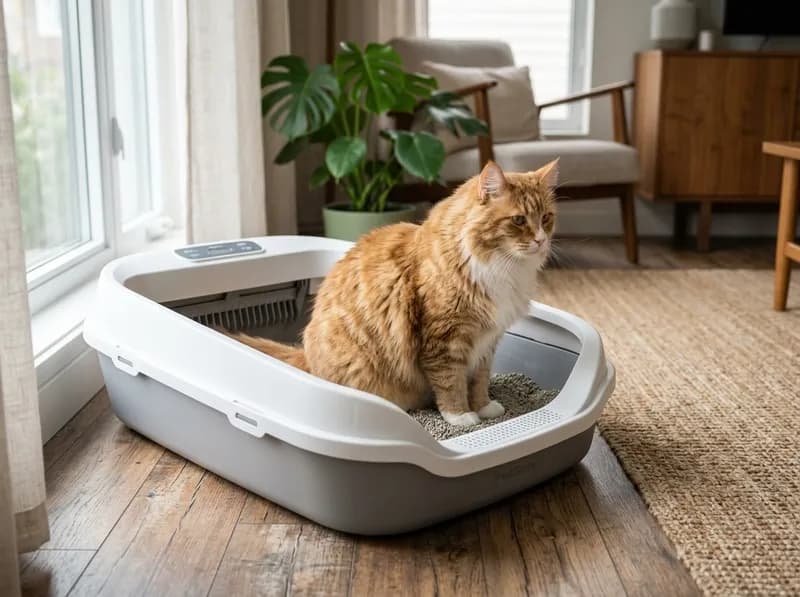
A self-cleaning litter box has one job: deal with the litter so you don't have to scoop it every day.
The difference between models comes down to how well they do that job. Some separate clumps exceptionally well but take more work to deep-clean. Some are noticeably easier on odor. Others are better suited to large cats or cats that refuse enclosed litter boxes. Noise, app features, replacement bags, filters, and subscriptions also become more important after the first few weeks of ownership.
The market is broader in 2026 than it was a few years ago. Whisker now sells the Litter-Robot 4, Litter-Robot 5, Litter-Robot 5 Pro, and Litter-Robot EVO. PETKIT PuraMax 2 remains one of the more affordable enclosed smart models, while Meowant MW-SC09 and PetSnowy SNOW+ take different approaches to interior space and odor control.
There is also a growing open-top category. The Neakasa M1 Plus is designed for cats that dislike enclosed globes, while the PetPivot AutoScooper 11 brings automatic cleaning below $200 without requiring an app or Wi-Fi. PetSafe ScoopFree remains the low-cost option if you're willing to use disposable crystal-litter trays.
For this guide, the important comparison points are clump separation, odor control, noise, cat comfort, maintenance, reliability, litter compatibility, and total ownership cost.
Quick Picks
Best for | Model | Approx. U.S. price | What stands out |
|---|---|---|---|
Proven all-around option | Litter-Robot 4 | $699 | Mature rotating system, strong clump separation, good odor containment |
Newer Whisker system | Litter-Robot 5 | $799 | Up to five cats, 3–30 lb range, WasteID and newer monitoring features |
Advanced monitoring | Litter-Robot 5 Pro | $899 | Dual cameras and expanded monitoring |
Lower-priced enclosed box | PETKIT PuraMax 2 | $399.99 list; often ~$299.99 | Low entry, sealed waste bin, multiple odor-control options |
Large cats | Meowant MW-SC09 | ~$640 | 106L interior and support for cats up to 30 lb |
Odor-focused design | PetSnowy SNOW+ | ~$569–649 | Enclosed waste handling and dedicated odor-control system |
Cats that dislike enclosed boxes | Neakasa M1 Plus | $399.99 list; often on sale | Open-top design and support for cats up to about 33 lb |
Best under $200 | PetPivot AutoScooper 11 | $179 | Automatic cleaning without an app, Wi-Fi, or subscription |
Cheapest automation | PetSafe ScoopFree | ~$169.95–209.95 | Simple rake system and disposable crystal trays |
Whisker's current lineup starts at $599 for the EVO, followed by the $699 Litter-Robot 4, $799 Litter-Robot 5, and $899 Litter-Robot 5 Pro. The LR4 is also available refurbished at times for around $599.
PETKIT lists the PuraMax 2 at $399.99, although it has spent extended periods around $299.99 at retail. Meowant lists the SC09 at about $639.99, while PetSnowy pricing depends heavily on the bundle.
How Self-Cleaning Litter Boxes Work
The cleaning mechanism has a bigger effect on ownership than most of the smart features.
Rotating globe
The litter chamber rotates, allowing clean litter to fall through a screen while waste drops into a drawer.
The Litter-Robot family uses this approach. It has become one of the better-known designs because the mechanism is relatively simple and the waste is separated without a rake passing through the litter bed.
Rotating cylinder
A cylinder or drum rotates to separate waste from clean litter.
The PETKIT PuraMax 2, Meowant SC09, and PetSnowy SNOW+ use variations of this design. Interior shape, sifter size, waste-bin access, and cleaning access make a noticeable difference between them.
Open-top automatic systems
Open-top machines remove the enclosed globe altogether.
The Neakasa M1 Plus rotates its litter tray to move waste into a sealed bag, while the PetPivot AutoScooper 11 uses a physical scooping mechanism and sealed waste container.
This design is particularly useful for cats that don't like entering enclosed litter boxes.
Rake systems
The PetSafe ScoopFree uses a rake rather than a rotating chamber. After a cat leaves, the rake moves waste into a covered trap.
The design is simple and relatively inexpensive, but the machine is tied to PetSafe's disposable crystal-litter trays.
Wash-and-flush systems such as CatGenie are another category, but they require different plumbing and installation considerations and are outside the scope of this comparison.
What to Look for in a Self-Cleaning Litter Box
Clump separation
The most important question is whether the machine removes the waste without taking a lot of clean litter with it.
The Litter-Robot 4 uses a rotating globe and internal screen. In Cats.com's extended testing, it separated clumps consistently with suitable litter and left relatively little residue.
The PuraMax 2 uses interchangeable sifters for different litter particle sizes. PETKIT says it supports most clumping litters, although crystal litter is not supported.
The difference becomes more obvious when you clean the machine. Cats.com's testing found that emptying and deep-cleaning the PuraMax 2 took more work than expected.
That's worth keeping in mind when comparing machines. Automatic scooping does not mean maintenance-free.
Noise
Published noise figures are difficult to compare directly because manufacturers and reviewers don't necessarily measure them the same way.
PETKIT lists the PuraMax 2 at 35 dB. Meowant lists the SC09 at up to 38 dB. Cats.com's testing of the Litter-Robot 4 measured roughly 25–40 dB, with an average around 37 dB during cycling.
PetSnowy's SNOW+ reached a peak of about 53 dB in Cats.com's testing, while Neakasa lists the M1 Plus at 50 dB or less.
These figures shouldn't be treated as a laboratory ranking. Measurement distance, background noise, litter load, and whether the number represents peak or average sound can all change the result.
For a bedroom or small apartment, the quieter models are generally easier to live with, but cycle frequency and the sound of litter moving through the machine matter just as much as the motor.
Odor control
Odor control comes from several parts working together:
fast removal of waste
a sealed waste drawer
carbon or other filtration
waste bags that close around the contents
regular drawer emptying
suitable litter
adequate room ventilation
The Litter-Robot 4 uses a sealed, carbon-filtered drawer. Cats.com's testing found good odor containment during normal use.
The PuraMax 2 combines a sealed waste bin with PETKIT's N50 2.0 deodorizing system and optional odor-control products. PETKIT claims the N50 2.0 can remove at least 98% of ammonia, although that is a manufacturer test claim rather than a standardized comparison with other machines.
PetSnowy makes odor reduction a central part of the SNOW+ design and claims a 90.5% ammonia removal rate from its TiO₂ system. Again, that figure comes from the manufacturer and shouldn't be treated as a direct head-to-head result.
Open-top boxes have a different compromise. They are easier for some cats to accept, but they don't provide the same passive enclosure around the litter bed.
Cat comfort
Weight ratings are useful, but they're not the whole story.
A 30-pound cat may technically fit inside a machine while still finding the usable litter area too small. Interior diameter, height, entrance shape, and whether the cat has to turn around inside an enclosed chamber can all affect acceptance.
The Litter-Robot 4 supports cats from 3 to 25 pounds and has a roughly 15-inch opening. The Litter-Robot 5 and 5 Pro extend the stated range to 3–30 pounds.
The PuraMax 2 has a 7.87-inch entry and a 76L interior, with a stated maximum cat weight of 22 pounds. Independent testing has found that some larger cats are less comfortable inside its enclosed cylinder.
The Meowant SC09 has a 106L interior and supports cats from about 3.3 to 30 pounds. The open-top Neakasa M1 Plus is rated for cats up to roughly 33 pounds.
For a large cat, those interior dimensions can matter more than the number printed on the box.
Maintenance
Every automatic litter box still requires some hands-on work.
You'll need to:
add litter
empty the waste container
replace bags
wipe sensors
remove stuck litter
deep-clean the globe or drum
replace filters or deodorizing products
The benefit is that most of the unpleasant daily scooping is replaced by less frequent maintenance.
That distinction is especially important in multi-cat homes, where the waste drawer can fill much faster than the manufacturer's one-cat estimates suggest.
Best Self-Cleaning Litter Boxes in 2026
Litter-Robot 4
The Litter-Robot 4 remains one of the more established automatic litter boxes, even though it is no longer Whisker's newest model.
It costs $699 at current MSRP, with refurbished units sometimes available around $599. The machine supports up to four cats and cats from 3 to 25 pounds. Whisker rates the waste drawer for up to about eight days for one cat.
Its appeal is the overall system rather than one standout specification.
The rotating globe separates waste from clean litter, and Cats.com's testing found consistent cycling, relatively little residue, and good odor containment with appropriate clumping litter.
The Whisker app provides weight and usage information, while optional Whisker+ features add longer activity history and additional insights. The litter box itself does not require a subscription to operate.
The main issue is price. With the newer Litter-Robot 5 only $100 more at MSRP, the LR4 makes the most sense when its lower price or proven track record matters more than the latest features.
Best for: buyers who want a mature rotating system, strong multi-cat support, and an established app ecosystem.
Litter-Robot 5
The Litter-Robot 5 is the newer generation and currently sells for $799.
It supports up to five cats and cats from 3 to 30 pounds. Whisker also rates the waste capacity at around 10 days for one cat.
WasteID, a new display, and expanded monitoring are among the main additions over the LR4.
For someone who mainly wants automatic waste removal, the $100 premium isn't automatically necessary. The LR4 already handles the central task well. The LR5 becomes more interesting for larger cats, multi-cat homes, and buyers who want the newer monitoring platform.
Best for: households that want the newer Whisker platform, higher capacity, and expanded monitoring.
Litter-Robot 5 Pro
At $899, the Litter-Robot 5 Pro adds integrated dual cameras to the LR5 platform.
It supports up to five cats and cats from 3 to 30 pounds. The cameras are intended to provide additional activity monitoring and identification, with some advanced functions tied to Whisker+.
The cameras are also the part of the product that deserves the most scrutiny.
The Verge's hands-on review reported inaccurate weight readings and unreliable cat and waste identification during testing, despite finding the core litter-box operation quiet and effective.
That doesn't mean the 5 Pro's automatic cleaning is ineffective. It means the camera and AI features should be considered separately from the basic litter-box mechanism.
Best for: owners who specifically want camera-based monitoring and are comfortable paying for features beyond automatic scooping.
PETKIT PuraMax 2
The PETKIT PuraMax 2 is one of the more direct alternatives to Whisker's machines if you don't want to spend $600–900.
PETKIT lists the machine at $399.99. It has a 76L interior, 7L waste bin, 7.87-inch entry, and a stated maximum cat weight of 22 pounds.
Its actual retail price is often much lower. The PuraMax 2 has spent long stretches around $299.99, making the difference versus a $699 Litter-Robot 4 closer to $400 than $300.
The cylinder and sealed waste drawer are designed with odor control in mind. PETKIT also sells N50 2.0 deodorizing products and an optional smart spray system.
The machine is rated at 35 dB, making it one of the quieter claims in this group.
The main drawback is maintenance. Cats.com's testing found the everyday automatic scooping effective but the deep-cleaning and emptying process more cumbersome than expected.
The PuraMax 2 also uses 2.4 GHz Wi-Fi only, which can cause setup problems on networks configured exclusively for 5 GHz. Some of its more advanced health features are also tied to PETKIT's optional Care+ service.
Best for: buyers who want a smart automatic litter box at a substantially lower price, especially with smaller cats and a preference for a low entry.
Meowant MW-SC09
The Meowant MW-SC09 is primarily interesting because of its size.
Meowant lists a 106L interior, 6.7L waste container, and support for cats from 3.3 to 30 pounds. It accepts bentonite, tofu, and mixed clumping litter, subject to particle-size restrictions.
The current direct price is around $639.99, although promotions can reduce it.
Noise is listed at up to 38 dB, and the machine provides app-based usage and weight monitoring. It can continue to operate without Wi-Fi, although remote controls and notifications require a connection.
There is less independent testing available for the SC09 than for the Litter-Robot models. Some Chewy owners report incomplete clump removal and excessive clean-litter loss, but those are individual reports rather than evidence of a product-wide failure rate.
Meowant currently lists a two-year warranty for purchases made directly through Meowant.com. Purchases through Amazon or TikTok Shop may have a shorter warranty period.
Best for: large cats and households that need more interior space than smaller enclosed machines provide.
PetSnowy SNOW+
The PetSnowy SNOW+ puts more emphasis on waste containment and odor control than most of the competition.
Its waste-handling system keeps waste enclosed, while PetSnowy uses a TiO₂-based odor-control system and claims 90.5% ammonia removal.
Cats.com's hands-on testing rated the SNOW+ highly for both odor control and cleaning access. The same testing measured a peak noise level of 53 dB.
That number shouldn't be compared directly with PETKIT's 35 dB or Meowant's 38 dB manufacturer figures because the testing conditions are different.
Pricing also varies considerably depending on the bundle. Current SNOW+ packages have been around $569–649, with PetSnowy advertising a 30-day trial and warranty options of up to four years.
Best for: households where odor containment is a major consideration.
Best Self-Cleaning Litter Boxes Under $400
The sub-$400 category is worth separating from the premium models because open-top machines solve a different problem.
A cat that refuses an enclosed globe won't care how good the cleaning mechanism is.
Neakasa M1 Plus
The Neakasa M1 Plus uses an open-top design instead of a globe or enclosed drum.
The litter tray rotates backward and transfers waste into an 11.23L sealed bin. Neakasa rates it for cats from 3.3 to about 33 pounds and up to three cats, with a manual kitten mode for smaller cats.
The machine uses multiple infrared and weight sensors to detect a cat and stop the cleaning cycle when necessary. Its app is free, with no recurring subscription for normal tracking and control.
The biggest compromise is odor containment. An open litter area cannot isolate smells as effectively as a fully enclosed chamber.
Neakasa lists noise at 50 dB or less, which is not particularly impressive compared with the lower manufacturer claims from PETKIT and Meowant. The machine also uses 2.4 GHz Wi-Fi and is intended for clumping/bentonite litter.
Current pricing is often around $399.99 against a $549.99 list price.
Best for: large cats and cats that refuse enclosed litter boxes.
PetPivot AutoScooper 11
The PetPivot AutoScooper 11 takes almost the opposite approach to the smart litter boxes above.
There is no app, Wi-Fi connection, account, or subscription. The machine uses physical controls and sensors to run the cleaning cycle five minutes after a cat leaves.
PetPivot rates the waste container at 10L and estimates roughly 5–10 days between emptying depending on usage. The cat weight range is 3–22 pounds.
Independent coverage from PetsRadar and The Gadgeteer found the setup straightforward and described useful safety behavior around the cleaning cycle. The manual cleaning mode is also useful for cats that become nervous around moving litter equipment.
The limitations are obvious: no weight history, health monitoring, remote controls, or app notifications.
At around $179, however, it is one of the least expensive ways to automate daily scooping without introducing another connected device into your home.
Best for: budget buyers and anyone who wants automatic cleaning without an app or subscription.
PetSafe ScoopFree
The PetSafe ScoopFree is the simplest machine in this comparison and remains one of the cheapest.
The Original model is around $169.95, while covered and connected versions cost more. A rake moves across the litter roughly 20 minutes after use and deposits waste into a covered compartment.
The catch is the litter system.
ScoopFree uses PetSafe's disposable crystal-litter trays. A tray typically lasts around 20–30 days for one cat, less with multiple cats, and replacement trays generally cost around $21–25 each depending on the pack.
That can change the economics considerably.
A $170 machine followed by roughly one tray per month can cost several hundred dollars in consumables over three years. A more expensive machine using ordinary clumping litter can therefore end up with a similar or lower long-term cost.
Best for: very tight budgets, small spaces, and owners who prefer disposable trays over handling litter.
Which Self-Cleaning Litter Box Is Quietest?
There isn't enough standardized independent testing to produce a reliable laboratory-style ranking.
Current published and tested figures include:
PETKIT PuraMax 2: 35 dB manufacturer rating
Meowant SC09: up to 38 dB manufacturer rating
Litter-Robot 4: roughly 25–40 dB in Cats.com's testing
PetSnowy SNOW+: 53 dB peak in Cats.com's testing
Neakasa M1 Plus: ≤50 dB manufacturer rating
PetPivot AutoScooper 11: around 38 dB advertised
The testing methods aren't standardized, so these numbers are best used as rough reference points.
For a bedroom, the sound of litter moving through the machine can be more noticeable than the motor itself. Cycle timing also matters. A machine that runs for a short period several times a day may be less annoying than one with a louder but less frequent cycle.
Which Automatic Litter Box Handles Clumps Best?
The Litter-Robot 4 has some of the strongest independent evidence in this group. Cats.com's testing found consistent clump separation and relatively little residue when suitable clumping litter was used.
The PETKIT PuraMax 2 also handled routine automatic scooping well in testing, although emptying and deep cleaning were less convenient.
The Meowant SC09 supports several types of clumping litter, but there is less independent evidence available. Some individual owners report incomplete clump removal and clean-litter loss, but those reports shouldn't be treated as a measured failure rate.
Litter choice still matters enormously. A slow-forming or weak clump can stick to the machine regardless of its cleaning mechanism.
Which Automatic Litter Box Controls Odor Best?
The Litter-Robot 4, PETKIT PuraMax 2, and PetSnowy SNOW+ all take odor control seriously, but they do it differently.
Litter-Robot relies on rapid waste removal, a sealed drawer, and carbon filtration.
PETKIT combines a sealed waste container with the N50 2.0 deodorizing system and additional odor-control products.
PetSnowy uses enclosed waste handling and its TiO₂ odor-control system, with the company claiming 90.5% ammonia removal.
Those manufacturer ammonia figures are not standardized head-to-head results, so they shouldn't be used to declare one machine universally better at odor control.
Open-top machines such as the Neakasa M1 Plus give cats easier access but leave more of the litter area exposed. That is the basic trade-off for the design.
Which Automatic Litter Box Is Best for Different Cats?
One cat
A single-cat household has the widest range of options.
The PuraMax 2 is particularly interesting when it drops to around $299.99. The Neakasa M1 Plus makes more sense for cats that dislike enclosed boxes, while the LR4 is the more established option if you want Whisker's ecosystem.
If you don't want subscriptions or connected features, the PetPivot AutoScooper 11 is considerably simpler.
Two cats
Waste capacity becomes more important.
The LR4 is rated for four cats, while the LR5 and 5 Pro are rated for five. The PuraMax 2 can work for multiple cats, but its smaller interior may be less comfortable for larger animals.
The M1 Plus is rated for up to three cats.
Three or more cats
The larger Whisker models have higher published capacity. The LR5 and 5 Pro are rated for up to five cats, while the LR4 is rated for four.
PetSnowy also offers multi-unit configurations for larger households.
Regardless of the advertised number, expect to empty waste containers more frequently as cat count increases.
Large cats
Look at usable interior space rather than weight ratings alone.
The LR5 and 5 Pro support cats up to 30 pounds. The Meowant SC09 also reaches 30 pounds and has a 106L interior. The Neakasa M1 Plus is rated to roughly 33 pounds and doesn't enclose the cat in a globe.
The PuraMax 2 is rated to 22 pounds, and independent testing found some larger cats less willing to use it.
Kittens
Minimum weight is important because the machine needs to detect the cat before cycling.
The LR4 starts at 3 pounds. Meowant specifies cats over four months old and at least 3.3 pounds. Neakasa provides a manual kitten mode for smaller cats.
Always follow the current manufacturer's minimum-weight requirements before enabling automatic cycling.
Cats sensitive to noise or novelty
Don't rely on the published dB figure alone.
An open-top machine can be easier for a nervous cat to accept because there is no enclosed globe. The PetPivot AutoScooper 11 also has a manual cleaning mode, allowing owners to control when the machine runs.
Introduce any automatic box gradually rather than immediately removing the cat's familiar litter box.
Owners who hate deep cleaning
This is one of the less obvious differences between models.
Cats.com's testing found the LR4 relatively straightforward to clean, while the PuraMax 2 required more work during deep cleaning and emptying.
PetSnowy's cleaning access received positive marks in independent testing.
The ScoopFree takes a different approach altogether: instead of deep-cleaning a litter chamber, you replace the entire disposable tray.
What Owners Report
Owner discussions are useful for finding recurring annoyances, but individual posts are not a substitute for controlled testing.
For the Litter-Robot 4, recurring complaints include cycling errors, connectivity issues, sensor warnings, and litter sticking. At the same time, long-term reviews show many owners are satisfied with its cleaning and odor performance.
For the PuraMax 2, complaints commonly involve 2.4 GHz Wi-Fi setup, app promotions, and the amount of work involved in deep cleaning. At its frequent ~$299.99 selling price, the machine is often discussed as a good-value option despite those annoyances.
The biggest recurring issue across automatic litter boxes is simpler: some cats don't like enclosed machines.
That is one reason open-top products such as the Neakasa M1 Plus have become more relevant. If the cat refuses to enter the box, the quality of the automatic cleaning mechanism is beside the point.
Meowant has a thinner independent testing record. Some owner reviews report incomplete clump removal, while others are positive. The available evidence isn't strong enough to establish a general failure rate.
How Much Does an Automatic Litter Box Cost to Own?
The purchase price is only part of the calculation.
A useful three-year estimate includes:
Machine + litter + waste bags + filters/deodorizers + replacement parts + optional subscriptions
Litter will usually remain the largest ongoing expense, but machine-specific consumables can add up.
PETKIT sells PuraMax 2 waste bags and N50 2.0 odor-control refills. Whisker sells replacement liners and odor-control products. Meowant also recommends regular replacement of liners and deodorizing components.
ScoopFree is the clearest example of why the purchase price can be misleading. Its disposable trays cost roughly $21–25 each, so using one per month can add approximately $250–300 per year.
A $170 litter box can therefore have a much higher long-term consumable cost than its purchase price suggests.
Do You Need Whisker+ or PETKIT Care+?
No subscription is required for the basic cleaning function of these machines.
Whisker+ adds longer-term history and additional insights to the Whisker ecosystem. Some advanced camera-based features on the 5 Pro are also tied to the subscription.
PETKIT Care+ provides additional health-monitoring features within PETKIT's connected ecosystem.
If you don't want recurring software costs, the Neakasa M1 Plus is notable because its normal app features are available without a subscription. The PetPivot AutoScooper 11 avoids the issue completely because it has no app or Wi-Fi connection.
Before buying, check exactly which features are included in the current app and which require a paid plan. Subscription terms can change independently of the hardware.
Reliability and Common Problems
Automatic litter boxes combine motors, sensors, moving parts, and sometimes Wi-Fi hardware. More components mean more things that can eventually need attention.
Litter-Robot owners report occasional cycling errors, connectivity problems, sensor warnings, and litter sticking. These reports don't establish a product-wide failure rate, but they are useful for understanding the types of problems owners may encounter.
PuraMax 2 users report sensor and cleaning issues, while independent testing has highlighted the machine's more involved deep-cleaning process and its limitations for larger cats.
The SC09 has less long-term independent testing available, making it harder to draw conclusions about reliability compared with the more established Whisker models.
Warranty coverage is therefore worth checking before purchase. Whisker currently provides one year of standard coverage with extension options. PETKIT provides two years on qualifying PuraMax 2 purchases made through its official U.S. site or authorized distributors. Meowant, PetPivot, and Neakasa also advertise warranty coverage, but the exact terms depend on where the machine was purchased.
Which Self-Cleaning Litter Box Should You Buy?
Litter-Robot 4
Choose it if you want an established rotating system with strong independent testing, good odor containment, and solid multi-cat capability. It is also worth checking refurbished pricing, especially when a new LR4 is close to the price of the newer EVO.
Litter-Robot 5
Consider it when you want the newer Whisker platform, a higher cat-weight limit, five-cat support, and newer monitoring features. The extra $100 over the LR4 is easier to justify if those features matter to you.
Litter-Robot 5 Pro
This is primarily a camera and monitoring upgrade. The $899 price makes more sense for owners who specifically want those features rather than simply looking for an automatic litter box.
PETKIT PuraMax 2
This is one of the more compelling lower-priced enclosed options, particularly when it falls near $299.99. The low entry, sealed waste storage, and odor-control features are its main attractions.
The compromises are the more involved deep-cleaning process, smaller fit for some larger cats, and 2.4 GHz-only Wi-Fi.
Meowant SC09
The SC09 is worth considering when interior space is the main concern. Its 106L chamber and 30-pound rating make it particularly relevant for large cats, although its independent testing record is smaller than Litter-Robot's.
PetSnowy SNOW+
Consider it when odor containment is a major priority. Its enclosed waste system and dedicated odor-control technology are the main reasons to look at it, while its price and varying bundle configurations make it less straightforward to compare on cost alone.
Neakasa M1 Plus
This is the most obvious option for cats that refuse enclosed litter boxes. Its open-top design, large cat rating, and subscription-free app make it different from most of the enclosed machines here.
PetPivot AutoScooper 11
For around $179, it provides the core automation without adding an app, account, Wi-Fi connection, or subscription. The trade-off is that you get none of the weight, health, or remote-monitoring features found on smart models.
PetSafe ScoopFree
It remains useful when the lowest initial price or a very low-profile design is important. Just account for the ongoing cost of disposable crystal-litter trays.
When an automatic litter box may not be the right choice
An automatic litter box may not solve the problem if:
your cat refuses enclosed litter boxes
your cat is below the manufacturer's minimum weight
you expect zero maintenance
you don't want recurring bags, filters, or deodorizing products
your home has unreliable Wi-Fi and you specifically need app features
you are unwilling to introduce the machine gradually
Pros and Cons
Model | Pros | Cons |
|---|---|---|
Litter-Robot 4 | Proven rotating system, strong clump separation, good odor containment, mature app, multi-cat support | Expensive, ongoing consumables, newer LR5 is only $100 more at MSRP |
PETKIT PuraMax 2 | Often ~$299.99, low entry, sealed waste drawer, odor-control options | Deep cleaning can be tedious, less suitable for some large cats, 2.4 GHz Wi-Fi |
Meowant SC09 | 106L interior, 30-lb rating, app, broad clumping-litter support | Less independent testing, large footprint, ongoing consumables |
PetSnowy SNOW+ | Strong odor focus, enclosed waste handling, positive cleaning-access testing | Higher price, variable bundle pricing, less favorable independent noise measurement |
Neakasa M1 Plus | Open-top, large-cat friendly, free app, documented safety sensors | Less passive odor containment, up to 50 dB claimed, clumping litter only |
PetPivot AutoScooper 11 | ~$179, no app, no Wi-Fi, no subscription, simple operation | No health/data features, 22-lb limit, narrower litter compatibility |
PetSafe ScoopFree | Low purchase price, low profile, minimal litter handling | Proprietary crystal trays, recurring tray cost, smaller litter area |
FAQ
What is the best self-cleaning litter box in 2026?
There isn't one model that fits every cat or household.
The Litter-Robot 4 and Litter-Robot 5 have extensive testing and established ecosystems. PETKIT PuraMax 2 is a lower-priced enclosed alternative, while Meowant SC09 and Neakasa M1 Plus are particularly relevant for large cats. PetSnowy SNOW+ focuses heavily on odor control, and PetPivot AutoScooper 11 is aimed at buyers who want simple automation without connected features.
Are automatic litter boxes worth it?
They can significantly reduce daily scooping, but they don't eliminate litter-box maintenance.
You still need to add litter, empty waste, clean sensors, replace bags or filters, and periodically deep-clean the machine.
For multi-cat households, the reduction in daily scooping can be particularly noticeable.
Are automatic litter boxes safe?
Major automatic litter boxes use combinations of weight sensors, infrared sensors, anti-pinch systems, or other detection hardware designed to prevent cycling when a cat is present.
Minimum weight remains important. Very small kittens may not trigger the sensors reliably, so follow the manufacturer's age and weight requirements.
Automatic monitoring also shouldn't replace normal observation of a cat's health. Changes in litter-box frequency or weight can be useful information to discuss with a veterinarian.
What is the quietest automatic litter box?
PETKIT lists the PuraMax 2 at 35 dB, while Meowant lists the SC09 at up to 38 dB. Independent testing of the Litter-Robot 4 measured roughly 25–40 dB.
Because the testing methods differ, these figures shouldn't be treated as a definitive ranking.
Which automatic litter box controls odor best?
The Litter-Robot 4, PETKIT PuraMax 2, and PetSnowy SNOW+ all use sealed waste handling and additional odor-control measures.
PetSnowy places the greatest emphasis on its TiO₂ odor-control system, while Litter-Robot relies on a sealed carbon-filtered drawer and PETKIT combines its sealed bin with N50 2.0 deodorizing products.
Which automatic litter box handles clumping litter best?
The Litter-Robot 4 has strong independent evidence for consistent clump separation with suitable clumping litter.
The PuraMax 2 also performs well during routine automatic cleaning, although independent testing found its deep-cleaning process less convenient.
What is the best automatic litter box for large cats?
The Meowant SC09, Litter-Robot 5/5 Pro, and Neakasa M1 Plus are all designed for cats around 30 pounds or more.
The SC09 has a 106L interior, while the M1 Plus avoids the enclosed geometry completely. The PuraMax 2 has a 22-pound rating and may be less comfortable for some larger cats.
What is the best automatic litter box for multiple cats?
The Litter-Robot 5 and 5 Pro are rated for up to five cats, while the LR4 is rated for four.
Actual capacity depends on how much litter each cat produces and how frequently you empty the waste container.
Can kittens use an automatic litter box?
Some can, but minimum weight requirements vary.
The LR4 starts at 3 pounds, Meowant's SC09 specifies at least 3.3 pounds and an age requirement, and the Neakasa M1 Plus provides a manual kitten mode for smaller cats.
Do automatic litter boxes smell?
They can still produce odor, but sealed waste containers and rapid waste removal can reduce it substantially.
Litter type, room ventilation, cat count, and how often the waste drawer is emptied also have a major effect.
Do automatic litter boxes need special litter?
Most rotating machines are designed for clumping litter.
Whisker recommends clumping clay, PETKIT supports a broad range of clumping litters, and Meowant supports bentonite, tofu, and mixed clumping litter.
The PetSafe ScoopFree is different because it uses disposable crystal-litter trays. The PetPivot AutoScooper 11 also has narrower litter requirements.
How often do you clean an automatic litter box?
Expect regular light maintenance and occasional deep cleaning.
Waste drawers may need emptying every few days in a multi-cat household, while the main globe or drum generally needs a less frequent but more thorough cleaning.
How much does an automatic litter box cost to maintain?
The answer depends heavily on the litter box design.
Machines using standard clumping litter generally have lower proprietary-consumable costs than ScoopFree, which requires disposable crystal trays.
When comparing prices, include waste bags, filters, deodorizing products, replacement parts, and any optional subscription in the calculation.
Related GuidesMore →
Best Dog Ramps for Cars and Beds: Top Picks and How to Choose
Choosing the best dog ramp starts with measuring your vehicle's cargo-floor height or your bed's surface, then matching the ramp length to a manageable incline. This guide compares popular dog ramps for cars, SUVs, trucks, couches, and beds, including options from PetSafe, WeatherTech, HerCcreta, Pet Gear, and DoggoRamps. Learn how to compare slope, traction, width, stability, storage, and weight capacity before buying.
Best Cat Trees: Stable Picks for Large Cats, Multi-Cat Homes, and Small Spaces
A tall cat tree is not necessarily a stable one. This buying guide compares popular models from New Cat Condos, Feandrea, Frisco, Yaheetech, and Mau, using published specifications and owner feedback rather than claiming hands-on testing. Learn how base geometry, construction, platform layout, and wall anchoring affect your choice, along with the trade-offs between budget towers and premium designs.
Dog Crate End Table Dimensions: A Buying Guide to Size, Design, and Cost
Furniture-style dog crates can double as end tables or living-room furniture, but their usable space, door openings, materials, and prices vary considerably. This guide compares seven popular dog crate furniture models from New Age Pet, Fable, Diggs, Casual Home, and Unipaws. It examines interior dimensions, space efficiency, price per square foot, and practical design differences to help you find a crate that fits both your dog and your home.