Best Cat Water Fountains (2026): What Actually Matters, and What It Costs to Own One
Choosing the best cat water fountain is less about tank size and smart features than cleaning, pump access, replacement filters, noise, and long-term cost. This guide compares 11 popular cat water fountains from PETLIBRO, Catit, PetSafe, Pioneer Pet, PETKIT, Oneisall, and Veken, covering stainless steel, ceramic, plastic, cordless, and smart models to help you find the right fit for your cat and household.
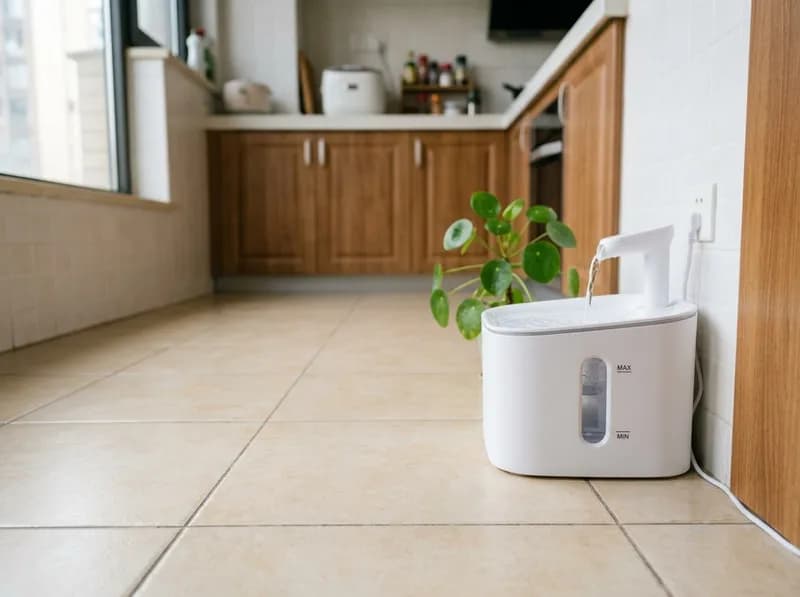
The best cat water fountain isn't necessarily the one with the biggest tank or the longest feature list. For most cat owners, four things matter more: is it easy to clean, is the pump reasonably quiet, are the filters affordable, and will your cat actually use it?
We looked at 11 current fountains from PETLIBRO, Catit, PetSafe, Pioneer Pet, PETKIT, Oneisall, and Veken with those questions in mind. The result is less about chasing features and more about what happens after the fountain has been sitting in your kitchen for six months.
One important distinction: specifications, materials, replacement parts, and manufacturer maintenance instructions were checked against manufacturer information. Prices are recent U.S. listing prices observed in October 2026 and are shown as ranges where appropriate. Noise and battery figures are manufacturer claims, not independent measurements.
The rankings are editorial judgments. We did not put these fountains on a laboratory test bench, so there are no invented pump-life figures or pseudo-precise noise scores here.
Quick Answer
Model | Recent U.S. price | Capacity | Material | Best for |
|---|---|---|---|---|
PETLIBRO Stainless Steel | ~$35–45 | 3 L / 101 oz | 304 stainless tank | Best overall |
Catit Stainless Flower | ~$30–40 | 3 L / 100 oz | Stainless top, plastic body | Flexible drinking styles |
PetSafe Drinkwell Stainless Multi-Pet | ~$70–80 | 128 oz | Stainless steel | Multiple cats |
Pioneer Pet Raindrop | ~$55–65 | 60 oz | 18/8 stainless | Long-term serviceability |
PetSafe Drinkwell Pagoda | $90.99 | 70 oz | Ceramic | Best ceramic |
PETKIT EverSweet Max 2 UVC | ~$95–105 | 3 L / 101 oz | ABS + 304 stainless tray | Smart + cordless |
PETLIBRO Dockstream 2 Smart | ~$85–95 | 3 L | ABS + stainless | App monitoring |
PETKIT EverSweet 3 Pro UVC | ~$75–85 | 1.8 L / 60 oz | ABS + stainless tray | Quiet smart fountain |
PetSafe Creekside Ceramic | ~$60–70 | 60 oz | Ceramic | Gentle bubbling flow |
Oneisall 3.2 L Cordless | ~$35–50 | 3.2 L | Stainless | Budget cordless |
Veken 95 oz / 2.8 L | from ~$27 | 2.8 L / 95 oz | BPA-free plastic | Lowest entry price |
Prices are recent U.S. listing prices observed in October 2026. This category is heavily discounted, so check the current price before buying.
The short version
For most single-cat homes, the PETLIBRO Stainless Steel is the easiest recommendation. It gives you a stainless tank, 3-liter capacity, adjustable flow, a replaceable pump and a relatively low purchase price without adding unnecessary electronics.
The Catit Stainless Flower is a better fit if you're not sure what type of water movement your cat prefers. The different flower configurations give you more ways to adjust the flow.
For multiple cats, the PetSafe Drinkwell Stainless Multi-Pet makes more sense because its 128-ounce capacity and open access are designed around several animals sharing one fountain.
If long-term repairability is your priority, look at the Pioneer Pet Raindrop. Its replaceable pump and established replacement-parts ecosystem are more important than its older design.
The PetSafe Drinkwell Pagoda is the ceramic pick, while the PETKIT EverSweet Max 2 is the model to consider if cordless placement and app monitoring genuinely solve a problem for you.
If you're simply trying to find out whether your cat likes moving water, the inexpensive Veken 95 oz is a sensible place to start.
What Matters More Than the Spec Sheet
A cat water fountain is a small appliance, but most of the ownership experience has little to do with its headline capacity.
The things worth checking are:
Cleaning: Can you reach every surface that touches water?
Pump access: Can you remove and clean the pump without fighting the design?
Replacement parts: Is a replacement pump actually sold?
Filters: How often do you have to replace them, and what do they cost?
Flow: Is there a gentle option, a stream, bubbling water, or several choices?
Noise: Does the pump stay quiet as the water level drops?
Materials: Which parts actually touch the water?
Capacity: Is the tank large enough for your household without becoming unnecessarily large?
Ownership cost: What will the fountain cost after a year of filters and maintenance?
I put more weight on cleaning and serviceability than on smart features. That's intentional. A fountain that is pleasant to use for three years is a better purchase than one with an impressive app that becomes annoying to maintain after a few months.
Why replacement parts matter
Pump failure is one of the easiest ways for a fountain to become disposable.
Pioneer Pet sells a replacement 12V pump and replacement charcoal filters for the Raindrop. PetSafe also sells replacement pumps for models including the Stainless Multi-Pet, Creekside and Pagoda, along with model-specific filters.
That doesn't prove that one pump will last longer than another. There isn't good public data for that. What it does tell you is that a failed pump doesn't necessarily mean throwing away the entire fountain.
For a product that may run every day for years, that's a useful distinction.
Cleaning Matters More Than Capacity
A 100-ounce fountain sounds attractive until you have to clean all 100 ounces' worth of plumbing.
Water doesn't only sit in the reservoir. It passes through the pump, filter compartment, channels, spout and drinking surface. Cat hair, food particles and residue eventually find their way into those areas.
Manufacturer maintenance schedules give a better indication of the work involved than the tank size does.
PETLIBRO recommends cleaning the fountain and pump every two weeks on its stainless model and replacing the filter every two weeks for a single pet. Its troubleshooting information also points owners toward pump and filter cleaning when water flow drops.
Pioneer Pet recommends cleaning the Raindrop roughly weekly, changing the filter every two to four weeks, and cleaning the pump about monthly.
PetSafe takes a somewhat easier approach with several of its models because the main fountain body can go in the top rack of a dishwasher, while the pump still needs to be washed separately.
That last detail is easy to overlook. "Dishwasher safe" generally does not mean the entire fountain can go into the dishwasher. The pump is usually the part that needs the most attention.
A good cat water fountain should have
Removable water-contact parts
Easy access to the pump
Few narrow channels where hair can collect
Dishwasher-safe parts when the manufacturer explicitly allows it
A drinking surface that can be scrubbed properly
Replacement filters that are easy to find
A separately available replacement pump
An intake that doesn't constantly collect hair
A large tank that takes 15 minutes to dismantle isn't necessarily easier to own than a smaller fountain you can clean in a couple of minutes.
Stainless Steel vs. Plastic vs. Ceramic
Material matters, but probably not for the reason most product listings suggest.
The important question is not simply "Is this fountain stainless steel?" It's which parts actually touch the water?
Stainless steel
Stainless steel is the safest default if you want a durable, easy-to-clean drinking surface. It is non-porous, resistant to corrosion, and generally handles repeated washing well.
But a stainless-steel fountain can still contain quite a lot of plastic.
The PETLIBRO stainless model, for example, uses a 304 stainless tank but also has a polypropylene water outlet. Catit's stainless Flower Fountain combines a stainless drinking surface with a plastic body.
Neither is inherently a problem. It just means the product title doesn't tell you the whole material story.
Stainless steel also doesn't make a fountain self-cleaning. The pump, filter housing and other water-contact parts still need regular attention.
Plastic
Plastic keeps costs and weight down, and there is nothing inherently wrong with a well-designed plastic fountain.
The bigger concern is what happens to the surface over time. Scratches and accumulated residue make plastic harder to keep clean, especially if the fountain is being scrubbed aggressively.
The Veken 95-ounce fountain is the budget example here. It uses food-grade BPA-free plastic, has a water-level window and offers two flow patterns. At roughly $27, it is a cheap way to see whether your cat even likes a fountain.
Ceramic
Ceramic fountains are heavier and tend to feel more like a piece of kitchenware than pet equipment. The extra weight can be useful if your cat likes pushing lightweight objects around.
The downside is obvious: ceramic can chip or break, and a large ceramic fountain is considerably heavier to move when you're cleaning it.
Two ceramic models stand out here.
The PetSafe Drinkwell Pagoda holds 70 ounces and uses two free-falling streams with an open upper bowl. It is top-rack dishwasher safe and uses published replacement filter and pump parts.
The PetSafe Creekside holds 60 ounces and uses a gentler bubbling flow with a single main drinking area.
What about cat acne?
Feline chin acne is one reason some owners prefer stainless steel or ceramic bowls and fountains.
Cats can develop blackheads and small bumps around the chin and lower lip for several reasons. Surface cleanliness, oil production, grooming and other factors can all play a role. Scratched plastic can hold residue and bacteria more easily than a smooth, non-porous surface.
That makes stainless steel or ceramic a reasonable choice if your cat repeatedly develops chin irritation. It does not mean plastic automatically causes feline acne, and a stainless fountain isn't a treatment.
If your cat has persistent or severe chin lesions, the appropriate next step is a veterinarian rather than another fountain.
Don't forget whiskers
The shape of the drinking area can matter just as much as the material.
A deep, narrow bowl can force a cat's whiskers into the sides or water. Some cats dislike that and compensate by drinking from the very edge, pawing at the water, or avoiding the bowl.
A wider, shallower drinking surface is often a better choice for these cats.
Do Cats Actually Drink More From a Fountain?
This is where cat fountain marketing tends to get ahead of the evidence.
PetSafe, for example, says the Pagoda's free-falling streams can entice pets to drink more and links increased hydration with urinary and kidney health. You'll also find buying guides claiming that studies prove cats drink significantly more from fountains than bowls.
The research is less definitive.
A 2025 scoping review in the Journal of Animal Science examined 32 publications on feline water intake and hydration from 1975 through 2025. Its findings suggest that diet and food composition have clearer effects on water intake than the type of water source. For flowing versus still water specifically, the review did not find a consistent group-level preference or a reliable increase in intake attributable to the water source alone.
An older 2010 pilot study also found somewhat higher average intake with flowing water, but the difference was not statistically significant. A small pilot study isn't enough to establish a general rule for all cats.
So should you buy a fountain?
Yes, if your cat seems to prefer one.
Some cats clearly enjoy running water. Others couldn't care less. A fountain may also be convenient because it circulates a larger volume of water and can keep the water moving between cleanings.
The important distinction is that a fountain is not a proven hydration treatment. It is a water source that some cats may prefer.
If your cat suddenly starts drinking much more or much less than normal, or develops changes in urination, appetite or behavior, don't try to solve that with a different fountain. Talk to your veterinarian.
Cat Fountain Filters: What Do They Actually Do?
Most fountain filters are variations on the same basic system:
Mesh or foam: catches hair and larger debris
Activated carbon: helps reduce odors and some compounds that affect taste
Ion-exchange resin: included in some cartridges to target certain minerals
Catit's Flower Fountain filter uses cotton mesh, activated carbon and ion-exchange resin and recommends replacing it every 30 days.
PETLIBRO's stainless model uses a three-layer filter and recommends a two-week replacement schedule.
PetSafe's Stainless Multi-Pet and Pagoda use carbon filtration for taste and odor alongside foam designed to capture hair and debris.
None of these systems should be confused with water purification.
A fountain filter can improve the water's taste and catch debris. It does not make unsafe or contaminated water safe to drink.
More filter stages aren't necessarily better
A five-stage filter sounds better than a three-stage filter, but the number alone tells you very little.
A simple foam pre-filter can be extremely useful because it catches hair and food particles before they reach the pump. If that layer is easy to remove and clean, it may contribute more to reliable operation than an additional carbon stage.
Look at what the filter layers actually do and how much they cost to replace.
What Does a Cat Fountain Cost to Run?
The purchase price is only the beginning.
Fountain | Recent U.S. price | Filter basis | Estimated annual filter cost | Replacement pump |
|---|---|---|---|---|
PETLIBRO Stainless | ~$35–45 | $22.99 / 8-pack, every 2 weeks | ~$75 | Yes |
Catit Stainless Flower | ~$30–40 | ~$19.74 / 5-pack, every 30 days | ~$47 | Available |
PetSafe Stainless Multi-Pet | ~$70–80 | $9.99 / 3 carbon, every 2–4 weeks | ~$43–87 | Yes |
Pioneer Pet Raindrop | ~$55–65 | ~$13 / 4-pack, every 2–4 weeks | ~$42–85 | Yes |
PetSafe Pagoda | $90.99 | Carbon #6 + Foam #5 | Depends on pack size | Yes |
PETLIBRO Dockstream 2 | ~$85–95 | $26.99 / 8-pack, every 2 weeks | ~$88 | Yes |
PETKIT EverSweet 3 Pro | ~$75–85 | $19.99 / 5-pack | Depends on schedule | Wireless pump |
Oneisall 3.2 L | ~$35–50 | $49.99 / 9-pack, every 2 weeks | ~$144 | 2-year guarantee |
Veken 95 oz | from ~$27 | Varies by pack | Not reliably calculated | Not specified |
These are estimates based on manufacturer replacement schedules and recent U.S. pack prices observed in October 2026. Actual costs vary with promotions, household conditions and how often you replace the filters.
The numbers reveal something that is easy to miss when shopping: the cheapest fountain isn't always the cheapest fountain to own.
The Oneisall is inexpensive to buy, but its stated two-week filter schedule can make annual filter costs much higher than the hardware price.
The Pioneer Raindrop costs more upfront but uses relatively inexpensive replacement filters and has a replaceable pump.
PETLIBRO's stainless model is also inexpensive at checkout, but a two-week filter schedule adds substantially to the annual cost.
Multi-packs and subscription discounts can reduce those figures, so treat the table as a comparison rather than a precise household budget.
Electricity is a much smaller part of the equation. For fountains of this size, filter replacement is generally the running cost worth paying attention to.
Noise: Don't Put Too Much Weight on the dB Number
"Quiet" is one of the most abused words on cat fountain product pages.
There are several different sounds to consider:
Pump vibration
Motor hum
Water hitting the drinking surface
Splashing
Noise caused by low water
Noise caused by a clogged filter or pump
PETKIT lists the EverSweet 3 Pro at up to 25 dB. PETLIBRO lists some models around 23–30 dB, while Oneisall advertises 20 dB for its cordless model.
Those numbers are manufacturer claims made under different conditions. They aren't useful as a strict ranking.
A fountain rated at 20 dB by one company isn't automatically quieter than one rated at 25 dB by another.
For a bedroom or office, the more useful question is how the fountain behaves as the water level changes. A submerged pump with enough water around it is generally quieter than one struggling near the bottom of the tank.
Regular cleaning matters too. Hair and mineral deposits can change pump noise long before the pump actually fails.
How Much Capacity Do You Need?
Most of the fountains here hold between 60 and 128 ounces.
The PETKIT EverSweet 3 Pro, PetSafe Creekside, Pioneer Raindrop and PetSafe Pagoda are in the 60–70-ounce range.
The Catit Flower and PETLIBRO Stainless hold about 3 liters, or roughly 100 ounces.
The PetSafe Stainless Multi-Pet holds 128 ounces.
For one cat, you don't necessarily need the largest reservoir you can find. A larger tank is more useful when you have multiple cats, a cat that drinks heavily, or a fountain placed somewhere that makes frequent refilling inconvenient.
There is one trade-off: more capacity also means more water sitting in the reservoir between cleanings.
A bigger tank doesn't make a cat drink more.
The Best Cat Water Fountains
Best Overall: PETLIBRO Stainless Steel Fountain
Best for: most single-cat households
Material: 304 stainless steel tank, polypropylene water outlet
Capacity: 3 L / 101 oz
Filtration: 3-layer, replace every 2 weeks
Pump: AC pump, replacement available
Noise: manufacturer-rated ≤30 dB
Price: ~$35–45
Warranty: 24 months
The PETLIBRO Stainless Steel is the easiest model here to recommend without knowing much about the cat.
It gives you the things that matter day to day — a stainless tank, decent capacity, adjustable flow, dishwasher-safe construction and a replaceable pump — without turning the fountain into a smart-home project.
The main downside is the filter schedule. Replacing filters every two weeks makes the long-term cost higher than the $35–45 purchase price suggests.
The polypropylene outlet and pump also need hand cleaning, so don't mistake the stainless tank for a completely stainless fountain.
Best reason to buy it: a good balance of simplicity, cleaning, capacity and price.
Main drawback: frequent filter replacement.
Best for Fussy Drinkers: Catit Stainless Flower Fountain
Best for: cats that respond differently to water movement
Material: stainless steel top, plastic body and components
Capacity: 3 L / 100 oz
Filtration: triple-action mesh, carbon and ion-exchange
Filter interval: about 30 days
Pump: replacement available
Price: ~$30–40
The Flower Fountain has stayed popular because it gives cats several ways to drink.
The flower attachment can create a gentle flow, bubbling water or a waterfall-style stream. If your cat rejects one arrangement, you can change the flow without buying another fountain.
The stainless version also gives you a dishwasher-safe drinking surface and a water-level window.
Much of the fountain remains plastic, and the filter is proprietary, but the roughly 30-day replacement interval keeps its running cost relatively reasonable.
Best reason to buy it: more flexibility if you don't know what type of flow your cat prefers.
Main drawback: plastic body and internal components.
Best for Multiple Cats: PetSafe Drinkwell Stainless Multi-Pet
Best for: multi-cat and mixed-pet households
Material: stainless steel
Capacity: 128 oz / 1 gallon
Filtration: carbon + foam
Pump: submersible, replacement available
Price: ~$70–80
The Stainless Multi-Pet isn't the newest or smartest fountain here. That's fine.
Its advantage is that the design is built around several animals sharing one water station. The bowl is accessible from all sides, the 128-ounce reservoir is substantially larger than most single-cat models, and five stream attachments let you change the flow.
The main body is top-rack dishwasher safe, while the pump needs separate cleaning.
PetSafe also sells replacement pumps and filters, which makes the higher initial price easier to justify if you expect to keep the fountain for years.
Best reason to buy it: capacity and accessibility for multiple cats.
Main drawback: large footprint and more noticeable pump noise than some newer designs.
Best for Long-Term Serviceability: Pioneer Pet Raindrop Stainless Steel
Best for: owners who care more about replaceable parts than smart features
Material: 18/8 stainless steel
Capacity: 60 oz
Filtration: replaceable charcoal, every 2–4 weeks
Pump: replaceable 12V pump
Price: ~$55–65
The Raindrop looks old-fashioned next to the smart fountains. In this case, that's an advantage.
Pioneer Pet sells the pump and filters separately and publishes maintenance instructions. You can identify the parts you need instead of treating the entire fountain as a disposable appliance.
The trade-off is capacity. At 60 ounces, this is better suited to a single cat than a multi-cat household.
It also has fewer flow options than the Catit Flower and less technology than the PETKIT models.
Best reason to buy it: a straightforward fountain with an unusually good replacement-parts story.
Main drawback: smaller reservoir and older, less flexible design.
Best Ceramic: PetSafe Drinkwell Pagoda
Best for: owners who want a stable ceramic fountain with two drinking levels
Material: ceramic
Capacity: 70 oz
Filtration: activated carbon (#6) + foam (#5)
Pump: submersible, replacement available
Flow: two free-falling streams plus an open upper bowl
Price: $90.99 direct from PetSafe
The Pagoda has three things going for it that aren't immediately obvious from its feature list.
First, ceramic is heavy. A cat is much less likely to push it around the floor.
Second, the upper bowl remains accessible if the pump stops, which is useful during a power outage.
Third, the elevated drinking area can be convenient for older cats that don't want to bend as far.
PetSafe also publishes the filter and pump part numbers, making future maintenance easier to plan.
The biggest problem is price. At around $91, this is expensive for a 70-ounce fountain.
PetSafe also markets the fountain as helping prevent urinary and kidney diseases through increased hydration. That is stronger than what the current evidence supports, so I would not use the medical claim as a reason to pay the premium.
Best reason to buy it: stable ceramic construction and the two-level drinking design.
Main drawback: high price for the capacity.
Best Gentle Flow: PetSafe Creekside Ceramic
Best for: cats that dislike strong streams
Material: ceramic
Capacity: 60 oz
Filtration: carbon + foam
Pump: submersible, replacement available
Price: ~$60–70
The Creekside takes a quieter approach to water movement. Instead of a noticeable falling stream, it uses a gentler bubbling flow.
The ceramic body is heavy and stable, the drinking area is accessible from around the fountain, and the main body is dishwasher safe.
At 60 ounces, however, it isn't the right choice if you need a large reservoir.
Best reason to buy it: gentle flow in a stable ceramic body.
Main drawback: relatively small capacity.
Best Smart and Cordless: PETKIT EverSweet Max 2 UVC
Best for: owners who genuinely need monitoring or flexible placement
Material: ABS body with 304 stainless steel tray
Capacity: 3 L / 101 oz
Filtration: multi-layer
Pump: wireless UVC pump
Noise: manufacturer-rated ≤26 dB
Battery: manufacturer claims up to 83 days
Smart features: app and hydration monitoring
Price: ~$95–105
This is where the fountain stops being just a fountain and starts behaving like a smart appliance.
PETKIT gives you a 3-liter reservoir, stainless drinking tray, app monitoring, several operating modes and a wireless UVC pump. The company also claims up to 83 days of battery life under its specified conditions.
The important word there is claims. Neither the battery figure nor the noise figure is independent testing.
UVC is also not a replacement for cleaning. It can treat water as it passes through the pump, but it doesn't scrub the reservoir walls or remove residue from the drinking surface.
At roughly twice the price of the basic PETLIBRO, the Max 2 only makes sense if cordless placement or monitoring is something you will actually use.
Best reason to buy it: genuine cordless placement plus monitoring.
Main drawback: expensive, with more electronics to maintain.
Best for App Monitoring: PETLIBRO Dockstream 2 Smart
Best for: owners who want drinking data
Material: ABS with stainless-steel elements
Capacity: 3 L
Filtration: multi-layer, replace every 2 weeks
Pump: replacement available
Price: ~$85–95
The Dockstream 2 is most useful when the data actually answers a question.
The app can be helpful for tracking drinking behavior, and the RFID version can distinguish individual cats. That makes the feature considerably more useful in a multi-cat home, where a change in one cat's drinking can otherwise be difficult to notice.
The fountain also has low-water protection and can be used while charging.
The downside is cost. With a two-week filter schedule, the estimated annual filter cost is around $88 based on current pack pricing.
Best reason to buy it: tracking individual drinking behavior.
Main drawback: expensive filters and more complexity than a conventional fountain.
Best Quiet Smart Fountain: PETKIT EverSweet 3 Pro UVC
Best for: noise-sensitive households that still want smart features
Material: ABS with stainless steel tray
Capacity: 1.8 L / 60 oz
Filtration: 4-stage
Pump: wireless pump
Noise: manufacturer-rated ≤25 dB
Smart features: Bluetooth / app
Price: ~$75–85
The EverSweet 3 Pro is smaller than the Max 2 but keeps the wireless pump, app connectivity and UVC system.
PETKIT's 25 dB rating is among the lowest manufacturer figures in this group, although it should not be treated as a direct comparison with other brands' numbers.
There's also an important terminology distinction: the pump is wireless, but the fountain still needs external power.
So if your problem is an inconvenient outlet, this isn't equivalent to a battery-powered fountain.
With only 60 ounces of capacity, it is better suited to a single cat. If you don't need the app, UVC or wireless pump, the simpler PETLIBRO is easier to justify.
Best reason to buy it: compact size and low published noise figure with smart features.
Main drawback: limited capacity and unnecessary complexity for many cats.
Best Budget Cordless: Oneisall 3.2 L Cordless Fountain
Best for: cordless placement without spending close to $100
Material: stainless steel
Capacity: 3.2 L
Filtration: 5-stage
Noise: manufacturer claims 20 dB
Battery: manufacturer claims 30 days
Price: ~$35–50
The Oneisall is interesting because it brings cordless operation down into budget-fountain territory.
The manufacturer claims up to 30 days of battery life and recommends changing filters every two weeks.
The filter cost is the catch. At the current nine-filter pack price, the stated replacement schedule works out to roughly 26 filters a year, or around $144 annually.
That is more than three times the approximate hardware price.
The battery and 20 dB noise figures are manufacturer claims, and the replacement-parts ecosystem is not as established as PetSafe's or Pioneer's.
Best reason to buy it: inexpensive cordless operation.
Main drawback: very high estimated filter cost.
Best Budget Fountain: Veken 95 oz / 2.8 L
Best for: trying a fountain without spending much
Material: BPA-free food-grade plastic
Capacity: 2.8 L / 95 oz
Features: water-level window, two flow patterns
Price: from ~$27
The Veken is the simple answer to a simple question: What if I don't know whether my cat will even use a fountain?
At around $27, the financial risk is low. It has a reasonable 95-ounce capacity, a water-level window and two flow patterns.
Where it falls behind more established brands is long-term serviceability. Replacement pumps and other parts are less clearly documented, and that matters more once you start thinking in terms of several years of ownership.
Best reason to buy it: low upfront cost.
Main drawback: less convincing replacement-parts story.
Are Smart and Cordless Cat Fountains Worth It?
Smart features are useful when they solve a specific problem.
A low-water alert makes sense if the fountain is somewhere you don't regularly walk past. A filter reminder is useful if maintenance tends to slip your mind. Individual drinking tracking can be genuinely interesting in a multi-cat home.
Beyond that, the benefits get harder to justify.
An app doesn't clean a fountain. UVC doesn't remove residue from the tank. A notification doesn't unclog a pump.
Treat the electronics as extras, not as a substitute for a good fountain design.
Cordless operation is easier to justify because it solves a very concrete problem: where can you put the fountain?
A battery-powered model can sit on a kitchen island or in a hallway without running a cable across the floor.
Just check what "wireless" actually means. A wireless pump is not necessarily a wireless fountain. The PETKIT EverSweet 3 Pro still needs external power, while the Max 2 and Oneisall are designed around battery operation.
Before buying a cordless model, check:
Whether the entire fountain runs on battery
Whether it can operate while charging
The manufacturer's battery-life conditions
Whether the battery is replaceable
What happens when the water level gets too low
Whether replacement pumps and batteries are available
What If Your Cat Refuses the Fountain?
This is the one problem no feature list can solve.
Cats may reject a fountain because the pump hums, the flow is too strong, the drinking area is too narrow, the fountain smells new, the water tastes different, the location is uncomfortable, or they simply prefer still water.
The transition is usually more important than the model.
Keep the existing bowl available rather than removing it immediately. Put the fountain nearby and let the cat investigate it on its own. If the flow is adjustable, start with the gentlest setting.
Before first use, wash the fountain thoroughly to remove manufacturing residue and packaging odors.
Also keep water away from litter boxes. Some cats are particularly reluctant to drink from a station they associate with their bathroom area.
And if your cat never takes to the fountain, that's fine. A clean stainless or ceramic bowl is still a perfectly good way to provide water.
Cat Water Fountain Safety and Warranty
A fountain combines water and electricity, so basic maintenance matters.
Keep electrical connections dry.
Don't immerse an electronic base unless the manufacturer specifically allows it.
Don't run the pump dry.
Keep the water above the minimum level.
Clean the pump regularly.
Replace damaged cords instead of repairing them.
Stop using the fountain if you notice overheating, damaged wiring or unusual electrical behavior.
PETLIBRO specifically warns about immersing the base on applicable models and notes that insufficient water can cause pump problems.
Warranty length is also worth looking beyond. A two-year warranty sounds good, but check what it actually covers and whether pumps, batteries and accessories are included.
More importantly, ask what happens after the warranty expires. A fountain with a three-year-old body and a failed pump is much easier to keep using when the manufacturer still sells the pump.
PETLIBRO lists a 24-month warranty on its stainless model. Oneisall advertises a 24-month replacement guarantee on its cordless fountain.
Frequently Asked Questions
What is the best cat water fountain?
For most single-cat households, the PETLIBRO Stainless Steel Fountain is the best overall balance of price, capacity, cleaning and serviceability. It has a 3-liter stainless tank, adjustable flow, a dishwasher-safe design, a replaceable pump and a 24-month warranty.
For multiple cats, the PetSafe Stainless Multi-Pet is a better fit because its 128-ounce capacity and 360-degree access are designed for shared use.
Do I need a cat water fountain, or is a clean bowl enough?
A clean bowl is enough if your cat drinks normally from it.
There is no strong evidence that every cat will drink more simply because the water is moving. A fountain is most useful when your cat appears to prefer running water, paws at the bowl, seeks out faucets or consistently ignores still water.
If your cat prefers still water, a wide stainless or ceramic bowl may actually be the better choice.
How often should I replace a cat fountain filter?
Follow the recommendation for your specific model. The intervals vary considerably.
PETLIBRO recommends replacement every two weeks on several models, while Catit's Flower Fountain uses a roughly 30-day interval.
Water quality, number of cats and how much debris reaches the filter can all affect how quickly it becomes dirty.
Can I use another brand's filters or pumps?
Don't assume compatibility just because a replacement part fits physically.
Filters can have different flow resistance, shapes and mounting systems. Pumps also need the correct voltage, flow rate, connector and physical dimensions.
The safest choice is the manufacturer's specified replacement part unless the company explicitly states that an alternative is compatible.
How long do cat fountain pumps last?
There isn't a reliable public number.
Manufacturers don't publish comparable pump-life testing, and the lifespan of a pump depends heavily on water level, debris, mineral buildup and cleaning.
Instead of choosing based on a claimed number of months, look for a model with a separately sold replacement pump and follow the cleaning schedule.
Is it safe to leave a cat water fountain plugged in all the time?
Generally, yes, when the fountain is intact and used according to the manufacturer's instructions.
Keep electrical connections dry, maintain the minimum water level and don't allow the pump to run dry.
Stop using the fountain if you notice damaged wiring, overheating, unusual electrical behavior or a damaged power adapter.
Bottom Line
A good cat water fountain doesn't need to be complicated.
For most owners, easy cleaning, a replaceable pump, affordable filters and a drinking surface your cat actually likes matter more than UVC, apps or a huge reservoir.
The PETLIBRO Stainless Steel is the best all-around choice for most single-cat households. The Catit Stainless Flower is a better option when you want to experiment with different drinking styles. The PetSafe Stainless Multi-Pet makes more sense for multiple cats, while the Pioneer Pet Raindrop is the strongest choice if long-term serviceability is your priority.
For ceramic, choose the PetSafe Pagoda if you want the two-level design, or the Creekside if your cat prefers a gentler flow.
And if you're still trying to answer the most basic question — will my cat use a fountain? — don't spend $100 to find out. A simple model such as the Veken can answer that question for much less.
Related GuidesMore →
Best Dog Ramps for Cars and Beds: Top Picks and How to Choose
Choosing the best dog ramp starts with measuring your vehicle's cargo-floor height or your bed's surface, then matching the ramp length to a manageable incline. This guide compares popular dog ramps for cars, SUVs, trucks, couches, and beds, including options from PetSafe, WeatherTech, HerCcreta, Pet Gear, and DoggoRamps. Learn how to compare slope, traction, width, stability, storage, and weight capacity before buying.
Best Cat Trees: Stable Picks for Large Cats, Multi-Cat Homes, and Small Spaces
A tall cat tree is not necessarily a stable one. This buying guide compares popular models from New Cat Condos, Feandrea, Frisco, Yaheetech, and Mau, using published specifications and owner feedback rather than claiming hands-on testing. Learn how base geometry, construction, platform layout, and wall anchoring affect your choice, along with the trade-offs between budget towers and premium designs.
Dog Crate End Table Dimensions: A Buying Guide to Size, Design, and Cost
Furniture-style dog crates can double as end tables or living-room furniture, but their usable space, door openings, materials, and prices vary considerably. This guide compares seven popular dog crate furniture models from New Age Pet, Fable, Diggs, Casual Home, and Unipaws. It examines interior dimensions, space efficiency, price per square foot, and practical design differences to help you find a crate that fits both your dog and your home.