Detailed Review
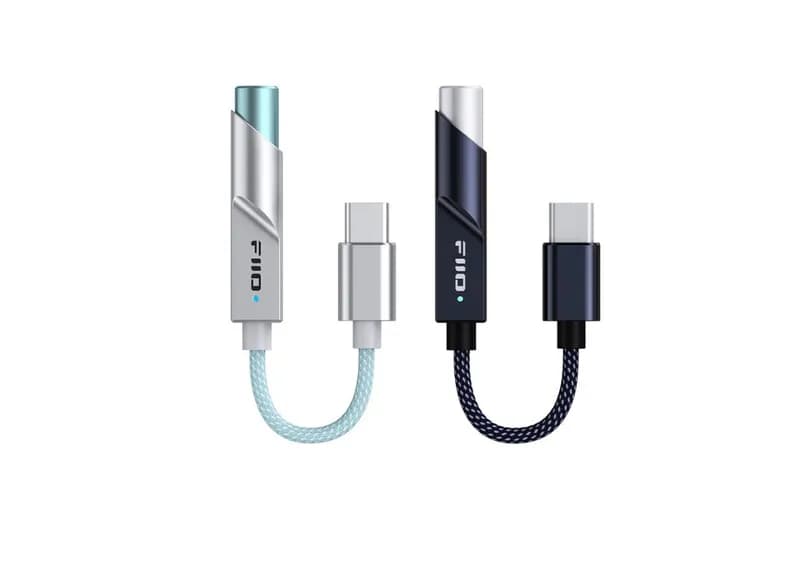
The FiiO KA11 is one of those USB DAC dongles that makes more sense when you look at its size and intended use rather than simply comparing its specifications with larger DAC/amps. At around 8.5g, it is extremely small, yet FiiO rates it for up to 200mW per channel at 32Ω through its 3.5mm single-ended output.
That combination is the KA11's main selling point. It is not designed to replace a desktop DAC/amp, and it does not offer the feature set of more expensive dongles such as a display, hardware volume controls, or a 4.4mm balanced output. Instead, it focuses on one practical goal: providing a compact USB DAC/amp with considerably more output capability than a basic phone audio adapter.
The KA11 uses a Cirrus Logic CS43131 DAC and supports PCM up to 32-bit/384kHz and DSD256. More importantly for everyday use, its low output impedance makes it a sensible match for many IEMs, including low-impedance and multi-driver designs.
Its biggest limitation is the 3.5mm-only output. The official specification lists 200mW at 32Ω but only 22mW at 300Ω. That means the KA11 is much better suited to IEMs and easy-to-drive portable headphones than demanding high-impedance headphones.
For mobile listeners using IEMs, the KA11 is particularly compelling because it combines very small dimensions, low weight, good output power, and a relatively clean sound at a low price. Users who already own a 4.4mm balanced cable, need substantially more voltage for high-impedance headphones, or want advanced controls should look at a higher-tier dongle instead.
FiiO KA11 Specifications
Specification | FiiO KA11 |
|---|---|
DAC chip | Cirrus Logic CS43131 |
Amplifier | SGM8262 |
PCM | Up to 32-bit/384kHz |
DSD | Up to DSD256 |
Output | 3.5mm single-ended |
Output at 16Ω | 245mW + 245mW |
Output at 32Ω | 200mW + 200mW |
Output at 300Ω | 22mW + 22mW |
Output impedance | Below 0.7Ω |
SNR | ≥125dB @ 32Ω |
THD+N | <0.0006% @ 32Ω |
USB | USB-C |
Dimensions | 44.5 × 9.7 × 10.5mm |
Weight | Approximately 8.5g |
Compatible platforms | Android, iOS, Windows, macOS and others |
Output | 3.5mm |
Reference price | Around $30 / ¥199, depending on market |
FiiO's specifications list 245mW per channel at 16Ω, 200mW at 32Ω, and 22mW at 300Ω. The company also specifies an output impedance below 0.7Ω, SNR of at least 125dB, PCM support up to 32-bit/384kHz, and DSD256 support.
The important point is that these numbers should not be interpreted independently. A 200mW rating at 32Ω does not automatically mean that the KA11 can drive every 32Ω headphone equally well. Headphone sensitivity, impedance behavior, voltage requirements, and current requirements all affect real-world performance.
What Really Matters in a USB DAC Dongle?
The KA11 is a good example of why DAC specifications alone are not enough to judge a dongle.
DAC Chip
The CS43131 is a well-established low-power audio DAC designed for portable applications. It supports high-resolution PCM and DSD playback, but the chip itself does not determine the complete sound quality of the KA11.
The analog output stage, power supply, amplifier section, output impedance, and implementation all matter.
In other words, the KA11's value does not come simply from having a CS43131. Its more important achievement is combining that DAC with an SGM8262 amplifier and a very small chassis.
Output Power
The KA11's output figures are particularly impressive for its size:
245mW + 245mW at 16Ω
200mW + 200mW at 32Ω
22mW + 22mW at 300Ω
This makes it considerably more capable than a basic low-power USB audio adapter when used with many portable headphones and IEMs.
But three different concepts should be separated:
Making sound: The headphone produces audio.
Getting enough volume: The headphone reaches your preferred listening level.
Driving the headphone properly: The amplifier has sufficient voltage and current headroom to maintain dynamics and control under demanding conditions.
The KA11 does the first two very easily with most IEMs. The third depends heavily on the headphone.
Output Impedance
FiiO specifies an output impedance below 0.7Ω.
This is useful for low-impedance IEMs and multi-driver earphones because a low output impedance reduces the possibility that the source will significantly alter the headphone's frequency response.
For most modern IEMs, this is preferable to a relatively high-impedance source.
How Does the FiiO KA11 Sound?
The KA11 is not simply a "high-resolution" sounding dongle. Its overall presentation is more useful to describe as clean, smooth, and slightly full-bodied rather than aggressively analytical.
Third-party reviews have described some warmth in the lower midrange and bass, while other listening impressions have characterized it as having a mild U-shaped balance with some emphasis toward the bass and treble regions.
These differences are not necessarily contradictory. The KA11 does not appear to have an extremely strong tonal coloration, so its character can also change noticeably depending on the headphones used.
Bass
Bass has reasonable punch and control without making the KA11 sound excessively thick.
With a relatively thin-sounding IEM, the KA11 can give the presentation a little more body. It is not a bass-boosting DAC in the traditional sense, but its overall presentation does not feel particularly dry.
Midrange
Vocals are not pushed unusually far back.
With neutral or slightly bright IEMs, the KA11 can provide a little more perceived body to vocals and instruments. It is not specifically a vocal-focused dongle, however, so listeners looking for a strongly warm or romantic presentation may prefer a different implementation.
Treble
Treble has reasonable extension and detail without being deliberately aggressive.
This is useful when pairing the KA11 with brighter IEMs. It will not completely remove an IEM's inherent treble peaks or sibilance, but it also does not appear designed to exaggerate them.
Soundstage and Imaging
The KA11's soundstage is not its defining advantage.
It can provide reasonable separation and positioning for its price and size, but it should not be compared with larger DAC/amp systems purely in terms of spatial scale.
For a $30-class dongle, the more meaningful advantage is the combination of output capability and portability.
Does the FiiO KA11 Have Enough Power?
For IEM users, generally yes.
High-Sensitivity IEMs
This is the KA11's strongest use case.
Most efficient IEMs require very little power to reach normal listening levels. With the KA11's low output impedance and relatively high output capability, there is plenty of headroom for most portable earphones.
For extremely sensitive IEMs, however, the question becomes noise and volume control rather than maximum power.
Low-Impedance IEMs
The KA11 is also well suited to low-impedance IEMs.
Its low output impedance helps minimize source-interaction effects, while its output stage provides substantial current capability for a small dongle.
Planar Headphones
This depends heavily on the specific planar model.
Some relatively efficient planar headphones can work surprisingly well from the KA11. Others require substantially more power and will benefit from a more powerful balanced dongle or desktop amplifier.
The KA11 should therefore not be described as a universal planar headphone amplifier.
High-Impedance Headphones
This is where the KA11's limitations become obvious.
The 22mW rating at 300Ω is substantially lower than its 200mW rating at 32Ω.
That does not mean a 300Ω headphone cannot produce sound from the KA11. It means that voltage headroom becomes much more limited.
If your main headphones are demanding 250Ω or 300Ω models, a more powerful DAC/amp is a safer choice.
Does the FiiO KA11 Have Hiss?
The KA11's noise performance is generally good for an entry-level dongle.
FiiO specifies an SNR of at least 125dB at 32Ω and THD+N below 0.0006%. Third-party measurements have also shown low noise and distortion performance.
However, no SNR specification guarantees absolute silence with every IEM.
Extremely sensitive multi-BA earphones can reveal background noise that a conventional dynamic-driver IEM may not. The actual result also depends on the connected device, gain structure, and the sensitivity of the earphone.
For most mainstream IEMs, hiss should not be a major concern.
Can the FiiO KA11 Be Used With a Phone?
Yes. Mobile use is one of its main reasons to exist.
The KA11 works with Android and iOS devices as well as Windows and macOS computers. Some Android phones may require OTG to be enabled, and compatibility can vary between Android devices.
FiiO's software support is also different between platforms. Android users have access to FiiO Control functions, while the iOS version cannot directly control the KA11 in the same way.
The KA11 also supports UAC 1.0 mode, making it suitable for certain gaming devices and consoles that require UAC 1.0 compatibility.
For a simple phone setup, however, the main advantage is that the KA11 can simply remain connected to the phone and provide a dedicated wired headphone output.
Android, iPhone, Windows and macOS Compatibility
Android
The KA11 can operate as a USB Audio device. Depending on the phone, OTG may need to be enabled.
Android provides the most flexibility for configuration and FiiO software support.
iPhone and iPad
USB-C iPhones and iPads can use the KA11 directly through USB-C.
Older Lightning devices may require an appropriate adapter, and power/compatibility behavior can vary depending on the adapter and device.
Windows
The KA11 can function as a USB audio device and is suitable for music, video, and gaming.
For ordinary listening, there is little reason to make the setup unnecessarily complicated. The main advantage is simply bypassing a weak or nonexistent motherboard headphone output.
macOS
macOS generally recognizes USB DAC devices directly, making the KA11 straightforward to use for music and video.
Power Consumption and Heat
The KA11 does not have its own battery. It draws power from the connected USB device.
Its small size makes it convenient for mobile use, but higher output levels naturally require more power from the phone or tablet.
This means the KA11 can be used comfortably for everyday mobile listening, but users who prioritize maximum smartphone battery life should remember that any active USB DAC/amp consumes additional power.
Heat is generally manageable during normal use. Third-party testing has not identified excessive heat as a major problem.
Portability and Build Quality
Portability is probably the KA11's strongest physical advantage.
At approximately 44.5 × 9.7 × 10.5mm and 8.5g, it is small enough to leave attached to a phone without adding much bulk.
The aluminum-magnesium construction also gives it a more substantial feel than a generic plastic USB audio adapter.
The main compromise is the fixed cable.
A detachable cable would make long-term maintenance easier, but it would also add size and weight. FiiO clearly prioritized compactness with the KA11.
For users who regularly carry a dongle in a pocket or bag, the trade-off makes sense. For users who frequently bend or stress USB cables, it is worth keeping in mind.
Is the KA11 Good for Gaming and Movies?
Yes, but its gaming advantage should not be exaggerated.
The KA11 can provide a clean stereo output with sufficient drive for many gaming headsets and headphones. Better output capability can help a demanding headphone reach a more appropriate listening level and maintain dynamics.
However, a DAC does not automatically improve competitive gaming performance.
Footstep positioning depends on the headphone's tuning, the game's audio mix, channel separation, and the listener's perception. The KA11 is better understood as a compact USB audio solution rather than a dedicated gaming sound card.
FiiO KA11 Pros and Cons
Pros
Extremely small and light at around 8.5g
Strong 3.5mm single-ended output for its size
Low output impedance
Good match for many IEMs
Supports PCM 32-bit/384kHz and DSD256
Good noise and distortion performance
Affordable entry point into dedicated USB DACs
Cons
No 4.4mm balanced output
Fixed USB cable
No physical volume buttons
Limited voltage headroom with high-impedance headphones
Software control is more limited on iOS
Higher output levels can increase smartphone battery consumption
FiiO KA11 vs Similar Dongle DACs
Product | DAC | Output | 3.5mm | 4.4mm | Portability | Main Strength |
|---|---|---|---|---|---|---|
FiiO KA11 | CS43131 | 200mW @ 32Ω | Yes | No | Excellent | Very small, strong single-ended output |
FiiO KA13 | Dual CS43131 | Up to 550mW+ @ 32Ω* | Yes | Yes | Very good | Much higher output capability |
MOONDROP Dawn Pro | Dual CS43131 | Up to 4Vrms balanced | Yes | Yes | Very good | Dual outputs and balanced connection |
Hidizs S9 Pro | ES9038Q2M | Up to 100mW SE / 200mW balanced @ 32Ω | Yes | No | Very good | Compact high-resolution DAC/amp |
* KA13's maximum output depends on the output mode and Desktop Mode. Its maximum balanced output should not be interpreted as the normal output level in every operating condition.
The key difference is positioning.
The KA11 emphasizes size and single-ended output.
The KA13 is more appropriate when you need substantially more power and a 4.4mm balanced connection.
The Dawn Pro is more flexible if you want both 3.5mm and 4.4mm outputs.
The S9 Pro is another option for users who value a compact DAC with balanced output and a different implementation.
Rather than asking which one is universally better, the more useful question is which feature you actually need.
FiiO KA11 Rating: 5-Point Scale
Category | Score | Assessment |
|---|---|---|
Sound quality | 4.3/5 | Clean, smooth presentation with some body and good overall compatibility |
Driving power | 4.5/5 | Excellent for IEMs and portable headphones, less suitable for demanding high-impedance models |
Noise performance | 4.5/5 | Very good for typical IEM use |
Portability | 5.0/5 | 8.5g makes it exceptionally easy to carry |
Usability & compatibility | 4.0/5 | Broad device support, but no physical volume buttons |
Value | 4.7/5 | Strong output capability for its price |
Overall | 4.5/5 | A focused, highly portable entry-level dongle DAC |
Who Should Buy the FiiO KA11?
The KA11 makes the most sense for:
IEM users
Smartphone users without a headphone jack
People who want more output capability than a basic USB adapter
Users who prioritize extremely small size
Listeners using low-impedance headphones
First-time buyers of USB DAC dongles
Anyone looking for an inexpensive 3.5mm solution
It is less suitable for:
Users who already have 4.4mm balanced headphones
Owners of demanding 250Ω or 300Ω headphones
People who want physical volume controls
Users who frequently replace USB cables
Buyers who want displays, EQ, gain controls, or other advanced features
FiiO KA11 FAQ
Is the FiiO KA11 worth buying?
For users who want a very small USB DAC with a strong 3.5mm output, the KA11 offers a particularly practical combination of size, power, and price.
How does the FiiO KA11 sound?
It has a generally clean and smooth presentation with some fullness through the lower frequencies. It is not an aggressively analytical or heavily colored DAC.
Is the FiiO KA11 powerful enough?
For most IEMs and low-impedance portable headphones, yes. Its 200mW rating at 32Ω provides substantial headroom. Its 22mW rating at 300Ω shows why it is less suitable for demanding high-impedance headphones.
Does the FiiO KA11 have hiss?
Its measured noise performance is good, and most conventional IEMs should not present a major problem. Extremely sensitive multi-BA IEMs can still reveal noise depending on the complete setup.
Does the KA11 get hot?
It can become warm during use, particularly under higher loads, but heat is not generally considered one of its major weaknesses.
Can the FiiO KA11 be used with a phone?
Yes. It works with compatible Android and iOS devices, as well as Windows and macOS computers. Some Android phones may require OTG to be enabled.
What headphones work best with the KA11?
It is particularly well suited to IEMs and efficient low-impedance headphones. It can work with some planar headphones, but demanding planar models may benefit from a more powerful amplifier.
Does the KA11 support 4.4mm balanced output?
No. It only has a 3.5mm single-ended output. If you already own a 4.4mm cable, the KA13 or another balanced dongle would be a more natural match.
How is the KA11 different from the KA13?
The KA11 prioritizes size and simplicity, while the KA13 provides substantially more output capability and adds a 4.4mm balanced connection.
Is the KA11 good for beginners?
Yes. Its simple plug-and-play design makes it easy to use, and buyers do not need to understand gain settings, menus, or complicated DAC features to get started.
Final Verdict: What Is the FiiO KA11 Really Good At?
The FiiO KA11's biggest advantage is not the CS43131 DAC chip or its high-resolution format support. Its real strength is the combination of an 8.5g body, low output impedance, and 200mW of 32Ω single-ended output power.
If you mainly use high-sensitivity IEMs, the KA11 already provides more than enough output capability for normal listening. In this situation, its low output impedance and compact design are more important than chasing higher power numbers.
If you need more driving power, particularly for planar headphones or demanding high-impedance models, the KA11's limitations become more relevant. A more powerful balanced dongle such as the KA13 is worth considering.
If you mainly listen through a smartphone, the KA11 is particularly convenient because its 8.5g weight adds almost no burden to a mobile setup.
If you need 4.4mm balanced output, the KA11 is simply the wrong model because it only provides 3.5mm single-ended output.
If you prioritize maximum portability, however, the KA11 is difficult to ignore. It is small enough to stay attached to a phone and powerful enough to handle most IEMs without requiring a separate amplifier.
And if you already own a good desktop DAC/amp, the KA11 should be viewed as a mobile companion rather than a desktop upgrade.
Overall, the FiiO KA11 is best understood as a small, inexpensive, high-output 3.5mm dongle DAC. It does not try to do everything. Instead, it focuses on portability, compatibility, and enough power for the vast majority of IEM users. That focused design is also what makes it one of the more practical choices in its price range.