Hisense TV Lineup 2026: Every Series Explained and Which One to Buy
Choosing the best Hisense TV in 2026 requires more than comparing series names or advertised brightness. This buying guide explains the differences between conventional Mini-LED and RGB Mini-LED, compares key U6, U7, U8, and UR models, and highlights the trade-offs found in independent testing. It also covers discounted 2025 televisions, size-specific specification differences, and why the newest flagship models may not be the best value for every buyer.
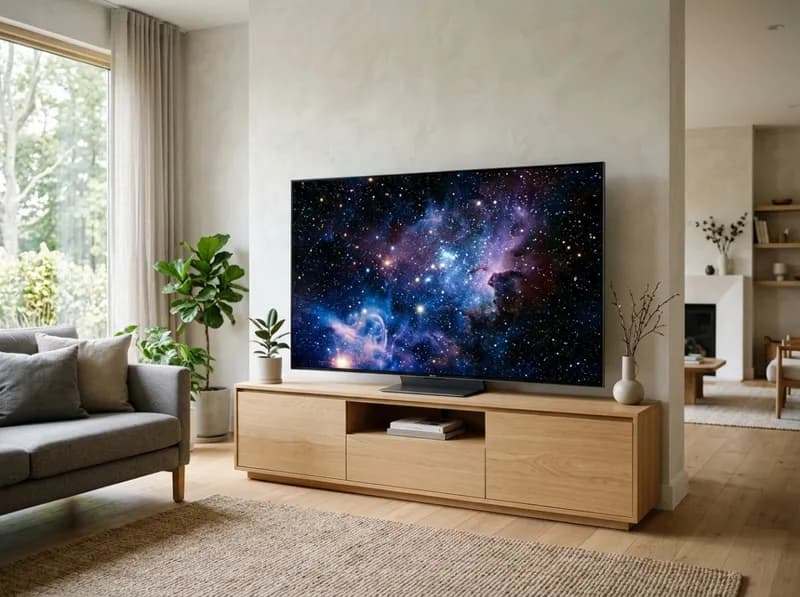
The best Hisense TV in 2026 depends on your budget, room, and how you plan to use it. The U7SG is a strong starting point for most households, the U6SF Pro brings Mini-LED and high-refresh-rate gaming features to a lower price bracket, and the UR8 and UR9 introduce RGB Mini-LED backlighting for buyers who want newer display technology.
Pricing has changed the comparison considerably. The 65-inch Hisense UR8 has dropped to around $1,099.99 at Best Buy, while the 65-inch UR9 has reached approximately $1,699.99. Both are substantially cheaper than their launch prices, making RGB Mini-LED more competitive with conventional Mini-LED TVs than it was earlier in the year.
That does not automatically make the newer technology the better buy. Independent testing found that the 2025 U8QG delivered more precise local dimming than the newer UR8. The U7SG also offers strong brightness, contrast, and gaming support, although its motion handling and viewing angles have drawbacks. Choosing the right model means comparing actual picture performance and street prices, not simply buying the newest series.
Software is another important difference. The U7SG uses Google TV, while the U7SF is the Fire TV alternative. Hisense's premium RGB models also bring newer processing and gaming features, and selected models are receiving Dolby Vision 2 through software updates. Availability and update eligibility vary by model, so check the current U.S. product page before buying.
This guide covers the major Hisense TV series available or announced for the 2026 U.S. market, including current Mini-LED models, RGB Mini-LED televisions, lifestyle TVs, and discounted sets from previous generations. Where independent testing is unavailable, recommendations are based on published specifications and should be treated as provisional.
Quick Recommendations: Which Hisense TV Should You Buy?
Buyer or use case | Hisense TV to consider | Why it stands out | Main drawback |
|---|---|---|---|
Best starting point for most households | U7SG | Bright Mini-LED picture, local dimming, extensive gaming support | Fast-motion blur and narrow viewing angles |
Prefer Amazon's TV interface | U7SF | Fire TV alternative to the Google TV U7SG | U.S. availability and independent testing need confirmation |
Best lower-cost Mini-LED option | U6SF Pro | Strong measured brightness, low input lag, built-in subwoofer | Motion blur and screen-uniformity issues |
Cheapest route into Mini-LED | U6SF | Local dimming, matte screen, high-refresh-rate features | Brightness and dimming-zone specifications remain uncertain |
Best discounted conventional Mini-LED | U8QG | Excellent measured HDR brightness and black levels for the price | Older model; panel and performance vary by size |
Most affordable entry into RGB Mini-LED | UR8 | 4K/180Hz, four HDMI 2.1 inputs, newer backlight architecture | U8QG performed better in local-dimming precision tests |
Premium RGB Mini-LED | UR9 | High brightness, USB-C DisplayPort, Devialet-tuned audio | Expensive; measured brightness falls short of the advertised peak |
Ultra-large flagship available now | 116UX | 116-inch RGB Mini-LED screen | Extremely expensive and difficult to accommodate |
Art-inspired living room TV | S7 CanvasTV | Matte screen and frame-style design | Picture and sound priorities differ from performance-focused models |
Lowest-price clearance option | QD7QF or older U-series | Discounts on previous-generation hardware | Check refresh rate, ports, warranty, and exact screen size |
For most buyers, the U7SG, U6SF Pro, and discounted U8QG deserve the closest look. The UR8 becomes more compelling at its lower street price, while the UR9 is aimed at buyers who specifically want premium RGB Mini-LED hardware.
One caution applies to sports fans: the U7SG is bright enough for many well-lit rooms, but independent testing has found visible dirty-screen effects and blurred fast motion. A bright screen does not guarantee that a television will handle football, hockey, or fast camera pans particularly well.
Hisense TV Lineup at a Glance
Hisense's range is easier to understand when divided into three main groups: value and mainstream Mini-LED, premium Mini-LED, and RGB Mini-LED. Lifestyle models and discounted older televisions fill out the lineup.
Model or series | Generation | Position | Main distinction |
|---|---|---|---|
UR9 | 2026 | Premium RGB Mini-LED | High-end RGB backlight, Google TV, USB-C DisplayPort and premium audio |
UR8 | 2026 | More accessible RGB Mini-LED | 4K/180Hz and four HDMI 2.1 inputs |
U7SG | 2026 | Mainstream premium Mini-LED | Google TV, high brightness and gaming features |
U7SF | 2026 | Mainstream premium Mini-LED | Fire TV version; verify U.S. availability |
U6SF Pro | 2026 | Value Mini-LED | Fire TV, built-in subwoofer and strong measured brightness |
U6SF | 2026 | Entry-level Mini-LED | Best Buy exclusive, matte screen and high-refresh-rate support |
S7 CanvasTV | 2026 | Lifestyle TV | Matte display designed to resemble framed artwork |
S6 FollowMe | 2026 | Portable lifestyle TV | Battery-powered movable touchscreen announced at CES 2026 |
116UXS | 2026 | Ultra-large RGB flagship | Announced for France; no confirmed U.S. release at the time of research |
U8QG | 2025 | Premium Mini-LED, clearance | 165Hz panel and strong HDR performance |
U75QG | 2025 | Mainstream premium Mini-LED, clearance | Previous-generation alternative to the U7SG |
QD7QF | 2025 | Budget-oriented clearance | Features and refresh rates vary by screen size |
116UX / 100UX | 2025 | Ultra-large RGB Mini-LED | Older flagship models available through clearance channels |
116U75QG | 2025 | Ultra-large conventional Mini-LED | 116-inch alternative to the RGB flagship |
U9N | 2024 | Previous premium tier | Worth considering only at an attractive price |
U8N / U7N / U6N | 2024 | Earlier premium and mainstream tiers | Older hardware; compare discounts against current models |
The U7SG and U7SF represent different smart-TV platforms, not simply different model numbers. The U8QG, U75QG, and QD7QF are older televisions still relevant because discounts can make them competitive with newer models.
Is There a New Hisense U8 Series TV in 2026?
Do not assume that a new U8-series model exists simply because Hisense has released new U-series televisions. The U8QG is a 2025 model, and a widely available 2026 U8 successor could not be established from the U.S. product information and independent coverage used for this guide.
For buyers shopping around the U8QG's former price range, the newer UR8 now occupies part of the same territory. The decision is between the U8QG's proven conventional Mini-LED performance and the UR8's newer RGB backlight, higher refresh rate, and additional HDMI connectivity.
Hisense UR9: Premium RGB Mini-LED
The Hisense UR9 sits at the top of the company's 2026 RGB Mini-LED range. Unlike a conventional Mini-LED television that uses a blue or white backlight with a quantum-dot color layer, RGB Mini-LED uses red, green, and blue light emitters in the backlight itself.
The goal is better control over color and brightness, particularly in saturated HDR highlights. It is an ambitious approach, but the technology label alone does not tell you how well a television handles black levels, motion, or color accuracy.
Key features and specifications
Independent testing of the UR9SG confirms a 4K panel with refresh rates up to 180Hz, HDMI 2.1 bandwidth across its three HDMI inputs, USB-C with DisplayPort Alt Mode, Google TV 14, an ATSC 3.0 tuner, and a Devialet-tuned audio system.
Local-dimming zone counts vary by screen size:
Screen size | Reported dimming zones |
|---|---|
65 inches | 1,056 |
75 inches | 980 |
85 inches | 1,320 |
100 inches | 1,920 |
The 75-inch model has fewer reported zones than the 65-inch, so do not assume that moving to a larger screen automatically means a higher zone count.
How bright is the UR9 in real-world testing?
Hisense advertises peak brightness of up to 5,000 nits. Business Insider's instrumented testing measured approximately 3,300 nits under its test conditions.
That is still exceptionally bright for a television, but it is not the same as reaching the advertised 5,000-nit figure. The difference matters when comparing specifications from manufacturers with measurements from independent reviewers.
What are the UR9's weaknesses?
The UR9's premium price does not eliminate the usual LCD trade-offs. Tom's Guide reported color-balance issues and a relatively limited game-feature menu, while eCoustics highlighted black crush and declining brightness away from the center of the screen. Business Insider also observed occasional picture-mode changes during use.
These findings are review observations, not proof that every unit has the same problems. They are nevertheless worth considering when deciding whether to spend more on the UR9 instead of a discounted conventional Mini-LED model.
Hisense UR9 pricing
Best Buy's October 2026 listings put the 65-inch model at approximately $1,699.99, down from a listed MSRP of $2,199.99. Other reported prices include $2,999.99 for the 75-inch, $3,999.99 for the 85-inch, and $5,999.99 for the 100-inch.
Some buying guides quote different prices without clearly identifying the screen size. Use the 65-inch configuration as the main reference point and check the exact SKU before comparing deals. A 55-inch version has appeared in launch materials, but its U.S. retail availability was not established at the time of research.
Who should buy the UR9? It suits buyers who want premium RGB Mini-LED, very high brightness, high-refresh-rate gaming, USB-C DisplayPort connectivity, or an ATSC 3.0 tuner. If your main goal is excellent movie performance for less money, compare the UR8 and U8QG before spending more.
Hisense UR8: RGB Mini-LED at a More Accessible Price
The UR8 brings RGB Mini-LED to a wider range of screen sizes, from 55 to 100 inches. It combines the newer backlight architecture with Google TV, a high-refresh-rate panel, and four HDMI 2.1 inputs.
Independent testing confirms support for 4K at up to 180Hz, variable refresh rate, and an anti-reflective screen coating marketed as Obsidian. TechRadar found plenty to like about its picture, although it did not consider the television an automatic replacement for OLED. RTINGS places it between the premium UR9 and the mainstream U7SG in the product range.
The UR8 uses a VA LCD panel, so picture contrast and color can change when viewed from the side. Review coverage has also noted a warm-looking picture before adjustment. These are manageable trade-offs, but they matter if your seating is spread across a wide living room.
Why the UR8 is more attractive at its current price
Early coverage compared the UR8 with other RGB Mini-LED televisions at launch prices, when the new technology carried a larger premium. That comparison has changed.
TechRadar reported launch pricing ranging from $1,299 for the 55-inch model to $5,999 for the 100-inch version. By October 2026, Best Buy was listing the 65-inch at approximately $1,099.99 to $1,199.99, depending on the listing, and the 75-inch at around $1,699.99.
The 65-inch price is roughly $900 below the original $1,999.99 launch price. At that level, RGB Mini-LED is no longer an upgrade reserved exclusively for high-end enthusiasts.
One specification discrepancy deserves attention. ZDNET has cited 165Hz, while Hisense's specifications and RTINGS testing support 180Hz for the relevant UR8 configuration. Check the exact model's documentation if refresh rate is a deciding factor.
UR8 vs. U8QG: Which is the better value?
The discounted U8QG can cost around $999.99 for the 65-inch, placing it close to the UR8. RTINGS found that the U8QG handled local dimming more precisely in its testing, despite being an older conventional Mini-LED television.
The UR8 counters with its 180Hz panel, four HDMI 2.1 inputs, and newer platform. If those features matter to you, the price difference may be worthwhile. If your priority is picture performance per dollar and you do not need the newer features, the U8QG remains a strong alternative.
Hisense 116UXS: Is the New 116-Inch Flagship Available in the U.S.?
The Hisense 116UXS is an ultra-large RGB Mini-LED flagship, but buyers in the United States should not assume it is available just because it has been announced internationally.
At the time of research, Hisense had unveiled the model with French pricing of €16,999 and a planned Q4 2026 launch window. A confirmed U.S. release date and price had not been announced.
Hisense's claimed specifications include more than 40,000 local-dimming control zones, 110% of the BT.2020 color gamut, a 180Hz panel, and its ChromaMagic 2.0 processing system. The RGB-C architecture adds cyan to the red, green, and blue emitters. Its potential benefits are technically plausible, but the manufacturer's claims should not be treated as independently verified performance results.
Which ultra-large Hisense TVs can U.S. buyers consider?
Model | Reported U.S. availability | Key consideration |
|---|---|---|
116UXS | No confirmed U.S. release at research time | Wait for an official U.S. price and availability announcement |
116UX | $19,999.99 at Hisense's clearance outlet | Previous-generation 116-inch RGB flagship |
100UX | $9,999.99 at the clearance outlet | Large RGB Mini-LED screen for less than the 116-inch model |
116U75QG | $12,999.99 at the clearance outlet | Conventional Mini-LED alternative |
TCL 115QM891G | Cross-brand alternative | Worth comparing for buyers who want a screen above 110 inches |
The 116UX's advertised specifications include peak brightness of up to 8,000 nits, 3,584 dimming zones, a 165Hz panel, and a 6.2.2-channel Devialet audio system. These are manufacturer figures, not independent measurements.
A 116-inch television also creates practical challenges that smaller sets do not. Measure doorways, hallways, stairwells, and the final installation area before ordering. Delivery, wall reinforcement, and professional mounting can add substantial expense.
For most households, a 100-inch model is easier to justify. The 100-inch U7SG has appeared at around $2,497.97, while the 100UX offers RGB Mini-LED at a considerably higher price. The 116UXS is worth revisiting once its U.S. launch is confirmed, but it will remain a specialist purchase.
Hisense U8QG: The Discounted Mini-LED TV Worth a Look
The Hisense U8QG launched in 2025, but its discounted price makes it one of the most relevant televisions to consider alongside the 2026 lineup.
It combines conventional Mini-LED backlighting, quantum-dot color, local dimming, a native 165Hz panel, Google TV, and USB-C DisplayPort Alt Mode. RTINGS confirms 4K at up to 165Hz, variable refresh rate, Dolby Vision, HDR10+, and support for DTS audio formats. The tested configuration has three HDMI inputs with HDMI 2.1 bandwidth.
Picture quality and gaming
Independent testing found excellent HDR brightness, deep blacks, and vivid color. The main compromises include bright HDR tone mapping, blooming around small highlights and subtitles, and some motion blur.
Panel technology can also vary by screen size. Reports indicate that the 55-inch and 75-inch versions may differ from the tested 65-inch configuration, so results from one size should not automatically be applied to another.
Current clearance prices
Hisense's clearance outlet has listed the U8QG at approximately:
Screen size | Reported clearance price |
|---|---|
65 inches | $999.99 |
75 inches | $1,299.99 |
85 inches | $1,699.99 |
100 inches | $2,999.99 |
Price trackers have recorded the 65-inch model dropping as low as $776.80, with a reported 90-day average around $949.87. Actual stock and prices vary.
At $999.99, the 65-inch U8QG is only about $100 less than the UR8 at its reported sale price. That makes the decision unusually close. The U8QG has the stronger local-dimming test result, while the UR8 offers a newer backlight architecture, 180Hz refresh rate, and an additional HDMI 2.1 input.
For buyers who care most about tested picture performance per dollar, the U8QG is a compelling clearance purchase. The UR8 is more attractive if its additional connectivity and newer features will actually be used.
Hisense U7SG vs. U7SF: The Mainstream Sweet Spot
The U7 family is a sensible starting point for buyers who want better HDR brightness and gaming performance than a basic budget television without paying RGB Mini-LED prices.
The U7SG uses Google TV, while the U7SF is the Fire TV alternative. Hisense's 2026 lineup materials identify both versions, but availability and independent testing should be checked separately.
The tested U7SG supports 4K at up to 165Hz, variable refresh rate, HDMI 2.1 bandwidth on all four inputs, Dolby Vision, and HDR10+. Most tested sizes also feature a matte anti-reflective coating.
RTINGS found high SDR brightness, good contrast, vivid color, and extensive gaming support. The main drawbacks were narrow viewing angles, visible dirty-screen effects, and blurred fast motion. These issues are particularly noticeable during sports broadcasts, where camera pans can reveal uneven screen uniformity across large areas of grass or ice.
Hisense U7SG specifications by screen size
The U7SG is not identical across all six screen sizes. Brightness, panel type, local-dimming zones, and connectivity can vary.
Screen size | Reported dimming zones | Advertised peak brightness | Panel or finish notes | Listed MSRP |
|---|---|---|---|---|
55 inches | 512 | 2,000 nits | IPS-ADS panel; matte coating | $1,299.99 |
65 inches | 960 | 3,000 nits | Matte coating | $1,499.99 |
75 inches | 1,100 | Around 3,000 nits | VA panel; matte coating | $1,999.99 |
85 inches | 1,536 | Around 3,000 nits | Matte coating | $2,499.99 |
100 inches | 2,304 | Not confirmed here | Glossy finish | $4,499.99 |
116 inches | 3,168 | 4,000 nits reported | HDMI and specification details require U.S. SKU verification | Around $19,999.99 |
The 55-inch model has fewer reported dimming zones and a lower advertised brightness than the 65-inch. That means buyers should not assume the smaller version delivers exactly the same HDR performance as the 65-inch model reviewed by independent testers.
Hisense U7SG street prices
Retail prices have fallen below the original MSRPs. Reported offers include $827.99 to $899.99 for the 65-inch, $647.99 for the 55-inch during Prime Day, $1,697.99 for the 85-inch, and a low of approximately $2,497.97 for the 100-inch.
Early Black Friday 2026 listings have also advertised a 65-inch U7 model around $747.99. These prices are time-sensitive, but they show why comparing street prices matters more than relying on the original list price.
Should you buy the U7SF instead?
The U7SF offers Fire TV rather than Google TV, which may suit households already using Amazon's streaming ecosystem. However, the U7SG's independent test results should not automatically be applied to the U7SF.
At the time of research, the U7SF had been announced but was not listed on Hisense USA's own website. Secondary sources also differ on whether the two versions share every gaming and wireless feature.
Choose between them based on the operating system once the U7SF's U.S. availability and specifications are confirmed. Until independent measurements are available, treat its picture performance as unverified rather than assuming the two models are identical.
Hisense U6SF Pro: A Strong Value Mini-LED TV
The U6SF Pro is one of the more attractive options for buyers who want Mini-LED contrast, high refresh rates, and gaming features without moving into the U7 or RGB ranges.
PCMag's review measured peak brightness at 1,442 nits and input lag at 4.6 milliseconds for 1080p/120Hz, rising to 9.2 milliseconds for 4K/60Hz. Those are strong results for a value-oriented television.
The U6SF Pro runs Fire TV with Alexa+, includes four HDMI inputs with HDMI 2.1 bandwidth on two, and supports FreeSync Premium Pro. It also has DTS Virtual, a built-in subwoofer, and Wi-Fi 6.
U6SF Pro pricing
Reported retail prices for the range are:
Screen size | Reported price |
|---|---|
55 inches | $499.99 |
65 inches | $649.99 |
75 inches | $799.99 |
85 inches | $1,099.99 |
100 inches | $2,299.99 |
The 75-inch model has dipped to around $749.99 during promotional periods.
The main compromises are motion handling and screen uniformity. RTINGS found significant blur during fast movement, distracting uniformity problems in some scenes, and rapid picture degradation when viewed from the side. The set also lacks an ATSC 3.0 tuner and hands-free voice control.
For movies, scripted television, and casual streaming, its brightness, contrast, and features make a convincing package. If sports and fast-paced gaming are priorities, compare it with the U7SG before deciding whether the extra cost is justified.
Hisense U6SF: The Budget Mini-LED Option
The standard U6SF sits below the U6SF Pro and is aimed at buyers who want local dimming and a high-refresh-rate panel for less money.
It is a U.S. Best Buy exclusive, runs Fire TV, and uses a matte screen. Reported prices include approximately $399.99 for the 50-inch, around $600 for the 65-inch during ordinary retail periods, and $699.99 for the 75-inch at its listed price. The exact price depends on size and promotion.
The U6SF supports a refresh rate of up to 144Hz with variable refresh rate, but HDMI 2.1 bandwidth is available on only two inputs. Check the port layout if you plan to connect a gaming PC, PlayStation 5, Xbox Series X, and an additional HDMI device.
How bright is the U6SF?
Brightness is one of the more uncertain specifications for this model.
Hisense and retailer listings advertise peak brightness of 1,000 nits for several screen sizes and up to 1,200 nits for the 75-inch. Some owner-reported measurements, however, are closer to 600 nits. Reports of conversations with customer service have also cited different figures depending on the screen size.
Local-dimming zone counts are similarly inconsistent. Some owners report a 128-zone configuration based on service-menu information, while other sources cite 144 or 160 zones.
Without a reliable independent test covering the relevant U.S. sizes, these discrepancies cannot be resolved confidently. Treat the advertised brightness as a manufacturer specification rather than a guaranteed real-world measurement.
The U6SF may be a good fit if the price is substantially lower than the U6SF Pro and you mainly watch streaming services, films, and everyday television. If HDR brightness is a major reason for upgrading, compare verified measurements and return policies before buying.
Final Recommendation: Which Hisense TV Is Best in 2026?
The best Hisense TV depends on which features you will notice every day.
For most households: Start with the U7SG. It balances brightness, contrast, gaming support, and price, especially when discounted. Be aware of its motion and viewing-angle limitations.
For a value Mini-LED TV: Compare the U6SF Pro with the U7SG. The Pro has strong measured brightness and low input lag, but the U7SG is the safer choice for buyers concerned about fast-motion performance.
For the best clearance value: The U8QG deserves serious consideration. Its independently tested picture performance remains competitive, and discounts bring it close to the newer UR8.
For RGB Mini-LED without flagship pricing: The UR8 is much more appealing at around $1,100 for the 65-inch than it was at launch. Its 180Hz panel and four HDMI 2.1 inputs are meaningful advantages if you need them.
For premium RGB Mini-LED: The UR9 offers higher-end hardware and extensive connectivity, but its measured performance does not match every headline claim.
For an ultra-large screen: Compare the available 100-inch models before committing to the 116-inch flagships. Installation costs and room dimensions matter as much as the television's specifications.
For the lowest purchase price: Look at discounted QD7QF and previous-generation U-series models, but verify the exact screen size, refresh rate, port configuration, and warranty.
Do not choose a Hisense TV solely by its series number. A discounted previous-generation U8QG can be a better purchase than a newer UR8 for picture quality per dollar, while the UR8 can be the smarter option for a buyer who needs its newer connectivity and higher refresh rate. Compare the exact screen size, current selling price, independent measurements, and features you will actually use before making the final decision.
Related GuidesMore →
Levoit Humidifiers Explained: Models Compared, Features, Prices, and What to Know Before Buying
Levoit’s humidifier lineup includes several distinct families, from budget-friendly Classic and NeoClassic models to warm-mist OasisMist units and mist-free Superior evaporative humidifiers. This guide compares tank capacities, humidity controls, app connectivity, cleaning requirements, water recommendations, and verified U.S. prices. Independent test results from Wirecutter, Good Housekeeping, RTINGS, Better Homes & Gardens, and Popular Mechanics help you choose a model based on real-world performance rather than specifications alone.
Best TCL TVs in 2026: Which Series Is Right for You?
TCL's 2026 TV lineup ranges from affordable QLED and entry-level Mini-LED models to premium SQD-Mini LED sets and the RGB-Mini LED RM9L. This guide compares the major series, including the QM7L, QM8L, and X11L, using current U.S. prices, manufacturer specifications, and independent test results. Learn which models offer the best value, which suit bright rooms or HDR movies, and what compromises to consider before spending more.
Lasko Space Heater Lineup: Every Major Type Explained and How to Choose
Lasko makes a wide range of space heaters, from low-wattage MyHeat personal models to ceramic towers, Ellipse heaters, infrared quartz units, and bathroom-specific designs. This guide explains the major Lasko heater families, compares key models, and highlights differences in wattage, controls, prices, and safety features. Learn which options make sense for a desk, bedroom, or larger living area—and why checking the exact model number matters before buying.