Samsung TV Buying Guide 2026: OLED vs. Neo QLED vs. Mini LED
Samsung's 2026 TV lineup includes Crystal UHD, Mini LED, Neo QLED, OLED, Micro RGB, 8K, and The Frame models, but the differences go beyond their marketing names. This guide compares the major series, explains their strengths and limitations, and highlights which TVs suit different budgets, room conditions, and gaming needs. It also covers current U.S. pricing, discounted 2025 models, and alternatives worth considering before you buy.
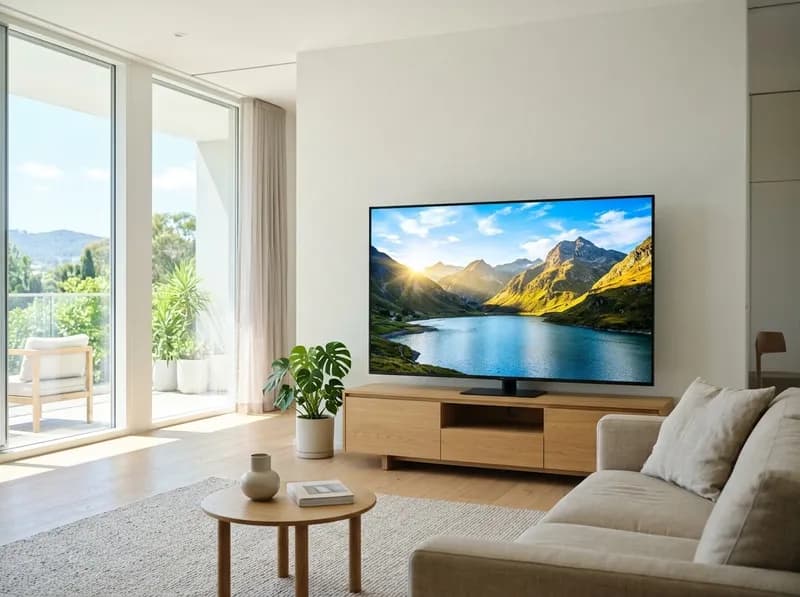
The best Samsung TV in 2026 depends on your budget, room lighting, screen size, and how you use it. For most buyers, the Samsung S90H OLED is the best all-around choice, combining perfect blacks, a matte Glare Free screen, 4K gaming up to 165Hz, and four HDMI 2.1 ports. If you want OLED picture quality for less, the S85H is worth a close look at its current sale prices. For a bright living room where LCD brightness matters more than OLED contrast, the QN80H Neo QLED is a stronger starting point.
This year's lineup has a few surprises. Samsung has skipped the QN90 series in its 2026 U.S. range, introduced a budget Neo QLED tier called the QN1EH, and expanded its Micro RGB TVs into a more prominent premium category. The M70H and M80H also carry Mini LED branding, but independent testing has found that they lack local dimming and quantum dots—the features many shoppers associate with a meaningful picture-quality upgrade.
There is another reason to compare carefully: discounted 2025 models can be better buys than their newer replacements. The S90F, QN90F, and QN990F are worth checking before paying extra for a 2026 model.
Quick recommendations:
Best Samsung TV for most people: S90H OLED
Best value OLED: S85H OLED
Best Samsung TV for bright rooms: QN80H Neo QLED or S90H OLED, depending on your priorities
Best premium OLED: S95H, but compare it with the LG G6
Best budget large-screen TV: U9000H Crystal UHD
Best budget 4K/144Hz gaming TV: M80H, with significant picture-quality compromises
Best alternative to the discontinued QN90 series: QN80H or a discounted QN90F
Best choice for 8K buyers: A discounted 2025 QN990F is generally easier to justify than the QN990H
Samsung TV Lineup 2026: At a Glance
Samsung's U.S. lineup covers conventional 4K LCD TVs, entry-level and premium Neo QLED models, several OLED tiers, Micro RGB TVs, 8K displays, and The Frame lifestyle TVs. These categories serve different needs, so the most expensive model is not automatically the best choice.
Series | Display technology | Best for | Main advantage | Main drawback |
|---|---|---|---|---|
Crystal UHD U8000H / U9000H | 4K LCD, conventional LED backlight | Everyday streaming and large screens on a budget | Low prices; 98-inch U9000H has been listed at $1,499.99 | No quantum dots or local dimming; limited HDR performance |
QN1EH | Entry-level Neo QLED LCD | Buyers looking for a lower-priced Neo QLED | 75-inch model listed at $1,249.99 in Samsung's U.S. store | Limited independent testing; gaming capabilities need verification |
M70H / M80H / M90H | LCD with Mini LED backlight | Budget buyers and selected large-screen gaming setups | M80H supports 4K/144Hz; M70H 55-inch model reached $299.99 | No local dimming or quantum dots on M70H/M80H |
QN70H | Entry-level Neo QLED | Buyers considering a heavily discounted set | Quantum-dot branding and selected high-refresh modes | 60Hz native panel, no HDMI 2.1, weak motion handling |
QN80H | Neo QLED with Mini LED local dimming | Bright rooms, sports, and gaming | 4K/144Hz, four HDMI 2.1 ports, strong measured brightness | Narrow viewing angles; check specifications by size |
QN990H | 8K Neo QLED LCD | Buyers who specifically want an 8K TV | Advanced processing, Wireless One Connect, 4K/240Hz mode | Expensive; limited native 8K content |
S85H | WOLED | Affordable OLED viewing and dark-room movies | Perfect blacks at a comparatively low price | Glossy screen, limited brightness, weak built-in speakers |
S90H | WOLED in North America | Movies, mixed use, and PC gaming | 4K/165Hz, matte Glare Free finish, four HDMI 2.1 ports | No Dolby Vision; panel type may vary by region |
S95H | QD-OLED | Premium home theater and gaming | Extremely high measured HDR brightness | Expensive; no Dolby Vision or ATSC 3.0 tuner |
S99H | Design-focused OLED | Buyers prioritizing appearance and premium construction | FloatLayer design; praised by What Hi-Fi | Limited evidence of U.S. availability and pricing |
R85H / R95H | Micro RGB-backlit LCD | Premium large-screen buyers interested in new display technology | Wide color capabilities; R95H adds 165Hz and Glare Free | Expensive; independent testing reports visible blooming |
The Frame / Built-in / Frame Pro | Lifestyle LCD; Pro adds Neo QLED hardware | Art display and interior design | Art Mode and a range extending to 98 inches | Art subscription costs extra; picture quality trails similarly priced conventional TVs |
A note on the terminology: QLED refers to quantum-dot color technology, Mini LED describes the backlight, and OLED uses self-emissive pixels. Micro RGB uses separate red, green, and blue LEDs to illuminate an LCD panel. They are not interchangeable technologies.
The distinction is particularly important in 2026: the M70H and M80H use Mini LED backlights but lack local dimming and quantum dots, according to the independent testing cited in this guide. Check the exact model number rather than buying on the technology label alone.
What Happened to the Samsung QN90 Series?
There is no Samsung QN90H in the 2026 U.S. lineup. Samsung has skipped the QN90 series without publishing an official explanation.
For years, the QN90 family was a popular choice for buyers who wanted a bright LCD with strong local dimming without paying flagship OLED prices. If that is what you are looking for now, three options deserve attention.
1. Samsung QN80H: The closest current alternative
The QN80H is the most straightforward 2026 alternative for buyers who want a bright Neo QLED with effective local dimming. Independent measurements put its HDR peak brightness at approximately 1,033 nits, and the TV supports 4K/144Hz, VRR, and four HDMI 2.1 ports.
Its main limitation is viewing angle. The picture loses quality when you sit well to the side, so it is a better fit for a room where most viewers sit directly in front of the screen.
2. Samsung QN90F: The clearance option
The 2025 QN90F remains worth considering while stock lasts. It offers full-array local dimming, strong brightness, and gaming features that make it a more direct continuation of the older QN90 formula than some of Samsung's new models.
If a QN90F is substantially cheaper than a comparable QN80H, compare the same screen size and verify the warranty before buying. Clearance stock varies by retailer.
3. Samsung R85H Micro RGB: A different approach
Samsung's R85H occupies part of the price territory formerly associated with the QN90 family, but it is not a like-for-like replacement. It uses Micro RGB backlighting rather than conventional Mini LED local dimming.
IGN's hands-on coverage praised its color but reported a relatively dim image for its price and visible blooming around bright objects. Those findings make it important to compare independent reviews of the exact size before spending extra.
Bottom line: Start with the QN80H if you want a current Samsung LCD with effective local dimming. Compare the QN90F if you find a good clearance deal. Consider the R85H for its Micro RGB technology, not simply because it occupies a similar price bracket.
Samsung TV Technologies Explained
Crystal UHD: Basic 4K for everyday viewing
The U8000H and U9000H are Samsung's entry-level 4K LCD TVs. They make sense for streaming, broadcast television, spare rooms, and buyers who want the largest possible screen for their money.
They do not have quantum dots or local dimming, and their brightness and contrast are limited compared with Samsung's premium models. That makes them less suitable for people who want convincing HDR highlights or deep blacks in a dark home theater.
Price is their main attraction. In the October 22, 2026 snapshot used for this guide, the U8000H 43-inch model was listed at $229.99, while the 85-inch model was $899.99. The 98-inch U9000H had been listed at $1,499.99 at Best Buy, against a $1,799.99 list price.
A 98-inch 4K TV at that price is compelling if screen size matters more to you than HDR performance. If picture quality is the priority, a smaller OLED or a properly equipped Mini LED TV is usually a better choice.
Where did Samsung's standalone QLED range go?
Samsung's 2026 U.S. lineup no longer prominently features a separate conventional QLED series. Quantum-dot technology remains in Neo QLED, QN1EH, and 8K models, but it is absent from the M70H and M80H discussed here.
Older 2024 and 2025 QLED TVs may still be good purchases at clearance prices. Just make sure you are comparing the same technology and model year rather than assuming every Samsung LCD offers quantum-dot color.
Samsung M70H and M80H: Mini LED without the usual benefits
The M-series is one of the easiest parts of the 2026 lineup to misunderstand. Mini LED normally offers the most benefit when the TV can control groups of backlight LEDs independently. That helps brighten highlights while keeping nearby dark areas dark.
Independent testing of the M70H and M80H found no local dimming, despite the Mini LED branding. Neither model uses quantum dots, either. The result is a set of TVs whose backlight technology sounds more premium than their overall picture performance suggests.
Samsung M80H
The M80H is the more interesting model for budget gaming. It supports 4K/144Hz through three HDMI 2.1 ports, giving PC gamers high refresh rates without paying Neo QLED prices.
However, RTINGS measured brightness at around 350 nits and criticized its contrast and response-time performance. Its overall assessment was that it is a poor buy for most people. The lack of local dimming is a major reason not to choose it as a picture-quality upgrade.
Buy it only if inexpensive 4K/144Hz connectivity is your main requirement and you accept the compromises.
Samsung M70H
The M70H is a more basic option. RTINGS describes it as a native 60Hz TV without HDMI 2.1, with substantial motion blur in sports testing. Its 55-inch model reached $299.99 in the price snapshot, making it an inexpensive large-screen LCD rather than a serious Mini LED upgrade.
Samsung M90H
The 100-inch M90H was listed at $2,499.99, with a promotional price of $2,299.99. It offers a much larger screen than most buyers can accommodate, but independent lab testing of this specific model was not available in the sources used for this guide. Its actual contrast, brightness, and dimming performance should therefore be treated as unverified.
M-series verdict: Choose the M70H for a very cheap large screen or the M80H if you specifically need budget 4K/144Hz gaming. If you want better contrast and HDR, compare the QN80H or a discounted 2025 Mini LED competitor instead.
Samsung Neo QLED: QN1EH vs QN70H vs QN80H
Neo QLED combines quantum-dot color with advanced backlighting. But the three 2026 models are not equivalent, and the Neo QLED name alone does not guarantee a strong gaming experience.
QN80H: The strongest all-around LCD choice
The QN80H is the model to start with if you want an LCD for a bright living room, sports, or gaming. Independent testing has measured HDR peak brightness at approximately 1,033 nits, while RTINGS reports good contrast, high peak brightness, and effective local dimming.
Its gaming specifications include 4K/144Hz, VRR, FreeSync Premium Pro, and four HDMI 2.1 ports. A DLG mode also supports 1080p/240Hz on compatible setups.
There are caveats. The VA panel has narrow viewing angles, some units show screen-uniformity issues, and SDR colors can look too blue before calibration. The 50-inch version is limited to 60Hz, so check the specification for the size you intend to buy.
Launch prices included $1,299.99 for 55 inches, $1,999.99 for 75 inches, and $2,799.99 for 85 inches. The 100-inch model launched at $5,499.99 and was seen around $4,999.
It is worth comparing the TCL QM8, which offers strong brightness for the money, and Sony's Bravia 7, which adds Dolby Vision.
QN70H: A model to approach cautiously
The QN70H is much less convincing. RTINGS found an edge-lit panel, a native 60Hz refresh rate, no HDMI 2.1, no VRR, heavy motion blur, and distracting blooming.
The TV does have local-dimming hardware, but testing suggests that it is not effective enough to deliver the benefits buyers expect from a well-equipped Neo QLED.
Some sizes support 1080p/120Hz through Samsung's DLG feature, while some retailer listings claim higher refresh rates. Those claims should not be treated as equivalent to native 4K/120Hz or 4K/144Hz. The 43-inch and 50-inch versions lack even the documented 1080p/120Hz mode.
With the 43-inch model listed at $599.99 and the 85-inch model at $1,899.99, the QN70H is worth considering only if a substantial discount changes the value calculation.
QN1EH: A new entry-level Neo QLED
The QN1EH adds a lower-priced step into Samsung's Neo QLED range. Samsung's U.S. store listed the 75-inch version at $1,249.99 and the 85-inch version at $1,849.99 in the October snapshot.
Independent testing remains limited, and the available evidence does not establish that its gaming features match the QN80H. It may be a reasonable choice for everyday viewing if you want quantum-dot color at a lower price, but check the specifications for your exact screen size before buying.
Samsung OLED TVs: S85H vs S90H vs S95H vs S99H
Samsung's OLED range offers pixel-level light control, so black areas remain black without the halos that can appear around subtitles or stars on LCD TVs. The differences between the models come down to brightness, refresh rate, screen finish, construction, and price.
Feature | S85H | S90H | S95H | S99H |
|---|---|---|---|---|
Position | Entry OLED | Mainstream all-rounder | Performance flagship | Design flagship |
Panel | WOLED, according to RTINGS | WOLED in North America; panel may vary by region | QD-OLED | OLED with FloatLayer construction |
Maximum refresh rate | 120Hz | Up to 165Hz | 165Hz-class | Verify by size and region |
Screen finish | Glossy | Matte Glare Free | Premium reflection control | Design-focused finish |
Main strength | OLED contrast at a lower price | Gaming, mixed use, and glare control | Very high measured HDR brightness | Premium appearance and construction |
Main drawback | Limited brightness and reflection handling | No Dolby Vision | High price; no ATSC 3.0 tuner | Limited U.S. availability evidence |
Price snapshot | 55-inch at $1,097.99 | 55-inch at $1,498 | Launch prices from $2,499.99 | European listings around €2,000+ |
All four models share two limitations that matter to some buyers: Samsung does not support Dolby Vision, and its TVs do not support DTS audio decoding in the way some competing models do. Check your sources and audio setup if either format is important to you.
Samsung S85H: The best value OLED at the right price
The S85H is the entry point for buyers who want OLED contrast without paying flagship prices. RTINGS' 65-inch review reports perfect blacks, wide viewing angles, and accurate SDR calibration out of the box. Its four HDMI 2.1 ports support 4K/120Hz, which is sufficient for PS5 and Xbox Series X gaming.
Its weaknesses are most obvious in bright rooms. The glossy screen reflects light, and the panel does not get bright enough to overcome strong glare. What Hi-Fi also criticized its 20W built-in speakers as severely underpowered.
The price changes the equation. Amazon listings in the October snapshot put the 55-inch S85H at $1,097.99, with the 65-inch model around $1,297.99–$1,398. A 48-inch version was available from $1,199.99.
At those prices, the S85H is a strong choice for a bedroom, den, or light-controlled living room. If your TV faces windows or receives substantial daytime sunlight, the S90H's matte finish is worth paying extra for.
Samsung S90H: The best all-around Samsung TV
The S90H is the safest starting point for buyers who want one TV for movies, sports, everyday streaming, and gaming.
RTINGS reports perfect blacks, low input lag, and 4K refresh rates up to 165Hz through all four HDMI 2.1 ports. Its matte Glare Free coating also diffuses reflections that remain more visible on the glossy S85H.
For PC gaming, the 165Hz ceiling is useful. For console owners, 4K/120Hz and VRR cover the features that matter most. For mixed daytime and nighttime viewing, the matte finish makes the TV more flexible than the S85H.
Two details deserve attention before you buy.
First, panel specifications can vary by region and size. RTINGS identifies the North American S90H as WOLED, while UK coverage of the 77-inch HAT-suffix model reports QD-OLED. Do not assume a panel type based on the series name alone.
Second, the price has fallen substantially from its $1,999.99 April MSRP. The 55-inch model reached $1,498 at Amazon in the October snapshot.
The S90H is the best choice for most premium Samsung buyers, provided its price is competitive with discounted 2025 OLED models.
Samsung S95H: Flagship brightness at a flagship price
The S95H is aimed at buyers who want Samsung's strongest OLED performance. Tom's Guide measured approximately 2,739 nits at a 10% window, making it the brightest OLED in that publication's testing at the time. The figure helps explain its appeal for HDR highlights, particularly in brighter viewing environments.
The QD-OLED panel, gaming capabilities, and strong reviews make it a serious premium option. T3 also named it Best Gaming TV 2026.
The drawbacks are worth weighing against its price. Samsung still does not support Dolby Vision, the S95H lacks an ATSC 3.0 tuner for NextGen TV broadcasts, and reviewers have criticized the remote's feel given the price.
Launch pricing was $2,499.99 for 55 inches, $3,399.99 for 65 inches, $4,499.99 for 77 inches, and $6,499.99 for 83 inches.
Before spending that much, compare the S95H with the LG G6. The Samsung's reflection handling and color performance may suit some rooms better, but LG has advantages in Dolby Vision support, measured brightness in Filmmaker mode, and panel-warranty coverage.
Samsung S99H: A premium design option
The S99H sits above the S95H in Samsung's 2026 OLED range and uses FloatLayer construction. What Hi-Fi has praised it as one of Samsung's strongest OLED designs.
For U.S. buyers, availability is the main obstacle. The model has appeared primarily in European-market coverage, with pricing around €2,000 or more, while reliable U.S. retail pricing remains limited.
If it becomes available in your market, compare its exact specifications and price with the S95H. Otherwise, the S95H is the more practical premium Samsung OLED to consider.
Should you worry about OLED burn-in?
Burn-in is possible with OLED, but it is not inevitable. People who regularly switch between movies, shows, sports, and games should not treat it as an automatic reason to avoid OLED.
The risk deserves more attention if your TV will display the same static elements for many hours every day—for example, a persistent news ticker, a fixed game HUD, or a desktop interface.
Compare the warranty terms before buying. LG has offered five-year panel coverage on certain OLED TVs, while Samsung's standard U.S. TV warranty is generally one year; coverage details and exclusions vary, so confirm the terms for the specific model.
Samsung also positions Micro RGB as an alternative for buyers concerned about OLED burn-in. That is a manufacturer positioning claim, not proof that every Micro RGB model will outperform OLED in long-term use.
Samsung Micro RGB TVs: R85H vs R95H
Micro RGB is one of Samsung's major display experiments for 2026. Instead of using a conventional white or blue LED backlight with color filters, it uses separate red, green, and blue micro-LED light sources behind an LCD panel.
It is not OLED: the pixels do not produce their own light. It is also different from conventional Mini LED, where the backlight's main advantage comes from controlling small groups of LEDs independently.
The R85H is the lower tier, while the R95H adds a higher refresh rate, Glare Free treatment, and a more advanced processor.
Feature | R85H | R95H |
|---|---|---|
Maximum refresh rate | 144Hz | 165Hz |
Glare Free coating | No | Yes |
Processor | Standard AI Engine | AI Engine Pro |
Main appeal | Lower-cost entry into Micro RGB | Higher-end Micro RGB picture and gaming features |
Launch price range | $1,599.99–$3,999.99 | $3,199.99–$6,499.99 |
IGN's hands-on coverage praised the color reproduction but noted that the picture appeared relatively dim for the price and that blooming remained visible around bright objects. That is an important qualification for a technology being sold on its potential picture-quality advantages.
Discounts have also changed the value calculation. In the October snapshot, Samsung's U.S. store listed the R85H 85-inch model at $2,799.99, down $1,200, and the R95H 85-inch model at $5,499.99, down $1,000. The R85H 75-inch model was listed at $2,599.99.
HDTVTest's pricing analysis also noted that the R95H 65-inch model at $3,199.99 undercut the LG G6 at $3,399.99 and the Hisense UR9 at $3,499.99.
Who should buy Micro RGB? It makes the most sense for enthusiasts who want to explore a new display technology, have room for a large screen, and are willing to pay a premium. For most households, the S90H OLED or QN80H Neo QLED remains a more established choice.
Samsung The Frame 2026: Standard vs Built-in vs Pro
The 2026 Frame family has been reorganized, so buyers should pay attention to the exact model rather than assuming all Frame TVs have the same hardware.
The Frame: The standard version with a One Connect box is available in 43- and 50-inch sizes.
The Frame (Built-in): The connection hardware is built into the TV, with sizes from 55 to 98 inches.
The Frame Pro: Available in 55–85 inches, this version adds Neo QLED picture hardware and Wireless One Connect.
The range is designed for people who want their TV to look more like framed artwork when it is not being watched. Art Mode is central to the experience, and the matte treatment helps reduce the screen's mirror-like appearance.
Launch prices included $1,199.99 for the 55-inch standard Frame, $1,499.99 for 65 inches, $1,999.99 for 75 inches, $2,999.99 for 85 inches, and $4,499.99 for 98 inches. The Frame Pro launched at $1,499.99 for 55 inches, $1,999.99 for 65 inches, $2,799.99 for 75 inches, and $3,999.99 for 85 inches. A retailer listed the 85-inch Pro at $3,299.99 in the price snapshot.
The Frame Pro's picture quality is better equipped than the standard Frame, but it is not automatically the best TV at its price. Testing by choose.tv found edge-lit local dimming with just 24 zones, brightness around 850–900 nits, and higher input lag when gaming wirelessly. Connecting a gaming source directly to the chassis's Micro HDMI port can avoid the wireless-mode penalty.
Remember to budget for more than the TV itself. The Art Store subscription costs $4.99 per month, and decorative bezels and mounting may add to the total.
Hisense's CanvasTV is another option for shoppers who want an art-focused television. Compare the two if the display's appearance is the main reason for buying. If you care more about picture quality per dollar, a conventional OLED or Neo QLED is generally the better place to spend the money.
Samsung vs LG, TCL, Hisense, and Sony
Samsung's lineup is easier to evaluate when you compare it with competing TVs at similar prices.
Samsung S95H vs LG G6
The S95H and LG G6 are direct rivals in the premium OLED market.
In TechRepublic's comparison, the LG G6 measured brighter in Filmmaker mode—3,004 nits versus 2,739 nits at a 10% window. It also supports Dolby Vision, recorded lower input lag in that test, and carries a five-year panel warranty.
Samsung counters with stronger reflection handling, a wider BT.2020 color gamut, and advantages in some bright-room viewing conditions. It also supports HDR10+ formats.
For buyers with Dolby Vision-heavy streaming libraries or physical-media collections, the LG G6 is the more straightforward fit. If reflection control and Samsung's HDR10+ ecosystem matter more, the S95H remains worth comparing in person.
Samsung QN80H vs TCL and Hisense Mini LED TVs
At the QN80H's price, TCL and Hisense deserve serious consideration. The TCL QM8 offers high brightness at competitive prices, while Hisense's Mini LED models can deliver strong contrast and HDR performance for the money.
Samsung's strengths include its smart-TV platform, build quality, and stated software-update commitment. But those advantages do not guarantee better picture quality per dollar. The QN70H is particularly difficult to recommend unless its price is substantially lower than the competition.
Compare measured brightness, local-dimming performance, gaming ports, viewing angles, and Dolby Vision support rather than choosing by brand alone.
Samsung QN990H vs discounted 2025 8K TVs
The QN990H is Samsung's premium 8K Neo QLED. Its feature set includes the NQ8 AI Gen3 processor, 8K/120Hz, 4K/240Hz, Wireless One Connect, and Glare Free 3.0. It is aimed at buyers who specifically want an 8K display, not people simply looking for the best TV for the money.
The price is the sticking point. Samsung's U.S. store listed the 85-inch QN990H at $7,999.99 in the October snapshot, while launch coverage from FlatpanelsHD recorded a different price. The conflicting figures make it important to check the current listing.
By comparison, the 2025 QN990F 65-inch model was listed at $3,999.99, and the QN900F 65-inch model at $3,099.99. With native 8K content still limited, the discounted previous-generation models are easier to justify for most buyers who specifically want 8K.
Which Samsung TV Is Best for Your Needs?
Use this table as a shortlist, then compare current prices for the exact screen size you want.
Your priority | Models to compare | Why they make the shortlist | Main caution |
|---|---|---|---|
Best value overall | S85H, S90H | OLED contrast at roughly $1,100–$1,500 in the price snapshot | S85H is less suitable for bright rooms |
Best all-around TV | S90H | 4K/165Hz, matte finish, four HDMI 2.1 ports | No Dolby Vision; check panel by region |
Bright living room | S90H, QN80H, R95H | Matte OLED or bright LCD options | QN80H has narrow viewing angles; R95H is expensive |
Movies in a dark room | S85H, S90H, S95H | Perfect blacks and strong contrast | Choose brightness based on room lighting |
PS5 or Xbox Series X | S85H, S90H, QN80H | 4K/120Hz or higher, VRR, HDMI 2.1 | Avoid the QN70H if you need full HDMI 2.1 gaming |
PC gaming | S90H, QN80H | Up to 165Hz and 144Hz respectively | M80H is cheaper but has major picture-quality compromises |
Budget high-refresh gaming | M80H | 4K/144Hz through three HDMI 2.1 ports | No local dimming; modest brightness |
Former QN90 buyer | QN80H, clearance QN90F, R85H | Covers different parts of the old QN90 market | R85H uses a different backlight technology |
Largest screen per dollar | U9000H 98-inch, M90H 100-inch | Large 4K images at comparatively low prices | Entry-level picture quality; M90H lacks full independent testing |
Premium home theater | S95H, LG G6, S90H | High-end OLED contrast and HDR | Compare Dolby Vision, brightness, and price |
Interior design | Frame, Frame Built-in, Frame Pro | Art Mode and lifestyle-focused styling | Art Store costs extra; picture quality is not the main priority |
8K | Discounted QN990F or QN900F, then QN990H | Previous-generation discounts can be substantial | Native 8K content remains limited |
For a quick decision: at roughly $1,100–$1,500, compare the S85H and S90H. For a bright room where LCD brightness and local dimming matter, start with the QN80H. Above $2,500, compare the S95H with the LG G6 before committing to Samsung. Treat the M-series as a budget option for size or selected gaming features, not as a guaranteed picture-quality upgrade.
Should You Buy a 2025 Samsung TV Instead?
In many cases, yes. A newer model is worth paying more for only if its specific improvements matter to you.
The clearest example is the S90F versus S90H. The 2025 S90F has been selling for substantially less than the S90H, with a 65-inch clearance listing at $1,397.99 in the October snapshot. Insider's comparison also found that the S90F's QD-OLED panel can produce richer colors than the North American S90H's WOLED panel.
The S90H still has two practical advantages: its matte Glare Free coating and its higher 165Hz refresh-rate ceiling. If neither matters to your setup, the S90F may offer better value.
Other previous-generation models worth checking include:
QN90F: A direct option for buyers who want the former QN90 experience.
QN990F: A discounted 8K flagship that costs substantially less than the QN990H in the cited listings.
QN900F: Another 8K alternative at a lower clearance price.
DU8900F 98-inch: A previous-generation large-screen TV listed at $1,399.99, undercutting the U9000H 98-inch in the snapshot.
Before buying an older model, check five things:
Exact screen size and model suffix. Similar names can hide different panel types and features.
Gaming specifications. Verify native refresh rate, VRR, and HDMI 2.1 support instead of relying on the series name.
Screen finish. The S90H's matte coating can make a meaningful difference in a bright room.
Software support. Samsung says eligible 2026 models receive up to seven years of Tizen OS updates. Confirm the policy for the exact model and region rather than assuming all generations have the same terms.
The actual price difference. Paying more for a newer model makes sense when you will use its improvements regularly.
A well-discounted 2025 TV can be a better purchase than a 2026 model at full price.
Samsung TV Prices and Black Friday Deals in 2026
The prices below are snapshots, not guaranteed current offers. Samsung TVs are frequently discounted, and retailers may change prices without notice. Compare the same screen size and model across stores before buying.
Samsung's official-store discounts
Prices visible in the October 22, 2026 snapshot included:
Model | Screen size | Snapshot price | Discount shown |
|---|---|---|---|
R85H | 85 inches | $2,799.99 | $1,200 off |
R95H | 85 inches | $5,499.99 | $1,000 off |
R85H | 75 inches | $2,599.99 | — |
QN990H | 85 inches | $7,999.99 | $500 off |
QN1EH | 75 inches | $1,249.99 | $250 off |
U8000H | 43 inches | $229.99 | — |
Retailer price lows
The same snapshot included these retailer listings:
Model | Screen size | Price | Retailer or context |
|---|---|---|---|
S85H | 55 inches | $1,097.99 | Amazon, early Black Friday pricing |
S85H | 65 inches | $1,297.99–$1,398 | Amazon listings |
S90H | 55 inches | $1,498 | Amazon |
M70H | 55 inches | $299.99 | Historical low |
U9000H | 98 inches | $1,499.99 | Best Buy |
M80H | 75 inches | $1,179 | Amazon |
QN70H | 55 inches | $801 | Macy's |
2025 clearance models
Previous-generation prices in the snapshot included the S90F 65-inch at $1,397.99, QN70F 75-inch at $997.99, QN990F 65-inch at $3,999.99, QN900F 65-inch at $3,099.99, and DU8900F 98-inch at $1,399.99. QN90F availability was declining.
When should you buy?
Early Black Friday offers were already appearing in October 2026. Prices may fall further in November, but waiting is not always worthwhile—especially if a particular size is already at a historical low or stock is limited.
Compare prices at Samsung's official store, Amazon, Best Buy, and other major retailers. Make sure the model number and screen size match exactly; comparing a 55-inch launch price with an 85-inch sale price tells you very little.
How to Choose the Right Samsung TV Size
Screen size is often the most noticeable upgrade, but the right choice depends on how far away you sit and what you watch. These ranges are useful starting points rather than strict rules.
Approximate viewing distance | Practical screen-size range |
|---|---|
4–5 feet | 32–43 inches |
5–6.5 feet | 43–55 inches |
6.5–8 feet | 55–65 inches |
8–10 feet | 65–75 inches |
10–12 feet | 75–85 inches |
12 feet or more | 85 inches and larger |
Use your viewing habits to decide where to spend your budget:
Watch from far away? Prioritize a larger screen.
Watch movies in a dark room? OLED contrast is particularly appealing.
Watch daytime sports? Look for strong brightness and good reflection handling.
Play PC games? Verify the native refresh rate and supported resolution.
Considering 8K? Think about your viewing distance and available content. A larger 4K TV is often a more practical upgrade than a smaller 8K set.
Frequently Asked Questions
What is the best Samsung TV in 2026?
The S90H OLED is the best all-around choice for most buyers because it combines perfect blacks, a matte Glare Free screen, 4K/165Hz, and four HDMI 2.1 ports. The S85H is a better value for dark rooms when discounted, while the QN80H is a strong LCD option for bright rooms and gaming. At the premium end, compare the S95H with the LG G6 before buying.
Did Samsung discontinue the QN90 series?
Samsung has skipped the QN90 series in its 2026 U.S. lineup, and there is no QN90H. The company has not published an official explanation. The QN80H is the most straightforward current Samsung alternative, while discounted QN90F stock from 2025 may be a better value. The R85H Micro RGB occupies part of the former premium price territory but uses a different display architecture.
Is the Samsung M80H really a Mini LED TV?
It uses a Mini LED backlight, but independent testing found no local dimming and no quantum dots. RTINGS measured brightness at around 350 nits and criticized its contrast and response time. Its main selling point is 4K/144Hz gaming through three HDMI 2.1 ports, not premium HDR performance.
Should I buy the S85H, S90F, or S90H?
Choose the S85H if you want the least expensive genuine OLED and mainly watch in a dark room. Consider the S90F if its discounted price is substantially lower and you do not need the S90H's matte finish or 165Hz ceiling. Choose the S90H for a more flexible all-around setup, especially if your room is bright or you play PC games.
Is the Samsung S95H worth it over the S90H?
Only if you will benefit from the S95H's higher measured HDR brightness and premium positioning. The S90H already provides OLED contrast, high-refresh gaming, and reflection control at a lower price. Compare both at your intended screen size and current sale price.
Is the Samsung S95H better than the LG G6?
Neither wins every category. In TechRepublic's comparison, the LG G6 measured brighter in Filmmaker mode, supports Dolby Vision, recorded lower input lag, and offers a five-year panel warranty. The S95H has strong reflection handling and a wider measured BT.2020 color gamut. If Dolby Vision matters to your content library, the LG is the more suitable option.
Does the Samsung Frame Pro have good picture quality?
It has better picture hardware than the standard Frame, but picture quality is not its main selling point. Testing found 24 local-dimming zones, brightness around 850–900 nits, and higher input lag in wireless gaming mode. Connect a gaming source directly to the TV's Micro HDMI port if you want to avoid the wireless-mode penalty.
How much does Samsung's Frame Art Store cost?
The Art Store subscription costs $4.99 per month, in addition to the TV, optional bezels, and mounting. Check whether your purchase includes a trial and what happens when it ends. If you do not plan to use Art Mode, a conventional Samsung TV will usually make better use of your budget.
Is Samsung's 2026 Mini LED M-series better than last year's QLED TVs?
Not necessarily. The M70H and M80H lack both local dimming and quantum dots, while some discounted 2025 QLED and Neo QLED TVs offer stronger picture-quality features. The M-series can still make sense for its price, large screen sizes, or the M80H's 4K/144Hz gaming support. Do not buy it expecting the contrast of a properly equipped Mini LED TV.
Is the Samsung QN990H 8K worth buying, or should I choose the QN990F?
For most buyers who specifically want 8K, the discounted QN990F is easier to justify. The cited listings put the 65-inch QN990F at $3,999.99, while Samsung's U.S. store listed the 85-inch QN990H at $7,999.99. These are different sizes, so compare equivalent screen sizes before deciding. The QN990H has newer hardware, but native 8K content remains limited.
Do Samsung TVs support Dolby Vision?
No. Samsung TVs do not support Dolby Vision, including the 2026 lineup. Samsung supports HDR10 and HDR10+ formats, including HDR10+ Advanced on eligible models. If you regularly watch Dolby Vision content, compare Samsung with an LG, Sony, or other compatible TV before buying.
Which Samsung TV is best for a bright room?
The S90H is the OLED to consider first because its matte Glare Free finish helps diffuse reflections. For an LCD, the QN80H combines effective local dimming with measured HDR brightness of approximately 1,033 nits. The premium R95H also has Glare Free treatment, although independent testing has raised questions about brightness and blooming. No screen can eliminate every reflection, so room layout still matters.
How many years of software updates do 2026 Samsung TVs get?
Samsung says eligible 2026 TVs receive up to seven years of Tizen OS updates. This refers to the stated software-update policy, not a guarantee that every individual streaming app will remain supported for the same period. Confirm eligibility and terms for your exact model and region.
Is a 98-inch Samsung Crystal UHD TV a good buy?
It can be, if screen size is your main priority. The U9000H 98-inch model was listed at $1,499.99 at Best Buy in the October snapshot, making it an inexpensive way to get a very large 4K picture. Expect entry-level contrast, no local dimming, and modest HDR performance. It is better suited to a large family room than a dedicated home theater.
Final Recommendation
For most U.S. buyers, the Samsung S90H is the best place to start because it combines OLED contrast, a matte screen, and high-refresh gaming in one package. The S85H is the better bargain when heavily discounted and used in a darker room. If you prefer LCD or watch in a bright space, compare the QN80H with similarly priced TCL and Hisense Mini LED TVs.
Before paying flagship prices, compare the S95H with the LG G6. Before buying a 2026 model simply because it is newer, check clearance prices on the S90F, QN90F, and QN990F. And if a Samsung TV advertises Mini LED, look beyond the label: local dimming, measured brightness, and the exact model's independent test results matter far more than the name on the box.
Related GuidesMore →

Levoit Humidifiers Explained: Models Compared, Features, Prices, and What to Know Before Buying
Levoit’s humidifier lineup includes several distinct families, from budget-friendly Classic and NeoClassic models to warm-mist OasisMist units and mist-free Superior evaporative humidifiers. This guide compares tank capacities, humidity controls, app connectivity, cleaning requirements, water recommendations, and verified U.S. prices. Independent test results from Wirecutter, Good Housekeeping, RTINGS, Better Homes & Gardens, and Popular Mechanics help you choose a model based on real-world performance rather than specifications alone.
Best TCL TVs in 2026: Which Series Is Right for You?
TCL's 2026 TV lineup ranges from affordable QLED and entry-level Mini-LED models to premium SQD-Mini LED sets and the RGB-Mini LED RM9L. This guide compares the major series, including the QM7L, QM8L, and X11L, using current U.S. prices, manufacturer specifications, and independent test results. Learn which models offer the best value, which suit bright rooms or HDR movies, and what compromises to consider before spending more.

Lasko Space Heater Lineup: Every Major Type Explained and How to Choose
Lasko makes a wide range of space heaters, from low-wattage MyHeat personal models to ceramic towers, Ellipse heaters, infrared quartz units, and bathroom-specific designs. This guide explains the major Lasko heater families, compares key models, and highlights differences in wattage, controls, prices, and safety features. Learn which options make sense for a desk, bedroom, or larger living area—and why checking the exact model number matters before buying.