Best Beginner Welders: MIG vs. Flux-Core vs. Stick vs. TIG
Buying your first welder means balancing power requirements, welding processes, duty cycle, and total setup cost—not just maximum amperage. This guide compares seven welders for beginners and home use, including MIG, flux-core, stick, and DC TIG options from Forney, Hobart, Lincoln, ESAB, and Miller. Learn which machines suit occasional repairs, garage fabrication, outdoor work, and longer welding sessions, plus what to check before plugging a welder into a household circuit.
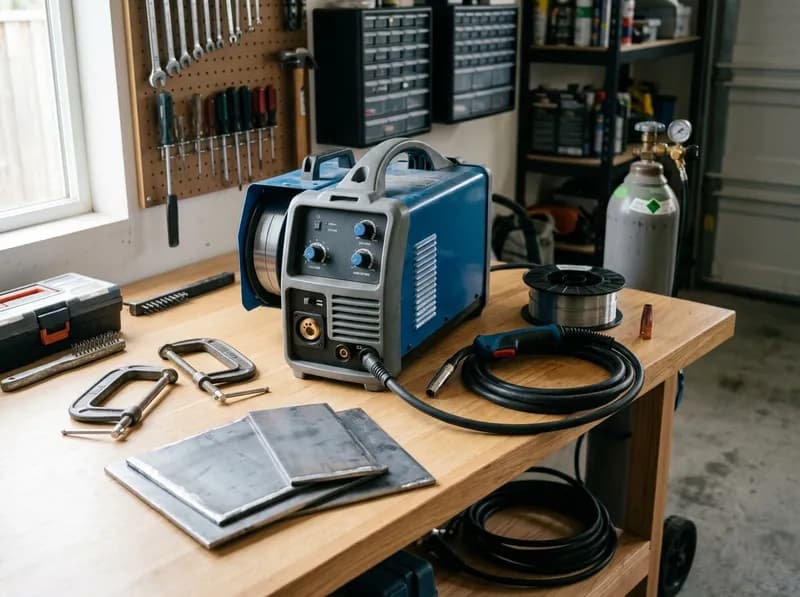
Buying your first welder is less about finding the machine with the highest amperage and more about matching it to the work you plan to do. A welder that runs comfortably on a garage circuit may be ideal for small repairs but frustrating when you start building a frame. A multiprocess machine offers more flexibility, but the extra capabilities are expensive if you only use one process.
Before comparing brands, work out three things: what power supply you have, which metals and thicknesses you need to weld, and how long you expect to weld between breaks. Those answers will narrow the field faster than a list of top-rated machines.
This guide compares seven welders for beginners and home use, from an entry-level flux-core machine to a professional-style multiprocess unit. It covers MIG, flux-core, stick and TIG welding, along with duty cycle, circuit requirements, equipment costs and the limitations of each machine.
Two familiar names also need updating. The Hobart Handler 140 and Miller Multimatic 215 have been discontinued, according to the source research for this guide. Their successors are included below, with product numbers to help distinguish the newer machines from older listings.
Quick Picks: Best Welders for Beginners
If you need… | Consider | Why it stands out |
|---|---|---|
A simple machine for getting started without shielding gas | Forney Easy Weld 141 FC-i | Flux-core only, 120V input and an 18.6 lb body |
An inexpensive way to learn stick welding | Forney X-Series 100 STx | Weighs 6 lb and supports stick plus lift-start DC TIG |
A 120V MIG welder that can also run flux-core wire | Hobart Handler 140EZ | Includes a gas solenoid, regulator and hose; rated at 90A and a 30% duty cycle |
Longer welding sessions on a 120V supply | Lincoln POWER MIG 140 MP | Rated at a 60% duty cycle at 95A |
Stick welding with the option of DC TIG | ESAB Rogue ES 201iP PRO | Dual-voltage design, up to 200A stick output on 230V and pulse stick mode |
One machine for several welding processes | Miller Multimatic 215 PRO | Supports six processes and operates on 120V or 240V |
A garage with only a 15A circuit | Check the circuit before buying | Most machines in this comparison need more current to deliver their rated output |
The best beginner welder depends on the job. For occasional mild-steel repairs, a basic flux-core machine may be enough. If you want cleaner welds on indoor projects and plan to use shielding gas, a MIG machine with a gas solenoid is a more flexible starting point. For someone who expects to build frames or work through many joints in one session, duty cycle deserves as much attention as maximum amperage.
The prices and specifications in this guide reflect the original research dated October 12, 2026, using manufacturer information and U.S. retail listings. Some prices could not be reconfirmed, and those are identified rather than estimated.
Check Your Garage's Electrical Circuit First
A welder is a substantial electrical load. The outlet's voltage, breaker rating and wiring determine which machines you can use at full output. Buying a machine before checking those details can leave you with a welder that works only at reduced settings—or a purchase that requires additional electrical work.
Can you use a welder with a regular 120V outlet? Yes, provided the machine is designed for 120V and the circuit can supply the current it needs. The voltage printed on the machine is only part of the answer; input amperage matters just as much.
For example, the Hobart Handler 140EZ draws 20A at rated output on 115V. That is approximately 2,300 watts. A 15A, 120V circuit has a nominal capacity of 1,800 watts, while a 20A circuit has a nominal capacity of 2,400 watts.
Power supply | What it means for home welding | What to check |
|---|---|---|
120V, 15A circuit | May handle light work with a compatible welder at reduced settings | The machine's input-current rating and the circuit's other loads |
120V, 20A circuit | Can accommodate many 120V machines, subject to their requirements | The receptacle, wiring and whether the circuit is shared |
Dedicated 240V, 40–50A circuit | Opens the door to machines with higher output on 240V | The welder's 240V input requirements and rated output |
Unknown or shared circuit | Capacity is uncertain until checked | Have a qualified electrician identify the circuit and its limits |
The wattage figures above are nominal calculations: 15A × 120V, 20A × 120V, and 40A × 240V. They are not a substitute for the machine's electrical specifications or applicable electrical-code requirements.
A common mistake is to assume that any outlet labeled 120V will run any 120V welder. It will not necessarily do so at the machine's rated output. If a manufacturer specifies a 20A circuit, do not assume a 15A circuit will provide the same performance.
Do you need a 240V outlet for a welder?
Not for every home project. A 120V welder can handle many brackets, carts, light fabrication jobs and occasional repairs. The limitations become more apparent as material thickness and the number of welds increase.
The Miller Multimatic 215 PRO illustrates the difference. Its published steel thickness range is 24 gauge to 3/16 inch on 120V and 24 gauge to 3/8 inch on 240V. The machine itself has not changed; the higher-voltage supply allows it to operate at a higher output.
Can a 120V welder weld 1/4-inch steel? The answer depends on the machine, joint and procedure. A single pass may be beyond the machine's practical capability, while a properly prepared joint may be possible using multiple passes within the manufacturer's limits. Multiple passes also add heat and time, so duty cycle becomes more important.
If you expect to work regularly with thicker steel, price the electrical installation before choosing a welder. A new 240V circuit is a separate project, and its cost depends on the electrical panel, the distance to the outlet and the installation requirements.
A plug adapter does not increase circuit capacity. It changes the connector, not the amount of current the wiring can safely supply.
Choose the Welding Process Before the Machine
MIG is a common recommendation for beginners because it can produce consistent results relatively quickly on clean mild steel. It is not the right choice for every environment, though. Outdoor work, rusty metal, thin sheet and aluminum each introduce different requirements.
The useful question is not simply whether MIG, TIG or stick is best. It is which process suits the work you actually have.
Typical job | Process to consider | Main reason |
|---|---|---|
Occasional mild-steel repairs without a gas cylinder | Self-shielded flux-core | No external shielding gas is required |
Brackets, carts and simple frames in a garage | Gas-shielded MIG | Fast wire feed and relatively clean welds on suitable steel |
Outdoor repairs or work on less-than-clean metal | Stick or self-shielded flux-core | Neither relies on an external gas shield that wind can disrupt |
Thin sheet metal | MIG, or TIG where appropriate | Heat control and the machine's minimum usable output matter |
Aluminum | MIG with a suitable spool gun, or AC TIG | The machine must support the process and required equipment |
Structural, lifting or pressure-bearing work | A qualified welding procedure and operator | A beginner machine's thickness rating does not establish weld integrity |
Flux-core welding
Self-shielded flux-core wire contains flux that provides shielding during welding. Because the process does not require an external shielding-gas cylinder, the equipment list is relatively short.
The trade-off is cleanup. Flux-core welding produces slag that must be removed, and spatter can leave additional work before the finished joint is ready. It can be a practical choice for outdoor repairs, but it is not automatically the best option for every beginner.
Gas-shielded MIG welding
MIG welding feeds solid wire through a gun while shielding gas protects the weld pool. On clean mild steel, it can produce a neat bead with less slag cleanup than self-shielded flux-core.
The gas cylinder, regulator and hose add cost and storage requirements. Wind can also disrupt the shielding gas, making gas-shielded MIG less suitable for exposed outdoor work.
A machine that supports both gas MIG and flux-core gives you more options. You can start with flux-core wire and add a gas setup later, provided the machine has the necessary components.
Stick welding
Stick welding uses a flux-coated electrode that is consumed during welding. It is well suited to many outdoor repairs and can be useful when the metal is not perfectly clean.
The limitations show up on thin material and in appearance-sensitive work. Stick welding requires more attention to electrode choice, arc length and technique, and it is generally not the easiest way to begin welding thin automotive sheet metal.
For someone repairing gates, brackets or equipment outside, a portable stick welder may be more useful than a MIG machine.
TIG welding
TIG uses a tungsten electrode and a separate filler rod, giving the operator precise control over the weld pool. That control makes it useful for work where appearance and heat management matter, but it is slower and usually harder to learn than MIG.
A machine with DC TIG capability does not necessarily support aluminum TIG welding. Aluminum TIG requires AC output. The machines in this comparison that offer DC TIG should not be treated as aluminum TIG machines.
Aluminum MIG is a separate case. It may be possible with a compatible spool gun, but the gun and other required equipment can add substantially to the total cost.
Welder Duty Cycle: Why Maximum Amperage Is Not Enough
Duty cycle tells you how long a welder can operate at a specified output during a ten-minute period before it needs to cool. A 30% duty cycle means three minutes of welding and seven minutes of cooling at the stated conditions. A 60% duty cycle means six minutes of welding and four minutes of cooling.
That difference is easy to overlook when comparing machines by their maximum amperage.
Three minutes of welding may be enough to practise a few beads. Building a cart or frame involves many joints, and a machine that repeatedly reaches its thermal limit can interrupt the work.
Machine and process | Rated output | Duty cycle | Welding time per 10 minutes |
|---|---|---|---|
Forney Easy Weld 141 FC-i, flux-core | 90A | 30% | 3 minutes welding, 7 minutes cooling |
Forney X-Series 100 STx, stick | 80A | 30% | 3 minutes welding, 7 minutes cooling |
Forney X-Series 100 STx, DC TIG | 85A | 30% | 3 minutes welding, 7 minutes cooling |
Hobart Handler 140EZ, MIG | 90A at 18.5V DC | 30% | 3 minutes welding, 7 minutes cooling |
Forney Easy Weld 140 MP, MIG | 90A | 30% | 3 minutes welding, 7 minutes cooling |
Lincoln POWER MIG 140 MP, MIG | 95A at 18.75V | 60% | 6 minutes welding, 4 minutes cooling |
ESAB Rogue ES 201iP PRO, stick on 230V | 200A at 28.0V | 25% | 2.5 minutes welding, 7.5 minutes cooling |
ESAB Rogue ES 201iP PRO, stick on 120V | 110A at 24.4V | 25% | 2.5 minutes welding, 7.5 minutes cooling |
Miller Multimatic 215 PRO, MIG on 120V | 110A at 19.5V DC | 60% | 6 minutes welding, 4 minutes cooling |
Miller Multimatic 215 PRO, MIG on 240V | 160A at 22.0V DC | 60% | 6 minutes welding, 4 minutes cooling |
Miller Multimatic 215 PRO, MIG on 240V | 215A at 24.8V DC | 30% | 3 minutes welding, 7 minutes cooling |
These ratings come from the manufacturer specifications identified in the original research, including Hobart document 299171, Miller document dc13-5, ESAB's product specification table and Forney's published figures. The rows use different processes, voltages and output settings, so they should not be read as a direct performance ranking.
Two comparisons are especially useful.
First, maximum amperage is not the same as a continuous operating rating. The Forney Easy Weld 140 MP is advertised as a 140A machine, but its listed MIG duty-cycle rating is 90A at 30%.
Second, duty cycle can separate machines that otherwise appear similar. The Lincoln POWER MIG 140 MP is rated at 60% at 95A, while the Hobart Handler 140EZ is rated at 30% at 90A. For someone working through a series of joints, the Lincoln's longer operating time may be more useful than a small difference in amperage.
Always compare duty-cycle figures at the stated output and process. A percentage without its corresponding amperage does not tell you how long the machine can weld at the setting you intend to use.
Gas vs. Gasless MIG: What Comes With Each Setup?
The difference between gas-shielded MIG and self-shielded flux-core is not just the wire. It changes the equipment you need, the ongoing costs and where the machine is practical to use.
Item | Gas-shielded MIG | Self-shielded flux-core |
|---|---|---|
Wire | Solid wire | Flux-cored wire |
Shielding gas | Required | Not required |
Cylinder and regulator | Cylinder required; regulator and hose may be included | Not needed |
Outdoor use | Wind can disrupt shielding gas | Less affected by wind |
Cleanup | Generally less slag, though spatter still occurs | Slag must be removed |
Ongoing consumables | Wire, gas refills and contact tips | Wire and contact tips |
A dual-process MIG machine can be a sensible starting point if you want to learn without buying a cylinder immediately. The Hobart Handler 140EZ includes a built-in gas solenoid, a dual-gauge regulator and a gas hose, so the gas equipment is ready when you decide to use it.
The Forney Easy Weld 141 FC-i is different. It is a flux-core-only machine. Adding a cylinder will not turn it into a gas MIG welder because it lacks the gas-control hardware and the required operating configuration.
Gasless welding should not be confused with risk-free welding. Both processes produce fumes, sparks and heat. Ventilation, protective equipment and fire prevention remain necessary regardless of the shielding method.
Best Beginner Welders Compared
The following comparison brings together the key specifications for the seven machines in this guide. Product numbers are included where available because older and newer generations often have similar names.
Machine | Processes | Input | Rated output and duty cycle | Published steel thickness | Weight | Price in source research |
|---|---|---|---|---|---|---|
Forney Easy Weld 141 FC-i — Item 262 | Flux-core only | 120V | 90A, 30% | 24 ga–1/4 in, single pass | 18.6 lb | $259.99; not reconfirmed |
Forney X-Series 100 STx | Stick, lift-start DC TIG | 120V | Stick 80A, 30%; TIG 85A, 30% | 24 ga–1/4 in, single pass | 6 lb | $229.99; not reconfirmed |
Hobart Handler 140EZ — Item 500582 | MIG, flux-core | 120V | 90A at 18.5V DC, 30% | 24 ga–3/16 in, single pass | 53 lb | $719.00 |
Forney Easy Weld 140 MP — Item 271 | MIG, flux-core, stick, DC TIG | 120V | MIG 90A, 30%; stick 80A, 30%; TIG 110A, 30% | 24 ga–1/4 in, single pass | Not published | $329.99; not reconfirmed |
Lincoln POWER MIG 140 MP — K4498-1 | MIG, flux-core, stick, DC TIG | 115V | 95A at 18.75V, 60% | Not published | 34.5 lb | $1,178.99 |
ESAB Rogue ES 201iP PRO — 0705002022 | Stick, lift TIG | 120/230V | Stick 200A at 28.0V, 25% on 230V; 110A at 24.4V, 25% on 120V | Not published | Not published | Not confirmed |
Miller Multimatic 215 PRO — 907840 | MIG, pulsed MIG, flux-core, DC TIG, pulsed TIG, stick | 120/240V | MIG 110A at 19.5V DC, 60% on 120V; 160A at 22.0V DC, 60% on 240V | 24 ga–3/16 in on 120V; 24 ga–3/8 in on 240V | 35 lb | $2,125.00 |
The Handler 140EZ replaces the discontinued Handler 140, and the Multimatic 215 PRO replaces the earlier Multimatic 215. The Forney prices marked as not reconfirmed were present in the original research but could not be verified against the manufacturer's current listing. ESAB's U.S. store uses postal-code-based pricing, so no price is supplied here.
The figures are retailer observations from October 12, 2026, rather than guaranteed prices. Stock, promotions and package contents can change. Check the current product listing before ordering, especially when comparing older and newer versions.
The Seven Welders: What Each One Does Best
Forney Easy Weld 141 FC-i: A Simple Gasless Starting Point
The Forney Easy Weld 141 FC-i is a 120V flux-core wire welder designed for buyers who want to start with a relatively short equipment list. There is no shielding-gas cylinder, regulator or hose to purchase before practising.
It weighs 18.6 lb and is rated at 90A with a 30% duty cycle. Forney lists a single-pass mild-steel range of 24 gauge to 1/4 inch and support for 0.030- and 0.035-inch flux-cored wire on 4- or 8-inch spools. The manufacturer provides a one-year warranty.
The main limitation is that it cannot be converted into a gas MIG machine simply by adding a cylinder. If you expect to move to solid wire and shielding gas, starting with a machine that already supports both processes may save money later.
Be careful when reading older guides, too. Some discuss the previous 140 FC-i and quote warnings from that model's manual. The 141 FC-i is a different machine, so use the manual supplied with the exact product you are buying rather than transferring electrical specifications from its predecessor.
Best fit: occasional mild-steel repairs, simple projects and beginners who want to learn wire-feed welding without buying gas equipment.
Less suitable for: buyers who need clean gas-MIG welds, expect to weld for long periods or want a machine that can later run solid wire.
Forney X-Series 100 STx: A Lightweight Stick Welder
At 6 lb, the Forney X-Series 100 STx is easy to carry between a garage, workbench and outdoor repair. It runs on 120V and supports stick welding at 15–80A, along with lift-start DC TIG at 15–85A. Both processes are rated at a 30% duty cycle, and the machine accepts electrodes up to 1/8 inch.
The portability is the attraction. Stick welding is useful for many outdoor repairs, gates and brackets, and the machine does not require a wire-feed system or shielding-gas cylinder for stick work.
The TIG option needs some context. The torch, argon cylinder and regulator are not included, so setting up TIG requires additional purchases. It is also DC TIG, not AC TIG, which means this machine is not suitable for aluminum TIG welding.
The relatively low output also makes the machine less appealing for thin automotive sheet metal or work that needs more power than a small stick welder can provide.
Best fit: beginners who want to learn stick welding and need a portable machine for repairs and outdoor work.
Less suitable for: wire-feed fabrication, thin sheet metal or buyers who expect to use TIG without purchasing additional equipment.
Hobart Handler 140EZ: A Flexible 120V MIG Welder
The Hobart Handler 140EZ, product 500582, replaces the discontinued Handler 140. One notable change is the rated duty cycle: the 140EZ is listed at 30% at 90A and 18.5V DC.
The machine operates from 30A to 140A, feeds wire at 15–360 inches per minute and is rated for single-pass welding of mild steel from 24 gauge to 3/16 inch. At 53 lb, it is considerably heavier than the small Forney machines, so a cart may be useful if you need to move it around the garage.
Its package is a major part of the appeal. Hobart includes a 10-foot HM-100 MIG gun, a 10-foot work cable and clamp, a built-in gas solenoid, a dual-gauge regulator and hose, contact tips, a drive roll for solid and flux-cored wire, and a thickness gauge.
The machine draws 20A at rated output on 115V, so the circuit must meet its requirements. It can also weld aluminum with the optional SpoolRunner 150 spool gun. Hobart notes that the machine is not recommended for use with engine-driven welders.
Best fit: home users who want to start with flux-core and have the option of adding gas MIG without replacing the machine.
Less suitable for: buyers limited to a 15A circuit or those who regularly need more than its published single-pass thickness range.
Forney Easy Weld 140 MP: Four Processes on 120V
The Forney Easy Weld 140 MP combines MIG, flux-core, stick and DC TIG in one 120V machine. The manufacturer lists MIG at 90A, stick at 80A and TIG at 110A, with a 30% duty cycle for the stated ratings. It accepts electrodes up to 1/8 inch.
The package includes a 10-foot MIG gun, electrode holder and lead, ground clamp and cable, plug adapter, and a spare contact tip. The TIG torch is not included, so the TIG function requires extra equipment before it can be used.
Its advantage is flexibility at a relatively low entry price. If you want to experiment with several processes, it avoids buying separate machines at the outset.
The price is less certain than the specifications. The original research found a $329.99 figure, but Forney's own listing differed and its stock status was inconsistent. Check the exact product number, package contents and seller's current price before treating it as a budget bargain.
Best fit: beginners who want to explore multiple welding processes and are comfortable checking the accessory list carefully.
Less suitable for: buyers who already know which process they will use most of the time. A dedicated machine may offer better value when the extra functions would go unused.
Lincoln POWER MIG 140 MP: Longer Welding Sessions on 120V
The Lincoln POWER MIG 140 MP stands out because of its published duty cycle. Lincoln rates the machine at 60% at 95A and 18.75V on 115V single-phase power. That means six minutes of welding in a ten-minute period at the rated conditions, rather than the three minutes offered by several other machines in this comparison.
It supports MIG, DC TIG and stick, and weighs 34.5 lb. The package described in the source research includes a Magnum PRO 100L gun with a 10-foot cable, a Harris regulator and hose, an electrode holder with a 10-foot cable, sample spools of solid MIG wire and Innershield flux-cored wire, gas and gasless nozzles, and a dual-track drive roll.
The drawback is price. At the listed figure of $1,178.99, it costs considerably more than entry-level 120V machines. That premium is difficult to justify for someone who only welds a few brackets each month, but the longer duty cycle may matter to a buyer building a frame or working through many joints in one session.
Best fit: home fabricators who need longer welding intervals but want to stay on a 120V supply.
Less suitable for: buyers with a budget near $500 or projects that require more output than the machine can provide.
ESAB Rogue ES 201iP PRO: Stick and TIG With Dual-Voltage Support
The ESAB Rogue ES 201iP PRO is a stick and lift-TIG inverter rather than a MIG machine. Its dual-voltage design lets it operate on 120V or 230V, with a substantial increase in available output on the higher-voltage supply.
For stick welding on 230V, ESAB lists 200A at 28.0V with a 25% duty cycle, 129A at 60%, and 100A at 100%. On 120V, the corresponding figures are 110A at 25%, 70A at 60%, and 55A at 100%.
The published TIG figures also vary by input voltage. On 230V, the machine delivers 200A at 18.0V for a 25% duty cycle, falling to 129A at 60% and 100A at 100%. On 120V, the listed ratings are 140A at 25%, 90A at 60%, and 70A at 100%.
Pulse SMAW is designed to help reduce spatter and distortion on thinner material. Power Factor Control is intended to help maintain arc performance with long extension runs; ESAB rates the machine for up to 300 feet of 12 AWG cable. The specifications also list generator compatibility at 7 kW, an IP23S rating and support for electrodes up to 5/32 inch.
There is no MIG process or wire feed. Pricing was not confirmed because ESAB's U.S. store quotes by postal code.
Best fit: buyers whose main work is stick welding, particularly if a 230V circuit is available.
Less suitable for: general garage fabrication where wire-feed MIG is the preferred process.
Miller Multimatic 215 PRO: A Six-Process Machine for Serious Home Shops
The Miller Multimatic 215 PRO, product 907840, replaces the earlier Multimatic 215. It supports six processes: MIG, pulsed MIG, flux-core, DC TIG, pulsed TIG and DC stick. It can run on 120V or 240V, making it the most versatile machine in this comparison.
On 120V, Miller lists a steel thickness range of 24 gauge to 3/16 inch. On 240V, that range extends to 3/8 inch. Its MIG ratings are 110A at 19.5V DC and a 60% duty cycle on 120V, 160A at 22.0V DC and 60% on 240V, and 215A at 24.8V DC and 30% at the top of its range.
The machine weighs 35 lb. The source research lists a three-year warranty on the welder and a 90-day warranty on the gun. Auto-Set helps with setup, and a NEMA 20P plug is available for 20A, 120V circuits.
Not everything needed for every process comes in the box. A gas cylinder, TIG kit and spool gun for aluminum MIG are separate purchases. The TIG function is DC, so it does not provide the AC output needed for aluminum TIG.
At $2,125, this is not a sensible purchase for someone who expects to weld a few brackets and little else. Its value comes from having several processes available as the work changes, along with the higher output available on 240V.
Best fit: a home shop that will use multiple processes and needs more capacity than a basic 120V machine provides.
Less suitable for: occasional repairs where a dedicated flux-core or MIG welder would handle the work at a fraction of the price.
How Much Does It Cost to Start Welding at Home?
The machine is only part of the budget. A safe welding setup also needs a helmet, gloves, protective clothing, consumables and basic tools. Gas-shielded MIG adds a cylinder and its initial fill if those are not already available.
Equipment | Gasless flux-core setup | Gas-shielded MIG setup |
|---|---|---|
Welder | $230–$260 | $719 |
Shielding-gas cylinder and first fill | Not needed | $150–$250 |
Regulator and hose | Not needed | Included with the Handler 140EZ |
Auto-darkening welding helmet | $70–$150 | $70–$150 |
Welding gloves | $20–$40 | $20–$40 |
Protective clothing and closed footwear | $30–$80 | $30–$80 |
Wire and basic consumables | $20–$40 | $30–$60 |
Wire brush, chipping hammer and clamps | $25–$60 | $25–$60 |
Estimated total | $395–$630 | $1,044–$1,359 |
These are approximate U.S. retail ranges for the listed equipment, not quotes. The cylinder estimate covers a first fill and varies by cylinder size and supplier. The totals exclude any electrical work.
For someone searching for the best welder under $500, a gasless flux-core setup is the more realistic starting point. That budget can cover a basic machine and essential gear, but it generally does not stretch to a complete gas-MIG setup with a cylinder and safety equipment.
A new 240V circuit is another separate cost. The price depends on the existing panel, the distance to the work area and local installation requirements. Get an electrician's quote before buying a machine that depends on 240V for the work you have planned.
What Can a Beginner Welder Realistically Weld?
For most beginners, mild steel is the most practical starting material. It is widely used in brackets, carts, frames and general repairs, and the machines in this guide cover a range of power levels for those jobs.
Manufacturer thickness ratings need to be read in context. They usually describe single-pass capability on mild steel under specified conditions. Real work may involve rust, paint, poor fit-up, awkward welding positions or gaps that make the job harder.
Project | Process to consider | Important limitation |
|---|---|---|
Small brackets and simple repairs | Flux-core, MIG or stick | Match the process to the steel thickness and power supply |
Carts and simple frames | MIG | Duty cycle matters when the job involves many joints |
Thin sheet metal | MIG or, where appropriate, TIG | Heat control and minimum usable output are critical |
Automotive body panels | MIG at low heat | Thin panels distort easily |
Outdoor repairs | Flux-core or stick | Wind and metal condition affect process choice |
1/4-inch steel and thicker | A suitable 240V machine or a properly planned multi-pass procedure | The machine's actual output and the joint design set the limits |
Stainless steel | MIG or TIG with compatible filler | Filler selection and cleanliness matter |
Aluminum | MIG with a suitable spool gun or AC TIG | Not every machine supports aluminum welding |
Structural, lifting or pressure-bearing work | Qualified personnel and an appropriate welding procedure | A beginner machine's rating does not establish structural reliability |
A visible bead is not proof that a joint can safely carry a load. Trailer hitches, lifting equipment, pressure vessels and automotive structures may require specified welding procedures, qualified welders and inspection. Do not use a general-purpose beginner machine's thickness claim as evidence that a critical joint is safe.
Welding Safety for a Home Garage
A home welding setup needs to control four main hazards: arc exposure, fumes, fire and electricity. Protective equipment and a suitable workspace matter just as much as choosing the right welder.
Protect your eyes and face
Use a welding helmet with a shade appropriate for the process and current. An auto-darkening helmet still needs to be configured correctly; the wrong shade or setting can leave you inadequately protected.
Safety glasses are also necessary. Grinding, brushing and removing slag can send particles toward your eyes, and a welding helmet is not a substitute for impact-rated eye protection.
Wear suitable clothing
Use welding gloves, sleeves and protective clothing that can withstand sparks and spatter. Closed leather or suitable cotton footwear helps protect your feet. Avoid synthetic clothing that can melt when exposed to hot material, and keep cuffs and collars closed.
Control fumes and ventilation
Welding fumes vary with the base metal, coatings and filler. Painted, galvanized and unidentified metal deserve particular care. Heating galvanized steel can release zinc-containing fumes, and simply opening a garage door does not guarantee that hazardous contaminants will be removed.
Local exhaust ventilation that captures fumes near the source is generally more effective than relying on an open door. Ventilation also needs to be arranged so that it does not interfere with shielding gas where the process uses it.
OSHA's welding standards address ventilation and hazardous coatings for good reason. If the job requires respiratory protection and you do not know how to select it, seek advice from a qualified safety professional rather than guessing.
Prevent fires
Remove combustible materials from the bench and floor. Shield anything that cannot be moved.
Remember that sparks and slag can travel through gaps and ignite material on the other side of a panel.
Keep a suitable fire extinguisher within reach.
Do not weld near flammable vapors, heavy dust or containers that have held fuel.
Inspect the surrounding area after welding, including the floor, nearby walls and spaces where sparks may have travelled.
Check the electrical equipment
Inspect the power cord, welding leads, connectors, work clamp and insulation before each session. Keep the machine dry and use it only within its stated electrical requirements. Secure the workpiece so it cannot shift while you are welding.
Never bypass circuit protection or modify a plug to make a machine fit an unsuitable outlet. If the circuit rating or wiring is unclear, have an electrician check it. Replacing a breaker with a larger one does not make undersized wiring safe.
Beginner Welder Buying Mistakes to Avoid
Buying the welder before checking the circuit. A machine that needs a 20A circuit may not deliver its rated output on a 15A run. Check the nameplate and the manual first.
Confusing maximum amperage with continuous output. A machine's headline amperage does not tell you how long it can weld at that setting. Read the duty-cycle rating at the stated output.
Assuming a flux-core machine can be converted to gas MIG. A gas cylinder alone is not enough. The machine needs the hardware and settings required for gas-shielded MIG.
Spending the whole budget on the machine. A helmet, gloves, clothing, wire, clamps and basic cleanup tools are part of the cost of starting safely.
Assuming DC TIG can weld aluminum. Aluminum TIG requires AC output. A machine advertised with DC TIG does not automatically support the process.
Treating thickness ratings as guarantees. Published ratings do not account for every joint, material condition or welding position. Real projects may require different settings or multiple passes.
Buying a multiprocess machine without knowing why. Extra processes often require extra torches, gas equipment or spool guns. If you will use only one process, those unused capabilities may not justify the price.
Ignoring replacement parts and consumables. Contact tips, liners, nozzles and guns wear out. Before ordering a less familiar machine, check whether the consumables and replacement parts are available from suppliers you can use.
Frequently Asked Questions
Can a beginner welder weld aluminum?
Yes, but only if the machine supports the required process and you have the right accessories. Aluminum MIG may require a compatible spool gun because aluminum wire is soft and can be difficult to feed through a standard MIG gun liner. The Hobart Handler 140EZ supports the optional SpoolRunner 150, while the Miller Multimatic 215 PRO requires a separately purchased spool gun for aluminum MIG.
Aluminum TIG requires AC output. The DC TIG machines covered in this guide do not provide that capability. Aluminum also conducts heat quickly and can be difficult to weld consistently, making it a challenging first material.
Should I take a welding class before buying a welder?
A class is not a prerequisite for buying a machine, but it can shorten the learning curve. An instructor can help you correct travel speed, torch or electrode angle, arc length and other technique issues before you develop habits that are hard to change.
Community colleges and local maker spaces may offer introductory courses. If you plan to teach yourself, budget for practice material and expect to spend time learning before you can produce consistent, usable welds.
Can I run a welder from a generator or a long extension cord?
Check the manual for the exact model. Hobart does not recommend using the Handler 140EZ with engine-driven welders. ESAB lists the Rogue ES 201iP PRO as generator-compatible at 7 kW and specifies operation with cable runs up to 300 feet of 12 AWG under its stated conditions.
Extension cords can cause voltage drop, especially when they are long or undersized. That can affect arc performance and may prevent the machine from operating as intended. Use a cord of the correct gauge and length for the machine's requirements, and follow the manufacturer's instructions.
Is a multiprocess welder worth buying if I do not know what I will build?
It depends on how likely you are to use the extra processes and what equipment the package includes. A multiprocess machine can provide flexibility, but each process may need its own accessories. DC TIG requires a suitable torch and gas setup; gas MIG requires shielding-gas equipment; aluminum MIG may need a spool gun.
If your immediate projects are simple mild-steel brackets and repairs, a dedicated flux-core or MIG welder may leave more money for safety gear and consumables. You can reconsider a multiprocess machine when you have a clear need for another process.
What happens if I plug a welder into an undersized circuit?
The circuit breaker may trip when the machine draws more current than the circuit can supply. If that happens repeatedly, reduce the machine's settings or have the circuit assessed for the intended load.
Do not solve the problem by installing a larger breaker without verifying the wiring. The conductor size and the circuit's design determine the safe capacity; changing the breaker alone does not increase it.
What is the best welder for a beginner under $500?
For someone working on light mild-steel repairs, the Forney Easy Weld 141 FC-i is a straightforward flux-core option, while the Forney Easy Weld 140 MP offers several processes if its current price and package contents check out.
Remember to include safety gear, consumables and basic tools in the budget. A machine that costs less than $500 may still push the complete setup beyond that figure.
Is MIG easier to learn than stick welding?
For many beginners working indoors on clean mild steel, MIG is easier to get consistent results from because wire feed makes it easier to maintain a continuous arc. Stick welding can be more practical outdoors and on less-than-clean material, but electrode handling and arc control take practice.
The best process to learn first depends on the work you want to do. For garage fabrication, MIG is a common starting point. For portable outdoor repairs, stick may be more useful.
What is the difference between the Hobart Handler 140 and Handler 140EZ?
The Handler 140 is the older, discontinued model. The Handler 140EZ, product 500582, is its replacement. The source research lists the 140EZ at a 30% duty cycle at 90A and 18.5V DC, compared with a 20% duty-cycle rating for the earlier model.
Check the exact product number when comparing used machines, clearance listings or older reviews. Similar names do not guarantee identical specifications.
Is the Miller Multimatic 215 still available?
The original Multimatic 215 has been discontinued according to the source research. The newer Multimatic 215 PRO, product 907840, is the model covered in this guide. It supports six processes and operates on 120V or 240V.
When shopping, verify the product number and included accessories. Listings for the older machine may not reflect the newer model's capabilities or package contents.
Final Recommendation
For a first welder, start with the circuit and the projects—not the machine's maximum amperage.
The Forney Easy Weld 141 FC-i is a straightforward choice for light repairs when you want to avoid buying shielding gas. The Hobart Handler 140EZ is a better fit if you want to begin with flux-core and keep the option of gas MIG. If long welding sessions matter on a 120V supply, the Lincoln POWER MIG 140 MP's published duty cycle deserves a close look. For a shop that will use several processes and can justify the cost, the Miller Multimatic 215 PRO offers the broadest range of capabilities in this comparison.
A machine's advertised thickness range is only part of the decision. Check the circuit, compare duty-cycle ratings at the output you need, account for the accessories and safety equipment, and make sure the process suits the material and working environment.
The recommendations in this guide are based on product specifications, published materials, customer feedback and value considerations rather than hands-on testing.
Related GuidesMore →
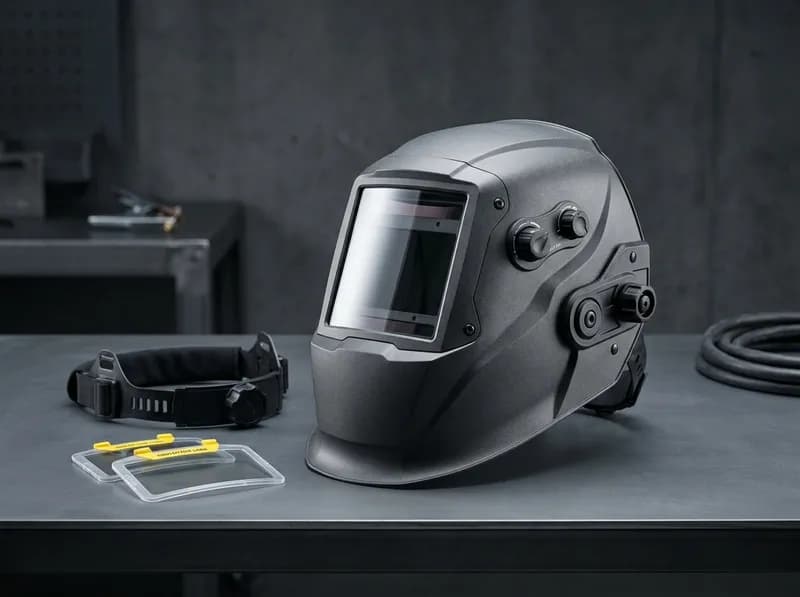
Best Welding Helmets in 2026: Top Picks for TIG, MIG, and Everyday Use
Choosing the best welding helmet means balancing optical clarity, low-amp TIG performance, viewing area, weight, and comfort. This 2026 buying guide compares the Lincoln Electric VIKING 3350, Miller Digital Infinity, ESAB Sentinel A60, Optrel crystal2.0, Hobart Inventor, and YESWELDER LYG-M800H. It explains which specifications are documented, where manufacturer claims differ from independent verification, and what to check before choosing a helmet for your welding setup.

How to Choose a Water Softener in 2026: Sizing, Salt Efficiency, and Cost
Choosing a water softener starts with your water test, not the grain rating on the box. This guide explains how to calculate your household’s hardness load, size a system, and compare usable capacity at different salt doses. It also compares five salt-based water softeners, including Rheem, Whirlpool, Pentair Fleck, and SpringWell options, while covering installation costs, ongoing salt use, regeneration water, and key operating limits.