Detailed Review
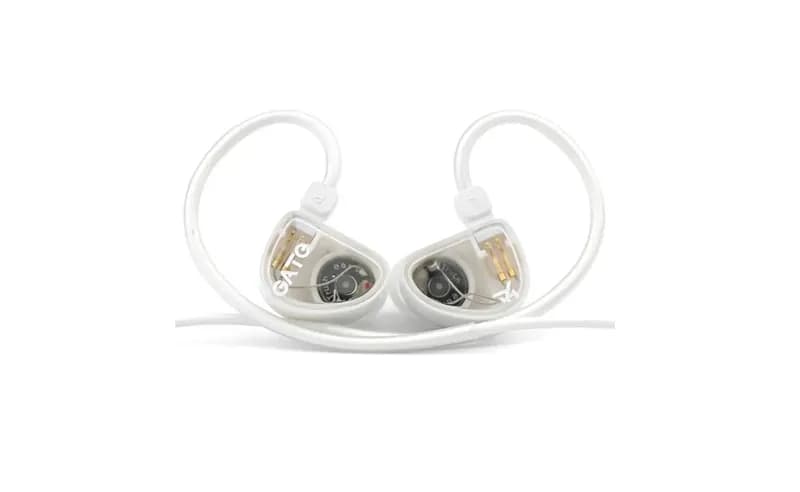
The TRUTHEAR GATE is one of those IEMs that makes the most sense when judged by what it actually costs. At around the $20 price class, it does not try to compete with more expensive earphones through elaborate driver configurations or excessive technical specifications. Instead, it uses a single 10mm dynamic driver, a lightweight shell, a replaceable 0.78mm 2-pin cable, and a generally balanced tuning designed for easy everyday listening. Its biggest strengths are comfort, sensible tonal balance, low distortion, and an unusually useful stock cable for the price. Its main limitations are equally straightforward: technical performance is only moderate, bass texture is not especially impressive, and listeners looking for a highly spacious or aggressively detailed presentation may quickly outgrow it. The GATE is therefore less about chasing maximum performance and more about providing a reliable starting point for someone entering the IEM market.
What Is the TRUTHEAR GATE?
The GATE is an ultra-budget single-dynamic-driver IEM positioned around the $20 price range. It was introduced as a successor of sorts to the popular TRUTHEAR HOLA, but it is not simply a HOLA with a different shell.
TRUTHEAR uses a 10mm dynamic driver with an N52 magnet and a carbon-LCP dome combined with an ultra-thin PU diaphragm. The company also redesigned the acoustic structure and shell, with the stated goal of improving high-frequency extension while keeping the earphone lightweight and comfortable.
The GATE's most important characteristic, however, is not the material of its diaphragm. It is the overall balance of the product.
This is an inexpensive IEM that tries to avoid major weaknesses rather than specialize aggressively in one area. Its tuning has some sub-bass emphasis and an upper-midrange presence, while the treble is relatively controlled. Independent reviews generally describe it as smooth, balanced, or mildly U-shaped, although the exact impression depends significantly on eartips, insertion depth, and individual hearing. (TRUTHEAR)
Specifications
Specification | TRUTHEAR GATE |
|---|---|
Type | In-ear monitor |
Driver | 10mm dynamic driver |
Diaphragm | Carbon LCP dome + ultra-thin PU |
Driver configuration | 1DD |
Magnet | N52 |
Impedance | 28Ω ±15% @ 1kHz |
Sensitivity | 122dB/Vrms @ 1kHz |
THD | ≤1% @ 1kHz, 94dB |
Frequency range | 10Hz–45kHz |
Effective frequency range | 20Hz–20kHz |
Connector | 0.78mm 2-pin |
Plug | 3.5mm |
Shell | PC+ABS composite |
Cable | Oxygen-free copper, detachable |
Eartips | Two styles, multiple sizes |
Price class | Around $20 |
The official specifications show that the GATE is extremely easy to drive on paper. Its high sensitivity means that it does not require a powerful amplifier to reach normal listening levels. (TRUTHEAR)
That distinction matters because the GATE is not an IEM where buying a powerful desktop amplifier is necessary to unlock its basic performance.
Build Quality and Design
The GATE uses a transparent PC+ABS composite shell. Rather than being a heavy metal IEM, its lightweight construction is clearly intended to prioritize comfort.
This is one area where the GATE is quite convincing for its price. The shell is relatively compact and follows an ergonomic shape influenced by TRUTHEAR's previous budget designs. The recessed 0.78mm 2-pin connection also gives the cable a secure physical interface.
The compromise is that the shell does not feel particularly luxurious. Some user reviews describe the construction as feeling inexpensive, and the transparent surface can be more vulnerable to visible scratches than a heavier metal shell. That is not necessarily a durability problem, but it does reinforce the fact that the GATE is designed around affordability rather than premium materials. (Head-Fi)
For a $20-class IEM, however, the decision makes sense. The money is being spent where it matters more for daily use: driver performance, ergonomics and the detachable cable.
Comfort and Fit
Comfort is arguably one of the GATE's strongest characteristics.
The shell is relatively lightweight, and the ergonomic design does not require an especially deep insertion. TRUTHEAR also includes two different styles of silicone eartips, giving users some flexibility in adjusting the fit. (TRUTHEAR)
Public user impressions are generally positive about comfort. Several reviews describe the fit as comfortable or suitable for long listening sessions. (Head-Fi)
For average-sized ears, the GATE should be capable of several hours of continuous use if the correct eartip is selected.
Small ears are a little more complicated. Even an ergonomically shaped shell can feel uncomfortable if its width or nozzle position does not match the listener's ear. Large ears may have the opposite issue: the shell can sometimes feel less secure if it does not fully contact the concha.
This is one area where no specification can completely replace personal experience.
The eartips are therefore important. A good seal changes not only comfort but also bass response and overall tonal balance.
Cable and Accessories
The included cable is surprisingly good considering the price.
TRUTHEAR supplies a detachable oxygen-free copper cable with a 0.78mm 2-pin connector. It is relatively flexible and includes pre-formed ear guides. The cable also has a chin slider, which can help improve stability and reduce cable movement. Independent reviews have repeatedly mentioned the cable as one of the GATE's strengths. (TRUTHEAR)
The package includes two types of silicone eartips in several sizes, along with a small carrying pouch.
There are some minor complaints about the cable being prone to tangling, but this is not unusual at this price.
More importantly, there is very little reason to immediately replace the cable.
For a budget IEM, spending another $20–30 on an aftermarket cable would generally make little economic sense unless the replacement is being purchased for a specific ergonomic reason.
Sound Quality
The GATE's sound is where its value becomes clearer.
It is not an extremely technical IEM. Instead, it delivers a relatively balanced and approachable presentation that works with a broad range of music.
Different measurements and listening impressions describe the exact tuning somewhat differently, but there is a consistent pattern: modest sub-bass emphasis, clear upper-midrange presence, relatively relaxed treble, and no overwhelming mid-bass coloration. (Head-Fi)
Bass
The GATE's bass is more restrained than what many bass-heavy budget IEMs provide.
Sub-bass extension is reasonably good, giving electronic bass lines and low-frequency effects enough depth. The transition from sub-bass into the midrange is relatively smooth, without an obvious wall of mid-bass overwhelming vocals.
This is one reason the GATE sounds clean.
The downside is texture.
The bass does not have the physical authority or fine-grained texture of better IEMs. Kick drums have adequate impact, but they can sound somewhat soft compared with more technically capable competitors.
For acoustic bass, complex drum recordings and bass-heavy electronic tracks, the GATE can therefore sound less convincing than its tonal balance initially suggests.
It is better described as controlled and moderate than powerful.
If you want large bass quantity, the GATE is not the obvious choice.
Midrange
The midrange is probably the GATE's most important tuning feature.
Vocals have a relatively forward presence, particularly around the upper-midrange region. This gives singers clear intelligibility and helps guitars, piano and other central instruments remain easy to follow.
Male vocals generally have sufficient body, although listeners accustomed to warmer IEMs may find them somewhat lean.
Female vocals can be particularly clear because the upper-midrange provides presence without requiring extremely bright treble.
This also explains why several user reviews describe the GATE as a good choice for vocal-focused listening. (Head-Fi)
The trade-off is that some recordings with already aggressive upper-midrange energy can sound slightly forward.
This is not necessarily harshness. It is more a matter of presentation: the singer is placed closer to the listener rather than pushed behind the instruments.
Treble
Treble is relatively relaxed compared with many budget IEMs designed to create an immediate impression of "detail."
That is a good thing for long listening sessions.
The GATE does not rely on excessive treble energy to create clarity. Several listening reports describe its treble as smooth, non-fatiguing and reasonably controlled, although some also note that its extension is not exceptional. (Head-Fi)
There is some disagreement about the upper-treble behavior because measurements are highly dependent on coupler design, insertion depth and individual HRTF.
This is an important point for budget IEM buyers: a large feature on a measurement graph around 8–12kHz does not automatically translate into the same perceived sound for every listener.
The practical takeaway is simpler.
The GATE provides enough treble information for a clear presentation, but it is not trying to sound aggressively bright or hyper-detailed.
Soundstage and Imaging
The GATE's soundstage is competent rather than spectacular.
Its left-right presentation can feel reasonably open for a $20 IEM, but front-to-back depth is more limited. One independent review described the stage as having good width but comparatively little depth, while other impressions characterize it as a fairly conventional "around-the-head" presentation. (Head-Fi)
Imaging is adequate.
Instrument separation is sufficient for ordinary pop, rock and vocal recordings, but complex orchestral arrangements expose the limitations of its single-driver budget platform.
This does not make it poor for gaming. Positional information remains usable, especially for casual gaming. But competitive players looking specifically for highly precise spatial layering have reasons to consider more technical IEMs.
Dynamics and Technical Performance
The GATE is technically competent for its price, but this is where expectations should remain realistic.
Its resolution is adequate rather than exceptional. Micro-details in complex recordings are not presented with the separation and texture available from substantially more expensive IEMs.
Bass texture is another limitation.
On the other hand, the single dynamic driver produces generally coherent timbre, and the absence of complicated crossover arrangements helps the presentation remain straightforward.
Some independent reviewers have found that additional amplification can improve dynamics or note weight, but the GATE does not require an amplifier to operate properly. (Head-Fi)
That distinction is important.
It can scale somewhat, but it does not need to scale.
Tuning and Measurements
The GATE's measured response generally supports its overall tonal description: controlled bass, an upper-midrange rise, and relatively restrained upper treble.
TRUTHEAR's own specifications report low distortion, including THD below 1% at 1kHz and 94dB SPL under its stated measurement conditions. (TRUTHEAR)
Third-party measurements broadly confirm that the GATE has low distortion and a sensible overall frequency response, although the exact treble interpretation varies between measurement systems. (Headphones.com)
This illustrates why frequency-response graphs should be treated as a tool rather than a complete description of sound.
A graph can tell us a lot about tonal balance. It cannot completely predict:
perceived texture
imaging
comfort
individual treble sensitivity
perceived dynamics
how a particular eartip changes the seal
For the GATE, measurements are most useful for explaining why it sounds relatively clean and balanced, not for determining whether every listener will hear the same treble response.
Music Compatibility
Genre | Performance | Suitability | Reason |
|---|---|---|---|
Pop | Clean and balanced | Very good | Clear vocals and controlled bass |
Asian Pop | Clear vocals | Very good | Upper-midrange presence helps vocals |
Rock | Competent | Good | Clean mids, but bass impact is moderate |
Electronic | Good | Good | Sub-bass reaches reasonably low, but impact is limited |
Classical | Decent | Moderate | Adequate separation but limited depth |
Jazz | Natural | Good | Single-DD timbre works well |
Folk / Acoustic | Very good | Very good | Clear vocals and instruments |
Female Vocals | Strong | Very good | Forward upper-midrange |
Games / OST | Competent | Good | Clear positioning and vocals |
Film Soundtracks | Good | Good | Balanced presentation and controlled bass |
The GATE is particularly comfortable with vocals, acoustic recordings and general-purpose pop.
It is less compelling for listeners who want physical bass impact or an exceptionally large spatial presentation.
Who Is the GATE For?
Bass Lovers
Only conditionally.
The sub-bass is present, but the GATE does not deliver the quantity or impact that bass-first listeners may want.
Vocal-Focused Listeners
Yes.
Its forward and clear midrange makes vocals one of its stronger areas.
Detail-Focused Listeners
Only if expectations are realistic.
The GATE is clear for its price, but it is not a detail monster. Its resolution is appropriate for the budget category rather than genuinely high-end.
Smooth-Sound Listeners
Generally yes.
The treble is relatively relaxed, although the upper-midrange can become somewhat forward with certain recordings.
Classical Listeners
It is usable, but not an obvious specialist choice.
The tonal balance is reasonable, but stage depth and technical separation limit its ability to reproduce complex orchestral arrangements convincingly.
Gamers
Good for casual and general gaming.
Imaging is sufficient for positional information, but competitive players seeking maximum spatial precision should consider more technically capable models.
Does TRUTHEAR GATE Need an Amplifier?
No.
With a 28Ω impedance and 122dB/Vrms sensitivity, the GATE is very easy to drive. A normal phone, laptop, basic USB dongle or entry-level dongle DAC should have enough output for normal listening levels. (TRUTHEAR)
A better source may change the presentation slightly, particularly in dynamics or noise performance, but buying a powerful amplifier specifically for the GATE is difficult to justify.
The important point is that a clean source is more useful than a powerful source.
For example, if a phone has an audible noise floor or poor output implementation, a simple USB-C dongle can make more practical sense than buying a large desktop amplifier.
Source Pairing
A smartphone or basic USB dongle is sufficient.
A mid-range dongle DAC can provide a cleaner and more convenient output, but the improvement should not be exaggerated.
A desktop DAC/amp can provide more power and potentially improve dynamic headroom, but this is primarily useful if the same setup will later be used with harder-to-drive headphones.
For the GATE alone, there is little reason to spend hundreds of dollars on amplification.
This is precisely the type of IEM that makes sense with a simple portable source.
Noise and Compatibility
The GATE's high sensitivity means that source noise deserves more attention than output power.
With a well-designed modern USB DAC, background hiss should generally not be a major concern. Poorer or noisier sources can be more noticeable with sensitive IEMs, however.
The detachable 3.5mm cable also makes the GATE broadly compatible with phones, computers, DAPs and dongles, provided the device offers analog audio through the appropriate output.
For modern phones without a 3.5mm jack, a USB-C dongle is the straightforward solution.
TRUTHEAR GATE vs. Similar IEMs
The ultra-budget IEM category is highly competitive, and the GATE should not be considered in isolation.
TRUTHEAR GATE vs. TRUTHEAR HOLA
The HOLA is generally warmer and more relaxed, while the GATE pushes the upper-midrange more and reduces some of the warmth.
The GATE therefore provides a somewhat clearer and more open presentation, while HOLA's tuning can be more immediately forgiving.
If you prefer warmth and relaxed vocals, the older HOLA-style tuning makes more sense. If you want a cleaner and slightly more energetic presentation, the GATE is the more natural direction.
TRUTHEAR GATE vs. Moondrop Chu II
The Chu II is another major reference point in the budget IEM category.
Compared with the GATE, the Chu II can provide a more energetic and technically engaging presentation, while the GATE focuses more heavily on smoothness and straightforward usability.
The choice therefore depends less on which one has the "better" specification and more on whether you prefer a more energetic or more relaxed presentation.
TRUTHEAR GATE vs. 7Hz Salnotes Zero 2
The Zero 2 is another well-known budget alternative with a different balance between bass, mids and treble.
The GATE makes sense for someone who wants a relatively clean vocal presentation without turning the treble into the main attraction.
The Zero 2 may appeal more to listeners who want a stronger low-end foundation.
The important point is that these products are close enough in price that personal tuning preference can matter more than small technical differences.
Strengths and Weaknesses
Strengths
Very affordable entry point into wired Hi-Fi IEMs
Comfortable and lightweight ergonomic shell
Clear, generally balanced tuning
Good vocal performance
Reasonable sub-bass extension
Detachable 0.78mm 2-pin cable
Useful accessory package for the price
Very easy to drive
Low distortion
Weaknesses
Bass texture and impact are only moderate
Technical performance is limited compared with more expensive IEMs
Soundstage depth is not particularly impressive
Upper-midrange can be forward with some recordings
Shell materials feel appropriately budget-oriented rather than premium
Treble extension and refinement are not class-leading
Overall Rating
Category | Weight | Rating |
|---|---|---|
Sound Quality | 35% | 3.5/5 |
Tuning Execution | 15% | 4.0/5 |
Comfort | 15% | 4.5/5 |
Build & Design | 10% | 3.5/5 |
Driving & Compatibility | 10% | 4.5/5 |
Cable & Accessories | 5% | 4.0/5 |
Value for Money | 10% | 4.5/5 |
Overall Rating: 4.0 / 5.0
The value rating is particularly sensitive to the actual street price. At roughly the $20 price class, the GATE's combination of sound, comfort and accessories is compelling. If its price rises substantially, the number of competitive alternatives increases quickly.
Who Should Buy TRUTHEAR GATE?
The GATE makes the most sense for:
First-time IEM buyers
People who want an inexpensive wired earphone
Vocal-focused listeners
Listeners who prefer balanced or mildly warm-neutral sound
Users who value comfort
People who want a detachable cable
Buyers who do not want to spend money on a dedicated amplifier
It is less suitable for:
Heavy-bass enthusiasts
Listeners demanding exceptional technical performance
People who prioritize a very large soundstage
Users who want highly resolving treble
Buyers already using substantially more capable mid-range IEMs
Is TRUTHEAR GATE Worth Buying?
At its intended budget price, the GATE remains a sensible entry-level IEM because its strengths are practical rather than spectacular.
It is comfortable, easy to drive, reasonably balanced, and supplied with a better-than-expected cable and accessory package. More importantly, it does not require an expensive audio chain to make sense. A basic phone plus a clean USB dongle can already form a complete system.
Its biggest limitation is that the GATE does not deliver the technical leap that some newer budget IEMs can offer. Bass texture, stage depth and overall resolution are adequate rather than exceptional. If your priority is maximum technical performance per dollar, there are other models worth comparing before buying.
But that does not make the GATE a poor choice. Its appeal is that it gets the fundamentals right without demanding much money or equipment.
If you want an inexpensive, comfortable IEM with clear vocals, moderate bass and a relatively relaxed presentation, the TRUTHEAR GATE is a strong starting point. If you want powerful bass, exceptional detail or a dramatically spacious presentation, its limitations become much easier to notice.
For someone buying their first serious wired IEM, that distinction is probably the most important thing to understand: the GATE is not trying to be the most technically impressive IEM in its category. It is trying to be a comfortable, balanced and inexpensive gateway into the IEM world—and at that job, it is quite convincing.