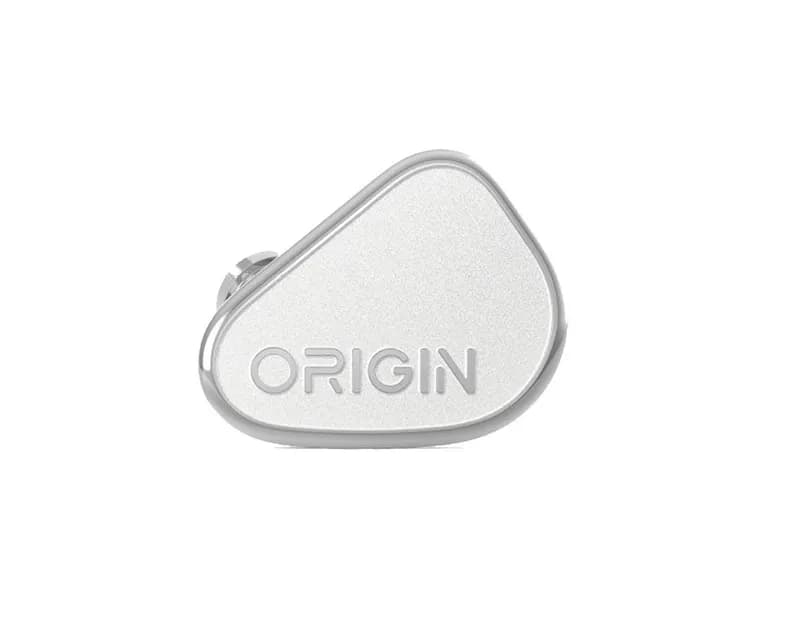
Detailed Review
TANCHJIM Origin is a premium single-dynamic-driver IEM built around a straightforward idea: instead of combining multiple driver types, TANCHJIM aims to extract as much performance as possible from one carefully engineered dynamic driver. Officially priced at $249.99 internationally and ¥1,380 in China, the Origin sits in a highly competitive mid-fi segment where buyers have many technically capable alternatives. Its 10mm fifth-generation DMT dynamic driver, dual-magnetic dual-cavity structure, and composite diaphragm give it a technically ambitious foundation.
The sound is generally clean, controlled, and technically capable, with noticeable upper-midrange presence, quick mid-bass, and unusually good treble extension for a single-DD IEM. Its strongest qualities are resolution, imaging, separation, and overall coherence. The main limitation is equally clear: this is not a basshead IEM, and listeners who want deep sub-bass rumble may find it restrained. The shell is also somewhat larger than some of TANCHJIM's smaller IEMs, while the included cable terminates only in 3.5mm. For listeners who value natural timbre, vocal clarity, technical performance, and a coherent single-driver presentation, the Origin remains an interesting choice.
Positioning and Market Role
The Origin is TANCHJIM's flagship-style single-dynamic-driver IEM and was introduced as a successor to the company's well-known Oxygen. Rather than following the increasingly common trend of combining multiple balanced-armature, dynamic, and planar drivers, TANCHJIM took a different approach.
The centerpiece is its fifth-generation DMT dynamic driver. According to the manufacturer, the driver uses a composite diaphragm together with inner and outer dual magnetic circuits and a dual-cavity design. The official specifications list a 16Ω ±5% impedance and 126dB/Vrms sensitivity, making the Origin exceptionally easy to drive.
That design philosophy is important when evaluating the Origin. Its selling point is not the number of drivers inside the shell. Instead, the goal is to provide the coherence of a single driver while achieving technical performance that can compete with more complicated IEM architectures.
This puts the Origin in an interesting position. At around $250, buyers can already choose from numerous multi-driver hybrids and planar IEMs. Consequently, the Origin has to justify itself through execution rather than specifications alone.
That execution is largely successful. The Origin combines strong resolution, imaging, soundstage openness, and treble extension with a coherent single-driver presentation.
Specifications and Hardware
Specification | TANCHJIM Origin |
|---|---|
Type | Wired in-ear monitor |
Driver | 10mm DMT5 dynamic driver |
Driver configuration | Single dynamic driver |
Driver structure | Dual magnetic circuit, dual cavity |
Diaphragm | Composite PU suspension / DLC dome |
Impedance | 16Ω ±5% |
Sensitivity | 126dB/Vrms |
Frequency response | 2Hz–48kHz |
Connector | 0.78mm 2-pin |
Plug | 3.5mm |
Cable length | 1.25m |
Cable | Litz oxygen-free copper with silver plating |
Shell | Stainless steel |
Swappable filters | Three |
Official international price | $249.99 |
Official China price | ¥1,380 |
The official specifications also list total harmonic distortion below 0.056% at 1kHz and 94dB. The 2Hz–48kHz frequency-response specification should not, however, be interpreted as meaning that a listener can literally hear the entire range. It is a technical specification rather than a direct measure of perceived sound quality.
Build Quality and Shell Design
The Origin uses a stainless-steel shell with a relatively refined, minimalist appearance. The metal construction gives the IEM a more substantial feel than many lightweight resin competitors.
The machining and finishing are among the stronger aspects of the product. Rather than relying on an elaborate decorative design, TANCHJIM keeps the shell relatively restrained. The result feels more like a carefully engineered piece of audio equipment than a fashion accessory.
The main compromise is size.
The Origin is noticeably larger than some of TANCHJIM's earlier compact IEMs. Part of the increase comes from the nozzle assembly, which needs to accommodate the interchangeable filters. The larger housing should not automatically be considered uncomfortable, but it can become an issue for users with smaller ears.
The 0.78mm 2-pin connector is also a practical choice. It is easy to replace and widely supported by aftermarket cables. There is little reason to replace the cable purely for sound quality, although users who specifically need a 4.4mm balanced connection have a practical reason to do so.
Comfort and Fit
Comfort is generally good, but the Origin is not universally shaped for every ear.
The shell has enough structure to provide a stable fit, while the relatively substantial nozzle helps position the IEM securely. For average-sized ears, this should make it possible to achieve a consistent seal without excessive insertion depth.
Small-ear users are the group that needs to pay the most attention.
The larger shell and extended nozzle assembly can create pressure points depending on ear anatomy. This is not necessarily a flaw in the design, but it means that the Origin should not be considered universally comfortable simply because many users find the shape wearable.
For an average ear shape, two to four hours of continuous use should be realistic with appropriately sized ear tips. Users with smaller ears may experience fatigue sooner.
Isolation is adequate for everyday use, although the Origin is not specifically designed as a maximum-isolation IEM. The final result will depend significantly on ear-tip choice and the quality of the seal.
Cable, Ear Tips, and Accessories
The included cable uses a Litz-style structure with oxygen-free copper and silver-plated cores. It is 1.25 meters long and terminates in a 3.5mm plug. TANCHJIM also includes multiple ear-tip options and a magnetic-clasp carrying case.
The cable is relatively thin but feels adequately constructed for normal use. It is not a reason to reject the Origin, although the lack of a 4.4mm option is increasingly noticeable at this price.
The included accessories are sufficient for normal ownership. There is no strong reason to immediately purchase an aftermarket cable or expensive ear tips.
A cable upgrade makes practical sense if you need a different connector, particularly 4.4mm balanced. It should not be treated as a mandatory sound-quality upgrade.
Sound Quality
The Origin's sound is where the product becomes particularly interesting.
Its overall presentation can be described as relatively balanced with a noticeable upper-midrange presence, controlled mid-bass, and extended treble. It is not a conventional bass-heavy V-shaped IEM.
More importantly, the Origin manages to combine this tuning with strong technical performance.
Bass
The bass is controlled rather than excessive.
There is enough mid-bass to give drums and bass instruments physical presence, but the Origin does not emphasize sub-bass rumble. The result is relatively fast and clean bass.
Kick drums have a clear initial impact, bass guitar lines remain easy to follow, and the lower frequencies generally stay out of the way of the midrange.
This is particularly useful for acoustic music, rock, jazz, and vocal recordings.
The trade-off is obvious. If your preferred sound includes huge sub-bass extension and strong physical rumble, the Origin will probably feel restrained.
Its bass philosophy is closer to control and definition first, quantity second.
Midrange
The midrange is one of the Origin's strongest areas.
Vocals have a clear presence without being pushed excessively far forward. Male vocals retain some warmth because of the mid-bass contribution, while female vocals benefit from the upper-midrange emphasis.
This creates a presentation that is particularly effective for vocal-heavy recordings.
Acoustic guitar also benefits from the combination of midrange clarity and note definition. Piano and strings have enough upper-midrange energy to remain articulate without becoming excessively thick.
One important characteristic is the lack of obvious discontinuity between the bass and midrange.
Because the Origin relies on a single dynamic driver, there is no multi-driver crossover transition between individual frequency regions. That does not automatically make every single-DD IEM better, but in the Origin it contributes to a particularly coherent presentation.
Treble
Treble is arguably one of the Origin's most impressive technical characteristics.
The treble extends unusually well for a single-DD IEM, with strong upper-frequency information before gradually declining. At the same time, the overall presentation does not depend on an aggressive treble boost to create the impression of detail.
This combination matters.
The Origin can reproduce cymbal information, vocal overtones, and small high-frequency details without making the entire presentation excessively bright.
That does not mean it will be universally smooth.
Some listeners may find the upper-midrange and lower-treble region relatively energetic, particularly with certain vocal recordings. This is an individual preference rather than a universal limitation, but treble-sensitive listeners should take it into account.
Soundstage and Imaging
The Origin performs particularly well in imaging.
Its soundstage is relatively open, with strong lateral positioning and good separation between instruments. This is especially useful with instrumental recordings where individual sounds are deliberately distributed across the stereo field.
The same characteristics can benefit acoustic recordings, classical music, gaming, and film soundtracks.
The important distinction is that a good soundstage is not simply a matter of width.
The Origin's strength is the relationship between width, instrument positioning, and separation. Individual sounds can occupy distinct positions without the presentation becoming artificially disconnected.
It does not create an enormous, speaker-like stage, but it provides a convincing sense of space for an IEM.
Dynamics and Transients
The Origin is also strong in dynamics.
Drums have a reasonably quick attack, bass notes start and stop cleanly, and percussion retains good definition.
The IEM also benefits from its relatively restrained sub-bass. Because the lower end does not dominate the presentation, changes in volume and intensity throughout a recording can remain easy to follow.
It is important not to confuse this with resolution.
Resolution refers to how much fine information can be perceived, while dynamics describe changes in level and intensity. The Origin performs well in both areas, but they are separate characteristics.
Tuning and Frequency Response
The Origin's overall tuning can be described as balanced, upper-midrange-forward, relatively controlled in the bass, and extended in the treble.
Third-party measurements broadly support this general description, although frequency-response graphs should always be interpreted according to the measurement system used. Different measurement rigs can produce different results, particularly in the upper treble.
A frequency-response graph can help explain why the Origin has noticeable vocal presence, controlled bass, and extended treble.
It cannot, by itself, explain every aspect of the listening experience.
Imaging, dynamics, transient perception, distortion, ear-tip seal, and individual ear anatomy all influence what a listener actually hears.
This is why the Origin's measured response and subjective performance should be considered together rather than treating either one as the complete story.
Music Compatibility
Music Genre | Performance | Suitability | Why |
|---|---|---|---|
Pop | Clear vocals and controlled bass | Excellent | Keeps vocals prominent without excessive bass |
Vocal Pop | Strong | Excellent | Upper-midrange provides vocal clarity |
Rock | Fast and controlled | Very good | Good drum attack and separation |
Electronic | Clean but restrained | Good | Fast bass, but limited sub-bass emphasis |
Classical | Open and well separated | Excellent | Strong imaging and instrument placement |
Jazz | Natural and articulate | Excellent | Good bass control and instrumental texture |
Acoustic/Folk | Particularly strong | Excellent | Natural midrange and guitar texture |
Female Vocals | Clear and forward | Excellent | Upper-midrange emphasis |
Gaming/OST | Precise | Very good | Strong imaging and separation |
Film Scores | Detailed and spacious | Very good | Good positioning and layered presentation |
The Origin is especially convincing with vocal music, acoustic recordings, jazz, classical, J-Pop, and game soundtracks.
It can handle rock and electronic music well, but listeners who expect cinematic sub-bass may want something with a stronger low-end emphasis.
Who Is the Origin For?
Bassheads
Not the ideal match.
The bass is technically strong but relatively restrained in quantity. If your priority is maximum sub-bass impact, there are more appropriate options.
Vocal Listeners
Very good match.
The upper-midrange emphasis brings vocals forward, while the mid-bass provides enough warmth to keep male vocals from sounding excessively thin.
Detail-Oriented Listeners
Strong match.
The Origin offers excellent perceived resolution, separation, and imaging without depending entirely on an aggressive treble boost.
Long-Listening Users
Generally suitable.
Its treble is relatively controlled and its bass is restrained. However, listeners who are particularly sensitive to upper-midrange or lower-treble energy should audition it if possible.
Classical Listeners
Strong match.
The open presentation, imaging, and instrument separation are particularly useful for orchestral and acoustic recordings.
Gamers
Good match.
Accurate imaging and separation are more important for gaming than simply having a huge soundstage, and the Origin performs well in this area.
Does the TANCHJIM Origin Need an Amp?
No.
The Origin has a 16Ω impedance and 126dB/Vrms sensitivity, making it exceptionally easy to drive. Its electrical specifications indicate that it does not require a powerful amplifier to reach normal listening levels.
A more expensive DAC/amp can still be useful for convenience, output quality, or connectivity, but there is no technical reason to buy a powerful desktop amplifier specifically to drive the Origin.
In other words, power is not the problem with the Origin.
A clean output is more important than a high-power amplifier.
Source and DAC Pairing
Phone:
A phone with a suitable USB-C or Lightning DAC is enough for normal listening.
Basic Dongle DAC:
Probably the most sensible pairing. It provides a clean digital-to-analog path without unnecessary expense.
Midrange Dongle DAC:
Useful if you already own one, but not necessary as an upgrade specifically for the Origin.
Desktop DAC/amp:
Completely optional. The Origin does not require the extra power.
Because the IEM is highly sensitive, a noisy source can be more noticeable than insufficient power. A clean, low-noise dongle is therefore a better investment than an oversized amplifier.
Noise and Compatibility
The Origin's high sensitivity means that source noise can potentially become audible on poorly designed outputs.
This is not a reason to avoid the IEM, but users pairing it with older phones, inexpensive USB adapters, or noisy desktop outputs should be aware of the possibility.
With a clean modern USB DAC, Android, Windows, macOS, and iPhone usage should be straightforward as long as the appropriate digital adapter is used.
Again, the important specification is not maximum amplifier power. It is output cleanliness.
How It Compares With Similar IEMs
The Origin's competition is unusually strong because the $200–$300 segment contains many technically capable products.
Against the Truthear Nova, the difference is largely about design philosophy. The Nova uses a multi-driver configuration and emphasizes strong technical performance at a lower price point, while the Origin focuses on the coherence and timbre of a single dynamic driver.
Against the Letshuoer S12 Pro, the S12 Pro's planar driver gives it a different presentation, with a strong sense of speed and detail. The Origin is more focused on dynamic-driver timbre, vocal naturalness, and coherent presentation.
Against the ThieAudio Elixir, the comparison becomes particularly interesting. The Elixir offers more sub-bass for listeners who prefer a fuller low end, while the Origin places more emphasis on imaging, upper-midrange clarity, and overall technical refinement.
Against TANCHJIM's Oxygen, the Origin should not simply be treated as a universal replacement. The newer model improves aspects such as resolution, treble extension, and spatial performance, but listeners who specifically prefer the stronger bass response of the older tuning may not consider the Origin a straightforward upgrade.
The practical choice therefore depends heavily on priorities rather than a simple ranking.
Pros and Cons
Pros
Excellent technical performance for a single dynamic-driver IEM
Strong resolution and imaging
Natural and coherent midrange
Good treble extension
Fast and controlled bass
Easy to drive
High-quality stainless-steel construction
Useful 0.78mm 2-pin connector
Open and spacious presentation
Cons
Sub-bass quantity is limited for bass-focused listeners
Shell is larger than some compact TANCHJIM models
Stock cable is only terminated in 3.5mm
Swappable filters produce relatively subtle changes
Price competition is extremely strong in this segment
Upper-midrange/lower-treble energy may not suit particularly treble-sensitive listeners
Rating
Category | Weight | Score |
|---|---|---|
Sound Quality | 35% | 4.5/5 |
Tuning | 15% | 4.5/5 |
Comfort | 15% | 4.0/5 |
Build & Design | 10% | 4.5/5 |
Driveability & Compatibility | 10% | 4.5/5 |
Cable & Accessories | 5% | 3.5/5 |
Value | 10% | 4.0/5 |
Overall Score: 4.5/5.0
The value score should be interpreted according to the actual selling price. At a substantial discount, the Origin becomes considerably easier to recommend. At its full official price, buyers should compare it carefully with newer competitors rather than assuming that its single-driver flagship positioning automatically makes it the best option.
Who Should Buy the TANCHJIM Origin?
Recommended for
Listeners who prefer coherent single-DD sound
Vocal and acoustic music fans
Classical and jazz listeners
People who value imaging and separation
Listeners w