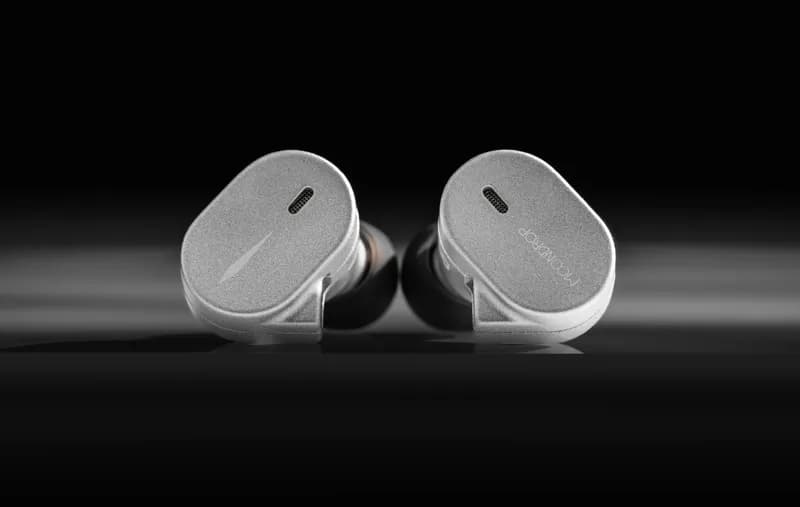
Detailed Review
The MOONDROP CHU III, is the third generation of MOONDROP's entry-level CHU IEM series. It keeps the compact metal-shell concept of its predecessors but introduces a new 10mm dynamic driver with an aluminum-magnesium alloy composite diaphragm, a zinc-alloy housing, and a detachable 0.78mm 2-pin cable. Its launch price is around $25, placing it firmly in the budget IEM category.
The most important change is not simply the new driver. CHU III takes a somewhat warmer, fuller approach than the earlier CHU II, with more emphasis on mid-bass and vocals and less of the aggressive upper-mid presentation that some listeners found tiring. It is easy to drive from phones and basic dongle DACs, and its small metal shell makes it particularly attractive for portable use. The main compromises are more modest accessories, relatively limited isolation, and a sound that does not prioritize maximum treble extension or competitive-gaming imaging. For someone buying a first wired IEM, however, CHU III is a serious option at its price.
Product Positioning
MOONDROP has traditionally been particularly competitive in the entry-level IEM market, and the CHU series has been one of its most accessible product lines.
The original CHU established the basic formula: a small shell, a single dynamic driver, a low price, and a tuning designed to make a serious introduction to wired audio possible without requiring expensive equipment. CHU II later added a detachable cable and changed the tuning and hardware design.
The CHU III continues that strategy rather than attempting to become a mid-range audiophile monitor. Its purpose is straightforward: provide a compact, metal-bodied IEM with a modern dynamic driver and an approachable tuning at a price around $25.
That positioning is important when evaluating it. CHU III should not be judged by whether it can compete technically with $100 or $200 IEMs. The more useful question is whether it offers enough sound quality, comfort, build quality, and usability to make spending more money unnecessary for a beginner.
At launch, MOONDROP positioned CHU III at the equivalent of roughly ¥4,950 in Japan, while international pricing has been around the mid-$20 range depending on market and retailer.
Core Specifications
Specification | MOONDROP CHU III |
|---|---|
Type | Wired in-ear monitor |
Driver | 10mm dynamic driver |
Diaphragm | Aluminum-magnesium alloy composite diaphragm |
Magnet | N52 neodymium magnet |
Housing | Zinc alloy |
Impedance | 16Ω ±15% at 1kHz |
Sensitivity | 118dB/Vrms at 1kHz |
Frequency range | 12Hz–50kHz |
Effective frequency range | 20Hz–20kHz, -3dB |
THD | ≤0.1% at 1kHz, 94dB |
Connector | 0.78mm 2-pin |
Plug | 3.5mm single-ended |
Cable | Detachable |
Colors | Silver, Black |
Microphone | No |
Price class | Around $25 |
The specifications are impressive for the price, but they should be interpreted carefully.
For example, the advertised 12Hz–50kHz frequency range does not mean that listeners will perceive meaningful information throughout that entire range. The effective audible-band specification is much more relevant for ordinary listening.
Likewise, the 16Ω impedance and 118dB/Vrms sensitivity mean that CHU III is an extremely easy load to drive. You do not need a powerful headphone amplifier simply to make it loud.
Build Quality and Design
One of the strongest aspects of CHU III is its physical construction.
Instead of using a lightweight plastic shell, MOONDROP uses a zinc-alloy housing. The result is a small IEM that feels substantially more expensive than its price suggests. The compact bean-shaped shell also maintains the basic visual identity associated with the CHU family.
The metal construction gives the earphones a reassuring sense of solidity, although it also means they have more physical weight than a comparable plastic IEM.
The housing itself is small enough to sit inside the concha of many ears without protruding significantly. This is particularly useful for people who dislike large resin IEMs that extend noticeably outside the ear.
The 0.78mm 2-pin connector is another meaningful improvement compared with the original CHU. The cable can be replaced if it becomes damaged, and users are not locked into a permanently attached cable.
The overall construction therefore makes sense for a first IEM: small, sturdy, replaceable cable, and relatively uncomplicated.
One limitation is that the stock accessory package is clearly designed around keeping the price low rather than providing a luxurious unboxing experience.
Comfort and Fit
The compact housing is one of CHU III's most practical advantages.
The shell follows a small bean-like shape and does not demand a particularly deep insertion. Some users who find the CHU II's fit slightly too deep may prefer the shorter nozzle arrangement of CHU III.
Based on the housing dimensions and early user reports, it should work well for many small and medium-sized ears. The low-profile shell also makes it easier to wear while lying down or using a phone at a desk.
The metal shell does not automatically make it uncomfortable. Its individual earpieces are small, and the weight is distributed close to the ear rather than hanging from the cable.
Long listening sessions can therefore be quite comfortable if the supplied tips create a good seal.
There is, however, an important distinction between comfort and isolation.
CHU III's vented design does not attempt to maximize passive noise isolation. It can be suitable for a quiet room, office, desk, or casual commuting, but it is not the first choice if your priority is blocking a loud train, airplane cabin, or busy street.
In other words, its small shell makes it easy to wear, but its acoustic design does not turn it into a dedicated isolation-focused monitor.
Cable, Ear Tips, and Accessories
The detachable 0.78mm 2-pin cable is a useful feature at this price.
The stock cable is functional rather than luxurious. It is relatively flexible and easy to handle, and the basic design is adequate for everyday use. It is not the kind of cable that makes CHU III feel like a premium product, but it also does not undermine the product.
The package includes three pairs of silicone ear tips and a small carrying pouch, along with the usual documentation.
That is enough to get started.
There is also little reason to immediately spend more money on an aftermarket cable. A cable upgrade may change handling characteristics, but it should not be treated as a necessary sound upgrade.
For a $25 IEM, the more meaningful upgrade is usually finding the right ear-tip size and achieving a reliable seal.
Sound Quality
Sound is where CHU III becomes more interesting than its price suggests.
Compared with the previous generation, CHU III moves toward a somewhat fuller and more relaxed presentation. Multiple early measurements and reviews agree on the broad direction: the bass has greater mid-bass presence, while the upper-midrange is less aggressive than on the CHU II.
However, there is some disagreement about how successful this tuning is.
Some listeners appreciate the warmer presentation and more comfortable vocal balance. Others argue that the stronger mid-bass and reduced upper-mid energy come at the expense of clarity and treble detail.
That disagreement is worth acknowledging rather than pretending there is one universally correct description.
Bass
The bass is not extreme, but it is more substantial than the typical neutral-leaning budget IEM.
CHU III puts more emphasis on the mid-bass than on an ultra-deep sub-bass presentation. Kick drums have noticeable weight, and bass guitars have enough body to prevent the overall sound from becoming thin.
The advantage is musicality.
Pop, rock, electronic music, hip-hop, jazz, and tracks built around drums can benefit from the additional impact.
The disadvantage is that the extra mid-bass can make the lower part of the presentation sound somewhat thicker. Listeners who prioritize maximum separation and a very clean, analytical presentation may prefer a leaner competitor.
It is therefore better described as moderately warm and full-bodied than basshead-oriented.
The bass also does not completely dominate the rest of the frequency range. Vocals remain relatively prominent, which keeps the IEM versatile.
Midrange
The midrange is one of CHU III's more successful areas.
Vocals are reasonably forward, particularly female vocals and voices in the upper-midrange. This gives the IEM an immediate and accessible character with pop, acoustic music, anime songs, and vocal-heavy recordings.
Male vocals are somewhat more complicated.
Because the lower-midrange is less prominent relative to the upper vocal region, deeper male voices can sound slightly less emphasized on some recordings. This does not mean male vocals disappear, but the balance can favor lighter and brighter vocal presentations.
Instruments such as acoustic guitar and strings retain enough presence to avoid sounding dull.
The overall midrange therefore aims more for clarity and vocal accessibility than for a thick, luxurious presentation.
Treble
Treble is probably the area where expectations need to be managed.
CHU III does not appear to be tuned as a strongly bright or analytical IEM. The uppermost treble is comparatively restrained, which helps reduce listening fatigue.
That is useful for long listening sessions.
The trade-off is that some recordings may sound less airy and less extended than they would on a more treble-focused IEM.
Cymbals, upper harmonics, and very high-frequency details do not always have the same sense of openness as more technically aggressive competitors.
This is also why “more treble” should not automatically be interpreted as “more detail.” A brighter IEM can make certain details more obvious while also making recordings more tiring.
CHU III takes the opposite approach: it sacrifices some ultimate air and sparkle for a smoother and more relaxed balance.
Soundstage and Imaging
CHU III's soundstage is reasonable for its price, but it should not be mistaken for a wide-open presentation.
The compact shell and tuning provide enough separation for normal music listening, but complex recordings can become somewhat denser than they would on more technically capable IEMs.
For pop and vocal music, this is rarely a serious problem.
Classical recordings and large live performances expose the limitations more clearly. Instrument placement is understandable, but the presentation does not create an especially large sense of depth.
Gaming is similar.
For casual gaming, dialogue-heavy games, RPGs, and general entertainment, CHU III works well.
Competitive FPS gaming is a different matter. Early testing suggests that directional information can be identified, but precise distance and localization are not its strongest characteristics.
If competitive gaming is the primary reason for buying an IEM, there are other options worth considering.
Dynamics and Transients
The larger dynamic driver gives CHU III a reasonably physical presentation.
Kick drums have impact, bass guitars have weight, and percussion does not sound completely flat.
However, dynamics should not be confused with resolution.
CHU III can make music energetic and enjoyable without necessarily resolving every micro-detail in a complex recording.
For ordinary listening, that distinction is not particularly important. The IEM's strength is that it makes music sound engaging without requiring expensive amplification.
Tuning and Frequency Response
CHU III is generally described as warmer and more mid-bass-focused than the CHU II.
Third-party measurements show elevated bass and a relatively noticeable upper-midrange region, while the very top end is less prominent. The exact response varies with measurement system, ear tips, insertion depth, and test fixture, so individual graphs should not be treated as absolute representations of what every listener will hear.
The important takeaway is the overall balance:
more body than a strictly neutral IEM, a relatively forward vocal region, and a less aggressive high-frequency presentation.
MOONDROP describes the tuning using its own target framework, but independent measurements and listening impressions do not all interpret the result identically. Some reviewers consider the final tuning warmer and thicker than the target description might suggest.
That is precisely why frequency-response graphs should be treated as evidence rather than a complete substitute for listening.
A graph can help explain why the bass sounds elevated or why upper vocals are prominent. It cannot, by itself, determine perceived texture, dynamics, imaging, distortion, or personal enjoyment.
Music Compatibility
Music Type | Performance | Suitability | Why |
|---|---|---|---|
Pop | Full and vocal-focused | High | Strong vocals and punchy bass |
Chinese Pop | Engaging | High | Good vocal presence |
Rock | Energetic | High | Bass weight helps drums and guitars |
Electronic | Enjoyable | High | Mid-bass impact works well |
Classical | Acceptable | Moderate | Limited stage and upper-air extension |
Jazz | Good | High | Bass body and natural vocals work well |
Folk | Good | High | Vocals and acoustic instruments remain clear |
Female Vocals | Strong | High | Upper vocal presence is prominent |
Gaming/OST | Good | High | Engaging tonal balance |
Film Soundtracks | Good | High | Dialogue and general effects remain clear |
It is particularly convincing with vocal-oriented music, pop, acoustic recordings, rock, and electronic music.
It is less convincing for listeners who want a very expansive classical presentation or extremely high treble air.
Who Will Like the CHU III?
Bass-focused listeners
Generally suitable, but not for extreme bassheads.
The bass has more body and impact than a neutral IEM, but the tuning is not designed around overwhelming sub-bass.
Vocal listeners
Very suitable.
The upper vocal range has enough presence to make singers easy to follow, especially in pop and acoustic music.
Detail-focused listeners
Only moderately suitable.
CHU III provides good detail for the price, but it does not prioritize maximum perceived clarity and treble information.
Listeners who prefer relaxed sound
Suitable.
The reduced upper-mid aggression makes it easier to listen to for long periods than some brighter budget IEMs.
Classical listeners
Acceptable rather than ideal.
It can play classical music competently, but its stage and treble presentation are not its strongest selling points.
Gamers
Good for casual gaming, less convincing for competitive FPS.
Dialogue, music, and general positional cues are fine, but precise spatial localization is not a major strength.
Does CHU III Need an Amplifier?
No.
With a rated impedance of 16Ω and sensitivity of 118dB/Vrms, CHU III is extremely easy to drive.
A modern smartphone with an appropriate dongle DAC should have no difficulty reaching sufficient volume.
A dedicated amplifier may provide a different output stage or lower noise depending on the source, but additional power is not something CHU III fundamentally requires.
For most buyers, money is better spent on a good source with a clean output and comfortable ear tips than on a powerful headphone amplifier.
The same principle applies to desktop DAC/AMPs. CHU III can certainly be used with one, but its low power requirement means that the main benefit would be source quality, connectivity, or convenience rather than additional driving power.
Front-End Pairing
Smartphone + basic USB DAC
This is the most sensible combination for most users.
A simple dongle DAC provides clean output and convenient volume control without adding unnecessary bulk.
Mid-range dongle DAC
A better dongle can be useful if it has exceptionally low output noise or if you already own one, but do not expect CHU III to suddenly become a completely different IEM.
Desktop DAC/AMP
It works perfectly well, but it is difficult to justify purchasing a desktop amplifier specifically for CHU III.
The IEM simply does not need that much power.
Noise and Compatibility
Because CHU III is highly sensitive, source noise can be more relevant than amplifier power.
If a phone, laptop, or inexpensive dongle has a noisy headphone output, the IEM may expose that noise more readily than a harder-to-drive headphone.
A clean USB DAC is therefore more useful than a powerful amplifier.
For Android and USB-C devices, a conventional USB DAC setup is straightforward.
For computers, CHU III is also easy to use because the earphones themselves are simply a passive 3.5mm IEM.
For iPhones, compatibility depends on the phone's physical connector and whether an appropriate adapter or USB DAC is being used.
There is no built-in microphone or inline control on the standard CHU III configuration, so people who want one-cable phone-call functionality should consider that limitation before buying.
CHU III vs Other Budget IEMs
The budget IEM market is extremely competitive, and CHU III is not operating in isolation.
The 7Hz Salnotes Zero 2 is a relevant alternative for listeners who want a different balance between bass, clarity, and technical performance.
The TANGZU Wan'er family is another competitor worth considering, particularly for listeners who place a high value on vocal presentation and tuning character.
The TRUTHEAR GATE occupies a similar entry-level territory and offers another interpretation of the inexpensive single-dynamic-driver formula.
The Kiwi Ears Cadenza can also become relevant when its street price moves close to the CHU III's budget, although it is not always priced in exactly the same range.
The important point is that CHU III does not automatically make these alternatives obsolete.
Its strongest argument is the combination of small metal construction, comfortable fit, detachable cable, easy drivability, and an engaging warm-vocal tuning.
If your priority is maximum technical clarity, treble detail, or competitive gaming imaging, another model may make more sense.
Pros and Cons
Pros
Compact and comfortable metal shell
Detachable 0.78mm 2-pin cable
Very easy to drive
Engaging vocal-oriented tuning
Fuller and more relaxed presentation than the previous generation
Strong value at around the $25 price point
Suitable for a wide range of everyday music
Cons
Passive isolation is not especially strong
Treble extension and air are not the main strengths
Soundstage is only moderate
Competitive FPS imaging is not exceptional
Stock cable and accessories are functional rather than premium
No microphone or USB-C version in the standard configuration
Rating
Using the requested weighted scoring system:
Category | Weight | Score |
|---|---|---|
Sound Quality | 35% | 4.0/5 |
Tuning Completion | 15% | 4.0/5 |
Comfort | 15% | 4.5/5 |
Build & Design | 10% | 4.5/5 |
Driveability & Compatibility | 10% | 4.5/5 |
Accessories & Cable | 5% | 3.5/5 |
Value | 10% | 4.5/5 |
Overall Score: 4.0/5.0
The value score is particularly dependent on actual street price. Around $25, CHU III makes much more sense than if it were substantially more expensive.
Who Should Buy the MOONDROP CHU III?
Recommended for
First-time IEM buyers
Listeners who want an inexpensive introduction to wired Hi-Fi
Vocal and pop listeners
People who prefer a slightly warm, full sound
Users who want a small metal IEM
Smartphone and laptop users
Buyers who want a detachable cable at a low price
Listeners who prefer relaxed treble for long sessions
Less suitable for
Extreme bassheads
Listeners who prioritize maximum treble air
People who want a very large soundstage
Competitive FPS players who need highly precise positional imaging
Users who require strong passive isolation
Buyers who need a built-in microphone
Is the MOONDROP CHU III Worth Buying?
At around the $25 price level, CHU III is easy to justify as a first IEM.
Its biggest advantage is not one spectacular specification. Instead, it combines several useful qualities that are difficult to find together at this price: a small metal housing, replaceable cable, low driving requirements, comfortable fit, and a reasonably mature tuning.
The most important caveat is that CHU III is not necessarily a universal upgrade over the CHU II. Its sound changes direction rather than simply improving every aspect. The additional mid-bass and more relaxed upper-midrange can make it more comfortable and enjoyable for some listeners, while others may prefer the earlier model's greater sense of clarity and openness.
Compared with other budget IEMs, CHU III is therefore best understood as a balanced entry point rather than a definitive winner. Its combination of physical design, comfort, and tuning is attractive, but buyers who care strongly about technical performance should compare it with other models in the same price bracket.
If your priority is an affordable, comfortable IEM for everyday music, especially vocals, pop, rock, and electronic music, CHU III is worth considering. If you want maximum detail, isolation, or competitive-gaming imaging, its limitations become more relevant.
MOONDROP CHU III FAQ
Who is the MOONDROP CHU III best for?
It is best suited to beginners and everyday listeners who want an inexpensive wired IEM with a compact metal shell, comfortable fit, easy drivability, and a slightly warm, vocal-friendly sound.
What does the MOONDROP CHU III sound like?
It has a relatively full and warm presentation, with noticeable mid-bass, clear vocals, and a less aggressive treble presentation than some brighter budget IEMs. It is designed more for enjoyable long-term listening than for an aggressively analytical sound.
What music is the CHU III good for?
Pop, Chinese pop, vocals, rock, electronic music, jazz, folk, and game or anime soundtracks are particularly suitable. Classical music is still enjoyable, but the moderate soundstage and restrained upper-air extension are less ideal for listeners seeking a large orchestral presentation.
Does the CHU III need an amplifier?
No. Its 16Ω impedance and 118dB/Vrms sensitivity make it very easy to drive. A clean dongle DAC is more than enough for most users.
Can a phone drive the CHU III?
Yes. With a suitable 3.5mm output or USB-C dongle DAC, a modern smartphone can drive it easily.
Is the CHU III comfortable?
Its compact bean-shaped metal shell is one of its strongest characteristics. It should suit many small and medium-sized ears, although ear shape and ear-tip selection always affect the final fit.
What is the biggest weakness of the CHU III?
Its main limitations are moderate isolation, only average soundstage and imaging, and less treble air than some technically oriented competitors. The stock accessories are also fairly basic.
Is the CHU III good for gaming?
It is good for casual gaming and dialogue-heavy games, but competitive FPS players may want an IEM with stronger positional imaging and spatial depth.
Is the CHU III better than the CHU II?
Not universally. CHU III changes the tuning rather than simply making every aspect better. It offers a fuller, less shouty presentation, while some listeners may prefer the CHU II's greater sense of clarity and openness.
Is the MOONDROP CHU III worth buying?
At around $25, it is a compelling entry-level IEM. Its value is strongest for listeners who prioritize comfort, build quality, vocals, and an enjoyable everyday tuning rather than maximum technical performance.