Detailed Review
The MOONDROP Aria 2 is a single-dynamic-driver IEM aimed at the entry-level to mid-range wired in-ear market. With a street price generally around the $90 range, it competes with some of the strongest budget-to-midrange IEMs currently available.
Its main strength is not an unusually complicated driver configuration, but the balance of sound quality, tuning, build quality, and usability. The 10mm dynamic driver delivers a relatively balanced presentation with clear mids, controlled bass, and extended treble without turning the earphone into an aggressively bright analytical monitor. Vocals are one of its stronger areas, making the Aria 2 particularly appealing for pop, acoustic music, female vocals, and general everyday listening.
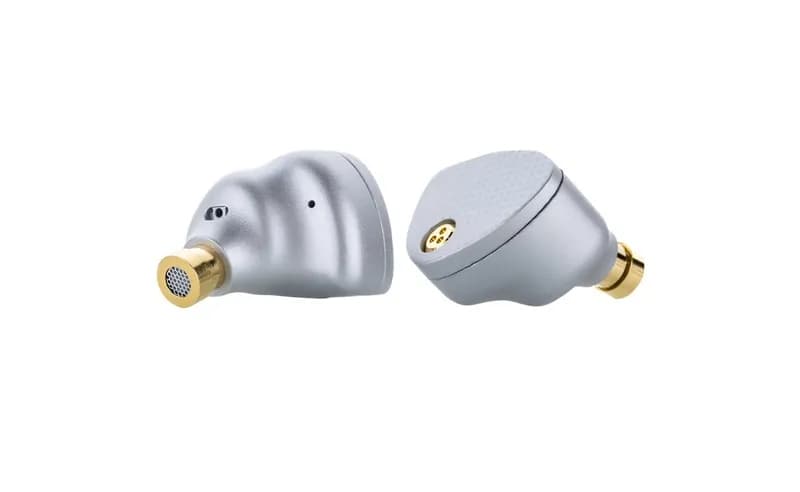
The metal shell gives it a more substantial feel than many resin IEMs, while the detachable cable supports both 3.5mm and 4.4mm connections. However, that metal construction also makes the Aria 2 relatively heavy, and its fairly large nozzle may not suit users with smaller ear canals.
The Aria 2 is still worth considering if you want a mature, balanced single-dynamic-driver IEM and find it at a good price. But the market has become much more competitive, so it is no longer an automatic choice simply because it carries the Aria name.
Product Positioning and Market
The Aria 2 is part of MOONDROP's long-running Aria family and sits in the company's entry-level to mid-range IEM lineup.
Unlike many competitors in this price range, it does not rely on multiple balanced-armature drivers, multiple dynamic drivers, or planar technology. Instead, MOONDROP uses a single 10mm dynamic driver with a TiN ceramic-coated composite diaphragm and a redesigned acoustic structure.
That approach is important because the Aria 2 is not trying to win the specification race.
Its basic proposition is simpler:
Deliver a coherent, well-tuned single-driver sound with a metal shell, replaceable cable, and practical connectivity at a relatively accessible price.
The market around $50–$100 has changed significantly since the original Aria became popular. Today, products such as the TRUTHEAR HEXA and ZERO:RED, along with numerous newer single-driver, hybrid, and planar IEMs, provide serious competition.
As a result, the Aria 2's strongest argument is its overall balance rather than any single specification.
Core Specifications
Feature | MOONDROP Aria 2 |
|---|---|
Type | Wired in-ear monitor |
Driver | 10mm dynamic driver |
Driver count | Single |
Diaphragm | TiN ceramic-coated composite diaphragm |
Impedance | 33Ω ±15% @1kHz |
Sensitivity | 122dB/Vrms @1kHz |
Frequency range | 16Hz–22kHz |
Effective frequency range | 20Hz–20kHz |
Connector | 0.78mm 2-pin |
Plug | Detachable 3.5mm / 4.4mm |
Shell | Zinc alloy |
Nozzle | Brass |
Cable | Copper and silver-plated copper Litz-style construction |
Microphone | No |
Price range | Around $90 |
These specifications should be treated separately from listening impressions and third-party measurements.
For example, the high sensitivity tells us that the Aria 2 does not require a powerful amplifier, but it does not by itself tell us how good the IEM sounds.
Likewise, the TiN-coated diaphragm is a description of the driver construction rather than proof of a particular sound signature.
Build Quality and Shell Design
The Aria 2 uses a metal shell rather than the lightweight resin construction found on many competing IEMs.
The zinc-alloy housing gives it a substantial feel in the hand and generally looks more like a premium product than its price suggests.
The replaceable brass nozzle is also a practical design choice. It forms part of the acoustic structure while making cleaning and maintenance easier.
The 0.78mm 2-pin connector is another advantage. It is a common standard, so replacing the cable does not require replacing the entire earphone.
The main drawback of the metal construction is weight.
The Aria 2 is noticeably heavier than many resin IEMs, with individual shells measuring roughly 11–12g in third-party measurements. That is not excessive for a metal IEM, but it is enough to matter during long listening sessions.
The overall construction feels solid, but users who prioritize extremely lightweight IEMs may prefer a resin design.
Comfort and Fit
The Aria 2's shell follows a fairly conventional ergonomic shape and generally sits securely in the ear.
For average-sized ears, the fit is usually straightforward. The shape provides good stability, and the over-ear cable routing helps prevent the earphones from moving around.
However, the nozzle is relatively thick.
This matters more than many product specifications suggest. An IEM can have an excellent shell shape but still feel uncomfortable if the nozzle is too large for the user's ear canal.
Small-ear users or people who are sensitive to deeper insertion should pay particular attention to this.
The metal shell also adds weight. Users with average or larger ears may have no problem wearing the Aria 2 for several hours, but users with smaller ears may experience pressure or fatigue sooner.
Isolation is generally good when the eartips provide a proper seal, although actual isolation depends heavily on ear-tip size and individual anatomy.
Overall, the Aria 2 is reasonably comfortable, but it is not one of the lightest IEMs in this class.
Cable, Eartips and Accessories
The included cable is one of the Aria 2's practical strengths.
It uses a detachable 0.78mm 2-pin connection and comes with interchangeable 3.5mm and 4.4mm plugs.
That means users with a 4.4mm balanced output on a DAC, DAP, or portable player do not need to immediately purchase a separate balanced cable.
The cable is relatively substantial and feels durable. It is not the sort of accessory that needs to be replaced immediately after purchase.
The eartip selection is less impressive than some competing IEMs. The package is functional rather than exceptionally generous.
For most users, the included cable is already good enough.
If you want to spend additional money, experimenting with eartips is generally more useful than immediately buying an expensive aftermarket cable.
Sound Quality
The Aria 2's sound is its main reason to buy it.
It does not follow the exaggerated V-shaped tuning often associated with budget IEMs, nor does it try to create an extremely analytical presentation.
Instead, the overall character is balanced, clean, slightly midrange-focused, and relatively easy to listen to.
The bass is controlled rather than dominant, vocals remain clear, and the treble provides enough energy and detail without making the entire presentation aggressively bright.
Bass
The Aria 2 has a moderate and relatively controlled bass response.
Sub-bass extension is respectable, and bass instruments retain enough weight to avoid making the sound thin. However, bass quantity is not the main attraction.
Compared with bass-oriented IEMs, the Aria 2 can sound relatively restrained.
Its strength is speed and control.
Kick drums have a reasonably clean attack, bass notes do not linger excessively, and the low end generally stays out of the way of vocals.
This makes it easier to follow bass lines and other instruments in busy arrangements.
If you want a powerful, physical low-end presentation, however, the Aria 2 may not provide enough impact.
Midrange
The midrange is one of the Aria 2's strongest areas.
Vocals are clear without being excessively pushed forward. Male vocals have reasonable body while remaining clean, while female vocals benefit from the IEM's clear upper-midrange presentation.
Acoustic guitar, piano, strings, and other midrange instruments also sound relatively natural.
The Aria 2 does not attempt to create an especially warm or romantic presentation. Instead, it keeps the midrange fairly clean and articulate.
For pop, folk, acoustic recordings, and vocal-focused music, this is a strong characteristic.
Treble
The treble provides good clarity and extension.
The TiN ceramic-coated composite diaphragm is part of MOONDROP's effort to improve high-frequency performance and control distortion.
In practice, the Aria 2 provides enough treble energy to make cymbals, percussion, and fine details easy to follow.
However, higher treble energy should not automatically be interpreted as more detail.
Some recordings with strong sibilance or aggressive mastering can still sound somewhat forward, particularly for listeners who are highly sensitive to upper-frequency energy.
The Aria 2 is therefore not an extremely warm IEM, but it also does not belong to the aggressively bright category.
It sits closer to the middle ground between clarity and long-term listenability.
Soundstage and Imaging
The Aria 2 provides a reasonably spacious presentation for its price.
Its main strength is not an enormous soundstage, but relatively clear positioning and separation.
Left-to-right placement is easy to follow, while instruments generally maintain enough space to avoid collapsing into a single mass.
Pop and live recordings benefit from this separation, while classical music can reveal the location of different instrument groups reasonably well.
However, the overall scale remains limited compared with more expensive headphones or higher-end IEMs.
The better description is therefore good imaging and separation, rather than an exceptionally large soundstage.
Dynamics and Transients
The single dynamic driver gives the Aria 2 a coherent presentation.
Drums have a reasonably quick attack and decay, and electronic music does not sound excessively sluggish.
The IEM can handle normal dynamic contrasts well, although it is not specifically designed around maximum impact.
Large orchestral passages remain organized, but extremely complex recordings can expose the limitations of a product in this price range.
It is also important to distinguish dynamics from detail.
An IEM can retrieve small details without necessarily producing convincing large-scale dynamic contrast, and the Aria 2's strengths are more balanced across these areas rather than focused entirely on one technical metric.
Tuning and Frequency Response
The Aria 2 follows the general direction associated with modern MOONDROP tuning: a relatively balanced low end combined with clear mids and upper mids, rather than an exaggerated V-shaped response.
Third-party measurements show some deviations from a perfectly flat or target response, including a noticeable dip in the lower-midrange area and additional variation in the upper frequencies.
These measurements help explain why the Aria 2 can sound clean and relatively open while avoiding a thick or overly warm presentation.
However, frequency response alone cannot fully describe an IEM.
Soundstage, dynamics, transient perception, distortion, ear-tip seal, insertion depth, and individual hearing all influence the final result.
This is especially important with IEMs because changing eartips can alter both the seal and the perceived tonal balance.
Music Genre Compatibility
Genre | Performance | Suitability | Reason |
|---|---|---|---|
Pop | Clear vocals and good separation | ★★★★★ | Strong midrange performance |
Chinese pop | Natural vocal presentation | ★★★★★ | Vocals remain clear and controlled |
Rock | Fast and clean | ★★★★☆ | Bass is controlled rather than dominant |
Electronic | Good speed and clarity | ★★★★☆ | Bass quantity may be insufficient for bass lovers |
Classical | Good separation and positioning | ★★★★☆ | Soundstage scale is not exceptional |
Jazz | Good instrument definition | ★★★★☆ | Natural mids and clear positioning |
Folk | Excellent | ★★★★★ | Vocals and acoustic instruments work well |
Female vocals | Excellent | ★★★★★ | Clear upper-midrange presentation |
Gaming/OST | Good imaging | ★★★★☆ | Separation helps with positional information |
Film soundtracks | Balanced | ★★★★☆ | Dialogue and background music remain relatively distinct |
Matching Different Listener Types
Bass Lovers
★★★☆☆
The Aria 2 has enough bass to avoid sounding thin, but it is not designed for maximum low-end impact.
If you want strong sub-bass rumble and physical punch, there are better options in the same general price range.
Vocal Listeners
★★★★★
This is one of the Aria 2's strongest use cases.
Chinese pop, female vocals, folk, acoustic recordings, and vocal-centric tracks all benefit from its clean and relatively natural midrange.
Detail-Oriented Listeners
★★★★☆
The Aria 2 offers good detail retrieval, but it does not create detail by making the treble extremely sharp.
That makes it easier to live with than some aggressively analytical IEMs.
Listeners Who Prefer Smoothness
★★★★☆
The overall tuning is reasonably easy to listen to, although people who are extremely sensitive to upper-midrange or treble energy should still try it before buying.
Classical Listeners
★★★★☆
Imaging and separation are useful for classical recordings, but the Aria 2 does not create the large-scale spatial presentation associated with higher-end IEMs.
Gamers
★★★★☆
Imaging is clear enough for gaming, and environmental sounds and positional cues are relatively easy to separate.
For competitive FPS gaming, however, the ideal tuning depends on whether you prefer a natural presentation or a more treble-forward sound designed to emphasize small positional cues.
Does the Aria 2 Need an Amplifier?
No.
The Aria 2 has an impedance of around 33Ω and high sensitivity, which makes it relatively easy to drive.
A phone with a decent headphone output can provide enough volume.
For phones without a 3.5mm jack, a basic USB dongle DAC is more than sufficient.
This is an important point because owning a Hi-Fi IEM does not automatically mean that you need a desktop amplifier.
The more important concern is output noise and output impedance.
A highly sensitive IEM can reveal background hiss from a poorly designed amplifier even when that amplifier has far more power than the IEM requires.
For the Aria 2, a clean low-noise source is more useful than an extremely powerful amplifier.
Source Pairing
Directly From a Phone
If the phone has a competent headphone output, the Aria 2 can be used directly.
There is no practical reason to purchase a high-powered amplifier solely for this IEM.
Entry-Level Dongle DAC
This is one of the most sensible combinations.
A basic USB DAC can provide clean output, sufficient power, and convenient compatibility with modern smartphones.
Midrange Dongle DAC
Devices such as the FiiO KA13, FiiO KA15, or MOONDROP Dawn Pro 2 can certainly be paired with the Aria 2.
However, users should not expect a dramatic transformation simply by moving from a basic dongle to a much more expensive DAC.
The more noticeable advantages may come from cleaner volume control, lower noise, balanced connectivity, or EQ functionality.
Desktop DAC/Amp
A desktop DAC/amp is unnecessary for the Aria 2 alone.
If you already own a desktop system for other headphones, there is no problem using it. But purchasing a large amplifier specifically to drive the Aria 2 is difficult to justify.
Noise and Compatibility
Because the Aria 2 is highly sensitive, the quality of the source matters more than its maximum output power.
It can be used with Android, Windows, macOS, and iPhone devices when an appropriate USB DAC or headphone connection is available.
The main potential problem is not insufficient power but background noise.
A poorly designed USB DAC or amplifier can produce audible hiss with sensitive IEMs.
This is why the most sensible pairing philosophy for the Aria 2 is:
low noise first, high power second.
Aria 2 vs Similar-Priced IEMs
The Aria 2 remains a good IEM, but its competitive environment has become considerably more difficult.
TRUTHEAR HEXA
The HEXA takes a more technical and neutral approach, using a hybrid configuration with one dynamic driver and three balanced-armature drivers.
Compared with the Aria 2, the HEXA is more focused on separation, technical performance, and a relatively monitor-oriented presentation.
The Aria 2 is the more natural choice if you prefer a coherent single-driver presentation and stronger vocal appeal.
The HEXA becomes more interesting if you prioritize technical separation and a more neutral presentation.
TRUTHEAR ZERO:RED
The ZERO:RED uses a dual-dynamic-driver configuration and is generally more focused on bass quantity and low-frequency impact while retaining a relatively controlled midrange.
It is often sold at a lower price than the Aria 2.
For listeners who want more bass and are less concerned about the Aria 2's metal construction and single-driver character, the ZERO:RED can be a strong alternative.
TRUTHEAR ZERO:BLUE2
The ZERO:BLUE2 is another lower-priced dual-dynamic-driver competitor.
It provides a different approach to bass response and overall tuning while also addressing some of the practical limitations of earlier designs.
The Aria 2's advantages are therefore not simply about having the most drivers or the most specifications.
Its appeal comes from its single-driver coherence, metal construction, mature vocal presentation, and versatile detachable cable system.
Pros
Coherent single-dynamic-driver presentation
Strong vocal performance
Balanced overall tuning
Controlled rather than excessive bass
Clear but generally manageable treble
Solid metal construction
Replaceable 0.78mm 2-pin cable
Interchangeable 3.5mm and 4.4mm plugs
Easy to drive from phones and basic dongle DACs
No expensive amplifier required
Cons
Relatively heavy metal shells
Thick nozzle may not suit smaller ear canals
Bass quantity may be insufficient for bass-focused listeners
Eartip selection is not especially generous
Strong competition at the current price
The original Aria's reputation should not be the main reason to buy the Aria 2 today
5-Point Rating
Category | Weight | Score |
|---|---|---|
Sound quality | 35% | 4.5/5 |
Tuning refinement | 15% | 4.5/5 |
Comfort | 15% | 4.0/5 |
Build and design | 10% | 4.5/5 |
Driveability and compatibility | 10% | 4.5/5 |
Cable and accessories | 5% | 4.0/5 |
Value | 10% | 4.0/5 |
Overall Score: 4.3/5.0
The value score is particularly sensitive to the actual selling price.
At a substantial discount below its typical $90 price range, the Aria 2 becomes more attractive. If its price approaches newer competitors with stronger specifications or newer designs, the decision becomes more dependent on personal tuning preferences.
Who Should Buy the Aria 2?
Recommended For
First-time Hi-Fi IEM buyers
Listeners who prefer balanced tuning
Fans of pop, Chinese pop, folk, and female vocals
Listeners who prioritize vocal clarity
Users who appreciate metal construction
Users who already own a 4.4mm balanced DAC or DAP
Buyers who do not want to purchase a separate amplifier
Not Recommended For
Listeners who prioritize strong bass impact
People with very small ear canals
Users who strongly prefer lightweight IEMs
Buyers who want the most specification-heavy IEM possible for the money
Existing Aria owners who do not have a clear reason to upgrade
Is the MOONDROP Aria 2 Still Worth Buying?
At around $90, the Aria 2 remains a well-rounded IEM, but it is no longer enough to simply call it an automatic recommendation in this price range.
If you like balanced tuning, clear vocals, moderate bass, solid construction, and a flexible 3.5mm/4.4mm cable system, it still has a clear reason to exist.
If you want more bass, products such as the ZERO:RED deserve consideration.
If you prefer a more neutral, technical, hybrid presentation, the HEXA is another obvious comparison.
If your budget is lower, several $50–$70 IEMs now offer surprisingly competitive sound quality.
The buying logic is therefore straightforward:
If you like the Aria 2's balanced single-dynamic-driver sound and can accept its heavier metal shell, it remains worth considering at the right price. If you care more about maximum bass, lightweight comfort, or the strongest current value proposition, there are other IEMs that deserve a closer look.
FAQ
Who is the MOONDROP Aria 2 for?
The Aria 2 is best suited to listeners who want a balanced and relatively natural sound with clear vocals. It works particularly well for pop, Chinese pop, folk, acoustic music, and female vocals.
What does the MOONDROP Aria 2 sound like?
It has a balanced and clear presentation with controlled bass, a relatively prominent and natural midrange, and extended treble. It is not a bass-heavy IEM.
What music is the Aria 2 good for?
Pop, Chinese pop, female vocals, folk, acoustic recordings, and jazz are particularly good matches. Rock and electronic music also work well, although bass-focused listeners may want more low-end impact.
Does the Aria 2 need an amp?
No. Its impedance and sensitivity make it easy to drive. A phone with a decent headphone output or a basic USB dongle DAC is enough for normal listening.
Can a phone drive the Aria 2?
Yes. A phone with a headphone output can drive it directly. Phones without a headphone jack can use a USB-C or Lightning-compatible dongle DAC.
Is the Aria 2 comfortable?
For average ears, the ergonomic shell generally provides a stable fit. However, the metal construction makes it relatively heavy, and the nozzle is fairly large. Users with small ears or narrow ear canals should pay particular attention to fit.
What is the biggest weakness of the Aria 2?
Its biggest practical weaknesses are its relatively heavy shell and the intense competition at its current price. The sound quality is good, but newer competitors provide more alternatives at similar or lower prices.
Is the Aria 2 worth buying?
Yes, if you like its balanced, vocal-friendly tuning and find it at a reasonable price. If you prioritize strong bass, lightweight construction, or maximum value for money, other IEMs may be a better match.
Final Verdict
The MOONDROP Aria 2's biggest strength is its overall coherence.
It does not depend on a complicated driver configuration, an enormous specification sheet, or an expensive source chain. Instead, it combines a competent single dynamic driver, a balanced tuning, clear vocals, solid metal construction, and a practical interchangeable cable system.
Its biggest weaknesses are equally clear. The metal shell adds weight, the nozzle may not suit smaller ears, bass lovers may want more impact, and the current IEM market offers a large number of strong alternatives at similar prices.
That makes the Aria 2 a product that should be chosen for its specific combination of tuning and usability, rather than simply because it belongs to the well-known Aria family.
For listeners who prioritize vocals, balanced sound, pop, folk, and general-purpose music, the Aria 2 remains a strong option.
For listeners who want heavier bass, lighter construction, or the most aggressive value proposition in the current budget IEM market, it is worth comparing alternatives before buying.
And importantly, the Aria 2 does not require an expensive audio chain. A good seal, the right eartips, and a clean low-noise dongle DAC are generally more important than pairing it with a large desktop amplifier.